

P0010 on 2007-2013 Chevrolet Silverado 1500 4.3L V6: Causes and Fixes
For the 2007-2013 Silverado with a 4.3L V6, code P0010 almost always points to a faulty intake camshaft position actuator solenoid. This is a common failure item that is relatively inexpensive and easy to replace. The cost for a new solenoid is typically $25-$50 for an aftermarket part and $50-$90 for an OEM part. Dirty or low engine oil is the second most likely cause, as the solenoid relies on clean oil to function.
- P0010 on your Silverado points to an electrical fault with the intake camshaft actuator solenoid.
- Before buying parts, check your engine oil. Low or dirty oil is a frequent cause of this code.
- The most likely part to fail is the camshaft position actuator solenoid (GM part #12627116), which is a simple and affordable DIY replacement.
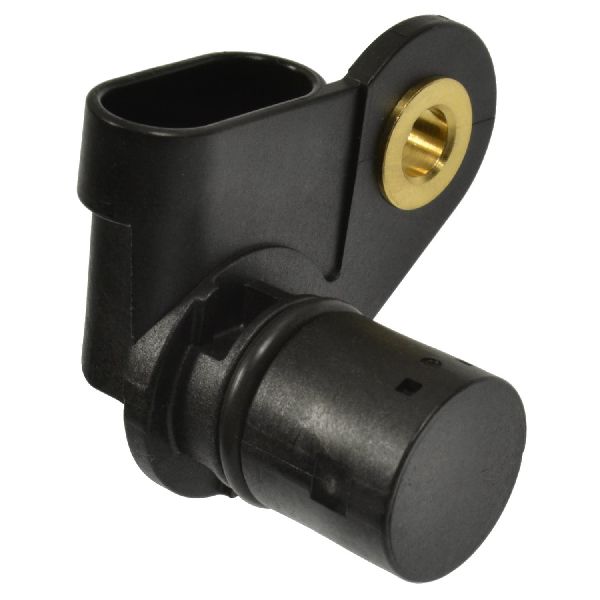
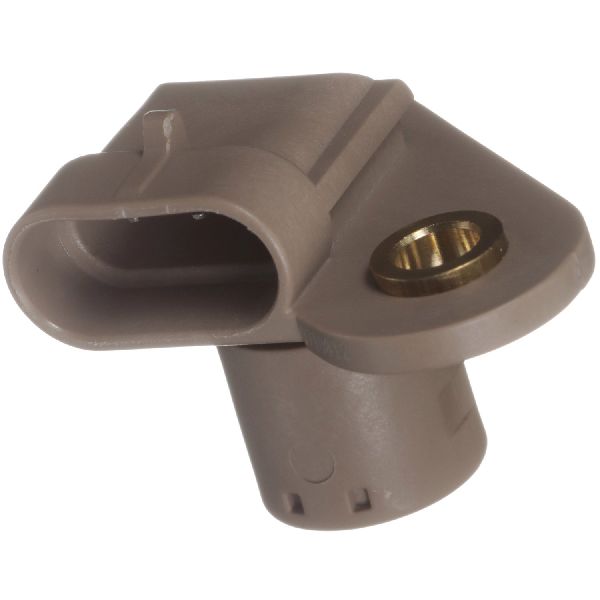
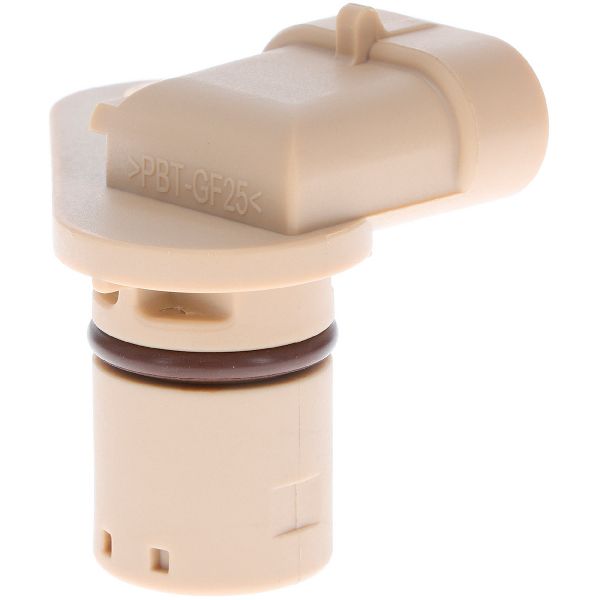
- Do not confuse the actuator solenoid with the camshaft position sensor; they are different parts.
- Replacing the solenoid involves removing a single bolt and an electrical connector, making it a very beginner-friendly repair.
What's Unique About the 2007-2013 Chevrolet Silverado 1500
The 4.3L V6 (RPO code LU3) used in this generation of Silverado is a straightforward overhead valve (OHV) pushrod engine, but it does incorporate a basic Variable Valve Timing (VVT) system, also known as cam phasing. Unlike more complex DOHC engines, this V6 only has a single camshaft in the block and thus only one actuator solenoid to control timing advance. This simplifies diagnosis for codes like P0010, as there is only one solenoid to inspect. The primary cause of failure is often oil-related, as the solenoid is an oil-fed component. Sludge from infrequent oil changes is a common culprit for causing the solenoid to stick or fail electrically.
Generation note: The 2007 model year includes both the older GMT800 'Classic' body style and the newer GMT900. The 2008-2013 models are all GMT900. However, the 4.3L V6 engine (LU3) and its VVT system remained largely the same across this entire period, so the causes and fixes for P0010 are consistent for all 2007-2013 model years.
Symptoms You May Notice
- Check Engine Light is on
- Rough or uneven idle, sometimes feeling like a misfire
- Reduced engine power and poor acceleration
- Stalling at low speeds or when coming to a stop
- Decreased fuel economy
- Engine may make rattling or ticking noises
- "Service Stabilitrack" or "Service Traction Control" messages may appear with reduced engine power
- Replacing the Camshaft Position SENSOR instead of the SOLENOID. P0010 is a circuit code for the actuator solenoid, not the position sensor. While their names are similar and they are located near each other, they are different parts with different functions. 🎬 Watch: How to replace the camshaft position sensor
Most Likely Causes
- Faulty Intake Camshaft Position Actuator Solenoid 🔴 High Probability → Shop Engine Camshaft The solenoid is an electro-mechanical part that operates in hot engine oil, making it susceptible to failure from internal shorts, open circuits, or becoming clogged with oil sludge. It is the most common point of failure for this code on most GM vehicles.
How to confirm: Unplug the connector and check the solenoid's resistance with a multimeter. A typical reading should be between 8 and 12 ohms, though aftermarket parts may vary. An open circuit (infinite resistance) or short (near-zero resistance) indicates a bad solenoid. NHTSA ODI #11342559 describes a case where a failed intake solenoid tested at 1.4k ohms, far exceeding the normal range. You can also try applying 12V directly to the solenoid's pins to see if it clicks; lack of a click means it's seized.
Typical fix: Replace the camshaft position actuator solenoid. It is a single component located on the front of the engine, held in by one 10mm bolt. 🎬 See this step-by-step GM actuator solenoid replacement guide
Est. part cost: $25-$90 - Low or Dirty Engine Oil 🟡 Medium Probability The VVT system is entirely dependent on clean oil at the correct pressure to function. The 4.3L V6 in this platform can be prone to oil consumption, particularly if the PCV system is clogged. If the oil is low, or thick and sludgy from missed oil changes, it can clog the small passages and screen on the actuator solenoid, preventing it from working correctly.
How to confirm: Check the engine oil level on the dipstick. Inspect the oil's condition. If it is very dark, thick, or below the 'add' line, this is a likely contributor. An oil change is the first step before replacing parts.
Typical fix: Perform an oil and filter change using the manufacturer-recommended 5W-30 oil. If the old solenoid was heavily sludged, it may still need to be replaced even after the oil change.
Est. part cost: $40-$80 - Damaged Wiring or Connector ⚪ Low Probability The wiring harness in the engine bay is exposed to heat and vibration, which can cause wires to become brittle, frayed, or shorted over time. The connector itself can also become corroded or loose. There is a GM Technical Service Bulletin (21-NA-149, which supersedes 21-NA-233) for newer models that points to potential harness chafing issues, indicating a known area of concern for GM truck wiring harness routing. Manufacturer TSB #PIP5553A also notes that a wiring jumper harness can chafe at the bolt of a connector, potentially causing P0010 and engine stalling.
How to confirm: Visually inspect the wiring leading to the camshaft position actuator solenoid for any signs of damage, melting, or corrosion. Wiggle the connector while the engine is running to see if it affects the idle. Check for continuity from the connector back to the PCM if the solenoid itself tests good.
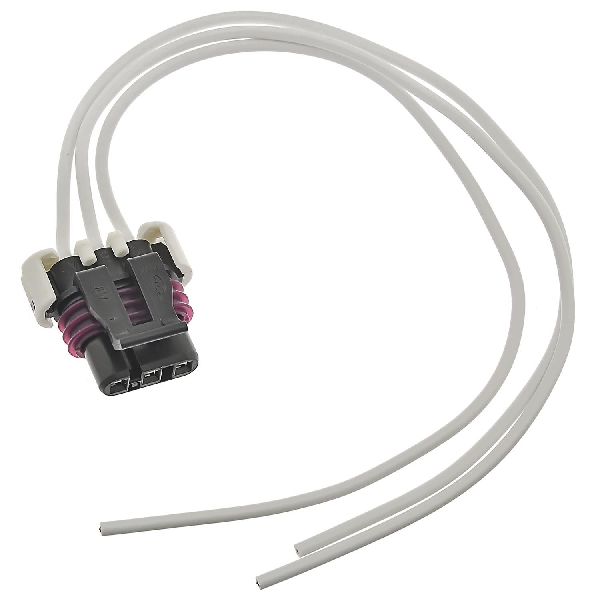
Typical fix: Repair the damaged section of wire or replace the pigtail connector.
Est. part cost: $15-$40
Rare But Worth Checking
- Stretched Timing Chain: → Shop Engine Timing Chain While P0010 is an electrical circuit code, a severely stretched timing chain can sometimes cause erratic behavior that the PCM misinterprets. This is more likely on very high-mileage engines (150k+ miles) and would typically be accompanied by rattling noises on startup and other timing performance codes like P0011 or P0016.
- Faulty Powertrain Control Module (PCM): This is very rare. The PCM should only be considered after all other possibilities, including the solenoid, oil, and wiring, have been thoroughly ruled out. PCM failure is uncommon and replacement is expensive and requires programming.
Diagnosis Steps
- Read the code with an OBD-II scanner to confirm P0010 is present.
- Check the engine oil level and condition. If low or dirty, perform an oil and filter change with 5W-30 oil before proceeding. This can sometimes resolve the issue on its own.
- Locate the intake camshaft position actuator solenoid. On the 4.3L V6, it is on the front of the engine, near the top, held in by a single 10mm bolt.
- Inspect the electrical connector and wiring going to the solenoid for any visible damage, corrosion, or loose connections.
- If the wiring looks good, unplug the solenoid and test its resistance with a multimeter. A good OEM part should read between 8-12 ohms. An open circuit (infinite resistance) or short (zero resistance) indicates a failed solenoid.
- If you have a power probe or jumper wires, you can carefully apply 12V and ground to the solenoid's pins. A healthy solenoid will make an audible 'click'. No click means it's bad.
- If the solenoid tests bad, replace it. Ensure the new solenoid's o-ring is lightly oiled before installation.
- If the solenoid tests good, the problem is likely in the wiring harness or, in very rare cases, the PCM driver circuit.
- After any repair, clear the codes with the scanner and perform a test drive to ensure the code does not return.
Parts You'll Likely Need
- Intake Camshaft Position Actuator Solenoid
(OEM #12627116, 12655434)— This is the most common failure point for a P0010 code. It is an electro-mechanical part that gets clogged or fails electrically.
Trusted brands: ACDelco, GM Genuine, Dorman, Standard Motor Products (SMP)
OEM price range: $50-$90
Aftermarket price range: $25-$50
Related Codes That Often Appear With This One
- P0011 — P0011 ('A' Camshaft Position - Timing Over-Advanced or System Performance Bank 1) is a performance-related code, while P0010 is a circuit code. It's common to see P0011 appear alongside P0010 because the electrical circuit fault (P0010) prevents the VVT system from working, which immediately leads to a timing performance error (P0011).
Technical Service Bulletins (TSBs) & Recalls
- 21-NA-149: This TSB for newer models identifies a potential for the engine wiring harness to chafe on various brackets, including the oil dipstick tube bracket, causing shorts and various DTCs, including P0010. While for a later generation, it highlights a known weak point in GM truck wiring harness routing.
- Bulletin #PIP5553A: This manufacturer bulletin notes that P0010 can be triggered by a wiring jumper harness that has chafed at the bolt of the X154 connector, potentially leading to a crank-no-start condition or engine stalling.
Mechanic-Grade Diagnostic Values
- Camshaft Position Actuator Solenoid Resistance — expected: 8 to 12 Ohms. Failure: An open circuit (infinite resistance) or a shorted circuit (near zero resistance) indicates a failed solenoid.
- Voltage to Solenoid Connector — expected: Battery voltage (approx. 12V) on the power wire with key on, engine off.. Failure: No voltage suggests a problem with the power supply from the fuse block or a break in the wire.
- Scan Tool Commanded State vs. Actual State — expected: When commanding the solenoid ON with a bidirectional scanner, the scan tool should show the desired and actual states matching, and a change in engine idle should be noticeable.. Failure: If the state does not change or the engine idle is unaffected, it points to a faulty solenoid, clogged oil passages, or a wiring issue.
Scan Tool Commands That Help
- GDS2 / Tech2 or equivalent professional scanner: Camshaft Position Actuator Solenoid Control — This bidirectional control allows a technician to command the solenoid on and off manually. It is used to verify if the solenoid is mechanically functioning (an audible click should be heard) and if the oil passages are clear (commanding it on at idle should cause the engine to run rough or stall). This isolates the solenoid and its hydraulic circuit from the PCM's control logic.
Wiring & Ground Locations
- G104 — On the front of the left cylinder head.. This is a primary engine ground. A poor connection here can cause a variety of erratic electrical issues and sensor faults, as the ECM and its sensors rely on a stable ground reference.
- G107 (4.3L specific) — On the top left rear of the engine.. This ground is part of the engine harness. A loose or corroded connection at G107 can introduce electrical noise or voltage drops in circuits controlled by the ECM, potentially triggering a false P0010 code.
- Camshaft Position Actuator Solenoid Connector — On the front of the engine, near the top, plugged into the VVT solenoid.. This is the direct connection point. The two pins are for the 12V power supply and the control signal (ground-side switched) from the ECM. Checking for voltage, ground, and pin integrity here is a critical diagnostic step.
- ECM Connector X1 (LU3 4.3L) — The Engine Control Module (ECM) is located on the left front of the engine compartment, near the fan shroud.. The control wire for the camshaft actuator solenoid terminates here. A pinout diagram is required to test for continuity between this connector and the solenoid connector to rule out a wiring break.
Real Owner Repair Stories
- SilveradoSierra.com forum user (2007-2013 era GM truck with high mileage (230k)) — Check engine light with code P0011 (a related performance code), Service Stabilitrack/Traction Control lights, stumbling idle, and drop in oil pressure once the engine reached operating temperature.
❌ Tried (didn't work) Replacing the Camshaft Position Sensor (not the solenoid)., Multiple oil changes with synthetic 5W-30 oil., Replacing the Camshaft Position Actuator Solenoid., Replacing the valley cover gasket (AFM/DOD related).
✅ What actually fixed it The user ultimately performed a VVT delete. The underlying theory was that worn cam bearings were causing a loss of oil pressure when the oil was hot and thin, which was insufficient to properly operate the VVT system, triggering the timing-related codes. Deleting the VVT system eliminated the symptoms, suggesting the root cause was mechanical engine wear, not a primary VVT component failure. - NHTSA ODI #11058390 — An owner reported that after experiencing a P0010 code, the dealership diagnosed the issue as a failure of both the intake and exhaust camshaft solenoids.
- NHTSA ODI #10735463 — One owner noted that their vehicle would hesitate when pulling off from a stopped position. Despite replacing the camshaft sensor, the P0010 code and the performance issue persisted, highlighting that the sensor is often not the root cause.
OEM Part Supersession History
12627116→12655434— Standard part evolution, likely for improved reliability or manufacturing process.12655434→12662736— Standard part evolution for newer GM applications, but remains backward compatible.
Diagnostic Flowchart
Other Known Issues on This Vehicle
Issues unrelated to this code that are worth knowing about as an owner of this generation:
- Cracked Dashboard 🟡 Low — Extremely common, especially in sun-exposed climates. Cracks often appear near the passenger airbag and instrument cluster after 5-10 years. (Ref: No recall issued; GM considers it a cosmetic issue. Multiple class-action lawsuits were filed but were largely unsuccessful.)
- Fuel Level Sensor (Sender) Failure 🟠 Medium — Common after 80,000 miles. The fuel gauge becomes erratic or reads empty when the tank is full. (Ref: GM issued TSBs for older models (e.g., 01-06-04-008D) for corrosion on the sender contacts. The issue persists on GMT900s, often requiring replacement of the fuel pump module.)
- Excessive Oil Consumption 🟠 Medium — Frequently reported on the 4.3L V6 after 60,000 miles. Often caused by a clogged or faulty PCV valve system integrated into the driver-side valve cover, which allows oil to be sucked into the intake. (Ref: While many TSBs exist for V8 oil consumption due to AFM, this specific V6 issue is primarily discussed in owner forums. The fix is often replacing the valve cover.)
- Intake Manifold Gasket Leaks 🟠 Medium — A known issue on GM V6 engines of this era, though less frequent on the later LU3 than earlier versions. Gaskets can fail, causing coolant to leak externally or, more dangerously, into the engine oil.
- Oil Pressure Sensor / Filter Screen Clogging 🟡 Low — Common after 60,000 miles. The oil pressure gauge may drop to zero or read erratically. This is often caused by a clogged filter screen located underneath the oil pressure sensor, rather than actual low oil pressure.
Used vs. New Parts: Buying Guide for This Vehicle
When a used part is the smart pick: Given the low cost of a new aftermarket part (as low as $25) and the fact that this component's failure is often due to internal sludge or electrical burnout, buying a used solenoid is generally not recommended. The risk of getting a part that is near the end of its life or already clogged is high. A new part with a warranty is a much smarter choice.
Donor-vehicle mileage cap: roughly under 50000 miles for the part to have meaningful remaining life.
What to inspect on the donor part:
- Ensure the screen is perfectly clean, with no signs of sludge or debris.
- Check that the electrical connector is free of corrosion and the plastic is not brittle or cracked.
- If possible, test the resistance to ensure it's within the 8-12 ohm range before purchase.
OEM-only on this vehicle (don't cheap out):
- While not strictly 'OEM-only', many professional mechanics and forum users strongly recommend using ACDelco or GM Genuine solenoids over budget aftermarket options to avoid premature failure and ensure correct operation.
Aftermarket brands forum-validated for this vehicle:
- ACDelco (often the OEM supplier)
- Standard Motor Products (SMP)
- Delphi
Brands owners have reported issues with on this vehicle:
- Dorman: While Dorman makes a wide variety of parts, their electronic components and solenoids have a mixed reputation among mechanics, with some reporting higher failure rates compared to OEM.
- No-name/unbranded parts from online marketplaces: These often have questionable quality control and may not perform to OEM specifications, leading to the code returning.
Real Owner Stories
Aggregated from forums and TSBs cited above. Mileages and costs reflect what owners reported in those sources.
2009 Chevrolet Silverado 2500 HD 6.0L V8 (LY6)
Symptoms: Rough idle (almost feels like a misfire) but drives fine above 1500 RPM.
What fixed it: The owner was investigating the P0010 code which corroborated the common symptom of rough idle resolving at higher engine speeds.
Source hint: Reddit r/mechanic - 09 Silverado 2500 HD (LY6) - P0010 Code
2011 Chevrolet Silverado 4.3L V6
Symptoms: The truck displayed 'Service Stabilitrack', 'Service Traction Control', and 'Engine Power is Reduced' messages.
What fixed it: While the specific story involved a throttle body, it demonstrates how these specific electronic warnings are triggered by powertrain faults on the 4.3L Silverado platform. NHTSA ODI #10809597 also documents a Silverado owner experiencing Stabilitrak and Reduced Engine Power messages alongside P0010.
Source hint: GM-Trucks.com - ENGINE POWER REDUCED, SERVICE TRACTION CONTROL, SERVICE STABILITR
2011 Chevrolet Tahoe
Symptoms: Recurring P0010 code immediately after purchase; the code would return even after being cleared by a dealer.
What fixed it: The report emphasizes that the underlying solenoid or oil condition must be addressed rather than just clearing the code.
Source hint: Chevrolet Forum - P0010 Check Engine code, dealer can't fix
Related OBD-II Codes
Frequently Asked Questions
Where is the intake camshaft position actuator solenoid located on my 4.3L V6 Silverado?
My truck is showing 'Service Stabilitrack' and 'Service Traction Control' along with P0010. Are these related?
Does TSB 21-NA-149 apply to my 2007-2013 Silverado 1500?
Can low oil levels cause the P0010 code on my 4.3L V6?
What is the correct oil type to use to prevent VVT issues in my 2007-2013 Silverado?
How can I test if the solenoid itself is bad before buying a new one?
Helpful Videos

We Have This Part in Stock


The information in this article is provided for general reference and educational purposes only. Vehicle specifications, procedures, and part compatibility can vary by production date, trim level, and region. Always consult your vehicle's factory service manual and verify part numbers before purchasing or performing repairs. Safety-critical components such as airbags, seat belts, and braking systems should be installed by a qualified professional.
- Chevrolet Silverado 1500:
- 🧭 Diagnostic Flowchart
- 🎬 Helpful Videos
- 🛍️ Shop This Part
- What's Unique About the 2007-2013 Chevrolet Silverado 1500
- Symptoms You May Notice
- Most Likely Causes
- Rare But Worth Checking
- Diagnosis Steps
- Parts You'll Likely Need
- Related Codes That Often Appear With This One
- Technical Service Bulletins (TSBs) & Recalls
- Mechanic-Grade Diagnostic Values
- Scan Tool Commands That Help
- Wiring & Ground Locations
- Real Owner Repair Stories
- OEM Part Supersession History
- Other Known Issues on This Vehicle
- Used vs. New Parts: Buying Guide for This Vehicle
- Real Owner Stories
- 2009 Chevrolet Silverado 2500 HD 6.0L V8 (LY6)
- 2011 Chevrolet Silverado 4.3L V6
- 2011 Chevrolet Tahoe
- Related OBD-II Codes
- Frequently Asked Questions
- 🎟️ Get 5% Off