

P0010 on 2012-2020 Chevrolet Sonic 1.8L: Causes and Fixes for Camshaft Actuator Circuit Fault
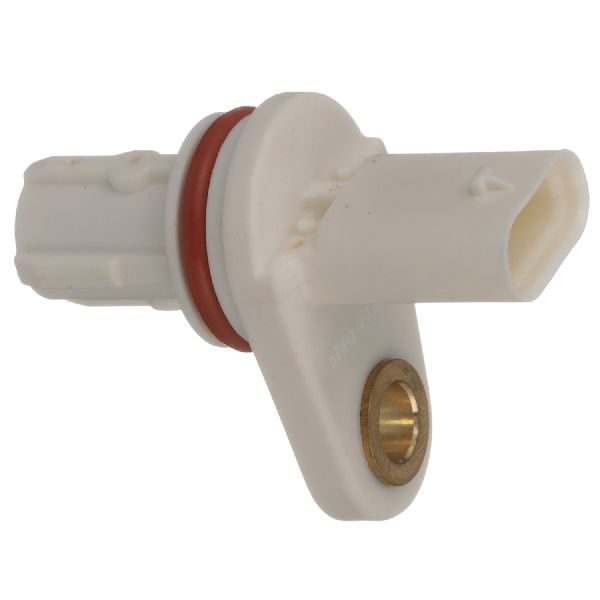
On a 2012-2020 Sonic 1.8L, code P0010 is almost always caused by a failed intake camshaft actuator solenoid (VVT solenoid). It's a very common and easy DIY fix, with the part costing between $25 and $65. It is highly recommended to replace both the intake and exhaust solenoids at the same time using quality OEM or equivalent parts.
- P0010 on your Sonic 1.8L almost certainly means you need a new intake VVT solenoid.
- This is a very easy and inexpensive DIY repair that requires only basic tools and about 30 minutes.
- Always check your oil level first, and plan to do an oil change with full synthetic 5W-30 oil along with the repair.
- Buy and replace both the intake and exhaust solenoids at the same time to prevent the same code from appearing for the other solenoid in the near future.
What's Unique About the 2012-2020 Chevrolet Sonic
The 1.8L Ecotec engine used in the Chevrolet Sonic is known for being particularly sensitive to oil quality and level, which directly impacts the VVT system. While VVT solenoid failure is common across many GM vehicles, on the Sonic and its platform-mate, the Chevrolet Cruze, it is an especially frequent and well-documented issue. Fortunately, the design of this engine makes the solenoids extremely accessible on the top-front of the engine, turning what could be a complex repair on other vehicles into a simple, beginner-friendly DIY task.
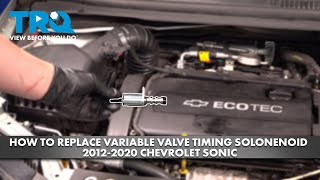
🎬 Watch: Step-by-step Chevrolet Sonic VVT solenoid replacement guideSymptoms You May Notice
- Check Engine Light is on
- Rough engine idle
- Reduced engine power and sluggish acceleration
- Decreased fuel economy
- Engine may stall when slowing down or at a stop
- Rattling or knocking noises from the engine
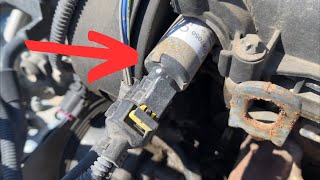
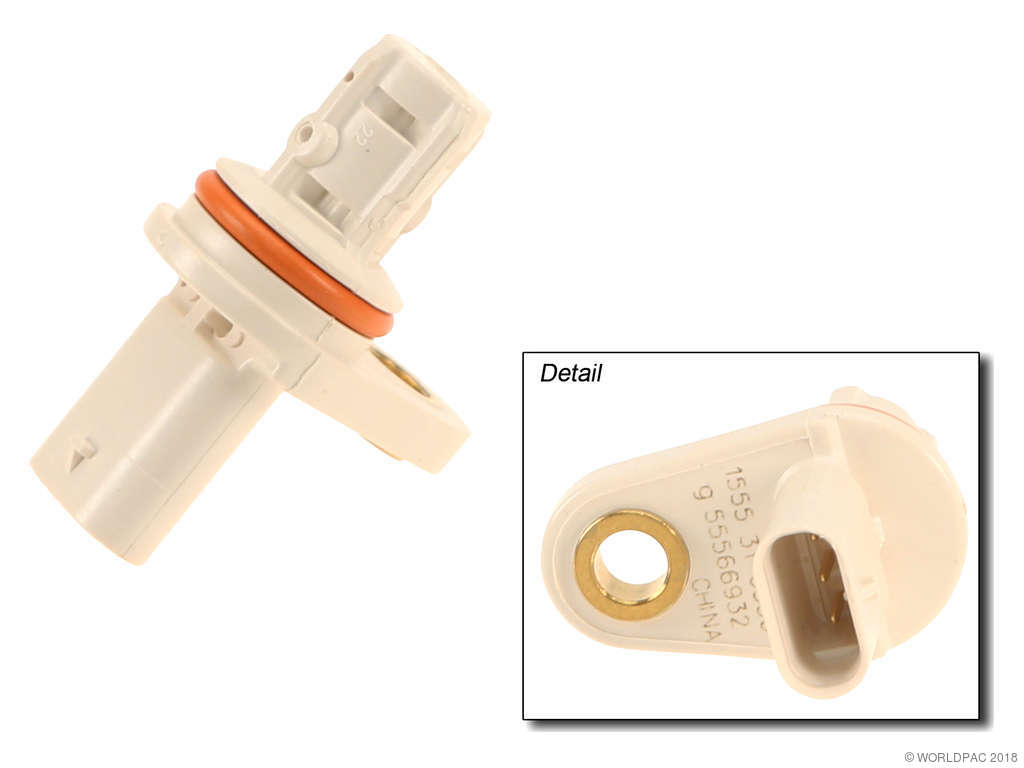
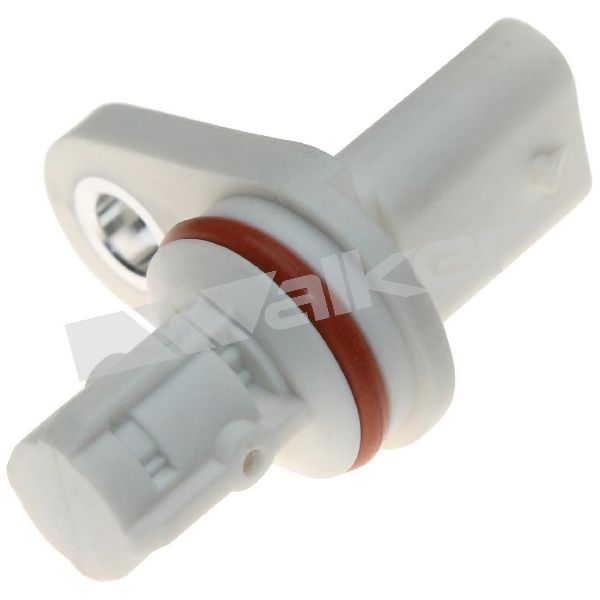
- Replacing the camshaft position *sensor* instead of the camshaft position actuator *solenoid*. P0010 is a code for the solenoid circuit, not the sensor. 🎬 Watch: How to diagnose and fix GM P0010 and P0011 codes
Most Likely Causes
- Failed Intake Camshaft Position Actuator Solenoid (VVT Solenoid) 🔴 High Probability → Shop Engine Camshaft These solenoids are a very common failure point on GM Ecotec engines. The internal electrical coil can fail, creating an open or short circuit. Additionally, the fine mesh screens on the solenoid can tear or become clogged with oil sludge, impeding function and triggering the P0010 code.
How to confirm: Swap the intake and exhaust solenoids, which are identical and located next to each other. Clear the codes and drive the vehicle. If the code changes to P0013 (Exhaust Camshaft Position Actuator Circuit), the solenoid is definitively bad. You can also test the solenoid's resistance with a multimeter; a reading outside the 8-13 ohm range indicates a failure. For example, NHTSA ODI #11342559 documented a failed intake solenoid that tested at 1.4k ohms, far exceeding the standard range.
Typical fix: Replace the faulty solenoid. It is best practice to replace both the intake and exhaust solenoids as a pair, since they are the same age and have been subjected to the same conditions. Using high-quality OEM (ACDelco) or reputable aftermarket (e.g., Delphi) parts is strongly recommended.
Est. part cost: $25-$65 - Low or Dirty Engine Oil 🟡 Medium Probability The VVT system is operated by oil pressure. Old, dirty, or low oil can cause sludge to build up and clog the fine mesh screens on the VVT solenoids, impeding their function and potentially causing a circuit fault over time.
How to confirm: Check the oil level on the dipstick and inspect the oil's condition. If it is low, black, or appears thick and sludgy, this is a likely contributor.
Typical fix: Perform an engine oil and filter change using the manufacturer-specified 5W-30 full synthetic oil. This should be done even if you are also replacing the solenoids.
Est. part cost: $35-$70 - Damaged Wiring or Electrical Connector ⚪ Low Probability
How to confirm: Visually inspect the wiring harness and connector going to the intake VVT solenoid. Look for any signs of frayed wires, corrosion on the pins, or a loose connection. Manufacturer Bulletin #PIP5553A notes that a chafed wiring jumper harness can lead to P0010 and P0011 codes, potentially causing a stall or a crank-no-start condition.
Typical fix: Repair the damaged wiring or clean the connector pins. If the connector itself is broken, it may need to be replaced.
Est. part cost: $5-$30
Rare But Worth Checking
- Leaking Camshaft Phaser (Actuator): → Shop Engine Camshaft GM TSB PI1425 describes a condition on 2014-2015 1.8L engines where the camshaft phaser (sprocket) itself can leak oil into the timing belt area. While this TSB is for an oil leak, a failing phaser can cause a variety of VVT codes, including P0010. This is a much more involved and expensive repair.
- Faulty Engine Control Module (ECM): This is very uncommon. All other possibilities, especially the VVT solenoid and wiring, should be thoroughly ruled out before considering ECM replacement.
Diagnosis Steps
- Check Engine Oil: Verify the oil level is full and the oil is clean. If low or dirty, perform an oil and filter change with 5W-30 full synthetic oil. Clear the codes and see if P0010 returns.
- Inspect Connector: Check the electrical connector on the intake VVT solenoid (the one closer to the firewall) for a secure connection, corrosion, or damaged wires.
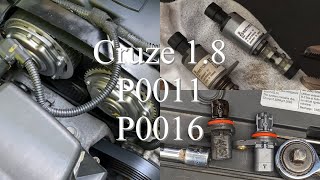
- Swap Solenoids: The easiest diagnostic test is to swap the intake and exhaust VVT solenoids. They are identical and held by one E10 external Torx bolt each. 🎬 Watch: Locate and replace the 1.8L Sonic solenoids Mark them, swap their positions, clear the codes, and drive the car. If the code returns as P0013 (exhaust circuit), you have confirmed the solenoid you moved is faulty.
- Test Solenoid Resistance (Optional): If you have a multimeter, unplug the solenoid and measure the resistance between its two pins. A healthy solenoid should read between 8 and 13 ohms. A reading of infinity (open circuit) or zero (short circuit) confirms it's bad.
- Check for Power: If the solenoid seems good, use a multimeter to check for voltage at the connector with the engine running. This can help determine if the problem is in the wiring or the ECM, but is a more advanced step.
Parts You'll Likely Need
- Intake & Exhaust Camshaft Position Actuator Solenoids (Set of 2)
(OEM #12679099 (Intake, supersedes 12655420), 12655421 (Exhaust))— This is the most common failure part for code P0010. It is highly recommended to replace both at the same time as a preventative measure. The original intake part number 12655420 has been superseded multiple times to the current number 12679099.
Trusted brands: ACDelco (OEM), Delphi, Dorman
OEM price range: $80-$130 (for a pair)
Aftermarket price range: $40-$75 (for a pair) - Engine Oil and Filter — Clean oil is essential for the VVT system to function. An oil change is a critical maintenance step when addressing this code.
Trusted brands: ACDelco Dexos1, Mobil 1, Pennzoil Platinum
OEM price range: $35-$70
Aftermarket price range: $35-$70
Related Codes That Often Appear With This One
- P0011 — P0011 indicates 'Camshaft Position Timing Over-Advanced'. If the solenoid is failing electrically (P0010), it can also cause the mechanical timing control to fail, triggering P0011. Seeing them together strongly points to a bad solenoid.
- P0013 — This is the equivalent circuit fault code for the exhaust camshaft solenoid. If you see P0010 and P0013 together, it's likely that both solenoids are failing, or there is a systemic oil or electrical issue affecting both.
Technical Service Bulletins (TSBs) & Recalls
- TSB PI1425: Diagnostic Tips for Oil Leak from Timing Belt Area - This bulletin from February 2015 addresses oil leaks from the camshaft sprockets on 2014-2015 models with the 1.8L engine. It instructs technicians on how to identify a leaking phaser, which can be a root cause for VVT system faults.
- Bulletin #PIP5553A: This manufacturer service bulletin notes that a SES lamp with DTC P0010 or P0011 may be caused by a wiring jumper harness chafed at the bolt at the X154 connector.
Platform-Specific Known Issues
- Avoid Cheap Aftermarket Solenoids: Multiple owner accounts on forums like Reddit and CruzeTalk emphasize the importance of using high-quality ACDelco or Delphi solenoids. Many have reported buying cheap, unbranded solenoids from online marketplaces only to have them fail within a few months, causing the P0010 or P0011 code to return. Spending slightly more on a quality part is often cheaper in the long run.
Mechanic-Grade Diagnostic Values
- Camshaft Position Actuator Solenoid Resistance — expected: 8 to 13 Ohms. Failure: A reading of infinity (open circuit) or near zero (short circuit) indicates a failed solenoid.
- Voltage at Solenoid Connector (harness side) — expected: One pin should have battery voltage (approx. 12V) with the key on, engine off. The other pin is the control wire from the ECM.. Failure: No voltage on the power pin indicates a problem upstream in the fuse or wiring. The control wire is pulse-width modulated, so it is best tested with an oscilloscope or by using a scan tool's bidirectional control.
Scan Tool Commands That Help
- GDS2 (GM Global Diagnostic System 2): Camshaft Position Actuator Control — This bidirectional function allows a technician to command the solenoid to a specific percentage (e.g., 0%, 25%, 50%) while the engine is running. This tests the entire circuit, from the ECM to the solenoid, and the solenoid's mechanical function. If the engine RPM changes or stumbles when the command is sent, it confirms the circuit and solenoid are working. If nothing happens, it points to a wiring, solenoid, or ECM driver issue. This can confirm a bad solenoid without having to swap it with the exhaust solenoid.
Wiring & Ground Locations
- K20 ECM Connector X1 — The main engine control module, located in the engine bay.. Pin 47 (BN/GY wire) is the control circuit for the Intake Camshaft Position Actuator Solenoid. Pin 48 (GN/GY wire) is the low reference circuit. Testing for continuity and shorts between these pins and the solenoid connector can diagnose wiring faults.
- Intake Camshaft Position Actuator Solenoid Connector — Top of the engine valve cover, closer to the firewall.. This is the direct connection to the component. Pin 1 is the control circuit (from ECM Pin 47), and Pin 2 is the ignition voltage supply. Checking for voltage at Pin 2 and for a solid connection on both pins is a primary diagnostic step.
- Engine Block Ground — There are several grounds, but a key one is often located on the engine block or transmission housing, connected to the chassis via a braided strap.. While P0010 is a specific circuit code, a poor main engine ground can cause a host of bizarre electrical issues and codes. Verifying the main grounds are clean and tight is a good practice when troubleshooting any electrical fault.
Real Owner Repair Stories
- CruzeTalk Forum Member (Chevrolet Cruze 1.8L (shared engine)) — P0010 and P0011 codes, rough idle, stalling.
❌ Tried (didn't work) Replaced both intake and exhaust VVT solenoids with new aftermarket parts., Performed multiple oil changes.
✅ What actually fixed it The wiring harness to the intake solenoid had chafed against a sharp edge on the engine block. The insulation wore through, causing an intermittent short to ground. The fix was to repair the damaged wire and secure the harness away from the sharp edge with a zip tie. - NHTSA ODI #11183476 — An owner reported the vehicle shuts off on a daily basis after warming up. Despite replacing both intake and exhaust solenoids, the P0010 and P0011 codes persisted.
- NHTSA ODI #10735463 — One owner experienced hesitation when pulling off from a stopped position. A P0010 code was present, but replacing the camshaft sensor did not resolve the issue.
- NHTSA ODI #11150787 — A report describes the engine shutting off when coming to a stop or idling, with codes P0010 and P0011 triggered despite the vehicle being well-maintained.
OEM Part Supersession History
12655420→12679099— The original solenoids were prone to premature failure. The updated part number represents a revised design intended to improve durability and resistance to oil contamination and internal coil failure.
Model Year Variations Within This Range
- 2012-2016 vs 2017-2020: The Chevrolet Sonic received a facelift for the 2017 model year, which included cosmetic changes and updated interior technology. However, the 1.8L LUW/LWE engine and its VVT system remained fundamentally the same throughout the entire 2012-2020 production run for the North American market. The diagnosis and repair for code P0010 are identical across all years.
Diagnostic Flowchart
Other Known Issues on This Vehicle
Issues unrelated to this code that are worth knowing about as an owner of this generation:
- Cracked Plastic Thermostat Housing / Water Outlet 🔴 High — Very common, often failing after 60,000-80,000 miles. Leads to coolant leaks and potential overheating.
- PCV System Failure 🟠 Medium — The PCV system on the 1.8L engine can fail, leading to increased oil consumption, oil leaks from seals (including around the oil cap), and rough running. The issue is often integral to the valve cover.
- Water Pump Failure 🔴 High — The original water pump often uses a plastic impeller which can break, causing a sudden overheating condition without a visible coolant leak. Failure is common between 60,000 and 100,000 miles.
- Cracked Rubber Intake Air Duct 🟡 Low — The rubber air duct between the air filter box and the throttle body can become brittle and crack over time, causing unmetered air to enter the engine, which can lead to lean codes and rough running.
Used vs. New Parts: Buying Guide for This Vehicle
When a used part is the smart pick: For this specific repair, using a used part is strongly discouraged. The VVT solenoids are a known high-failure-rate item due to internal wear and clogging from oil debris. A used solenoid from a junkyard has an unknown history and is likely to have a very short remaining service life, if it works at all.
What to inspect on the donor part:
- Not applicable, as used parts are not recommended for this component.
OEM-only on this vehicle (don't cheap out):
- While not strictly 'OEM-only', it is critical to use either a genuine ACDelco part or a top-tier aftermarket equivalent. Cheap, unbranded solenoids from online marketplaces are notorious for failing within weeks or months, causing the code to return.
Aftermarket brands forum-validated for this vehicle:
- ACDelco (OEM)
- Delphi (Often an OEM supplier)
- Standard Motor Products (SMP)
- NGK/NTK
Brands owners have reported issues with on this vehicle:
- Unbranded, 'no-name' parts from Amazon, eBay, or other online marketplaces without a reputable brand name and warranty.
Real Owner Stories
Aggregated from forums and TSBs cited above. Mileages and costs reflect what owners reported in those sources.
2017 Chevrolet Sonic LS 1.8L — 68759 miles
Symptoms: Persistent P0011 check engine light, burning oil much faster.
What fixed it: Unresolved in the thread; the owner had replaced solenoids five times and performed timing belt/cam seal services, but suspected a wiring issue to the Bank 1 solenoid.
Source hint: reddit.com/r/MechanicAdvice
2017 Chevrolet Sonic 1.8L
Symptoms: Troubleshooting a P0011 mechanical code.
What fixed it: Replacing the VVT solenoid is highlighted as the primary fix for this platform.
Source hint: reddit.com/r/ChevySonic thread titled '2017 Sonic with P0011'
Related OBD-II Codes
Frequently Asked Questions
I have a 2014 Chevrolet Sonic 1.8L with an oil leak near the timing belt; could this be related to my P0010 code?
Can I just swap the intake and exhaust solenoids on my Sonic to see if the part is bad?
What brand of VVT solenoid should I buy for my 2012-2020 Sonic?
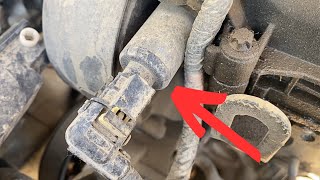
Where is the intake VVT solenoid located on the 1.8L Ecotec engine?
What is the correct resistance for a healthy VVT solenoid on a Chevy Sonic?
Could my Sonic's rough idle and P0010 code be caused by the oil I'm using?
Helpful Videos
We Have This Part in Stock



The information in this article is provided for general reference and educational purposes only. Vehicle specifications, procedures, and part compatibility can vary by production date, trim level, and region. Always consult your vehicle's factory service manual and verify part numbers before purchasing or performing repairs. Safety-critical components such as airbags, seat belts, and braking systems should be installed by a qualified professional.
- Chevrolet Sonic:
- 🧭 Diagnostic Flowchart
- 🎬 Helpful Videos
- 🛍️ Shop This Part
- What's Unique About the 2012-2020 Chevrolet Sonic
- Symptoms You May Notice
- Most Likely Causes
- Rare But Worth Checking
- Diagnosis Steps
- Parts You'll Likely Need
- Related Codes That Often Appear With This One
- Technical Service Bulletins (TSBs) & Recalls
- Platform-Specific Known Issues
- Mechanic-Grade Diagnostic Values
- Scan Tool Commands That Help
- Wiring & Ground Locations
- Real Owner Repair Stories
- OEM Part Supersession History
- Model Year Variations Within This Range
- Other Known Issues on This Vehicle
- Used vs. New Parts: Buying Guide for This Vehicle
- Real Owner Stories
- 2017 Chevrolet Sonic LS 1.8L — 68759 miles
- 2017 Chevrolet Sonic 1.8L
- Related OBD-II Codes
- Frequently Asked Questions
- 🎟️ Get 5% Off