

P0010 on 2013-2018 Ford Focus ST: 'A' Camshaft Actuator Circuit Causes and Fixes
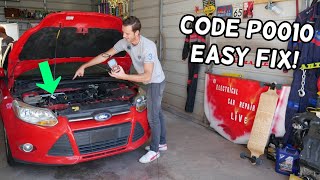
On a 2013-2018 Ford Focus ST, code P0010 almost always indicates a failed intake Variable Camshaft Timing (VCT) solenoid. This is a common, DIY-friendly repair with the part costing between $30 and $70. The solenoids are under the valve cover, so the gasket must be replaced at the same time.
- P0010 is an electrical circuit code for the intake VCT solenoid, not a mechanical timing issue.
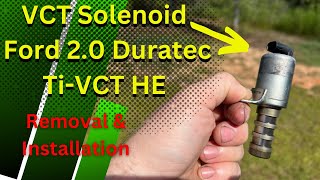
- The most likely cause is a failed intake VCT solenoid (part # CJ5Z-6M280-A).
- A simple and effective diagnostic is to swap the identical intake and exhaust solenoids to see if the trouble code follows the part, changing to P0013.
- Because the solenoids are under the valve cover, you must also replace the valve cover gasket (part # CV6Z-6584-A) during the repair.
- Always check engine oil level and condition first, as low or dirty oil can cause or contribute to VCT system faults.
- For 2013-2014 models, be aware of Safety Recall 14S17 regarding potential wiring harness issues.
What's Unique About the 2013-2018 Ford Focus ST
The 2.0L EcoBoost in the Focus ST uses Ford's Twin Independent Variable Camshaft Timing (Ti-VCT) system, which is operated by oil pressure controlled by two solenoids. While the system is generally reliable, the VCT solenoids are a known failure point. The P0010 code specifically points to an electrical failure within the intake solenoid itself, which is the most common reason for this code on the Focus ST. For 2013-2014 models, it's also worth noting a recall (14S17) was issued for faulty engine wiring harness splices that could cause various drivability issues and codes, though this is a less direct cause for a specific circuit code like P0010.
Symptoms You May Notice
- Check Engine Light is on
- Rough or unstable idle
- Reduced engine power and poor acceleration
- Decreased fuel economy
- Engine may hesitate or stall when coming to a stop
- A rattling or clicking noise from the top of the engine, which may be intermittent
- Replacing the camshaft position sensor. The sensor reads the camshaft's position, but P0010 is a fault in the actuator's *circuit*. The sensor is not part of this circuit.
Most Likely Causes
- Failed Intake VCT (VVT) Solenoid 🔴 High Probability The internal coil windings of the solenoid can fail over time due to heat and vibration, creating an open or short circuit that the PCM detects. This is the most common failure for a P0010 code on this platform.
How to confirm: Swap the intake and exhaust VCT solenoids (they are identical parts, #CJ5Z-6M280-A). If the code changes to P0013 ('B' Camshaft Position Actuator Circuit), the solenoid is bad. Alternatively, test the solenoid's resistance with a multimeter; it should be between 6.9 and 7.9 ohms. An open circuit (infinite resistance) or short (near-zero ohms) confirms failure.
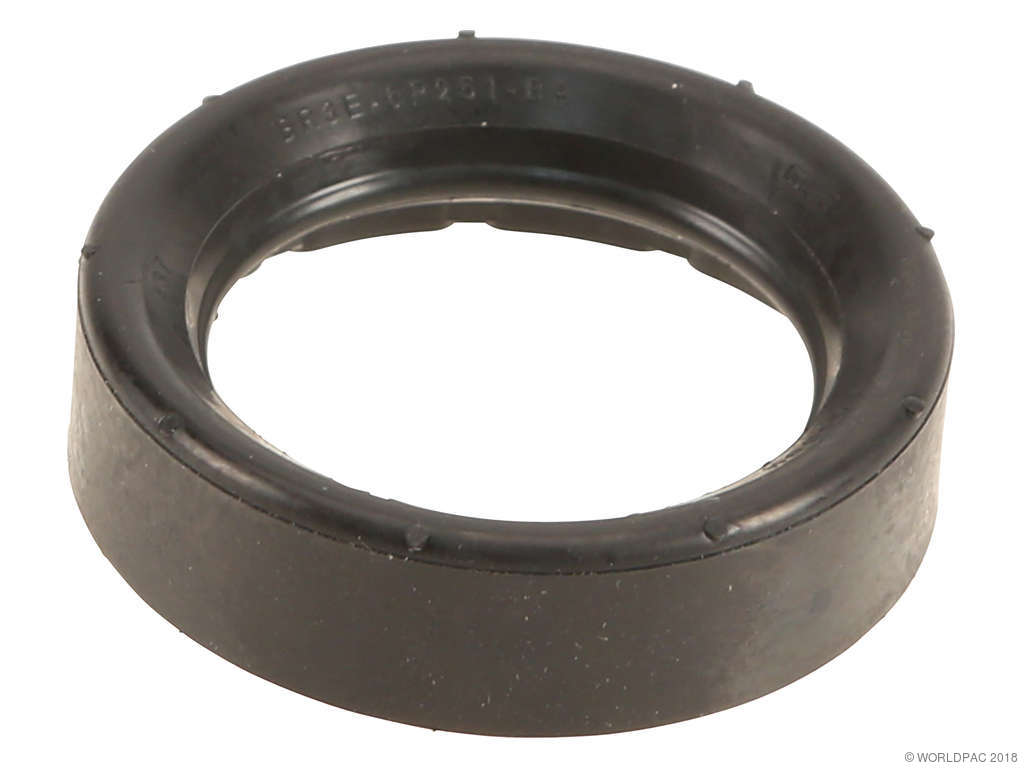
Typical fix: Replace the faulty intake VCT solenoid. Since the solenoids are under the valve cover, the valve cover gasket and spark plug tube seals must also be replaced. Using an OEM Motorcraft part is highly recommended for longevity.
Est. part cost: $30-$70 - Low or Dirty Engine Oil ⚪ Low Probability The VCT system is hydraulic and relies on clean oil at the proper pressure. While low/dirty oil typically causes performance codes (like P0011/P0012), severe sludge can clog the fine mesh screens on the solenoid, causing it to stick or strain, which could potentially be flagged as a circuit fault.
How to confirm: Check the engine oil dipstick for level and inspect the oil's condition. If it's low, dark, or sludgy, this is a critical first step to address before replacing parts.
Typical fix: Perform an oil and filter change using the correct grade of oil (5W-30 Full Synthetic meeting Ford's specification).
Est. part cost: $40-$80 - Wiring or Connector Issue ⚪ Low Probability On 2013-2014 models, Safety Recall 14S17 addressed insufficiently compressed wiring harness splices that could cause high resistance and various electrical issues. More commonly, oil can leak from the valve cover and contaminate the solenoid's electrical connector, causing a poor connection and triggering a circuit code.
How to confirm: Visually inspect the wiring and connector for the VCT solenoid (once the valve cover is removed) for any signs of damage, corrosion, or oil saturation. Check for battery voltage at the power pin of the connector with the key on, engine off.
Typical fix: Clean the oil from the connector with electrical contact cleaner and ensure a secure connection. If the harness is damaged, repair the affected wires.
Est. part cost: $5-$100
Rare But Worth Checking
- Faulty Powertrain Control Module (PCM): This is extremely rare. The PCM's internal driver for the VCT solenoid circuit can fail. All other possibilities (solenoid, wiring, oil) should be exhaustively ruled out before considering PCM replacement.
Diagnosis Steps
- Check the engine oil level and condition. Top up or change if necessary with full synthetic 5W-30 oil. This is a critical first step.
- Scan the vehicle for other codes. Note if performance codes like P0011 or P0012 are also present.
- The most definitive and cost-effective diagnostic step is to swap the intake and exhaust VCT solenoids. They are identical parts. Clear the codes, run the engine, and re-scan.
- If the code returns as P0013 ('B' Camshaft Position Actuator Circuit - Exhaust), the solenoid you moved is faulty and needs replacement.
- If the P0010 code returns, the problem is likely in the wiring to the intake solenoid or the PCM.
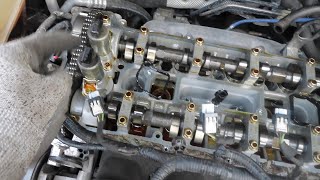
- To test further, remove the valve cover to access the wiring and solenoids. Visually inspect the harness and connector for the intake VCT solenoid for oil contamination, corrosion, or damage.
- With the key on, engine off, use a multimeter to check for battery voltage at the power pin on the solenoid connector.
- If wiring and voltage checks are good, test the original solenoid's resistance. It should be between 6.9 and 7.9 ohms. A reading of infinity (Open Loop) or near zero ohms confirms a bad solenoid.
- If all components and wiring test good, a PCM fault is possible, but professional diagnosis is recommended at this stage.
Parts You'll Likely Need
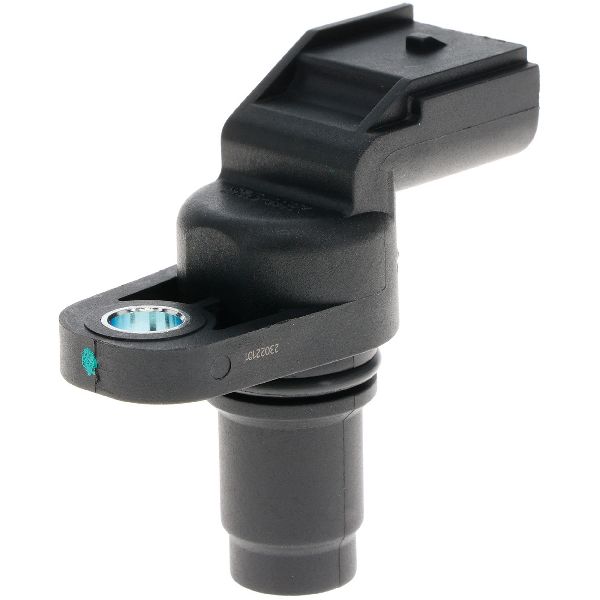
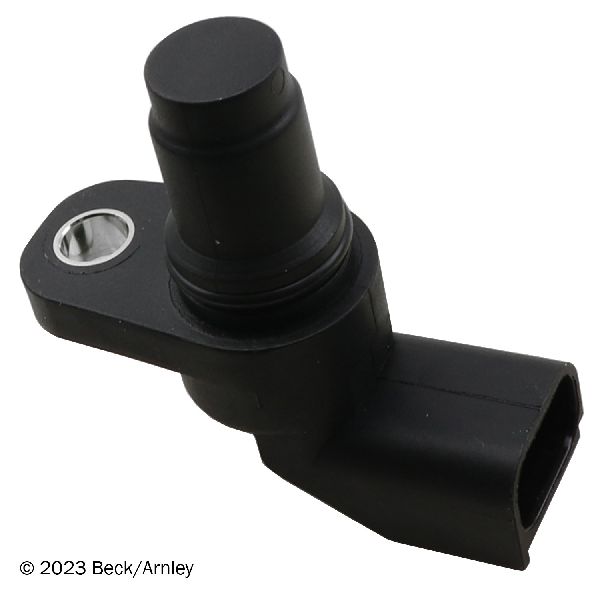
- Variable Camshaft Timing (VCT) Solenoid
(OEM #CJ5Z-6M280-A)— This is the most common cause of a P0010 code, due to internal electrical failure. Both intake and exhaust solenoids are the same part number.
Trusted brands: Motorcraft, Dorman
OEM price range: $50-$70
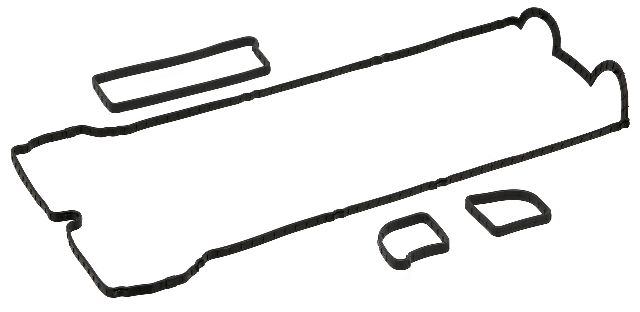
Aftermarket price range: $30-$50 - Valve Cover Gasket
(OEM #CV6Z-6584-A)— Required for replacing the VCT solenoids, which are located under the valve cover. The old gasket is a single-use item and should not be reused to prevent oil leaks. 🎬 Watch: How to replace the valve cover gasket
Trusted brands: Motorcraft, Fel-Pro
OEM price range: $40-$60
Aftermarket price range: $25-$40
Related Codes That Often Appear With This One
- P0011 — P0011 is a performance code ('Intake 'A' Camshaft Position Timing Over-Advanced'). If the solenoid's circuit fails (P0010), it can get stuck in a position that causes the mechanical timing to be incorrect, triggering P0011. Fixing the P0010 electrical issue usually resolves P0011.
- P0012 — P0012 is a performance code ('Intake 'A' Camshaft Position Timing Over-Retarded'). This can occur alongside P0010 if the solenoid fails in a way that retards timing, or if low/dirty oil is the root cause of the entire VCT system malfunction.
Technical Service Bulletins (TSBs) & Recalls
- TSB 13-09-07 - Preceded Safety Recall 14S17 for engine wiring harness issues on 2013-14 models. This TSB specifically addressed drivability concerns with DTCs P0106 or P0236 caused by bad signal return splices (S132, S133).
Platform-Specific Known Issues
- Safety Recall 14S17 - Engine Wiring Splice Repair: Affecting 2013-2014 Focus ST models built from Feb 14, 2012, to Oct 14, 2013. Insufficiently crimped splices in the engine wiring harness could cause high resistance in sensor circuits, leading to stalling, hesitation, and various DTCs. The fix involves dealers repairing the splices. While not a direct cause for P0010 alone, a faulty harness could be a root cause if other electrical codes are present.
- Real-World Repair Story: P0010 + P0012 after Low Oil: A 2013 Ford Fusion 2.0L EcoBoost owner on Reddit reported getting a P0012 code and engine rattle after a low oil situation. After topping up the oil and replacing the intake VCT solenoid, the rattle stopped but the codes changed to P0010 and P0012, which would not clear. This highlights how an oiling issue can lead to a persistent electrical code, potentially from oil contamination inside the electrical connector.
Mechanic-Grade Diagnostic Values
- VCT Solenoid Resistance — expected: 6.9 to 7.9 Ohms. Failure: Infinite resistance (open circuit) or near-zero Ohms (short circuit). A wider range of 7-14 Ohms is generally acceptable for a functional check.
- VCT Solenoid Connector Voltage (Key On, Engine Off) — expected: Battery voltage (approx. 12V) at the power supply pin.. Failure: No voltage indicates a problem with the power supply circuit (fuse, wiring).
- FORScan Live Data: VCT Advance Error PID (VCT_INT_DIF for intake) — expected: Should hover near 0 degrees at idle when the engine is warm and in closed-loop.. Failure: A large, persistent error value, or a slow, lagging response to changes in the commanded position (VCT_INT_CMD), can indicate a failing solenoid or oil pressure issue. This is more common with performance codes (P0011/P0012) but can be a clue.
- Minimum Oil Pressure at Idle (Warm Engine) — expected: 15 PSI minimum. Failure: Pressure below 15 PSI at idle can cause erratic VCT operation, though this typically sets performance codes, not circuit codes.
Hidden / Shadow Codes Worth Checking
- Mode $06, Test ID $53 (on some models): Mode $06 data can show misfire counts per cylinder before they are high enough to set a DTC. While not directly for P0010, if the VCT issue is causing rough running, checking misfire data can be useful. (see via Advanced OBD-II scanner with Mode 6 functionality.)
Scan Tool Commands That Help
- FORScan or Ford IDS: Active Test / Output Control for VCT Solenoid (VVT CTRL) — This allows you to command the solenoid on and off directly. With the engine running at idle, activating the solenoid should cause the engine to run rough or stall. If there is no change in engine operation, the solenoid is likely stuck or not actuating, confirming a mechanical failure even if the circuit is electrically sound.
- FORScan or Ford IDS: Monitor PIDs: VCT_INT_CMD (Commanded), VCT_INT_ACT (Actual), VCT_INT_DIF (Difference/Error) — Graphing these PIDs while driving allows you to see if the PCM is commanding a change, if the solenoid is responding, and how large the error is between the desired and actual camshaft position. A large, unresponsive 'Actual' reading despite a changing 'Commanded' value points to a solenoid or oil pressure problem.
Wiring & Ground Locations
- VCT Solenoid Connector — Under the valve cover, connected to the front (intake side) and rear (exhaust side) VCT solenoids.. This is the primary point for electrical testing. Pin 1 is typically the 12V power supply, and Pin 2 is the ground-side control wire from the PCM. The connector is prone to oil contamination from a leaking valve cover gasket, which can cause a bad connection and trigger P0010.
- Engine Ground (G106/G107) — The main engine-to-chassis ground on a Ford Focus is typically located on the driver's side frame rail, underneath the air filter box.. A poor engine ground can cause a floating voltage reference for all engine sensors and actuators. This can lead to numerous, seemingly unrelated electrical codes, including circuit faults like P0010. It's a crucial point to check and clean if multiple electrical codes appear simultaneously.
- PCM Connector (C175B) — The main 154-pin PCM connector is located in the engine bay, often near the firewall or battery.. If the solenoid and its local wiring test good, the next step is to check for continuity on the control wire from the solenoid connector all the way back to the corresponding pin at the PCM connector. This will identify any breaks in the harness.
OEM Part Supersession History
CJ5Z-6M280-A→No direct supersession found for this specific part number, it appears to be the consistent part for this application.— N/A
Heads up: The part CJ5Z-6M280-A is used across a wide range of Ford 2.0L, 2.3L, and 2.5L engines, including the Focus ST/RS and EcoBoost Mustang, indicating it's a common and stable part design.
Model Year Variations Within This Range
- 2013-2014: Models built between Feb 14, 2012, and Oct 14, 2013, were subject to Safety Recall 14S17 for poorly crimped wiring harness splices. This could cause high resistance on various sensor and actuator circuits, making a wiring fault a slightly higher possibility on these specific years compared to later models.
Diagnostic Flowchart
Other Known Issues on This Vehicle
Issues unrelated to this code that are worth knowing about as an owner of this generation:
- EVAP Canister Purge Valve Failure 🔴 High — Very common. Often fails every 50,000 miles. Symptoms include rough idle after refueling, stalling, and difficulty starting. Triggers DTC P1450. (Ref: Safety Recall 18S32 (NHTSA 18V735) was issued for 2012-2018 models.)
- Rear Motor Mount (RMM) Failure 🟠 Medium — The factory fluid-filled RMM is a known weak point and often fails, especially on tuned cars. Failure leads to excessive engine movement, harsh 1-2 shifts, and a 'thunk' on acceleration. Many owners upgrade to a stiffer aftermarket mount.
- Low-Speed Pre-Ignition (LSPI) 🔴 High — A risk inherent to many direct-injection turbo engines. Occurs when applying heavy throttle at low RPM in a high gear (lugging the engine), which can cause catastrophic piston/ringland damage. Prevention involves using the correct API SP-rated oil and avoiding low-RPM, high-load situations.
- Manual Transmission Synchronizer Failure 🟠 Medium — The Getrag MMT6 transmission can develop weak or broken synchronizer tabs, leading to grinding shifts, difficulty getting into gear, or complete gear failure. It is more common on aggressively driven or tracked cars.
- Carbon Buildup on Intake Valves 🟡 Low — As a direct-injection engine, fuel does not wash over the intake valves, leading to gradual carbon buildup over time. This can cause reduced performance and misfires at higher mileage (typically 80k+ miles). Walnut blasting is the recommended cleaning procedure.
Used vs. New Parts: Buying Guide for This Vehicle
When a used part is the smart pick: It is almost never a smart choice to buy a used VCT solenoid. It is an electro-mechanical wear item that is relatively inexpensive new. The labor to replace it (removing the valve cover) is significant enough that you do not want to risk using a part with an unknown history.
Donor-vehicle mileage cap: roughly under 10000 miles for the part to have meaningful remaining life.
What to inspect on the donor part:
- If forced to use a used part in an emergency, source it from the lowest mileage vehicle possible.
- Inspect the fine mesh screens for any tears, clogging, or metallic debris. Any debris is a major red flag for the donor engine's health.
- Test the resistance with a multimeter before purchase; it must be within the 6.9-7.9 Ohm spec.
OEM-only on this vehicle (don't cheap out):
- Variable Camshaft Timing (VCT) Solenoid
Aftermarket brands forum-validated for this vehicle:
- NTK is generally considered a reliable OEM-quality alternative if Motorcraft is unavailable.
Brands owners have reported issues with on this vehicle:
- Dorman: Forum consensus across multiple Ford platforms is highly critical of the reliability and longevity of Dorman electronic components, especially VCT solenoids. Many users report premature failure, sometimes within months, leading to doing the job twice.
Real Owner Stories
Aggregated from forums and TSBs cited above. Mileages and costs reflect what owners reported in those sources.
2013 Ford Fusion 2.0L EcoBoost
Symptoms: Engine rattle and a P0012 code following a low oil situation. After replacing the solenoid, the rattle stopped but the codes changed to P0010 and P0012 and would not clear.
What fixed it: The owner suspected oil contamination inside the electrical connector was causing a persistent circuit fault even after the solenoid was replaced.
Source hint: Reddit r/MechanicAdvice: 2013 Ford Fusion 2.0 EcoBoost – P0010 + P0012, hard start...
2013-2018 Ford Focus ST 2.0L EcoBoost
Symptoms: Check engine light with P0010 code; symptoms often include rough idle and reduced engine power.
What fixed it: Swapping the intake and exhaust solenoids to confirm the fault moved (changing the code to P0013), followed by replacing the faulty intake VCT solenoid with a Motorcraft part.
Source hint: FocusST.org & r/FocusST Forums
Related OBD-II Codes
Frequently Asked Questions
Does Safety Recall 14S17 apply to my 2013-2014 Focus ST, and could it cause a P0010?
Can I test if the intake VCT solenoid is bad without buying a new part?
What is the specific resistance range for a healthy VCT solenoid on the 2.0L EcoBoost?
Is there a TSB for wiring issues on the 2013-2014 Focus ST?
What oil should I use to prevent VCT system issues in my Focus ST?
Do I need to replace anything else when changing the VCT solenoid?
Helpful Videos
We Have This Part in Stock


The information in this article is provided for general reference and educational purposes only. Vehicle specifications, procedures, and part compatibility can vary by production date, trim level, and region. Always consult your vehicle's factory service manual and verify part numbers before purchasing or performing repairs. Safety-critical components such as airbags, seat belts, and braking systems should be installed by a qualified professional.
- Ford Focus ST:
- 🧭 Diagnostic Flowchart
- 🎬 Helpful Videos
- 🛍️ Shop This Part
- What's Unique About the 2013-2018 Ford Focus ST
- Symptoms You May Notice
- Most Likely Causes
- Rare But Worth Checking
- Diagnosis Steps
- Parts You'll Likely Need
- Related Codes That Often Appear With This One
- Technical Service Bulletins (TSBs) & Recalls
- Platform-Specific Known Issues
- Mechanic-Grade Diagnostic Values
- Hidden / Shadow Codes Worth Checking
- Scan Tool Commands That Help
- Wiring & Ground Locations
- OEM Part Supersession History
- Model Year Variations Within This Range
- Other Known Issues on This Vehicle
- Used vs. New Parts: Buying Guide for This Vehicle
- Real Owner Stories
- 2013 Ford Fusion 2.0L EcoBoost
- 2013-2018 Ford Focus ST 2.0L EcoBoost
- Related OBD-II Codes
- Frequently Asked Questions
- 🎟️ Get 5% Off