

P0010 on 2013-2019 Ford Fusion Hybrid: 'A' Camshaft Actuator Circuit Causes and Fixes
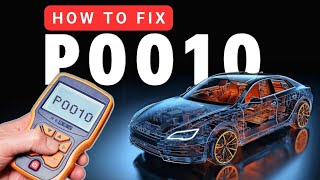
P0010 on a 2.0L Fusion Hybrid indicates an electrical fault with the intake VCT solenoid. The most common fix is replacing the solenoid, but it's located under the valve cover, making the job more complex. Always check your oil level and condition first, as low or dirty oil is a primary cause. This issue also affects the Ford C-Max and Lincoln MKZ Hybrids with the same engine.
- P0010 is an electrical circuit code for the intake VCT solenoid.
- Before any repairs, check your engine oil. Low, old, or dirty 5W-20 oil is a primary cause of this code.
- The most likely failed part is the VCT solenoid (Motorcraft part #CM5Z-6M280-C).
- On the 2.0L Fusion Hybrid, the solenoids are under the valve cover, making replacement a 2-3 hour job that requires a new valve cover gasket.
- A definitive DIY diagnosis is to swap the intake and exhaust solenoids; if the code follows the solenoid (changing to P0013), the solenoid is confirmed bad.
What's Unique About the 2013-2019 Ford Fusion
The 2.0L Atkinson-Cycle engine in the Fusion Hybrid is generally reliable, but its VCT system is sensitive to oil condition. Ford has issued technical service bulletins (TSBs) acknowledging that small debris in the oil can cause the VCT solenoids to stick or fail. The most significant platform-specific issue is the location of the VCT solenoids; unlike many other Ford engines where they are easily accessible, on this hybrid engine they are located underneath the valve cover. This makes a relatively simple part replacement a more labor-intensive job that requires a new valve cover gasket.
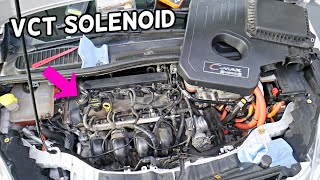
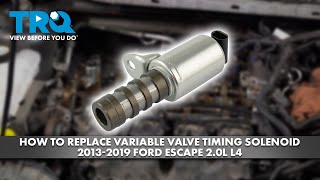
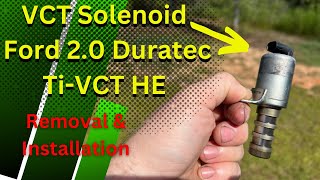
🎬 Watch: 2.0L hybrid VCT solenoid location and replacement walkthroughSymptoms You May Notice
- Check Engine Light is on
- Rough or unstable idle
- Reduced fuel economy
- Poor engine performance and hesitation during acceleration
- Engine stalling at low speeds
- Replacing the Camshaft Position Sensor (CPS): The P0010 code is for the actuator circuit, not the sensor. Replacing the sensor will not fix this electrical circuit code.
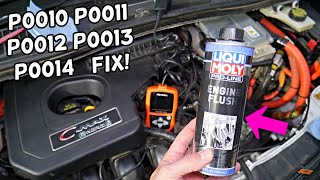
- Replacing the timing chain or phasers: While these can cause performance-related timing codes (like P0011 or P0012), they are not the cause of a P0010 electrical circuit code. Always diagnose the circuit first. 🎬 Watch: Diagnostic guide for Ford P0010 through P0014 codes
Most Likely Causes
- Low, Dirty, or Incorrect Viscosity Engine Oil 🔴 High Probability The VCT system is hydraulically operated and highly sensitive to oil pressure and cleanliness. Sludge or debris can clog the small passages in the VCT solenoids, causing them to stick or fail electrically.
How to confirm: Check the oil dipstick for a low level. Inspect the oil on the dipstick or on a paper towel for dark, thick, or sludgy consistency. The correct oil is SAE 5W-20.
Typical fix: Change the engine oil and filter using the manufacturer-specified 5W-20 oil. Consider using an engine flush product before the oil change to help clear debris. Clear the codes and see if P0010 returns.
Est. part cost: $30-$70 - Faulty Intake VCT Solenoid 🔴 High Probability This is the most common part to fail for this code. The solenoid can fail electrically (causing P0010) or mechanically by sticking due to oil debris, which is a known issue on this platform per Ford TSBs.
How to confirm: After verifying oil is good, the definitive test is to swap the intake and exhaust VCT solenoids (they are identical). Clear codes and drive. If the code changes to P0013 (Exhaust Camshaft Position Actuator Circuit), the solenoid you moved is bad. This requires removing the valve cover.
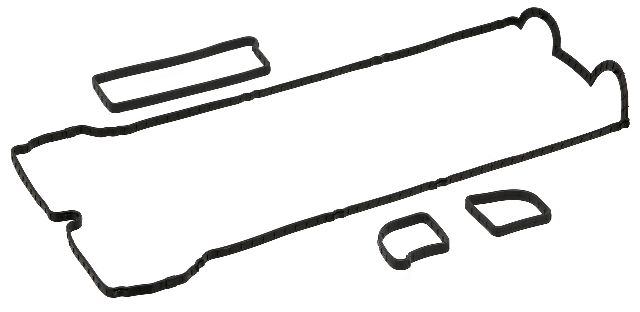
Typical fix: Replace the faulty VCT solenoid. Since the valve cover must be removed for this job, the valve cover gasket set must also be replaced. Some owners have had success removing and cleaning the solenoid with carburetor cleaner before opting for replacement.
Est. part cost: $50-$130 - Damaged Wiring or Poor Connection ⚪ Low Probability
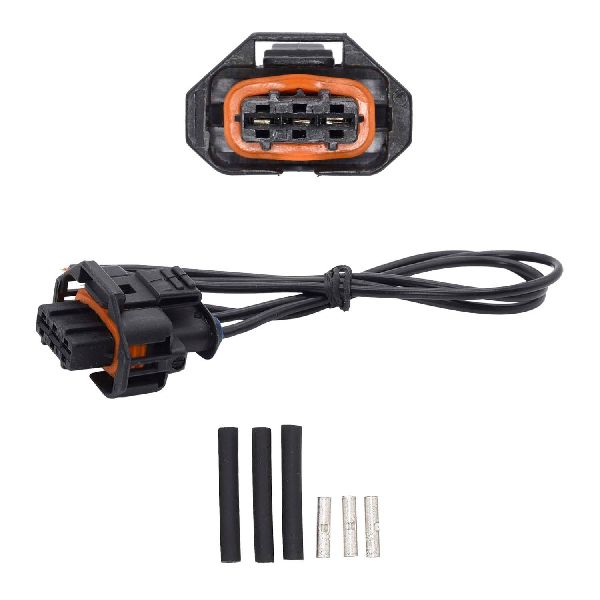
How to confirm: Visually inspect the wiring harness leading to the valve cover where the solenoids connect. Check for any signs of frayed wires, corrosion, or oil saturation in the connectors. A multimeter can be used to check for continuity and voltage at the solenoid connector.
Typical fix: Repair or replace the damaged section of the wiring harness or clean the connector contacts.
Est. part cost: $5-$50
Rare But Worth Checking
- Faulty Powertrain Control Module (PCM): This is extremely rare. The PCM should only be considered after all other possibilities, including wiring and the solenoid itself, have been exhaustively tested and ruled out.
Diagnosis Steps
- Read the code with an OBD-II scanner and confirm it is P0010.
- Check the engine oil level and condition. If it is low, dirty, or the wrong viscosity (should be 5W-20), perform an oil and filter change. Consider an engine flush. 🎬 Watch: Understanding P0010 causes and how to fix them Clear the code and test drive.
- If the oil is good, inspect the visible portion of the engine wiring harness for any obvious damage, especially around the valve cover.
- Using a bidirectional scan tool, access the PCM functions and command the VCT solenoid on and off. Per TSB SSM 50067, cycle the solenoid 10 times to attempt to dislodge any debris that may be causing it to stick. If the code clears and performance improves, the issue was likely debris.
- To definitively test the solenoid, you must remove the valve cover.
- Once the valve cover is off, swap the intake ('A') and exhaust ('B') VCT solenoids, as they are identical parts.
- Reinstall the valve cover (you can use the old gasket for this temporary test), clear the codes, and run the engine.
- If the trouble code changes to P0013 ('B' Camshaft Position Actuator Circuit), you have confirmed the original intake solenoid is faulty.
- Replace the bad solenoid and install a new valve cover gasket set to prevent leaks.
- If the code does not change after the swap, the problem lies in the wiring to the intake solenoid or, rarely, the PCM.
Parts You'll Likely Need
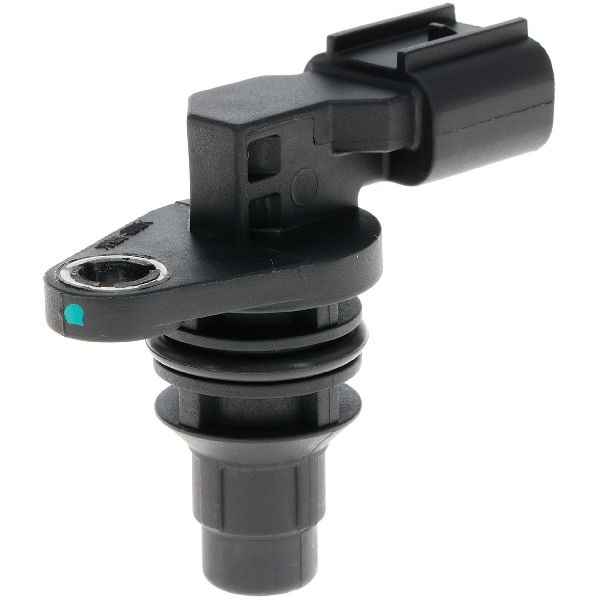
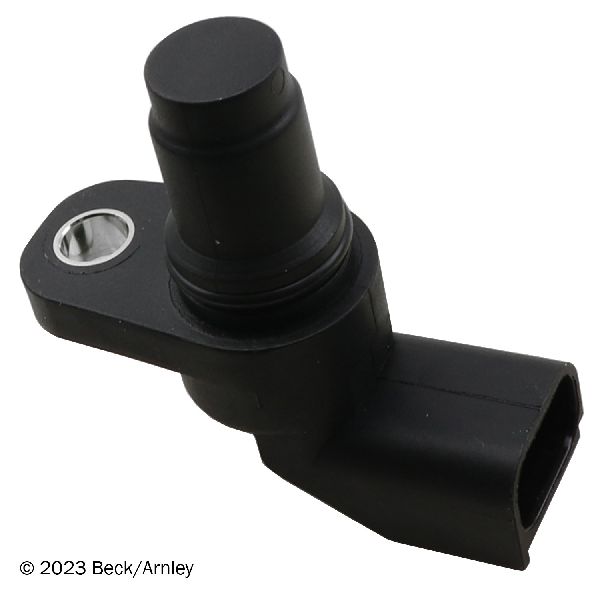
- Variable Camshaft Timing (VCT) Solenoid
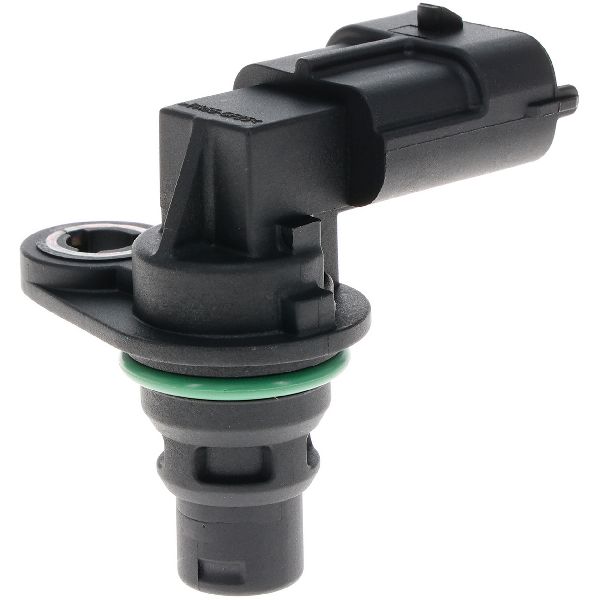
(OEM #CM5Z-6M280-G (latest), supersedes CM5Z-6M280-F, CM5Z-6M280-D, and CM5Z-6M280-C)— This is the most common part to fail, either electrically or by sticking, causing the P0010 code. Part numbers have been updated several times, indicating revisions to the part.
Trusted brands: Motorcraft, Dorman
OEM price range: $30-$50
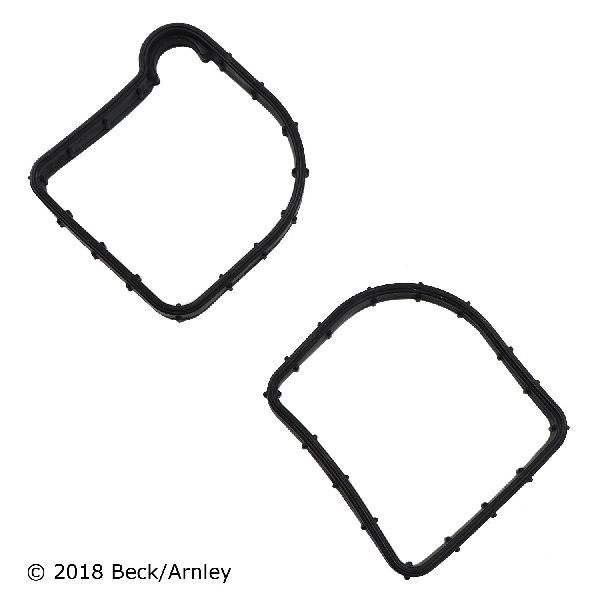
Aftermarket price range: $20-$40 - Valve Cover Gasket Set
(OEM #CV6Z-6584-A)— This is required for the repair because the VCT solenoids are located under the valve cover on this engine. The gasket is a one-time-use part.
Trusted brands: Motorcraft, Fel-Pro
OEM price range: $40-$80
Aftermarket price range: $25-$50
Related Codes That Often Appear With This One
- P0011 — P0011 means 'Intake Camshaft Position Timing - Over-Advanced'. A faulty VCT solenoid circuit (P0010) can prevent proper control, leading to a performance code like P0011.
- P0013 — This is the exhaust-side equivalent of P0010 ('B' Camshaft Position Actuator Circuit). It may appear if the solenoid swap test is performed and the fault moves with the solenoid, or if both solenoids are failing.
- P0012, P0014, P0015 — These are other VCT performance codes (Over-Retarded, Over-Advanced, etc.). A sticking or failing solenoid can cause any of these codes to appear along with the base circuit code P0010.
Technical Service Bulletins (TSBs) & Recalls
- SSM 50067: Notes that various VCT-related performance DTCs (P0011, P0012, etc.) on 2015-2021 Ford vehicles may be caused by small debris causing the VCT solenoid to stick. Recommends running a diagnostic pinpoint test to cycle the affected VCT solenoid 10 times to attempt to clear the debris before replacement.
- SSM 47170: An earlier, similar TSB that also advises cycling the solenoid to dislodge debris before replacing the part, confirming this is a long-standing known issue.
Platform-Specific Known Issues
- The VCT solenoids on the 2.0L Atkinson-cycle hybrid engine are located under the valve cover, which significantly increases the labor time for diagnosis and replacement compared to other engines.
Mechanic-Grade Diagnostic Values
- VCT Solenoid Internal Resistance — expected: 6.9 to 7.9 Ohms at 68°F (20°C). Some sources state a wider acceptable range of 7-14 Ohms.. Failure: An open circuit (infinite resistance) or a short circuit (near zero resistance) indicates a failed solenoid coil.
- VCT Solenoid Connector Voltage (Key On, Engine Off) — expected: Approximately 12V (Battery Voltage) on the power supply pin (VPWR).. Failure: No voltage on the power supply pin points to a wiring, fuse, or PCM power relay issue upstream of the solenoid.
- Scan Tool Live Data: VCT Advance Error PID (VCT_ADV_ERR) — expected: Should be stable and hover around 0° at idle when in closed-loop.. Failure: A persistent deviation greater than +/- 5 degrees indicates the camshaft is not at its commanded position, pointing to a sticking solenoid or phaser issue.
Scan Tool Commands That Help
- Ford IDS (or equivalent professional scanner): Active Test: VVT CTRL B1 (VVT Control Bank 1) — This command allows the technician to manually operate the VCT solenoid while the engine is running. A change in engine idle quality or speed when the command is sent confirms the solenoid is mechanically responding to electrical input. This helps differentiate a wiring/PCM issue from a completely seized solenoid.
- Ford IDS (or equivalent professional scanner): Solenoid Cycle Test (as per TSB SSM 50067) — Before replacing the solenoid, this function cycles it on and off rapidly (e.g., 10 times) to attempt to dislodge small debris or varnish that may be causing it to stick intermittently. If performance improves or the code clears temporarily, it confirms a sticking issue that might be resolved by an engine flush and oil change.
Wiring & Ground Locations
- G100 / G102 — Left front of the engine compartment.. These are primary engine grounds. A poor connection at these points can cause erratic voltage and trigger various electrical fault codes, including P0010.
- G103 / G104 — G103 is at the right rear of the engine compartment; G104 is on the right side of the engine compartment.. These serve as additional grounding points for engine sensors and actuators. Verifying they are clean and tight is a key step in diagnosing any circuit fault.
- Battery Junction Box (BJB) — Left side of the engine compartment.. The BJB contains the fuses and relays that supply power to engine components. The power feed (VPWR) for the VCT solenoid circuit originates here, making it a critical checkpoint if no voltage is found at the solenoid.
- C134 — A major engine harness connector, often located near the PCM or on the engine itself.. The wiring for the VCT solenoid passes through this and other inline connectors. Checking for corrosion or backed-out pins at these junctions is necessary if a wiring fault is suspected between the PCM and the solenoid.
OEM Part Supersession History
CM5Z-6M280-C, CM5Z-6M280-D, CM5Z-6M280-F→CM5Z-6M280-G— Part revision to improve reliability and resistance to sticking from oil debris. Multiple supersessions indicate Ford has actively worked to improve this component.
Diagnostic Flowchart
Other Known Issues on This Vehicle
Issues unrelated to this code that are worth knowing about as an owner of this generation:
- HF35 eCVT Transmission Failure 🔴 High — Commonly reported between 70,000 and 160,000 miles. Often begins with a whining or grinding noise that indicates internal bearing failure.
- Engine Coolant Intrusion 🔴 High — A known design flaw in this engine family where coolant can leak into the cylinders, causing misfires and eventual engine failure. Symptoms include unexplained coolant loss and white exhaust smoke. The fix is typically a short block replacement. (Ref: TSB 19-2346 (covers 2.0L engine in 2017-2019 Fusions))
- 12V Battery Drain and SYNC System Glitches 🟡 Low — Widespread reports of the 12V auxiliary battery dying unexpectedly, sometimes due to a module failing to enter sleep mode. The MyFord Touch / SYNC infotainment system is also known for freezing, unresponsiveness, and connectivity problems. (Ref: Various software updates have been issued.)
- Cracked Flexplate 🟠 Medium — A rattle noise from the transmission bellhousing area, most noticeable at idle, can be caused by a cracked flexplate. (Ref: TSB 21-2347 (for 2.0L EcoBoost, but relevant to shared architecture))
Used vs. New Parts: Buying Guide for This Vehicle
When a used part is the smart pick: For this specific repair, a used part is NOT recommended. The failure is often due to internal wear (weak spring) or contamination from the donor vehicle's oil. The labor cost to remove the valve cover is significant, making it unwise to risk installing a used part with an unknown history that could fail shortly after installation.
Donor-vehicle mileage cap: roughly under 40000 miles for the part to have meaningful remaining life.
What to inspect on the donor part:
- If a used part must be considered, source it from a documented low-mileage vehicle.
- Visually inspect the donor engine's oil fill area for any signs of sludge or varnish, which would indicate poor maintenance and a high risk for the VCT solenoids.
- Test the resistance of the used solenoid before installation to ensure it is within the 6.9-7.9 Ohm specification.
OEM-only on this vehicle (don't cheap out):
- VCT Solenoid: While not strictly OEM-only, using a Motorcraft solenoid is strongly advised. The high labor cost of the job justifies the small price premium for a part known to meet factory specifications for performance and longevity.
Aftermarket brands forum-validated for this vehicle:
- Motorcraft (OEM)
Brands owners have reported issues with on this vehicle:
- While brands like Dorman are widely available, forum discussions often contain mixed reviews regarding their long-term reliability for VCT solenoids compared to OEM. Given the labor involved, cheap, unbranded solenoids from online marketplaces should be avoided.
Real Owner Stories
Aggregated from forums and TSBs cited above. Mileages and costs reflect what owners reported in those sources.
2013 Ford Focus 2.0L
Symptoms: Check engine light on for P0010 'A' Camshaft Position Actuator Circuit Open Bank 1.
What fixed it: Removed the valve cover to access the intake solenoid and replaced the faulty unit.
Source hint: World Mechanics video: 'FORD ENGINE LIGHT ON CODE P0010 FIX. P0010 A CAMSHAFT POSITION ACTUATOR CIRCUIT OPEN BANK 1'
2015-2021 Ford Vehicle
Symptoms: VCT-related performance DTCs caused by small debris causing the VCT solenoid to stick.
What fixed it: Running a diagnostic pinpoint test to cycle the affected VCT solenoid 10 times to attempt to clear the debris.
Source hint: SSM 50067
Related OBD-II Codes
Frequently Asked Questions
I have a 2017 Ford Fusion Hybrid; does TSB 19-2346 mean my P0010 code is related to engine coolant intrusion?
My mechanic mentioned SSM 50067 for my VCT issue. What does Ford recommend before replacing parts?
Can I use any oil in my 2013-2019 Fusion Hybrid to clear the P0010 code?
Is the VCT solenoid easy to access on the 2.0L Atkinson-cycle hybrid engine?
Should I buy a used VCT solenoid from a salvage yard to save money?
Helpful Videos

We Have This Part in Stock

The information in this article is provided for general reference and educational purposes only. Vehicle specifications, procedures, and part compatibility can vary by production date, trim level, and region. Always consult your vehicle's factory service manual and verify part numbers before purchasing or performing repairs. Safety-critical components such as airbags, seat belts, and braking systems should be installed by a qualified professional.
- Ford Fusion:
- 🧭 Diagnostic Flowchart
- 🎬 Helpful Videos
- 🛍️ Shop This Part
- What's Unique About the 2013-2019 Ford Fusion
- Symptoms You May Notice
- Most Likely Causes
- Rare But Worth Checking
- Diagnosis Steps
- Parts You'll Likely Need
- Related Codes That Often Appear With This One
- Technical Service Bulletins (TSBs) & Recalls
- Platform-Specific Known Issues
- Mechanic-Grade Diagnostic Values
- Scan Tool Commands That Help
- Wiring & Ground Locations
- OEM Part Supersession History
- Other Known Issues on This Vehicle
- Used vs. New Parts: Buying Guide for This Vehicle
- Real Owner Stories
- 2013 Ford Focus 2.0L
- 2015-2021 Ford Vehicle
- Related OBD-II Codes
- Frequently Asked Questions
- 🎟️ Get 5% Off