

P0010 on 2020-2024 Hyundai Palisade: Intake Cam Actuator Circuit Fault Causes and Fixes
P0010 on a Palisade indicates an electrical fault with the Bank 1 intake Oil Control Valve (OCV). Before suspecting the part, check your engine oil level and condition, as low or dirty oil is a very common cause. If the OCV needs replacement, be aware it is a labor-intensive job as the part is located under the intake manifold.
- First, check your oil. Low or dirty oil is the most common and easiest-to-fix cause of P0010 on this engine.
- The code points to an electrical circuit fault, not a mechanical timing issue. The primary suspect is the Oil Control Valve (OCV) solenoid.
- Replacing the OCV is a major job due to its location under the intake manifold, making it a costly repair in terms of labor.
- Given the labor involved, it is highly advisable to replace both intake OCVs (Bank 1 and Bank 2) and all intake gaskets at the same time.
- Do not confuse the Camshaft Position Actuator (OCV) with the Camshaft Position Sensor; they are different parts.
What's Unique About the 2020-2024 Hyundai Palisade
The key challenge with this code on the Palisade's 3.8L V6 is the location of the intake Oil Control Valves. Unlike many engines where they are easily accessible on the valve covers, on the Lambda II GDI they are buried beneath the upper and lower intake manifolds. This turns a simple part replacement into a significant 4-6 hour labor job. Additionally, these GDI engines can be prone to oil consumption and carbon buildup, which makes checking the oil level and using high-quality oil the most critical first step for any timing-related code. Some owners have reported needing engine replacement due to excessive oil consumption after dealers performed combustion chamber cleanings and multiple consumption tests.
Symptoms You May Notice
- Check Engine Light is on
- Rough or unstable idle
- Hesitation or stumbling during acceleration
- Reduced engine power
- Decreased fuel economy
- Engine rattling noise
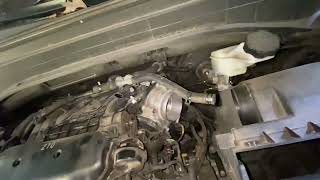
- Replacing the Camshaft Position Sensor. This code is for the actuator (solenoid) circuit, not the sensor. The sensor reads the position, while the actuator (OCV) adjusts it. Replacing the wrong part will not fix the issue. 🎬 Watch: Understanding P0010 causes and fixes
Most Likely Causes
- Low or Dirty Engine Oil 🔴 High Probability The Lambda II 3.8L GDI engine can be susceptible to oil consumption, with some owners reporting losses of over a quart every 500-1000 miles. This is often attributed to piston rings sticking from carbon buildup. The CVVT system is entirely dependent on clean oil and correct pressure to function, and low or sludgy oil is a primary cause of P0010.
How to confirm: Check the engine oil dipstick when the engine is cold and on level ground. The level should be between the 'F' and 'L' marks. The oil should not be black, thick, or sludgy. Monitor consumption over 1,000 miles.
Typical fix: Perform an engine oil and filter change using a high-quality full synthetic 5W-30 oil that meets Hyundai's specifications. Some owners have reported reduced consumption after switching to specific brands like Valvoline Restore & Protect. Clear the code and see if it returns.
Est. part cost: $50-$100 - Faulty Bank 1 Intake Oil Control Valve (OCV) 🔴 High Probability The OCV is an electromechanical part that can fail electrically or become clogged with oil sludge, a common failure item for this code.
How to confirm: After removing the intake manifold, the OCV can be tested. Check its resistance with a multimeter (typically 6.9-7.9 ohms, though some sources suggest 6-12 ohms is a general acceptable range). You can also apply 12V power to see if the internal plunger clicks. Swapping with the Bank 2 OCV is definitive but requires replacing both since the manifold is already off.
Typical fix: Replace the Bank 1 Intake Oil Control Valve. Given the significant labor involved to access the part under the intake manifold, it is highly recommended to replace the Bank 2 intake OCV at the same time, along with the intake manifold gaskets.
Est. part cost: $70-$110 per valve - Wiring or Connector Issue ⚪ Low Probability While not specific to this platform, wiring can become damaged from heat, oil saturation, or rodents. Given the location under the intake manifold, a visual inspection is difficult without disassembly.
How to confirm: Once the intake manifold is removed, visually inspect the wiring harness and connector for the Bank 1 intake OCV. Check for any signs of damage, corrosion, oil contamination, or loose pins. Test for 12V power and ground at the connector with the key on.
Typical fix: Repair the damaged section of the wiring harness or replace the connector pigtail.
Est. part cost: $15-$50
Rare But Worth Checking
- Faulty Powertrain Control Module (PCM): This is very rare, but a failed driver circuit within the PCM can trigger a P0010 code. This should only be considered after all other possibilities (oil, OCV, wiring) have been exhaustively ruled out by a professional.
Diagnosis Steps
- Check the engine oil level and condition. If it is low or dirty, perform an oil and filter change, clear the code, and drive to see if the code returns. This is the most important first step.
- Scan for any other trouble codes that could provide more diagnostic clues.
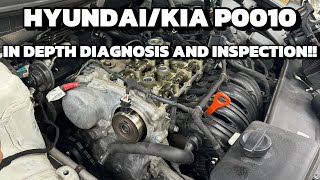
- If the code returns, the next step involves accessing the OCV. This requires removing the upper and lower intake manifolds. A video guide for a spark plug change on this engine shows the complexity of intake manifold removal. 🎬 Watch: Step-by-step guide to removing the intake manifold
- Once the manifold is removed, inspect the OCV connector and wiring for any visible damage, corrosion, or oil saturation.
- Test the OCV's internal resistance using a multimeter. Compare the reading to the specification (typically 6.9-7.9 ohms). An open circuit (infinite resistance) or short (zero resistance) indicates a failed solenoid.
- Test the circuit by checking for 12V power at the OCV connector with the ignition on.
- If the OCV and wiring test good, the fault may lie within the PCM, which requires professional diagnosis.
Parts You'll Likely Need
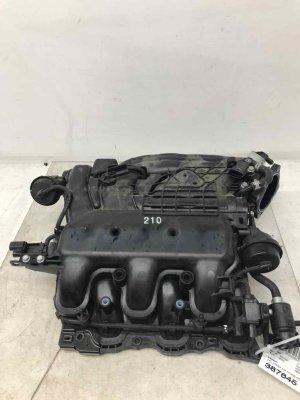
- Engine Oil Control Valve (Intake)
(OEM #24378-3L100)— This solenoid is the most common component to fail electrically or become clogged, directly causing the P0010 circuit fault. This part number is confirmed across multiple Hyundai/Kia parts sites.
Trusted brands: Hyundai Genuine, Kia
OEM price range: $75-$110
Aftermarket price range: $50-$80 - Upper and Lower Intake Manifold Gaskets
(OEM #28411-3L100 (Upper), 29215-3L100 (Lower))— These must be replaced whenever the intake manifold is removed to access the intake OCVs to prevent vacuum leaks.
Trusted brands: Hyundai Genuine, Mahle, Fel-Pro
OEM price range: $50-$80
Aftermarket price range: $30-$60
Related Codes That Often Appear With This One
- P0011 — If the OCV is stuck or the circuit fault leads to incorrect operation, the PCM may also detect that the camshaft timing is over-advanced, triggering P0011 for the same bank.
Technical Service Bulletins (TSBs) & Recalls
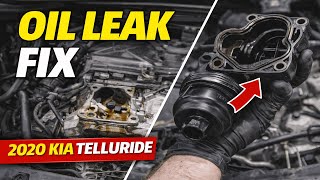
- While no TSBs directly address P0010 on the Palisade specifically, Hyundai has issued TSBs for similar codes on other models. For example, TSB 15-01-022-1 for the 2015 Sonata (LF) with DTC P0010 pointed to an improperly seated oil seal plug at the E-CVVT actuator. 🎬 Watch: How to diagnose Hyundai/Kia E-CVVT issues
Platform-Specific Known Issues
- The location of the intake Oil Control Valves under the intake manifold is a significant design characteristic of the Lambda II 3.8L GDI engine, making this repair much more labor-intensive than on other vehicles.
- This engine platform can experience higher than average oil consumption due to carbon buildup on piston rings, making low oil a frequent trigger for VVT-related codes. Some owners have gone through lengthy oil consumption tests with dealers, eventually leading to engine replacement under warranty.
Mechanic-Grade Diagnostic Values
- Oil Control Valve (OCV) Coil Resistance — expected: 6.9 - 7.9 Ohms at 20°C (68°F). Failure: A reading of infinity (open circuit), near zero (short circuit), or significantly outside the specified range indicates a faulty solenoid.
- Scan Tool Live Data: CVVT Timing Error — expected: The difference between 'Cam Actual Position' and 'Cam Desired Position' should be less than 20 degrees while the engine is running.. Failure: A persistent deviation greater than 20 degrees will trigger the fault code. The ECM may set the DTC if the delay between the target and real angle occurs over 5 times.
- Voltage at Cam Phaser/OCV Connector — expected: 10 - 12 volts with the engine running.. Failure: A lack of voltage could indicate a wiring issue or a problem with the PCM driver, while correct voltage suggests the problem is with the OCV itself.
Scan Tool Commands That Help
- Hyundai GDS (Global Diagnostic System): Active Test: VVT CTRL B1 — Use this function to command the Bank 1 intake OCV to operate. A corresponding change in engine speed or idle quality indicates the solenoid is mechanically responding to the PCM's command, helping to isolate a circuit fault from a stuck valve.
- Hyundai GDS (Global Diagnostic System): Reset E-CVVT Values / Adaptation Reset — After replacing a CVVT component like an OCV or phaser, this function should be used to clear learned values and force the PCM to relearn the new component's operational characteristics. This can prevent performance issues or codes from returning after a repair.
Wiring & Ground Locations
- OCV Connector (B17) to ECM Connector (B30) — The OCV connector is on the solenoid under the intake manifold. The ECM connector is at the main engine computer.. For a definitive circuit check, technicians test continuity between specific pins. For the Bank 1 Intake OCV: test between pin B17-1 (OC1+) and ECM pin B30-100 (OC1+), and between pin B17-2 (OC1-) and ECM pin B30-123 (OC1-). Resistance should be below 1 Ω. A test from either pin to body ground should show 10 kΩ or higher, confirming no short to ground.
OEM Part Supersession History
24378-3L100→24378-3L100— No supersession found. This part number appears to be stable for the entire 2017-2026 model year range for vehicles using the Lambda II 3.3L/3.8L engine.
Model Year Variations Within This Range
- 2020-2024: No significant variations affecting this repair have been identified. The 3.8L Lambda II GDI V6 engine and associated CVVT components remained consistent throughout this period, including across the 2023 model year facelift.
Diagnostic Flowchart
Other Known Issues on This Vehicle
Issues unrelated to this code that are worth knowing about as an owner of this generation:
- Excessive Wind/Whistling Noise from Door Area 🟡 Low — Common on 2020-2021 models. Tends to appear at highway speeds. (Ref: TSB 21-01-003H (supersedes 19-BD-010H). Involves replacing belt molding and adding foam pads.)
- Tow Hitch Wiring Harness Fire Risk 🔴 High — Affects 2020-2022 models equipped with an accessory tow hitch. Can occur while parked. (Ref: NHTSA Recall 22V-633. A class-action lawsuit was also filed. The fix involves a new fuse and wiring kit.)
- Excessive Oil Consumption 🔴 High — Reported across multiple model years, sometimes starting around 16,000-60,000 miles. Can lead to engine failure. (Ref: No specific recall, but dealers follow an oil consumption test procedure which can lead to combustion chamber cleaning or engine replacement under warranty.)
- Unpleasant Interior Odor 🟡 Low — Some owners of early models (2020-2021) reported a strong chemical or garlic-like smell, often traced to the headrests or seat materials. (Ref: No official TSB, but dealers have addressed it on a case-by-case basis, sometimes replacing seat foam or headrests.)
- Knocking/Rattling from Rear Self-Leveling Shocks 🟠 Medium — Affects 2020-2021 models with factory 20-inch wheels (SEL Premium, Limited). (Ref: TSB 22-SS-001H describes the issue and potential replacement of the shocks.)
Used vs. New Parts: Buying Guide for This Vehicle
When a used part is the smart pick: For this specific repair, using a used part is almost never a smart choice. The primary failure parts are the Oil Control Valve (OCV) and intake gaskets.
Donor-vehicle mileage cap: roughly under 15000 miles for the part to have meaningful remaining life.
What to inspect on the donor part:
- For an OCV, there are no reliable external cues. The part fails internally from sludge or electrical winding failure, which is not visible.
- Avoid any parts from an engine that shows signs of heavy oil sludge or poor maintenance.
OEM-only on this vehicle (don't cheap out):
- Oil Control Valve (OCV): Due to the 4-6 hours of labor required to access this part, the risk of a used or cheap aftermarket part failing prematurely is too high. The cost savings on the part do not justify the risk of repeating the labor. Sticking with a Hyundai Genuine part is the strongest recommendation.
- Intake Manifold Gaskets: These are single-use parts and must be new. Never reuse gaskets.
Aftermarket brands forum-validated for this vehicle:
- For gaskets, brands like Fel-Pro and Mahle are generally considered reliable OEM-equivalent alternatives.
Brands owners have reported issues with on this vehicle:
- Unnamed, low-cost OCVs from online marketplaces should be avoided. The quality control is unknown, and the risk of premature failure is high for this labor-intensive job.
Real Owner Stories
Aggregated from forums and TSBs cited above. Mileages and costs reflect what owners reported in those sources.
2020 Hyundai Palisade 3.8L GDI V6 — 60000 miles
Symptoms: Excessive oil consumption issues starting at 60k miles. The vehicle eventually required an oil consumption test and combustion chamber cleaning.
What fixed it: After the cleaning failed to resolve the issue, Hyundai approved a full engine replacement even though the vehicle was slightly over 100k miles by the time of approval.
Source hint: Reddit r/HyundaiPalisade - 'Oil consumption Hyundai palisade'
2020 Hyundai Palisade 3.8L GDI V6 — ~1000 miles
Symptoms: Excessive oil consumption of more than 1qt per 1000 miles. Owner underwent failed consumption tests and a combustion chamber cleaning.
What fixed it: The dealer authorized replacing parts related to the fuel pipe, though the owner remained skeptical of the fix.
Source hint: Reddit r/HyundaiPalisade - 'Excess oil consumption'
Related OBD-II Codes
Frequently Asked Questions
Is there a TSB for P0010 on my 2020-2024 Hyundai Palisade?
Why is the P0010 repair so expensive on the Palisade 3.8L V6 compared to other cars?
Can low oil levels really trigger a P0010 code on this vehicle?
Should I replace both Oil Control Valves if only Bank 1 (P0010) is failing?
What specific oil should I use to prevent VVT issues on my Palisade?
Is the P0010 code related to the engine replacement warranty I've heard about?
Helpful Videos

We Have This Part in Stock

The information in this article is provided for general reference and educational purposes only. Vehicle specifications, procedures, and part compatibility can vary by production date, trim level, and region. Always consult your vehicle's factory service manual and verify part numbers before purchasing or performing repairs. Safety-critical components such as airbags, seat belts, and braking systems should be installed by a qualified professional.
- Hyundai Palisade:
- 🧭 Diagnostic Flowchart
- 🎬 Helpful Videos
- 🛍️ Shop This Part
- What's Unique About the 2020-2024 Hyundai Palisade
- Symptoms You May Notice
- Most Likely Causes
- Rare But Worth Checking
- Diagnosis Steps
- Parts You'll Likely Need
- Related Codes That Often Appear With This One
- Technical Service Bulletins (TSBs) & Recalls
- Platform-Specific Known Issues
- Mechanic-Grade Diagnostic Values
- Scan Tool Commands That Help
- Wiring & Ground Locations
- OEM Part Supersession History
- Model Year Variations Within This Range
- Other Known Issues on This Vehicle
- Used vs. New Parts: Buying Guide for This Vehicle
- Real Owner Stories
- 2020 Hyundai Palisade 3.8L GDI V6 — 60000 miles
- 2020 Hyundai Palisade 3.8L GDI V6 — ~1000 miles
- Related OBD-II Codes
- Frequently Asked Questions
- 🎟️ Get 5% Off