

P0010 on 2007-2009 Hyundai Santa Fe 3.3L V6: Causes and Fixes for Cam Actuator Circuit Fault
On a 2007-2009 Santa Fe 3.3L, code P0010 is most often caused by low or dirty engine oil, or a faulty Oil Control Valve (OCV) for the Bank 1 intake camshaft. An OCV is a relatively inexpensive part (around $40-$90 aftermarket) and is a common DIY fix. Always check oil level first, as this engine is known for valve cover leaks that cause oil loss.
- Always check your engine oil level and condition first; this is the easiest and cheapest fix.
- P0010 is an electrical circuit code. The most likely failed part is the Bank 1 (firewall side) intake Oil Control Valve (OCV).
- Do not immediately replace the camshaft position sensor; it is rarely the cause of this specific code.
- A simple diagnostic test is to swap the Bank 1 and Bank 2 intake OCVs to see if the fault code follows the part, moving to P0020.
- The correct OEM part number for the OCV is likely 24355-3C100 or its successor, 24355-3C200.
What's Unique About the 2007-2009 Hyundai Santa Fe
The Lambda 3.3L V6 engine (G6DB) in this generation of Santa Fe is known to be sensitive to oil level and quality. While generally more reliable than the 4-cylinder Theta II engines that had widespread recall issues, this V6 can suffer from oil leaks. Notably, Hyundai issued service campaigns (936 and 976) for leaking front valve cover gaskets on these 2007-2009 models. This leak can cause a low oil level, starving the CVVT system and triggering codes like P0010, or drip directly onto the alternator causing it to fail.
Symptoms You May Notice
- Check Engine Light is on
- Rough or unstable idle
- Hesitation or loss of power during acceleration
- Reduced fuel economy
- Engine may stall at low speeds
- Rattling or ticking noise from the engine bay
- Replacing the Camshaft Position Sensor. The P0010 code is for the actuator *circuit*, not the position sensor. The sensor may be working perfectly fine and accurately reporting the timing problem caused by the faulty actuator or lack of oil pressure.
Most Likely Causes
- Low or Dirty Engine Oil 🔴 High Probability The CVVT system is hydraulic and requires clean oil at the proper level. These engines are known for valve cover gasket leaks (per Service Campaigns 936 and 976) that cause significant oil loss, which can starve the CVVT system.
How to confirm: Check the engine oil dipstick. The oil should be between the 'F' and 'L' marks. Inspect the oil's color and consistency; if it is very dark, thick, or gritty, it needs to be changed. Check the front valve cover for signs of an active oil leak.
Typical fix: Perform an engine oil and filter change using a quality full synthetic 5W-20 or 5W-30 oil and an OEM or equivalent filter. If a valve cover leak is present, replace the gasket (OEM P/N 22441-3C110) to prevent future oil loss.
Est. part cost: $40-$80 - Faulty Bank 1 Intake Oil Control Valve (OCV) 🔴 High Probability The OCV (also called a VVT solenoid) is a common failure point. It can become clogged with sludge from old oil or fail electrically, causing the 'open circuit' condition of the P0010 code. In some Hyundai models, an owner reported that even after replacing the actuator, the vehicle continued to struggle when accelerating from a dead stop or going up an incline (NHTSA ODI #11509805).
How to confirm: Swap the Bank 1 (firewall side) and Bank 2 (radiator side) intake OCVs. They are identical parts. Clear the codes and drive. If the code returns as P0020 (the Bank 2 equivalent), the OCV is faulty. You can also test the solenoid's resistance with a multimeter; it should be approximately 6.7-7.9 ohms.
Typical fix: Replace the Bank 1 intake Oil Control Valve. Bank 1 is the cylinder head closer to the firewall. It is held in by a single 10mm bolt.
Est. part cost: $70-$150 - Wiring or Connector Issue ⚪ Low Probability The wiring harness can become brittle from heat cycles. More commonly, oil from a leaking valve cover gasket can seep into the OCV's electrical connector, disrupting the signal.
How to confirm: Visually inspect the wiring harness and connector going to the Bank 1 intake OCV. Look for any frayed wires, loose pins, or corrosion. Check for oil contamination inside the electrical connector itself.
Typical fix: Repair the damaged section of wiring or clean the oil out of the connector with electrical contact cleaner and ensure a secure connection.
Est. part cost: $5-$20
Rare But Worth Checking
- Stretched Timing Chain or Failed Tensioner: → Shop Engine Timing Chain This is more likely to cause rattling noises on startup and performance-related codes (like P0011/P0012) rather than just a circuit code. However, severe timing issues can sometimes trigger circuit codes as a secondary effect. An owner report (NHTSA ODI #11654322) noted that the entire timing system began failing with codes P0010 and P0011 following a combustion chamber cleaning.
- Faulty Powertrain Control Module (PCM): This is extremely rare. The PCM should only be considered after all other possibilities, including wiring, have been exhaustively checked and ruled out.
- Internal Oil Seal Plug Issues: While documented on other Hyundai platforms, manufacturer TSB Bulletin #TSB-15-01-022-1 notes that an incomplete seating of the internal oil seal plug at the intake camshaft can cause the check engine light to illuminate with code P0010.
Diagnosis Steps
- Check Engine Oil: Verify the oil level is correct and the oil is clean. If low, top it off, clear the code, and see if it returns. If the oil is old or dirty, perform an oil and filter change. Inspect the front valve cover for leaks.
- Inspect the Connector: Locate the Bank 1 intake OCV on the firewall-side cylinder head. Disconnect it and inspect the connector and solenoid for oil contamination, corrosion, or damaged pins.
- Swap the OCVs: The easiest way to confirm a bad OCV is to swap it. The intake OCVs on Bank 1 (firewall) and Bank 2 (radiator) are identical. Swap their positions, clear the codes, and drive the vehicle. If the code changes to P0020 (Bank 2 circuit fault), you have confirmed the OCV is the problem.
- Test the OCV (Optional): Using a multimeter, measure the resistance across the two pins of the suspected OCV. A reading between 6.7 and 7.9 ohms is expected. A reading of infinity (OL) indicates an open circuit, confirming the solenoid is bad.
- Check for Voltage: If the OCV tests good, use a multimeter to check for voltage at the connector with the key on, engine off. You should have battery voltage on one of the pins. If not, you may have a wiring or fuse issue.
- Replace the Faulty Part: Based on your findings, replace the faulty Oil Control Valve or repair the wiring.
Parts You'll Likely Need
- Engine Oil Control Valve (VVT Solenoid), Intake, Bank 1
(OEM #24355-3C200 (supersedes 24355-3C100))— This solenoid is the most common part to fail, either electrically or by getting clogged with oil sludge, directly causing the P0010 circuit code. The original part 24355-3C100 was updated to 24355-3C200.
Trusted brands: Hyundai/Kia Genuine, Dorman, Standard Motor Products (SMP), Aisin
OEM price range: $100-$160
Aftermarket price range: $40-$90
Related Codes That Often Appear With This One
- P0011 — P0011 indicates 'Camshaft Position - Timing Over-Advanced or System Performance (Bank 1)'. It can appear with P0010 if the faulty circuit leads to a measurable timing performance issue.
- P0012 — P0012 indicates 'Camshaft Position - Timing Over-Retarded (Bank 1)'. This often points to a lack of oil pressure from low/dirty oil or a clogged OCV screen, which are root causes for P0010 as well.
- P0020 — P0020 is the equivalent circuit fault code for Bank 2 (radiator side). If this code appears after swapping the Bank 1 and Bank 2 OCVs, it confirms the OCV that was moved is faulty.
Technical Service Bulletins (TSBs) & Recalls
- Hyundai Service Campaign 936 / TSB 15-01-031: Addresses oil leaks from the front valve cover gasket on 2007-2009 models, a potential root cause for this code due to oil loss and a direct cause of alternator failure.
- Hyundai Service Campaign 976 / TSB 23-01-076H-2: A later campaign that supersedes 936, providing updated procedures to inspect for the valve cover leak and install an oil protector shield above the alternator.
- Manufacturer TSB Bulletin #TSB-15-01-022-1: Although issued for other models, this bulletin highlights that an unseated internal oil seal plug at the intake camshaft can trigger DTC P0010.
Platform-Specific Known Issues
- Service Campaigns 936 and 976 were issued for 2007-2009 models to address oil leaks from the front valve cover gasket. This leak can cause a low oil level, which is a primary trigger for CVVT system fault codes like P0010. The leak also notoriously drips onto the alternator, causing premature failure.
- Owner Repair Story: Valve Cover Leak Causing P0012: An owner of a 2008 Santa Fe 3.3L with a persistent P0012 code (often seen with P0010) discovered the root cause was low oil levels from a leak at the T-joint of the front valve cover. The fix was not the OCV, but replacing the front valve cover gasket (Part # 22441-3C110) and performing an oil change, which stopped the oil loss and resolved the code.
Mechanic-Grade Diagnostic Values
- Oil Control Valve (OCV) Solenoid Resistance — expected: 6.7 - 7.9 Ohms (Ω) at 68°F (20°C).. Failure: A reading of infinity (OL) indicates an open coil. A reading near zero indicates a shorted coil.
- OCV Connector Voltage (Key On, Engine Off) — expected: One pin should show battery voltage (approx. 12.6V) relative to a good ground. The other pin is the control wire from the PCM and should be near 0V.. Failure: No voltage on the power pin points to a blown fuse or a break in the power wire. Voltage on the control wire with the key on suggests a short to power.
- Scan Tool Live Data: CVVT Desired vs. Actual Angle — expected: At a steady RPM, the 'CVVT Actual Position (B1)' should track the 'CVVT Desired Position (B1)' with a variance of less than 5-7 degrees.. Failure: A large, persistent deviation between the desired and actual angles, or an actual angle that is stuck at 0 or full advance/retard, indicates a problem. For a P0010 circuit code, you may see the desired angle change while the actual angle does not respond at all.
Scan Tool Commands That Help
- Hyundai GDS (Global Diagnostic System) or equivalent professional scanner: Active Test: CVVT Control (Bank 1) — This bidirectional command allows the technician to manually command the Bank 1 intake OCV to activate. You should hear a click from the solenoid and see a change in engine RPM or even cause it to run rough/stall. If the engine response is normal, it confirms the OCV and CVVT phaser are mechanically capable, pointing the diagnosis back towards an intermittent wiring or PCM driver issue. If there is no click or change in engine operation, it points to a faulty OCV or a wiring fault between the PCM and the OCV.
Wiring & Ground Locations
- Bank 1 Intake OCV Connector — On the Bank 1 (firewall side) valve cover, towards the passenger side of the engine. The connector plugs directly into the top of the Oil Control Valve.. This is the primary connection point for all electrical testing (resistance, voltage) of the OCV circuit. It is also a common point for oil contamination from a leaking valve cover gasket to disrupt the electrical signal.
- Engine Ground Strap — A primary ground strap connects the engine block to the vehicle's chassis, typically near the passenger-side engine mount.. A poor engine ground can cause a variety of electrical issues, including erratic sensor readings and actuator circuit faults like P0010. While not a direct cause, it's a foundational check for any electrical diagnosis. Ensure the connection is clean, tight, and free of corrosion.
- Alternator and Starter Harness — The main engine harness routes from the fuse box, around the front of the engine to the alternator, and down to the starter. The OCV wiring is part of this larger harness.. The notorious valve cover leak on this engine drips oil directly onto the alternator and this harness. Over time, this can degrade the wire insulation or seep into connectors, causing shorts or open circuits that could trigger P0010.
Real Owner Repair Stories
- YouTube Repair Channel (2013 Hyundai Elantra (demonstrates a common Hyundai CVVT issue)) — Check Engine Light with CVVT codes.
❌ Tried (didn't work) Replacing the Oil Control Valve (OCV) solenoid did not fix the code.
✅ What actually fixed it The issue was a completely clogged OCV filter screen located in the cylinder head, separate from the OCV itself. After removing the OCV, the small cylindrical filter was extracted from the head using a pick and was found to be blocked with sludge. Cleaning this filter and reinstalling the OCV resolved the problem. - NHTSA ODI #11714812: An owner reported engine stumbling at stoplights with DTC P0010. Upon inspection, it was found that the internal oil seal plug at the intake camshaft E-CVVT had become unseated, causing an active oil leak.
- NHTSA ODI #11720901: A driver reported experiencing an error code of P0010 which required a week of repairs in the shop, referencing Service Campaign TX3 and TSB# 15-01-022.
OEM Part Supersession History
24355-3C100→24355-3C200— Standard part revision and improvement by the manufacturer.
Heads up: None. The parts are fully interchangeable. Both part numbers are often listed in the same product description.
Model Year Variations Within This Range
- Early 2007 (produced before August 4, 2006): TSB 06-20-002 was issued for a startup rattle on early 2007 models caused by faulty timing chain tensioners. While this typically causes timing correlation codes (like P0011/P0012), severe chain slack could potentially contribute to a P0010 if the system is struggling to control cam timing.
Diagnostic Flowchart
Other Known Issues on This Vehicle
Issues unrelated to this code that are worth knowing about as an owner of this generation:
- Valve Cover Gasket Leak Causing Alternator Failure 🔴 High — Extremely common, especially over 80,000 miles. The front (Bank 2) gasket leaks oil directly onto the alternator, causing it to fail. (Ref: Service Campaign 936 (TSB 15-01-031) and its successor Campaign 976 (TSB 23-01-076H-2) were issued to inspect, replace the gasket, and install an oil protector.)
- Faulty Fuel Level Sending Unit 🟠 Medium — Very common on 2007-2009 models. The fuel gauge becomes erratic, reads empty after a fill-up, or gets stuck. The vehicle has two sensors, and often both are replaced. (Ref: TSB 08-FL-002 (Service Campaign 086) addressed this on some early models, but the problem is widespread beyond the campaign.)
- Timing Chain Tensioner Rattle 🔴 High → Shop Engine Timing Chain — Common across the Lambda engine family. A distinct 2-3 second rattle on cold startups indicates failing hydraulic tensioners. If ignored, it can lead to a jumped timing chain and catastrophic engine damage. (Ref: TSB 06-20-002 was issued for early 2007 models, but the issue is known to affect the entire 2007-2009 range.)
- Leaking Oil Pressure Switch 🟠 Medium — A known leak point that can be misdiagnosed as a more severe rear main seal leak. Oil drips down the back of the engine.
Used vs. New Parts: Buying Guide for This Vehicle
When a used part is the smart pick: For this repair, using a used part is generally not recommended. The primary failure component, the Oil Control Valve (OCV), is an electro-hydraulic part prone to wear and clogging from oil sludge. A new aftermarket OCV is inexpensive (often $40-$90), making the risk of getting a worn or failing used part not worth the small savings.
Donor-vehicle mileage cap: roughly under 50000 miles for the part to have meaningful remaining life.
What to inspect on the donor part:
- If considering a used OCV, insist on seeing the donor vehicle's mileage; anything over 50k miles is a gamble.
- Inspect the OCV's mesh screens for any tears, debris, or heavy sludge.
- Test the resistance with a multimeter before purchase; it must be within the 6.7-7.9 ohm range.
- Avoid parts from engines with visible signs of heavy oil sludge under the oil cap.
OEM-only on this vehicle (don't cheap out):
- While not required, using an OEM valve cover gasket (P/N 22441-3C110) is highly recommended if you are fixing the common oil leak, as aftermarket gasket fitment can be inconsistent.
Aftermarket brands forum-validated for this vehicle:
- Dorman
- Standard Motor Products (SMP)
- Aisin
Brands owners have reported issues with on this vehicle:
- No-name, unbranded parts from online marketplaces are a significant risk, as their internal coil windings and materials may not meet OEM specifications for thermal stability and durability, leading to premature failure.
Real Owner Stories
Aggregated from forums and TSBs cited above. Mileages and costs reflect what owners reported in those sources.
2008 Santa Fe 3.3L
Symptoms: Persistent P0012 code (often seen with P0010) caused by a leak at the T-joint of the front valve cover.
What fixed it: Replacing the front valve cover gasket (Part # 22441-3C110) and performing an oil change to stop oil loss.
Source hint: Owner Repair Story: Valve Cover Leak Causing P0012
2007 Santa Fe 3.3L
Symptoms: Multiple CVVT codes including P0010, P0011, P0021, and P0022.
What fixed it: Replacing all four Oil Control Valves (OCVs).
Source hint: Hyundai-Forums.com: 'P0010, P0011, P0021, P0022 Codes'
2007-2009 Santa Fe 3.3L — ~85000 miles
Symptoms: Oil leaking from the cylinder head cover onto the alternator, potentially leading to engine stalling.
What fixed it: Service Campaign 976 procedures: inspecting/replacing the gasket and installing an oil protector shield.
Source hint: Reddit r/HyundaiSantaFe: '2007-2009 Service Campaign for Cylinder Head Cover Oil Leak'
Related OBD-II Codes
Frequently Asked Questions
Does Service Campaign 976 apply to my 2008 Hyundai Santa Fe 3.3L?
Can I use any oil filter to resolve the P0010 code on my Lambda 3.3L engine?
Is there a specific part number for the valve cover gasket if I have an oil leak?
How can I tell if the Bank 1 Oil Control Valve is actually the problem without buying a new one?
Why is my alternator failing at the same time I'm seeing CVVT codes?
What should I look for if I hear a 2-3 second rattle when I start my Santa Fe in the morning?
Helpful Videos
We Have This Part in Stock

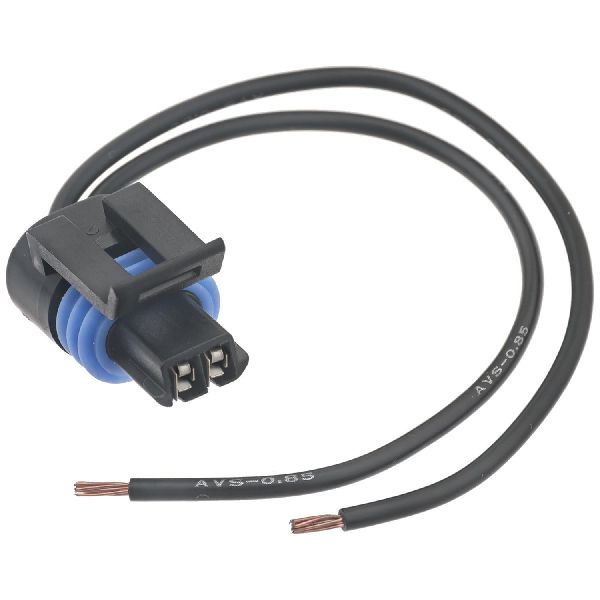
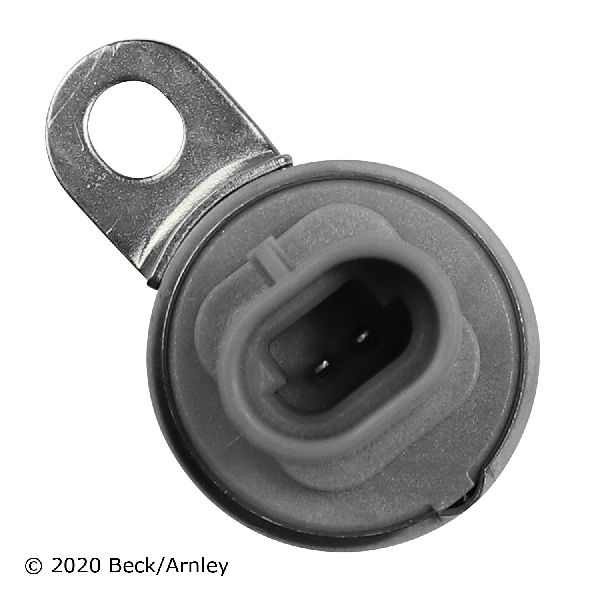

The information in this article is provided for general reference and educational purposes only. Vehicle specifications, procedures, and part compatibility can vary by production date, trim level, and region. Always consult your vehicle's factory service manual and verify part numbers before purchasing or performing repairs. Safety-critical components such as airbags, seat belts, and braking systems should be installed by a qualified professional.
- Hyundai Santa Fe:
- 🧭 Diagnostic Flowchart
- 🎬 Helpful Videos
- 🛍️ Shop This Part
- What's Unique About the 2007-2009 Hyundai Santa Fe
- Symptoms You May Notice
- Most Likely Causes
- Rare But Worth Checking
- Diagnosis Steps
- Parts You'll Likely Need
- Related Codes That Often Appear With This One
- Technical Service Bulletins (TSBs) & Recalls
- Platform-Specific Known Issues
- Mechanic-Grade Diagnostic Values
- Scan Tool Commands That Help
- Wiring & Ground Locations
- Real Owner Repair Stories
- OEM Part Supersession History
- Model Year Variations Within This Range
- Other Known Issues on This Vehicle
- Used vs. New Parts: Buying Guide for This Vehicle
- Real Owner Stories
- 2008 Santa Fe 3.3L
- 2007 Santa Fe 3.3L
- 2007-2009 Santa Fe 3.3L — ~85000 miles
- Related OBD-II Codes
- Frequently Asked Questions
- 🎟️ Get 5% Off