

P0010 on 2018-2023 Kia Stinger 3.3L: 'A' Camshaft Actuator Circuit Causes & Fixes
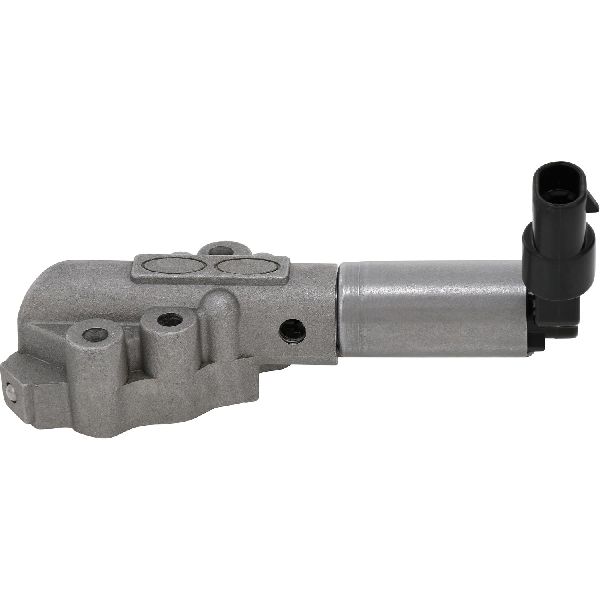
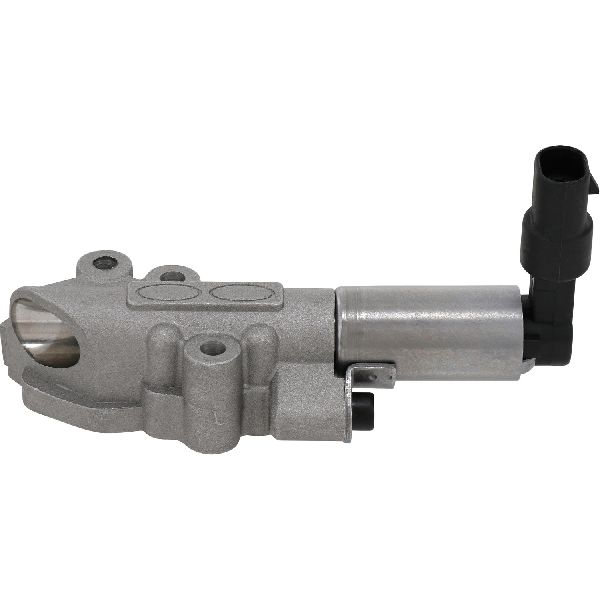
On a 2018-2023 Kia Stinger 3.3T, P0010 is almost always caused by low/dirty engine oil or a failed Bank 1 (passenger side) intake Oil Control Valve (OCV). Check your oil first; if the level and quality are good, the OCV is the next likely culprit. A new OEM OCV (Part No. 24355-3L100) costs around $50-$80 and is a straightforward DIY replacement.
- P0010 on your Stinger 3.3T is an electrical circuit code for the passenger-side intake camshaft actuator.
- Before buying any parts, check your engine oil. Low, old, or dirty oil is the most common trigger for this code.
- If the oil is fine, the Oil Control Valve (OCV) solenoid is the next most likely failure. It's an affordable and accessible part to replace.
- A simple DIY diagnostic is to swap the passenger-side intake OCV with the driver-side intake OCV to see if the trouble code follows the part.
- Do not immediately assume you have a major timing chain issue, as this specific code points to a much simpler electrical or hydraulic fault.
What's Unique About the 2018-2023 Kia Stinger
The Lambda II 3.3L T-GDi engine in the Stinger is a high-performance, twin-turbo direct-injection motor. Its Continuously Variable Valve Timing (CVVT) system is highly sophisticated but also very sensitive to oil quality, level, and pressure. Owner and technician experiences with this engine (and its identical twin in the Genesis G70) show that timing-related codes are frequently traced back to simple oil maintenance issues or failure of an OCV, rather than more severe mechanical problems like a stretched timing chain.
Symptoms You May Notice
- Check Engine Light is on
- Rough or unstable engine idle
- Reduced engine power and poor acceleration
- Decreased fuel economy
- Engine may sound like it's rattling on startup or during operation
- Replacing the camshaft position sensor. P0010 is a circuit code for the actuator (OCV), not the sensor. A bad sensor would typically set a different code (e.g., P0340).
- Replacing the timing chain or phasers. While timing components can fail, P0010 specifically points to an electrical circuit fault. Mechanical timing correlation faults have their own codes, such as P0016 or P0017.
Most Likely Causes
- Low or Dirty Engine Oil 🔴 High Probability The CVVT system is hydraulic and extremely sensitive to oil pressure and cleanliness. GDI engines can be harsh on oil, and sludge can clog the small passages in the OCV solenoids. A recall for a leaking turbo oil feed line (SC300) can also cause a low oil condition.
How to confirm: Check the engine oil dipstick. The level should be between the 'F' and 'L' marks. The oil should be amber/brown and translucent, not black, thick, or gritty.
Typical fix: Perform an oil and filter change using a high-quality full synthetic 5W-30 oil and a genuine Kia/Hyundai OEM oil filter (Part No. 26320-3LTA0). Using non-OEM filters has been anecdotally linked to CVVT issues on this platform, with some owners on stingerforum.org reporting codes appearing after using quick-lube services.
Est. part cost: $60-$110 - Faulty Bank 1 Intake Oil Control Valve (OCV) 🔴 High Probability The OCV is an electromechanical part that operates constantly while the engine is running. It can fail electrically (internal short/open) or become mechanically stuck from oil sludge.
How to confirm: Swap the Bank 1 (passenger side) intake OCV with the Bank 2 (driver's side) intake OCV. Clear the codes and drive the vehicle. If the code changes to P0020 ('A' Camshaft Position Actuator Circuit / Open Bank 2), the OCV is confirmed to be faulty. Alternatively, test the resistance of the solenoid; it should be between 6.9 - 7.9 Ω at room temperature.
Typical fix: Replace the faulty Oil Control Valve. On the 3.3L V6, there are four OCVs in total (intake and exhaust for each bank). Ensure you are replacing the correct one (Bank 1 Intake).
Est. part cost: $50-$80 - Wiring or Connector Issue 🟡 Medium Probability The OCV connector is located at the front of the engine and is exposed to heat and vibration, which can lead to brittle wires or loose connections over time. For 2018 models, recall SC170 addresses a potential for harness damage on the driver's side, which could cause various electrical faults.
How to confirm: Visually inspect the wiring harness and connector going to the Bank 1 intake OCV. Look for frayed wires, corrosion in the connector pins, or oil contamination. Use a multimeter to check for 10-12V power at the connector with the engine running.
Typical fix: Repair the damaged section of wiring or clean/replace the connector pigtail.
Est. part cost: $10-$30
Rare But Worth Checking
- Faulty Engine Control Module (ECM): This is very rare. The ECM's internal driver for the OCV circuit could fail. This should only be considered after all other possibilities (oil, OCV, wiring) have been exhaustively ruled out.
Diagnosis Steps
- Read the code using an OBD-II scanner to confirm P0010 is present.
- Check Engine Oil: Turn off the engine and check the oil level and condition. If it is low, dirty, or overdue for a change, address this first. This resolves the issue a surprising amount of the time. Ensure an OEM filter is being used.
- Inspect the Connector: Locate the intake OCV on Bank 1 (passenger side, front of the engine). Disconnect it and inspect the connector and pins for any signs of corrosion, oil, or damage.
- Test the Circuit: With the key on and engine off, use a multimeter to verify that one pin on the harness connector has battery voltage and the other can be grounded. With the engine running, you should see 10-12 volts.
- Test the OCV Resistance: With the OCV disconnected, use a multimeter to measure the resistance between its two pins. A good OCV should read between 6.9 and 7.9 ohms. An open circuit (infinite resistance) or short (zero resistance) confirms a failed solenoid.
- Swap the OCVs: A simple and definitive test is to swap the Bank 1 intake OCV with the Bank 2 intake OCV. They are identical parts. Clear the codes, start the engine, and let it run for a few minutes. Re-scan for codes.
- Analyze Swap Results: If the code returns as P0010, the problem is in the wiring or ECM. If the code changes to P0020 (the equivalent code for Bank 2), the OCV you moved is faulty and needs to be replaced.
- Test the OCV (Optional): You can test the solenoid directly by applying 12V from a battery to its terminals. You should hear a distinct 'click' as it actuates.
Parts You'll Likely Need
- Engine Oil Control Valve (VVT Solenoid), Intake
(OEM #24355-3L100)— This is the most common part to fail that directly causes a P0010 code. It can become clogged with sludge or fail electrically. The intake and exhaust OCVs are different parts.
Trusted brands: Hyundai/Kia Genuine
OEM price range: $50-$80
Aftermarket price range: $30-$60 - Engine Oil and OEM Filter
(OEM #26320-3LTA0 (Filter))— Low or dirty oil is a primary cause of all CVVT system faults on this engine. An oil change is a critical first step in diagnosis and repair.
Trusted brands: Pennzoil, Mobil 1, Castrol
OEM price range: $70-$120
Aftermarket price range: $50-$90 - Engine Oil Control Valve (VVT Solenoid), Exhaust
(OEM #24360-3CAB2)— For reference only. This part is for the exhaust camshaft and would typically trigger codes like P0014 or P0017, not P0010. It is physically different from the intake OCV.
Trusted brands: Hyundai/Kia Genuine
OEM price range: $60-$90
Aftermarket price range: $40-$70
Related Codes That Often Appear With This One
- P0011 — If the OCV is stuck or slow to respond, the ECM might also detect that the camshaft timing is 'Over-Advanced' (P0011), in addition to detecting the circuit fault.
Technical Service Bulletins (TSBs) & Recalls
- While no TSB directly addresses P0010, several service campaigns are relevant. Recall SC300 / NHTSA 24V169000 for a leaking turbo oil feed pipe can cause low oil levels that trigger timing codes. Recall SC170 / NHTSA 18V-754 for potential wiring harness damage on 2018 models could also be a root cause for this electrical fault code.
Documented NHTSA Reports
- NHTSA ODI #11700368: A Kia owner reported that after starting the vehicle, a failure occurred and the dealer retrieved DTC P0010, requiring repairs at the owner's expense.
- NHTSA ODI #11545195: An owner of a related Kia model reported that a code reader showed P0010 for a camshaft issue after finding the engine oil was empty, despite being full the day before.
- NHTSA ODI #11704086: A repair shop identified a P0010 cam actuator code alongside internal engine damage caused by significant oil loss and oil entering the combustion chamber.
- NHTSA ODI #11691181: A report describes engine sludge and a P0010 part failure occurring within one year of a Kia engine replacement.
- NHTSA ODI #11564105: An owner reported that a mechanic replaced both camshaft position sensors after a P0010 code appeared and the vehicle was found to be low on oil.
Platform-Specific Known Issues
- Post-Oil Change Code Appearance: Multiple owners on stingerforum.org have reported that CVVT-related codes (like P0016, P0017, etc.) can appear shortly after an oil change, particularly when performed at a quick-lube shop. This is widely attributed to the use of aftermarket oil filters that do not meet the OEM specifications for flow and bypass pressure, disrupting the sensitive CVVT system. The fix is often to repeat the oil change using a genuine Kia/Hyundai filter (26320-3LTA0).
- Real-World OCV Swap Diagnostic: In a scenario common to both the Stinger and its platform-mate Genesis G70, a P0010 code can be definitively diagnosed by swapping the passenger-side (Bank 1) intake OCV with the driver-side (Bank 2) intake OCV. If the code changes to P0020 after clearing and re-scanning, it provides 100% confirmation that the original OCV has failed. This is a standard, no-cost diagnostic procedure recommended by experienced owners and technicians for this platform.
Mechanic-Grade Diagnostic Values
- Oil Control Valve (OCV) Internal Resistance — expected: 6.9 - 7.9 Ω at 68°F (20°C). Failure: A reading of 0 Ω (short), infinity/OL (open), or a value significantly outside the expected range indicates a failed solenoid coil.
- OCV Connector Voltage (Engine Running) — expected: 10-12 Volts. Failure: No voltage or significantly lower voltage points to a problem in the wiring harness, a blown fuse, or an issue with the ECM's driver circuit.
- OCV Connector Voltage (Key On, Engine Off) — expected: ~12V (Battery Voltage) on the power supply pin. Failure: No voltage suggests a break in the power supply wire from the engine main relay or a blown fuse.
Scan Tool Commands That Help
- Kia GDS (Global Diagnostic System) or equivalent advanced scanner: Active Test: CVVT Oil Control Valve — This bidirectional command allows a technician to manually cycle the Bank 1 Intake OCV on and off while the engine is idling. A noticeable change in engine sound or roughness confirms the valve is mechanically responding to commands and that oil passages are likely clear. No change in engine behavior points to a stuck OCV, a wiring issue, or an oil passage blockage.
- Kia GDS (Global Diagnostic System) or equivalent advanced scanner: Service Function: Resetting Adaptive Values — After replacing a CVVT component like an OCV, this function should be performed to clear the old learned timing values from the ECM. This forces the system to re-learn the new component's baseline characteristics from a zeroed state, preventing potential performance issues after the repair.
Wiring & Ground Locations
- Main Engine Harness Ground — Typically located on the driver's side (left) fender wall in the engine compartment or bolted directly to the engine block near the alternator.. A poor or corroded ground connection at this point can cause a wide range of electrical issues, including incorrect sensor readings and intermittent circuit faults like P0010. It should be inspected for tightness and corrosion as part of any electrical diagnosis.
- Bank 1 Intake OCV Connector — On the front of the passenger-side valve cover, connecting directly to the Oil Control Valve.. This is the direct connection point for the component in question. It is exposed to engine heat and vibration and should be inspected closely for oil contamination from a leaking valve cover gasket, corrosion on the pins, or damaged wires, as any of these issues will cause a P0010 code.
- Engine Ground Wiring Assembly — This is a specific harness assembly for the 3.3L engine, with part number 91860-J5010.. Damage to this specific grounding harness can lead to various electrical faults. While not a primary suspect, it's a known component in the grounding system that could be a root cause if other wiring checks out.
Real Owner Repair Stories
- Go-Parts Repair Database (2018-2023 Kia Stinger GT (3.3T)) — Check engine light with P0011/P0012 codes (related to timing performance, often caused by the same OCV fault).
❌ Tried (didn't work) Implied that simply reading the code was not enough.
✅ What actually fixed it The issue was resolved by either checking and correcting the engine oil level or by replacing the faulty Oil Control Valve (OCV), part number 24355-3L100. - Go-Parts Repair Database (2019-2023 Kia Stinger GT (3.3T)) — P0012 or related timing codes (P0011, P0017) appeared shortly after an oil change at a quick-lube service or when the oil change was overdue.
❌ Tried (didn't work) Initial code clearing without addressing the root cause.
✅ What actually fixed it Performing an oil change using a genuine Hyundai/Kia OEM oil filter and a high-quality full synthetic 5W-30 oil resolved the code.
OEM Part Supersession History
24360-2GGB0→24360-2GGD0QQK— Center boss height tolerance was changed for improved durability.
Heads up: This part is for the E-CVVT Cover on 2.0L/2.4L engines, not the 3.3L V6 OCV, but demonstrates that Kia actively supersedes CVVT-related parts to improve them.
Model Year Variations Within This Range
- 2018-2021: The 3.3L V6 in these model years was rated at 365 horsepower.
- 2022-2023: For the 2022 model year refresh, the 3.3L V6 received a slight power bump to 368 horsepower, primarily due to a new, sportier-sounding exhaust system. This change does not affect the diagnosis of P0010.
Diagnostic Flowchart
Other Known Issues on This Vehicle
Issues unrelated to this code that are worth knowing about as an owner of this generation:
- Left Turbocharger Oil Feed Pipe Leak 🔴 High — Common enough to warrant a recall (SC300). Affects 2018-2023 models. The pipe and hose assembly can deteriorate, leaking oil onto hot engine components. (Ref: NHTSA 24V169000 / Kia Recall SC300)
- Electronic Wastegate Actuator (EWGA) Failure 🟠 Medium — A frequent cause of underboost codes (P0299). Often identified by a distinct squeaking or rattling noise from the turbo area when the engine is shut off.
- High-Pressure Fuel Pump (HPFP) Failure 🔴 High — A known issue on 2018-2021 2.0T models, but the 3.3T can also be affected, leading to stalling or loss of power. A warranty extension (WTY034) may apply to some vehicles. (Ref: NHTSA 23V-634 (applies to 2.0T but 3.3T has similar issues))
- Front Wiring Harness Damage (2018 models) 🟠 Medium — Affects early 2018 models where the harness could chafe on a sharp edge of the driver's side fender apron, causing various electrical shorts. (Ref: NHTSA 18V-754 / Kia Recall SC170)
- Interior/Hatch Rattles 🟡 Low — Common owner complaint, especially on early models. Rattles can come from the tailgate area, sunroof, or dashboard components. (Ref: SA322 (for early 2018 model tailgate rattle))
Used vs. New Parts: Buying Guide for This Vehicle
When a used part is the smart pick: For this specific repair, sourcing a used Oil Control Valve (OCV) is generally not recommended. The part is relatively inexpensive new (around $50-$80 OEM) and is highly sensitive to oil sludge and internal wear. The risk of getting a used part that is already clogged or near failure outweighs the small cost savings.
Donor-vehicle mileage cap: roughly under 30000 miles for the part to have meaningful remaining life.
What to inspect on the donor part:
- If buying used is the only option, source from a vehicle with documented low mileage (under 30,000 miles).
- Visually inspect the mesh screens on the valve. They should be perfectly clean, free of any dark residue, sludge, or metallic particles.
- Test the resistance with a multimeter before purchase. It must be within the 6.9 - 7.9 Ω specification.
- Ensure the donor vehicle was not in a severe front-end collision that could have damaged the connector.
OEM-only on this vehicle (don't cheap out):
- Oil Control Valve (OCV) / VVT Solenoid
- Engine Oil Filter
Aftermarket brands forum-validated for this vehicle:
- No aftermarket brands are consistently recommended over OEM for this specific part on this platform. Given the sensitivity of the CVVT system, Hyundai/Kia Genuine parts are the safest choice.
Brands owners have reported issues with on this vehicle:
- Generic, unbranded solenoids from online marketplaces should be avoided. Forum discussions frequently link CVVT issues to the use of non-OEM parts, especially oil filters and, to a lesser extent, the solenoids themselves.
Real Owner Stories
Aggregated from forums and TSBs cited above. Mileages and costs reflect what owners reported in those sources.
2018-2023 Kia Stinger 3.3L T-GDi
Symptoms: CVVT-related codes appeared shortly after an oil change performed at a quick-lube shop.
What fixed it: Repeating the oil change using a genuine Kia/Hyundai filter (26320-3LTA0).
Source hint: stingerforum.org: Numerous threads discuss CVVT codes (P0016/P0017/P0010) where the resolution was an oil change with an OEM filter
2018-2023 Kia Stinger 3.3L T-GDi
Symptoms: Check Engine Light with code P0010; owner needed to confirm if the solenoid was the culprit without buying parts first.
What fixed it: Swapping the passenger-side (Bank 1) intake OCV with the driver-side (Bank 2) intake OCV; the code followed the part and became P0020.
Source hint: stingerforum.org / genesisg70.com: Real-World OCV Swap Diagnostic
Kia Owner Report (NHTSA ODI #11545195)
Symptoms: The owner discovered the engine oil was empty just one day after it appeared full, and a code reader identified P0010 for a camshaft issue.
What fixed it: The report notes that the entire top of the motor required replacement due to the "no oil" condition.
Kia Owner Report (NHTSA ODI #11691181)
Symptoms: Engine sludge and a P0010 part failure occurred within one year of the engine being replaced.
What fixed it: The report highlights ongoing issues with engine sludge leading to component failure even after major service.
Related OBD-II Codes
Frequently Asked Questions
Could the recent recall for the turbo oil feed line on my Kia Stinger be related to the P0010 code?
I just had my oil changed at a quick-lube shop and now P0010 appeared. What should I do?
Is there a specific TSB for wiring issues on the 2018 Kia Stinger that might cause this?
How can I be sure the Bank 1 Intake OCV is actually bad before buying a new one?
Does the Genesis G70 have this same P0010 issue?
We Have This Part in Stock

The information in this article is provided for general reference and educational purposes only. Vehicle specifications, procedures, and part compatibility can vary by production date, trim level, and region. Always consult your vehicle's factory service manual and verify part numbers before purchasing or performing repairs. Safety-critical components such as airbags, seat belts, and braking systems should be installed by a qualified professional.
- Kia Stinger:
- 🧭 Diagnostic Flowchart
- 🛍️ Shop This Part
- What's Unique About the 2018-2023 Kia Stinger
- Symptoms You May Notice
- Most Likely Causes
- Rare But Worth Checking
- Diagnosis Steps
- Parts You'll Likely Need
- Related Codes That Often Appear With This One
- Technical Service Bulletins (TSBs) & Recalls
- Documented NHTSA Reports
- Platform-Specific Known Issues
- Mechanic-Grade Diagnostic Values
- Scan Tool Commands That Help
- Wiring & Ground Locations
- Real Owner Repair Stories
- OEM Part Supersession History
- Model Year Variations Within This Range
- Other Known Issues on This Vehicle
- Used vs. New Parts: Buying Guide for This Vehicle
- Real Owner Stories
- 2018-2023 Kia Stinger 3.3L T-GDi
- 2018-2023 Kia Stinger 3.3L T-GDi
- Kia Owner Report (NHTSA ODI #11545195)
- Kia Owner Report (NHTSA ODI #11691181)
- Related OBD-II Codes
- Frequently Asked Questions
- 🎟️ Get 5% Off