

P0010 on 2006-2010 Pontiac G6 2.4L: Intake Cam Solenoid Circuit Causes & Fixes
On a 2006-2010 Pontiac G6 with the 2.4L engine, code P0010 is almost always caused by a faulty intake camshaft position actuator solenoid or low/dirty engine oil. Replacing the intake solenoid is a simple, 15-minute DIY job, and the part costs between $25 and $60. It is highly recommended to replace both intake and exhaust solenoids at the same time.
- P0010 on this car points specifically to an electrical fault with the intake VVT solenoid.
- Before buying any parts, check your oil level and condition. A simple oil change might fix it.
- The easiest way to confirm a bad solenoid is to swap the intake and exhaust solenoids and see if the code changes to P0013.
- This is a very DIY-friendly repair. The solenoids are on top of the engine and easily accessible, requiring only basic tools.
- Always replace the solenoids in pairs (both intake and exhaust) to ensure reliability.
What's Unique About the 2006-2010 Pontiac G6
The 2.4L LE5 Ecotec engine in the Pontiac G6 is well-known for having sensitive Variable Valve Timing (VVT) components. The camshaft actuator solenoids are particularly prone to issues caused by oil contamination or low oil levels, making P0010 a very common code for G6 owners. A helpful design feature of this engine is that the intake and exhaust VVT solenoids are physically identical and interchangeable, which allows for a simple diagnostic swap to confirm if the solenoid is the root cause. The intake solenoid typically has a gray electrical connector, while the exhaust has a black one.
Symptoms You May Notice
- Check Engine Light illuminated
- Rough or shaky idle
- Engine may stall at low speeds or when coming to a stop
- Poor acceleration and reduced engine power
- Decreased fuel economy
- Rattling or ticking noise from the top of the engine
- Harsh or erratic automatic transmission shifting
- Replacing the camshaft position SENSOR. P0010 is for the actuator SOLENOID circuit, not the sensor. The sensor reports the camshaft's position, while the solenoid is what the computer uses to change the position.
- Replacing the timing chain. While a stretched chain can cause performance-related timing codes (like P0011, P0016, or P0017), it is not a typical cause for a purely electrical circuit code like P0010.
Most Likely Causes
- Faulty Intake Camshaft Position Actuator Solenoid 🔴 High Probability → Shop Engine Camshaft The VVT solenoids on the LE5 Ecotec engine are a known high-failure item, often due to internal electronic failure (open circuit) or becoming clogged with oil sludge. This is the most common cause for P0010 on this platform.
How to confirm: Swap the intake solenoid (front of engine, often a gray connector) with the identical exhaust solenoid (rear of engine, black connector). If the code changes to P0013 (Exhaust Camshaft Position Actuator Circuit), the solenoid is bad. You can also test the solenoid's resistance with a multimeter; a good solenoid should read between 8 and 13 Ohms. A reading of 'OL' (open circuit) or a wildly fluctuating reading confirms a bad solenoid.
Typical fix: Replace the intake camshaft position actuator solenoid. It is highly recommended to replace both the intake and exhaust solenoids at the same time as a pair, as they are exposed to the same conditions and the other is likely to fail soon.
Est. part cost: $25-$60 - Low or Dirty Engine Oil 🔴 High Probability The VVT system is operated by oil pressure. The LE5 engine can consume oil, and if the level gets low or the oil is dirty/sludgy, it can clog the fine mesh screens on the solenoids, causing them to malfunction. Using the wrong oil viscosity (e.g., thicker than the specified 5W-30) can also impede solenoid function.
How to confirm: Check the engine oil dipstick. Note the oil level and its color/condition. If the level is low or the oil is dark and sludgy, this is likely a contributing factor. Verify the correct oil (5W-30) was used during the last oil change.
Typical fix: Perform an engine oil and filter change using the correct 5W-30 full synthetic oil. In some cases, this alone can fix the problem, especially if the oil level was very low.
Est. part cost: $40-$80 - Damaged Wiring or Connector ⚪ Low Probability The wiring harness can become brittle from heat cycles. There is also a known issue where the harness can chafe on the EVAP solenoid bracket, causing shorts. (TSB PIP4549B)
How to confirm: Visually inspect the wiring harness and electrical connector going to the intake VVT solenoid. Look for any signs of corrosion, frayed wires, loose pins, or oil contamination inside the connector.
Typical fix: Repair the damaged section of wiring or replace the connector pigtail.
Est. part cost: $15-$30
Rare But Worth Checking
- Faulty Powertrain Control Module (PCM): This is extremely rare. All other possibilities, especially the solenoid and oil, should be thoroughly ruled out before considering the PCM as the cause.
Diagnosis Steps
- Check Engine Oil: Verify the oil level is full and the oil is clean. If low, top it off. If old or dirty, perform an oil and filter change with 5W-30 synthetic oil. This can sometimes resolve the code on its own.
- Inspect the Connector: Check the electrical connector on the intake VVT solenoid (the one closer to the front/radiator side of the engine cover, usually with a gray plug) for damage, oil saturation, or corrosion.
- Swap the Solenoids: The easiest test for this engine. Unplug both solenoids. Unbolt the intake (front) and exhaust (rear) solenoids (10mm bolt). Swap their positions. Clear the codes and drive the vehicle. If the code changes from P0010 to P0013, you have confirmed the solenoid is faulty.
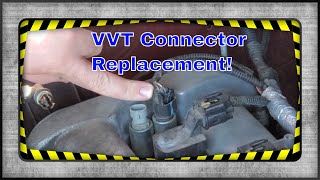
- Test Resistance: Unplug the suspect solenoid and set a multimeter to Ohms (Ω). Measure the resistance between its two pins. A good solenoid will read between 8 and 13 Ohms. An open circuit (OL) or a reading that jumps around confirms a bad solenoid. 🎬 Watch: How to test and replace VVT solenoids
- Replace the Faulty Part(s): If the solenoid is confirmed bad, replace it. It is best practice to replace both solenoids as a pair since they have similar lifespans.
Parts You'll Likely Need
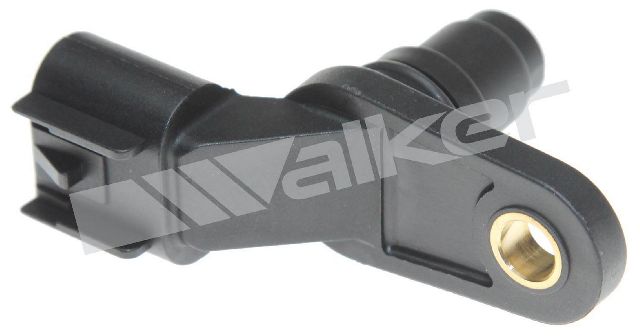
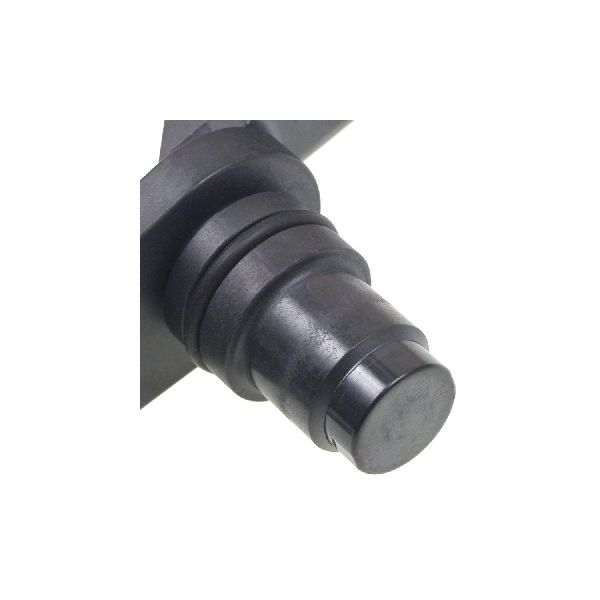
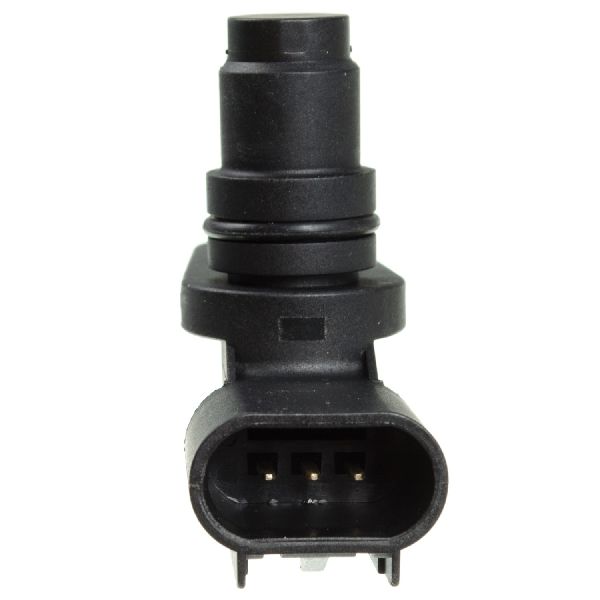
- Intake Camshaft Position Actuator Solenoid
(OEM #12655420)— This is the most common part to fail, either electrically or by getting clogged, directly causing the P0010 code. It is identified by a gray connector.
Trusted brands: ACDelco (GM Original Equipment), Delphi, Dorman
OEM price range: $45-$70
Aftermarket price range: $25-$55 - Exhaust Camshaft Position Actuator Solenoid
(OEM #12655421)— The intake and exhaust solenoids are physically identical and exposed to the same conditions. It is highly recommended to replace them as a pair to prevent having to do the job again in the near future. This part is identified by a black connector.
Trusted brands: ACDelco (GM Original Equipment), Delphi, Dorman
OEM price range: $45-$70
Aftermarket price range: $25-$55
Related Codes That Often Appear With This One
- P0011 — P0011 means 'Intake Camshaft Position Timing Over-Advanced'. If the solenoid circuit fails (P0010), it can cause the camshaft timing to be incorrect, triggering a performance code like P0011. Seeing them together strongly points to a bad intake solenoid.
- P0013 — This is the circuit code for the exhaust ('B') solenoid. You will see this code if you swap a faulty intake solenoid to the exhaust position for diagnostic purposes.
- P0014 — This is the performance code for the exhaust ('B') solenoid. It may appear with P0013 after a diagnostic swap, confirming the original intake solenoid was faulty.
Technical Service Bulletins (TSBs) & Recalls
- GM TSB #17-NA-098: Addresses rough running, hesitation, hard starts, and stalling accompanied by DTCs P0010, P0011, P0013, or P0014. The cause is identified as camshaft position actuator solenoid valve failure, and the recommended correction is to replace both solenoid valves and ensure the ECM has the latest software calibration.
- GM TSB #PIP4549B: While not directly for P0010, this bulletin notes that the engine wiring harness can chafe on the EVAP solenoid bracket, causing shorts for critical sensor wiring. This is a potential, though less common, cause for electrical circuit codes.
Platform-Specific Known Issues
- The 2.4L LE5 engine is known to consume oil. It is critical to check the oil level regularly between changes, as low oil is a primary trigger for VVT-related fault codes.
- A user on the Chevy HHR Network forum with codes P0010/P0011 noted, 'I had this issue before. I cleared the codes a few times before finally replacing the int solenoid... Replace the int solenoid and your issue will very likely be solved. I think it was ~$65 at the dealer.' This highlights the commonality and straightforward fix.
Mechanic-Grade Diagnostic Values
- VVT Actuator Solenoid Resistance — expected: 8 to 13 Ohms. Failure: A reading of OL (Open Line/infinite resistance), a wildly fluctuating/unstable reading, or a value significantly outside the expected range.
- VVT Solenoid Control Signal — expected: 12V Pulse Width Modulated (PWM) signal from the ECM when the engine is running and VVT is commanded.. Failure: Signal that is absent, not a PWM signal, or has incorrect voltage, indicating a wiring or ECM issue.
Hidden / Shadow Codes Worth Checking
- Cam Solenoid Circuit Short/Open Test Status: This is not a DTC but a specific data PID available on professional scan tools. It shows the result of the ECM's internal continuous check of the solenoid driver circuit, indicating 'OK' or 'Fault' for short-to-ground or open circuit conditions. (see via GM Tech2 or GDS2 scan tool under engine data or specific test menus.)
Scan Tool Commands That Help
- GM Tech2 / GDS2: Camshaft Position Actuator Solenoid Control — This bidirectional test allows a technician to command the solenoid ON and OFF, or to a specific duty cycle, while the engine is running. By observing the 'Desired' vs. 'Actual' cam angle PIDs, a technician can confirm if the ECM, wiring, solenoid, and mechanical phaser are all responding correctly. If the actual angle does not change when commanded, it points to a failure in the solenoid, oil passages, or the phaser itself.
Wiring & Ground Locations
- G105 — On the left rear side of the engine compartment, located on an engine/transmission stud below the upper coolant hose.. G105 serves as a primary ground for the Engine Control Module (ECM). A poor connection at this point due to corrosion or looseness can cause a voltage drop, leading to a wide range of erratic electronic issues and false circuit codes, including P0010.
- Intake VVT Solenoid Connector — Top of the engine on the valve cover, toward the front of the vehicle (radiator side). It is typically a gray, 2-pin connector.. This is the primary interface for electrical testing. One pin is the control circuit (12V PWM signal from the ECM) and the other is the low-reference (ground provided by the ECM). All resistance and voltage tests are performed at this connector.
Real Owner Repair Stories
- YouTube channel 'MrTWalla' (2009 Pontiac G5 (with identical 2.4L Ecotec engine)) — Check Engine Light with code P0010.
✅ What actually fixed it The technician used a multimeter to test the resistance of both VVT solenoids. The exhaust solenoid measured a healthy 12 Ohms. The intake solenoid showed no reading (open circuit). Replacing the faulty intake solenoid with a new one that measured 11 Ohms resolved the issue.
OEM Part Supersession History
12655420 (Intake)→12679099— Standard part revision and improvement by the manufacturer.12655421 (Exhaust)→12679100— Standard part revision and improvement by the manufacturer.
Diagnostic Flowchart
Other Known Issues on This Vehicle
Issues unrelated to this code that are worth knowing about as an owner of this generation:
- Electric Power Steering (EPS) Failure 🔴 High — Very common, typically occurs around 70,000-100,000 miles. Can be intermittent at first, often temporarily fixed by restarting the car. (Ref: GM issued recall 14V153000 (GM recall #14116) in March 2014 for this issue, but eligibility may have expired.)
- Timing Chain Wear / Tensioner Failure 🔴 High → Shop Engine Timing Chain — Common after 80,000-100,000 miles. Often presents as a rattling noise on startup. Low oil levels accelerate wear significantly.
- Excessive Oil Consumption 🟠 Medium — A known issue with the 2.4L Ecotec family, often attributed to piston ring wear. Owners should check oil levels frequently. (Ref: GM had customer satisfaction programs for later model year Ecotec engines with this issue, but the 2006-2010 G6 may not be covered.)
- Worn Front Lower Control Arm Bushings 🟠 Medium — The rearward bushings on the front lower control arms are a common wear item, causing clunking noises from the front suspension, especially when turning or braking.
- Transmission Control Module (TCM) Failure 🟠 Medium — Can cause harsh shifting, getting stuck in one gear (limp mode), and may trigger code P0700.
Used vs. New Parts: Buying Guide for This Vehicle
When a used part is the smart pick: Almost never for this specific part. The VVT solenoids are a known high-failure component and are relatively inexpensive to purchase new ($25-$60). The risk of a used part failing shortly after installation outweighs the minimal cost savings.
Donor-vehicle mileage cap: roughly under 30000 miles for the part to have meaningful remaining life.
What to inspect on the donor part:
- Visually inspect the mesh screens; they must be perfectly clean, intact, and free of any metallic shavings or sludge.
- Check the plastic connector for any cracks, brittleness, or signs of heat damage.
- Test the resistance with a multimeter before purchase. It must read between 8 and 13 Ohms and the reading must be stable when wiggling the connector.
OEM-only on this vehicle (don't cheap out):
- Camshaft Position Actuator Solenoids
Aftermarket brands forum-validated for this vehicle:
- ACDelco (OEM)
- Delphi
Brands owners have reported issues with on this vehicle:
- Dorman (for this specific electronic part, due to widespread reports of premature failure in forum and technician communities).
Real Owner Stories
Aggregated from forums and TSBs cited above. Mileages and costs reflect what owners reported in those sources.
2006-2011 Chevrolet HHR 2.4L LE5
Symptoms: Owner had issues with P0010 and P0011 codes appearing together. The vehicle required the codes to be cleared multiple times before a permanent repair was made.
What fixed it: Replacing the intake solenoid.
Cost: $65-$65
Source hint: Chevy HHR Network - 'Camshaft Position Actuator Solenoid Valve Replacement (w. pics) - P0010/11 P0013/14'
2006-2010 Chevrolet Cobalt 2.4L LE5
Symptoms: The owner described getting both P0010 and P0011 codes simultaneously on the 2.4L engine.
What fixed it: Replacing both camshaft actuator solenoids.
Cost: $100-$100
Source hint: The Chevrolet Cobalt SS Forum - 'Codes P0010 & P0011 - VVT'
Related OBD-II Codes
Frequently Asked Questions
My 2.4L Ecotec is running rough and stalling; does GM TSB #17-NA-098 apply to my P0010 code?
Can I test if the intake solenoid is actually the problem before buying parts for my G6?
Is there a wiring issue I should look for on the 2006-2010 Pontiac G6 besides the solenoids?
Why does my G6 keep throwing P0010 even though I just changed the solenoid?
Should I replace both solenoids even if only the intake (P0010) is showing a fault?
Is there a recall for the steering issues I'm having along with this engine code?
Helpful Videos
We Have This Part in Stock



The information in this article is provided for general reference and educational purposes only. Vehicle specifications, procedures, and part compatibility can vary by production date, trim level, and region. Always consult your vehicle's factory service manual and verify part numbers before purchasing or performing repairs. Safety-critical components such as airbags, seat belts, and braking systems should be installed by a qualified professional.
- Pontiac G6:
- 🧭 Diagnostic Flowchart
- 🎬 Helpful Videos
- 🛍️ Shop This Part
- What's Unique About the 2006-2010 Pontiac G6
- Symptoms You May Notice
- Most Likely Causes
- Rare But Worth Checking
- Diagnosis Steps
- Parts You'll Likely Need
- Related Codes That Often Appear With This One
- Technical Service Bulletins (TSBs) & Recalls
- Platform-Specific Known Issues
- Mechanic-Grade Diagnostic Values
- Hidden / Shadow Codes Worth Checking
- Scan Tool Commands That Help
- Wiring & Ground Locations
- Real Owner Repair Stories
- OEM Part Supersession History
- Other Known Issues on This Vehicle
- Used vs. New Parts: Buying Guide for This Vehicle
- Real Owner Stories
- 2006-2011 Chevrolet HHR 2.4L LE5
- 2006-2010 Chevrolet Cobalt 2.4L LE5
- Related OBD-II Codes
- Frequently Asked Questions
- 🎟️ Get 5% Off