

P0010 on 2013-2024 Ram 1500 3.6L: 'A' Camshaft Actuator Circuit Causes and Fixes
On a 3.6L Pentastar Ram 1500, code P0010 is most often caused by low or dirty engine oil, or a failed intake Variable Valve Timing (VVT) solenoid on the passenger side. Always check your oil level and condition first. Replacing the solenoid is a common DIY fix, with the part costing around $30-$80.
- P0010 on a Ram 1500 3.6L points to an electrical fault with the passenger-side intake VVT solenoid circuit.
- Before buying any parts, check your engine oil level and condition. Low or dirty oil is a very common cause.
- The most frequently replaced part for this code is the VVT solenoid itself, which is accessible and relatively inexpensive to replace.
- A simple way to confirm a bad solenoid is to swap it with the exhaust solenoid on the same bank and see if the trouble code changes from P0010 to P0013.
- If you own a 2021 model, be aware of TSB 08-109-21, which points to a specific factory wiring ground issue as a possible cause.
What's Unique About the 2013-2024 Ram 1500
The 3.6L Pentastar V6 engine is well-known for its Variable Valve Timing (VVT) system being sensitive to oil quality and level. Many P0010 codes on this platform are a direct result of delayed oil changes or using incorrect oil viscosity. For some 2021 Ram 1500 models specifically, a Technical Service Bulletin (TSB 08-109-21) was issued for P0010 and related codes caused by a faulty engine ground harness connection at ground G927A, which is a unique, documented issue for that model year. Furthermore, this code can be an early symptom of the infamous 'Pentastar tick' caused by failing rocker arms, which contaminate the oil with metal debris and clog the VVT solenoids.
Generation note: This year range covers the fourth generation (2013-2018, and 2019+ as Ram 1500 Classic) and the fifth generation (2019-2024). The 3.6L Pentastar V6 is a primary engine in both. The common causes are consistent across generations, but a specific wiring TSB (08-109-21) applies only to certain 2021 fifth-generation models built between October 16 and October 18, 2020. Additionally, a key change occurred in 2014 with an updated oil filter housing design; 2013 models have the earlier, more failure-prone version.
Symptoms You May Notice
- Check Engine Light is illuminated.
- Rough running engine or rough idle.
- Hesitation or stalling during acceleration.
- Noticeable decrease in engine power.
- Worse than normal fuel economy.
- Engine ticking or rattling noise, which could indicate oil contamination from a separate rocker arm issue.
- Replacing the Camshaft Position Sensor. P0010 is a circuit code for the actuator solenoid that controls cam timing, not the sensor that reads it. While they work together, the fault lies in the control circuit. A Reddit user mentioned their mechanic made this mistake initially.
Most Likely Causes
- Low or Dirty Engine Oil 🔴 High Probability The Pentastar's VVT system uses oil pressure to adjust cam timing. Old, sludgy, or low oil cannot operate the actuators correctly and can clog the small filter screens on the solenoids. This is the most common cause and should always be the first check.
How to confirm: Check the engine oil dipstick for both level and condition. If the oil is dark, gritty, or below the 'add' line, this is the likely cause. Also check for a burning smell or signs of metal particles, which could indicate a more severe internal engine problem like rocker arm failure.
Typical fix: Perform an engine oil and filter change using the manufacturer-specified oil weight (typically 5W-20 or 0W-20 depending on the year). Clear codes and re-test.
Est. part cost: $40-$80 - Faulty VVT Solenoid (Oil Control Valve) 🔴 High Probability This is the most common component to fail for this code. The solenoid's internal coil can short out or break, causing an electrical circuit fault. They are also susceptible to clogging from oil sludge or debris from rocker arm failure.
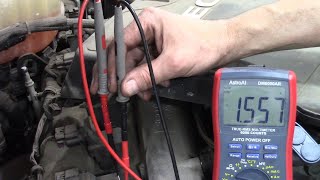
How to confirm: Swap the Bank 1 intake solenoid with the Bank 1 exhaust solenoid. Clear the codes and drive. If the code changes to P0013 ('B' Camshaft Position Actuator Circuit), the solenoid is bad. You can also test the solenoid's resistance with a multimeter; it should be between 7.0 and 8.0 ohms at room temperature. A reading of infinity (open) or near zero (short) indicates a bad solenoid. 🎬 Watch: How to diagnose and test a P0010 code
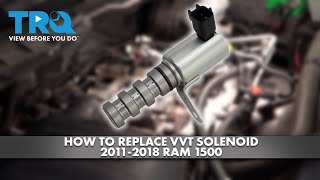
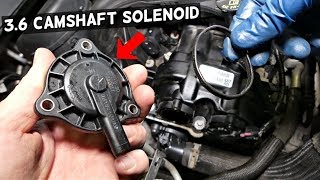
Typical fix: Replace the Bank 1 (passenger side) intake VVT solenoid. The solenoids on the 3.6L Pentastar are located on the front of the cylinder heads. Accessing the Bank 1 (passenger side) solenoids requires removing the upper and lower intake manifolds. 🎬 Watch: Step-by-step VVT solenoid replacement on a Ram 1500
Est. part cost: $30-$80 - Wiring or Connector Damage 🟡 Medium Probability For 2021 models, TSB 08-109-21 identifies a specific issue with the engine ground harness causing this code. On all years, the connector can become contaminated with oil, or wires can become brittle and break from engine heat and vibration. The plastic locking tab on the connector is also known to break, causing a poor connection.
How to confirm: Visually inspect the wiring harness and connector going to the Bank 1 intake VVT solenoid. Look for frayed wires, corrosion in the connector pins, or a loose connection. Check for oil saturation in the connector. Use a multimeter to check for continuity to the PCM; resistance should be under 5.0 ohms.
Typical fix: Repair the damaged section of wire or clean/replace the connector pigtail. For affected 2021 models, perform the repair outlined in TSB 08-109-21, which involves splicing in a new ground pigtail (Part No. 68552801AA). If the connector tab is broken, a zip tie can be used to secure it as a temporary fix.
Est. part cost: $10-$50
Rare But Worth Checking
- Failed Powertrain Control Module (PCM): This is very rare. The PCM is the last thing to suspect after all other possibilities (oil, solenoid, wiring) have been exhaustively ruled out.
Diagnosis Steps
- Check Engine Oil: Pull the dipstick. Verify the oil is at the full mark and is clean. If low or dirty, perform an oil change with the correct viscosity oil, clear the code, and see if it returns.
- Inspect the Wiring: Locate the intake VVT solenoid on the passenger side of the engine. Carefully inspect its electrical connector and the surrounding wires for any signs of damage, oil contamination, or looseness. The connector is a 2-pin plug.
- Swap the Solenoids: A simple and effective test is to swap the intake VVT solenoid with the exhaust VVT solenoid on the same bank (passenger side). They are identical parts. Clear the codes and drive. If the code changes from P0010 to P0013, you have confirmed the solenoid is faulty.
- Test the Solenoid: If you have a multimeter, unplug the solenoid and measure the resistance across its two pins. A reading between 7.0 and 8.0 ohms is the specific range for a good solenoid. A reading of infinity (open) or near zero (short) indicates a bad solenoid.
- Test the Circuit: If the solenoid tests good, check the electrical connector for power and ground. With the key on, engine off, one pin should have battery voltage (approx. 12V). The other pin is the control wire from the PCM. Check the resistance of the control wire from the connector to the PCM; it should be less than 5.0 ohms.
- Check for TSBs: For 2021 models built between Oct 16-18, 2020, specifically check if TSB 08-109-21 applies to your vehicle's VIN, as it points to a known wiring issue at ground G927A.
Parts You'll Likely Need
- Engine Variable Valve Timing (VVT) Solenoid
(OEM #5184101AH)— This is the most common part to fail, causing an electrical circuit fault that triggers P0010. The original part number 5184101AG has been superseded by 5184101AH.
Trusted brands: Mopar, Dorman, Standard Motor Products (SMP), TRQ
OEM price range: $60-$100
Aftermarket price range: $30-$80
Related Codes That Often Appear With This One
- P0011 — This code means 'Camshaft Position Timing Over-Advanced'. If P0010 (circuit fault) appears with P0011 (performance fault), it strongly suggests the VVT solenoid is both electrically bad and mechanically stuck.
- P0020 — This is the identical circuit fault code but for Bank 2 (driver's side). Seeing both P0010 and P0020 together often points to a systemic problem like severe oil contamination or a shared wiring issue, such as the ground fault described in TSB 08-109-21.
- P0520 — This code indicates a fault in the 'Engine Oil Pressure Sensor Circuit'. Because the VVT system is entirely dependent on oil pressure, a fault in the pressure sensing system can trigger related VVT codes.
Technical Service Bulletins (TSBs) & Recalls
- 08-109-21 / RRT 21-083: For some 2021 Ram 1500 3.6L models, this bulletin addresses a rough running engine and multiple VVT codes, including P0010, caused by a faulty engine ground harness.
- TSB Bulletin #0810921: A manufacturer service bulletin notes that P0010 (Bank 1 Camshaft 1 Position Actuator Circuit Open) may occur alongside other intake valve control solenoid circuit codes such as P1056 and P1059.
Platform-Specific Known Issues
- TSB 08-109-21 (also RRT 21-083) was issued for some 2021 Ram 1500s with the 3.6L eTorque engine, built between Oct 16, 2020 and Oct 18, 2020. It indicates that P0010 (and other VVT codes) could be caused by a poor engine ground harness connection at ground G927A. The fix requires splicing in a pigtail (Part No. 68552801AA).
Mechanic-Grade Diagnostic Values
- VVT Solenoid Internal Resistance — expected: 7.0 to 8.0 Ohms at 68°F (20°C).. Failure: A reading of infinity (Open Loop) or near-zero Ohms indicates a failed solenoid.
- VVT Solenoid Harness Connector Voltage — expected: Battery voltage (approx. 12.0-12.6V) on one of the two pins with Key On, Engine Off.. Failure: No voltage suggests a problem upstream, such as the ASD relay or a break in the power wire.
- VVT Solenoid Control Circuit Resistance — expected: Less than 5.0 Ohms between the solenoid harness connector and the corresponding pin at the PCM connector.. Failure: Resistance above 5.0 Ohms indicates an open or high-resistance wire that needs repair.
Scan Tool Commands That Help
- wiTECH or capable aftermarket scanner (e.g., Autel, XTOOL): VVT Solenoid Actuation / Active Test / Bidirectional Control — Use this command with the engine running to manually activate the solenoid. A change in engine idle or sound when the solenoid is commanded ON/OFF confirms the solenoid is mechanically responding to electrical input, helping to differentiate between a stuck solenoid and a wiring issue.
Wiring & Ground Locations
- G927A — Engine ground harness connection, specific to certain 2021 models.. A poor connection at this specific ground is the direct cause of P0010 and other VVT codes as identified in TSB 08-109-21.
- VVT Solenoid Connector (Bank 1 Intake) — On the front of the passenger side cylinder head, requires removal of the intake manifold for access.. This is the direct connector for the component in question. It is a common failure point due to oil contamination, heat embrittlement, and broken locking tabs.
- G304 / G305 — General engine-to-chassis grounds, often found on or near the passenger side frame rail.. If the TSB for G927A does not apply, checking and cleaning main engine grounds is a good general practice, as a poor ground can cause a variety of electrical faults, including VVT circuit codes.
When the Usual Fixes Don't Work
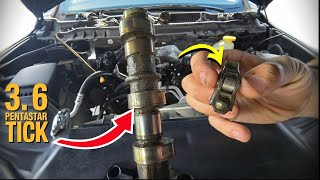
- While replacing the VVT solenoid is the most common fix for P0010, a recurring theme among Pentastar engine experts is that this often provides only a temporary solution. The code frequently returns because the underlying cause was not addressed. In many cases, the true root cause is the 'Pentastar Tick,' where failing rocker arms contaminate the engine oil with metallic debris. This debris clogs the fine mesh screen on the new solenoid, causing it to fail as well. The correct, albeit more expensive and labor-intensive, repair in this scenario involves removing the valve cover, inspecting all rocker arms for play, and replacing all 24 rockers and lifters to prevent future contamination.
OEM Part Supersession History
5184101AG→5184101AH— Standard part revision and improvement by the manufacturer.
Heads up: None, 5184101AH is the correct direct replacement for 5184101AG.
Model Year Variations Within This Range
- 2013 vs 2014+: The oil filter housing assembly was updated for the 2014 model year. 2013 models use an earlier, more failure-prone plastic design. When this part fails on a 2013 model, it is often upgraded to the 2014+ design or an aftermarket aluminum version, which also requires using the 2014+ style oil filter cartridge.
- All years: The manufacturer-specified engine oil viscosity has changed over the Pentastar's production life. While many 2013+ Ram 1500s specify 5W-20, some newer models or different platforms with the same engine may specify 0W-20. Using the incorrect viscosity can cause VVT system faults. Always confirm the required oil type on the oil cap or in the owner's manual.
Diagnostic Flowchart
Other Known Issues on This Vehicle
Issues unrelated to this code that are worth knowing about as an owner of this generation:
- Cracked Oil Filter Housing/Cooler Assembly 🔴 High — Extremely common, typically between 70,000-120,000 miles. The plastic housing becomes brittle from heat cycles and can crack, causing significant oil and/or coolant leaks.
- Rocker Arm and Lifter Failure ('Pentastar Tick') 🔴 High — Common, particularly on earlier models (pre-2016), but can occur at any mileage. Causes a distinct ticking noise from the valvetrain. Failure can release metal debris into the oil, causing widespread engine damage if not addressed. (Ref: A class-action lawsuit was filed regarding this issue, alleging a known defect.)
- Cylinder Head Failure (Left Bank) 🔴 High — Primarily affected early engines (2011-2013). An overheating condition on the #2 cylinder could lead to valve seat issues, causing misfires and requiring cylinder head replacement. This issue is less common on the Ram 1500's model years. (Ref: Chrysler extended the warranty on the left cylinder head for some early models.)
- Cooling System Failures 🟠 Medium — Water pumps, thermostats, and radiators can be weak points over the life of the engine, leading to overheating.
Used vs. New Parts: Buying Guide for This Vehicle
When a used part is the smart pick: A used part is generally not recommended for this specific repair, as VVT solenoids are wear items sensitive to the donor vehicle's maintenance history. A used wiring pigtail could be a viable option if the connector is in good condition.
Donor-vehicle mileage cap: roughly under 75000 miles for the part to have meaningful remaining life.
What to inspect on the donor part:
- For a used engine assembly, check the oil fill cap for signs of sludge.
- If possible, get a vehicle history report to check for consistent oil change intervals.
- Avoid any donor engine that has the audible 'Pentastar tick'.
OEM-only on this vehicle (don't cheap out):
- Powertrain Control Module (PCM) - Aftermarket or reprogrammed units are notoriously unreliable for this platform.
Aftermarket brands forum-validated for this vehicle:
- Dorman (specifically their aluminum oil filter housing upgrade, part 926-959, which is a well-regarded fix for the failure-prone OEM plastic housing).
- Jasper (for complete remanufactured engines that include updates to address original design flaws like rocker arms and pistons).
Brands owners have reported issues with on this vehicle:
- No-name, unbranded VVT solenoids from online marketplaces are a gamble; they may fail prematurely or be out of specification from the start.
Real Owner Stories
Aggregated from forums and TSBs cited above. Mileages and costs reflect what owners reported in those sources.
2021 Ram 1500 3.6L eTorque
Symptoms: Rough running engine and multiple VVT codes including P0010.
What fixed it: Splicing in a new ground pigtail (Part No. 68552801AA) at ground G927A as per TSB 08-109-21.
Source hint: TSB 08-109-21 / RRT 21-083
2013-2024 Ram 1500 3.6L Pentastar V6
Symptoms: P0010 code persists even after a mechanic replaced the camshaft position sensor for an oil leak.
What fixed it: Replacing the actual VVT actuator solenoid rather than the camshaft position sensor, which is a common misdiagnosis.
Source hint: Reddit - r/MechanicAdvice - P0010 after Camshaft Position Sensor Replacement
2013-2024 Ram 1500 3.6L Pentastar V6 — ~95000 miles
Symptoms: Significant oil and/or coolant leaks; plastic housing became brittle and cracked.
What fixed it: Replacing the oil filter housing/cooler assembly, with some owners opting for an aluminum housing upgrade.
Cost: $650-$800
Source hint: RamForum.com - Oil filter and cooler housing v6 3.6 pennstar
Related OBD-II Codes
Frequently Asked Questions
I have a 2021 Ram 1500 3.6L eTorque and keep getting P0010. Is there a specific known issue for this year?
Where is the Bank 1 intake VVT solenoid located on my 3.6L Pentastar engine?
Can I test the VVT solenoid on my Ram 1500 before buying a new one?
My Ram 1500 has a ticking noise along with the P0010 code. Are they related?
Is there a simple way to confirm if the solenoid is the problem without special tools?
What oil should I use in my Ram 1500 3.6L to prevent VVT issues?
Helpful Videos
We Have This Part in Stock


The information in this article is provided for general reference and educational purposes only. Vehicle specifications, procedures, and part compatibility can vary by production date, trim level, and region. Always consult your vehicle's factory service manual and verify part numbers before purchasing or performing repairs. Safety-critical components such as airbags, seat belts, and braking systems should be installed by a qualified professional.
- Ram 1500:
- 🧭 Diagnostic Flowchart
- 🎬 Helpful Videos
- 🛍️ Shop This Part
- What's Unique About the 2013-2024 Ram 1500
- Symptoms You May Notice
- Most Likely Causes
- Rare But Worth Checking
- Diagnosis Steps
- Parts You'll Likely Need
- Related Codes That Often Appear With This One
- Technical Service Bulletins (TSBs) & Recalls
- Platform-Specific Known Issues
- Mechanic-Grade Diagnostic Values
- Scan Tool Commands That Help
- Wiring & Ground Locations
- When the Usual Fixes Don't Work
- OEM Part Supersession History
- Model Year Variations Within This Range
- Other Known Issues on This Vehicle
- Used vs. New Parts: Buying Guide for This Vehicle
- Real Owner Stories
- 2021 Ram 1500 3.6L eTorque
- 2013-2024 Ram 1500 3.6L Pentastar V6
- 2013-2024 Ram 1500 3.6L Pentastar V6 — ~95000 miles
- Related OBD-II Codes
- Frequently Asked Questions
- 🎟️ Get 5% Off