

P0010 on 2007-2009 Toyota Camry 2.4L: Causes and Fixes for the VVT Actuator Circuit
On a 2007-2009 Camry with the 2.4L 2AZ-FE engine, P0010 almost always means the intake Oil Control Valve (OCV), or VVT solenoid, has failed. First, check that the engine oil is clean and full, as low oil from this engine's known consumption issue is a very common trigger. Replacing the OCV is a simple, 15-minute DIY job with a part cost of about $30-$90.
- First, check your oil level. On this specific engine, low oil due to consumption is the most likely trigger for P0010.
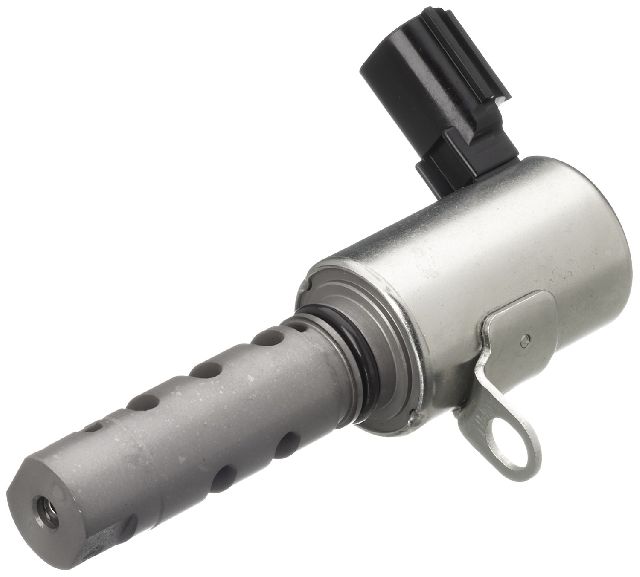
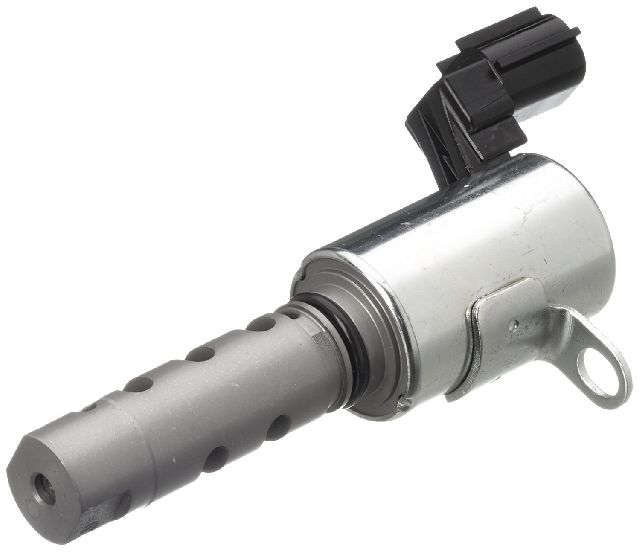
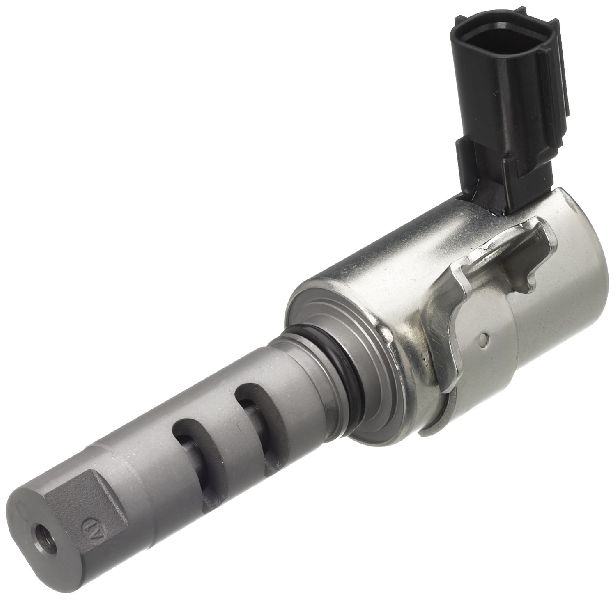
- The most common failed part is the intake Oil Control Valve (OCV), part number 15330-28020.
- Replacing the OCV is a very simple DIY job that takes less than 30 minutes and requires only basic tools.
- Do not confuse the Oil Control Valve (actuator) with the Camshaft Position Sensor; they are different parts.
- This guide applies specifically to 2007-2009 Camrys with the 2.4L 2AZ-FE engine, not later models with the 2.5L engine.
What's Unique About the 2007-2017 Toyota Camry
The 2.4L 2AZ-FE engine, used in the Camry from 2007-2009, has a well-documented history of excessive oil consumption due to a piston ring design flaw. This issue is critical for code P0010 because the VVT system relies entirely on clean oil at the correct pressure. Many owners experience P0010 simply because the oil level has dropped too low between changes, starving the OCV and VVT system.
Generation note: The specified year range (2007-2017) covers two Camry generations, but the 2AZ-FE 2.4L engine was only offered in the XV40 generation from 2007 to 2009. From 2010 onward, the base engine was the 2.5L 2AR-FE. This guide is specific to the 2007-2009 models with the 2AZ-FE engine.
Symptoms You May Notice
- Check Engine Light is on
- Rough or unstable idle
- Reduced engine power and poor acceleration
- Worse fuel economy
- Engine may be difficult to start
- Rattling noise from the engine bay, especially if oil is low
- Replacing the Camshaft Position Sensor: The P0010 code is for the actuator circuit (the OCV), not the sensor. The camshaft position sensor measures the camshaft's position, while the OCV is the component that controls it. They are different parts with different functions.
- Replacing Timing Chain Components: P0010 is an electrical circuit code. While worn timing components can cause performance-related VVT codes (like P0011, P0012), they do not cause a circuit fault code like P0010 unless there is a catastrophic failure.
Most Likely Causes
- Low or Dirty Engine Oil 🔴 High Probability The 2AZ-FE engine is notorious for excessive oil consumption due to piston ring issues, making low oil a very frequent problem. Dirty or sludgy oil can also clog the small passages in the OCV and its filter screen.
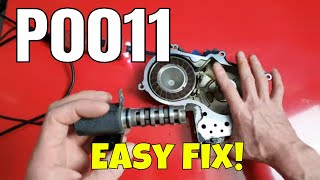
How to confirm: Check the engine oil dipstick for level and condition. If the oil is low, top it off, clear the code, and see if it returns. If the oil is dark and sludgy, an oil change is necessary. 🎬 See how cleaning the solenoid can sometimes fix the code
Typical fix: Top off or change the engine oil and filter. Monitor oil levels frequently (e.g., every 500 miles) to track consumption.
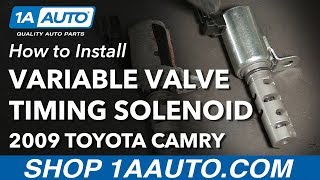
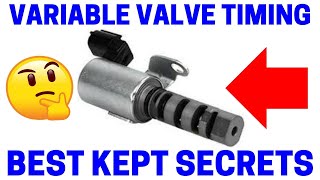
Est. part cost: $30-$70 for oil and filter - Failed Intake Oil Control Valve (OCV) / VVT Solenoid 🔴 High Probability This is an electro-mechanical part that operates constantly and is susceptible to failure from heat cycles and internal contamination from oil sludge. It's the most common part to fail that directly causes the P0010 circuit code. 🎬 Watch: How to replace the VVT solenoid on your Camry
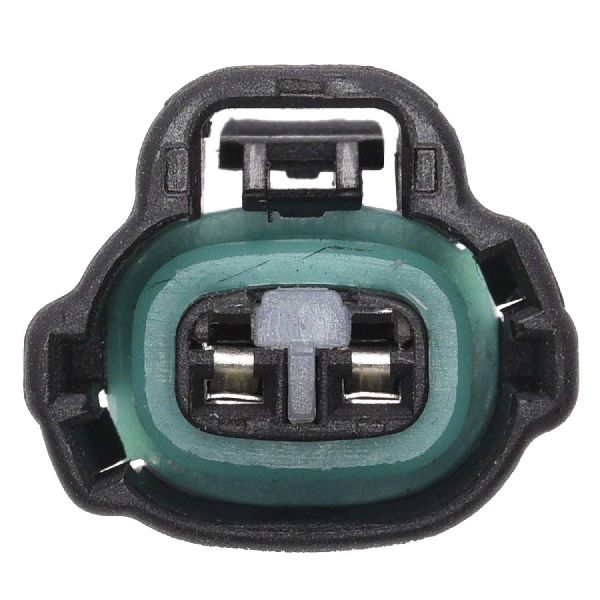
How to confirm: Disconnect the OCV connector and measure the resistance between its two pins with a multimeter. The resistance should be between 6.9 and 7.9 Ω at 68°F (20°C). If the reading is open (OL) or shorted (near zero), the solenoid is bad. You can also briefly apply 12V power to the terminals to see if the internal plunger clicks.
Typical fix: Replace the intake Oil Control Valve. It is located on the top of the valve cover and held by a single 10mm bolt, torqued to 9.0 N*m (80 in.*lbf).
Est. part cost: $30-$90 - Damaged Wiring or Connector 🟡 Medium Probability The connector and wiring for the OCV sit on top of the engine and are exposed to heat and vibration, which can make them brittle and prone to cracking or breaking over time.
How to confirm: Visually inspect the connector and wiring harness leading to the OCV for any signs of cracking, fraying, or corrosion. With the key on, check for battery voltage at one pin of the connector using a multimeter.
Typical fix: Repair the damaged section of wire or replace the connector pigtail.
Est. part cost: $10-$25 for a new pigtail
Rare But Worth Checking
- Clogged OCV Filter Screen: There is a small, thimble-shaped filter screen for the VVT oil supply line located in the cylinder head, underneath the OCV. While not a common failure point, it can become clogged with sludge or debris, restricting oil flow and causing VVT-related codes. It's worth checking and cleaning if a new OCV doesn't solve the problem.
- Stretched Timing Chain: → Shop Engine Timing Chain While P0010 is an electrical code, an extremely stretched timing chain can, in rare cases, cause the VVT system to operate so far out of its expected range that the ECM flags a circuit fault. This is more common on very high mileage engines (150k+ miles) and is usually accompanied by rattling noises.
- Faulty ECM: An internal failure of the driver circuit within the Engine Control Module (ECM) is possible but extremely rare. This should only be considered after all other possibilities, including wiring, have been exhaustively checked.
Diagnosis Steps
- Check Engine Oil: Verify the engine oil level is full and the oil is in good condition. Top off or change if necessary. This is the most critical first step for a 2AZ-FE engine.
- Inspect Wiring: Visually inspect the wiring and connector for the intake OCV (on top of the valve cover) for any obvious damage, corrosion, or loose connection.
- Test the OCV: Disconnect the OCV connector. Use a multimeter to measure the resistance across the two pins of the solenoid. It should be approximately 6.9-7.9 ohms at 68°F (20°C). If it's an open circuit (infinite resistance) or shorted (near zero), the OCV has failed.
- Check for Power: Turn the ignition to the 'ON' position. Carefully probe the OCV electrical connector. One of the pins should have battery voltage (approx. 12V). If not, there is a wiring issue between the relay and the OCV.
- Clean/Replace OCV: If the resistance test fails, or if it passes but the issue persists, replace the Oil Control Valve. It is secured by one 10mm bolt and should be torqued to 9.0 N*m (80 in.*lbf).
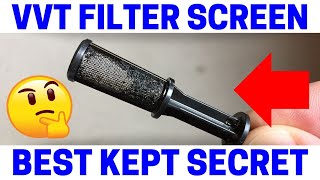
- Check OCV Filter: If a new OCV does not resolve the code, consider removing the OCV and checking the small filter screen located in the oil passage below it for clogs. 🎬 Watch this guide to find and replace the oil filter screen
- ECM Check: If all other steps fail to find a fault, the issue may lie in the ECM wiring or the ECM itself, which requires professional diagnosis.
Parts You'll Likely Need
- Engine Variable Valve Timing (VVT) Solenoid / Oil Control Valve (OCV)
(OEM #15330-28020 (may be superseded by 15330-0H010 or 15330-28010))— This is the component whose electrical circuit is monitored by the P0010 code. It is the most common part to fail, either electrically or by getting stuck.
Trusted brands: Denso (OEM supplier), Aisin, NGK, Dorman
OEM price range: $80-$150
Aftermarket price range: $30-$90
Related Codes That Often Appear With This One
- P0011 — P0011 ('A' Camshaft Position - Timing Over-Advanced) can appear with P0010 if the OCV is stuck in a position that allows continuous oil flow to the VVT actuator.
- P0012 — P0012 ('A' Camshaft Position - Timing Over-Retarded) can be triggered if the OCV is stuck closed or its filter is clogged, preventing the camshaft from advancing as commanded.
Technical Service Bulletins (TSBs) & Recalls
- T-SB-0094-11: This Toyota Technical Service Bulletin addresses the excessive oil consumption issue on the 2AZ-FE engine. While not directly for P0010, it describes the root cause (low oil) that often triggers this code. The TSB outlines the procedure for replacing the pistons and rings with an updated design.
- T-SB-0158-14: This TSB contains the specific oil consumption inspection procedure that must be performed before the repair in T-SB-0094-11 can be authorized.
Platform-Specific Known Issues
- Excessive Oil Consumption: The 2007-2009 Camry with the 2AZ-FE engine was subject to a warranty enhancement program (T-SB-0094-11) for excessive oil consumption caused by faulty piston ring design. This leads to low oil levels, which is a primary trigger for VVT-related codes like P0010.
Mechanic-Grade Diagnostic Values
- OCV Solenoid Resistance — expected: 6.9 to 7.9 Ω at 20°C (68°F). Failure: A reading of infinity (open circuit) or near-zero (short circuit).
- OCV Harness to ECM Continuity — expected: Below 1 Ω. Failure: Resistance above 1 Ω indicates a break in the wire between the OCV connector and the ECM pin.
- OCV Harness to Ground (Check for Short) — expected: 10 kΩ or higher. Failure: Resistance below 10 kΩ indicates a short to ground in the harness.
- OCV Signal Waveform at ECM — expected: A specific square wave pattern (duty cycle) should be visible on an oscilloscope at idle.. Failure: An absent, flat-lined, or distorted waveform can indicate a faulty ECM driver circuit.
Hidden / Shadow Codes Worth Checking
- Mode $06 Data: While not a hidden code, professional scan tools can access Mode $06 data. For P0010, a technician would look at the test results for the VVT system monitor (often under TID $81, CID $11 or similar). A failed test result here can confirm the fault detected by the ECM even before the MIL is commanded on for a second trip on some codes. (see via Professional scan tool with Mode $06 capability, such as Toyota Techstream.)
Scan Tool Commands That Help
- Toyota Techstream: Active Test: Control the VVT System (Bank 1) or VVT CTRL B1 — This command allows a technician to manually command the OCV solenoid 'ON' or 'OFF' while the engine is idling. If commanding the OCV 'ON' causes the engine to run rough or stall, the valve and hydraulics are likely working. If there is no change in engine operation, it points to a failed OCV, a clogged oil passage, or a wiring/ECM driver issue.
- Toyota Techstream: Utility: All Readiness — After a repair (like replacing the OCV), this function can be used to quickly run the system's internal self-test monitor to confirm the fix is complete and the P0010 code will not return, without needing to perform a full drive cycle.
Wiring & Ground Locations
- B17 (OCV Connector) — On the Oil Control Valve itself, located on the top of the valve cover near the intake camshaft.. This is the primary connector for testing the OCV solenoid's resistance and for checking power/ground signals from the ECM.
- B30 (ECM Connector) — The main engine computer connector, typically located behind the glove box inside the passenger cabin.. This is the termination point for the OCV circuit. Testing for continuity and shorts requires back-probing specific pins at this connector.
- ECM Pins OC1+ and OC1- — At the B30 ECM connector, Pin OC1+ is B30-100 and Pin OC1- is B30-123 for the 2AZ-FE engine.. These are the specific pins that send the duty-cycle signal to the OCV. A continuity test from these pins to the corresponding pins at the B17 OCV connector will confirm if the wiring harness is intact.
- EG / EH (Ground Points) — On the 2AZ-FE, major engine-related ground points are on the left side of the cylinder head (EG) and the intake side of the cylinder block (EH).. A poor engine ground can cause a variety of electrical issues, including erratic sensor readings and actuator circuit faults. While not a direct cause of P0010, ensuring these grounds are clean and tight is a crucial step in diagnosing any electrical fault.
Real Owner Repair Stories
- Reddit r/MechanicAdvice (2012 Toyota Camry (Note: This is likely the 2AR-FE engine, but the failure mode is identical)) — Check Engine Light with P0010 code.
❌ Tried (didn't work) Initial diagnosis
✅ What actually fixed it The owner discovered a single severed wire right at the OCV connector. Repairing the broken wire by soldering it and applying heat shrink resolved the code. - Car Talk Community Forum (2005 Toyota Camry 2.4L 2AZ-FE, 140k+ miles) — A gear rattling noise for 1 second on cold start-up, no CEL at the time.
❌ Tried (didn't work) Checking serpentine belt and pulleys.
✅ What actually fixed it The issue was diagnosed as the VVT gear's internal lock pin sticking due to oil draining out overnight. While the user didn't proceed with the expensive repair, the confirmed diagnosis was the gear itself, not the OCV. This can eventually lead to VVT performance codes. - Toyotanation Forum User (2007 Camry 2.4L 2AZ-FE, 129k miles) — Knocking noise and Check Engine Light with codes P0011 and P0012 after an engine rebuild.
❌ Tried (didn't work) Replacing the OCV before startup.
✅ What actually fixed it The user's problem was related to using a heavier weight oil (10W-30) for break-in, which interfered with the VVT system's operation. The discussion also referenced the critical step of ensuring the VVT gear is in the fully retarded (locked) position during timing chain installation.
When the Usual Fixes Don't Work
- In one documented case on a 2012 Camry, the P0010 code was not caused by a failed OCV or low oil, but by a single wire that had broken off right at the OCV connector. This highlights the importance of a thorough visual inspection of the harness and connector pigtail for physical damage, especially in an area exposed to engine heat and vibration, before replacing the part itself.
OEM Part Supersession History
15330-28020→15330-28010, 15330-0H010— Standard part revision and consolidation by Toyota.
Heads up: While 15330-28020 is the primary part for the 2AZ-FE, some aftermarket suppliers may cross-reference other numbers. One user review for a cheap aftermarket part noted the bolt hole did not align correctly, highlighting the risk of poor quality control in non-OEM parts.
Model Year Variations Within This Range
- 2007-2009 (XV40 Generation): These models use the 2.4L 2AZ-FE engine. The P0010 code is very frequently linked to the engine's inherent oil consumption issue (TSB T-SB-0094-11), making 'low oil level' the top suspect. The correct OCV part number is 15330-28020.
- 2010-2017 (XV40 Refresh & XV50 Generation): These models use the 2.5L 2AR-FE engine. While P0010 can still occur due to a failed OCV, it is not associated with the same systemic oil consumption issue as the 2AZ-FE. The OCV part number is different (e.g., 15330-0T010).
Diagnostic Flowchart
Other Known Issues on This Vehicle
Issues unrelated to this code that are worth knowing about as an owner of this generation:
- Excessive Oil Consumption 🔴 High — Very common, typically starts after 60,000 miles. Some engines can burn a quart of oil every 600-1200 miles. (Ref: T-SB-0094-11)
- Stripped Cylinder Head Bolt Threads 🔴 High — A known issue, though less common than oil consumption. The aluminum block threads can fail, especially after an overheat, causing head gasket failure. Typically seen between 50,000 and 100,000 miles. (Ref: T-SB-0015-11)
- VVT-i Cam Gear Rattle on Cold Start 🟠 Medium — Common on high-mileage engines. A brief 1-3 second rattle upon cold startup indicates wear in the VVT-i actuator (cam gear) locking pin. If left unaddressed, it can lead to catastrophic failure.
- Sticky / Melting Dashboard 🟡 Low — Widespread on XV40 Camrys (2007-2011) in high-heat, high-humidity climates. The dash surface becomes shiny, sticky, and can melt. (Ref: Warranty Enhancement Program ZE6)
Used vs. New Parts: Buying Guide for This Vehicle
When a used part is the smart pick: For this repair, a used part is generally not recommended. The Oil Control Valve (OCV) is an electro-mechanical part with internal moving components and seals that wear over time and are sensitive to oil contamination. Given the low cost of a new, high-quality aftermarket part, the risk of getting a used part that is already near the end of its life or clogged with sludge from a donor car is not worth the small savings.
Donor-vehicle mileage cap: roughly under 50000 miles for the part to have meaningful remaining life.
What to inspect on the donor part:
- If considering a used part, insist on seeing the donor vehicle to check for signs of oil sludge under the oil cap.
- Inspect the small screen on the used OCV for any embedded debris or sludge that cannot be easily cleaned.
- Test the resistance of the used part with a multimeter before purchase; it must be within the 6.9-7.9 Ω specification.
OEM-only on this vehicle (don't cheap out):
- While not strictly OEM-only, using a Denso (OEM supplier) or Aisin part is highly recommended for fitment and longevity.
Aftermarket brands forum-validated for this vehicle:
- Denso (OEM)
- Aisin
Brands owners have reported issues with on this vehicle:
- Unnamed, low-cost brands from online marketplaces have reports of incorrect physical fitment (e.g., bolt holes not aligning), leading to installation problems.
Real Owner Stories
Aggregated from forums and TSBs cited above. Mileages and costs reflect what owners reported in those sources.
2007-2011 Toyota Camry 2.4L 2AZ-FE
Symptoms: Owners report the dashboard surface becoming shiny, sticky, and melting in high-heat climates, often discussed alongside engine reliability issues.
What fixed it: Repaired under Warranty Enhancement Program ZE6.
Source hint: Known Issues section citing Warranty Enhancement Program ZE6
2007-2009 Toyota Camry 2AZ-FE — ~60000 miles
Symptoms: Excessive oil consumption, sometimes burning a quart every 600-1200 miles, leading to VVT-related codes.
What fixed it: Replacement of pistons and rings with an updated design as per TSB procedure.
Source hint: T-SB-0094-11
Toyota Camry 2AZ-FE
Symptoms: P0010 code where diagnosis may involve more than just the solenoid, including checking the filter and the camshaft itself.
What fixed it: Diagnosing and replacing the VVT solenoid and checking the oil passage filter.
Source hint: YouTube: 'How To Fix Check Engine Light || P0010 || Camshafts Position A Actuator Circuit (Bank 1) Of Toyota' by Mayo Cars Dr
Related OBD-II Codes
Frequently Asked Questions
Is my 2007-2009 Camry eligible for a free repair regarding the oil consumption that causes P0010?
How much oil is 'normal' for the 2AZ-FE engine to burn before it triggers a VVT code?
Can I just replace the VVT solenoid to fix the P0010 code on my Camry?
What is the specific resistance I should look for when testing the Camry's OCV?
Is the rattling noise I hear at startup related to the P0010 code?
Are there other Toyota models with the 2AZ-FE that have this same P0010 and oil issue?
Helpful Videos
We Have This Part in Stock


The information in this article is provided for general reference and educational purposes only. Vehicle specifications, procedures, and part compatibility can vary by production date, trim level, and region. Always consult your vehicle's factory service manual and verify part numbers before purchasing or performing repairs. Safety-critical components such as airbags, seat belts, and braking systems should be installed by a qualified professional.
- Toyota Camry:
- 🧭 Diagnostic Flowchart
- 🎬 Helpful Videos
- 🛍️ Shop This Part
- What's Unique About the 2007-2017 Toyota Camry
- Symptoms You May Notice
- Most Likely Causes
- Rare But Worth Checking
- Diagnosis Steps
- Parts You'll Likely Need
- Related Codes That Often Appear With This One
- Technical Service Bulletins (TSBs) & Recalls
- Platform-Specific Known Issues
- Mechanic-Grade Diagnostic Values
- Hidden / Shadow Codes Worth Checking
- Scan Tool Commands That Help
- Wiring & Ground Locations
- Real Owner Repair Stories
- When the Usual Fixes Don't Work
- OEM Part Supersession History
- Model Year Variations Within This Range
- Other Known Issues on This Vehicle
- Used vs. New Parts: Buying Guide for This Vehicle
- Real Owner Stories
- 2007-2011 Toyota Camry 2.4L 2AZ-FE
- 2007-2009 Toyota Camry 2AZ-FE — ~60000 miles
- Toyota Camry 2AZ-FE
- Related OBD-II Codes
- Frequently Asked Questions
- 🎟️ Get 5% Off