

P0010 on 2005-2012 Toyota RAV4 2.4L: "A" Camshaft Actuator Circuit Causes and Fixes
On a 2005-2012 RAV4 with the 2.4L 2AZ-FE engine, code P0010 almost always means the intake Oil Control Valve (OCV), also called the VVT solenoid, has failed. It's a simple, accessible part to replace. Before replacing it, check that your engine oil level is correct and the oil is clean, as this engine is known for oil consumption issues that can trigger VVT faults.
- P0010 is an electrical fault code for the intake VVT solenoid (OCV), not a mechanical timing issue.
- The most likely cause is a failed Oil Control Valve (OCV), part number 15330-28020.
- Always check your engine oil level and condition first; low or dirty oil is a very common trigger for this code on the 2AZ-FE engine.
- This is a very DIY-friendly repair, typically requiring only a 10mm socket and about 20-30 minutes.
- Do not confuse the Oil Control Valve (actuator) with the Camshaft Position Sensor; they are different parts.
What's Unique About the 2005-2012 Toyota RAV4
The 2AZ-FE engine in this generation of RAV4 is generally reliable, but it is known for potential oil consumption issues, especially in 2006-2008 models. Because the VVT-i system is entirely dependent on clean oil at the correct pressure, this engine is particularly sensitive to oil level and condition. Toyota issued Technical Service Bulletin T-SB-0094-11 for this issue, which was caused by defective piston rings. An owner experiencing P0010 should first suspect a simple lack of oil or oil that has become sludgy from extended change intervals, which can clog or damage the Oil Control Valve.
Generation note: This guide covers the end of the second generation (XA20, 2005) and the entire third generation (XA30, 2006-2012) RAV4. The 2AZ-FE engine and the VVT system design are consistent across this year range, so the causes and fixes for P0010 are the same. Note that the oil consumption TSB specifically covers 2006-2008 models. For the 2009 model year, a larger 2.5L 2AR-FE engine started replacing the 2.4L 2AZ-FE, so be sure to confirm which engine your vehicle has.
Symptoms You May Notice
- Check Engine Light is on
- Rough or unstable idle
- Poor acceleration and loss of power
- Reduced fuel economy
- Engine may stall
- Rattling noise from the engine on startup
- Replacing the Camshaft Position Sensor. The P0010 code is for the actuator circuit (the OCV/solenoid), not the position sensor. The sensor measures the camshaft's position, while the actuator is what changes it.
Most Likely Causes
- Failed Intake Oil Control Valve (OCV) / VVT Solenoid 🔴 High Probability The OCV is an electro-mechanical part that operates constantly. Over time, the internal solenoid coil can fail from heat and vibration, causing an open or short in the circuit. Sludgy oil, often a consequence of the 2AZ-FE's oil consumption issue, can also cause it to stick or fail.
How to confirm: Disconnect the OCV connector and measure the resistance across its two pins with a multimeter. At 68°F (20°C), the resistance should be between 6.9 and 7.9 ohms. A reading of infinite resistance (open) or near-zero resistance (short) confirms failure. You can also briefly apply 12V power to the terminals to listen for a 'click' from the internal plunger, or use a capable scan tool's active test to command the solenoid on and off while monitoring engine RPM.
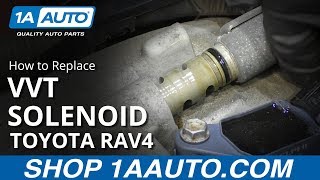
Typical fix: Replace the intake Oil Control Valve. It is held in by a single 10mm bolt and is located on the front of the cylinder head, easily accessible.
Est. part cost: $30-$90 - Low or Dirty Engine Oil 🟡 Medium Probability The 2AZ-FE engine, particularly in 2006-2008 models, is subject to TSB-0094-11 for excessive oil consumption due to faulty piston rings. The VVT system relies on oil pressure. If the oil level is too low, or if the oil is old and sludgy, it can clog the small passages and filter screen on the OCV, leading to malfunction and triggering P0010.
How to confirm: Check the engine oil dipstick. Note the level and the color/condition of the oil. If it is low, black, or thick, this is a likely contributing factor. This should be the very first check performed. 🎬 See a breakdown of the common causes for code P0010.
Typical fix: Top off the oil to the correct level or perform a full oil and filter change using the manufacturer-specified grade (typically 5W-20). Monitor oil level closely thereafter.
Est. part cost: $30-$60 - Damaged Wiring or Connector ⚪ Low Probability The OCV connector and its wiring are exposed to high engine bay temperatures and vibration, which can make them brittle and prone to cracking or breaking over time. Rodent damage is also a possibility.
How to confirm: Visually inspect the wiring harness and the connector going to the intake OCV. Look for any signs of cracked insulation, corrosion on the pins, or broken wires. Wiggle the harness with the engine running to see if it affects the idle.
Typical fix: Repair the broken wire or replace the damaged connector pigtail.
Est. part cost: $10-$25
Rare But Worth Checking
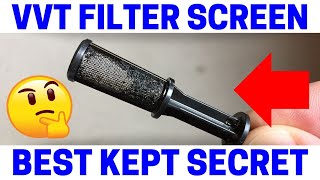
- Clogged OCV Filter Screen: There is a small, thimble-shaped filter screen for the VVT oil supply located in the cylinder head, often underneath the OCV itself or nearby. If the engine has a history of sludge from oil consumption or infrequent changes, this screen can become completely blocked, starving the OCV of oil. It's worth checking and cleaning if a new OCV doesn't solve the problem. It can often be extracted carefully with a small pick or screw. On the 2AZ-FE, this filter is located on the back of the engine (passenger side) and requires removing the power steering pump for access. 🎬 Watch this guide on how to replace the VVT filter screen.
- Faulty Engine Control Module (ECM): In very rare cases, the driver circuit within the ECM that controls the OCV can fail. This should only be considered after all other possibilities (valve, wiring, oil, filter screen) have been definitively ruled out through testing.
Diagnosis Steps
- Check Engine Oil: Before any other steps, verify the engine oil is at the correct level and is in good condition. This is the most critical first step for a 2AZ-FE engine. Top off or change the oil if necessary.
- Read Freeze Frame Data: Using a scan tool, look at the freeze frame data to understand the engine conditions (speed, temperature, load) when the code was set.
- Inspect the OCV Connector and Wiring: Visually check the electrical connector and harness going to the intake OCV for any obvious damage, corrosion, or loose connections.
- Test the Oil Control Valve (OCV): Disconnect the OCV and measure its resistance with a multimeter. It should be between 6.9 and 7.9 ohms at room temperature. If it reads as an open circuit (infinite resistance) or a dead short (zero resistance), it has failed and must be replaced.
- Perform an Active Test (Optional): If you have a capable bidirectional scan tool like Toyota Techstream, use the active test function 'VVT Ctrl B1' to command the intake OCV on and off. You should hear a click from the valve and see a change in engine idle (it may stumble or stall), confirming the valve is mechanically responding.
- Test the OCV Circuit: If the OCV tests good, check for voltage at the connector with the key on, engine off. One wire should have battery voltage. Then, check for continuity between the other wire (signal) and its corresponding pin at the ECM to rule out a wire break. For the 2AZ-FE, check for continuity between OCV connector pin 1 and ECM connector B30, pin 100 (OC1+), and between OCV connector pin 2 and ECM connector B30, pin 123 (OC1-). Resistance should be below 1 Ω.
- Inspect OCV Filter: If the OCV and wiring are good, consider inspecting the small filter screen. On the 2AZ-FE, this is a more involved job, requiring removal of the serpentine belt and power steering pump to access the filter on the back of the engine. Check if it is clogged with sludge or debris and clean or replace it as needed.
- Replace the OCV: If the OCV fails the resistance test or does not respond to an active test, replace it. This is the most common point of failure for this code.
- Clear Code and Test Drive: After performing repairs, clear the DTC with a scan tool and perform a complete drive cycle to ensure the code does not return.
Parts You'll Likely Need
- Engine Camshaft Timing Oil Control Valve (VVT Solenoid)
(OEM #15330-28020)— This is the component whose electrical circuit is monitored by the P0010 code. Internal failure of its solenoid coil is the most frequent cause of the fault. The original part number was 15330-28010, which was superseded by 15330-28020. Some parts catalogs may show the reverse, but 15330-28020 is the commonly sold replacement.
Trusted brands: Denso (OEM Supplier), Aisin, Dorman, Standard Motor Products (SMP)
OEM price range: $80-$110
Aftermarket price range: $30-$70
Related Codes That Often Appear With This One
- P0011 — P0011 indicates 'Camshaft Position 'A' - Timing Over-Advanced'. While P0010 is an electrical circuit code, the underlying cause (like a stuck OCV or oil sludge) can also cause a mechanical timing performance issue, triggering P0011.
- P0012 — P0012 indicates 'Camshaft Position 'A' - Timing Over-Retarded'. Similar to P0011, this points to a performance problem with the VVT system that can share root causes with the P0010 electrical fault, such as a clogged or failing OCV.
Technical Service Bulletins (TSBs) & Recalls
- T-SB-0094-11: Titled '2AZ-FE Engine Oil Consumption', this TSB details the issue of excessive oil burning in 2006-2008 RAV4s (and other models) and provides the repair procedure, which involves replacing the piston assembly.
- T-SB-0158-14: Titled '2AZ-FE Engine Oil Consumption Inspection Procedure', this TSB outlines the official dealer procedure for performing an oil consumption test to determine if a vehicle qualifies for the warranty repair.
Platform-Specific Known Issues
- The 2AZ-FE engine had a Technical Service Bulletin (TSB 0094-11) issued for excessive oil consumption on 2006-2008 RAV4 models. This was followed by Warranty Enhancement Program ZE7, which extended the warranty for this specific issue to 10 years or 150,000 miles. The root cause was faulty piston rings. While not directly for P0010, this known issue makes low oil level a highly probable cause for any VVT-related codes on this engine.
Mechanic-Grade Diagnostic Values
- Oil Control Valve (OCV) Solenoid Resistance — expected: 6.9 to 7.9 Ω at 20°C (68°F). Failure: A reading of infinite resistance (open circuit) or near-zero resistance (short circuit).
- OCV Wiring Harness Continuity (OCV connector to ECM connector) — expected: Below 1 Ω. Failure: Resistance above 1 Ω indicates a break in the wire.
- OCV Wiring Harness (Check for short to ground) — expected: 10 kΩ or higher. Failure: Resistance below 10 kΩ indicates a short to ground.
- OCV Signal Waveform at ECM (Oscilloscope) — expected: A specific square wave pattern is expected at idle.. Failure: An absent or distorted waveform can indicate a faulty ECM driver.
Scan Tool Commands That Help
- Toyota Techstream: Active Test: VVT Ctrl B1 (or 'Activate the VVT System (bank 1)') — Use this after confirming the OCV has correct resistance. This command directly tells the ECM to cycle the solenoid. A successful test will cause the engine to stumble or stall, confirming the solenoid, wiring, and ECM driver are all working. If the engine idle doesn't change, it points to a problem in that chain.
Wiring & Ground Locations
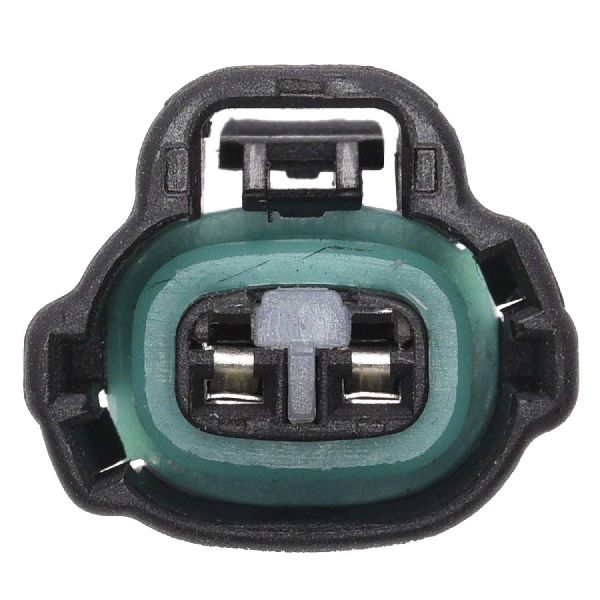
- OCV Connector (B17) — On the front of the cylinder head, connected to the intake VVT solenoid.. This is the primary connection point for testing the solenoid and the circuit. Pin 1 (OC1+) and Pin 2 (OC1-) are the two terminals.
- ECM Connector (B30) — Located in the engine bay, the specific location may vary slightly by year but is typically accessible near the firewall or fender.. This is where the OCV circuit terminates. To test for a wiring break, you must check continuity from the OCV connector to these specific pins. Pin 100 (OC1+) and Pin 123 (OC1-) correspond to the OCV circuit.
- Engine Ground (EG) — On the 2AZ-FE, a key ground point is located on the left side of the cylinder head.. While P0010 is a specific circuit code, a poor main engine ground can cause a variety of electrical issues. It's a good practice to check that this ground is clean and tight if other electrical tests are inconclusive.
Real Owner Repair Stories
- Reddit r/MechanicAdvice (2012 Toyota Camry) — Check engine light with P0010 code.
✅ What actually fixed it The owner discovered a single severed wire right at the OCV connector. Repairing the damaged wire by soldering it resolved the code. - YouTube / D/I/Y Diagnostics N Repair (2009 Toyota Camry 2.4L) — Check Engine Light with P0010.
❌ Tried (didn't work) Initial diagnosis focused on checking oil level and condition.
✅ What actually fixed it The VVT solenoid (OCV) was tested and found to be faulty. Replacing the solenoid fixed the P0010 code.
OEM Part Supersession History
15330-28010→15330-28020— Standard part revision and improvement by the manufacturer.
Heads up: 15330-28020 is the correct and current replacement part for the 2.4L 2AZ-FE engine. While some older catalogs might show the reverse, 15330-28020 is the part typically supplied.
Model Year Variations Within This Range
- 2005-2008: These years used the 2.4L 2AZ-FE engine exclusively in the RAV4. Models from 2006-2008 are specifically called out in TSBs for excessive oil consumption, making low/dirty oil a higher probability cause for P0010.
- 2009-2012: Starting in the 2009 model year, Toyota began phasing in the larger 2.5L 2AR-FE four-cylinder engine. While many later models still have the 2.4L, it's crucial to verify which engine is in the vehicle, as the OCV part numbers and some procedures may differ.
Diagnostic Flowchart
Other Known Issues on This Vehicle
Issues unrelated to this code that are worth knowing about as an owner of this generation:
- Excessive Oil Consumption 🔴 High — Common on 2006-2008 models, typically appearing after 60,000 miles. Caused by defective piston rings. (Ref: T-SB-0094-11; Warranty Enhancement Program ZE7)
- Stripped Cylinder Head Bolt Threads 🔴 High — A known design flaw in the aluminum block, primarily affecting earlier 2AZ-FE engines (approx. 2002-2006). Overheating can cause the threads in the block to strip, leading to head gasket failure. (Ref: TSB EG015-07 (recommends short block replacement))
- Steering Shaft Intermediate Shaft Noise 🟠 Medium — Common on 2006-2008 models. Owners report a 'clunking' or 'popping' noise from the steering column at low speeds, especially when turning. Caused by a faulty intermediate steering shaft. (Ref: TSB-0318-08 (for some models))
- Water Pump Failure 🟠 Medium — Water pumps on the 2AZ-FE can fail prematurely, sometimes indicated by a pink crusty residue around the weep hole or a growling noise. Failure often occurs between 60,000 and 100,000 miles.
Used vs. New Parts: Buying Guide for This Vehicle
When a used part is the smart pick: For a simple electro-mechanical part like an Oil Control Valve (OCV), a used OEM part from a low-mileage donor vehicle can be a cost-effective alternative to a new aftermarket part. Given the high failure rate, it's a gamble, but can work if the donor vehicle's history is known.
Donor-vehicle mileage cap: roughly under 80000 miles for the part to have meaningful remaining life.
What to inspect on the donor part:
- Check the donor vehicle's CarFax or service history for regular oil changes.
- When pulling the part, inspect the area around the valve covers for signs of heavy sludge or varnish.
- Test the resistance of the used OCV with a multimeter before purchase; it must be within the 6.9-7.9 ohm specification.
- Ensure the connector pins are clean, straight, and free of corrosion.
OEM-only on this vehicle (don't cheap out):
- Engine Control Module (ECM)
Aftermarket brands forum-validated for this vehicle:
- Denso (OEM)
- Aisin
Brands owners have reported issues with on this vehicle:
- Unbranded, no-name parts from online marketplaces should be avoided, as their internal coil windings and valve tolerances may not meet OEM specifications, leading to a quick return of the P0010 code or other performance issues.
Real Owner Stories
Aggregated from forums and TSBs cited above. Mileages and costs reflect what owners reported in those sources.
2007 Toyota RAV4 2.4L 2AZ-FE — ~85000 miles
Symptoms: The owner experienced excessive oil burning, which is a common precursor to VVT-related codes on this specific engine model.
What fixed it: The repair procedure involved replacing the piston assembly as detailed in T-SB-0094-11 to resolve the oil consumption issue.
Source hint: T-SB-0094-11: Titled '2AZ-FE Engine Oil Consumption'
2006-2008 Toyota RAV4 2.4L 2AZ-FE — ~120000 miles
Symptoms: Owners on forums frequently report P0010 alongside symptoms of a failed OCV or low oil levels.
What fixed it: Replacing the Oil Control Valve (OCV) or topping off the engine oil.
Source hint: RAV4World Forums: Numerous threads discuss P0010, with the overwhelming consensus pointing to a failed OCV or low oil level.
Related OBD-II Codes
Frequently Asked Questions
Is there a TSB for the oil consumption issue that causes P0010 on my 2007 RAV4?
What is the correct resistance for the Oil Control Valve on a 2AZ-FE engine?
Does the Warranty Enhancement Program ZE7 cover my P0010 code?
Where is the OCV located on the 2.4L RAV4, and is it hard to replace?
Can I test the OCV circuit using the Toyota Techstream tool?
Why does my RAV4 rattle on startup when the P0010 code is present?
Helpful Videos

![How to Fix TOYOTA P0010 Engine Code in 4 Minutes [2 DIY Methods / Only $6.53]](https://img.youtube.com/vi/BlJbMSWirrk/mqdefault.jpg)
We Have This Part in Stock


The information in this article is provided for general reference and educational purposes only. Vehicle specifications, procedures, and part compatibility can vary by production date, trim level, and region. Always consult your vehicle's factory service manual and verify part numbers before purchasing or performing repairs. Safety-critical components such as airbags, seat belts, and braking systems should be installed by a qualified professional.
- Toyota RAV4:
- 🧭 Diagnostic Flowchart
- 🎬 Helpful Videos
- 🛍️ Shop This Part
- What's Unique About the 2005-2012 Toyota RAV4
- Symptoms You May Notice
- Most Likely Causes
- Rare But Worth Checking
- Diagnosis Steps
- Parts You'll Likely Need
- Related Codes That Often Appear With This One
- Technical Service Bulletins (TSBs) & Recalls
- Platform-Specific Known Issues
- Mechanic-Grade Diagnostic Values
- Scan Tool Commands That Help
- Wiring & Ground Locations
- Real Owner Repair Stories
- OEM Part Supersession History
- Model Year Variations Within This Range
- Other Known Issues on This Vehicle
- Used vs. New Parts: Buying Guide for This Vehicle
- Real Owner Stories
- 2007 Toyota RAV4 2.4L 2AZ-FE — ~85000 miles
- 2006-2008 Toyota RAV4 2.4L 2AZ-FE — ~120000 miles
- Related OBD-II Codes
- Frequently Asked Questions
- 🎟️ Get 5% Off