

P0011 on 2012-2018 Audi A6 3.0T: Causes and Fixes for Over-Advanced Camshaft Timing
On the Audi A6 3.0T, code P0011 is most often caused by a faulty camshaft adjuster solenoid (VVT solenoid) or low/dirty engine oil. Start by checking your oil level and condition. If the oil is fine, the solenoid is the next likely culprit, costing around $80-$220 for the part and being a relatively simple DIY replacement. Ignoring the code can lead to reduced performance and, in rare cases, mask a more severe timing chain issue.
- Always check your engine oil level and condition first; low, dirty, or incorrect viscosity oil is a primary cause of P0011.
- The most likely failed part is the Bank 1 intake camshaft adjuster solenoid (N205 valve), a very common issue on the 3.0T engine.
- A simple and effective DIY diagnostic is to swap the intake solenoids between the passenger (Bank 1) and driver (Bank 2) side of the engine to see if the code follows the part (changes to P0021).
- Use only high-quality, OEM-spec parts, especially the oil filter, as a filter that is too short is known to cause oil pressure issues and trigger this code.
What's Unique About the 2012-2018 Audi A6
The Audi 3.0T (EA837) engine's variable valve timing system is highly dependent on clean engine oil and correct pressure. For this specific platform, the camshaft adjuster solenoids (also called oil control valves or N205 valves) are a known failure point. A common diagnostic trick specific to this engine is to swap the identical solenoids between Bank 1 and Bank 2 to see if the fault code follows the part (changing to P0021), which would confirm the solenoid is the issue. Ignoring this code can sometimes be an early warning for more significant timing chain tensioner issues, although this is less common than a solenoid failure for an isolated P0011 code.
Symptoms You May Notice
- Check Engine Light is on
- Rough or unstable idle
- Reduced engine power and sluggish acceleration
- Decreased fuel economy
- Engine stalling in some cases
- Rattling or ticking noise from the engine, especially on cold starts, which could indicate a more serious timing chain tensioner problem.
- Irregular engine running reported by customers.
- Replacing the camshaft phaser (adjuster) before ruling out the much cheaper and more common solenoid failure.
- Replacing the camshaft position sensor when the issue is actually the solenoid or an oil problem.
- Assuming a major timing chain failure without first performing the simple oil check and solenoid/sensor swap diagnostics.
Most Likely Causes
- Low, Dirty, or Incorrect Engine Oil 🔴 High Probability The VVT system uses hydraulic pressure to adjust timing, making it extremely sensitive to oil viscosity and cleanliness. Sludge from delayed oil changes can clog the small passages in the VVT solenoids and the camshaft adjusters.
How to confirm: Check the engine oil level on the dipstick (or via the MMI system) and examine the oil's condition. If it is dark, thick, or below the minimum level, it needs to be addressed. Ensure the correct oil specification (e.g., VW 502 00) is used, as incorrect viscosity can trigger this code.
Typical fix: Perform an engine oil and filter change using a high-quality synthetic oil that meets Audi's specifications and an OEM-quality filter.
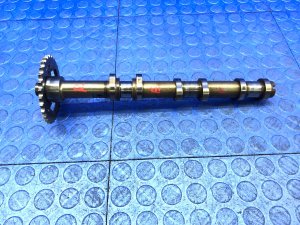
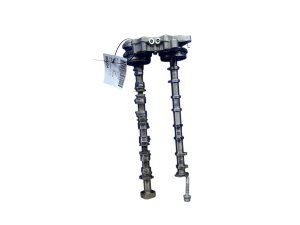
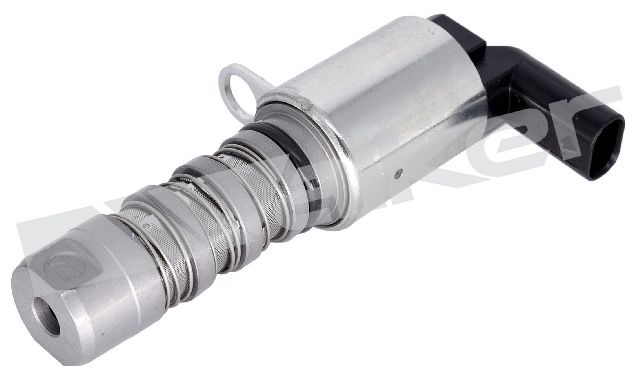
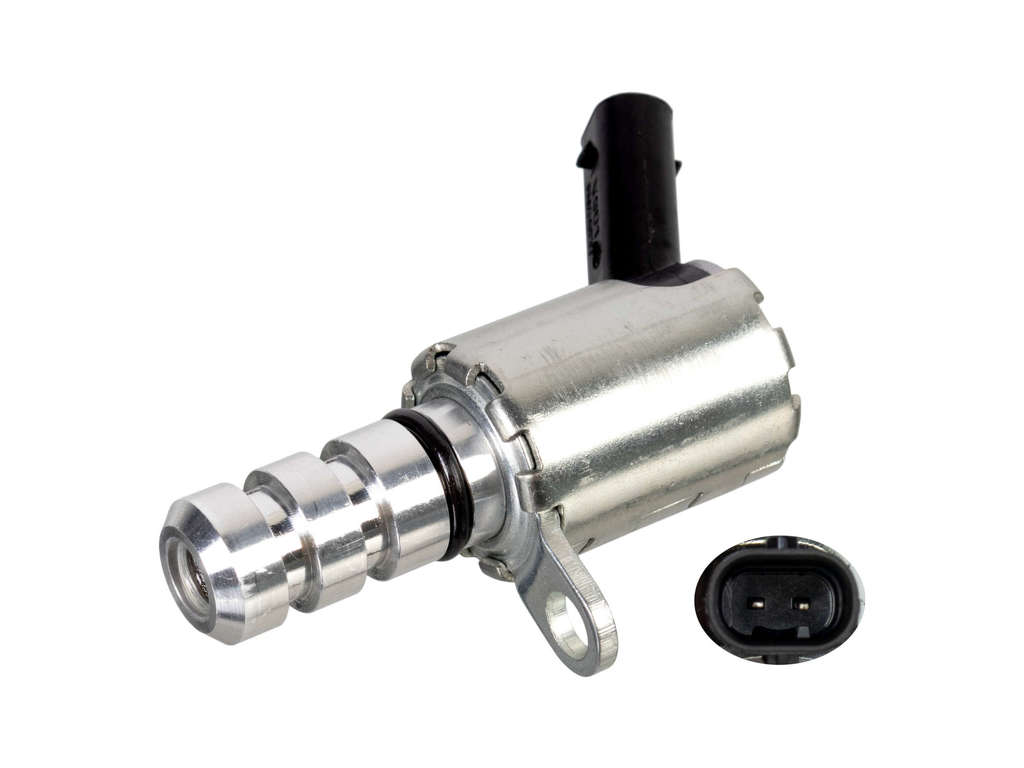
Est. part cost: $80-$150 - Faulty Camshaft Adjuster Solenoid (VVT Solenoid / N205 Valve) 🔴 High Probability → Shop Engine Camshaft This is a very common failure item on the 3.0T engine. The solenoid can become clogged with debris or fail electrically. Audi has issued a TSB (2041097) noting that the internal filter screen on the valve can break off and cause a blockage. The particles are caught by the main oil filter and do not cause further engine damage, but the valve itself ceases to function correctly.
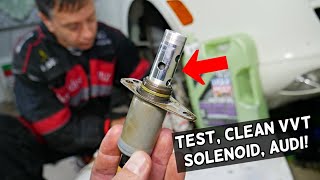
How to confirm: Swap the Bank 1 (passenger side) intake camshaft solenoid with the identical Bank 2 (driver's side) solenoid. Clear the codes and drive. If the fault code changes to P0021 (the Bank 2 equivalent), the solenoid is confirmed to be bad. Resistance can also be checked with a multimeter; it should be between 6.9 and 7.9 ohms at 68°F (20°C). 🎬 See how to properly test and clean your VVT solenoid.
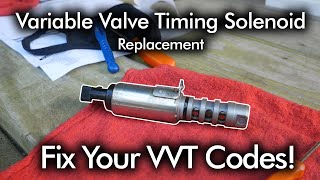
Typical fix: Replace the faulty camshaft adjuster solenoid. It is located on the top front of the cylinder head and is relatively easy to access, typically held by a single Torx screw. 🎬 Watch: A step-by-step guide to replacing the cam adjuster solenoid.
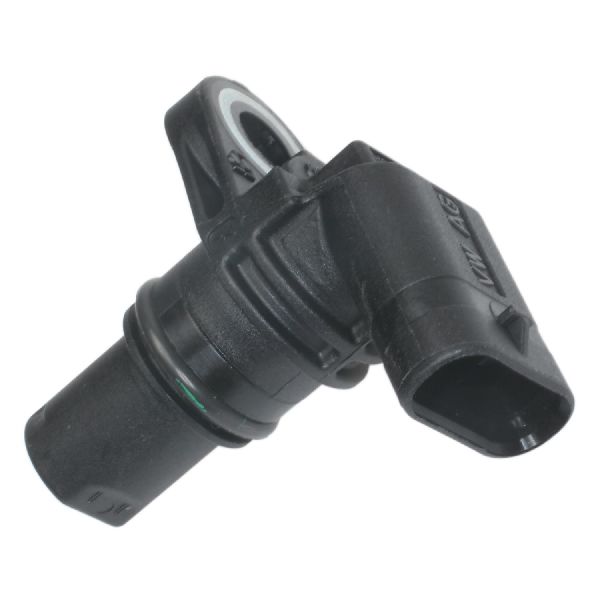
Est. part cost: $80-$220 - Faulty Camshaft Position Sensor (G40) 🟡 Medium Probability → Shop Engine Camshaft Position Sensor While durable, these sensors can fail with age and heat cycles, sending inaccurate position data to the ECM, leading it to believe the timing is over-advanced when it is not.
How to confirm: Similar to the solenoid, swap the Bank 1 camshaft position sensor with the Bank 2 sensor. Clear codes and drive. If the code changes to P0021, the sensor is the culprit.
Typical fix: Replace the faulty camshaft position sensor.
Est. part cost: $30-$80
Rare But Worth Checking
- Stretched Timing Chain or Failing Tensioner: → Shop Engine Timing Chain While less common for just a P0011 code, timing chain issues are a known problem on higher-mileage Audi engines. This is a much more serious and expensive repair. A rattling noise on startup is a key symptom. 🎬 Listen to this example of Audi timing chain rattle. This cause is more likely if P0011 is paired with correlation codes like P0016.
- Incorrect Oil Filter Installed: → Shop Engine Oil Filter Adapter An Audi TSB (2033379/2) warns that using an oil filter that is too short (must be 155 +/- 1 mm) can cause oil pressure malfunctions, which can in turn trigger VVT-related codes. If the filter is too short, a drain flap in the housing doesn't close, causing a loss of oil pressure. Always use a filter that matches OEM specifications.
- Clogged Oil Passages / Camshaft Adjuster Failure: → Shop Engine Camshaft If the solenoid and sensor swaps do not resolve the issue, and oil is clean, the problem may lie deeper. TSB 2049153/1 is a follow-up to the solenoid TSB and instructs technicians to replace the entire intake camshaft adjuster unit if the solenoid replacement doesn't work, after cleaning the oil passages with compressed air. This indicates that internal passages or the adjuster mechanism itself can fail.
Diagnosis Steps
- Read the fault codes with an OBD-II scanner.
- Check the engine oil level and condition. If low, dirty, or of an incorrect viscosity, perform an oil and filter change with the correct specification oil (e.g., VW 502 00) and an OEM-spec filter (155mm length). Clear codes and see if P0011 returns.
- If the code returns, locate the intake camshaft adjuster solenoids on top of the engine for Bank 1 (passenger) and Bank 2 (driver).
- Swap the Bank 1 and Bank 2 solenoids. They are identical parts and typically held by one T20 or T30 Torx bolt.
- Clear the codes and drive the vehicle. Scan for codes again.
- If code P0021 appears, the solenoid you moved to Bank 2 is faulty. Replace it.
- If P0011 reappears, the solenoid is likely not the issue. Swap them back to their original positions. Before reinstalling the original solenoid, inspect its oil screen for damage, as noted in TSB 2041097.
- Perform a similar swap test with the camshaft position sensors. If the code moves to P0021, the sensor is bad.
- If the code persists after these steps, the issue may be more complex. A professional should inspect for wiring issues, clogged oil passages in the cylinder head, or a mechanical timing issue (timing chain/tensioner/adjuster). TSB 2049153 suggests the next step is replacing the camshaft adjuster itself.
Parts You'll Likely Need
- Camshaft Adjuster Solenoid (VVT Solenoid)
(OEM #06E109257T (supersedes 06E109257M, 06E109257S, etc.))— This is the most common part to fail and cause the P0011 code on this specific engine, often due to internal clogging or the failure of its integrated filter screen.
Trusted brands: Audi (OEM), INA (OEM Supplier), Vaico, Vemo, Bosch
OEM price range: $150-$220
Aftermarket price range: $80-$150 - Engine Oil and Filter
(OEM #06E115562A (Filter))— Correcting low, old, or improper oil is the first and most crucial step, as the VVT system relies on oil pressure to function. Using the correct 155mm length filter is critical.
Trusted brands: Castrol EDGE Professional, Liqui Moly, Mobil 1, Mann-Filter (OEM Supplier), Mahle (OEM Supplier)
OEM price range: $100-$180
Aftermarket price range: $80-$130
Related Codes That Often Appear With This One
- P0016 — Crankshaft Position - Camshaft Position Correlation (Bank 1 Sensor A). If seen with P0011, it increases the likelihood of a mechanical timing issue like a stretched timing chain or an incorrectly installed timing component.
- P0021 — The equivalent code for Bank 2 (driver's side). If both appear together, it points to a systemic issue affecting both banks, such as very low oil pressure, severe oil sludging, or an incorrect oil filter.
- P164D00 — Oil Pressure Switch for Reduced Oil Pressure Malfunction. This code is specifically mentioned in TSB 2033379/2 regarding the installation of an oil filter that is too short, which can cause the oil pressure issues that lead to P0011.
Technical Service Bulletins (TSBs) & Recalls
- Audi TSB 2041097/2: Addresses codes P0011 and P0021, noting that the filter element on the camshaft adjustment valve can loosen or break off. It advises inspecting the valve and replacing it if the filter is missing or damaged.
- Audi TSB 2033379/2: Warns that an oil filter that is too short (must be 155mm) can be installed, leading to oil pressure malfunctions and codes like P164D00, which can cause VVT faults.
- Audi TSB 2049153/1: A follow-up procedure if TSB 2041097
Mechanic-Grade Diagnostic Values
- Camshaft Adjuster Solenoid (N205) Resistance — expected: 6.9 to 7.9 Ω at 68°F (20°C). Failure: A reading outside this range, or an open circuit (infinite resistance), indicates a faulty solenoid coil.
- VCDS Live Data: Camshaft Adaptation Phase — expected: For a healthy engine, the value for 'Camshaft adjustment: inlet phase: bank 1' should be between 0° and -2° at idle.. Failure: Values consistently between -2° and -4° suggest wear on the timing components. Values exceeding -5° often indicate a stretched timing chain or failing tensioner, warranting a more in-depth mechanical inspection.
Scan Tool Commands That Help
- VCDS (VAG-COM) or ODIS: Output Test for N205, Camshaft Adjustment Valve — This function allows a technician to directly command the solenoid to activate and deactivate. You should hear a distinct clicking sound from the solenoid. A lack of sound or an intermittent click suggests the solenoid is sticking or has failed electrically. This is a definitive way to test the solenoid's function without removing it from the engine.
- VCDS (VAG-COM) or ODIS: Basic Settings - Camshaft Adjustment — After replacing a solenoid or investigating a persistent code, running this test allows the ECM to check the full range of motion of the camshaft adjuster. If the test fails, it strongly suggests a mechanical problem with the adjuster (phaser) or the timing chain system itself, rather than a sensor or solenoid issue.
Wiring & Ground Locations
- Engine Block Ground Point — On the right side of the engine compartment, near the alternator.. A corroded or loose engine ground can cause erratic behavior and incorrect readings from various engine sensors, including the camshaft position sensor. While not a primary cause, checking that this ground is clean and tight is a crucial step in diagnosing persistent electronic faults after common parts have been replaced.
- J623 - Engine Control Module (ECM) — Located in the plenum chamber (the area under the windshield wipers) on the left (driver's) side.. All signals from the camshaft position sensor and commands to the adjuster solenoid route through the ECM. In rare cases of water ingress into the plenum chamber or connector corrosion, the ECM connections can be compromised, leading to this fault code.
Real Owner Repair Stories
- AudiWorld Forums (2012 Audi A6 3.0T, 30,000 miles) — Persistent P0021 code (Bank 2 equivalent, but the failure mode is identical for P0011).
❌ Tried (didn't work) Dealer swapped the camshaft adjuster solenoids between banks, but the fault code remained on the original bank.
✅ What actually fixed it The dealer replaced the entire mechanical camshaft adjuster (phaser) for Bank 2. The repair was covered by Audi as a goodwill gesture, and the code did not return.
OEM Part Supersession History
06E109257J→06E109257M, 06E109257S, 06E109257P, and finally 06E109257T— Multiple revisions were released to improve the durability and performance of the solenoid, specifically addressing the issue of the internal filter screen breaking off, which was a common failure on earlier versions.
Model Year Variations Within This Range
- 2016-2018 (C7.5 Facelift): The engine was updated to the 'CREC' code, which notably added a dual-injection system (both direct and port injection). While the fundamental VVT system and the N205 solenoid part number remained the same, the ECU and some engine management parameters changed. However, the diagnostic process for P0011 is identical to the earlier 2012-2015 'CGXB' engines.
Diagnostic Flowchart
Other Known Issues on This Vehicle
Issues unrelated to this code that are worth knowing about as an owner of this generation:
- PCV Valve Failure 🔴 High — Common after 50,000-80,000 miles. Failure can cause high oil consumption, rough idle, vacuum leaks (whistling noise), and potentially oil/coolant mixing.
- Water Pump & Thermostat Failure 🔴 High → Shop Engine Water Pump — Very common, especially on earlier 2012-2013 models. The plastic housings crack, leading to coolant leaks. Failure can cause overheating. It is a preventative maintenance item for many owners. This has been the subject of class-action investigations. (Ref: Multiple service actions and part updates have been issued over the years.)
- Intake Valve Carbon Buildup 🟠 Medium — As a direct-injection engine, carbon deposits build up on intake valves over time, typically requiring cleaning every 60,000-80,000 miles to restore performance and prevent misfires.
- Timing Chain Tensioner Wear 🔴 High → Shop Engine Timing Chain — Less common than other issues but very serious. Can occur on higher-mileage engines (100k+ miles). A key symptom is a metallic rattle on cold starts that lasts for a few seconds. If ignored, can lead to catastrophic engine failure.
- Supercharger Clutch/Pulley Issues 🟡 Low — Some models with a clutched supercharger pulley can experience engagement issues or noise, though this is not as widespread as other engine problems.
Used vs. New Parts: Buying Guide for This Vehicle
When a used part is the smart pick: Given the low cost and high failure rate of electronic components like sensors and solenoids, buying used is generally not recommended. A used part may have limited remaining life or could be suffering from the same internal sludge/wear issues as the part being replaced. The only time it might be considered is for a quick diagnostic swap if a new part is not immediately available.
Donor-vehicle mileage cap: roughly under 40000 miles for the part to have meaningful remaining life.
What to inspect on the donor part:
- For a solenoid, inspect the tip to ensure the filter screen is intact and not clogged.
- Check the electrical connector for any signs of corrosion or damage.
- Ask for the donor vehicle's VIN to check its service history for regular oil changes, if possible.
OEM-only on this vehicle (don't cheap out):
- Camshaft Adjuster (Phaser): This is a critical internal engine component. Due to the complexity and high labor cost of replacement, using anything other than an OEM or OEM-supplier part is a significant risk.
Aftermarket brands forum-validated for this vehicle:
- INA: INA is a well-regarded OEM supplier for many VAG (Volkswagen Audi Group) valvetrain components, including these solenoids. Their parts are often identical to the genuine Audi part but at a lower cost.
Brands owners have reported issues with on this vehicle:
- Unbranded, no-name solenoids from online marketplaces. Forum discussions frequently mention these parts failing quickly or being dead-on-arrival. Sticking to OEM or a known OEM supplier like INA is the safest choice for this repair.
Real Owner Stories
Aggregated from forums and TSBs cited above. Mileages and costs reflect what owners reported in those sources.
2014 Audi A6 3.0T
Symptoms: P0011 code appeared; owner noted that an oil change is always the recommended first step for this issue.
What fixed it: The owner confirmed that the camshaft adjuster solenoid is a frequent cause of P0011 on this platform.
Source hint: Audizine.com
2012-2018 Audi A6 3.0T
Symptoms: The P0011 code was finally resolved after a previous timing chain service.
What fixed it: A dealer found the mechanical timing was off by one tooth after a chain service.
Source hint: Audizine.com
2011-2017 Audi Q7 3.0T — ~65000 miles
Symptoms: High labor costs discussed for engine components buried under the supercharger.
What fixed it: PCV valve replacement (though not the direct fix for P0011, it is a common 3.0T failure noted in the same context).
Cost: $3,400-$3,400
Source hint: Reddit.com (r/Audi)
Related OBD-II Codes
Frequently Asked Questions
My 2014 Audi A6 3.0T has a P0011 code; does Audi TSB 2041097 apply to my vehicle?
I just did an oil change on my A6 and now I have a P0011 code. Could the filter be the problem?
What oil specification should I use for my 2012-2018 Audi A6 3.0T to avoid VVT issues?
Is there a simple way to test if my Bank 1 N205 solenoid is bad before buying a new one?
If replacing the solenoid and oil doesn't fix P0011, what does Audi suggest as the next step?
Helpful Videos
![3.0 T AUDI TFSI ENGINE TIMING CHAIN RATTLE (NOISE) COLD Start .... [PART 1] #audi #automotive #a7](https://img.youtube.com/vi/MlMCHpJmELo/mqdefault.jpg)
Used OEM Parts in Stock
New Aftermarket Parts Available


The information in this article is provided for general reference and educational purposes only. Vehicle specifications, procedures, and part compatibility can vary by production date, trim level, and region. Always consult your vehicle's factory service manual and verify part numbers before purchasing or performing repairs. Safety-critical components such as airbags, seat belts, and braking systems should be installed by a qualified professional.
- Audi A6:
- 🧭 Diagnostic Flowchart
- 🎬 Helpful Videos
- 🛍️ Shop This Part
- What's Unique About the 2012-2018 Audi A6
- Symptoms You May Notice
- Most Likely Causes
- Rare But Worth Checking
- Diagnosis Steps
- Parts You'll Likely Need
- Related Codes That Often Appear With This One
- Technical Service Bulletins (TSBs) & Recalls
- Mechanic-Grade Diagnostic Values
- Scan Tool Commands That Help
- Wiring & Ground Locations
- Real Owner Repair Stories
- OEM Part Supersession History
- Model Year Variations Within This Range
- Other Known Issues on This Vehicle
- Used vs. New Parts: Buying Guide for This Vehicle
- Real Owner Stories
- 2014 Audi A6 3.0T
- 2012-2018 Audi A6 3.0T
- 2011-2017 Audi Q7 3.0T — ~65000 miles
- Related OBD-II Codes
- Frequently Asked Questions
- 🎟️ Get 5% Off