

P0011 on 2010-2016 Buick LaCrosse: Causes and Fixes for Camshaft Timing
On the 2010-2016 LaCrosse, P0011 is most often caused by low or dirty engine oil. If the oil level is correct, the next most likely cause is a faulty Bank 1 intake camshaft position actuator solenoid. This is a relatively inexpensive part ($25-$60) and is easy to replace. On 3.6L V6 models, this code can also be an early warning of a stretched timing chain.
- Always check the engine oil level and condition first; this is the most common and cheapest fix.
- If the oil is fine, the intake camshaft position actuator solenoid on Bank 1 is the next most likely culprit. It's an affordable and DIY-friendly replacement.
- A rattling noise from the engine on startup is a serious symptom that points to a stretched timing chain or bad cam phaser, which requires professional repair.
- Do not confuse the actuator solenoid with the position sensor; P0011 is rarely caused by the sensor.
What's Unique About the 2010-2016 Buick LaCrosse
Both the 2.4L Ecotec and 3.6L V6 engines in this LaCrosse generation are highly sensitive to engine oil level and quality. The 2.4L Ecotec engines are known for higher-than-average oil consumption, often due to piston ring issues, which can starve the VVT system and trigger this code if the oil level is not checked regularly. The 3.6L LLT V6 engines used from 2010-2011 have a well-documented history of premature timing chain stretch which can cause P0011, often accompanied by a rattling noise on startup. For the 2012 model year, the 3.6L was updated to the LFX design, which had improved timing chain components, making this cause less common on 2012-2016 models.
Symptoms You May Notice
- Check Engine Light is on
- Rough or unstable idle
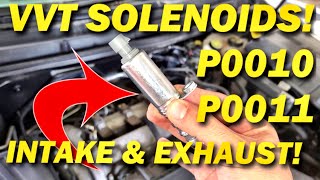
- Engine stalling, especially when coming to a stop 🎬 See how a faulty solenoid causes stalling in this video.
- Hesitation or reduced power during acceleration
- Hard starting
- Decreased fuel economy
- Rattling noise from the engine for a few seconds on cold startup (a classic sign of a timing chain issue on the 3.6L V6)
- Replacing the camshaft position *sensor* instead of the camshaft position *actuator solenoid*. The sensor's job is to read the camshaft's position, while the solenoid's job is to control the oil flow to change the position. P0011 is almost always caused by the solenoid, oil, or a mechanical issue, not the sensor.
Most Likely Causes
- Low or Dirty Engine Oil 🔴 High Probability The 2.4L Ecotec engine can consume significant oil between changes, and the VVT system is entirely dependent on oil pressure to function. Dirty or incorrect viscosity oil can clog the fine mesh screens on the VVT solenoids, preventing proper operation. Manufacturer Bulletin #PIP5162 notes that technicians should remove the camshaft solenoids and inspect the screens for debris, cleaning them if necessary. Using a full synthetic oil that meets GM's Dexos specification is critical.
How to confirm: Check the engine oil dipstick. The level should be in the safe range and the oil should be a translucent amber color, not black, sludgy, or past its service interval.
Typical fix: Top off or change the engine oil and filter using a full synthetic 5W-30 oil that meets the GM Dexos1 specification. In cases of heavy sludge, an engine flush product may be necessary before the oil change, as a simple drain and fill may not be sufficient.
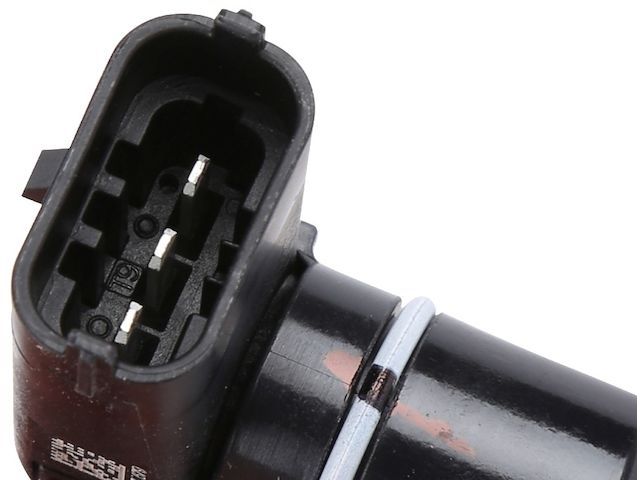
Est. part cost: $40-$80 - Faulty Intake Camshaft Position Actuator Solenoid 🔴 High Probability → Shop Engine Camshaft These solenoids operate in a hot, oil-filled environment and are a very common failure point. They can fail electronically or become clogged with debris from the engine oil.
How to confirm: Swap the intake solenoid with the exhaust solenoid on the same bank (they are identical parts). Clear the codes and run the engine. If the code changes to P0014 (Exhaust Camshaft Position), the solenoid is definitively faulty. You can also test the solenoid's resistance with a multimeter, which should be between 5 and 12 Ohms.
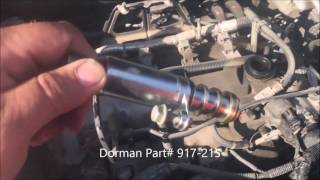
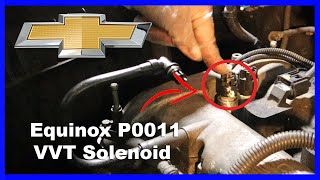
Typical fix: Replace the Bank 1 intake camshaft position actuator solenoid. It is located on the top/front of the valve cover 🎬 Watch: How to locate and replace the VVT solenoid. and held by a single 10mm bolt. 🎬 Watch: A fast and easy DIY solenoid replacement walkthrough. Lubricate the new solenoid's O-rings with fresh engine oil before installation.
Est. part cost: $25-$60 - Stretched Timing Chain or Faulty Tensioner 🟡 Medium Probability → Shop Engine Timing Chain The 3.6L LLT V6 engine (primarily 2010-2011 models) is known for premature timing chain wear due to the design of the original chains and long oil change intervals. A stretched chain causes the camshaft and crankshaft correlation to be off, triggering timing codes. While less common, the 2.4L Ecotec can also suffer from timing chain issues, especially with poor maintenance.
How to confirm: A key symptom is a distinct rattling noise from the engine on cold starts that lasts for 2-5 seconds. Manufacturer Bulletin #PIP4716F specifically mentions that technicians may find a short, sharp rattle noise from the front of the engine at start up when P0011 is present.
Typical fix: Replace all timing chains, tensioners, and guides. This is a major and expensive repair that is best left to a professional.
Est. part cost: $400-$800
Rare But Worth Checking
- Faulty Camshaft Phaser / Actuator: → Shop Engine Camshaft The mechanical gear on the end of the camshaft can get stuck or fail internally. This can happen after a timing chain job if a new phaser isn't installed. TSB PIP4716E (now superseded by newer versions like PIP4716F) mentions this as a cause if a startup rattle is heard. This is a complex and expensive repair.
- Damaged Wiring or Connector: Check the wiring harness and connector going to the intake camshaft actuator solenoid for any signs of damage, corrosion, or oil contamination from a leaking solenoid. A bad connection can mimic a failed solenoid.
- Spun Camshaft Reluctor Wheel (3.6L V6): → Shop Engine Camshaft TSB #PIP4548C notes that the reluctor wheel, which the camshaft position sensor reads, can physically spin on the camshaft itself. This causes a timing mismatch code even though the chain and phaser are mechanically sound. This repair requires camshaft replacement.
Diagnosis Steps
- Check Engine Oil: Verify the oil level is full and the oil is clean and of the correct Dexos-approved viscosity. If low, top it off. If old or dirty, perform an oil and filter change. Clear the code and see if it returns.
- Inspect Solenoid Wiring: Check the electrical connector and wiring for the Bank 1 intake camshaft actuator solenoid for any damage, looseness, or oil contamination.
- Test the Solenoid: Swap the intake and exhaust solenoids (they are located next to each other on the valve cover). Clear the codes and drive the vehicle. If the code returns as P0014, the solenoid you moved is bad and needs to be replaced. This is the most definitive DIY test.
- Listen for Noise: Pay close attention to the engine sound during a cold start. A brief rattle (2-5 seconds) from the side of the engine strongly points towards a more serious mechanical issue like a timing chain or cam phaser problem.
- Professional Diagnosis: If the above steps do not resolve the issue, or if a startup rattle is present, the problem is likely mechanical (timing chain, phaser). This requires advanced diagnostics with a scan tool to check cam/crank deviation and likely significant engine disassembly to confirm and repair.
Parts You'll Likely Need
- Intake Camshaft Position Actuator Solenoid (2.4L)
(OEM #12679099 (supersedes 12655420, 12628347))— This solenoid controls oil flow to the cam phaser and is the most common part to fail or clog, causing the P0011 code. Part number 12679099 is an updated design.
Trusted brands: ACDelco, Delphi, Dorman
OEM price range: $40-$60
Aftermarket price range: $20-$45 - Intake Camshaft Position Actuator Solenoid (3.6L)
(OEM #12679099 (supersedes 12655420, 12646783, 12628347))— This solenoid controls oil flow to the cam phaser on the V6. It is a common failure point and may require a specific updated part per TSBs. Note that the same part number is used for both engines in later service parts catalogs.
Trusted brands: ACDelco, Delphi
OEM price range: $45-$65
Aftermarket price range: $25-$50 - Engine Oil and Filter (Dexos1 Approved) — Low or dirty oil is the number one cause of this code. Using the correct full synthetic Dexos-approved 5W-30 oil is critical for VVT system health and timing chain longevity.
Trusted brands: ACDelco, Mobil 1, Pennzoil
OEM price range: $40-$70
Aftermarket price range: $30-$55
Related Codes That Often Appear With This One
- P0014 — This is the corresponding code for the exhaust camshaft on the same bank. If P0011 and P0014 appear together, it strongly suggests an oil pressure or oil quality issue affecting the entire cylinder head, or a software issue.
- P0016 / P0017 — These are crankshaft/camshaft correlation codes. If they appear with P0011, it makes a stretched timing chain a much more likely diagnosis, especially on the 3.6L V6.
- P0021 — This is the identical code but for Bank 2 (front bank on the V6). If both P0011 and P0021 are present, it points to a systemic issue like very low oil level/pressure or incorrect oil viscosity affecting the entire engine.
Technical Service Bulletins (TSBs) & Recalls
- PIP5096C: Addresses P0011 on 2012-2015 3.6L engines where no drivability issue is present, suggesting the replacement of the Cam Actuator Solenoid with an updated service part.
- PIP4716F: Connects P0011, P0014, P0016, or P0017 to a startup rattle, pointing towards a potential issue with the camshaft actuator (phaser) or timing chain. Technicians are advised to inspect the engine belt and hydraulic power steering if equipped.
- PIP5162: Provides information on vehicles with P0011 and/or P0014 where technicians need to remove the camshaft solenoids and clean debris from the screens.
- PI0562E: Discusses a startup rattle on 2.4L engines that can set P0011. The noise is caused by the cam actuator not locking in its home position on the previous shutdown, causing it to move abruptly on the next start until oil pressure builds.
- Special Coverage #14882: While not for P0011 directly, this covers a condition on 2010-2013 2.4L engines where high oil consumption can cause the PCV system to freeze or plug, leading to crankcase pressure issues and oil leaks, which can result in the low oil level that triggers P0011.
Platform-Specific Known Issues
- On 2.4L Ecotec engines, excessive oil consumption can lead to low oil levels, which is a primary trigger for P0011. GM Special Coverage #14882 addressed related issues like frozen/plugged PCV systems due to this condition. Owners must check oil levels frequently.
- On 3.6L V6 engines (especially 2010-2011 LLT), premature timing chain stretch is a well-documented issue. GM extended warranty coverage for some vehicles to address this. The issue is less prevalent on the updated LFX engine used from 2012-2016.
Mechanic-Grade Diagnostic Values
- Desired vs. Actual Camshaft Position Angle (Scan Tool) — expected: The 'Actual' position should track the 'Desired' position with a variance of less than 2 degrees when commanded.. Failure: The ECM sets P0011 if the variance between desired and actual angle is greater than 5 degrees for more than 2.5 seconds.
- Camshaft Position Actuator Solenoid Resistance — expected: 5-12 Ohms between the two pins of the solenoid connector.. Failure: A reading outside this range, an open circuit (infinite resistance), or any resistance between a pin and the solenoid body indicates a faulty solenoid.
- Camshaft Position Actuator Solenoid Control Circuit Voltage — expected: 1.5-4.5 V (Key On, Engine Off). A test lamp is recommended for this test as the circuit is pulled-up to a low current voltage.. Failure: Voltage outside this range or a test lamp that does not illuminate correctly suggests a wiring or ECM issue.
Scan Tool Commands That Help
- GDS2 / Tech2: Camshaft Position Actuator Control — While idling, command the actuator from 0 to 20 degrees. The 'Camshaft Position Variance' PID should remain under 2 degrees. This tests the mechanical response of the phaser and the function of the solenoid.
- GDS2 / Tech2: Solenoid Cycling (per TSB #PIP5130K) — If a sticking solenoid is suspected (especially in a crank-no-start situation with P0011), this function cycles the solenoid 4-5 times to attempt to free it mechanically before replacement.
Wiring & Ground Locations
- Q6 Camshaft Position Actuator Solenoid Connector — On the valve cover, connected to the top of the solenoid.. This is where electrical tests are performed. Terminal 1 is the control circuit and Terminal 2 is the low reference circuit.
- G103 — On the cowl in the engine compartment, above the brake booster.. This is a major ground point that grounds the Body Control Module (BCM) and the Data Link Connector (DLC/OBD-II Port). A poor ground here can cause communication issues or erratic behavior.
- OBD-II Connector Pin 1 — Under the driver's side dashboard.. This is the SW-CAN (Single Wire CAN) data line (Green wire). Issues on this circuit can prevent proper communication between modules, including the ECM, which could theoretically impact diagnostics.
Real Owner Repair Stories
- NHTSA ODI #11706046 — An owner reported a recurring problem where they had to keep replacing the camshaft timing solenoid as the car continued to give error codes P0011 and P0128.
- Commenter on EasyAutoFix YouTube video (Chevrolet Malibu (with similar Ecotec engine)) — P0011 code kept returning after oil changes.
❌ Tried (didn't work) A single oil change., A second oil change after 100 miles.
✅ What actually fixed it The owner performed an engine flush (with 'Abro flush'), cleaned the VVT solenoids with carb cleaner, and then added fresh oil. The code did not return after 1000+ miles, indicating heavy sludge was the root cause that simple oil changes couldn't fix. - 2CarPros Forum user (2014 Chevrolet Traverse (with 3.6L V6)) — P0011, P0014, and P0017 appeared immediately after a professional repair.
❌ Tried (didn't work) Replacing the timing chain., Replacing the camshaft phasers.
✅ What actually fixed it The expert diagnosis concluded that the new timing chains were installed incorrectly. The presence of correlation code P0017 alongside the position codes strongly indicated a mechanical timing misalignment, not a component failure. The vehicle needed to be returned to the shop to have the timing set correctly.
OEM Part Supersession History
12655420, 12628347, 12646783, 12578517→12679099— Updated design for improved durability and resistance to heat and oil contamination.
Heads up: While the parts are functionally interchangeable, some related models have physically keyed connectors for the intake and exhaust solenoids to prevent incorrect installation. Always match the new part to the old one being removed.
Model Year Variations Within This Range
- 2010-2011 (3.6L V6 only): These model years use the LLT version of the 3.6L V6, which is highly susceptible to premature timing chain stretch. For these years, P0011 accompanied by a startup rattle is very likely a timing chain issue.
- 2012-2016 (3.6L V6 only): These model years use the updated LFX version of the 3.6L V6. This engine featured redesigned timing chain components to improve longevity. While chain failure is still possible, it is significantly less common than on the earlier LLT engine.
Diagnostic Flowchart
Real Owner Stories
Aggregated from forums and TSBs cited above. Mileages and costs reflect what owners reported in those sources.
2013 Buick LaCrosse 2.4L
Symptoms: Engine stuttering and a persistent P0011 error code. Cleaning the solenoids did not resolve the drivability issues or clear the code.
What fixed it: Replacing the intake camshaft position actuator solenoid completely resolved the stuttering, and the check engine light turned off shortly after.
Source hint: Reddit r/Buick: Anyone deal with a p0011 error code on an ecotech engine?
2007 Cadillac CTS 3.6L — ~95000 miles
Symptoms: Vehicle threw codes P0011, P0021, and P0024. Replacing all VVT solenoids and cam sensors did not fix the issue.
What fixed it: Diagnosed as a timing chain failure, which a commenter noted is common on these 3.6L engines at relatively low mileage (under 100k miles) and requires a scan tool to check cam deviation.
Source hint: Reddit r/MechanicAdvice: 07 CTS 3.6L timing issue
Similar GM VVT System
Symptoms: P0011 code kept returning. Two separate oil changes only provided a temporary fix for the issue.
What fixed it: Removed the VVT solenoids, cleaned them thoroughly with carburetor cleaner, performed a chemical engine flush to remove heavy sludge, and then added fresh oil.
Source hint: YouTube Commenter Repair Story (Similar GM VVT System)
Related OBD-II Codes
Frequently Asked Questions
Does Special Coverage #14882 apply to the P0011 code on my 2012 Buick LaCrosse 2.4L Ecotec?
I have a 2011 LaCrosse with the 3.6L V6 and hear a rattling noise on cold starts. What does this mean for my P0011 code?
My 2014 LaCrosse 3.6L has a P0011 code but drives perfectly fine. What should I check first?
How can I test if the intake camshaft position actuator solenoid is bad on my 2.4L Ecotec?
What type of oil should I use to prevent P0011 in my Buick LaCrosse?
Why does my 2.4L Ecotec rattle on startup and throw a P0011 code?
Helpful Videos
We Have This Part in Stock


The information in this article is provided for general reference and educational purposes only. Vehicle specifications, procedures, and part compatibility can vary by production date, trim level, and region. Always consult your vehicle's factory service manual and verify part numbers before purchasing or performing repairs. Safety-critical components such as airbags, seat belts, and braking systems should be installed by a qualified professional.
- Buick LaCrosse:
- 🧭 Diagnostic Flowchart
- 🎬 Helpful Videos
- 🛍️ Shop This Part
- What's Unique About the 2010-2016 Buick LaCrosse
- Symptoms You May Notice
- Most Likely Causes
- Rare But Worth Checking
- Diagnosis Steps
- Parts You'll Likely Need
- Related Codes That Often Appear With This One
- Technical Service Bulletins (TSBs) & Recalls
- Platform-Specific Known Issues
- Mechanic-Grade Diagnostic Values
- Scan Tool Commands That Help
- Wiring & Ground Locations
- Real Owner Repair Stories
- OEM Part Supersession History
- Model Year Variations Within This Range
- Real Owner Stories
- 2013 Buick LaCrosse 2.4L
- 2007 Cadillac CTS 3.6L — ~95000 miles
- Similar GM VVT System
- Related OBD-II Codes
- Frequently Asked Questions
- 🎟️ Get 5% Off