

P0011 on 2016-2019 Cadillac CT6: Causes and Fixes for Over-Advanced Camshaft Timing
On the 2016-2019 Cadillac CT6, code P0011 is most often caused by low or dirty engine oil, or a faulty intake camshaft position actuator solenoid on Bank 1. For V6 models, a known software glitch related to the auto start/stop system can also trigger this code, requiring a dealer reprogram. Always check your oil first, as clean oil is critical for the VVT system.
- Always check the engine oil level and condition first; an oil change with the correct full synthetic oil may fix the problem.
- On V6 models, be aware that a software glitch related to the auto-stop system is a known cause, especially if multiple camshaft codes (P0011, P0014, P0021, P0024) appear together. This requires a dealer visit.
- The most likely failed part is the Bank 1 intake VVT solenoid, which is relatively inexpensive and easy to replace for a DIYer.
- A simple way to test a VVT solenoid is to swap it with the adjacent exhaust solenoid and see if the trouble code follows (changes from P0011 to P0014).
What's Unique About the 2016-2019 Cadillac CT6
For the V6 engines (3.6L LGX and 3.0L LGW) in the CT6, P0011 is frequently linked to a software anomaly, especially after an auto start/stop event. GM issued multiple service bulletins, including #PIP5568E, acknowledging an investigation into this code setting along with P0014, P0021, and P0024. The bulletin states the cause may be a software issue where the ECM's 'Verify Sync' status doesn't restart correctly, causing it to report incorrect cam positions. This often points to a dealer-installed software update as the fix rather than a failed part. Additionally, TSB #PIP5730B highlights unique 'Intake Camshaft Position Actuator Park Lock Solenoid Valves' on these engines that can stick and cause this code, a specific issue not found on many other platforms.
Diagnostic Flowchart
Tap your situation to follow the diagnostic path that matches what you're seeing on this vehicle.
Symptoms You May Notice
- Illuminated Check Engine Light
- Rough engine idle
- Engine stalling, especially at low speeds or after an auto-stop event
- Hesitation, stumbling, or reduced engine power during acceleration
- Decreased fuel economy
- Rattling noise from the engine on startup (less common, but may indicate timing chain issues)
- Engine may crank but fail to start
- Replacing the camshaft position sensor. The sensor reads the camshaft's position; it does not control it. A P0011 code indicates the cam is actually in the wrong position, which is a mechanical/hydraulic issue, not typically a sensor reading error.
- Immediately replacing the camshaft phaser (actuator). The phaser is the mechanical gear that moves the camshaft. While it can fail, the solenoid that controls it is a much more frequent and cheaper failure point.
Most Likely Causes
- Low, Dirty, or Incorrect Viscosity Engine Oil 🔴 High Probability The VVT system on all CT6 engines is hydraulic and highly sensitive to oil pressure and cleanliness. Extended oil change intervals or using oil that doesn't meet the GM dexos1 Gen 2 specification can lead to sludge that clogs the small passages and screens in the VVT solenoids.
How to confirm: Check the engine oil dipstick for a low level or dark, sludgy appearance. Verify the service history to see if an oil change is overdue.
Typical fix: Perform an engine oil and filter change using a full synthetic oil that meets the GM dexos1 Gen 2 specification (typically 5W-30). This is the most important and often successful first step.
Est. part cost: $60-$120 - Faulty Intake Camshaft Position Actuator Solenoid (VVT Solenoid) 🔴 High Probability → Shop Engine Camshaft These solenoids control oil flow to the cam phasers. They have fine mesh screens that can become clogged with debris from engine oil or the solenoid can fail electrically, causing it to stick.
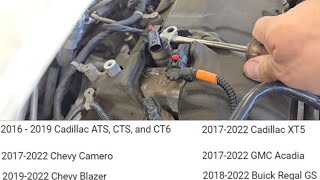
How to confirm: A common no-cost diagnostic is to swap the intake and exhaust solenoids on Bank 1. 🎬 See how to swap and fix VVT solenoids on a 3.6L. If the code changes from P0011 (intake) to P0014 (exhaust), the solenoid is faulty. A scan tool can also command the solenoid to check for response. Visually inspect the screens for debris upon removal.
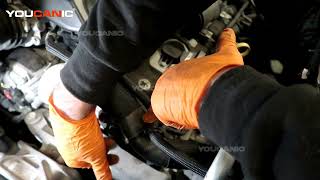
Typical fix: Replace the Bank 1 intake camshaft position actuator solenoid. 🎬 Watch: Step-by-step VVT solenoid replacement on the LGX V6 engine. On V6 engines, Bank 1 is the passenger side (firewall side). On the 2.0L Turbo, it is one of two easily accessible solenoids on the front of the engine.
Est. part cost: $30-$75 - Engine Control Module (ECM) Software Anomaly (V6 Engines) 🟡 Medium Probability As documented in TSB #PIP5568E, a software glitch can occur during an engine restart from an auto start/stop event, causing the ECM to lose synchronization with the camshafts and set multiple timing codes (P0011, P0014, P0021, P0024). This TSB applies specifically to the CT6 with LGX and LGW engines.
How to confirm: This issue is typically confirmed by the presence of all four cam phaser codes setting at once, often with a related customer complaint of rough running after an auto-stop. A dealer can check the vehicle's service history for relevant software updates.
Typical fix: A GM dealer needs to reprogram the ECM with updated software. In many cases, the initial instruction per the TSB was to simply clear the codes and release the vehicle if no other cause was found.
Est. part cost: $0-$200 - Sticking Intake Camshaft Position Actuator Park Lock Solenoid Valve (V6 Engines) ⚪ Low Probability → Shop Engine Camshaft TSB #PIP5730B specifically calls out this component on the 3.0L (LGW) and 3.6L (LGX) V6 engines. It is separate from the main VVT solenoid and can stick or come apart, leading to P0011, P0016, P0018, or P0021, often with no other drivability symptoms.
How to confirm: This requires more advanced diagnosis. The solenoid must be physically removed and inspected for sticking or damage as per the TSB instructions. The TSB also suggests swapping the solenoids from bank to bank to see if the code follows the part.
Typical fix: Replace the faulty park lock solenoid valve. It's recommended to inspect both and replace if one is found to be bad.
Est. part cost: $50-$100
Rare But Worth Checking
- Stretched Timing Chain or Failed Tensioner: → Shop Engine Timing Chain While a known issue on older GM 3.6L engines, the LGX/LGW in the CT6 have an improved design, making this less common. This should be suspected on higher-mileage vehicles (over 80,000-100,000 miles), especially if a startup rattle is present or if codes like P0016/P0017 (crank/cam correlation) are also stored.
Diagnosis Steps
- Check the engine oil level and condition. If it is low, dirty, or past its service interval, perform an oil and filter change with the correct dexos-approved oil. Clear the codes and see if P0011 returns.
- Scan for other codes. Note if P0014, P0021, or P0024 are present, as this can point towards a systemic issue like the software glitch.
- Inspect the wiring and connector for the Bank 1 intake VVT solenoid. Look for damage, corrosion, or oil contamination.
- If you have a V6 engine and experienced the issue after an auto-stop, contact a GM dealer to inquire about software updates related to TSB #PIP5568E.
- To confirm a bad solenoid, swap the Bank 1 intake solenoid with the Bank 1 exhaust solenoid. Clear the codes and drive the vehicle. If the code returns as P0014, the original intake solenoid is faulty and should be replaced.
- For V6 engines, if the code persists and other causes are ruled out, investigate the Intake Camshaft Position Actuator Park Lock Solenoid Valve per TSB #PIP5730B.
- If the code persists after a new solenoid and fresh oil, the issue may be with the cam phaser itself or, more rarely, the timing chain, which may require professional diagnosis.
Parts You'll Likely Need
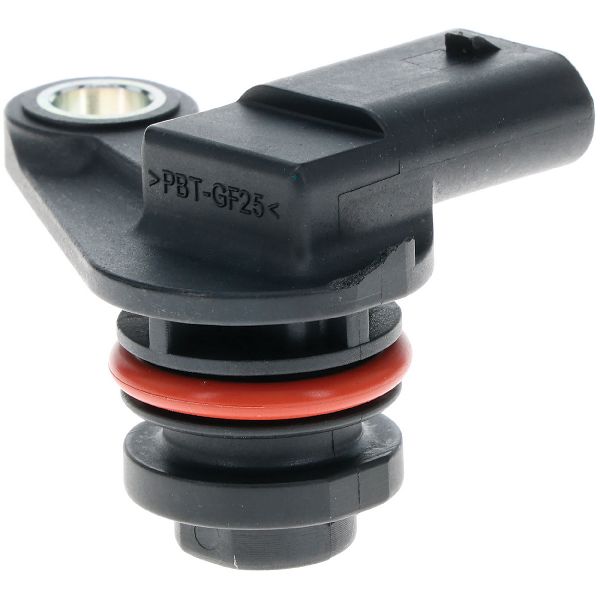
- Intake Camshaft Position Actuator Solenoid (VVT Solenoid)
(OEM #12687029)— This is the most common mechanical part to fail. 🎬 Watch this walkthrough for replacing the camshaft actuator solenoid valve. It gets clogged with oil sludge or fails electrically, causing it to stick open and create the over-advanced timing condition.
Trusted brands: ACDelco, Delphi, Dorman
OEM price range: $40-$75
Aftermarket price range: $25-$50 - Engine Oil and Filter — Clean oil of the correct viscosity (dexos1 Gen 2 5W-30) is critical for the VVT system to function. An oil change is the first and most important troubleshooting step and often resolves the code.
Trusted brands: Mobil 1, Pennzoil, Valvoline, ACDelco
OEM price range: $60-$120
Aftermarket price range: $50-$90 - Intake Camshaft Position Actuator Park Lock Solenoid Valve — Specific to the LGX/LGW V6 engines, this separate solenoid can stick or fail, causing timing codes as per TSB #PIP5730B. The part number 12681275 has been incorrectly associated with this part in some forums; it is actually for a rocker arm.
Trusted brands: ACDelco
OEM price range: $50-$100
Aftermarket price range: $30-$60
Related Codes That Often Appear With This One
- P0014 — This is the same fault ('B' Exhaust Camshaft Timing Over-Advanced) for the exhaust camshaft on Bank 1. The intake and exhaust solenoids share the same oil supply and often fail under similar conditions. Swapping the intake and exhaust solenoids can cause this code to appear, confirming a bad intake solenoid.
- P0021 — This is the equivalent P0011 code but for Bank 2 (driver's side on V6). If both P0011 and P0021 are present, it strongly points to a systemic issue like old/low oil or the ECM software glitch described in TSB #PIP5568E.
- P0024 — This is the equivalent P0014 code but for Bank 2. Seeing all four codes (P0011, P0014, P0021, P0024) is a key indicator of the software anomaly described in TSB #PIP5568E.
Technical Service Bulletins (TSBs) & Recalls
- PIP5568E: Investigation into cause and correction for DTCs P0011, P0014, P0021, P0024 setting together or in pairs, possibly with drivability concerns. This often points to a software issue.
- PIP5730B: Provides diagnostic assistance for P0011 on the V6 engines, pointing to sticking Intake Camshaft Position Actuator Park Lock Solenoid Valves as a possible cause.
- PIE0369: An earlier engineering information request related to P0011 and other cam codes on the 2016 CT6 with LGX/LGW engines, which was a precursor to later bulletins.
Platform-Specific Known Issues
- Real-World Repair: The Park Lock Solenoid: A 2017 CT6 3.6L owner on CadillacForums reported getting codes P0011 and P0021 simultaneously. A dealership initially replaced all four main VVT solenoids at a significant cost, but the check engine light returned. After further diagnosis referencing TSB #PIP5730B, the actual faulty parts were identified as the two 'Intake Camshaft Position Actuator Park Lock Solenoid Valves'. Replacing these two specific, less-common solenoids finally resolved the trouble codes. This highlights a common misdiagnosis where the more prevalent VVT solenoids are replaced when the park lock solenoids are the true cause on the LGX/LGW engines.
- DIY Repair Story (Related 3.6L Engine): A YouTube video from July 2019 shows a user fixing P0011 on a 2014 Cadillac CTS with the 3.6L engine. The user experienced the code at 80,000 miles and was initially worried about major timing chain or camshaft problems. However, the video demonstrates that the fix was simply replacing the VVT solenoids. The user notes that if one solenoid fails, the others are likely to fail soon and recommends replacing all four as a preventative measure. This experience is directly applicable to the CT6 with the same engine family.
Mechanic-Grade Diagnostic Values
- Camshaft Position (CMP) Actuator Solenoid Resistance — expected: 6.9 to 13 Ohms. Failure: A reading outside this range, or an open (infinite resistance) or shorted (near-zero resistance) circuit indicates a failed solenoid coil.
- Camshaft Position (CMP) Sensor 5V Reference Circuit — expected: 4.8 to 5.2 Volts (with ignition ON, engine OFF). Failure: Voltage significantly below this range could indicate a wiring or ECM issue, though this is less likely to cause P0011 alone.
- Camshaft End Play (V6 Engines) — expected: Less than 0.40 mm (0.016 in). Failure: Excessive end play suggests a larger mechanical issue like a worn thrust bearing, which can contribute to timing codes.
Scan Tool Commands That Help
- GM GDS2 / Tech2: Camshaft Position Actuator Control — This bidirectional command allows a technician to manually command the VVT solenoid on and off while the engine is running. A healthy solenoid will produce an audible click, and the technician can observe changes in live data for camshaft angle variance. This is a definitive test to isolate a failed/sticking solenoid from oil pressure or mechanical phaser issues.
Wiring & Ground Locations
- Engine Harness Ground — Typically located on the rear of the passenger side cylinder head, near the firewall. There may be multiple ground eyelets on a single stud.. A poor ground connection for the engine harness can cause erratic sensor readings and intermittent fault codes, including P0011. Cleaning this ground point is a crucial step when diagnosing persistent electrical faults.
- Engine Harness Chafe Points — Inspect the engine harness where it crosses over the camshaft carrier cover, near the ECM/TCM bracket, and near the shock tower bolts.. Engine vibration can cause the harness to rub against metal components, potentially shorting the control circuit for the VVT solenoid. This can cause intermittent P0011 codes or related electrical circuit codes like P0010.
Real Owner Repair Stories
- CorvetteForum user (2018 Chevrolet Colorado with 3.6L LGX engine (40k miles)) — Check Engine Light with code P0014 (exhaust side equivalent of P0011).
❌ Tried (didn't work) User initially suspected timing chain issues or wiring harness chafe mentioned in a TSB.
✅ What actually fixed it The dealer scanned the vehicle and found the exhaust VVT solenoid was bad. They replaced the faulty solenoid under warranty, which resolved the code. - YouTube creator 'Alpha Racks' (2014-2019 Cadillac with 3.6L V6 engine) — Check Engine Light with code P0011.
❌ Tried (didn't work) The creator notes that owners often fear major engine work like camshaft or timing chain replacement is needed.
✅ What actually fixed it The problem was solved by replacing the VVT solenoids. The creator replaced all four as a preventative measure, and the code did not return.
When the Usual Fixes Don't Work
- While forum posts and Pass 2 data suggested replacing the 'Intake Camshaft Position Actuator Park Lock Solenoid Valve' using part number 12681275, further investigation shows this part number is for a valve rocker arm, not a solenoid. This indicates a common misidentification in online communities. While the park lock solenoid itself can still be a valid cause per TSB #PIP5730B, the widely circulated part number for the fix is incorrect.
Model Year Variations Within This Range
- 2019: The base 2.0L Turbo engine was changed from the LTG to the LSY. Additionally, the 3.6L LGX and 3.0L LGW V6 engines were paired with a 10-speed automatic transmission, replacing the previous 8-speed.
Helpful Videos
We Have This Part in Stock

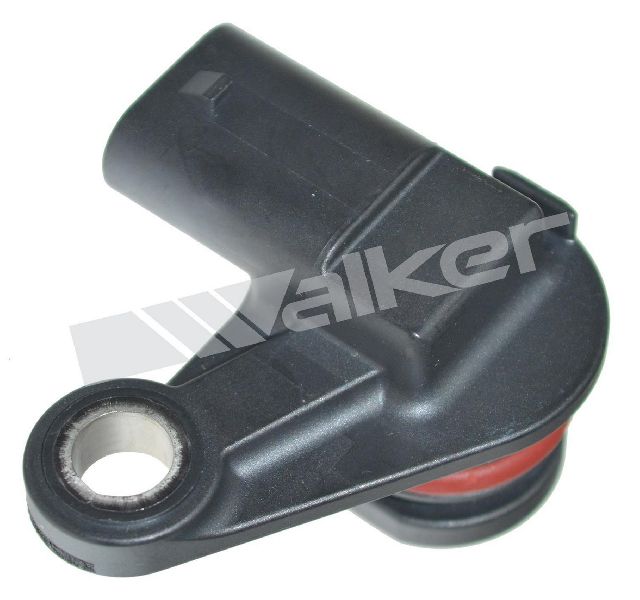
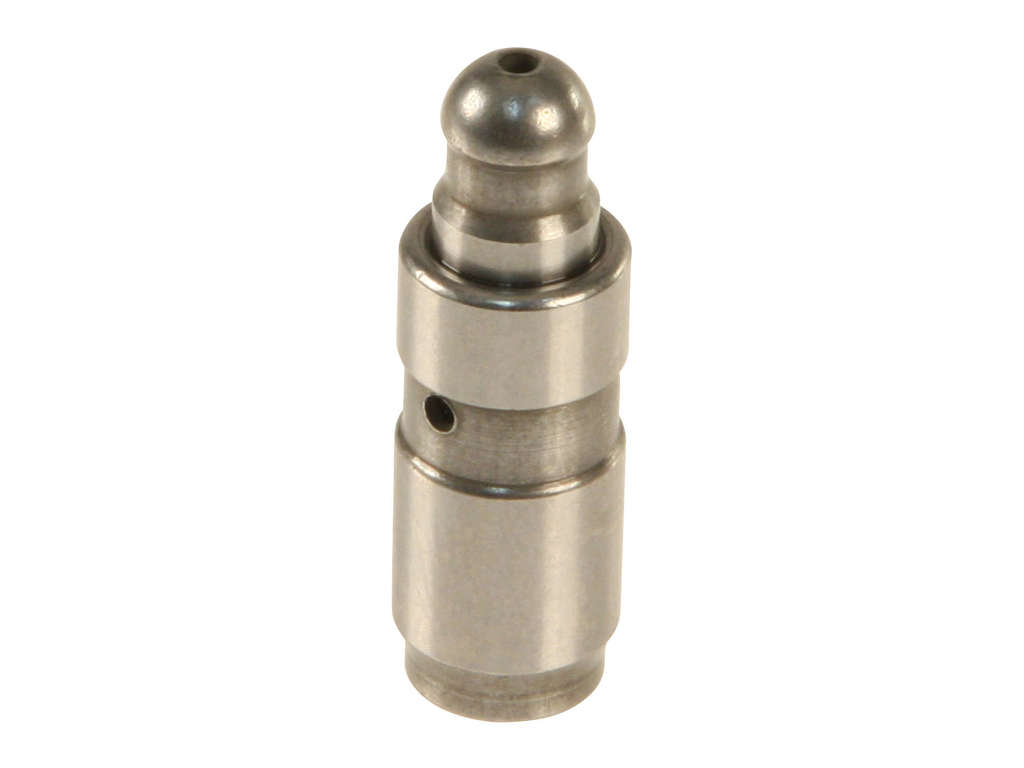

The information in this article is provided for general reference and educational purposes only. Vehicle specifications, procedures, and part compatibility can vary by production date, trim level, and region. Always consult your vehicle's factory service manual and verify part numbers before purchasing or performing repairs. Safety-critical components such as airbags, seat belts, and braking systems should be installed by a qualified professional.
- Cadillac CT6:
- 🧭 Diagnostic Flowchart
- 🎬 Helpful Videos
- 🛍️ Shop This Part
- What's Unique About the 2016-2019 Cadillac CT6
- Symptoms You May Notice
- Most Likely Causes
- Rare But Worth Checking
- Diagnosis Steps
- Parts You'll Likely Need
- Related Codes That Often Appear With This One
- Technical Service Bulletins (TSBs) & Recalls
- Platform-Specific Known Issues
- Mechanic-Grade Diagnostic Values
- Scan Tool Commands That Help
- Wiring & Ground Locations
- Real Owner Repair Stories
- When the Usual Fixes Don't Work
- Model Year Variations Within This Range
- 🎟️ Get 5% Off