

P0011 on 2015-2020 Chevrolet Corvette: Causes and Fixes for Over-Advanced Cam Timing
On a 2015-2020 Corvette, code P0011 is most often caused by a sticking Camshaft Position Actuator Solenoid or low/dirty engine oil. A less common but documented cause is a chaffed wiring harness. Replacing the solenoid is a common fix, costing around $40-$80 for the part. In some cases, low oil pressure from a failing oil pump can be the root cause, even after replacing the solenoid.
- P0011 on a C7 Corvette means the intake camshaft on the passenger side is too far advanced.
- Always check engine oil level and condition first; a simple oil change can sometimes fix the issue.
- The most common failed part is the Camshaft Position Actuator Solenoid (VVT Solenoid). Swapping the passenger and driver side intake solenoids is a definitive DIY diagnostic test.
- A known issue involves a wiring harness chafing near the front of the engine (TSB #PIP5553A).
- If the code persists after an oil change and solenoid replacement, the root cause could be low oil pressure from a failing oil pump, as highlighted in TSB #PIP5258A and owner forums.
What's Unique About the 2015-2020 Chevrolet CORVETTE
For the C7 Corvette, General Motors has issued specific Technical Service Bulletins (TSBs) related to P0011. These bulletins point to known issues that are more specific than generic causes. One TSB highlights that the Camshaft Position Actuator Solenoid can stick or bind, directly causing this code. Another significant TSB warns of a wiring harness that can chafe on a bolt for the X154 connector, leading to P0011 and a variety of other electrical and engine performance codes. Furthermore, TSB #PIP5258A specifically instructs technicians to check mechanical oil pressure if other diagnostics fail, acknowledging that underlying oil pressure issues can be the root cause.
🎬 Watch: Why you shouldn't replace parts before checking oil pressure.Diagnostic Flowchart
Tap your situation to follow the diagnostic path that matches what you're seeing on this vehicle.
Symptoms You May Notice
- Check Engine Light (SES Lamp) is on
- Engine stalling, especially when slowing down or at idle
- Crank but no start condition [Bulletin #PIP5130K, Bulletin #PIE0359A]
- Rough idle
- Reduced engine power or sluggish acceleration
- Poor fuel economy
- Rattling noise from the engine
- Service Stabilitrak / Traction Control message on the dash, as the ECM may disable these systems as a precaution.
- Replacing the camshaft position *sensor* when the camshaft position actuator *solenoid* is the faulty component. The sensor reads the position, but the solenoid controls it; P0011 is more often a control issue (solenoid) or a hydraulic issue (oil).
Most Likely Causes
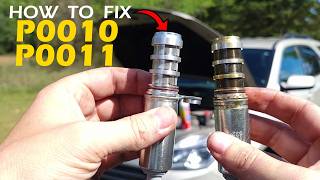
- Sticking/Failing Camshaft Position Actuator Solenoid 🔴 High Probability → Shop Engine Camshaft A manufacturer TSB specifically identifies this part as a primary cause. [Bulletin #PIP5130K] The solenoid controls oil flow to the cam phaser, and if it sticks due to sludge or internal failure, it can't regulate timing correctly. TSBs recommend cycling the solenoid with a scan tool to see if it frees up.
How to confirm: Use a capable scan tool to command the solenoid on and off while monitoring cam angle. A common diagnostic technique is to swap the Bank 1 (passenger side) intake solenoid with the Bank 2 (driver side) intake solenoid. If the code changes to P0021 (Bank 2), the solenoid is confirmed faulty.
Typical fix: Replace the Bank 1 intake camshaft position actuator solenoid. Some owners have had success cleaning the solenoid with brake cleaner or a similar solvent, but replacement is the more reliable fix.
Est. part cost: $40-$80 - Low, Dirty, or Incorrect Viscosity Engine Oil 🟡 Medium Probability The VVT system is entirely dependent on clean engine oil of the correct viscosity (e.g., Mobil 1 5W-30 meeting the Dexos standard) to function. Sludge or low oil levels can starve the actuators and solenoids of the hydraulic pressure they need. TSB #PIP5258A reinforces this by directing technicians to check oil pressure if the cause isn't obvious.
How to confirm: Check the engine oil level on the dipstick and inspect its condition. If the oil is dark, gritty, or below the 'add' line, it needs to be changed. The code appearing shortly after an oil change could indicate the wrong viscosity was used.
Typical fix: Perform an oil and filter change using a high-quality synthetic oil that meets GM's specifications for the engine. An engine flush may be considered if significant sludge is suspected.
Est. part cost: $60-$120 - Chaffed Engine Wiring Harness ⚪ Low Probability TSB #PIP5553A specifically calls out a potential for the wiring jumper harness to chafe at the bolt for the X154 connector on the front of the engine, causing a short. [Bulletin #PIP5553A, 2] This can affect the circuits for the cam actuator solenoid, cam position sensor, and other components.
How to confirm: Visually inspect the wiring harness near the X154 connector on the front of the engine for any signs of rubbing, exposed wires, or damage against the ECM/TCM bracket or other sharp edges.
Typical fix: Repair the damaged section of the wiring harness and secure it away from the source of the chaffing. This may involve soldering, heat shrinking, and re-looming the wires.
Est. part cost: $10-$50
Rare But Worth Checking
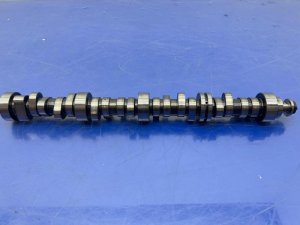
- Failed Camshaft Phaser: → Shop Engine Camshaft The phaser is the mechanical gear that actually adjusts the cam timing. While less common than a solenoid failure, it can fail internally or its passages can become clogged with debris, getting it stuck in an over-advanced position.
- Low Engine Oil Pressure (Failing Oil Pump): As documented in TSB #PIP5258A and by owner experiences, a failing oil pump can cause system-wide low oil pressure that starves the VVT system. In these cases, replacing the VVT solenoid will not fix the problem. A mechanical oil pressure test is required for diagnosis.
- Stretched Timing Chain: → Shop Engine Timing Chain While not a frequent issue on these engines, significant timing chain stretch can cause the correlation between the crank and cam sensors to be off, triggering timing codes. This is more likely on very high-mileage engines.
- Clogged VVT Solenoid Filter Screen: Some GM engines have small, serviceable filter screens in the oil passages leading to the VVT solenoids. If these screens become clogged with debris, they can restrict oil flow and cause timing codes. These are sometimes called 'spool valve filters'.
Diagnosis Steps
- Check the engine oil level and condition. If low or dirty, perform an oil and filter change with the correct Dexos-spec synthetic oil, clear the code, and see if it returns. This is the simplest and cheapest first step.
- Scan for any other trouble codes. Codes like P0010, P0340, or P0521 point towards a likely wiring or systemic oil pressure issue.
- Inspect the engine wiring harness near the X154 connector for signs of chaffing or damage, as noted in TSB #PIP5553A. [Bulletin #PIP5553A]
- If no wiring damage is found, the easiest way to test the solenoid is to swap the Bank 1 intake solenoid with the Bank 2 intake solenoid. They are identical and accessible on the front of the engine.
- Clear the codes and drive the vehicle. If the code returns as P0021 ('A' Camshaft Position - Timing Over-Advanced Bank 2), the solenoid you moved is faulty and needs to be replaced.
- If the P0011 code returns, the issue is not the solenoid. The next step, per TSB #PIP5258A, is to perform a mechanical oil pressure test to rule out a failing oil pump or other oiling system issue.
- If oil pressure is good, further diagnosis of the wiring, cam phaser, and base engine timing is required, which may necessitate a professional technician.
Parts You'll Likely Need
- Camshaft Position Actuator Solenoid (VVT Solenoid)
(OEM #12687034)— This part is identified in TSB #PIP5130K as a primary failure point for this code on this vehicle. It is the most common repair for P0011. [Bulletin #PIP5130K]
Trusted brands: ACDelco, Delphi
OEM price range: $60-$90
Aftermarket price range: $40-$70
Related Codes That Often Appear With This One
- P0010 — This code indicates a circuit malfunction for the same solenoid. If seen with P0011, it strongly points to a wiring issue (like the chaffed harness in TSB #PIP5553A) or a completely failed solenoid. [Bulletin #PIP5553A, 14]
- P0340/P0341 — These are codes for the camshaft position sensor circuit. Their presence alongside P0011 could indicate the chaffed wiring harness issue described in TSBs, as the wiring for both components may be compromised. [Bulletin #PIP5553A, 12]
- P0300 — This is a random misfire code. Incorrect cam timing can disrupt the air/fuel mixture and ignition timing, leading to misfires across multiple cylinders. [Bulletin #PIP5553A]
- P0521 — This code for 'Engine Oil Pressure Sensor/Switch Range/Performance' often appears with P0011 and strongly indicates the root cause is related to low oil pressure, reinforcing the diagnostic path suggested by TSB #PIP5258A.
Technical Service Bulletins (TSBs) & Recalls
- PIP5130K: Diagnosing intermittent crank no start with DTC P0011, pointing to a sticking Camshaft Position Actuator Solenoid Valve.
- PIP5553A: Lists P0011 as a possible code resulting from a chaffed wiring harness at the X154 connector.
- PIE0359A: Engineering bulletin related to crank-no-start or stalling with P0011.
- PIE0359: Engineering bulletin requesting information on crank-no-start conditions with P0011.
- PIP5553: Earlier version of PIP5553A, also mentioning the chaffed harness issue.
- PIP5258A: Directs technicians to check oil pressure when P0011 diagnostics are inconclusive.
- PIP5130D: Earlier version of PIP5130K.
- PIP5130C: Earlier version of PIP5130K.
Platform-Specific Known Issues
- TSB #PIP5130K: Notes that the Camshaft Position Actuator Solenoid Valve may stick or bind, causing this code along with crank-no-start conditions. Recommends cycling the solenoid with a GDS2 scan tool 4-5 times to attempt to free it.
- TSB #PIP5553A: Warns of a potential for the engine wiring harness to chafe on a bolt at the X154 connector, leading to P0011 and a host of other electrical and sensor-related codes.
- TSB #PIP5258A: Advises checking mechanical oil pressure if standard diagnostics for P0011 do not resolve the issue, pointing to low oil pressure as a potential underlying cause. It specifically mentions checking the #2 cam bearing oil feed.
Mechanic-Grade Diagnostic Values
- Camshaft Position Actuator Solenoid Resistance — expected: 8 to 13 Ohms. Failure: A reading significantly outside this range (open circuit or shorted) indicates a faulty solenoid.
- Engine Oil Pressure (Hot Idle) — expected: 25-35 PSI. Failure: Pressure below 20 PSI at hot idle strongly suggests a lubrication problem affecting the VVT system.
- Engine Oil Pressure (at 2000 RPM, Hot) — expected: 40-60 PSI. Failure: Pressure that does not increase significantly with RPM points to a weak oil pump or other mechanical issue.
- Scan Tool Live Data: Camshaft Position Variance (Bank 1) — expected: ~0 degrees at idle. Failure: A consistent variance between the commanded and actual camshaft position (e.g., greater than 8 degrees) confirms a performance fault.
Hidden / Shadow Codes Worth Checking
- Freeze Frame / Failure Records: This is not a specific code, but a data snapshot captured at the moment a DTC is set. It includes critical engine parameters like RPM, oil temperature, engine load, etc., which are invaluable for diagnosing intermittent faults like P0011. (see via GM GDS2 or an equivalent professional-grade scan tool.)
Scan Tool Commands That Help
- GM GDS2 / Tech2Win: Camshaft Position Actuator Solenoid Test — This bidirectional control, found in the ECM special functions, allows a technician to command the solenoid to a specific duty cycle (e.g., 25%, 50%) and observe if the actual cam position on live data responds. It directly tests the solenoid, wiring, and hydraulic response of the cam phaser, confirming if the solenoid is stuck or if there's a hydraulic blockage.
Wiring & Ground Locations
- Engine Ground Stud — On the passenger side fender well, just to the rear of the air filter.. A poor ground at this location can cause various electrical issues. While not specific to P0011, checking major grounds is a valid step when multiple electrical DTCs are present, as suggested by TSB #PIP5553A.
- Engine-to-Chassis Ground — A cable that bolts to the engine block near the starter on one end and the car body/frame on the other.. This is the main grounding link for the engine. A loose or corroded connection here can cause a wide range of problems, including intermittent electrical faults that could trigger P0011 among other codes.
- Q44 — This is the module identifier for the engine oil pressure control solenoid valve, which is located inside the oil pump.. A failure or intermittent sticking of this internal valve can cause sudden drops in oil pressure, starving the VVT system and triggering P0011. This is a deep-seated mechanical/electrical issue, not a simple sensor failure.
Real Owner Repair Stories
- CorvetteForum user (2015 Corvette C7 Z51) — Check Engine Light with code P0011.
❌ Tried (didn't work) Performing an oil change.
✅ What actually fixed it The user replaced the Bank 1 (passenger side) intake camshaft position actuator solenoid. The code was cleared and did not return, confirming the solenoid was the faulty component.
OEM Part Supersession History
12681018→12734067— Part has been updated by the manufacturer.
Heads up: While the primary part number for C7 Corvettes is often cited as 12687034, other numbers like 12681018 and its successor 12734067 are also used for GM Gen V V8 engines. Always verify the correct part number with a dealer using the vehicle's VIN.
Model Year Variations Within This Range
- 2015-2019: No significant changes to the core VVT system, camshaft actuators, or solenoids related to code P0011 have been documented across the C7 model years. The primary causes and diagnostic procedures remain consistent for all LT1, LT4, and LT5 engines in this generation.
Helpful Videos
Used OEM Parts in Stock
New Aftermarket Parts Available


The information in this article is provided for general reference and educational purposes only. Vehicle specifications, procedures, and part compatibility can vary by production date, trim level, and region. Always consult your vehicle's factory service manual and verify part numbers before purchasing or performing repairs. Safety-critical components such as airbags, seat belts, and braking systems should be installed by a qualified professional.
- Chevrolet CORVETTE:
- 🧭 Diagnostic Flowchart
- 🎬 Helpful Videos
- 🛍️ Shop This Part
- What's Unique About the 2015-2020 Chevrolet CORVETTE
- Symptoms You May Notice
- Most Likely Causes
- Rare But Worth Checking
- Diagnosis Steps
- Parts You'll Likely Need
- Related Codes That Often Appear With This One
- Technical Service Bulletins (TSBs) & Recalls
- Platform-Specific Known Issues
- Mechanic-Grade Diagnostic Values
- Hidden / Shadow Codes Worth Checking
- Scan Tool Commands That Help
- Wiring & Ground Locations
- Real Owner Repair Stories
- OEM Part Supersession History
- Model Year Variations Within This Range
- 🎟️ Get 5% Off