

P0011 on 2011-2016 Chevrolet Cruze: Causes and Fixes for Intake Camshaft Timing
On a 2011-2016 Chevy Cruze, code P0011 is most often caused by low/dirty engine oil or a failing intake camshaft position actuator solenoid. An oil change and solenoid replacement are the most common fixes, with a new solenoid costing between $25 and $60 for an aftermarket part. In some cases, the issue can be a more involved mechanical problem like a bad camshaft phaser.
- Always check your engine oil level and condition first; it's the easiest and most common cause of P0011 on a Cruze.
- The intake VVT solenoid (part #12655420) is the most likely failed part. Swapping it with the exhaust solenoid is a simple, no-cost diagnostic step.
- If you hear a rattling noise from the engine for a few seconds on startup, the problem is likely the more complex mechanical camshaft phaser, not just the solenoid.
- If you or a mechanic have recently performed engine repairs near the camshafts, be aware of TSB PIP4543D and the possibility of a missing plastic oil sleeve causing the code.
What's Unique About the 2011-2016 Chevrolet CRUZE

The Ecotec engines in the first-generation Cruze are known for being sensitive to oil quality and level. The VVT system, which triggers this code, operates on oil pressure, and many P0011 issues start with poor oil maintenance. Furthermore, GM issued a specific Technical Service Bulletin (TSB PIP4543D) for these engines, warning that a small, easily missed "black plastic oil sleeve" can be lost or damaged during camshaft actuator repairs, leading directly to this code. This sleeve is critical for directing oil to the actuator; if it's missing, the ECM cannot control the cam timing, even if all other parts are new.
Diagnostic Flowchart

Tap your situation to follow the diagnostic path that matches what you're seeing on this vehicle.
Symptoms You May Notice

- Check Engine Light is on
- Rough or erratic idle
- Reduced engine power and poor acceleration
- Hesitation during acceleration
- Decreased fuel economy
- Engine stalling, especially at low speeds or when stopping
- Rattling or ticking noise from the engine on startup that lasts for a few seconds
- Replacing the Camshaft Position *Sensor* instead of the Actuator *Solenoid*. The sensor is correctly reporting the timing error; it is not the cause of it. A YouTube video clearly distinguishes between the solenoid (actuator) and the sensor.
Most Likely Causes

- Low or Dirty Engine Oil 🔴 High Probability The VVT system is hydraulically operated by engine oil. Sludge, low oil levels, or incorrect oil viscosity directly impact the ability of the actuators and solenoids to function correctly. Many owners report that simply being low on oil triggered the code.
How to confirm: Check the oil dipstick for level and inspect the oil's color and consistency. If it's low, dark, or sludgy, it needs to be changed.
Typical fix: Perform an engine oil and filter change using the manufacturer-specified oil (typically full synthetic 5W-30 Dexos-approved). Clear the codes and drive to see if the issue is resolved.
Est. part cost: $30-$70 - Faulty Intake Camshaft Position Actuator Solenoid (VVT Solenoid) 🔴 High Probability → Shop Engine Camshaft These solenoids are a very common failure point on Ecotec engines. They get clogged with oil debris or fail electrically, preventing proper oil flow to the cam phaser. Numerous owner accounts confirm this is the most frequent fix.
How to confirm: Swap the intake and exhaust solenoids (they are often identical parts, located on the valve cover). Clear the codes. If the code changes to P0014 (exhaust camshaft), the solenoid is bad. You can also test its resistance with a multimeter (should be 7-12 ohms) or apply 12V to see if the internal plunger actuates.
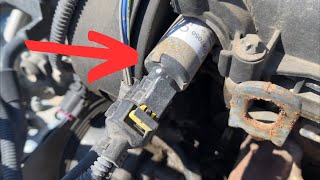
Typical fix: Replace the intake VVT solenoid. It is located on the top of the valve cover, held in by a single bolt. 🎬 Watch: How to replace the VVT solenoids on a 1.4L engine. It's often recommended to replace both intake and exhaust solenoids at the same time.
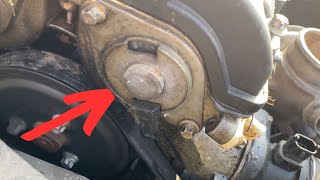
Est. part cost: $25-$60 - Faulty Intake Camshaft Phaser (Actuator) 🟡 Medium Probability → Shop Engine Camshaft The mechanical phaser gear on the end of the camshaft can fail. A common symptom is a distinct rattling noise on cold startup as the internal locking pin fails, allowing the camshaft to move before oil pressure builds.
How to confirm: Listen for a distinct rattle for a few seconds after a cold start. Diagnosis is confirmed by ruling out oil and solenoid issues first. A mechanic may need to remove the valve cover for inspection and check timing correlation with a scan tool.
Typical fix: Replace the intake camshaft phaser. This is an involved repair that often includes replacing the timing belt (1.8L) or timing chain (1.4L) at the same time.
Est. part cost: $50-$150 - Missing or Damaged Camshaft Actuator Oil Sleeve ⚪ Low Probability → Shop Engine Camshaft As noted in TSB PIP4543D, a unique plastic sleeve fits between the camshaft and the actuator. If this part is lost or damaged after a repair (like a cylinder head or actuator replacement), it will cause oil flow problems and trigger timing codes. The TSB states this is a typical cause if the code appears immediately after such work.
How to confirm: This can only be confirmed by removing the camshaft actuator and visually inspecting for the presence and condition of the black plastic sleeve. A YouTube video shows a user discovering this exact issue was the root cause after many other failed attempts. 🎬 See this video to find the hidden oil sleeve root cause.
Typical fix: Install a new camshaft actuator, as the sleeve is typically only available as part of the actuator assembly.
Est. part cost: $50-$150
Rare But Worth Checking
- Stretched Timing Chain/Belt: → Shop Engine Timing Chain While less common than solenoids, a stretched timing component can cause the cam/crank correlation to be off, triggering P0011. A user on a forum noted their mechanic changed a timing belt with significant slack, though the ultimate fix was the phaser.
- Clogged Oil Passages or Faulty Oil Flow Control Valve: Severe oil sludge can block the small passages that feed the VVT system. Some platform-mate vehicles have a small, one-way oil flow control valve in the cylinder head that can become clogged or fail, causing P0011.
- Loose Timing Chain Upper Guide: → Shop Engine Timing Chain On the 1.4L Turbo engine, a loose upper timing chain guide can cause a rattling noise and lead to oil pressure loss in the valve lifter oil galleries, potentially affecting VVT operation.
Diagnosis Steps
- Check engine oil level and condition. Top up or perform an oil and filter change if necessary, using Dexos-approved 5W-30 synthetic oil. Clear codes and test drive.
- Scan for any other DTCs to see if P0011 is paired with other codes like P0014, P0016, or P0017.
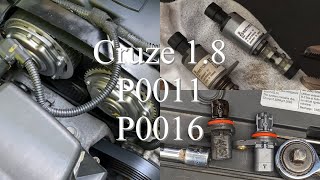
- A simple diagnostic test is to swap the intake and exhaust VVT solenoids. They are on top of the valve cover (intake is toward the firewall, 🎬 Watch: Locate and swap the solenoids on a 1.8L Cruze. exhaust is toward the front). Clear the codes and drive. If the code returns as P0014, the solenoid you moved is faulty.
- If the code does not change, inspect the solenoid's electrical connector for oil contamination or damage. Test the intake solenoid's internal resistance with a multimeter (should be between 7-12 ohms). You can also carefully apply 12V to see if it clicks.
- If solenoids and wiring are good, listen for a rattling noise on cold startup, which points to a failing camshaft phaser (actuator).
- If recent engine work was performed (e.g., cylinder head, timing components), consider the possibility of a missing or damaged actuator oil sleeve as described in TSB PIP4543D. This requires removing the cam phaser for inspection.
- As a final step, a professional may need to inspect the timing belt/chain for proper tension and alignment and check live data on a scan tool to see the commanded vs. actual cam position angles.
Parts You'll Likely Need
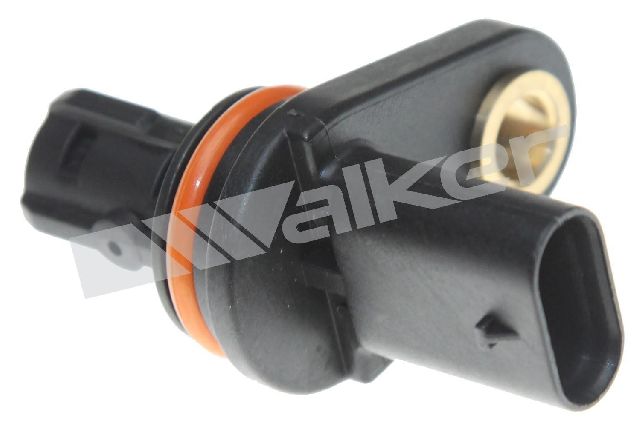
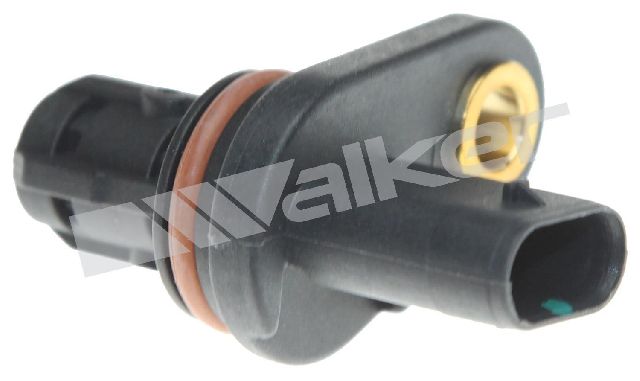
- Intake Camshaft Position Actuator Solenoid
(OEM #12655420)— This is the most frequent point of failure for code P0011 on the Cruze. It gets clogged or fails electrically, disrupting oil flow.
Trusted brands: ACDelco, Delphi, Dorman
OEM price range: $40-$60
Aftermarket price range: $25-$45 - Exhaust Camshaft Position Actuator Solenoid
(OEM #12655421)
Related Codes That Often Appear With This One
- P0014 — This is the corresponding code for the exhaust camshaft ('B' cam). Since both VVT solenoids operate under similar conditions, it's common for them to fail around the same time. Swapping the solenoids to see if P0011 becomes P0014 is a primary diagnostic step.
- P0016 — This code indicates a correlation issue between the crankshaft and the intake camshaft. It often appears with P0011 when the timing deviation is significant or if there is a base timing issue (e.g., stretched chain). TSB PIP4543D also lists this code as a possible result of the missing oil sleeve.
- P0017 — This code indicates a correlation issue between the crankshaft and the exhaust camshaft. It can appear alongside P0011 if there are broader timing system issues, as noted in TSB PIP4543D.
Technical Service Bulletins (TSBs) & Recalls
- PIP4543D: Addresses DTCs P0011, P0014, P0016, or P0017 setting after engine repairs, pointing to a missing black plastic oil sleeve between the camshaft and actuator.
Platform-Specific Known Issues
- NHTSA Technical Service Bulletin #PIP4543D specifically calls out that after repairs involving the camshaft actuators on 1.6L and 1.8L engines, codes P0011, P0014, P0016, or P0017 can set due to a missing or damaged black plastic oil sleeve between the actuator and the camshaft.
- An owner of a 2016 Cruze reported a recurring P0011 code even after the dealership performed work. The owner was eventually told a new cylinder head was needed, highlighting a potential worst-case scenario. [ODI #11487940]
- Another owner complaint for a 2016 Cruze explicitly references TSB PIP4543D as the known cause for their P0011 issue, indicating this is a recognized problem in the owner community. [ODI #11353803]
Mechanic-Grade Diagnostic Values
- Camshaft Position Actuator Solenoid Valve Resistance — expected: 7–12 Ω. Failure: A reading outside this range, or a reading of infinite resistance between a terminal and the solenoid housing, indicates a faulty solenoid.
- Camshaft Position Actuator Solenoid Voltage (Commanded ON) — expected: < 10 V. Failure: If voltage does not drop from the ~12V 'OFF' state when commanded ON with a scan tool, it indicates a problem in the control circuit or ECM.
Scan Tool Commands That Help
- GDS2 / Tech2win: Intake Camshaft Position Actuator Solenoid Valve Command — This bidirectional control is used to command the solenoid ON and OFF while monitoring engine response or circuit voltage. When the solenoid is commanded ON with the engine running, the engine should hesitate or stall, confirming mechanical operation of the solenoid and oil passages.
- GDS2 / Tech2win: Crankshaft Position Variation Learn — This procedure is necessary after replacing the ECM or performing major engine work. While not a direct fix for P0011, failing to perform this relearn can cause other timing-related codes and drivability issues.
Wiring & Ground Locations
- G114 — Left rear of the engine.. This is a primary engine ground. A poor connection here can cause erratic behavior from various sensors and actuators controlled by the ECM, potentially leading to incorrect timing codes.
- K20 ECM Connector X1, Pin 12 — On the Engine Control Module (ECM).. This is the Camshaft Position Intake Sensor Low Reference (ground) circuit. Verifying continuity and absence of voltage on this pin is crucial when diagnosing a sensor or wiring fault.
- K20 ECM Connector X2, Pin 41 — On the Engine Control Module (ECM).. This is the control circuit for the Intake Camshaft Position Actuator Solenoid Valve. A technician would test this pin for a proper signal from the ECM when commanding the solenoid on/off.
Real Owner Repair Stories
- YouTube user 'Homie Hektor' (2012 Chevrolet Cruze 1.8L) — Check Engine Light with codes P0011 and P0016, rattling sound on engine startup.
❌ Tried (didn't work) Replacing the intake VVT solenoid, Replacing the intake camshaft position sensor
✅ What actually fixed it The final fix was replacing both the intake and exhaust VVT sprockets (cam phasers), along with the timing belt, tensioner, and pulley. The startup rattle, caused by a failed locking pin in the original sprocket, was the key symptom pointing to this being the root cause. - Reddit user 'Folxy_Ploxy' (2010 Chevrolet Cruze 1.8L) — Low engine power, engine louder when accelerating, P0011 code present.
❌ Tried (didn't work) Verified oil level and condition were good.
✅ What actually fixed it Replacing both the intake and exhaust VVT solenoids with aftermarket parts resolved the symptoms and the code.
OEM Part Supersession History
12628347→12646783, then 12655420, and finally 12679099— GM has updated the VVT solenoid parts multiple times to improve reliability.
Heads up: The latest part number (12679099) is the recommended replacement for all previous versions for the intake side.
Model Year Variations Within This Range
- 2014+: Starting in 2014, Chevrolet offered a 2.0L clean diesel engine option in the Cruze. While the P0011 code definition is the same, the engine architecture and specific parts (solenoids, phasers) are completely different from the 1.4L and 1.8L gasoline engines.
Helpful Videos
We Have This Part in Stock


The information in this article is provided for general reference and educational purposes only. Vehicle specifications, procedures, and part compatibility can vary by production date, trim level, and region. Always consult your vehicle's factory service manual and verify part numbers before purchasing or performing repairs. Safety-critical components such as airbags, seat belts, and braking systems should be installed by a qualified professional.
- Chevrolet CRUZE:
- 🧭 Diagnostic Flowchart
- 🎬 Helpful Videos
- 🛍️ Shop This Part
- What's Unique About the 2011-2016 Chevrolet CRUZE
- Symptoms You May Notice
- Most Likely Causes
- Rare But Worth Checking
- Diagnosis Steps
- Parts You'll Likely Need
- Related Codes That Often Appear With This One
- Technical Service Bulletins (TSBs) & Recalls
- Platform-Specific Known Issues
- Mechanic-Grade Diagnostic Values
- Scan Tool Commands That Help
- Wiring & Ground Locations
- Real Owner Repair Stories
- OEM Part Supersession History
- Model Year Variations Within This Range
- 🎟️ Get 5% Off