

P0011 on 2009-2010 Chevrolet HHR: Causes for Over-Advanced Camshaft Timing
On a 2009-2010 Chevy HHR, code P0011 is most often caused by a faulty intake camshaft position actuator solenoid or low/dirty engine oil. These solenoids are a well-known failure point on Ecotec engines. Replacing the solenoid is a common DIY fix costing between $25 and $60 for the part, and it is highly recommended to replace both intake and exhaust solenoids at the same time.
- First, check your engine oil. Low or dirty oil is a primary cause of P0011.
- The most likely failed part is the intake camshaft position actuator solenoid, which is relatively inexpensive and easy to replace.
- A simple diagnostic trick is to swap the intake and exhaust solenoids to see if the trouble code follows the part.
- A rattling noise on startup combined with this code may indicate a more serious timing chain problem.
- Always use the correct viscosity oil as specified by Chevrolet.
What's Unique About the 2009-2010 Chevrolet HHR
The Ecotec engines in the 2009-2010 HHR rely on a Variable Valve Timing (VVT) system that is highly sensitive to oil quality and pressure. For the 2009 model year, VVT was added to the base 2.2L engine (now the LAP version), making this issue relevant across all available engines for this period. Problems with the camshaft position actuator solenoids are a well-documented weak point on this platform and its relatives (Cobalt, G5, Sky), often leading directly to codes like P0011.
Diagnostic Flowchart
Tap your situation to follow the diagnostic path that matches what you're seeing on this vehicle.
Symptoms You May Notice
- Check Engine Light is on
- Rough or unstable idle, sometimes described as 'huffing' or 'pulsing' at stops
- Engine stalling, especially when slowing down or sitting at a stop light
- Reduced engine power and sluggish acceleration
- Decreased fuel economy
- A short, sharp rattle from the engine on startup
- Hard shifting accompanied by the Traction Control light turning on (in some cases)
- Replacing the camshaft position sensor when the actual fault is with the VVT solenoid or oil pressure.
- Replacing the crankshaft position sensor.
- Assuming a timing chain replacement is needed before properly diagnosing the VVT solenoids and checking oil quality.
Most Likely Causes
- Low or Dirty Engine Oil 🔴 High Probability The VVT system is hydraulic and uses engine oil to actuate the cam phasers. Contaminated or low oil can clog the fine mesh screens on the VVT solenoids, starving them of pressure and preventing proper operation. This is the number one cause of VVT-related codes on Ecotec engines.
How to confirm: Check the engine oil level on the dipstick and inspect its condition. If the oil is low, dark, or sludgy, it needs to be changed. This should always be the first step before replacing any parts. 🎬 Watch: Why you shouldn't replace parts before checking this first.
Typical fix: Top off or perform an engine oil and filter change using the manufacturer-specified oil viscosity (5W-30). Clear the codes and drive to see if P0011 returns.
Est. part cost: $30-$60 - Faulty Intake Camshaft Position Actuator Solenoid (VVT Solenoid) 🔴 High Probability → Shop Engine Camshaft These solenoids are a very common failure item on GM Ecotec engines due to clogging from oil debris or electrical failure from heat cycles. Many owners and mechanics recommend replacing both intake and exhaust solenoids at the same time, as they are subjected to the same conditions and the other is likely to fail soon.
How to confirm: The solenoids can be tested for resistance with a multimeter (should be between 8 and 13 ohms). A simpler and more definitive method is to swap the intake and exhaust solenoids (they are located next to each other on the valve cover). Clear the codes and drive. If the code changes to P0014 (exhaust camshaft position), the solenoid is confirmed to be bad.
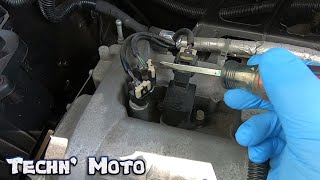
Typical fix: Replace the intake camshaft position actuator solenoid. It is located on the top of the valve cover and is held in by a single 10mm bolt. This is a very common DIY repair. 🎬 See this step-by-step walkthrough for replacing the HHR actuator solenoid.
Est. part cost: $25-$60 - Worn Timing Chain or Faulty Tensioner 🟡 Medium Probability → Shop Engine Timing Chain The timing chains on Ecotec engines can stretch over time, and the hydraulic tensioners can weaken or fail. This causes slack in the chain, which can affect the base camshaft timing and trigger correlation codes like P0011, P0016, and P0017, often accompanied by a rattling noise on startup.
How to confirm: This is a more involved diagnosis. A startup rattle is a strong indicator. A mechanic can check for timing chain slack by removing the valve cover and inspecting the guides, one of which is known to be a failure point.
Typical fix: Replace the timing chain, guides, and tensioner. This is a significant and costly repair.
Est. part cost: $150-$400 - Failing Camshaft Phaser (Actuator) ⚪ Low Probability → Shop Engine Camshaft The mechanical phaser gear on the camshaft itself can fail, but it is much less common than solenoid failure. It can get clogged with sludge or mechanically break, causing it to stick in an over-advanced position.
How to confirm: Diagnosis typically involves ruling out the oil and solenoids first. If replacing the solenoids does not fix the issue, the phaser itself may be the culprit. Advanced diagnostics with a scan tool to command and observe phaser angle may be needed.
Typical fix: Replace the intake camshaft phaser, which is a complex job that requires removing the timing chain.
Est. part cost: $50-$120
Rare But Worth Checking
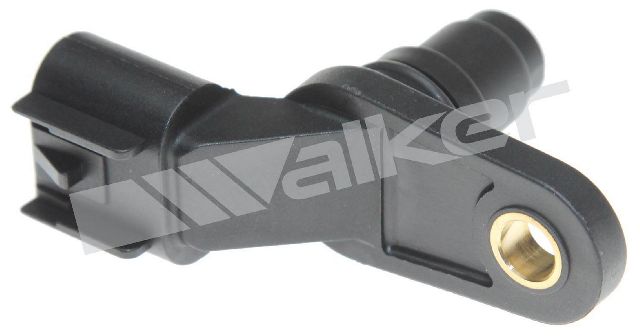
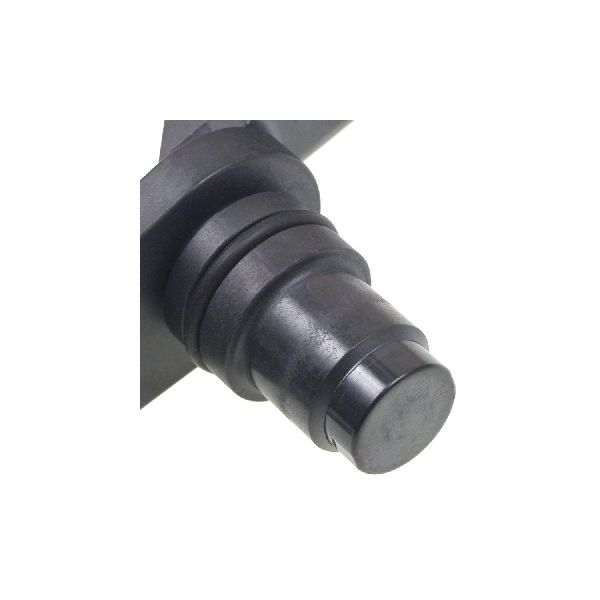
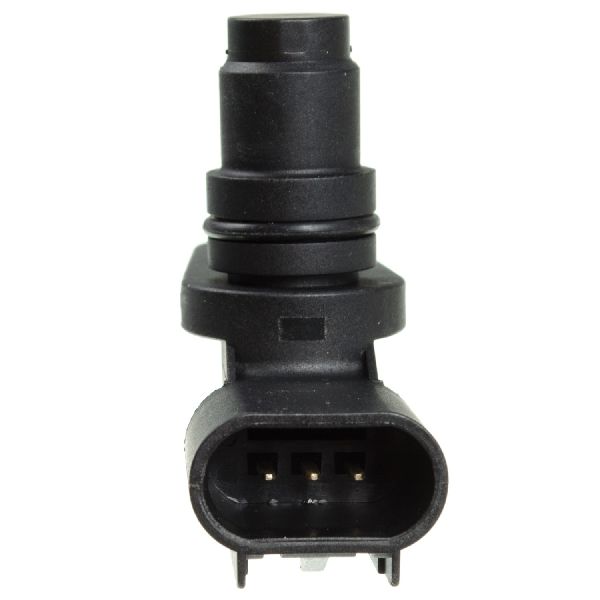
- Faulty Camshaft Position Sensor: → Shop Engine Camshaft Position Sensor While possible, it's less common for the sensor itself to fail than the VVT solenoid. A failing sensor would typically throw its own specific circuit codes (like P0340 or P0341) in addition to P0011.
- Damaged Wiring to VVT Solenoid: Before replacing the solenoid, inspect the connector and wiring harness for any visible damage, corrosion, or loose connections. The plastic connector clips can become brittle and break. 🎬 Watch: How to fix stalling and rough idle caused by these solenoids.
Diagnosis Steps
- Check Engine Oil: Verify the oil level is correct and the oil is clean. If low or dirty, perform an oil and filter change with 5W-30 oil, clear the code, and see if it returns. This is the most critical first step.
- Inspect VVT Solenoid Wiring: Check the electrical connector and wiring to the intake VVT solenoid for any damage, corrosion, or a broken locking tab.
- Swap VVT Solenoids: The easiest test is to swap the intake and exhaust VVT solenoids. They are located next to each other on the valve cover, held by 10mm bolts. Mark their original positions. Clear the codes and drive the vehicle. If the code returns as P0014, the solenoid you moved to the exhaust position is faulty.
- Replace VVT Solenoid(s): If the test in step 3 confirms a bad solenoid, replace it. It is best practice to replace both the intake and exhaust solenoids as a pair with quality ACDelco or Delphi parts. The old part number 12655420 has been superseded by 12679099 for the intake solenoid.
- Advanced Diagnosis: If the problem persists after replacing the solenoids, the issue is likely more complex, such as a stretched timing chain, a bad cam phaser, or clogged oil passages in the cylinder head. At this point, professional diagnosis is recommended.
Parts You'll Likely Need
- Intake Camshaft Position Actuator Solenoid
(OEM #12655420 (superseded by 12679099))— This is the most frequent point of failure for code P0011 on the HHR's Ecotec engines. The original part number 12655420 has been updated by GM.
Trusted brands: ACDelco, Delphi
OEM price range: $40-$60
Aftermarket price range: $25-$45 - Exhaust Camshaft Position Actuator Solenoid
(OEM #12655421 (superseded by 12679100))— It is highly recommended to replace both solenoids at the same time, as they wear at similar rates.
Trusted brands: ACDelco, Delphi
OEM price range: $40-$60
Aftermarket price range: $25-$45 - Engine Oil and Filter — Correct oil level and cleanliness are critical for the VVT system to function. This is the first and most important step in troubleshooting.
Trusted brands: ACDelco, Mobil 1
OEM price range: $40-$60
Aftermarket price range: $30-$50
Related Codes That Often Appear With This One
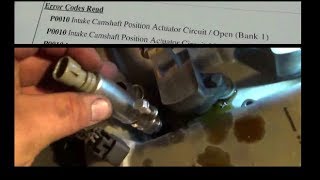
- P0010 — This code indicates an electrical circuit problem with the intake camshaft position actuator solenoid. Seeing P0010 with P0011 strongly points to a bad solenoid or a wiring issue, as it indicates the computer has detected an open or short in the solenoid's control circuit.
- P0014 — This is the equivalent code for the exhaust ('B') camshaft. Seeing both P0011 and P0014 together could indicate a more systemic problem like severe oil contamination affecting both solenoids, or a timing chain issue affecting both cams.
- P0016 / P0017 — These codes indicate a correlation problem between the crankshaft and camshaft(s). They often appear with P0011 when the timing chain has stretched or jumped a tooth, which is a serious mechanical issue requiring immediate attention.
Technical Service Bulletins (TSBs) & Recalls
- PIP4716F: Mentions a rattle noise at startup that can be associated with DTC P0011, P0014, P0016, or P0017 and advises checking VVT solenoid screens for debris during related repairs.
- PIP4469F: Addresses intermittent DTCs including P0011 and hesitation/stall issues on 2009 models with various Ecotec engines.
Platform-Specific Known Issues
- A GM Technical Service Bulletin (TSB #PIP4716F) notes that a short, sharp rattle from the front of the engine at startup, along with codes P0011, P0014, P0016, or P0017, can occur on these vehicles. The bulletin suggests that if camshaft actuators are replaced, the VVT solenoids must be removed and their screens inspected for debris. If debris is found, cleaning or replacement is necessary.
- Another related bulletin, #PIP4469F, addresses intermittent P0011/P0014/P0016/P0017 codes or hesitation/stall on 2009 HHR models, pointing towards potential issues with the cam phasers.
Mechanic-Grade Diagnostic Values
- VVT (Camshaft Position Actuator) Solenoid Resistance — expected: 8 to 13 Ohms. Failure: A reading outside this range, or one that fluctuates when wiggling the connector, indicates a faulty solenoid. An open circuit (infinite resistance) or short (zero resistance) is a definitive failure.
Scan Tool Commands That Help
- Tech2 / GDS2: Camshaft Position Actuator Solenoid Control — After verifying oil level and checking for circuit codes (like P0010), a technician can use a bidirectional scanner to command the intake solenoid to a specific duty cycle (e.g., 25%) while the engine is at 1,500 RPM. The scan tool's live data for 'Camshaft Angle Desired' should match the 'Camshaft Angle Actual' parameter. A mismatch indicates a mechanical problem with the solenoid or phaser, not an electrical one.
Wiring & Ground Locations
- G103 — Left front corner of the engine compartment.. This is a primary engine-related ground. A poor connection at G103 can cause erratic behavior from various engine sensors and the ECM, potentially leading to incorrect diagnostic codes.
- G105 — Left front of the engine block.. Another critical engine block ground. Ensuring this ground is clean and tight is essential for the proper operation of the Engine Control Module (ECM) and its ability to accurately read sensor data and control actuators like the VVT solenoids.
- G107 — On the front left corner of the transmission housing, near the oil filter housing.. This ground is shared by multiple components, including the Transmission Control Module (TCM). While not directly tied to the VVT circuit, a bad ground here can cause a variety of seemingly unrelated electrical issues and codes that can confuse diagnosis.
- VVT Solenoid Connectors — Top of the valve cover. The intake solenoid connector is typically grey, and the exhaust solenoid connector is black.. The connectors themselves are keyed differently to prevent swapping the intake and exhaust harnesses. The plastic can become brittle, leading to poor connections that can cause intermittent P0010 and P0011 codes.
Real Owner Repair Stories
- Reddit user in r/MechanicAdvice (2009 Chevrolet HHR, 44,000 miles) — Check engine light with P0011, engine shook and then smoothed out. After repair, still feels like it will stall when stopped with foot on the brake.
❌ Tried (didn't work) An oil change was performed just before the code appeared., A dealer replaced both the intake and exhaust VVT solenoids.
✅ What actually fixed it The user was advised by another technician that the next steps were to inspect the cam actuators (phasers) and, critically, the plastic timing chain guides. One guide, specifically the black one on the intake side, is notorious for breaking at its upper bolt on the 2.2L Ecotec, which causes timing slack and can trigger P0011 even with new solenoids.
OEM Part Supersession History
12655420→12679099— Updated design/materials by the manufacturer for improved reliability.
Heads up: The new part number 12679099 is a direct replacement for the old number and is fully compatible. The supersession chain also includes older numbers like 12578517, 12628347, and 12646783.12655421→12679100— Updated design/materials by the manufacturer for improved reliability.
Heads up: This is for the exhaust solenoid. It is a direct replacement and fully compatible.
Model Year Variations Within This Range
- 2009-2011: For the 2009 model year, the base 2.2L Ecotec engine (now coded as LAP) was updated to include Variable Valve Timing (VVT), which was previously only on the 2.4L (LE5). This change increased its horsepower and made it susceptible to the same VVT-related trouble codes (like P0011) as the 2.4L engine. There were no other significant engine changes affecting this code between the 2009 and 2010 model years.
Helpful Videos
We Have This Part in Stock



The information in this article is provided for general reference and educational purposes only. Vehicle specifications, procedures, and part compatibility can vary by production date, trim level, and region. Always consult your vehicle's factory service manual and verify part numbers before purchasing or performing repairs. Safety-critical components such as airbags, seat belts, and braking systems should be installed by a qualified professional.
- Chevrolet HHR:
- 🧭 Diagnostic Flowchart
- 🎬 Helpful Videos
- 🛍️ Shop This Part
- What's Unique About the 2009-2010 Chevrolet HHR
- Symptoms You May Notice
- Most Likely Causes
- Rare But Worth Checking
- Diagnosis Steps
- Parts You'll Likely Need
- Related Codes That Often Appear With This One
- Technical Service Bulletins (TSBs) & Recalls
- Platform-Specific Known Issues
- Mechanic-Grade Diagnostic Values
- Scan Tool Commands That Help
- Wiring & Ground Locations
- Real Owner Repair Stories
- OEM Part Supersession History
- Model Year Variations Within This Range
- 🎟️ Get 5% Off