

P0011 on 2011-2017 Chrysler 200 3.6L: Causes for Over-Advanced Camshaft Timing
On the 3.6L Pentastar V6, P0011 is most often caused by low or dirty engine oil, or a failing VVT solenoid. Start by checking your oil level and condition; an oil change with the correct 5W-20 or 5W-30 oil may resolve the issue. If not, the VVT solenoid is the next likely culprit, costing around $40-$90 for an aftermarket part. If a ticking noise is present, this code can be an early warning of rocker arm failure, a known issue with this engine.
- First, check your engine oil. Low, old, or incorrect oil is the #1 cause of P0011 on this engine.
- Bank 1 is the cylinder bank against the firewall. The 'A' camshaft is the intake cam.
- Do NOT replace the camshaft position sensor. It is almost never the problem.
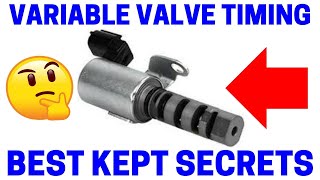
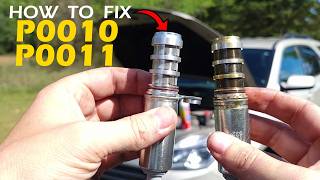
- If an oil change doesn't fix it, the VVT solenoid for the Bank 1 intake is the next most likely part to have failed and is a relatively simple DIY replacement.
What's Unique About the 2011-2017 Chrysler 200
The 3.6L Pentastar V6 engine's VVT system is entirely dependent on clean, correct-viscosity engine oil to function. Unlike some engines where this code points directly to a sensor, on the Pentastar, P0011 is very frequently a direct result of oil maintenance issues. A known, and very common, weakness in Pentastar engines involves rocker arm bearing failure, which creates a distinct ticking sound. This failure introduces metal debris into the oil, which can clog the fine mesh screens on the VVT solenoids and oil passages, directly causing codes like P0011. Another significant, though less common, issue is a cracked oil filter housing assembly, which can cause major oil leaks, low oil pressure, and starve the VVT system, triggering this code.
Generation note: The 2011-2017 year range covers two generations of the Chrysler 200 (2011-2014 and 2015-2017). However, both generations used the 3.6L Pentastar V6, so the causes, symptoms, and fixes for this engine-specific code are consistent across the entire year range. Early models (2011-2013) are more susceptible to a specific left cylinder head defect, but rocker arm failure and VVT issues can occur on all years.
Symptoms You May Notice
- Check Engine Light is on
- Rough or unstable idle
- Engine hesitates or stumbles during acceleration
- Noticeable loss of engine power
- Poor fuel economy
- Engine may stall at low speeds or when stopping
- Rattling or ticking noise from the top of the engine
- Replacing the camshaft position sensor. The sensor is almost never the cause of P0011; it is simply doing its job of reporting the timing discrepancy. The problem is mechanical or hydraulic (oil-related).
- Assuming it's a major mechanical issue before checking the oil. Low, old, or incorrect viscosity oil is the number one cause of this code on the Pentastar V6.
Most Likely Causes
- Low, Dirty, or Incorrect Engine Oil 🔴 High Probability The Pentastar's VVT system is hydraulic and extremely sensitive to oil volume, pressure, and cleanliness. Using the wrong oil viscosity (e.g., 10W-30 instead of the specified 5W-20/5W-30) or extending change intervals can easily trigger this code.
How to confirm: Check the engine oil dipstick for proper level. Inspect the oil's color and consistency. If it is dark, gritty, or below the 'add' line, it needs to be changed. Verify the correct oil viscosity was used on the last oil change.
Typical fix: Perform an oil and filter change using a quality oil filter and the manufacturer-recommended oil (typically SAE 5W-20 or 5W-30, check your owner's manual). Clear codes and test drive.
Est. part cost: $40-$80 - Faulty VVT Solenoid (Oil Control Valve) 🟡 Medium Probability The solenoid can become clogged with sludge or metal debris from dirty oil or rocker arm wear, or it can fail electrically, causing it to get stuck. It is a very common failure point.
How to confirm: After ruling out oil issues, the easiest way to confirm a bad solenoid is to swap the Bank 1 intake solenoid with the Bank 2 intake solenoid. They are identical parts. Clear the codes and drive the vehicle. If the code returns as P0021 (the Bank 2 equivalent), the solenoid is faulty. If P0011 returns, the problem is not the solenoid.
Typical fix: Replace the VVT solenoid for Bank 1 (intake). The three T25 Torx bolts should be torqued to 35 in-lbs.
Est. part cost: $40-$90 - Failed Camshaft Phaser ⚪ Low Probability → Shop Engine Camshaft The phaser is a mechanical gear that can fail internally, often due to long-term oiling issues or high mileage. It can get stuck in an advanced position, or the locking pin can fail.
How to confirm: This is a more advanced diagnosis. A mechanic will use a scan tool to monitor desired vs. actual cam angle. If the solenoid is confirmed good but the angle is still incorrect, the phaser is suspected. This often requires removing the valve cover for inspection.
Typical fix: Replace the camshaft phaser. This is a labor-intensive job that often includes replacing timing components as well.
Est. part cost: $150-$300
Rare But Worth Checking
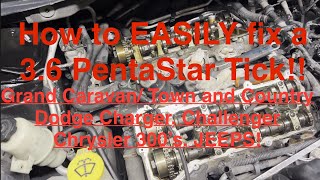
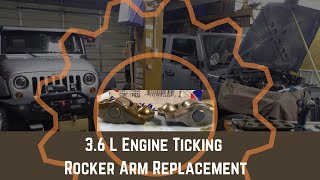
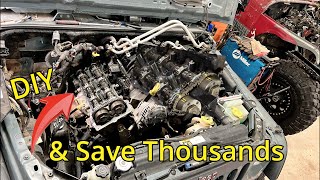
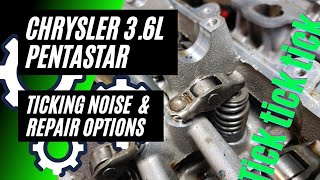
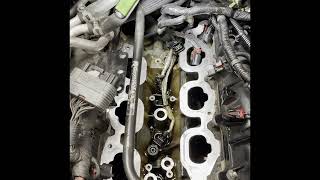
- Failed Rocker Arms / Lifters: → Shop Engine Rocker Arm The 3.6L Pentastar is notorious for rocker arm bearing failure, creating a rhythmic ticking noise ('Pentastar tick'). This failure releases metal particles into the oil, which can clog VVT solenoids and oil passages, leading to P0011. If you hear a loud engine tick, this should be investigated immediately 🎬 See this video to identify and repair the Pentastar ticking noise. as it can lead to camshaft damage.
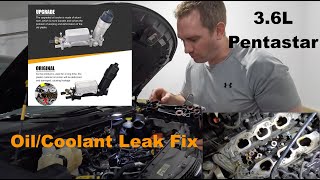
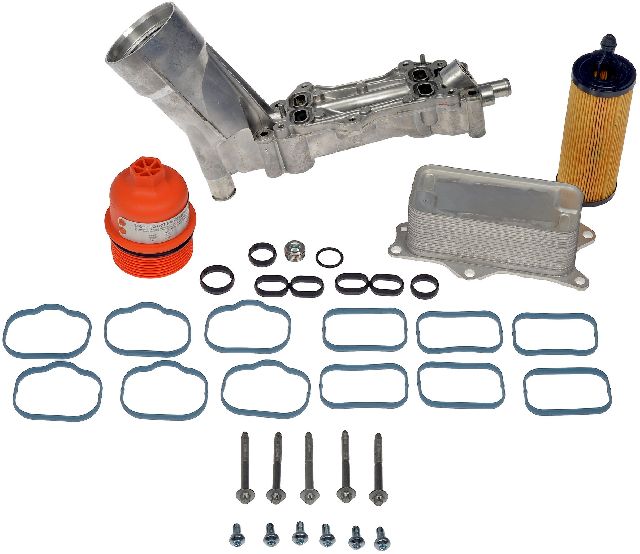
- Cracked Oil Filter Housing: → Shop Engine Oil Filter Adapter The plastic oil filter and cooler housing, located in the valley between the cylinder heads, is a known failure point. A crack can cause a significant oil leak, leading to low oil pressure that starves the VVT system and triggers P0011. If you find oil pooled in the engine valley, this is the likely cause. 🎬 Watch: How to replace a leaking oil filter and cooler housing.
- Stretched Timing Chain: → Shop Engine Timing Chain While not extremely common, a stretched timing chain can cause the base camshaft timing to be incorrect, triggering this code. This is usually accompanied by a rattling noise from the front of the engine, especially on startup.
Diagnosis Steps
- Check Engine Oil: Verify the oil level is correct and the oil is clean and of the proper viscosity (check owner's manual). If low, top it off. If old or dirty, perform a full oil and filter change. This is the most common fix.
- Scan for Other Codes: Check if other codes, like P0021 or P0010, are present to help narrow down the diagnosis.
- Listen to the Engine: Start the engine and listen for a rhythmic ticking noise from the valve covers (indicating possible rocker arm failure) or a rattling from the front of the engine (timing chain).
- Inspect Solenoid Wiring: Check the electrical connector and wiring to the Bank 1 intake VVT solenoid for any visible damage or loose connections.
- Swap VVT Solenoids: Swap the Bank 1 intake VVT solenoid with the Bank 2 intake solenoid. Clear the codes and see if the fault moves to Bank 2 (triggering a P0021). If it does, the solenoid is bad. If P0011 returns, the solenoid is likely not the issue.
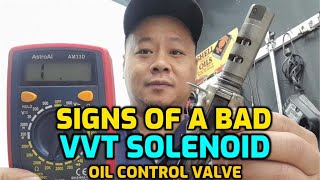
- Test the Solenoid: If you don't want to swap them, you can remove the suspect solenoid and apply 12V to it to see if the internal plunger moves. A stuck plunger means it has failed. You can also test resistance with a multimeter (a good reading is typically 6.9-7.9 ohms).
- Advanced Diagnostics: If the steps above do not resolve the issue, the problem may be a faulty camshaft phaser, rocker arm failure, or a timing chain issue. This level of diagnosis, which involves removing the valve cover, is best left to a professional mechanic.
Parts You'll Likely Need
- VVT Solenoid / Oil Control Valve (Bank 1 Intake)
(OEM #05184150AF (also seen as 53022338AA/AB))— This is the most common part to fail after oil issues have been ruled out. It gets clogged or fails electrically, preventing proper control of the cam phaser.
Trusted brands: Mopar, Dorman, Standard Motor Products (SMP)
OEM price range: $70-$120
Aftermarket price range: $40-$90 - Engine Oil Filter
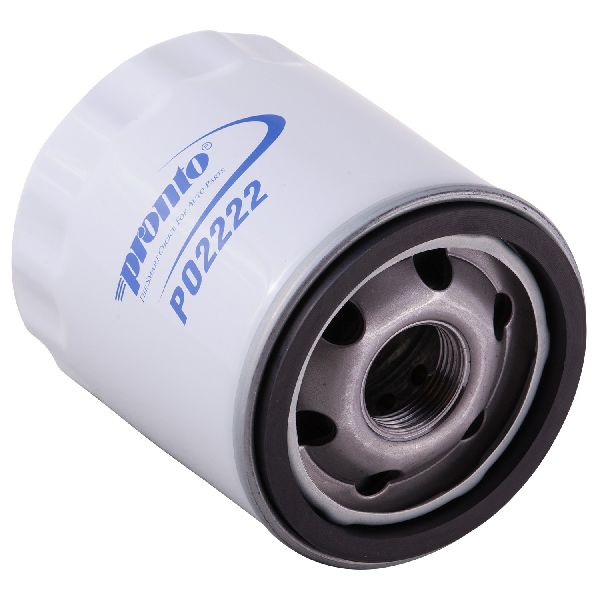
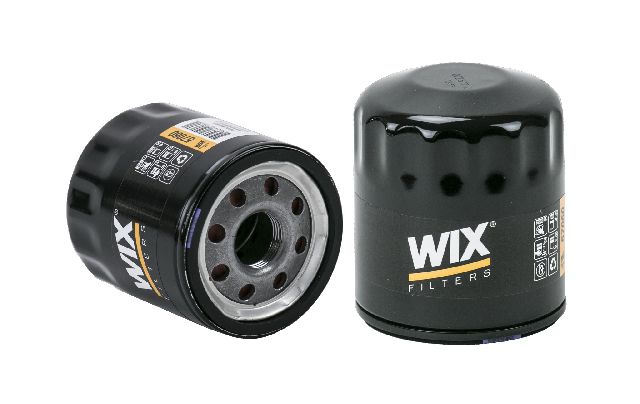
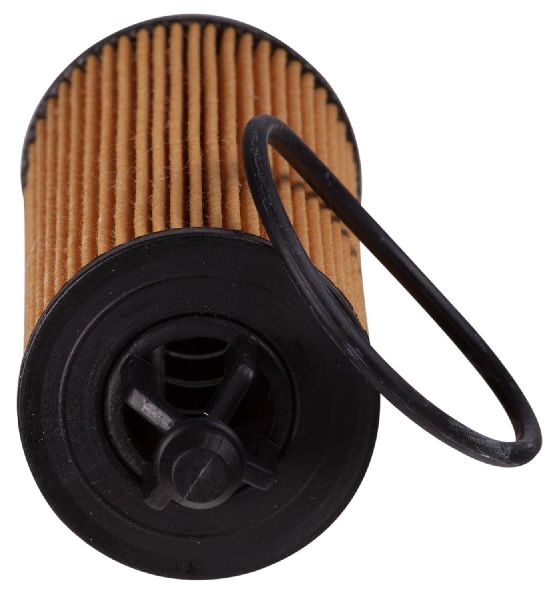
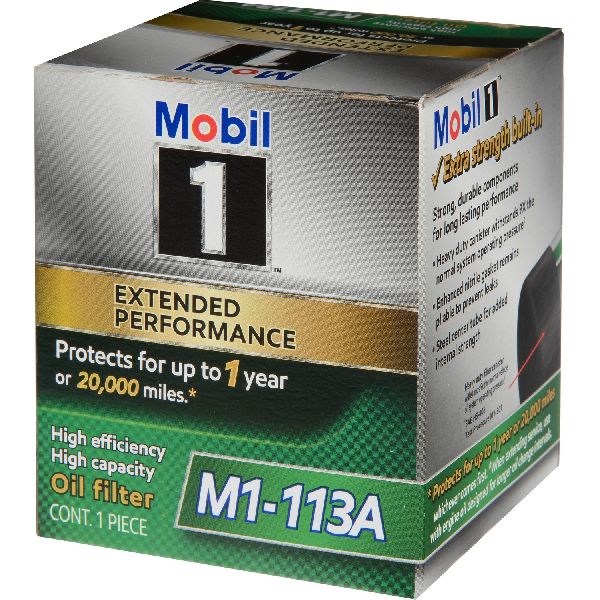
(OEM #68079744AC)— A fresh, quality oil filter is critical when addressing this code. A clogged or incorrect filter can restrict oil flow to the VVT system. For 2014+ models, the oil filter cap contains a bypass valve that can fail, making the filter assembly itself a potential cause.
Trusted brands: Mopar, Wix, Purolator
OEM price range: $10-$15
Aftermarket price range: $8-$12
Related Codes That Often Appear With This One
- P0021 — This is the equivalent code for Bank 2. If P0011 and P0021 appear together, it strongly suggests a systemic issue affecting the whole engine, such as very low/dirty oil or low oil pressure from a failing pump or major leak.
- P0010 — This code indicates an electrical circuit problem with the Bank 1 intake VVT solenoid. If seen with P0011, it points directly to a bad solenoid or a wiring/connector issue.
- P0300, P0301, P0302, etc. — Misfire codes can accompany P0011 if the incorrect cam timing is severe enough to affect combustion stability. If the root cause is rocker arm failure, a misfire on the affected cylinder is common.
Technical Service Bulletins (TSBs) & Recalls
- TSB 09-002-14 Rev. B: This TSB is related to the extended warranty (X56) for the left cylinder head on 2011-2013 models. It addresses misfire codes (P0302, P0304, P0306) caused by a manufacturing defect. While not directly for P0011, it's a critical piece of history for the early Pentastar engine and its valvetrain issues. A mechanic diagnosing P0011 on an early model should be aware of this separate, but related, valvetrain problem.
- TSB Bulletin #18-044-26: While issued for a different model with the same manufacturer, this bulletin confirms that P0011-00 (Bank 1 Camshaft 1 Position Timing Over Advanced) can exist in either an active or stored status within the PCM.
Platform-Specific Known Issues
- Owner Experience: Oil Change Fix: Multiple owners across various forums for Pentastar-equipped vehicles report that a simple oil and filter change with the correct viscosity oil was all that was needed to clear a P0011 code that appeared, especially if the oil change interval was overdue or the wrong oil was used by a quick-lube shop.
- Real-World Diagnosis: Rocker Arm Failure: → Shop Engine Rocker Arm A common story on forums like 200forums.com and various Jeep/Dodge forums involves a user chasing a P0011 code. They first change the oil, then the VVT solenoid, but the code returns. The key symptom they often mention later is a 'ticking' noise. The final diagnosis is a failed rocker arm and damaged camshaft, a known issue with the 3.6L Pentastar.
Mechanic-Grade Diagnostic Values
- VVT Solenoid Internal Resistance — expected: 8 to 12 Ohms. Failure: A reading of infinite resistance (open circuit) or very low resistance (short circuit) indicates a failed solenoid. Some sources suggest a range of 5-15 Ω, while others note that a reading below 8 Ohms can also indicate failure.
- VVT Solenoid Harness Voltage (Key On) — expected: ~12 Volts (Battery Voltage). Failure: A reading significantly lower than battery voltage or 0V at the solenoid connector points to a wiring issue, a bad connection, or a problem with the PCM driver circuit.
Scan Tool Commands That Help
- wiTECH (Chrysler Dealer Tool) or equivalent professional scan tool: VVT System Test — This bidirectional test allows a technician to command the VVT solenoids on and off while monitoring the engine's response and the camshaft position sensor data. It's used to verify if the solenoid is responding to commands from the PCM and if the phaser is mechanically able to move. This can isolate a faulty solenoid from a wiring or mechanical phaser issue.
Wiring & Ground Locations
- Bank 1 VVT Solenoid Connector — On the 3.6L Pentastar in a transverse-mounted Chrysler 200, Bank 1 is the cylinder head closer to the firewall. The intake solenoid is one of the two solenoids on that head, typically on the left side when facing the engine.. This is the primary connector to inspect for damage, corrosion, or loose pins when diagnosing P0011 or P0010. Testing for voltage and resistance occurs at this connector.
- PCM Connector C2 — This is one of the main harness connectors at the Powertrain Control Module (PCM). The specific location of the PCM varies, but it's typically in the engine bay.. The control circuit for the Bank 1 Intake VVT solenoid (often labeled K78) terminates here. Advanced diagnostics for an open or shorted wire would involve checking for continuity between this connector and the solenoid connector.
Real Owner Repair Stories
- Reddit user HkFortyFive (2014 Jeep Wrangler (with 3.6L Pentastar)) — Got the 'tick of death' and likely associated timing codes.
❌ Tried (didn't work) Replaced oil filter housing with an aftermarket aluminum unit, which then leaked again from the seals a few thousand miles later.
✅ What actually fixed it The ticking was caused by 2 bad roller rockers, which were replaced along with all lifters. During this repair, the mechanic also found two oil galley plugs that had backed out and were close to causing catastrophic failure; they were secured with Loctite and reinstalled.
OEM Part Supersession History
53022338AA, 53022338AB→05184150AF— Part has been updated by the manufacturer over time. 05184150AF is the most current OEM part number for the VVT solenoid for this application.
Model Year Variations Within This Range
- 2014-2017: Starting in 2014, the oil filter housing was redesigned. The new design incorporates a bypass valve within the oil filter cap assembly. If this valve fails or an incorrect filter is used, it can cause oil pressure issues that may lead to codes like P0011. The earlier 2011-2013 design is different.
- 2016-2017: For the 2016 model year, the 3.6L Pentastar was significantly upgraded. This included a new two-stage variable valve lift (VVL) system in addition to the existing variable valve timing (VVT). While the root causes of P0011 remain similar (oil-dependent), the system is more complex. The VVT phasers were also redesigned for a greater range of authority.
Diagnostic Flowchart
Other Known Issues on This Vehicle
Issues unrelated to this code that are worth knowing about as an owner of this generation:
- Rocker Arm / Cam Follower Failure ('Pentastar Tick') 🔴 High → Shop Engine Rocker Arm — Very common across all Pentastar applications, often appears after 60,000 miles. Can lead to camshaft and cylinder head damage if not addressed. (Ref: No recall, but subject of class-action lawsuits. TSB 09-009-23 addresses sticking lifters on newer models.)
- Left Cylinder Head Defect (2011-2013 models) 🔴 High — Affected a significant number of early (2011-2013) Pentastar engines, causing misfires on Bank 2 (cylinders 2, 4, 6). (Ref: Covered by extended warranty X56 (10 years/150,000 miles) detailed in TSB 09-002-14. This warranty period has now expired for all vehicles.)
- Cracked Oil Filter Cooler Housing 🟠 Medium → Shop Engine Oil Filter Adapter — Common failure point. The plastic housing, located in the engine 'V', can crack from heat cycles, causing significant oil leaks into the valley and onto the ground.
- 62TE Transmission Solenoid Pack Failure (2011-2014 models) 🟠 Medium — The 6-speed 62TE automatic transmission used in the first generation (2011-2014) is known for solenoid pack failures, leading to harsh shifting, getting stuck in gear ('limp mode'), and transmission-related codes.
- Totally Integrated Power Module (TIPM) Failure 🔴 High — A widespread issue on many Chrysler products of this era. The TIPM (fuse box) can fail internally, causing a wide range of bizarre electrical problems, including no-start conditions, fuel pump issues, and random operation of lights/wipers. (Ref: Subject of a class-action lawsuit.)
Used vs. New Parts: Buying Guide for This Vehicle
When a used part is the smart pick: For this specific repair, using used parts is generally not recommended. The primary failure components (VVT solenoid, rocker arms, oil filter housing) are all known wear items or prone to failure from oil contamination. A used part from a junkyard carries a high risk of having the same issue or a very limited remaining service life.
Donor-vehicle mileage cap: roughly under 40000 miles for the part to have meaningful remaining life.
What to inspect on the donor part:
- If forced to use a used part, source it from the lowest-mileage, latest-model-year donor vehicle possible.
- Avoid any engine that shows signs of sludge in the oil fill cap or on the dipstick.
- For a VVT solenoid, test its resistance and actuation with a 12V source before installation.
OEM-only on this vehicle (don't cheap out):
- Camshaft Phasers: Aftermarket phasers have a questionable reputation for longevity. Given the labor-intensive nature of the replacement, using OEM Mopar phasers is a wise investment to avoid a repeat failure.
Aftermarket brands forum-validated for this vehicle:
- VVT Solenoid: Dorman, Standard Motor Products (SMP), and NTK are reputable aftermarket brands.
- Oil Filter Housing: Dorman makes an aluminum-body replacement (Part #926-959) that is a popular upgrade over the failure-prone OEM plastic housing.
Brands owners have reported issues with on this vehicle:
- Unbranded, no-name VVT solenoids and sensors from online marketplaces. These often have high failure rates out of the box or fail prematurely, causing the code to return.
Real Owner Stories
Aggregated from forums and TSBs cited above. Mileages and costs reflect what owners reported in those sources.
2011-2017 Chrysler 200 3.6L Pentastar V6
Symptoms: The P0011 code appeared after an overdue oil change or after using the wrong oil viscosity at a quick-lube shop.
What fixed it: A simple oil and filter change using the correct viscosity oil and a quality filter.
Source hint: vehicle_specific_issues: Owner Experience: Oil Change Fix
2011-2017 Chrysler 200 3.6L Pentastar V6
Symptoms: The owner chased a P0011 code by changing the oil and the VVT solenoid, but the code returned. They eventually noticed a 'ticking' noise coming from the engine.
What fixed it: Replacement of a failed rocker arm and damaged camshaft.
Source hint: vehicle_specific_issues: Real-World Diagnosis: Rocker Arm Failure
2012 Jeep Wrangler (JK) 3.6L — ~60000 miles
Symptoms: A 'Pentastar tick' noise that can lead to camshaft and cylinder head damage.
What fixed it: Addressing rocker arm / cam follower failure.
Source hint: known_issues: Rocker Arm / Cam Follower Failure ('Pentastar Tick')
Related OBD-II Codes
Frequently Asked Questions
Does TSB 09-002-14 apply to my 2012 Chrysler 200 with a P0011 code?
What oil viscosity should I use in my 3.6L Pentastar to avoid VVT codes?
Can I test the VVT solenoid on my Chrysler 200 without buying a new part?
Is there a specific torque spec for the VVT solenoid bolts on the 3.6L engine?
I hear a ticking noise from the top of my engine along with the P0011 code; what does that mean?
Helpful Videos
We Have This Part in Stock


The information in this article is provided for general reference and educational purposes only. Vehicle specifications, procedures, and part compatibility can vary by production date, trim level, and region. Always consult your vehicle's factory service manual and verify part numbers before purchasing or performing repairs. Safety-critical components such as airbags, seat belts, and braking systems should be installed by a qualified professional.
- Chrysler 200:
- 🧭 Diagnostic Flowchart
- 🎬 Helpful Videos
- 🛍️ Shop This Part
- What's Unique About the 2011-2017 Chrysler 200
- Symptoms You May Notice
- Most Likely Causes
- Rare But Worth Checking
- Diagnosis Steps
- Parts You'll Likely Need
- Related Codes That Often Appear With This One
- Technical Service Bulletins (TSBs) & Recalls
- Platform-Specific Known Issues
- Mechanic-Grade Diagnostic Values
- Scan Tool Commands That Help
- Wiring & Ground Locations
- Real Owner Repair Stories
- OEM Part Supersession History
- Model Year Variations Within This Range
- Other Known Issues on This Vehicle
- Used vs. New Parts: Buying Guide for This Vehicle
- Real Owner Stories
- 2011-2017 Chrysler 200 3.6L Pentastar V6
- 2011-2017 Chrysler 200 3.6L Pentastar V6
- 2012 Jeep Wrangler (JK) 3.6L — ~60000 miles
- Related OBD-II Codes
- Frequently Asked Questions
- 🎟️ Get 5% Off