

P0011 on 2015-2021 Ford Edge: Causes and Fixes for Camshaft Over-Advanced Timing
On a 2015-2021 Ford Edge, code P0011 is most often caused by low or dirty engine oil, or a failing Variable Camshaft Timing (VCT) solenoid. An oil change and replacing the VCT solenoid are the most common fixes, with a solenoid costing between $40 and $120. Using the correct viscosity oil is critical.
- P0011 on a 2015-2021 Ford Edge points to the intake camshaft on Bank 1 being too far advanced.
- The most likely causes are simple: low or dirty engine oil, or a sticking VCT solenoid.
- Always start diagnosis by checking the engine oil level and condition. An oil change is a cheap first step.
- Ford has acknowledged that debris can clog the VCT solenoid, so cleaning or replacing this part is a very common fix.
- If the problem persists after addressing oil and the VCT solenoid, the issue could be a more serious mechanical problem like a bad cam phaser or timing chain.
What's Unique About the 2015-2021 Ford EDGE
The Ford Edge, particularly with its EcoBoost (GTDI) and V6 engines, has a VCT system that is sensitive to oil quality and debris. Ford has issued multiple Technical Service Bulletins (TSBs) acknowledging that P0011 and related codes can be triggered by small debris causing the VCT solenoids to stick. This makes regular, high-quality oil changes using the manufacturer-specified viscosity (e.g., 5W-20 or 5W-30 depending on the engine) especially critical for preventing this specific code on these vehicles.
Diagnostic Flowchart
Tap your situation to follow the diagnostic path that matches what you're seeing on this vehicle.
Symptoms You May Notice
- Check Engine Light is on
- Rough or erratic idle
- Poor acceleration and reduced engine power
- Engine hesitation or stalling, especially at low RPMs
- Decreased fuel economy
- Rattling or ticking noise from the engine on startup that may last a few seconds
- Replacing the camshaft position sensor when the issue is a mechanical problem with the VCT solenoid or phaser.
- Replacing the camshaft phaser when the problem is simply a clogged or sticking VCT solenoid that could be fixed for much less cost and labor.
Most Likely Causes
- Low or Dirty Engine Oil 🔴 High Probability The VCT system is hydraulically operated by engine oil. Low levels or contaminated oil can impede the function of the VCT solenoids and phasers, causing them to stick. This is the most common cause cited by mechanics and TSBs.
How to confirm: Check the oil level on the dipstick and inspect its color and consistency. If it's low, dark, or past its service interval, it's the first suspect.
Typical fix: Perform an engine oil and filter change using the manufacturer-specified oil (e.g., Motorcraft Synthetic Blend) and a quality filter. Clear the codes and drive to see if P0011 returns.
Est. part cost: $40-$80 - Failing Variable Camshaft Timing (VCT) Solenoid 🔴 High Probability → Shop Engine Camshaft Ford TSBs SSM 47170 and SSM 48423 specifically state that small debris can cause the VCT solenoid to stick, leading to this code. The solenoids contain fine mesh screens that can become clogged by oil sludge.
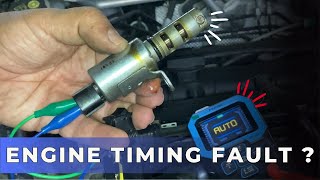
How to confirm: A diagnostic scan tool can command the solenoid to cycle; if it doesn't respond or the engine note doesn't change, it's likely faulty. You can also test the solenoid's resistance with a multimeter (should be between 5 and 14 ohms) or apply 12V to see if it clicks. Swapping the intake and exhaust solenoids (if identical) on Bank 1 can see if the code changes to P0014 (exhaust side), confirming a bad solenoid.
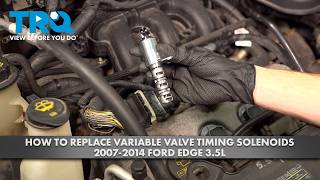
Typical fix: Replace the VCT solenoid for Bank 1 Intake. It's often recommended to replace them in pairs (intake and exhaust) or all four on V6 engines.
Est. part cost: $40-$120 - Failing Camshaft Phaser 🟡 Medium Probability → Shop Engine Camshaft The phaser is the mechanical gear that the solenoid controls. It can get stuck in the advanced position due to internal wear, failed locking pins, or oil contamination, especially on higher mileage EcoBoost engines.
How to confirm: This is a more complex diagnosis. A persistent startup rattle that lasts for 2-5 seconds is a strong indicator of a failing phaser. A mechanic may use a scan tool to monitor desired vs. actual cam angle; a large, persistent discrepancy points to a phaser issue.
Typical fix: Replace the camshaft phaser. This is a labor-intensive job that involves removing the valve cover and timing components. It often costs over $1000 at a shop.
Est. part cost: $100-$300
Rare But Worth Checking
- Stretched Timing Chain or Worn Guides: → Shop Engine Timing Chain While less common for just P0011, a stretched chain can cause camshaft timing to be out of sync with the crankshaft, triggering correlation codes like P0016 alongside P0011. This is a more serious mechanical issue often seen on higher-mileage 3.5L EcoBoost engines.
- Faulty Camshaft Position Sensor: → Shop Engine Camshaft Position Sensor The sensor itself can fail and send incorrect data, but this is less common than a mechanical issue with the VCT system. This would often be accompanied by other sensor-specific codes (e.g., P0340).
Diagnosis Steps
- Check Engine Oil: Verify the oil level is correct and the oil is clean and of the proper viscosity. If low or dirty, perform an oil and filter change, clear the code, and see if it returns. This simple step fixes the issue in many cases.
- Scan for Other Codes: Use an OBD-II scanner to check for any other related codes that could point to a specific component (e.g., sensor circuit codes, codes for Bank 2).
- Inspect VCT Solenoid Wiring: Check the electrical connector and wiring to the Bank 1 intake VCT solenoid for any damage, oil contamination, or loose connections.
- Perform Pinpoint Test HK11: As recommended by Ford TSB SSM 47170, use a capable scan tool to access the 'pinpoint test HK' routines. Test HK11 commands the VCT solenoid to cycle 10 times to dislodge small debris. If the code clears and does not return, the issue is resolved. If it returns, the solenoid likely needs replacement.
- Test the VCT Solenoid: If the pinpoint test fails, remove the solenoid. Check for clogged screens. Test its resistance with a multimeter (should be 5-14 ohms). Apply 12V power to its terminals; you should hear a solid click as the internal plunger moves. If it's silent or sluggish, it has failed.
- Inspect Timing Components: If a new solenoid and clean oil do not resolve the code, and especially if a startup rattle is present, the issue may be with the camshaft phaser or the timing chain itself. This requires a more in-depth mechanical inspection, often by a professional.
Parts You'll Likely Need
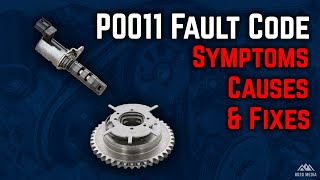
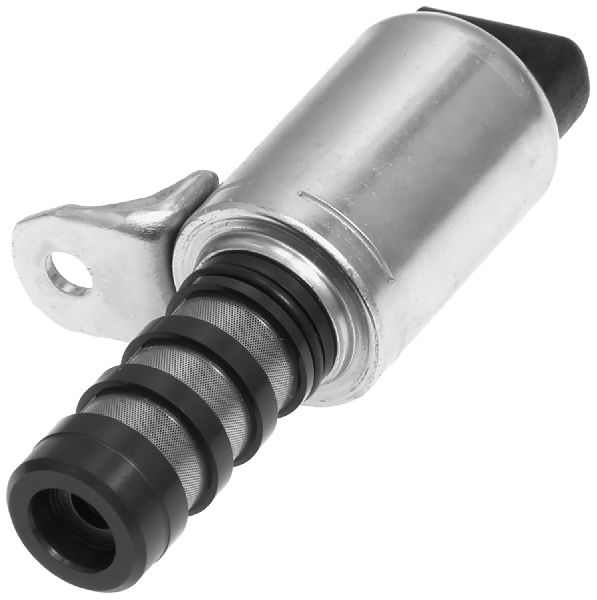
- Engine Variable Valve Timing (VVT) Solenoid
(OEM #Varies by engine. 3.5L/3.7L V6: AT4Z-6M280-B. 2.7L EcoBoost V6: FT4Z-6M280-B. 2.0L EcoBoost I4: CJ5Z-6M280-A.)— This is the most common point of failure, often due to sticking from oil debris, as noted in Ford's own service bulletins.
Trusted brands: Motorcraft, Dorman, NTK
OEM price range: $70-$120
Aftermarket price range: $40-$80 - Engine Oil and Filter — The VCT system is highly dependent on clean oil of the correct viscosity. This is the first and most crucial maintenance step and a common fix.
Trusted brands: Motorcraft, Mobil 1, Castrol
OEM price range: $50-$90
Aftermarket price range: $40-$70
Related Codes That Often Appear With This One
- P0012 — This code is for 'Camshaft Position 'A' - Timing Over-Retarded (Bank 1)'. It can appear if the VCT solenoid is sticking intermittently, causing both over-advanced and over-retarded conditions.
- P0021 — This is the same 'Over-Advanced' code but for Bank 2. If both P0011 and P0021 appear, it may point to a systemic issue like low/dirty oil affecting both banks, or a problem with the timing chain.
- P0016 — This code indicates a 'Crankshaft Position - Camshaft Position Correlation (Bank 1, Sensor A)' error. It can appear alongside P0011 if the timing deviation is significant enough to break the correlation between the two sensors, often pointing towards a stretched timing chain or failed phaser.
Technical Service Bulletins (TSBs) & Recalls
- SSM 54366: Notes that 2015-2021 Ford vehicles may exhibit P0011 and other VCT codes.
- SSM 47170: States that P0011 may be due to small debris causing the VCT solenoid to stick and recommends a specific diagnostic test (HK11) before replacement.
- TSB-16-0093: Mentions P0011 on low-mileage GTDI (EcoBoost) engines.
- SSM 48423: Repeats the guidance from SSM 47170 for 2015-2020 vehicles, highlighting debris in the VCT solenoid.
Platform-Specific Known Issues
- Real Owner Experience: 2018 F-150 with P0011: A user on the F150forum.com reported getting a P0011 code. Another member quickly referenced Ford's Special Service Message (SSM 47170), advising to check the oil level and perform the HK11 pinpoint test to cycle the solenoid before replacing any parts. This highlights how well-known the solenoid debris issue is in the community.
- TSB Pinpoint Test HK11: TSB SSM 47170 and SSM 48423 specifically note that P0011 can be caused by small debris causing the VCT solenoid to stick. They recommend a diagnostic procedure (pinpoint test HK11) which uses a scan tool to command the solenoid to cycle 10 times. This action can clear the debris and may fix the problem without replacing the part. If the engine runs rough or stalls during the test, it indicates a more significant issue.
Mechanic-Grade Diagnostic Values
- VCT Solenoid Internal Resistance — expected: 5 to 14 Ohms. Failure: A reading of 0 Ohms (short circuit) or infinite/OL (open circuit).
- VCT Solenoid Connector Voltage (Key On, Engine Off) — expected: One pin should show battery voltage (approx. 12.0-12.6V).. Failure: No voltage suggests a problem with the power supply wire or fuse.
- Ford IDS Live Data: VCT Error PID (VCT_ADV_ERR) — expected: Should remain close to 0 degrees at idle and under steady load.. Failure: A consistent, non-zero value or excessive variation during operation indicates the PCM cannot achieve the desired cam angle, pointing to a VCT system fault.
Hidden / Shadow Codes Worth Checking
- Mode 6, TID $81, CID $01 (and others): Mode 6 data provides non-continuous monitor test results. For VCT systems, this includes statistical data on timing deviation and solenoid response. A failing test here can indicate a borderline component before a full DTC is set. (see via A professional scan tool with Mode 6 capabilities, such as the Ford IDS.)
Scan Tool Commands That Help
- Ford IDS (Integrated Diagnostic System): Pinpoint Test HK / VCT Solenoid Bi-Directional Control — This is a key diagnostic step mentioned in TSBs. The command cycles the VCT solenoid rapidly to dislodge small debris. If running this test resolves the code, it confirms a sticking solenoid was the cause and avoids an unnecessary replacement.
- Ford IDS (Integrated Diagnostic System): Datalogger with VCT PIDs (VCT_ADV_ERR, RCAM, etc.) — To diagnose intermittent issues by recording desired vs. actual cam angles and the error between them during a test drive. This helps differentiate between a solenoid, phaser, or base timing issue.
Wiring & Ground Locations
- VCT Solenoid Connector — On the top of the engine, mounted to the valve cover near the front of the respective cylinder head (Bank 1 is near the firewall on V6 models).. This 2-pin connector provides power and control to the solenoid. Pin 1 is typically the 12V+ power supply from the PCM Power Relay via a fuse in the Battery Junction Box. Pin 2 is the ground-side control wire, which is pulsed by the PCM to operate the solenoid. Damage or corrosion here will cause a loss of control.
Real Owner Repair Stories
- Reddit user on r/f150 (2018 F-150 Limited 3.5L EcoBoost, 70,000 miles) — Intermittent hesitation, rough idle, and P0011 code.
❌ Tried (didn't work) The owner was concerned it was the cam phasers again, which had been replaced under warranty at 40k miles.
✅ What actually fixed it The owner replaced both VVT solenoids on the passenger side (Bank 1) and also replaced the valve cover as a preventative measure. This resolved the hesitation and the P0011 code.
OEM Part Supersession History
Varies by engine→Varies by engine— Standard part evolution and improvements.
Heads up: The VCT solenoid part number is specific to the engine (2.0L, 2.7L, 3.5L). For example, the 2.0L EcoBoost uses CJ5Z-6M280-A, while the 3.5L EcoBoost in a related F-150 may use HL3Z-6M280-A. Using the wrong part, even if it fits, can cause improper operation. Always verify the part number with the vehicle's VIN.
Helpful Videos


We Have This Part in Stock


The information in this article is provided for general reference and educational purposes only. Vehicle specifications, procedures, and part compatibility can vary by production date, trim level, and region. Always consult your vehicle's factory service manual and verify part numbers before purchasing or performing repairs. Safety-critical components such as airbags, seat belts, and braking systems should be installed by a qualified professional.
- Ford EDGE:
- 🧭 Diagnostic Flowchart
- 🎬 Helpful Videos
- 🛍️ Shop This Part
- What's Unique About the 2015-2021 Ford EDGE
- Symptoms You May Notice
- Most Likely Causes
- Rare But Worth Checking
- Diagnosis Steps
- Parts You'll Likely Need
- Related Codes That Often Appear With This One
- Technical Service Bulletins (TSBs) & Recalls
- Platform-Specific Known Issues
- Mechanic-Grade Diagnostic Values
- Hidden / Shadow Codes Worth Checking
- Scan Tool Commands That Help
- Wiring & Ground Locations
- Real Owner Repair Stories
- OEM Part Supersession History
- 🎟️ Get 5% Off