

P0011 on 2013-2019 Ford Escape: Causes and Fixes for Over-Advanced Camshaft Timing
On a 2013-2019 Ford Escape with an EcoBoost engine, P0011 is almost always caused by low or dirty engine oil, leading to a sticking intake VCT solenoid. The most common fix is an oil and filter change and replacing the Bank 1 intake VCT solenoid. Part numbers vary by engine, but a common one for the 1.5L/1.6L is CN1Z-6M280-C. The repair is straightforward and the part costs approximately $40-$100.
- Always check your engine oil level and condition first. Low or dirty oil is the #1 cause of P0011 on an EcoBoost Escape.
- The most likely failed part is the intake VCT solenoid, which gets stuck from oil debris.
- Replacing the intake VCT solenoid is a relatively inexpensive and accessible DIY repair.
- Before replacing the solenoid, a special diagnostic tool can be used to cycle it, which can sometimes clear the blockage without needing a new part.
- Using the correct specification engine oil and following recommended change intervals is the best way to prevent this code from returning.
What's Unique About the 2013-2019 Ford Escape
The EcoBoost engines in the Ford Escape are known for being sensitive to oil quality and maintenance schedules. The VCT system uses small oil passages and fine mesh screens on the solenoids that can easily get clogged with sludge or debris from old or incorrect viscosity oil. Ford has issued multiple Technical Service Bulletins (TSBs) acknowledging that small debris can cause the VCT solenoids to stick, leading to codes like P0011. The official Ford diagnostic procedure even includes a step to cycle the solenoid with a scan tool to try and dislodge debris before replacing the part.
Generation note: The 2013-2019 year range covers the third generation of the Ford Escape. The causes and fixes are generally consistent across the 1.5L, 1.6L, and 2.0L EcoBoost engines within this generation, though specific part numbers for the VCT solenoids may differ.
Symptoms You May Notice
- Check Engine Light is on
- Rough idle or engine running rough
- Engine stalling, especially at low speeds or when stopping
- Poor acceleration and loss of power
- Decreased fuel economy
- Rattling or ticking noise from the engine on startup
- Replacing the camshaft position sensor without testing it first. The VCT solenoid is a more frequent point of failure for this specific code.
- Immediately assuming a stretched timing chain. While possible, oil issues and solenoid failure are far more probable and should be ruled out first with the inexpensive fixes.
Most Likely Causes
- Low, Dirty, or Incorrect Viscosity Engine Oil 🔴 High Probability The VCT system is hydraulic and highly sensitive to oil pressure and cleanliness. Sludge from extended oil change intervals or using the wrong oil viscosity (e.g., 10W-30 instead of the required 5W-20 or 5W-30) can clog the small passages and screens in the VCT solenoids, impeding their function.
How to confirm: Check the oil dipstick for level and examine the oil's color and consistency. If it's low, black, or gritty, it needs to be changed. If the code appeared shortly after an oil change, verify the correct viscosity oil was used by checking the service receipt.
Typical fix: Perform an engine oil and filter change using the manufacturer-specified grade of oil (e.g., Motorcraft 5W-20 or 5W-30 Synthetic Blend, check owner's manual). Some owners report success using an engine flush product before the oil change to help clear deposits. Clear codes and test drive.
Est. part cost: $40-$80 - Sticking or Failing Intake VCT Solenoid (Oil Control Valve) 🔴 High Probability This is the most common mechanical failure for P0011 on these engines. Ford TSBs (like SSM 48423) directly state that small debris can cause the VCT solenoid to stick. The solenoid's internal plunger, which controls oil flow, gets gummed up and cannot respond to the PCM's commands quickly enough.
How to confirm: After confirming oil is good, use a scan tool to monitor commanded vs. actual cam angle. A diagnostic test (Ford's Pinpoint Test HK11 or HK12) can cycle the solenoid to see if it responds or to try and clear debris. A definitive test is to swap the intake and exhaust solenoids (if they are identical parts) and see if the code follows (e.g., changes to P0014). You can also test the solenoid's resistance with a multimeter or apply 12V to see if it actuates (clicks).
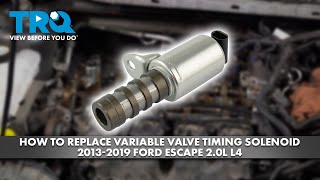
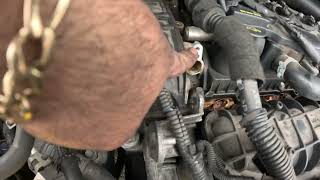
Typical fix: Replace the Bank 1 intake VCT solenoid. 🎬 Watch this step-by-step 2.0L VCT solenoid replacement walkthrough. It is often recommended to replace both intake and exhaust solenoids at the same time.
Est. part cost: $40-$100
Rare But Worth Checking
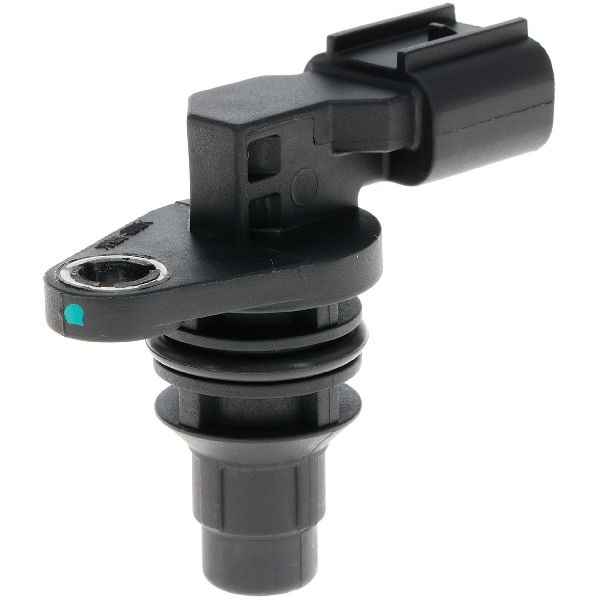
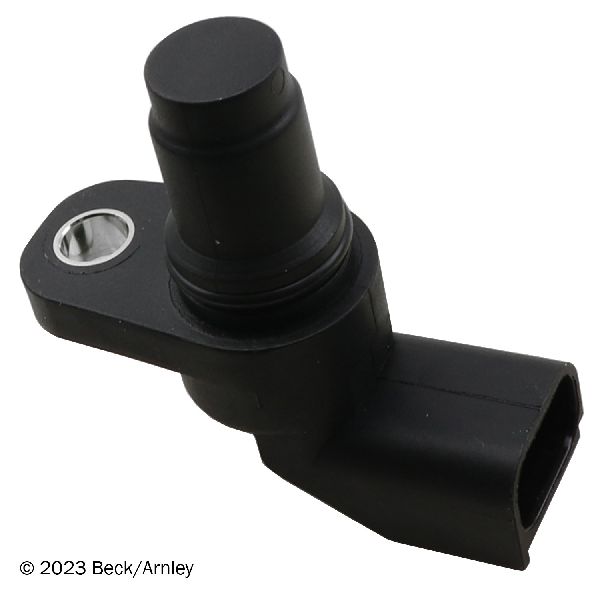
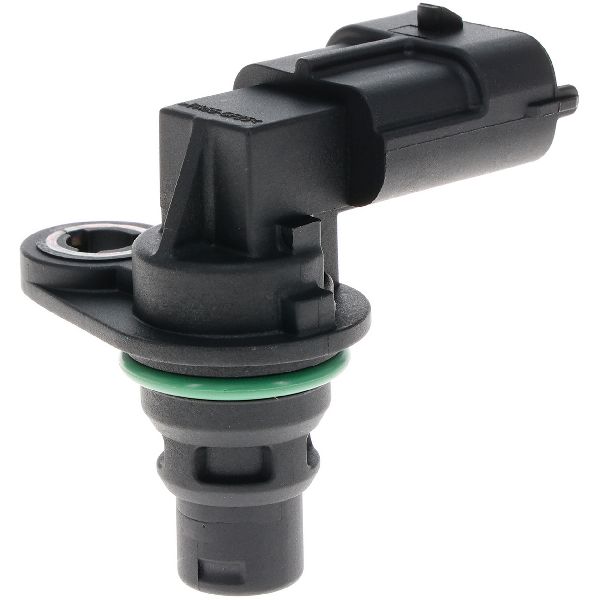
- Faulty Camshaft Position (CMP) Sensor: → Shop Engine Camshaft Position Sensor While less common than a solenoid failure, a CMP sensor providing incorrect data can make the PCM think there is a timing issue when there isn't. This often throws a specific sensor circuit code like P0340 as well.
- Stretched Timing Chain or Failed Phaser: → Shop Engine Timing Chain At very high mileage or with a history of severe oil neglect, the timing chain can stretch or the cam phaser can fail mechanically. This is a much more involved and expensive repair. This is more likely if P0011 is accompanied by P0016 (Crank/Cam Correlation error) and significant rattling noises on startup.
- Clogged Oil Passages in Cylinder Head: In rare cases, particularly with poor maintenance history, sludge can build up in the oil passages within the cylinder head that feed the VCT phasers. One forum user reported a dealership diagnosing this, which is an extremely labor-intensive repair. An engine flush is a good preventative measure to try first.
Diagnosis Steps
- Check the engine oil level and condition. If low, dirty, or overdue, perform an oil and filter change with the correct specification oil (check owner's manual). If the oil change was recent, confirm the correct viscosity was used. Clear the codes and test drive.
- If the code returns, scan for any other related trouble codes.
- Inspect the wiring and connectors for the Bank 1 intake VCT solenoid and the camshaft position sensor for any visible damage, corrosion, or loose connections.
- Using a capable bidirectional scan tool, perform the Ford-specific pinpoint test (HK11 or HK12) to cycle the VCT solenoid 10 times. This can sometimes clear debris and resolve the issue.
- If the solenoids are easily accessible, swap the intake and exhaust VCT solenoids. Clear codes and drive the vehicle. If the code returns as P0014, the original intake solenoid is confirmed to be faulty.
- Test the VCT solenoid. You can check its resistance with a multimeter (compare to a new part's spec) or carefully apply 12V to its terminals to see if it actuates (clicks).
- If the solenoid tests good, the next step is to inspect the camshaft position sensor and its circuit.
- If all sensors and solenoids are functional, the issue may be mechanical, such as a clogged oil passage, a failing cam phaser, or a stretched timing chain, which may require professional diagnosis.
Parts You'll Likely Need
- Intake Variable Camshaft Timing (VCT) Solenoid
(OEM #CN1Z-6M280-C (1.5L/1.6L), CJ5Z-6M280-A (2.0L), P2GZ-6M280-A (later 1.5L))— This is the most common part to fail for this code on these engines, typically by sticking due to oil debris. Part numbers can vary and have revisions; always verify with VIN.
Trusted brands: Motorcraft, Dorman, Standard Motor Products (SMP)
OEM price range: $80-$120
Aftermarket price range: $40-$70 - Engine Oil and Filter — Low or contaminated oil is the leading cause of VCT system problems. A fresh oil change with the correct viscosity (e.g., 5W-20 or 5W-30 Full Synthetic) is a critical first step and often part of the fix.
Trusted brands: Motorcraft, Mobil 1, Castrol
OEM price range: $50-$80
Aftermarket price range: $40-$60
Related Codes That Often Appear With This One
- P0010 — This code indicates an electrical circuit problem with the intake VCT solenoid ('A' Camshaft Position Actuator Circuit). Seeing it with P0011 points directly to a failed solenoid, a damaged connector, or a wiring issue.
- P0014 — This is the equivalent code for the exhaust camshaft ('B' Camshaft). If you swap the intake and exhaust solenoids for diagnosis and the code changes from P0011 to P0014, you have confirmed the solenoid is the faulty part.
- P0016 — Indicates a correlation issue between the crankshaft and camshaft. If seen with P0011, it suggests a more serious mechanical timing problem like a jumped or stretched timing chain, not just a sticky solenoid.
- P0340 — This code indicates a fault in the camshaft position sensor circuit. If the sensor is failing, it can cause the PCM to misinterpret the camshaft's position and trigger P0011.
Technical Service Bulletins (TSBs) & Recalls
- SSM 48423: For 2015-2020 models, states P0011 may be due to small debris causing the VCT solenoid to stick. Recommends using pinpoint test HK11 to cycle the solenoid 10 times to clear debris before replacement.
- SSM 47170: An earlier TSB with nearly identical information to SSM 48423, confirming this is a long-standing known issue for Ford where small debris causes the VCT solenoid to stick.
- TSB 16-0017: For some 2016 models with 2.0L GTDI engines, this TSB addresses P0011 (and others) on low-mileage vehicles, pointing towards VCT solenoid replacement.
- SSM 49821 / SSM 54366: Later manufacturer records like SSM 54366 continue to note that P0011 and related codes may be due to sticking solenoids and point technicians toward Pinpoint test HK in the Powertrain Control and Emissions Diagnosis manual.
Platform-Specific Known Issues
- Ford has issued multiple Technical Service Bulletins (TSBs), such as SSM 48423, SSM 47170, and the superseding SSM 54366, acknowledging that P0011 can be caused by small debris causing the VCT solenoid to stick. The recommended procedure is often to run a diagnostic routine to cycle the solenoid before replacing it.
Mechanic-Grade Diagnostic Values
- VCT Solenoid Internal Resistance — expected: 7 to 14 Ohms. Failure: A reading outside this range (e.g., open circuit or short) indicates a failed solenoid coil.
- VCT Solenoid Power Supply Voltage (Key On, Engine Off) — expected: 12V (Battery Voltage). Failure: No voltage or significantly low voltage points to a wiring or fuse issue upstream of the solenoid, not a faulty solenoid itself.
Hidden / Shadow Codes Worth Checking
- Mode $06, Test ID $53: This is the VCT system monitor in the onboard diagnostics. It can show if the VCT system is failing its self-test, sometimes before a hard code like P0011 is set. It provides raw test data from the PCM's self-checks. (see via A professional-grade OBD-II scan tool with Mode $06 functionality is required.)
Scan Tool Commands That Help
- Ford IDS (or equivalent professional scan tool): VCT Solenoid On/Off State or Duty Cycle Command — This bidirectional control allows a technician to command the VCT solenoid to activate while the engine is idling. A functioning system will cause a noticeable change in idle quality or may even stall the engine. If there is no change, it confirms a problem with the solenoid, wiring, or oil flow to the phaser.
- Ford IDS (or equivalent professional scan tool): Pinpoint Test HK (e.g., HK11, HK12) — This is an automated test routine referenced in Ford TSBs. It cycles the VCT solenoid multiple times (e.g., 10 times) in an attempt to dislodge small debris. If the code is resolved after running this test, it can prevent an unnecessary solenoid replacement.
Wiring & Ground Locations
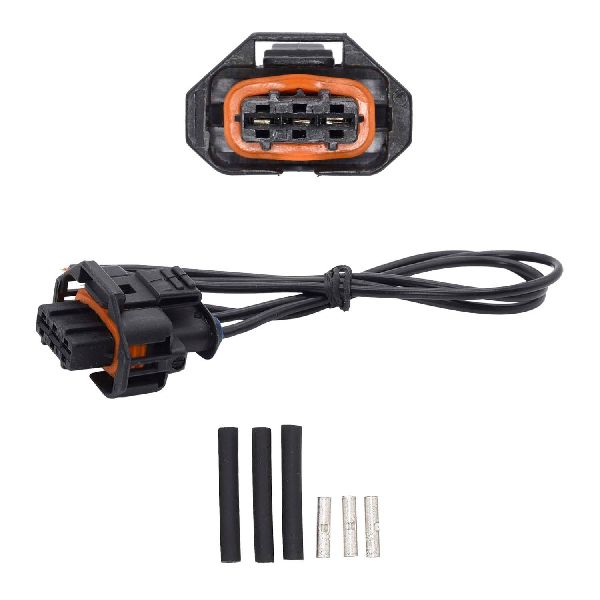
- VCT Solenoid Connector (e.g., C139) — On the top of the valve cover for 1.5L/1.6L engines, connecting directly to the VCT solenoid. On some 2.0L engines, it may be under the valve cover.. This is the primary point for electrical testing. One pin should have 12V power with the key on, and the other is the control wire that the PCM pulses with a ground signal. Checking for power and continuity here is a critical step.
- G104 — Typically found on the right side of the engine compartment on similar Ford platforms.. This is a primary ground point for the Powertrain Control Module (PCM). A loose or corroded ground at this location can cause erratic electrical behavior, including false sensor readings and incorrect operation of actuators like the VCT solenoids, potentially leading to a P0011 code.
Real Owner Repair Stories
- YouTube user 'FriesianCo' (2015 Ford Escape 1.6L EcoBoost) — Check Engine Light with code P0012 (retarded timing, but same components involved), very dirty oil found upon inspection.
❌ Tried (didn't work) The owner noted the intake solenoid had been previously 'cleaned' but the problem persisted.
✅ What actually fixed it Replaced both the intake and exhaust VCT solenoids and performed an oil change. The code did not return after replacement. - NHTSA ODI #11062784 — An owner reported that their engine continued surging until turned off; a mechanic found codes P0011 for intake camshaft timing over-advanced and P0016 for crankshaft-camshaft correlation.
Model Year Variations Within This Range
- 2013-2016 vs 2017-2019: For the 2017 model year, Ford replaced the 1.6L EcoBoost engine with a new 1.5L EcoBoost engine. While they are very similar and share the same VCT solenoid failure pattern, part numbers for some components may differ. The 2.0L EcoBoost was also updated for 2017 with a twin-scroll turbo.
- 2013-2019 (2.0L EcoBoost): The location of the VCT solenoids on the 2.0L engine can be under the valve cover, unlike the 1.5L/1.6L engines where they are externally accessible on top. This significantly increases the labor required for replacement, as the valve cover, and potentially the wiper cowl, must be removed.
Diagnostic Flowchart
Other Known Issues on This Vehicle
Issues unrelated to this code that are worth knowing about as an owner of this generation:
- Coolant Intrusion into Cylinders (1.5L/1.6L/2.0L EcoBoost) 🔴 High — Widespread issue, particularly noted in 2017-2019 1.5L and 2.0L engines. Can occur at various mileages. Leads to misfires, white smoke, and eventual engine failure. (Ref: TSB 19-2375, TSB 19-2346. Subject of multiple class-action lawsuits.)
- 6F35 Transmission Failure 🔴 High — Very common in early models (2013-2016). Symptoms include shuddering, slipping, harsh shifting, and complete failure, often before 100,000 miles. (Ref: No recall, but numerous owner complaints and a class-action lawsuit filed in March 2024.)
- Door Latch Failure 🟠 Medium — Common across 2013-2015 models. The door may fail to latch properly or could open while driving. (Ref: Recall 16S30.)
- Engine Stalling / Overheating (1.6L EcoBoost) 🔴 High — Prevalent in 2013 models. Can be caused by coolant leaks or other engine faults, leading to sudden stalling. (Ref: Recall 13S12 was issued to address overheating issues.)
- AWD System Shudder/Clunk (RDU Failure) 🟠 Medium — Affects 2013-2018 AWD models. A clunk or shudder may be felt from the rear when turning at low speeds. (Ref: SSM 46965 suggests replacing the rear drive unit (RDU) viscous coupler clutch.)
Used vs. New Parts: Buying Guide for This Vehicle
When a used part is the smart pick: For this specific repair, using a used VCT solenoid is NOT recommended. The part fails primarily due to internal sticking caused by oil contamination or wear. A used part from a junkyard has an unknown history and is likely to have the same or other issues. The low cost of a new aftermarket part makes it a much smarter choice.
What to inspect on the donor part:
- Not applicable as used solenoids are not recommended.
OEM-only on this vehicle (don't cheap out):
- No parts for this specific job are strictly OEM-only, as reputable aftermarket brands are widely available and used successfully.
Aftermarket brands forum-validated for this vehicle:
- Dorman
- Standard Motor Products (SMP)
- NTK/NGK
Brands owners have reported issues with on this vehicle:
- Unbranded, no-name solenoids from online marketplaces should be avoided. Some users have noted that extremely cheap aftermarket solenoids may lack the internal mesh screens found on the OEM part, potentially leading to premature failure.
Real Owner Stories
Aggregated from forums and TSBs cited above. Mileages and costs reflect what owners reported in those sources.
2016 Ford Escape
Symptoms: The owner reported getting P0011 and P0016 codes immediately following an oil change.
What fixed it: The source indicates a potential issue with the oil service or a newly revealed timing chain problem.
Source hint: Reddit (r/MechanicAdvice) thread title: 'Ford Escape P0011 and P0016'
2013-2019 Ford Escape EcoBoost
Symptoms: Owner experienced a P0011 code and attempted an oil change which did not resolve the issue alone.
What fixed it: Replacing the intake VCT solenoid resolved the issue permanently.
Source hint: fordescape.org forum threads
Ford Escape (General)
Symptoms: Battled the P0011 code for two years.
What fixed it: The issue was eventually discovered to be a bad timing chain, though the owner recommended trying an engine flush (Seafoam) and VCT solenoid replacement first as cheaper fixes.
Source hint: Reddit (r/MechanicAdvice) thread title: 'P0011 code: dealership is saying i need to replace the cylinder heads?'
Related OBD-II Codes
Frequently Asked Questions
My 2015 Ford Escape has a P0011 code; does Ford have a specific service bulletin for this?
Can I just swap parts to see if the intake VCT solenoid is actually bad on my EcoBoost engine?
What specific oil should I use in my Ford Escape to prevent VCT issues like P0011?
Is there a Ford-specific test I should run before replacing the VCT solenoid?
I have a 2016 Escape 2.0L with low mileage and a P0011 code. Is there a specific TSB for me?
Helpful Videos
We Have This Part in Stock

The information in this article is provided for general reference and educational purposes only. Vehicle specifications, procedures, and part compatibility can vary by production date, trim level, and region. Always consult your vehicle's factory service manual and verify part numbers before purchasing or performing repairs. Safety-critical components such as airbags, seat belts, and braking systems should be installed by a qualified professional.
- Ford Escape:
- 🧭 Diagnostic Flowchart
- 🎬 Helpful Videos
- 🛍️ Shop This Part
- What's Unique About the 2013-2019 Ford Escape
- Symptoms You May Notice
- Most Likely Causes
- Rare But Worth Checking
- Diagnosis Steps
- Parts You'll Likely Need
- Related Codes That Often Appear With This One
- Technical Service Bulletins (TSBs) & Recalls
- Platform-Specific Known Issues
- Mechanic-Grade Diagnostic Values
- Hidden / Shadow Codes Worth Checking
- Scan Tool Commands That Help
- Wiring & Ground Locations
- Real Owner Repair Stories
- Model Year Variations Within This Range
- Other Known Issues on This Vehicle
- Used vs. New Parts: Buying Guide for This Vehicle
- Real Owner Stories
- 2016 Ford Escape
- 2013-2019 Ford Escape EcoBoost
- Ford Escape (General)
- Related OBD-II Codes
- Frequently Asked Questions
- 🎟️ Get 5% Off