

P0011 on 2015-2021 Ford Escape: Causes and Fixes for Over-Advanced Camshaft Timing
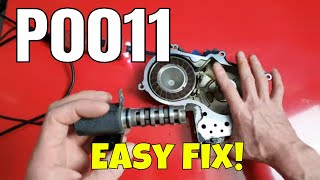
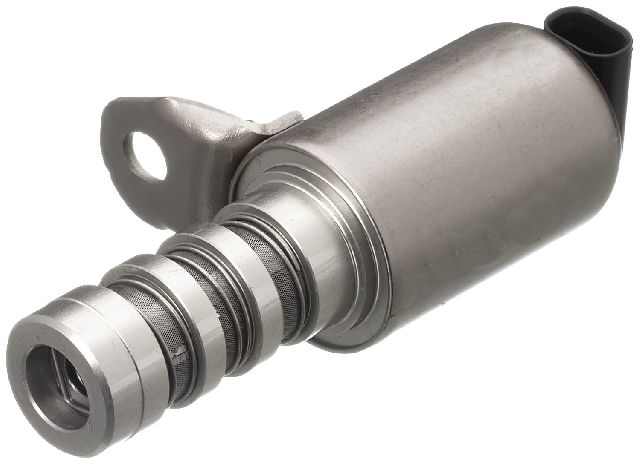
On a 2015-2021 Ford Escape, especially those with the 1.5L or 1.6L EcoBoost engine, code P0011 is most often caused by low or dirty engine oil leading to a sticking Variable Camshaft Timing (VCT) solenoid. The most common fix is an oil and filter change combined with replacing the Bank 1 intake VCT solenoid. The OEM part (e.g., CN1Z-6M280-C) costs around $80-$100.
- P0011 on a 2015-2021 Escape almost always points to an issue with the Variable Camshaft Timing (VCT) system, especially on 1.5L and 1.6L EcoBoost engines.
- The first and most important diagnostic step is to check your engine oil. Low, old, or dirty oil is the leading cause of this code.
- The most common failed part is the VCT solenoid (oil control valve), which gets stuck from oil debris, a problem acknowledged by Ford in service bulletins.
- Before replacing the solenoid, a technician (or DIYer with an advanced scan tool) can try the procedure in Ford's TSB to cycle the solenoid and attempt to clear the debris.
- The repair is often inexpensive and accessible for DIY, typically involving an oil change and replacing a sub-$100 solenoid.
What's Unique About the 2015-2021 Ford ESCAPE
For this generation of Ford Escape, particularly models with the 1.5L and 1.6L EcoBoost engines, the VCT system is known to be highly sensitive to oil quality and debris. Ford has issued multiple Technical Service Bulletins (TSBs) acknowledging that small debris can cause the VCT solenoids to stick, directly leading to codes like P0011. This makes regular, high-quality oil changes using the correct specification oil (e.g., Motorcraft 5W-20 Synthetic Blend) especially critical on these engines to prevent this common failure point.
Diagnostic Flowchart
Tap your situation to follow the diagnostic path that matches what you're seeing on this vehicle.
Generation note: The 2015-2021 year range covers the end of the 3rd generation (2013-2019) and the beginning of the 4th generation (2020-present) Ford Escape. The TSBs issued by Ford cover vehicles through 2021, indicating that the VCT solenoid issue is common to engines in both generations within this range, including the 1.5L/1.6L EcoBoost (Gen 3) and the 1.5L 'Dragon' EcoBoost (Gen 4).
Symptoms You May Notice
- Check Engine Light is on
- Rough idle or stalling
- Poor or sluggish acceleration
- Reduced fuel economy
- Difficulty starting the engine or long crank times
- Rattling noise from the engine, especially on startup
- Shaking or shuddering feeling, sometimes noticed more at highway speeds
- Replacing the camshaft position sensor before checking the oil or VCT solenoid.
- Replacing the expensive camshaft phaser when the problem is only a cheap, stuck VCT solenoid.
- Assuming a major timing chain issue before ruling out the simpler, more common oil and solenoid faults.
Most Likely Causes
- Low or Dirty Engine Oil 🔴 High Probability The VCT system is hydraulically operated by engine oil. If the oil is low, dirty, the wrong viscosity, or contains sludge, it cannot properly actuate the VCT solenoid and phasers, causing them to stick in an over-advanced position.
How to confirm: Check the engine oil level on the dipstick and inspect its color and consistency. If it's low or dark and sludgy, it needs to be changed. This is the first and most important check.
Typical fix: Perform an engine oil and filter change using the manufacturer-specified grade of oil (e.g., Motorcraft 5W-20 Synthetic Blend). Some owners recommend adding an engine flush product like Seafoam to the old oil and running the engine for a short time before draining to help clear deposits.
Est. part cost: $40-$80 - Sticking/Failing VCT Solenoid (Oil Control Valve) 🔴 High Probability This is the most common mechanical failure for P0011 on these engines. Ford TSBs SSM 48423 and SSM 47170 directly state that P0011 can be caused by small debris making the VCT solenoid stick. The 1.5L and 1.6L EcoBoost engines are particularly noted for this issue.
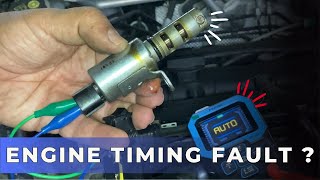
How to confirm: After confirming good oil condition, this is the next step. A diagnostic scan tool can run the pinpoint test (HK11 or HK12) suggested in Ford's TSBs to cycle the solenoid 10 times to try and clear debris. The solenoid can also be removed and tested for resistance (should be 7-12 ohms) or manually actuated with a 12V source to check for mechanical movement.
Typical fix: Replace the Bank 1 intake VCT solenoid. Given the low cost, many owners replace both the intake and exhaust solenoids at the same time as a preventative measure.
Est. part cost: $83-$96 (OEM), $30-$70 (Aftermarket) - Faulty Camshaft Position Sensor ⚪ Low Probability → Shop Engine Camshaft Position Sensor
How to confirm: This is less likely to be the cause unless other codes, like P0340, are present. The sensor's signal can be checked with an oscilloscope. It's typically diagnosed after the VCT solenoid has been ruled out.
Typical fix: Replace the Bank 1 intake camshaft position sensor.
Est. part cost: $30-$60
Rare But Worth Checking
- Damaged Camshaft Phaser: → Shop Engine Camshaft The phaser is the mechanical gear that actually rotates the camshaft. It can fail or get stuck, but this is far less common than a solenoid failure. This is a more involved and expensive repair, often accompanied by a rattling noise.
- Stretched Timing Chain or Damaged Guides: → Shop Engine Timing Chain If the timing chain has stretched or a guide has broken, the base timing will be incorrect, which can trigger a VCT-related code. This would typically be accompanied by persistent rattling noises from the engine and is a major repair.
Diagnosis Steps
- Check the engine oil level and condition. If it is low, dirty, or overdue for a change, perform an oil and filter change using the correct spec oil. Clear the code and drive to see if it returns.
- Use an OBD-II scanner to check for other related trouble codes, which can help pinpoint the issue (e.g., P0010 for solenoid circuit, P0340 for cam sensor).
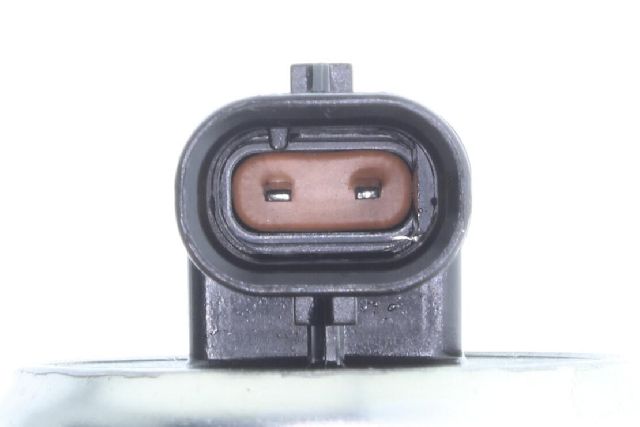
- Inspect the wiring and connector for the Bank 1 intake VCT solenoid and camshaft position sensor for any damage or loose connections.
- If the oil is clean and full, use a diagnostic tool to run the Ford-specific pinpoint test (HK11 or HK12). This commands the VCT solenoid to cycle 10 times to dislodge any small debris. If this resolves the rough idle and the code stays cleared, the issue was debris.
- If cycling the solenoid does not work, the next step is to test or replace the Bank 1 intake VCT solenoid. A DIY test involves checking resistance (7-12 ohms) and applying 12V power to see if it clicks.
- If the code persists after a new solenoid is installed, test the camshaft position sensor for proper operation.
- If all of the above components are good, the issue may be with the camshaft phaser or the base engine timing (timing chain/guides), which requires more in-depth mechanical diagnosis.
Parts You'll Likely Need
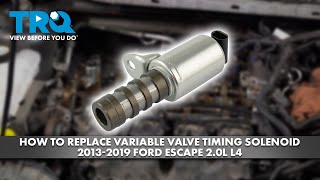
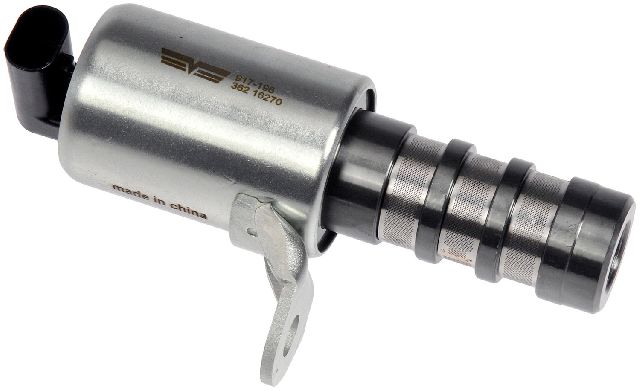
- Engine Variable Valve Timing (VVT) Solenoid
(OEM #CN1Z-6M280-C (or -A, -D) for 1.5L/1.6L; P2GZ-6M280-A for 2020+ 1.5L. Base part is 6M280.)— This is the most common cause of P0011 on this vehicle, as identified by Ford's own Technical Service Bulletins, which state it can stick due to debris. It is a widely reported failure point in owner forums.
Trusted brands: Motorcraft, Dorman
OEM price range: $83-$96
Aftermarket price range: $30-$70 - Engine Oil and Filter — Low or dirty oil is a primary trigger for VCT system faults, as the system relies on clean oil and correct pressure to function. An oil change is a critical first diagnostic step.
Trusted brands: Motorcraft, Mobil 1, Castrol
OEM price range: $50-$90
Aftermarket price range: $40-$70
Related Codes That Often Appear With This One
- P0012 — This code is for 'Intake Camshaft Position Timing - Over-Retarded (Bank 1)'. It relates to the same system and can appear if the VCT solenoid is sticking intermittently or has an electrical fault.
- P0014 — This is the equivalent 'Over-Advanced' code for the 'B' (exhaust) camshaft. If both P0011 and P0014 appear, it could point to a more systemic issue like oil pressure or a timing chain problem affecting both camshafts.
- P0016 — Crankshaft Position - Camshaft Position Correlation (Bank 1, Sensor A). This code indicates a discrepancy between the crank and cam sensors, often appearing alongside P0011 if the timing has jumped or a component has failed catastrophically.
Technical Service Bulletins (TSBs) & Recalls
- SSM 54366: Supersedes previous TSBs and covers 2015-2021 Ford/Lincoln vehicles. It notes that various VCT codes including P0011 may occur and directs technicians to an updated diagnostic pinpoint test (HK) in the workshop manual.
- SSM 48423: Specifically for 2015-2020 models, states P0011 may be due to small debris causing the VCT solenoid to stick. It recommends using pinpoint test HK11 to cycle the solenoid 10 times to clear debris before replacement. It lists the causal part as base number 6M280.
- SSM 47170: An earlier version of the TSB for 2018 and prior models, also pointing to debris causing a sticking VCT solenoid as a potential cause for P0011.
Platform-Specific Known Issues
- Ford Technical Service Bulletin (TSB) #SSM 48423 and #SSM 47170 specifically mention that P0011 on 2015-2020 Ford vehicles can be caused by 'small debris causing the VCT solenoid to stick'. The recommended procedure before replacement is to use a scan tool to run pinpoint test HK11, which cycles the solenoid 10 times to attempt to clear the debris.
Mechanic-Grade Diagnostic Values
- VCT Solenoid Internal Resistance — expected: 7 to 14 Ohms. One source specifies a tighter range of 6.9-7.9 Ohms at 68°F (20°C).. Failure: A reading of 0 Ohms indicates a short, while an infinite reading (OL) indicates an open circuit. A reading outside the expected range suggests the solenoid's coil is failing.
- Camshaft Position Sensor (3-wire Hall Effect) Voltage — expected: With the sensor connected and ignition on (engine off), back-probing the signal wire should show approximately 4.8-5.0 Volts. When a ferrous metal object (like a wrench) is passed in front of the sensor tip, the voltage should drop to 0 Volts.. Failure: If the voltage does not switch from ~5V to 0V when metal is passed in front of it, the sensor is faulty. No voltage on the reference or signal wire points to a wiring or PCM issue.
- Ford VCT PID Data at Hot Idle (in Drive) — expected: VCT_INT_DIF (Intake Cam Position Difference) should be near 0 degrees. VCT_INT (Intake Cam Position) should be near 20 degrees. VCT_EXH (Exhaust Cam Position) should be near 0 degrees. The VCT_ADV_ERR (Advance Error) PID should also be close to 0 degrees.. Failure: A large, fluctuating value for VCT_ADV_ERR or VCT_INT_DIF (e.g., swinging +/- 10 degrees or more) indicates the PCM cannot control the camshaft position, pointing to a sticking solenoid or failing phaser.
Hidden / Shadow Codes Worth Checking
- Mode $06, Test ID $53: Mode $06 data provides results from non-continuous monitor self-tests. For Ford, Test ID $53 often relates to Variable Camshaft Timing (VCT) monitor data. Viewing the raw data for this test can show how far off the timing was during the last test cycle, even if it wasn't enough to set a persistent DTC. (see via An advanced scan tool capable of displaying Mode $06 data, such as Ford IDS, FORScan, or other professional-grade scanners.)
Scan Tool Commands That Help
- Ford IDS / FORScan: Output State Control / Actuator Test for VCT Solenoids — This bidirectional command allows you to manually activate and deactivate the VCT solenoid while the engine is running at idle. Activating the intake solenoid should cause a noticeable change in engine idle quality (it will run rough or stall). If there is no change, it confirms the solenoid is not functioning mechanically or is not receiving the command, helping to distinguish between a wiring and component fault. This is a more direct test than the TSB's 'cycle 10 times' procedure.
Wiring & Ground Locations
- VCT Solenoid Connector — On the top/front of the valve cover. It is a 2-pin connector.. One pin is 12V+ power from the PCM power relay (via a fuse, e.g., F16 in the battery junction box), and the other is a duty-cycled ground controlled by the PCM. Checking for 12V+ with key-on is a primary electrical check. Damage to this connector or wiring is a possible cause.
- PCM Ground Wire — On the chassis, located underneath the air filter box on the driver's side of the engine bay.. A loose or corroded main PCM ground can cause a multitude of erratic and inconsistent codes, including VCT faults. The PCM may de-energize randomly, causing stalling and confusing diagnostic data. This is often missed because technicians chase the specific codes instead of checking fundamental power and ground connections.
Real Owner Repair Stories
- Reddit user post on r/fordescape (2017 Ford Escape) — Vehicle would randomly die when accelerating from a stop. The engine would stall, and battery/oil pressure lights would come on. It would restart immediately. Threw wildly different codes each time, but eventually, a consistent code for 'PCM de-energizing too early' appeared.
❌ Tried (didn't work) Checking basic connections, fuses, high-pressure fuel pump. The dealership took four weeks to diagnose.
✅ What actually fixed it The PCM ground wire, located under the airbox, was slightly loose and not making good contact with the chassis. Tightening this ground wire completely resolved the random stalling and all associated codes.
OEM Part Supersession History
CN1Z-6M280-A / CN1Z-6M280-B→CN1Z-6M280-C, then CN1Z-6M280-D, then CN1Z-6M280-E, and currently CN1Z-6M280-F or CN1Z-6M280-H.— Ford has revised this VCT solenoid part multiple times for the 1.5L and 1.6L engines. This frequent supersession strongly suggests efforts to improve the part's reliability and resistance to sticking from oil debris.
Heads up: While the newer parts are backward compatible, using an older, superseded part number is not recommended as it likely has the original design's flaws.
Model Year Variations Within This Range
- 2020-2021: For the 2020 model year, the Escape introduced a new 1.5L 3-cylinder 'Dragon' engine. This engine uses different VCT solenoids (OEM part P2GZ-6M280-A) and camshaft position sensors (OEM part HX7Z-6B288-A) than the 3rd generation 1.5L/1.6L 4-cylinder engines. While the P0011 code can still occur, the specific parts and their locations differ.
Helpful Videos

We Have This Part in Stock


The information in this article is provided for general reference and educational purposes only. Vehicle specifications, procedures, and part compatibility can vary by production date, trim level, and region. Always consult your vehicle's factory service manual and verify part numbers before purchasing or performing repairs. Safety-critical components such as airbags, seat belts, and braking systems should be installed by a qualified professional.
- Ford ESCAPE:
- 🧭 Diagnostic Flowchart
- 🎬 Helpful Videos
- 🛍️ Shop This Part
- What's Unique About the 2015-2021 Ford ESCAPE
- Symptoms You May Notice
- Most Likely Causes
- Rare But Worth Checking
- Diagnosis Steps
- Parts You'll Likely Need
- Related Codes That Often Appear With This One
- Technical Service Bulletins (TSBs) & Recalls
- Platform-Specific Known Issues
- Mechanic-Grade Diagnostic Values
- Hidden / Shadow Codes Worth Checking
- Scan Tool Commands That Help
- Wiring & Ground Locations
- Real Owner Repair Stories
- OEM Part Supersession History
- Model Year Variations Within This Range
- 🎟️ Get 5% Off