

P0011 on 2015-2020 Ford Explorer: 'A' Camshaft Timing Over-Advanced Causes and Fixes
On a 2015-2020 Ford Explorer, code P0011 is most often caused by low/dirty engine oil or a failing Variable Camshaft Timing (VCT) solenoid. An oil change or replacing the VCT solenoid (around $30-$80 for the part) usually resolves the issue. Before replacing parts, a technician may use a scan tool to cycle the solenoid multiple times to clear debris, which can sometimes fix the issue without parts replacement.
- P0011 on your Explorer means the intake camshaft timing on Bank 1 is stuck in an over-advanced position.
- Before buying any parts, check your engine oil. Low, old, or incorrect oil is a very common cause.
- The most likely failed part is the VCT solenoid, which gets stuck due to debris, as noted in Ford's own service bulletins.
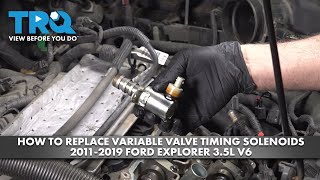
- Replacing the Bank 1 intake VCT solenoid is a manageable DIY job for many and is the most common fix. Swapping the Bank 1 and Bank 2 solenoids is a great no-cost diagnostic step.
- If you also have a P0016 code or hear a startup rattle, the problem may be more serious, involving the timing chain or cam phasers, especially on 3.5L EcoBoost models.
What's Unique About the 2015-2020 Ford EXPLORER
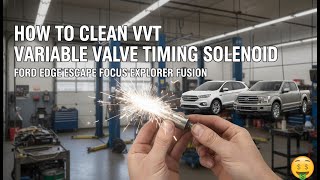
On this generation of Ford Explorer, the VCT system is highly sensitive to oil quality and level. Ford has issued multiple Technical Service Bulletins (TSBs) acknowledging that P0011 can be triggered by small debris causing the VCT solenoid to stick. A unique diagnostic step recommended by Ford for dealers is to use a scan tool to command the VCT solenoid to cycle on and off multiple times (Pinpoint Test HK) to dislodge debris before replacing the part. 🎬 See how to clean and test your solenoid for debris. For the 3.5L naturally aspirated V6, a transverse-mounted engine, the internal water pump is a known failure point that can lead to coolant contaminating the engine oil, causing sludge and triggering VCT codes like P0011.
Diagnostic Flowchart
Tap your situation to follow the diagnostic path that matches what you're seeing on this vehicle.
Generation note: This range covers two Explorer generations: the 5th Gen (2015-2019) and the 6th Gen (2020). The 5th Gen used 2.3L and 3.5L engines, while the 2020 model introduced 3.0L and 3.3L hybrid options. However, the TSBs regarding this code apply across these model years, suggesting the VCT system design shares similar vulnerabilities. TSB 16-0093 specifically notes this code can appear on very low-mileage (under 2,000 miles) 2016 models with 3.5L GTDI (EcoBoost) engines.
Symptoms You May Notice
- Check Engine Light is on
- Rough idle
- Engine stalling or hesitation
- Reduced engine power and acceleration
- Decreased fuel economy
- Rattling noise from the engine, especially on startup
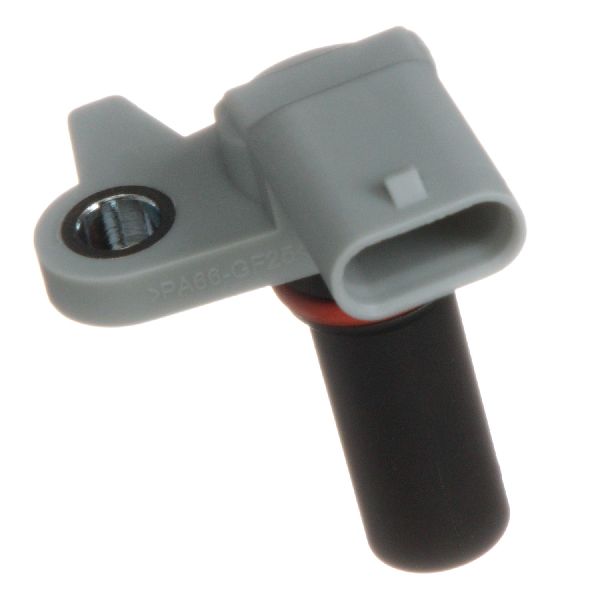
- Replacing the camshaft position sensor. While possible, this sensor is more likely to cause other codes or a no-start condition. For P0011, the sensor is often correctly reporting the over-advanced timing, it's not the cause of it.
Most Likely Causes
- Low or Dirty Engine Oil 🔴 High Probability The VCT system uses pressurized engine oil to adjust cam timing. If the oil is low, dirty, or the wrong viscosity, the system cannot function correctly. The EcoBoost engines in particular are known to be hard on oil due to higher operating temperatures.
How to confirm: Check the engine oil dipstick for level and inspect the oil's color and consistency. If it's low or looks like dark sludge, it needs to be changed. For the 3.5L NA V6, milky or frothy oil is a sign of coolant contamination from a failing internal water pump.
Typical fix: Change the engine oil and filter using the correct grade specified by Ford (e.g., 5W-30 for many of these engines, but always check your owner's manual). Clear codes and test drive.
Est. part cost: $40-$80 - Failing VCT Solenoid (Camshaft Oil Control Valve) 🔴 High Probability Ford TSBs SSM 47170 and SSM 48423 directly state that small debris can cause the VCT solenoid to stick, leading to this code. This is the most common point of failure besides oil condition.
How to confirm: A good DIY step is to swap the Bank 1 intake solenoid with the Bank 2 intake solenoid. Clear the codes and drive. If the code changes to P0021 (Bank 2), the solenoid is confirmed faulty. You can also test the solenoid's resistance with a multimeter or apply 12v to see if it actuates (clicks).
Typical fix: Replace the Bank 1 intake VCT solenoid. Some owners choose to replace both intake solenoids at the same time as a preventative measure.
Est. part cost: $30-$80 - Stretched Timing Chain or Worn Guides ⚪ Low Probability → Shop Engine Timing Chain While less common than oil or solenoid issues, timing chains can stretch over time, especially with high mileage or poor maintenance (infrequent oil changes), causing a permanent timing deviation. This is a more widely reported issue on the 3.5L EcoBoost engines compared to the naturally aspirated V6.
How to confirm: This is a complex diagnosis. A key symptom is a rattling noise from the front of the engine on cold starts. Diagnosis involves removing the valve cover to inspect for chain slack and may require specialized tools to verify timing marks. Often diagnosed after other causes are ruled out.
Typical fix: Replace the timing chain, tensioners, and guides. This is a labor-intensive job, often costing over $2000 at a shop.
Est. part cost: $300-$700
Rare But Worth Checking
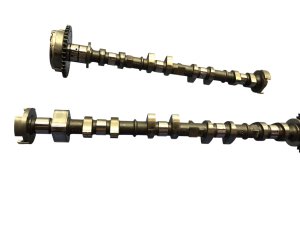
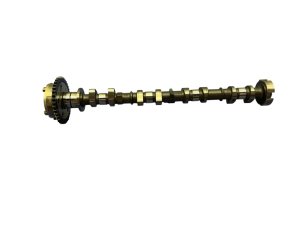
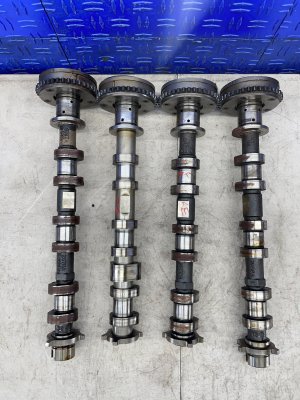
- Faulty Camshaft Phaser: → Shop Engine Camshaft The phaser is the gear on the end of the camshaft that actually rotates to change timing. It can fail mechanically, getting stuck in the advanced position. On 3.5L EcoBoost engines, phaser failure is a known issue, often causing a distinct rattle on startup. TSB 20-2315 addresses this issue on some 3.5L EcoBoost vehicles.
- Clogged Oil Passages: In engines with severe sludge buildup from neglected oil changes, the small oil passages leading to the VCT solenoid and phaser can become blocked, starving the system of oil pressure.
Diagnosis Steps
- Read the code with an OBD-II scanner and record any other codes present. Note the freeze frame data.
- Check the engine oil level and condition. If low, dirty, or milky (especially on 3.5L NA), perform an oil and filter change with the manufacturer-specified oil. Clear the codes and test drive.
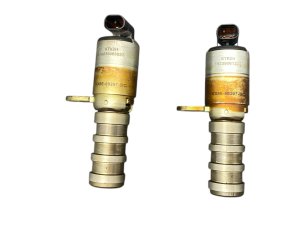
- If the code returns, locate the Bank 1 (passenger side) intake VCT solenoid. On the 3.5L V6, the intake solenoids are often white or grey, while the exhaust solenoids are black. Inspect the wiring and connector for damage or corrosion.
- Diagnostic Swap: Swap the Bank 1 intake VCT solenoid with the Bank 2 intake VCT solenoid. Clear codes and drive the vehicle. If the code changes to P0021, you have confirmed the solenoid is the faulty part.
- If the solenoid is suspect or confirmed faulty, replace it. It's often recommended to replace the valve cover gasket or VCT solenoid seals at the same time to prevent oil leaks.
- If the solenoid and oil are good, the next step is to suspect a mechanical timing issue (phaser or timing chain). This requires a more in-depth diagnosis, including listening for startup rattles and potentially removing the valve cover to inspect the timing chain for slack. This level of diagnosis may require professional help.
Parts You'll Likely Need
- Variable Camshaft Timing (VCT) Solenoid
(OEM #For 3.5L EcoBoost: HL3Z-6M280-A; For 3.5L NA V6: 7T4Z-6M280-C; For 2.3L EcoBoost: CJ5Z-6M280-A. Part numbers can vary by specific year and intake/exhaust position, always verify with VIN.)— This is the most common mechanical failure for this code on this vehicle, as confirmed by multiple Ford TSBs and owner experiences.
Trusted brands: Motorcraft, Dorman, Standard Motor Products
OEM price range: $50-$100
Aftermarket price range: $30-$80 - Engine Oil and Filter — Incorrect oil level or quality is a primary cause of VCT system faults.
Trusted brands: Motorcraft, Mobil 1, Castrol
OEM price range: $50-$90
Aftermarket price range: $40-$80
Related Codes That Often Appear With This One
- P0021 — This is the equivalent code for Bank 2. If both appear, it may point to a systemic issue like low/dirty oil affecting both banks, or a more serious timing chain issue.
- P0012 — This is for an 'over-retarded' condition on the same camshaft. Seeing both P0011 and P0012 intermittently could suggest a VCT solenoid that is sticking erratically.
- P0016 — This code indicates a correlation problem between the crankshaft and the Bank 1 intake camshaft. When seen with P0011, it strongly suggests a mechanical timing issue, such as a stretched timing chain or a jumped tooth on the timing gear.
Technical Service Bulletins (TSBs) & Recalls
- SSM 54366: Notes that P0011 and other VCT codes may occur on 2015-2021 Ford vehicles and refers to a specific diagnostic test.
- SSM 47170: States that for some vehicles, P0011 may be due to small debris causing the VCT solenoid to stick.
- SSM 48423: Repeats the information from SSM 47170, indicating a persistent issue with debris affecting VCT solenoids.
- TSB-16-0093: Mentions P0011 occurring on low-mileage 2016 GTDI engines and recommends solenoid replacement as the fix.
- TSB 20-2315: Addresses cold start rattle on 3.5L EcoBoost engines due to worn VCT units (phasers), a more serious repair often associated with timing codes.
Platform-Specific Known Issues
- Ford has issued multiple Technical Service Bulletins related to P0011. TSBs SSM 47170 and SSM 48423 for 2015-2020 models specifically mention that this code may be caused by 'small debris causing the VCT solenoid to stick'.
- TSB 16-0093 addresses P0011 on low-mileage 2016 3.5L GTDI (EcoBoost) engines and advises replacing the affected solenoid.
- On the 3.5L EcoBoost engines, P0011 is often a precursor or companion to codes like P0016 and can indicate the beginning of the common cam phaser and timing chain stretch issues that plague this engine family.
- On the transverse-mounted 3.5L naturally-aspirated V6, a failing internal water pump can cause coolant to leak into the oil, creating sludge that clogs VCT solenoids and triggers P0011.
Mechanic-Grade Diagnostic Values
- VCT Solenoid Internal Resistance — expected: 7 to 14 Ohms (Ω). Failure: A reading of OL (infinite resistance) indicates an open coil, while a very low reading (under 2 Ohms) indicates a short. The test should be performed when the engine is both cold and hot, as failures can be temperature-dependent.
- VCT Advance Error PID (VCT_ADV_ERR) — expected: Approximately 0 degrees (+/- 5 degrees). Failure: A consistent reading beyond +/- 5 degrees for an excessive time indicates the camshaft is not at its commanded position, pointing to a solenoid, phaser, or oil pressure problem.
- Voltage at VCT Solenoid Connector — expected: Battery voltage (approx. 12V) at Pin 1 with key on, engine off.. Failure: No voltage indicates a wiring or fuse issue upstream of the solenoid.
Scan Tool Commands That Help
- Ford IDS (Integrated Diagnostic System): VCT Solenoid Bidirectional Control — This function allows a technician to directly command the VCT solenoid on and off while the engine is idling. A healthy solenoid will produce an audible click, and activating it should cause a noticeable change in idle quality or even stall the engine. If there's no click or change in idle, it points to a faulty solenoid or a wiring issue.
- Ford IDS (or equivalent advanced scanner): Datalogger - VCT PIDs — Monitor PIDs like VCT_ADV_ERR, VCT_DSD (desired state), and the solenoid duty cycle percentage. In closed-loop operation, the error should be near zero. If the PCM is commanding a high duty cycle to one bank's solenoid compared to the other with little change in cam angle, it suggests that solenoid is sticking or there's an oil flow restriction.
Wiring & Ground Locations
- G104 / G105 / G106 — Based on similar Ford platforms, common engine compartment ground points are G104 (right front of engine compartment), G105 (left side of engine compartment), and G106 (right side of engine compartment). Always verify with a model-year specific diagram.. The PCM controls the VCT solenoid by providing a ground signal. A poor engine or chassis ground can cause erratic behavior in the entire VCT system, leading to intermittent codes.
- VCT Solenoid Connector — On the front of the engine, inserted into the valve cover for each camshaft.. The two-pin connector provides power and the control ground to the solenoid. Pin 1 should have battery voltage with the key on, and Pin 2 is the ground controlled by the PCM. Corrosion or damage to these pins is a common point of failure.
Real Owner Repair Stories
- Reddit user in r/MechanicAdvice (2016 Chevy Cruze (different vehicle, same VVT principle)) — Check engine light with code P0011 appeared 3 days after an oil change.
❌ Tried (didn't work) Replacing the intake VVT solenoid.
✅ What actually fixed it The user was advised that the issue was likely the wrong viscosity oil used during the oil change, or a faulty/improperly installed oil filter. The final fix was not posted, but the strong consensus was an oil/filter issue, not a part failure. - Ford Truck Enthusiasts Forum user (2011 Ford F-150 5.0L (different vehicle, similar VCT system)) — After an engine rebuild, multiple VCT circuit codes appeared (P0010, P0013, P0020, P0023) along with rough running.
❌ Tried (didn't work) Re-torquing exhaust manifold., Swapping O2 sensors., Cleaning electrical connectors., Reverting engine tune to stock.
✅ What actually fixed it The issue was traced to the new VCT solenoids. The original parts were discontinued, and the replacements required soldering new connectors onto the factory harness. The problem was confirmed to be related to the wiring and connections for all four new solenoids, as every single one threw a circuit code.
OEM Part Supersession History
7T4Z-6M280-A, 7T4Z-6M280-AA, 7T4Z-6M280-B→7T4Z-6M280-C— Part revision and improvement by the manufacturer. Using the latest revision is always recommended.
Heads up: Forum discussions strongly advise using only OEM Motorcraft VCT solenoids. Aftermarket brands like Dorman are frequently reported to have higher failure rates for this specific component, sometimes failing shortly after installation.
Helpful Videos
Used OEM Parts in Stock
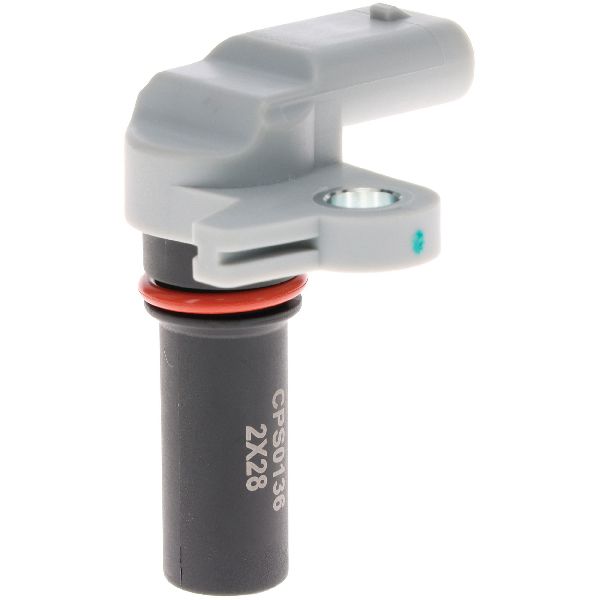
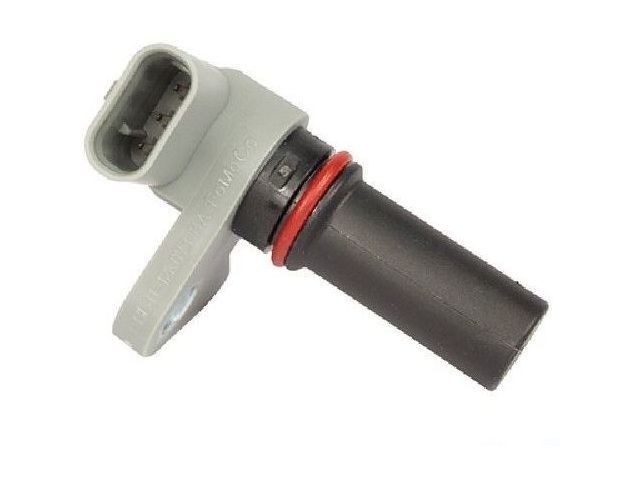
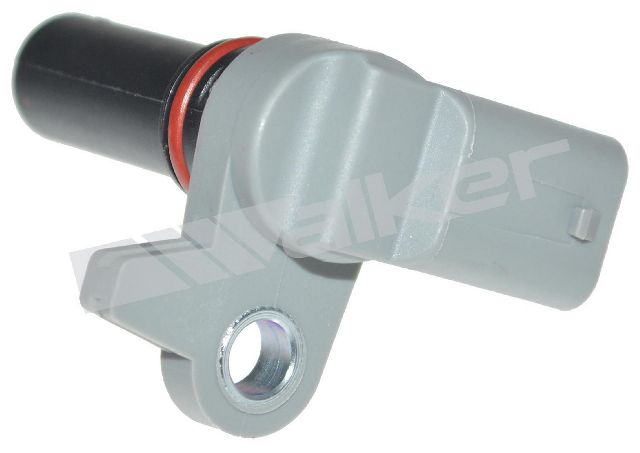
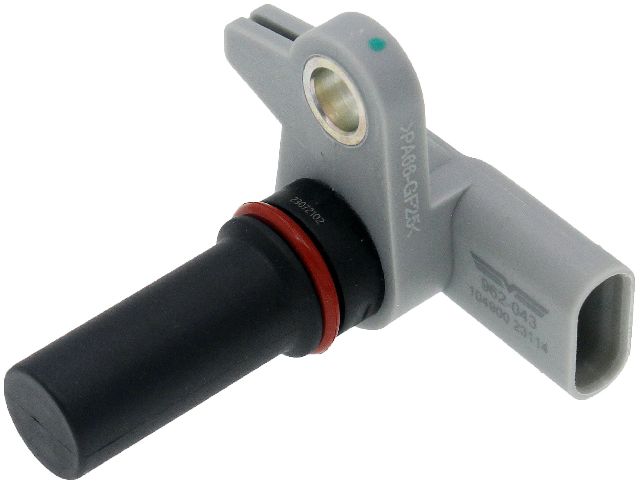
New Aftermarket Parts Available


The information in this article is provided for general reference and educational purposes only. Vehicle specifications, procedures, and part compatibility can vary by production date, trim level, and region. Always consult your vehicle's factory service manual and verify part numbers before purchasing or performing repairs. Safety-critical components such as airbags, seat belts, and braking systems should be installed by a qualified professional.
- Ford EXPLORER:
- 🧭 Diagnostic Flowchart
- 🎬 Helpful Videos
- 🛍️ Shop This Part
- What's Unique About the 2015-2020 Ford EXPLORER
- Symptoms You May Notice
- Most Likely Causes
- Rare But Worth Checking
- Diagnosis Steps
- Parts You'll Likely Need
- Related Codes That Often Appear With This One
- Technical Service Bulletins (TSBs) & Recalls
- Platform-Specific Known Issues
- Mechanic-Grade Diagnostic Values
- Scan Tool Commands That Help
- Wiring & Ground Locations
- Real Owner Repair Stories
- OEM Part Supersession History
- 🎟️ Get 5% Off