

P0011 on 2011-2018 Ford Focus 2.0L: Causes and Fixes for Over-Advanced Camshaft Timing
On a 2011-2018 Ford Focus with the 2.0L engine, code P0011 is most often caused by low/dirty engine oil or a faulty intake Variable Camshaft Timing (VCT) solenoid. Always check the oil level and condition first. If the oil is fine, the intake VCT solenoid is the likely culprit. The solenoids are under the valve cover, making replacement more involved. The solenoid part (OEM #CJ5Z-6M280-A) costs about $30-$80.
- P0011 on this Ford Focus points to the intake camshaft timing being too advanced.
- Always check your engine oil first. Low, dirty, or incorrect (non 5W-20) oil is the #1 cause.
- The most likely failed part is the intake VCT solenoid (Part # CJ5Z-6M280-A).
- To replace the solenoid, the valve cover must be removed, and the valve cover gasket (Part # CV6Z-6584-A) must be replaced at the same time.
- Do not waste money replacing the camshaft position sensor; it is rarely the cause of this code.
What's Unique About the 2011-2018 Ford Focus
The 2.0L Ti-VCT GDI engine in the third-generation Ford Focus is highly sensitive to oil quality and level. Unlike many other engines where the VCT solenoids are easily accessible, on this specific 2.0L engine, both the intake and exhaust solenoids are located under the valve cover. This makes replacing them a more involved job that requires removing the valve cover and its gasket, which increases the repair time and cost compared to vehicles where the solenoids can be accessed externally. Many owners and technicians express frustration that a minor design change could have made this a much simpler repair.
Symptoms You May Notice
- Check Engine Light is on
- Rough idle
- Engine stalling, especially when coming to a stop
- Poor acceleration or sluggish performance
- Reduced fuel economy
- Engine hesitation or stuttering under load
- Rattling noise from the engine
- Replacing the Camshaft Position Sensor. The sensor's job is to report the camshaft's position to the PCM. It is rarely the cause of a P0011 code, which indicates a mechanical timing or control problem, not a sensor reading issue. 🎬 See how to properly diagnose and fix the P0011 code. A faulty sensor would typically set a different code, like P0340.
Most Likely Causes
- Low, Dirty, or Incorrect Viscosity Engine Oil 🔴 High Probability The Ti-VCT system is hydraulic and extremely sensitive to oil pressure and cleanliness. Ford has issued service messages noting that debris in the oil can cause the VCT solenoids to stick. Some owners report the code appearing shortly after an oil change if the wrong viscosity (not 5W-20) was used.
How to confirm: Check the engine oil level on the dipstick and examine its condition. If the oil is below the 'add' line, very dark, sludgy, or past its recommended change interval, this is the most likely cause.
Typical fix: Perform an engine oil and filter change using the manufacturer-specified 5W-20 synthetic blend oil. This is the cheapest and easiest first step and should always be done before replacing parts.
Est. part cost: $30-$60 - Failed Intake VCT Solenoid 🔴 High Probability The VCT solenoids have fine mesh screens that can get clogged with small debris from the oil, causing the internal spool valve to stick. This is a well-documented issue on many Ford engines with the Ti-VCT system, as acknowledged in Ford's own service bulletins.
How to confirm: A common diagnostic technique is to swap the intake and exhaust VCT solenoids, as they are identical parts (CJ5Z-6M280-A). Clear the codes and drive the vehicle. If the code changes to P0014 (Exhaust 'B' Camshaft Timing Over-Advanced), the solenoid you moved to the exhaust side is confirmed to be faulty. You can also test the solenoid's resistance with a multimeter; a reading outside the 6.9-7.9 ohm range indicates failure, though any reading between 6-12 ohms is generally considered acceptable.
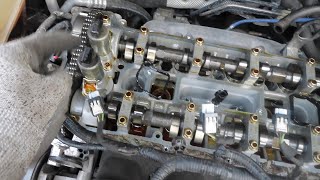
Typical fix: Replace the faulty intake VCT solenoid. Since the solenoids are under the valve cover on this engine, you must also replace the valve cover gasket and spark plug tube seals at the same time. It is highly recommended to replace both solenoids at once 🎬 Watch: Step-by-step guide to replacing both VVT solenoids. to avoid a repeat repair.
Est. part cost: $30-$80 for the solenoid, $25-$50 for the gasket kit. - Damaged VCT Solenoid Wiring or Connector ⚪ Low Probability
How to confirm: After removing the valve cover, visually inspect the wiring harness and connector for the intake VCT solenoid. Look for any signs of brittleness, breaks, corrosion, or oil saturation in the connector. The plastic locking tabs on the connectors can become brittle and break during removal.
Typical fix: Repair the damaged section of wiring or replace the connector pigtail.
Est. part cost: $15-$30
Rare But Worth Checking
- Failing Camshaft Phaser: → Shop Engine Camshaft If the oil is clean and a new VCT solenoid doesn't fix the issue, the problem could be with the camshaft phaser itself. The phaser is the gear at the end of the camshaft that actually adjusts the timing. It can get stuck or fail internally, but this is much less common than a solenoid failure for this specific code.
- Stretched Timing Chain or Worn Guides: → Shop Engine Timing Chain While not a primary cause for just a P0011 code, a stretched timing chain can cause camshaft timing to be out of sync with the crankshaft, potentially triggering this and other timing-related codes like P0016. This would typically be accompanied by a rattling noise on startup.
Diagnosis Steps
- Check Engine Oil: Verify the engine oil level is correct and the oil is clean. If low, dirty, or the wrong viscosity, perform an oil and filter change with the correct 5W-20 oil, clear the code, and see if it returns. This is the #1 cause.
- Scan for Other Codes: Check for any other related trouble codes. A code like P0010 would point directly to an electrical issue with the VCT solenoid.
- Attempt Solenoid Cycling (Dealer/Advanced Scan Tool Method): Per Ford TSBs, a scan tool like FORScan or Ford's IDS can be used to command the VCT solenoid to cycle on and off (often 10 times) to try and dislodge debris without disassembly. 🎬 Watch: Two quick DIY methods to clear engine codes. This may be a temporary fix.
- Inspect VCT System: If the oil is good, the next step involves accessing the VCT solenoids. This requires removing the engine valve cover.
- Swap VCT Solenoids: Once the valve cover is off, label and swap the positions of the identical intake and exhaust VCT solenoids. Reinstall the valve cover (you can do so temporarily with the old gasket for this test), clear the codes, and run the engine.
- Confirm the Fault: If the trouble code changes to P0014 (Exhaust Camshaft Position Timing Over-Advanced), you have confirmed that the solenoid is the faulty part.
- Replace Faulty Part(s): If the solenoid is confirmed bad, replace it with a new one (Motorcraft CM5Z-6M280-C is the current recommended part). It is highly advised to replace both solenoids at the same time. It is mandatory to install a new valve cover gasket kit (Motorcraft CV6Z-6584-A) during this procedure to prevent oil leaks.
- Advanced Diagnosis: If the code returns after replacing the solenoid(s), the issue may be a clogged oil passage, a failing camshaft phaser, or a timing chain issue, which requires more advanced mechanical diagnosis.
Parts You'll Likely Need
- Engine Variable Valve Timing (VVT) Solenoid
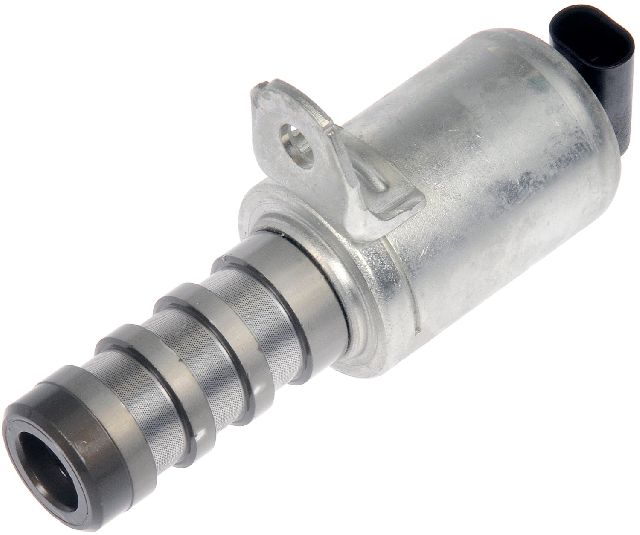
(OEM #CJ5Z-6M280-A)— This is the most common part to fail. It gets stuck due to contamination in the engine oil, preventing it from correctly controlling camshaft timing. Ford part may be superseded by CM5Z-6M280-A or CM5Z-6M280-C.
Trusted brands: Motorcraft, Dorman, Standard Motor Products (SMP)
OEM price range: $60-$90
Aftermarket price range: $30-$70 - Valve Cover Gasket Kit
(OEM #CV6Z-6584-A)— This is required for the VCT solenoid replacement because the solenoids are located under the valve cover on the 2.0L GDI engine. The kit typically includes the main gasket and spark plug tube seals.
Trusted brands: Motorcraft, Fel-Pro, Mahle
OEM price range: $35-$50
Aftermarket price range: $25-$40 - Engine Oil and Filter — Low, old, or incorrect viscosity oil is the leading cause of P0011. An oil change is the first and most crucial step in diagnosis and prevention. Use 5W-20 Synthetic Blend.
Trusted brands: Motorcraft (Synthetic Blend 5W-20), Mobil 1, Castrol
OEM price range: $30-$50
Aftermarket price range: $30-$50
Related Codes That Often Appear With This One
- P0010 — P0010 is an electrical circuit code for the same intake VCT solenoid. If you see both P0010 and P0011, it strongly points to a failed solenoid or a wiring issue, as the PCM is detecting both an electrical fault and a performance/timing error.
- P0014 — This code for the exhaust camshaft ('B' side) may appear if you have swapped the intake and exhaust solenoids for diagnostic purposes, confirming the solenoid is the fault.
Technical Service Bulletins (TSBs) & Recalls
- SSM 47170 / NHTSA ID 10137101: Notes that P0011 and a range of other VCT codes may be due to small debris causing the VCT solenoid to stick. Advises using PC/ED pinpoint test HK11 to cycle the solenoid 10 times to attempt to clear it before replacement.
- SSM 50067 / NHTSA ID 10201050: A superseding message that continues to advise on diagnosing VCT codes, often pointing to sticking solenoids that can sometimes be cleared by cycling with a scan tool.
Platform-Specific Known Issues
- Ford has issued multiple Special Service Messages (SSMs), such as SSM 47170 and SSM 50067, acknowledging that P0011 and other VCT codes can be caused by small debris causing the solenoid to stick. The recommended dealer procedure is often to first try cycling the solenoid with a diagnostic tool (via pinpoint test HK11 or HK12) to dislodge debris before replacing the part.
Mechanic-Grade Diagnostic Values
- VCT Solenoid Internal Resistance — expected: 6.9 to 7.9 ohms at 68°F (20°C). A general acceptable range is often cited as 6-12 ohms.. Failure: A reading of OL (Open Loop/infinite resistance) or near 0 ohms (short circuit) confirms a failed solenoid.
- VCT Solenoid Connector Voltage (Key On, Engine Off) — expected: Approximately 12V (battery voltage) at Pin 1 (Power Supply wire).. Failure: No voltage or very low voltage points to a wiring issue, a blown fuse, or a problem with the PCM power relay.
- Engine Oil Pressure (Hot Idle) — expected: Minimum of 15 PSI (103 kPa).. Failure: Pressure below this minimum indicates a base engine oiling problem that must be addressed before VCT components, as the system is hydraulic.
- Mode $06 VCT Advance Error (TID $81) — expected: The value should be near 0 degrees when no advance is commanded.. Failure: A significant and persistent variance (e.g., more than +/- 5 degrees) can indicate a sticking solenoid or phaser, even before a full DTC is set.
Hidden / Shadow Codes Worth Checking
- Mode 6, TID $81, CID $12: This is not a DTC but a test result from the onboard diagnostic monitor for VCT system response. It measures VCT advance error. A failing value here can be a precursor to a P0011 code. (see via An advanced OBD-II scan tool or software like FORScan that can display Mode $06 test results.)
Scan Tool Commands That Help
- FORScan / Ford IDS: VCT Solenoid On/Off Control (Cycle Test) or Pinpoint Test HK11 — This bidirectional command manually activates and deactivates the VCT solenoid. It's used to verify if the solenoid is mechanically stuck (you should hear it click) and is the procedure recommended by Ford TSBs to attempt to dislodge debris before part replacement.
Wiring & Ground Locations
- VCT Solenoid Connector — Under the valve cover, directly plugged into the top of each VCT solenoid.. The connector itself or its wiring can become brittle or saturated with oil, leading to a poor connection that can cause intermittent P0010 (circuit) or P0011 (performance) codes. The harness must be carefully maneuvered off mounting studs during valve cover removal.
- G107 Ground — On the right side of the engine compartment.. A poor main engine ground can cause erratic voltage and unpredictable behavior in PCM-controlled actuators like the VCT solenoids. Verifying this ground is clean and tight is a valid, though often overlooked, diagnostic step for persistent electronic issues.
- PCM Connector (e.g., C175E) — At the Powertrain Control Module, typically located in the engine bay near the firewall or battery.. The control wire for the intake VCT solenoid runs from this connector to the solenoid. A continuity test from the solenoid connector pin to the corresponding PCM pin (e.g., Pin E67 on some diagrams) is necessary to rule out a broken wire in the harness.
Real Owner Repair Stories
- Reddit user in r/MechanicAdvice (Ford Focus with P0011 and an oil pressure light.) — Check engine light with P0011 and a constantly blinking oil pressure light. Owner noted the car was way overdue for an oil change.
❌ Tried (didn't work) Adding a quart of oil, which only made the light go away for about 3 days.
✅ What actually fixed it The direct cause was extremely low and old oil. An oil and filter change is the confirmed first step and likely fix in this scenario, as the VCT system is entirely dependent on oil pressure and cleanliness.
OEM Part Supersession History
CJ5Z-6M280-A→CM5Z-6M280-A, then CM5Z-6M280-C— Standard part revision and improvement by the manufacturer.
Heads up: The parts are interchangeable and backward-compatible. When ordering, it is best to use the latest part number (CM5Z-6M280-C) to get the most recent revision.
Model Year Variations Within This Range
- 2015-2018 (Facelift): While the core 2.0L GDI engine and VCT system remained the same, there were minor software calibration changes in the PCM for the facelifted models (2015+). However, these changes do not affect the diagnosis or physical parts (solenoids, gaskets) needed for a P0011 repair. The cause and fix are consistent across the entire 2011-2018 generation.
Diagnostic Flowchart
Other Known Issues on This Vehicle
Issues unrelated to this code that are worth knowing about as an owner of this generation:
- DPS6 PowerShift Dual-Clutch Transmission Failure 🔴 High — Extremely common on automatic models. Issues include shuddering, jerking, delayed engagement, and outright failure. (Ref: Multiple lawsuits, recalls (e.g., 14M01), and extended warranty programs were issued by Ford.)
- Faulty Canister Purge Valve 🟠 Medium — A very common failure. The valve sticks open, causing rough idle, stalling after refueling, and codes like P1450 or P0456. (Ref: Ford issued recall 18S32 (NHTSA 18V-735) to reprogram the PCM and, if necessary, replace the valve to prevent fuel tank deformation.)
- Failed Passenger-Side Engine Mount 🟠 Medium — The hydraulic passenger-side engine mount is known to fail prematurely, leading to excessive vibration at idle that is felt throughout the cabin. (Ref: TSB 11-3-24 was issued for an earlier generation but the problem persists in the Mk3. No specific recall for the Mk3 mount.)
- Loss of Power Steering Assist 🔴 High — Some owners report a sudden failure of the electronic power steering system, often requiring a full steering rack replacement. (Ref: Recall 14S05 was issued for some models for a related software issue, but hardware failures are also reported.)
- Shifting into Neutral While Driving (Automatic) 🔴 High — A symptom of the failing DPS6 transmission where the car can unexpectedly shift into neutral, causing a loss of power. (Ref: Related to the broader DPS6 transmission issues and covered under associated recalls and extended warranties.)
Used vs. New Parts: Buying Guide for This Vehicle
When a used part is the smart pick: For this repair, using a used VCT solenoid is generally not recommended. The failure is caused by internal wear and contamination, and a used part carries a high risk of having the same issue or failing shortly after installation. Given the low cost of a new aftermarket part ($30-$70) and the labor involved in accessing it under the valve cover, a new part is the smarter investment.
Donor-vehicle mileage cap: roughly under 50000 miles for the part to have meaningful remaining life.
What to inspect on the donor part:
- If considering a used part, source it from a vehicle with the lowest possible mileage.
- Inspect the mesh screens on the solenoid; they should be perfectly clean and free of any metallic debris or sludge.
- Test the resistance with a multimeter before purchase; it must be within the 6.9-7.9 ohm specification.
OEM-only on this vehicle (don't cheap out):
- While not strictly 'OEM-only', many professional technicians and forum users strongly recommend using Motorcraft (OEM) VCT solenoids. Aftermarket solenoids have a reputation for higher failure rates, sometimes within a year.
Aftermarket brands forum-validated for this vehicle:
- Standard Motor Products (SMP) is generally considered a reliable aftermarket alternative.
- Delphi
Brands owners have reported issues with on this vehicle:
- Dorman VCT solenoids have a mixed reputation in forum discussions, with some users reporting premature failures. While they are a major supplier, for this specific internal engine part, many users advise against them in favor of OEM.
Real Owner Stories
Aggregated from forums and TSBs cited above. Mileages and costs reflect what owners reported in those sources.
2012-2018 Ford Focus 2.0L
Symptoms: The owner experienced a P0011 code and performed a DIY repair by accessing the components under the valve cover.
What fixed it: Replaced both VVT solenoids and the valve cover gasket.
Source hint: YouTube: How to replace VVT Solenoids on a Ford Focus (2012-2018) by Sabers P.O.V.
2012-2020 Ford Focus 2.0L
Symptoms: General timing issues and P0011 code requiring removal of the valve cover.
What fixed it: Replacement of the Variable Valve Timing Solenoids.
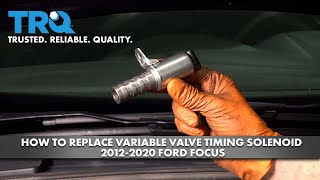
Source hint: YouTube: How to Replace Variable Valve Timing Solenoid 2012-2020 Ford Focus by 1A Auto
Related OBD-II Codes
Frequently Asked Questions
What does Ford SSM 47170 say about fixing the P0011 code on my Focus?
Can using the wrong oil viscosity trigger P0011 on the 2.0L Ti-VCT engine?
Is there a way to test if my intake VCT solenoid is bad without buying a new one?
What specific parts do I need to replace the VCT solenoids on my 2012-2018 Focus?
Does Ford SSM 50067 apply to my 2.0L GDI engine?
What is the acceptable resistance range for the VCT solenoid on this vehicle?
Helpful Videos
![How to Fix P0011 Engine Code in 4 Minutes [2 DIY Methods / Only $6.95]](https://img.youtube.com/vi/Il4J5NOlYPg/mqdefault.jpg)
Used OEM Parts in Stock
New Aftermarket Parts Available


The information in this article is provided for general reference and educational purposes only. Vehicle specifications, procedures, and part compatibility can vary by production date, trim level, and region. Always consult your vehicle's factory service manual and verify part numbers before purchasing or performing repairs. Safety-critical components such as airbags, seat belts, and braking systems should be installed by a qualified professional.
- Ford Focus:
- 🧭 Diagnostic Flowchart
- 🎬 Helpful Videos
- 🛍️ Shop This Part
- What's Unique About the 2011-2018 Ford Focus
- Symptoms You May Notice
- Most Likely Causes
- Rare But Worth Checking
- Diagnosis Steps
- Parts You'll Likely Need
- Related Codes That Often Appear With This One
- Technical Service Bulletins (TSBs) & Recalls
- Platform-Specific Known Issues
- Mechanic-Grade Diagnostic Values
- Hidden / Shadow Codes Worth Checking
- Scan Tool Commands That Help
- Wiring & Ground Locations
- Real Owner Repair Stories
- OEM Part Supersession History
- Model Year Variations Within This Range
- Other Known Issues on This Vehicle
- Used vs. New Parts: Buying Guide for This Vehicle
- Real Owner Stories
- 2012-2018 Ford Focus 2.0L
- 2012-2020 Ford Focus 2.0L
- Related OBD-II Codes
- Frequently Asked Questions
- 🎟️ Get 5% Off