

P0011 on 2020-2021 Ford Transit: Causes and Fixes for Over-Advanced Camshaft Timing
For a 2020-2021 Ford Transit built on or before July 1, 2021, code P0011 is very likely caused by a powertrain control module (PCM) software issue, per Ford TSB 21-2224. A dealer PCM update is the first step. If a software update doesn't apply or fix it, the next most common causes are low/dirty engine oil or a faulty VCT solenoid, which costs about $40-$100 for the part.
- For 2020-2021 Transits built before July 2021, the first step is to check if TSB 21-2224 (a PCM software update) applies to your vehicle.
- Always check engine oil level and condition before replacing any parts; it is the most common and cheapest fix.
- Swapping VCT solenoids is a proven, low-cost diagnostic method to confirm a faulty solenoid before purchasing a new one.
What's Unique About the 2020-2021 Ford TRANSIT
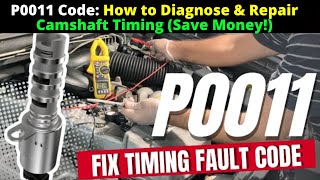
Unlike many vehicles where P0011 points directly to a mechanical fault, the 2020-2021 Ford Transit has a well-documented software issue. Ford issued Technical Service Bulletin (TSB) 21-2224 specifically for these vans, stating that a PCM software glitch can cause this code on vehicles built before July 2021. This makes checking for a needed software update the most critical and unique first step in diagnosis, potentially saving significant time and money on unnecessary mechanical repairs. 🎬 Watch: Why you shouldn't replace parts before checking for software updates. The 3.5L PFDi engine is a naturally aspirated workhorse, generally considered reliable, but still susceptible to the same oil-dependent VCT system issues as its EcoBoost counterpart.
Diagnostic Flowchart
Tap your situation to follow the diagnostic path that matches what you're seeing on this vehicle.
Symptoms You May Notice
- Check Engine Light is on
- Rough or unstable idle, sometimes fluctuating up and down.
- Engine stalling
- Poor acceleration or hesitation.
- Reduced fuel economy
- Hard starting
- Rattling noise from the engine, especially on startup.
- Replacing the camshaft position sensor. While the sensor reports the timing, it rarely causes an over-advanced condition. The fault is usually with the mechanical components that control the timing (oil, solenoid, phaser).
- Immediately replacing the cam phaser without first checking for the software TSB, verifying oil quality, and testing/swapping the VCT solenoid.
Most Likely Causes
- Powertrain Control Module (PCM) Software Issue 🔴 High Probability Ford TSB 21-2224 specifically identifies a software issue causing this code on 2020-2021 Transit models built on or before July 1, 2021. This is the most important first check for this specific vehicle and date range.
How to confirm: Check the vehicle's build date on the driver's side door jamb sticker. If it falls within the TSB range, contact a Ford dealership with your VIN to see if the PCM software update has been performed.
Typical fix: Update the PCM software at a Ford dealership or qualified shop with access to Ford's IDS software.
Est. part cost: $0-$250 - Low, Incorrect, or Dirty Engine Oil 🔴 High Probability The Ti-VCT system is hydraulic and extremely sensitive to oil pressure, volume, and cleanliness. Contaminants, sludge from extended oil change intervals, or incorrect viscosity can clog the small passages in the VCT solenoids or phasers, causing them to stick.
How to confirm: Check the oil level on the dipstick and inspect its condition. If it's low, dark, or sludgy, it needs to be changed. Even being slightly low on oil can trigger the code.
Typical fix: Change the engine oil and filter using the correct viscosity oil specified by Ford (e.g., 5W-30 Synthetic Blend for EcoBoost, 5W-20 for PFDi). Clear codes and see if P0011 returns.
Est. part cost: $40-$90 - Faulty Variable Camshaft Timing (VCT) Solenoid 🟡 Medium Probability → Shop Engine Camshaft These solenoids (also called oil control valves) can become clogged with debris or fail electrically, causing them to stick in the open/advanced position. This is a common failure point on many Ford engines, including the 3.5L platform.
How to confirm: Use a scan tool to monitor commanded vs. actual cam angle. A widely recommended diagnostic step on Ford forums is to swap the Bank 1 intake and exhaust solenoids (or the Bank 1 and Bank 2 intake solenoids) to see if the code changes to P0014 or P0021, respectively. If the code follows the solenoid, the solenoid is bad. Applying 12V to the solenoid terminals should produce an audible click, but this doesn't guarantee it isn't sticking internally.
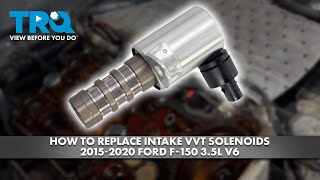
Typical fix: Replace the Bank 1 intake VCT solenoid. This requires removing the valve cover. 🎬 See this walkthrough on how to replace the intake VVT solenoids.
Est. part cost: $40-$100
Rare But Worth Checking
- Failing Camshaft Phaser: → Shop Engine Camshaft The phaser is the mechanical gear that actually rotates the camshaft. It can fail internally or get stuck due to sludge or wear. This repair is much more labor-intensive and is often accompanied by a distinct rattling noise on cold startups, a known issue on the 3.5L EcoBoost platform.
- Stretched Timing Chain or Worn Guides: → Shop Engine Timing Chain If the timing chain has stretched or a guide has broken, the base timing will be incorrect, which can trigger this code, often along with correlation codes like P0016. This is a major repair and usually presents with other symptoms like persistent rattling noises.
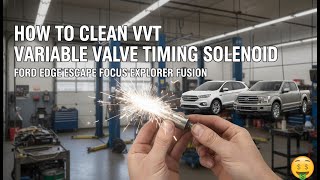
- Clogged VCT Solenoid Screens/Passages: The oil passages leading to the VCT solenoids and phasers are very narrow. Debris from infrequent oil changes can clog these passages or the small filter screens on the solenoids themselves, restricting oil flow even if the solenoid is electrically functional. 🎬 Watch: How to clean a clogged VVT solenoid to restore performance.
Diagnosis Steps
- Check your vehicle's build date from the door jamb sticker. If it is on or before July 1, 2021, contact a Ford dealer with your VIN to check for TSB 21-2224. A PCM software update is the most likely fix.
- Check the engine oil level and condition. If low, dirty, or of the incorrect viscosity, perform an oil and filter change using the Ford-specified oil. Clear the code and see if it returns.
- Use an OBD-II scanner to monitor live data for Commanded vs. Actual camshaft position for Bank 1 Intake (B1 A Cam). A significant, persistent deviation confirms the fault.
- Inspect the wiring and connector for the Bank 1 intake VCT solenoid (passenger side valve cover) for any damage or corrosion.
- Perform a VCT solenoid swap. This is a highly effective, low-cost diagnostic step. Swap the Bank 1 intake solenoid with the Bank 1 exhaust solenoid. Clear codes and drive. If the code changes to P0014 (Exhaust Cam Position Timing), the solenoid you moved is faulty.
- If the solenoid tests good and the oil is clean, the issue may be a more complex mechanical problem like a sticking cam phaser or a timing chain issue, which may require professional diagnosis and specialized tools.
Parts You'll Likely Need
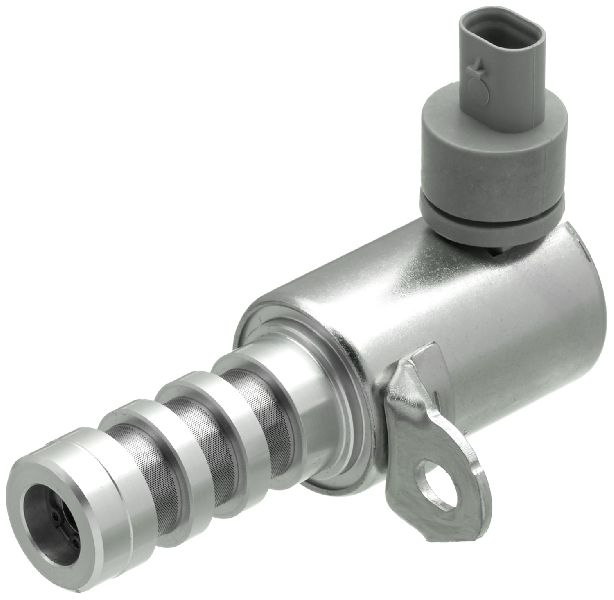
- Engine Variable Valve Timing (VVT) Solenoid
(OEM #HL3Z-6M280-A)— This solenoid controls oil flow to the cam phaser and is a very common failure point, often getting stuck or clogged with debris. It is used across many Ford 3.5L and 5.0L engines.
Trusted brands: Motorcraft, Dorman, Standard Motor Products (SMP)
OEM price range: $60-$100
Aftermarket price range: $40-$80
Related Codes That Often Appear With This One
- P0021 — This is the same over-advanced timing code but for Bank 2 (driver's side). If both appear, it strongly suggests a systemic issue like low/dirty oil or a PCM software problem affecting both banks.
- P0012, P0022 — These are codes for over-retarded timing. Seeing them with P0011 could indicate erratic VCT system performance, a sticking solenoid, or a failing phaser that is not responding correctly in either direction.
- P0016, P0017 — These are correlation codes between the crankshaft and camshaft. When seen with P0011, it points more strongly toward a base mechanical timing issue like a stretched timing chain or a phaser that has jumped a tooth.
Technical Service Bulletins (TSBs) & Recalls
- TSB 21-2224: Addresses a PCM software issue causing P0011 and other codes on 2020-2021 Transits.
- SSM 54366: A general bulletin for multiple Ford/Lincoln vehicles, including the Transit, that lists P0011 as a potential VCT system DTC.
- TSB 16-0093: An older TSB for 2016 models, but relevant as it shows a history of VCT solenoid failures causing P0011 on low-mileage 3.5L engines, recommending solenoid replacement.
Platform-Specific Known Issues
- TSB 21-2224: Some 2020-2021 Transit vehicles built on or before 01-Jul-2021 may exhibit an illuminated MIL with DTC P0011 due to a software issue in the powertrain control module (PCM). The fix is a PCM update.
- SSM 54366: A broader service message notes that many 2015-2021 Ford vehicles can exhibit P0011 and other related timing codes, pointing to a standard diagnostic procedure for VCT system faults.
- Owner Experience: Owners on forums like fordtransitusaforum.com often report that the first step a dealer takes for this code on a 2020-2021 model is to check if the TSB 21-2224 software update has been performed. If the software is up to date, diagnosis then proceeds to the oil and VCT solenoids.
Mechanic-Grade Diagnostic Values
- VCT Solenoid Internal Resistance — expected: 6.9 to 7.9 Ohms at 68°F (20°C). Some service documents allow a broader range of 5-15 Ohms.. Failure: A reading of 0 ohms (short), infinite/OL (open), or significantly outside the expected range indicates a faulty solenoid coil.
- VCT Solenoid Connector Voltage (Key On, Engine Off) — expected: Battery voltage (approx. 12V) at the power supply pin.. Failure: Low or no voltage points to a wiring issue, blown fuse (e.g., Fuse F16 in battery junction box), or PCM power relay problem.
- Engine Oil Pressure (at normal operating temp, using mechanical gauge) — expected: Minimum of 15-25 PSI at hot idle.. Failure: Pressure below 15 PSI at hot idle can cause the VCT system to malfunction and may indicate worn engine components or oil pump issues.
- Ford IDS Scan Tool PID: VCT_ADV_ERR (VCT Advance Error) — expected: Should be close to 0 degrees at idle in closed-loop operation.. Failure: A consistent deviation of more than +/- 5 degrees indicates the PCM cannot control the cam angle correctly.
Hidden / Shadow Codes Worth Checking
- Mode $06, TID $81: This refers to non-continuous monitor test results for VCT systems. While not a 'hidden code' in the traditional sense, it provides raw test data, including pass/fail counts and measured values for cam angle deviation, which can show a component is failing before it consistently sets a DTC. (see via A professional scan tool with Mode $06 capability, such as the Ford IDS.)
Scan Tool Commands That Help
- Ford IDS (Integrated Diagnostic System): VCT Solenoid Control / Output State Control — Allows a technician to command the VCT solenoid on and off while the engine is running to verify its mechanical operation. Activating the solenoid at idle should cause a noticeable change in engine idle quality or stall the engine, confirming the solenoid is working.
- Ford IDS (or FORScan): PCM - Reset All Adaptations — After replacing VCT system components like solenoids or phasers, resetting the PCM's learned adaptive values is recommended. This forces the PCM to relearn the behavior of the new parts, which can prevent the code from returning due to old, incorrect learned values.
- Ford IDS (Integrated Diagnostic System): Power Balance — This function can disable individual cylinders to help isolate if the rough running symptom is related to a specific cylinder misfire or a systemic issue like the VCT fault affecting the entire bank.
Wiring & Ground Locations
- VCT Solenoid Connector — On the top of the valve cover for the respective bank (Bank 1 is passenger side). The intake solenoid connector is often a different color (e.g., black) than the exhaust (e.g., white).. This is the primary connection point for testing voltage and resistance of the VCT solenoid. Pin 1 is typically the 12V power supply from the PCM relay/fuse, and Pin 2 is the ground-side control wire from the PCM.
- Engine Block/Chassis Ground — There are multiple ground points. A key ground strap often runs from the gearbox to the inner wing below the fuse box on Transit models. Another is from the battery negative terminal to the chassis.. A poor ground connection can cause erratic voltage signals and insufficient current for the VCT solenoids to operate correctly, leading to performance issues without setting a specific circuit code.
Real Owner Repair Stories
- Reddit user on r/f150 (2018 Ford F-150 3.5L EcoBoost, 70k miles (shared engine platform)) — Intermittent hesitation and rough idle, P0011 code.
❌ Tried (didn't work) Hoping it wasn't the cam phasers, which had been replaced under warranty at 40k miles.
✅ What actually fixed it Replaced both VVT solenoids on the passenger side bank (Bank 1) using OEM part HL3Z-6M280-A. The user also replaced the valve cover as a precaution. This completely resolved the rough idle and hesitation.
OEM Part Supersession History
Multiple older numbers exist for various 3.5L/5.0L applications.→HL3Z-6M280-A (sometimes ends in -B)— Ford has updated the VCT solenoids multiple times to improve reliability and resistance to debris and sticking.
Heads up: While older part numbers may physically fit, using the latest specified OEM part (HL3Z-6M280-A/B) is critical to ensure you have the most robust design against failure.
Model Year Variations Within This Range
- 2020 - Early 2021: Vehicles built on or before July 1, 2021, are subject to TSB 21-2224, which indicates the cause of P0011 is likely a PCM software issue. Vehicles built after this date have the updated software from the factory, making a software glitch a much less likely cause.
Helpful Videos
We Have This Part in Stock


The information in this article is provided for general reference and educational purposes only. Vehicle specifications, procedures, and part compatibility can vary by production date, trim level, and region. Always consult your vehicle's factory service manual and verify part numbers before purchasing or performing repairs. Safety-critical components such as airbags, seat belts, and braking systems should be installed by a qualified professional.
- Ford TRANSIT:
- 🧭 Diagnostic Flowchart
- 🎬 Helpful Videos
- 🛍️ Shop This Part
- What's Unique About the 2020-2021 Ford TRANSIT
- Symptoms You May Notice
- Most Likely Causes
- Rare But Worth Checking
- Diagnosis Steps
- Parts You'll Likely Need
- Related Codes That Often Appear With This One
- Technical Service Bulletins (TSBs) & Recalls
- Platform-Specific Known Issues
- Mechanic-Grade Diagnostic Values
- Hidden / Shadow Codes Worth Checking
- Scan Tool Commands That Help
- Wiring & Ground Locations
- Real Owner Repair Stories
- OEM Part Supersession History
- Model Year Variations Within This Range
- 🎟️ Get 5% Off