

P0011 on 2012-2015 GMC Savana: Camshaft Timing Over-Advanced Causes and Fixes
For a 2012-2015 GMC Savana with a P0011 code, the most common cause is a faulty camshaft position actuator solenoid, often due to low or dirty engine oil. Start by checking your oil. If the oil is fine, replacing the solenoid is a likely fix, costing between $30 and $85 for the part. This part is located on the front of the driver's side cylinder head.
- Always check your engine oil level and condition first. Low or dirty oil is a primary cause of P0011 on these engines.
- The most commonly failed part is the Bank 1 (driver's side) intake camshaft position actuator solenoid.
- A simple diagnostic trick is to swap the driver's side and passenger's side intake solenoids to see if the trouble code follows the part.
- If basic diagnostics don't solve the issue, be aware that official GM service bulletins point towards checking mechanical oil pressure as a next step.
What's Unique About the 2012-2015 Gmc SAVANA
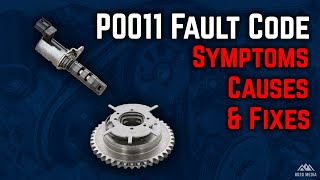
The Vortec V8 engines in this generation of GMC Savana are known for being sensitive to oil quality and level. The Variable Valve Timing (VVT) system is hydraulically operated, and any issue with oil pressure or cleanliness can directly impact its function, leading to codes like P0011. 🎬 Watch: A breakdown of P0011 causes and common fixes. Manufacturer service bulletins for these vans specifically advise checking oil pressure if initial diagnostics don't reveal the cause, highlighting how critical proper lubrication is for this system. Using an oil viscosity thicker than the recommended 5W-30 can also restrict flow and trigger this code.
Diagnostic Flowchart
Tap your situation to follow the diagnostic path that matches what you're seeing on this vehicle.
Symptoms You May Notice
- Check Engine Light is on
- Rough idle
- Engine stalling
- Reduced engine power and acceleration
- Poor fuel economy
- Hard starting
- Rattling or ticking noise from the engine, especially at idle or on a cold start
- Replacing the camshaft position *sensor* when the actual problem is the camshaft position actuator *solenoid*. The solenoid is a much more common failure point 🎬 See why you shouldn't replace parts before watching this. for this code.
Most Likely Causes
- Low, Dirty, or Incorrect Viscosity Engine Oil 🔴 High Probability The VVT system is entirely dependent on clean oil at the correct pressure and viscosity to function. TSBs #PIP-5258 and #PIP5258A for this vehicle specifically call out checking oil pressure, underscoring its importance. Sludge from infrequent oil changes can clog the small passages and solenoid screens.
How to confirm: Check the engine oil dipstick for proper level. Inspect the oil for a dark, sludgy consistency. Verify the oil viscosity used matches the manufacturer's recommendation (usually found on the oil cap, typically 5W-30).
Typical fix: Perform an engine oil and filter change with the correct grade of oil. Some owners report needing a second oil change shortly after the first to fully flush out contaminants.
Est. part cost: $40-$80 - Faulty Camshaft Position Actuator Solenoid 🔴 High Probability → Shop Engine Camshaft This solenoid is a common failure point. Its internal screens can become clogged with debris from dirty oil or tear, and the solenoid can fail electronically over time, causing it to stick.
How to confirm: Use a scan tool to command the solenoid on and off. A more straightforward method is to swap the Bank 1 (driver's side) intake solenoid with the Bank 2 (passenger side) intake solenoid. If the code changes to P0021 (Bank 2), the solenoid is faulty.
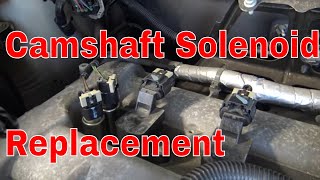
Typical fix: Replace the Bank 1 intake camshaft position actuator solenoid. It is held in by a single bolt and is located on the front of the driver's side cylinder head.
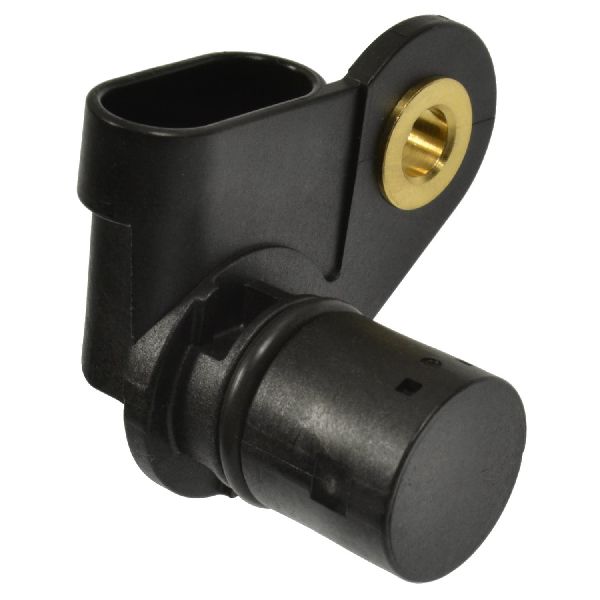
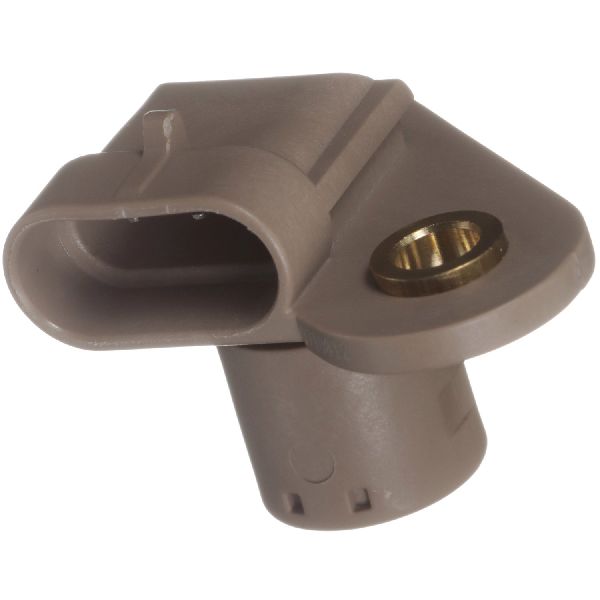
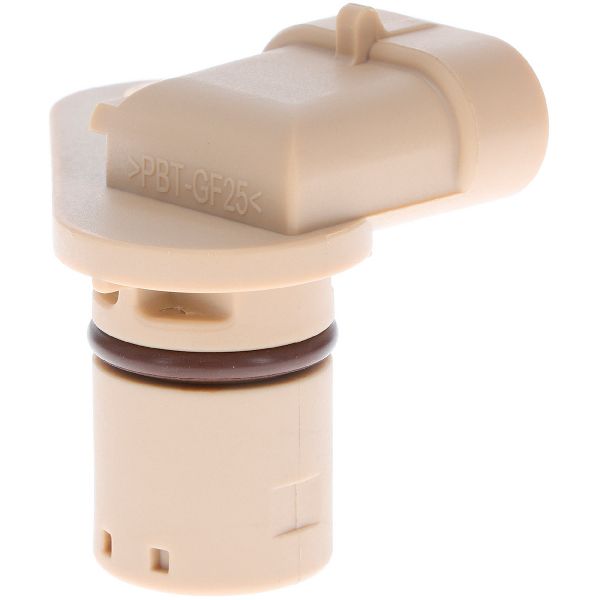
Est. part cost: $30-$85 - Faulty Camshaft Position Sensor ⚪ Low Probability → Shop Engine Camshaft Position Sensor
How to confirm: The sensor provides the position data to the ECM. If it sends incorrect signals, it can mimic a timing issue. Testing requires a multimeter or oscilloscope to check the sensor's output signal against specifications. This is less common, and often accompanied by other sensor-specific codes like P0341.
Typical fix: Replace the Bank 1 intake camshaft position sensor.
Est. part cost: $25-$60 - Stretched Timing Chain or Worn Guide ⚪ Low Probability → Shop Engine Timing Chain This is more common on higher-mileage engines (typically over 150,000 miles). A stretched chain can cause the actual camshaft timing to deviate from the commanded position, triggering the code.
How to confirm: This is an advanced diagnosis. It involves listening for a rattling noise from the front of the engine and removing the engine's front cover to physically inspect the timing chain for slack.
Typical fix: Replace the timing chain, tensioners, and guides. This is a labor-intensive job, often costing over $1,200.
Est. part cost: $200-$500
Rare But Worth Checking
- Faulty Camshaft Phaser (Actuator): → Shop Engine Camshaft The phaser is the gear on the end of the camshaft that actually adjusts the timing. It can become stuck or clogged internally, or the internal locking pin can fail, causing a rattling noise at startup. This is a more involved and expensive repair than the solenoid, often costing between $800 and $2,500.
- Clogged Oil Passages: Severe engine sludge can block the small oil passages that feed the VVT solenoids and phasers, starving them of the oil pressure needed to operate. This usually indicates a history of neglected oil changes and may require significant engine cleaning or disassembly to resolve. TSB PIP5258A points to checking the #2 cam bearing oil feed passage if other diagnostics fail.
Diagnosis Steps
- Check the engine oil level and condition. If it is low, dirty, or the wrong viscosity, perform an oil and filter change. This solves the problem a surprising amount of the time.
- Scan for any other DTCs. Codes for the solenoid circuit (P0010) or cam sensor (P0340) can provide valuable clues.
- Inspect the wiring and connector for the Bank 1 intake camshaft position actuator solenoid (driver's side, front of the cylinder head) for any damage or corrosion.
- The easiest way to confirm a bad solenoid is to swap it. Unplug and unbolt the Bank 1 intake solenoid and swap it with the Bank 2 intake solenoid (passenger side). Clear the codes and drive the vehicle. If the code returns as P0021 ('A' Camshaft, Bank 2), the solenoid you moved is faulty.
- If the code remains P0011 after the swap, the problem is not the solenoid. The next step is to test the camshaft position sensor.
- As per TSBs PIP-5258 and PIP5258A, if the cause is still not found, a mechanical oil pressure test should be performed to ensure the engine has adequate oil pressure. The TSB suggests checking pressure at the oil pressure sender location.
- If oil pressure is good and other components have been ruled out, the issue may be with the camshaft phaser or the timing chain itself, which requires a more in-depth mechanical inspection.
Parts You'll Likely Need
- Camshaft Position Actuator Solenoid (Intake)
(OEM #12679099)— This is the most frequent point of failure for code P0011. It gets stuck or clogged, preventing proper oil flow to the camshaft phaser. This part number supersedes older numbers like 12655420, 12628347, and 12578517.
Trusted brands: ACDelco, GM Genuine, Dorman
OEM price range: $40-$85
Aftermarket price range: $25-$50
Related Codes That Often Appear With This One
- P0010 — This code indicates a circuit malfunction for the Bank 1 intake solenoid. If you see P0010 and P0011 together, it strongly points to an electrical issue with the solenoid or its wiring, rather than a purely mechanical/oil pressure problem.
- P0340/P0341 — These codes relate to the camshaft position sensor circuit for Bank 1. Seeing them with P0011 could indicate a faulty sensor or a wiring problem affecting both timing measurement and control.
- P0021 — This is the equivalent code for Bank 2 (passenger side). If this code appears after swapping the Bank 1 and Bank 2 solenoids for diagnosis, it confirms the original Bank 1 solenoid was faulty.
Technical Service Bulletins (TSBs) & Recalls
- PIP5258A: Supersedes PIP-5258. Provides advanced diagnostics for P0011, instructing technicians to check oil pressure and the #2 cam bearing if the cause is not obvious. Covers 2007-2015 GM trucks/vans with V8 engines.
- PIP-5258: The original bulletin, later superseded by PIP5258A, with similar recommendations to check oil pressure for unresolved P0011 codes on 2007-2013 models.
Platform-Specific Known Issues
- TSB #PIP5258A: Advanced Diagnostics for P0011: This technical service bulletin from GM addresses situations where a technician diagnoses a P0011 code but cannot find the root cause through standard procedures. The bulletin instructs the technician to verify the engine oil pressure is within specification by testing at the oil pressure sender. If pressure is good, it suggests inspecting the #2 cam bearing, which is where the oil feed for the actuator originates. This applies to 2007-2015 GM trucks and vans with V8 engines.
- Owner Experience: Solenoid Swap and Oil Flush: On a gmtrucks.com forum, a user with a 2013 Silverado (same engine family) and a P0011 code described their fix. After an initial oil change didn't solve it, they removed both intake VVT solenoids, cleaned them with brake cleaner, and also cleaned the valve body orifices. After re-installing, the code was resolved. This highlights that sometimes cleaning the part and its seat is enough, and confirms the solenoid's accessibility and the viability of a DIY fix.
Mechanic-Grade Diagnostic Values
- Camshaft Position Actuator Solenoid Resistance — expected: 7 to 12 Ohms (Ω). Failure: A reading of 0 Ω (short), infinite/very high resistance (open), or an unstable reading indicates a faulty solenoid.
- Engine Oil Pressure (at operating temperature) — expected: Greater than 22 PSI at hot idle.. Failure: Pressure consistently below 20-22 PSI at hot idle can be insufficient to operate the VVT system and may trigger P0011, pointing to a mechanical engine issue rather than a VVT component failure.
- VVT Solenoid Power Supply Voltage — expected: 10 to 12 Volts DC with Key On, Engine Off.. Failure: No voltage indicates an open circuit or wiring problem between the fuse block, ECM, and the solenoid connector.
Scan Tool Commands That Help
- GDS2 (Global Diagnostic System 2): Camshaft Position Actuator Solenoid Valve Test — This bidirectional test commands the VVT solenoid on and off to verify its mechanical operation. A technician can listen for an audible click and observe live data to see if the camshaft angle responds. No response indicates a stuck solenoid, clogged passage, or wiring issue. This is a key step mentioned in GM TSBs.
Wiring & Ground Locations
- G103 — Located at the rear of the left (driver's side) engine cylinder head.. This is a critical ground point for the Engine Control Module (ECM) and other sensors. A loose or corroded connection at G103 can cause erratic sensor readings and unpredictable behavior from the ECM, potentially leading to false diagnostic codes. Ensuring this ground is clean and tight is a crucial step in diagnosing electrical faults.
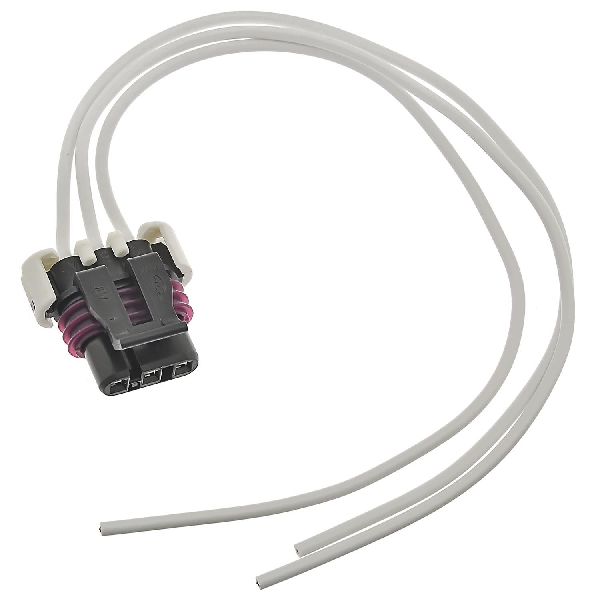
- VVT Solenoid Connector — On the front of the driver's side cylinder head, plugging into the camshaft position actuator solenoid.. The two-pin connector provides power and control signals to the solenoid. One pin should have 10-12V power with the key on, and the other is the control circuit from the ECM. Checking for voltage and ground pulse here is a primary electrical diagnostic step.
Real Owner Repair Stories
- Reddit user in r/Cartalk (2011 Chevy Malibu (uses a similar VVT system and solenoid design)) — Check Engine Light with codes P0010 and P0011, reduced engine power ('limp mode').
❌ Tried (didn't work) Initial diagnosis pointed towards oil issues or more severe engine damage.
✅ What actually fixed it Replacing both the intake and exhaust camshaft position actuator VVT solenoids. The user noted it was an easy self-repair and the check engine light did not return after the fix. - YouTube video by 'Let's build cool stuff' (GM 6.2L V8 (Yukon/Escalade/Silverado family)) — P0011 code, Service Stabilitrak warning.
❌ Tried (didn't work) The owner was preparing for a full timing chain job, assuming the worst.
✅ What actually fixed it The owner decided to first replace the VVT solenoid ('magnet') and the camshaft position sensor. After replacing these two components and performing an oil change, the code did not return. This confirmed the fix without needing the more complex timing chain replacement.
OEM Part Supersession History
12578517, 12628347, 12646783, 12655420→12679099— GM regularly updates part designs to integrate new materials and technologies for improved durability and performance. Later revisions often feature improved screen materials or coil windings to prevent common failures.
Heads up: While all parts are for the intake solenoid, using the latest part number (12679099) is highly recommended to benefit from the most recent design improvements.
Helpful Videos
![2014+ Chevy LS LT VVT Oil Control Solenoid Cam Sensor and Actuator Replacement [the easy way] 2022](https://img.youtube.com/vi/IB2gmTp_wWc/mqdefault.jpg)
We Have This Part in Stock


The information in this article is provided for general reference and educational purposes only. Vehicle specifications, procedures, and part compatibility can vary by production date, trim level, and region. Always consult your vehicle's factory service manual and verify part numbers before purchasing or performing repairs. Safety-critical components such as airbags, seat belts, and braking systems should be installed by a qualified professional.
- Gmc SAVANA:
- 🧭 Diagnostic Flowchart
- 🎬 Helpful Videos
- 🛍️ Shop This Part
- What's Unique About the 2012-2015 Gmc SAVANA
- Symptoms You May Notice
- Most Likely Causes
- Rare But Worth Checking
- Diagnosis Steps
- Parts You'll Likely Need
- Related Codes That Often Appear With This One
- Technical Service Bulletins (TSBs) & Recalls
- Platform-Specific Known Issues
- Mechanic-Grade Diagnostic Values
- Scan Tool Commands That Help
- Wiring & Ground Locations
- Real Owner Repair Stories
- OEM Part Supersession History
- 🎟️ Get 5% Off