

P0011 on 2007-2010 GMC Sierra 2500: VVT Solenoid, Oil Issues, and Fixes
On a 2007-2010 GMC Sierra 2500 with the 6.0L V8, P0011 is almost always caused by low/dirty engine oil or a faulty Camshaft Position Actuator Solenoid (VVT Solenoid). Start by checking your oil; if it's clean and full, the solenoid is the next likely culprit, costing about $45-$85 for the OEM part (ACDelco #12679099). In some higher-mileage cases, low oil pressure from a bad pickup tube O-ring can also trigger this code.
- Always check your oil level and condition first when you see a P0011 code.
- The Bank 1 VVT solenoid (ACDelco #12679099) is the most likely part to have failed and is a relatively easy and affordable DIY replacement.
- If the solenoid replacement doesn't fix it, investigate for a low oil pressure condition, likely caused by a bad oil pump pickup tube O-ring.
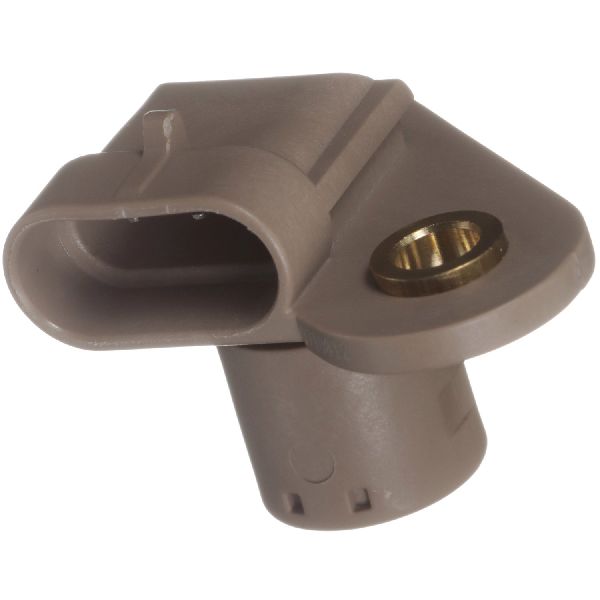
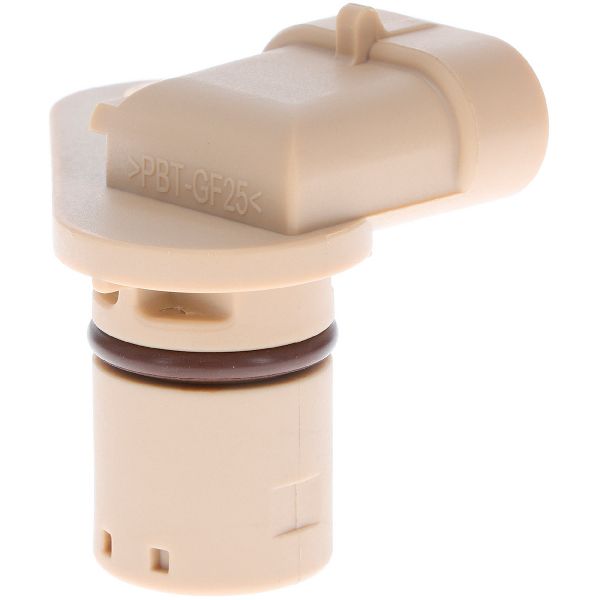
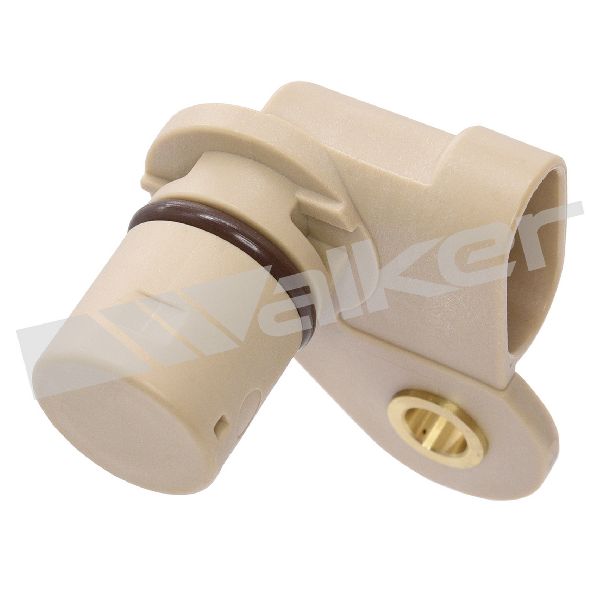
- Do not replace the camshaft position *sensor*; it is almost never the cause of this specific code.
What's Unique About the 2007-2010 Gmc SIERRA 2500
The 6.0L V8 engines (LY6/L96) in this generation of Sierra 2500 heavily rely on clean, correct-viscosity oil for the VVT system to function. These engines are known for the VVT actuator solenoid becoming clogged with sludge or debris, making it the most common point of failure for this code. Manufacturer service bulletins, specifically TSB PIP5258A, point to checking oil pressure if a new solenoid doesn't solve the problem, indicating that underlying lubrication issues like a hardened oil pump pickup tube O-ring or, in rare cases, worn cam bearings can be the root cause.
Diagnostic Flowchart
Tap your situation to follow the diagnostic path that matches what you're seeing on this vehicle.
Symptoms You May Notice
- Check Engine Light is on
- Rough or unstable idle
- Engine stalling, especially at low speeds or when coming to a stop
- Difficulty starting the engine
- Reduced engine power and performance
- Poor fuel economy
- Engine making a rattling or ticking noise
- Replacing the Camshaft Position Sensor. The sensor is usually doing its job correctly by reporting the timing discrepancy. The problem is mechanical or hydraulic, not typically the sensor itself for this code. The sensor replacement cost is typically $220-$323, which would be wasted money in this case.
Most Likely Causes
- Low or Dirty Engine Oil 🔴 High Probability The VVT system is entirely hydraulic and highly sensitive to oil volume and cleanliness. Sludge or low levels prevent the system from operating correctly.
How to confirm: Check the oil dipstick for proper level and examine the oil's color and consistency. If it is low, dark, thick, or past its service interval, it needs to be changed.
Typical fix: Perform an engine oil and filter change using the manufacturer-specified 5W-30 synthetic oil.
Est. part cost: $40-$80 - Failing Camshaft Position Actuator Solenoid (VVT Solenoid) 🔴 High Probability → Shop Engine Camshaft This solenoid is a known failure point. Its small internal screens can become clogged with oil debris, causing it to stick open or closed.
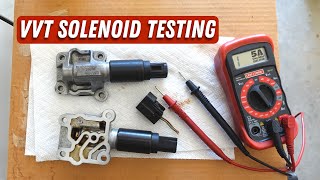
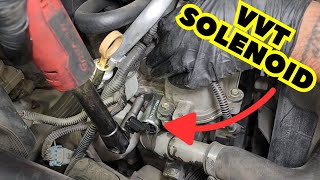
How to confirm: Remove the solenoid (one 10mm bolt) from the front of the passenger-side cylinder head. Inspect the screens for sludge or metallic debris. A scan tool can also command the solenoid on and off to listen for a clicking sound; no click indicates failure. Resistance should be 8-12 Ohms.
Typical fix: Replace the Bank 1 (passenger side) intake VVT solenoid. It is highly recommended to use an OEM ACDelco part to avoid premature failure reported with some aftermarket units.
Est. part cost: $30-$85 - Low Engine Oil Pressure 🟡 Medium Probability As highlighted in TSBs #PIP5258 and #PIP5258A, if other diagnostics fail, low oil pressure could be the cause. This can result from a failing oil pump or a hardened oil pump pickup tube O-ring, which is a known issue on higher-mileage GM V8s, causing oil aeration and pressure loss at idle.
How to confirm: Connect a mechanical oil pressure gauge to the engine and verify the pressure at hot idle and higher RPMs against manufacturer specifications. A symptom can be low oil pressure at idle that rises with RPM. A hot idle pressure around 20 PSI is a common sign of a potential issue on these engines.
Typical fix: If pressure is low, the cause must be identified. This may involve replacing the oil pump and/or the pickup tube O-ring, which is a labor-intensive job requiring removal of the oil pan.
Est. part cost: $50-$250
Rare But Worth Checking
- Stretched Timing Chain or Failed Tensioner: → Shop Engine Timing Chain On higher-mileage engines (over 150k miles), a stretched timing chain can cause the actual camshaft timing to deviate from the commanded position by more than 8 degrees, triggering the code even if the VVT components are working.
- Failed Camshaft Phaser: → Shop Engine Camshaft The mechanical phaser unit on the camshaft itself can fail, getting stuck or clogged internally. This is a more complex and expensive repair than the solenoid, often costing between $800 and $2,500.
- Worn Camshaft Bearings: → Shop Engine Camshaft As mentioned in TSB #PIP5258A, excessive wear on the #2 cam bearing can cause a localized drop in oil pressure to the VVT actuator. This is a very rare, major engine-out repair and is usually the last thing to check after all other possibilities are exhausted.
Diagnosis Steps
- Check Engine Oil Level and Condition: This is the first and most important step. Ensure the oil is full, clean, and of the correct viscosity (5W-30). If in doubt, change the oil and filter.
- Scan for Codes: Use an OBD-II scanner to confirm P0011 and check for any other related codes. Note the freeze-frame data for context.
- Inspect Solenoid and Wiring: Visually inspect the wiring and connector for the Bank 1 (passenger side) VVT solenoid for damage or corrosion.
- Test the VVT Solenoid: Remove the solenoid (held by a single 10mm bolt). Inspect the mesh screens for sludge or debris. If you have a bidirectional scanner, you can command the solenoid on and off to listen for a click before removing it. You can also test the solenoid's resistance with a multimeter; it should be between 8 and 12 ohms.
- Diagnostic Swap (Optional but effective): Swap the Bank 1 (passenger) and Bank 2 (driver) VVT solenoids. They are identical. Clear the codes. If the fault returns as P0021, the solenoid is confirmed bad. If P0011 returns, the problem lies elsewhere.
- Verify Oil Pressure: If a new solenoid does not resolve the code, test the engine oil pressure with a mechanical gauge to rule out a failing oil pump or other lubrication issues, as recommended by TSB #PIP5258A.
- Inspect Timing Components: If all else fails, especially on a high-mileage engine, the timing cover may need to be removed to inspect the timing chain for slack and the camshaft phaser for damage.
Parts You'll Likely Need
- Camshaft Position Actuator Solenoid (VVT Solenoid)
(OEM #12679099 (supersedes 12655420, 12646783, 12628347))— This is the most common failure point for P0011 on the 6.0L V8. It gets clogged with oil debris, causing it to stick and prevent proper timing adjustments.
Trusted brands: ACDelco (OEM), Dorman
OEM price range: $45-$85
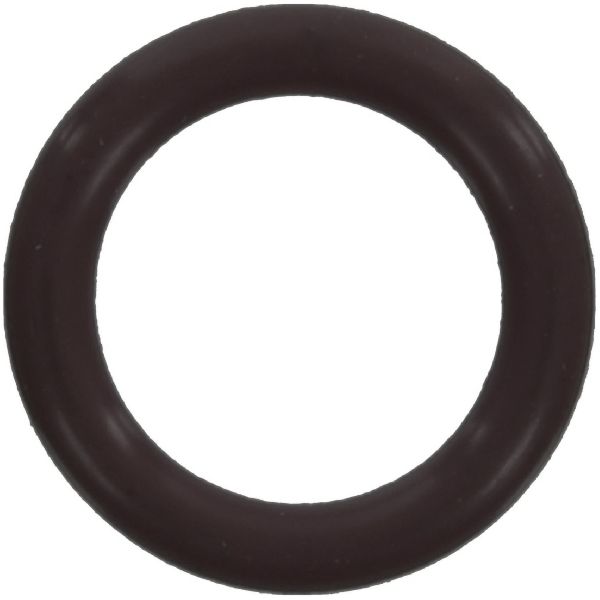
Aftermarket price range: $30-$60 - Engine Oil Pump Pickup Tube O-Ring
(OEM #12584922 (Verify by VIN))— In cases where low oil pressure is the root cause, this O-ring is often the culprit. It hardens and cracks over time, allowing air into the oil system.
Trusted brands: ACDelco (OEM), Fel-Pro
OEM price range: $5-$15
Aftermarket price range: $3-$10
Related Codes That Often Appear With This One
- P0010 — This code indicates a circuit malfunction for the same VVT solenoid. Seeing them together points strongly to an electrical issue with the solenoid or its wiring, rather than a mechanical/hydraulic problem.
- P0521 / P0522 — These codes relate to the engine oil pressure sensor. Their presence alongside P0011 reinforces the likelihood of a systemic oil pressure problem being the root cause.
- P0021 — This is the equivalent code for Bank 2 (driver's side). If you swap the Bank 1 and Bank 2 solenoids for diagnosis and the code changes from P0011 to P0021, you have confirmed the solenoid is the faulty part.
Technical Service Bulletins (TSBs) & Recalls
- PIP5258 / PIP5258A: Advises technicians to check engine oil pressure with a mechanical gauge if standard diagnostics for P0011 do not identify the root cause, pointing to potential underlying lubrication problems like a worn #2 cam bearing.
Platform-Specific Known Issues
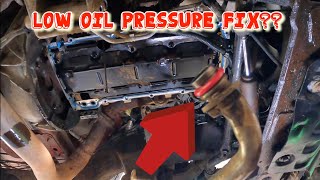
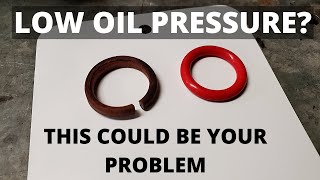
- The oil pump pickup tube O-ring can harden and crack over time, allowing the oil pump to suck in air. This aerates the oil, causing a drop in oil pressure that starves the VVT system and can trigger a P0011 code, often accompanied by a low oil pressure warning at idle.
- A small, removable filter screen is located under the oil pressure sending unit. This screen can become clogged with sludge and debris, restricting oil flow and causing pressure issues that can manifest as a P0011 code. It is often recommended to remove and discard this screen during an oil pressure sensor replacement.
Mechanic-Grade Diagnostic Values
- VVT Solenoid Internal Resistance — expected: 8 to 12 Ohms. Failure: A reading of 0 Ohms (short circuit) or infinite/Mega-Ohms (open circuit) indicates a failed solenoid coil.
- VVT Solenoid Connector Voltage — expected: Battery Voltage (~12V) with Key On, Engine Off. Failure: No voltage suggests a wiring or ECM issue upstream of the solenoid.
- Engine Oil Pressure (Hot Idle) — expected: Healthy engines typically show 35-40 PSI, but pressure can drop with age.. Failure: Pressure dropping to ~20 PSI or lower at hot idle is a strong indicator of a lubrication issue (e.g., pickup tube O-ring) that can cause P0011.
Scan Tool Commands That Help
- Tech2 / GDS2 / Professional Bidirectional Scanner: Camshaft Position Actuator Solenoid Control — Use this command with the engine off (key on) to manually cycle the VVT solenoid. A distinct clicking sound should be heard, confirming the solenoid's internal plunger is physically moving. No click indicates a stuck or electrically failed solenoid.
- Tech2 / GDS2 / Professional Bidirectional Scanner: Camshaft Position Desired vs. Actual Angle (Live Data) — While driving, monitor the desired cam angle commanded by the ECM versus the actual angle reported by the cam position sensor. A large, persistent discrepancy when the solenoid is commanded indicates a mechanical problem (stuck phaser, low oil pressure) rather than an electrical one.
Wiring & Ground Locations
- G102 — On the lower left (driver's side) front of the engine block on V8 models.. This is a primary engine ground. A poor connection here can cause a host of erratic sensor readings and control module issues, potentially impacting the VVT system's operation.
- G104 — On the front of the left (driver's side) cylinder head.. A critical ground point for components on the cylinder head. A loose or corroded G104 could cause faulty readings or improper operation of nearby sensors and actuators.
Real Owner Repair Stories
- Reddit user comment in r/ChevyTrucks (General GM Truck with 5.3L/6.0L V8) — Low oil pressure at idle, which can trigger P0011.
❌ Tried (didn't work) Replacing oil pressure sensor often doesn't fix the root cause.
✅ What actually fixed it A simple diagnostic trick was shared: Park the truck facing steeply downhill. If idle oil pressure is noticeably higher than when on level ground or facing uphill, it strongly suggests the oil pump pickup tube O-ring is bad. The angle causes oil to pool at the front of the pan, submerging the pickup tube and temporarily overcoming the air leak from the bad O-ring.
OEM Part Supersession History
12578517, 12628347, 12646783, 12655420→12679099— Standard part evolution for improved reliability or manufacturing changes by GM.
Model Year Variations Within This Range
- 2007-2010: The 2007-2010 models primarily use the 6.0L LY6 engine. The 2010 model year saw the introduction of the L96 engine, which replaced the LY6. The main difference is that the L96 is Flex Fuel compatible. Both engines use the same VVT system, so the diagnosis and repair for code P0011 are identical across this year range.
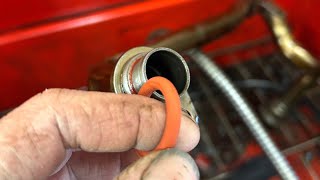
Helpful Videos
We Have This Part in Stock


The information in this article is provided for general reference and educational purposes only. Vehicle specifications, procedures, and part compatibility can vary by production date, trim level, and region. Always consult your vehicle's factory service manual and verify part numbers before purchasing or performing repairs. Safety-critical components such as airbags, seat belts, and braking systems should be installed by a qualified professional.
- Gmc SIERRA 2500:
- 🧭 Diagnostic Flowchart
- 🎬 Helpful Videos
- 🛍️ Shop This Part
- What's Unique About the 2007-2010 Gmc SIERRA 2500
- Symptoms You May Notice
- Most Likely Causes
- Rare But Worth Checking
- Diagnosis Steps
- Parts You'll Likely Need
- Related Codes That Often Appear With This One
- Technical Service Bulletins (TSBs) & Recalls
- Platform-Specific Known Issues
- Mechanic-Grade Diagnostic Values
- Scan Tool Commands That Help
- Wiring & Ground Locations
- Real Owner Repair Stories
- OEM Part Supersession History
- Model Year Variations Within This Range
- 🎟️ Get 5% Off