

P0011 on 2007-2011 GMC Yukon Denali: Causes and Fixes for Camshaft Timing Issues
On a 2007-2011 Yukon Denali with the 6.2L V8, code P0011 is most often caused by low or dirty engine oil, or a failing camshaft position actuator solenoid. Always check your oil level and condition first; if the oil is fine, the solenoid is a common, affordable, and DIY-friendly fix. If a new solenoid doesn't solve it, the next most likely cause is a hardened oil pickup tube O-ring causing low oil pressure.
- Always check your engine oil level and condition first. Low or dirty oil is the leading cause of P0011 on this engine.
- The most likely part to have failed is the Camshaft Position Actuator Solenoid on the driver's side (Bank 1), not the sensor.
- Replacing the solenoid is a beginner-friendly DIY job that can be done in under an hour with basic tools.
- If you see P0011 along with a 'Service Stabilitrak' message, don't be alarmed. Fixing the engine timing issue will likely resolve the Stabilitrak warning as well.
- Use a quality OEM part, like ACDelco, for the replacement solenoid to ensure reliability.
What's Unique About the 2007-2011 Gmc YUKON DENALI

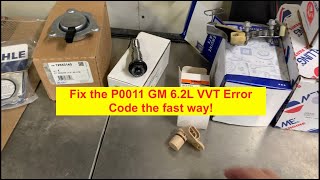
The 6.2L V8 engine in the GMT900-platform Yukon Denali uses a Variable Valve Timing (VVT) system that is highly dependent on clean oil and stable oil pressure. As evidenced by multiple GM Technical Service Bulletins (TSBs), these engines can be sensitive to oil flow issues, making oil-related problems a primary cause for the P0011 code. Unlike some vehicles where this code points directly to a sensor, on this platform, the diagnosis almost always starts with 🎬 Watch: This video shows an easy fix for the P0011 code. the oil and the oil-controlled solenoid. A very common secondary cause, after the solenoid, is a failed oil pickup tube O-ring leading to oil pressure loss.
Diagnostic Flowchart

Tap your situation to follow the diagnostic path that matches what you're seeing on this vehicle.
Symptoms You May Notice
- Check Engine Light is on
- Rough idle or stalling, sometimes after highway driving or at low speeds
- Poor acceleration and reduced engine power
- Decreased fuel economy
- Engine rattling noise, especially on a cold start, which can indicate timing chain slack or a failing phaser.
- Service Stabilitrak/Traction Control warning lights may appear on the dash
- Replacing the Camshaft Position *Sensor* instead of the Camshaft Position Actuator *Solenoid*. The sensor reads the position, but the solenoid controls it via oil pressure. The solenoid is the much more common failure point for this code.
Most Likely Causes

- Low, Dirty, or Incorrect Viscosity Engine Oil 🔴 High Probability The VVT system is hydraulic and relies entirely on oil pressure to function. Sludge, low oil levels, or using the wrong oil (GM recommends 5W-30) prevent the system from operating as commanded by the ECM.
How to confirm: Check the engine oil dipstick for proper level and inspect the oil's condition. If it's dark, gritty, or past its service interval, it needs to be changed. This is always the first step.
Typical fix: Perform an oil and filter change using a quality filter and the manufacturer-recommended full synthetic 5W-30 oil.
Est. part cost: $50-$100 - Faulty Camshaft Position Actuator Solenoid 🔴 High Probability → Shop Engine Camshaft The solenoid controls oil flow to the camshaft phaser. Its internal passages and screen can become clogged with debris from dirty oil, or the solenoid can fail electrically. It is a well-documented failure point on these engines.
How to confirm: Swap the Bank 1 (driver side) and Bank 2 (passenger side) intake solenoids. If the code changes to P0021 (the Bank 2 equivalent), the solenoid is faulty. Alternatively, test its resistance with a multimeter; a healthy solenoid should read between 8 and 12 Ohms. TSB #PIP5130K also suggests using a scan tool to cycle the solenoid to see if it's sticking.
Typical fix: Replace the Bank 1 camshaft position 🎬 See this walkthrough on replacing the VVT solenoid actuator. actuator solenoid. Inspect the mesh screens for debris before installation.
Est. part cost: $30-$85 - Failing Oil Pick-up Tube O-ring 🟡 Medium Probability The O-ring on the oil pump pick-up tube can become hard, brittle, and flat over time, allowing the pump to suck in air. This aerates the oil, causing a significant drop in oil pressure that starves the VVT system and triggers P0011, often before a low oil pressure warning light appears.
How to confirm: This is difficult to confirm without disassembly. A key symptom is low oil pressure on the dash gauge at hot idle (e.g., below 20 PSI). A mechanic can confirm with a mechanical oil pressure test. A forum user confirmed this fixed their P0011 code after a solenoid replacement did not. Bubbles on the oil dipstick can also be an indicator.
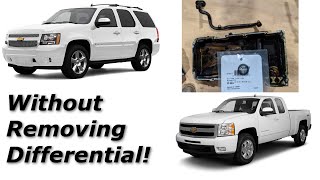
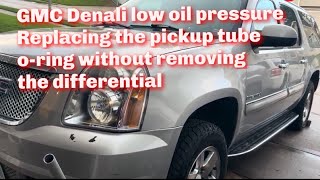
Typical fix: Replace the oil pick-up tube O-ring. This is labor-intensive as it requires removing the oil pan and, on 4WD/AWD models, lowering the front differential. 🎬 Watch: How to replace the O-ring without removing the differential.
Est. part cost: $5-$20 for the O-ring, but labor is significant.
Rare But Worth Checking
- Stretched Timing Chain or Failed Tensioner: → Shop Engine Timing Chain While less common, high-mileage engines (typically over 150,000 miles) can suffer from timing chain stretch. This creates a discrepancy between the camshaft and crankshaft positions that the VVT system cannot overcome, often causing a rattling noise on cold starts.
- Failed Camshaft Phaser: → Shop Engine Camshaft The mechanical phaser unit on the camshaft itself can fail, getting stuck in an advanced position. This is a more involved and expensive repair than the solenoid and is usually diagnosed after all other oil pressure and solenoid issues are ruled out.
- Internal Engine Oil Pressure Issues: As per TSB #PIP5258A, if all other diagnostics fail, low oil pressure due to worn internal components like the #2 camshaft bearing (which feeds oil to the actuator) could be the cause. This is a major engine repair.
- Incorrect Camshaft Installed: → Shop Engine Camshaft As per TSB #PIP5115, this code can appear after a camshaft replacement if the incorrect part number was used, highlighting the importance of using correct parts during major repairs.
Diagnosis Steps
- Verify engine oil level and condition. If low, top it off. If dirty or overdue for a change, perform an oil and filter change with full synthetic 5W-30 oil, clear the code, and see if it returns.
- Using a scan tool, check for any other accompanying codes like P0021, P0010, or P0521.
- Inspect the wiring and connector for the Bank 1 (driver's side) camshaft position actuator solenoid for any damage or loose connections.
- Perform a solenoid swap. Exchange the Bank 1 (driver's side) and Bank 2 (passenger's side) actuator solenoids. Clear the codes and drive the vehicle. If the code returns as P0021, the solenoid you moved is faulty and needs replacement.
- If the code remains P0011, test the solenoid's resistance with a multimeter. It should be between 8-12 Ohms.
- If the solenoid tests good, the next step is to check engine oil pressure with a mechanical gauge, as suggested by GM TSB #PIP5258A. Pressure should be at least 24 PSI at 1,000 RPM when the engine is warm. If pressure is low, suspect the oil pickup tube O-ring.
- If oil pressure is good, the problem may be a faulty camshaft phaser or a timing chain issue, which requires more in-depth mechanical diagnosis.
Parts You'll Likely Need

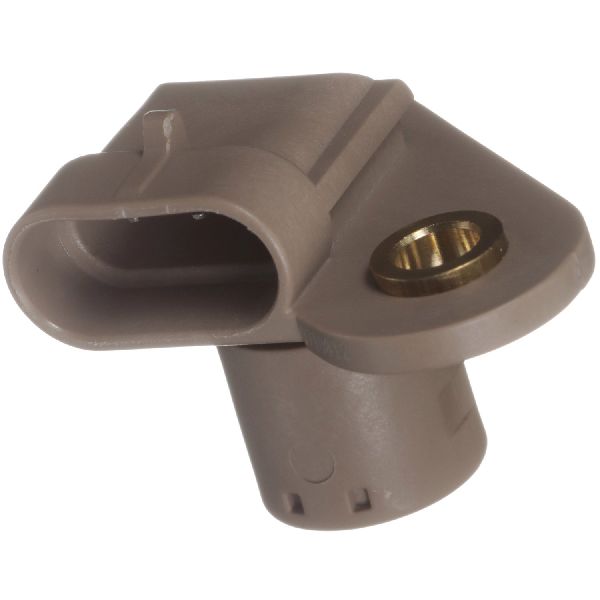
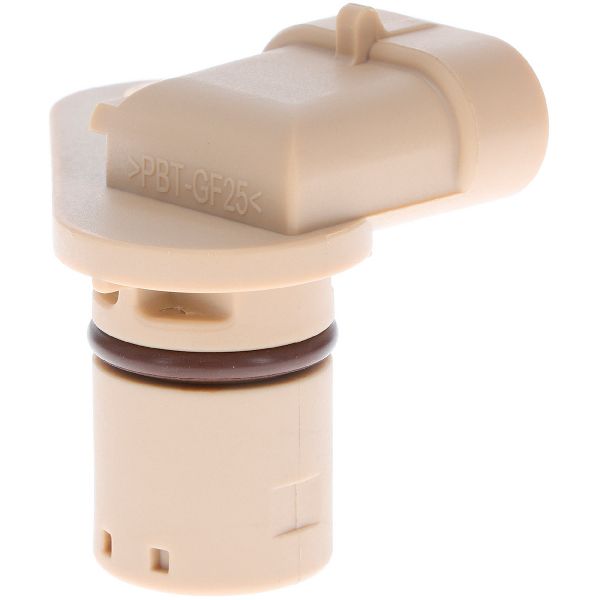
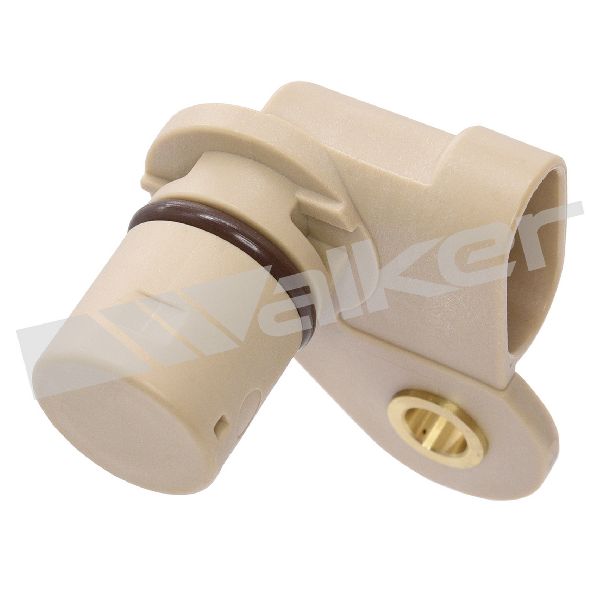
- Camshaft Position Actuator Solenoid (VVT Solenoid)
(OEM #12679099 (current), supersedes 12655420, 12628347, 12682000)— This solenoid is the most common part to fail or become clogged, directly causing the P0011 code. It is a relatively simple and inexpensive part to replace.
Trusted brands: ACDelco, GM Genuine Parts, Dorman
OEM price range: $45-$70
Aftermarket price range: $25-$50 - Oil Pump Pickup Tube O-Ring
(OEM #12557752)— This is the most common cause of low oil pressure on these engines, which in turn is a primary cause of P0011 when the solenoid is not at fault.
Trusted brands: GM Genuine Parts, Fel-Pro
OEM price range: $5-$15
Aftermarket price range: $3-$10
Related Codes That Often Appear With This One
- P0021 — This is the equivalent code for Bank 2 (passenger side). Seeing both P0011 and P0021 together strongly points to a systemic issue affecting the whole engine, like low/dirty oil or a failing oil pump/pickup O-ring.
- P0010 — This code indicates an electrical circuit problem (open or short) with the Bank 1 intake camshaft position actuator solenoid, pointing directly to a failed solenoid or its wiring harness.
- P0521 — This code is for 'Engine Oil Pressure Sensor/Switch Range/Performance'. Seeing it with P0011 strongly suggests the root cause is a lack of oil pressure, very likely from a bad pickup tube O-ring or failing oil pump.
Technical Service Bulletins (TSBs) & Recalls
- PIP5115: Mentions P0011 can occur if the wrong camshaft part is installed during a repair.
- PIP5258 / PIP5258A: Advises checking oil pressure with a mechanical gauge when the root cause for P0011 is not found through normal diagnostics.
- PIP5130K: Describes a sticking solenoid valve causing P0011 and provides a diagnostic proce
Platform-Specific Known Issues
- TSB #PIP5258A: If standard diagnostics for P0011 do not reveal the cause, GM advises checking engine oil pressure with a mechanical gauge and inspecting the #2 cam bearing oil feed.
- TSB #PIP5130K: Notes that a sticking Camshaft Position Actuator Solenoid Valve can cause P0011 and a crank-no-start condition. Suggests using a scan tool to cycle the solenoid 4-5 times to see if it frees up.
- TSB #PIP5115: This bulletin notes that code P0011 can be set after a camshaft replacement if an incorrect camshaft part number was installed.
- Many owners report that the Stabilitrak and Traction Control warning lights will illuminate along with the P0011 code. This is a secondary effect of the engine running poorly and the ECM disabling these systems as a precaution.
Mechanic-Grade Diagnostic Values
- Engine Oil Pressure (Mechanical Gauge, Hot) — expected: Minimum 24 PSI @ 1,000 RPM. Failure: Pressure below 20-24 PSI at hot idle or 1,000 RPM strongly indicates an oiling issue, likely the pickup tube O-ring.
- Camshaft Position Actuator Solenoid Resistance — expected: 8 to 12 Ohms. Failure: A reading significantly outside this range (open or shorted) indicates a failed solenoid coil.
- Scan Tool: Camshaft Position Variance (Bank 1) — expected: Near 0 degrees at idle. Failure: The ECM flags P0011 when the actual CMP angle differs from the desired angle by more than 8 degrees. A value that is stuck or doesn't respond to commands points to a stuck phaser or solenoid.
Scan Tool Commands That Help
- GDS2 / Tech2: Camshaft Position Actuator Control — This bidirectional control allows a technician to command the VVT solenoid to a specific duty cycle or angle while monitoring the engine's response via live data (Desired vs. Actual Cam Angle). It directly tests if the solenoid is responding to ECM commands and if the oil pressure is sufficient to move the phaser. TSB #PIP5130K also suggests cycling the solenoid 4-5 times to free a sticking valve.
Wiring & Ground Locations
- G103 / G104 — G103 is on the front of the driver's side cylinder head. G104 is on the back of the passenger's side cylinder head.. These are the primary engine block grounds. A poor connection at these points can cause erratic voltage and unpredictable behavior from various engine sensors and actuators controlled by the ECM, potentially contributing to control codes.
- G108 — Located on the firewall, where the main ground strap from the rear of the driver's side cylinder head (G104) attaches to the body.. This is the main ground path from the engine to the vehicle's cab and body control modules. Corrosion here can cause a host of seemingly unrelated electrical issues, including problems with the Stabilitrak system which is often seen with P0011.
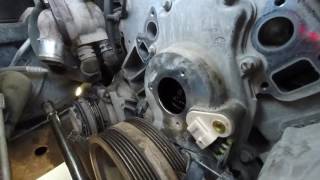
- CMP Actuator Solenoid Connector — On the front of the driver's side valve cover, near the oil fill cap.. This is the direct electrical connection to the solenoid. The ECM sends a 12-volt, pulse-width modulated (PWM) signal on one pin, and the other is a low-reference ground back to the ECM. Testing for this signal is a key diagnostic step.
Real Owner Repair Stories
- Tahoe Yukon Forum user 'JML07denali' (2007 GMC Yukon Denali XL) — P0011 code, Service Stabilitrak light, near-stalling after highway driving.
❌ Tried (didn't work) Replacing the camshaft position sensor.
✅ What actually fixed it The final fix was replacing the oil pickup tube o-ring, which was done at the same time as an oil pan gasket replacement. The user noted they had low oil pressure at idle for a long time, and the new o-ring brought the pressure back up to at least 20 PSI at idle. - Tahoe Yukon Forum user 'Ponchonutty' (2008 GMC Yukon Denali with 210k miles) — Low oil pressure readings compared to a similar engine (Camaro SS 6.2L).
❌ Tried (didn't work) Dealer stated oil pressure was 'within spec' despite owner's concerns.
✅ What actually fixed it Replacing the oil pickup tube o-ring. The original o-ring was found to be 'significantly worn and actually split' upon removal. After replacement, cold idle oil pressure increased to 45 PSI and highway speed pressure was 65 PSI.
When the Usual Fixes Don't Work
- While replacing the VVT solenoid is a very common and often successful first step, numerous owner reports confirm that the P0011 code frequently persists until a more fundamental oil pressure issue is addressed. In many cases documented on forums, the ultimate solution was the replacement of the oil pickup tube O-ring, which had become hardened and was allowing air into the oil system, causing pressure loss that was not always low enough to trigger the main oil pressure warning light but was sufficient to disrupt the sensitive VVT system.
OEM Part Supersession History
12628347, 12655420→12679099— Standard part evolution for improved reliability and material composition.
Heads up: The listed part numbers, including 12578517 and 12646783, are generally interchangeable for this application, with 12679099 being the latest service part. No major incompatibilities are noted for this specific vehicle range.
Model Year Variations Within This Range
- 2007-2008 vs 2009-2011: The engine changed from the L92 (2007-2008) to the L9H (2009-2011). The primary difference was the addition of Flex Fuel capability on the L9H, which involved different fuel injectors. Some sources suggest the camshaft and phaser may also differ, with the L92 having a wider range of VVT adjustment. However, for the P0011 code, the diagnostic approach for the VVT system remains the same across these years.
Helpful Videos
We Have This Part in Stock


The information in this article is provided for general reference and educational purposes only. Vehicle specifications, procedures, and part compatibility can vary by production date, trim level, and region. Always consult your vehicle's factory service manual and verify part numbers before purchasing or performing repairs. Safety-critical components such as airbags, seat belts, and braking systems should be installed by a qualified professional.
- Gmc YUKON DENALI:
- 🧭 Diagnostic Flowchart
- 🎬 Helpful Videos
- 🛍️ Shop This Part
- What's Unique About the 2007-2011 Gmc YUKON DENALI
- Symptoms You May Notice
- Most Likely Causes
- Rare But Worth Checking
- Diagnosis Steps
- Parts You'll Likely Need
- Related Codes That Often Appear With This One
- Technical Service Bulletins (TSBs) & Recalls
- Platform-Specific Known Issues
- Mechanic-Grade Diagnostic Values
- Scan Tool Commands That Help
- Wiring & Ground Locations
- Real Owner Repair Stories
- When the Usual Fixes Don't Work
- OEM Part Supersession History
- Model Year Variations Within This Range
- 🎟️ Get 5% Off