

P0011 on 2013-2018 Hyundai Santa Fe 2.4L: Causes and Fixes for Over-Advanced Cam Timing
On the 2.4L GDI Santa Fe, P0011 is most often caused by low or dirty engine oil. If the oil level is correct, the next most likely cause is a faulty intake Oil Control Valve (OCV). This code can be an early warning of serious engine problems related to widespread recalls and a class-action lawsuit, so check your oil immediately. If code P1326 is also present, engine failure may be imminent and the vehicle should not be driven.
- P0011 on this specific vehicle is a serious warning. Immediately check your engine oil level and condition.
- The 2.4L GDI engine has well-documented, widespread issues with oil consumption and internal failure. This code is often the first symptom.
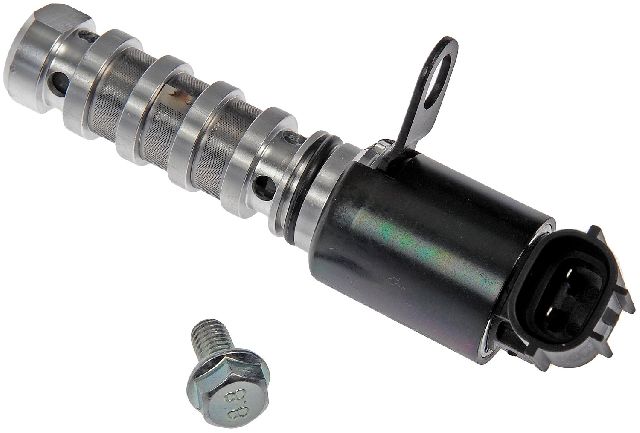
- If the engine oil is full and clean, the most likely failed part is the intake Oil Control Valve (OCV), part number 24355-2G500.
- Check your vehicle's VIN on Hyundai's website to see if it is covered by any open recalls or the lifetime engine warranty extension.
- If P0011 appears with code P1326, stop driving immediately and have the vehicle towed to a dealer, as engine failure is likely imminent.
What's Unique About the 2013-2018 Hyundai Santa Fe
The 2.4L Theta II GDI engine in this generation of Santa Fe (often the 'Santa Fe Sport' model) is notorious for significant oil consumption and premature engine failure. These issues are directly linked to recalls and a major class-action lawsuit settlement due to manufacturing debris causing oil starvation and connecting rod bearing failure. Because the CVVT system is entirely dependent on clean oil and stable oil pressure, P0011 is often the first warning sign of these more catastrophic, well-documented engine problems. It should be treated with a high degree of seriousness on this specific vehicle.
Symptoms You May Notice
- Check Engine Light is on
- Rough idle or stalling
- Poor acceleration and reduced engine power
- Decreased fuel economy
- Engine rattling or knocking noises, especially on startup
- Replacing the Camshaft Position Sensor. The sensor is usually reporting the problem correctly; it is rarely the cause of the timing issue itself. The code indicates a performance problem, not necessarily a sensor circuit fault.
Most Likely Causes
- Low or Dirty Engine Oil 🔴 High Probability The 2.4L Theta II GDI engine is widely known for excessive oil consumption due to design issues with piston rings and manufacturing debris. This leads to low oil levels, which starves the hydraulic CVVT system of the pressure it needs to function. Using oil with the incorrect viscosity (e.g., 10W-30 instead of the specified 5W-20) can also trigger this code, as thicker oil cannot flow properly through the small passages of the CVVT system.
How to confirm: Check the engine oil dipstick 🎬 Watch: Why you should check your oil before replacing parts. immediately. The level should be between the 'F' and 'L' marks. Inspect the oil's condition; if it is dark, thick, or sludgy, it needs to be changed. A Reddit user with a similar Hyundai engine reported P0011 and found '0 oil on the dipstick'. Similarly, NHTSA ODI #11535657 describes a case where a check engine light for P0011 appeared and the owner found nothing on the dipstick despite recent maintenance.
Typical fix: Perform an engine oil and filter change using a high-quality full synthetic oil of the correct viscosity (typically 5W-20). Monitor oil levels frequently (e.g., every fuel fill-up) thereafter.
Est. part cost: $40-$80 - Failing Intake Oil Control Valve (OCV) / VVT Solenoid 🔴 High Probability The OCV is highly susceptible to clogging from oil sludge and debris, a common issue in the Theta II engine. It can also fail electrically. When it sticks or clogs, it can't properly regulate oil flow to the camshaft phaser. An owner report in NHTSA ODI #11452564 noted that a dealership diagnosis confirmed engine oil sludge was causing VVT issues related to codes P0010 and P0011.
How to confirm: After confirming the oil level is correct, you can test the OCV. A common diagnostic step is to swap the identical intake and exhaust OCVs; if the code changes to P0014 (exhaust side), the original intake OCV is faulty. Alternatively, test the OCV's resistance with a multimeter; a reading outside of 6.9-7.9 Ohms at 68°F (20°C) indicates failure. You can also apply 12V to see if the internal plunger actuates.
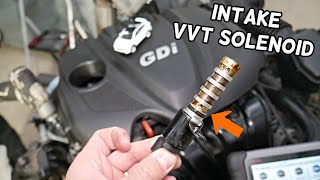
Typical fix: Replace the intake Oil Control Valve. It is located on the top of the valve cover and held by a single 10mm bolt, making for a relatively easy replacement.
Est. part cost: $70-$150
Rare But Worth Checking
- Stretched Timing Chain: → Shop Engine Timing Chain While less common than oil issues or a bad OCV, the timing chain can stretch over time, causing a deviation between the camshaft and crankshaft signals that the computer interprets as a timing error. In extreme cases, the timing may jump; NHTSA ODI #11729460 describes a vehicle that threw code P0011 and subsequently died because the timing skipped 5 or 6 teeth.
- Failing Camshaft Phaser (CVVT Assembly): → Shop Engine Camshaft The phaser itself, which is the gear on the end of the camshaft, can fail mechanically due to internal oil pressure leaks or debris. This is a more involved and expensive repair that should be considered after other causes are ruled out.
- Clogged OCV Filter Screen: A small, thimble-shaped filter screen for the OCV is located in the cylinder head beneath the valve. This can become clogged with sludge, restricting oil flow even if the OCV itself is functional. It can sometimes be removed with a pick and cleaned, though it is often overlooked.
Diagnosis Steps
- Check Engine Oil Level and Condition: This is the most critical first step. If the oil is low, top it off, clear the code, and see if it returns. If the oil is old, sludgy, or the wrong viscosity, perform an oil and filter change with the correct full synthetic 5W-20 oil.
- Check Vehicle History: Use the VIN to check Hyundai's recall website for open campaigns, specifically the KSDS update (Recall 953) and lifetime engine warranty eligibility.
- Scan for Other Codes: Check for related codes like P1326, P0010, or P0524, as they provide crucial diagnostic context.
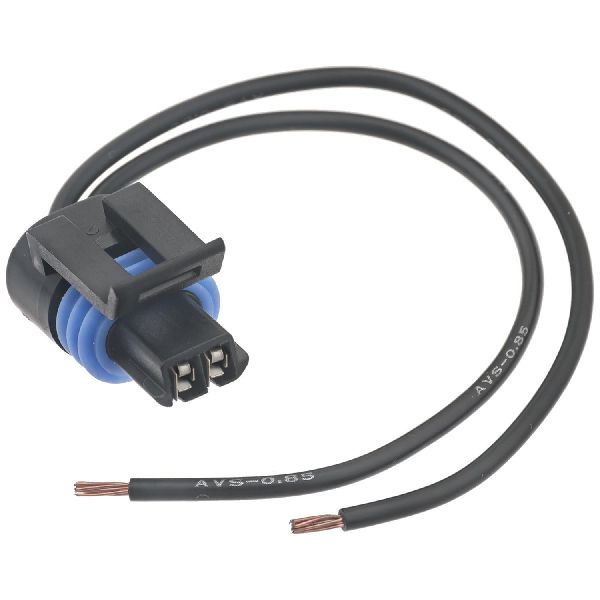
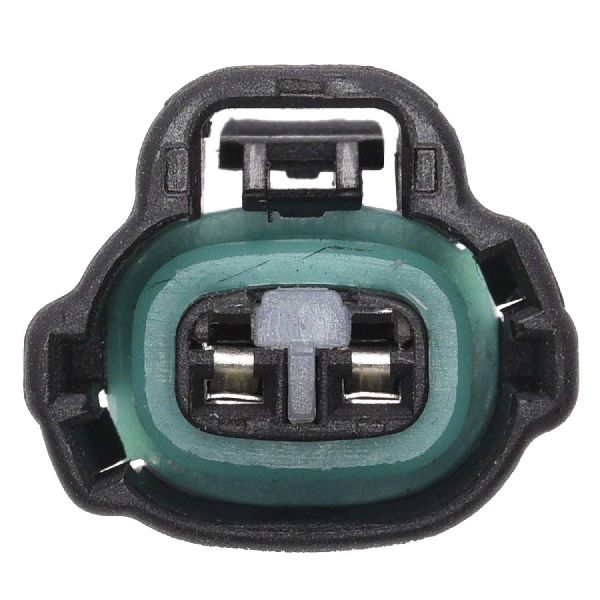
- Inspect OCV Wiring: Check the electrical connector and wiring to the intake OCV (front-most solenoid on the valve cover) for any damage, corrosion, or oil contamination.
- Test the Oil Control Valve (OCV): If oil and wiring are good, test the OCV. The easiest method is to swap the identical intake and exhaust OCVs. Clear codes and drive. If the code changes to P0014, 🎬 Watch: How to swap and test the OCV for diagnosis. the original intake OCV is faulty. Alternatively, test resistance with a multimeter (should be 6.9-7.9 Ohms).
- Check OCV Filter Screen: When the OCV is removed, inspect the small filter screen in the cylinder head for sludge or debris. Clean it carefully with a pick and brake cleaner if clogged.
- Mechanical Timing Check: If the above steps do not resolve the issue, a more in-depth diagnosis is needed to check for a stretched timing chain or a faulty camshaft phaser. This requires removing the valve cover and may require professional assistance.
Parts You'll Likely Need
- Intake Oil Control Valve (VVT Solenoid)
(OEM #24355-2G500)— This solenoid is the most common part to fail after ruling out oil level/condition issues. It gets clogged with sludge or fails electrically, causing incorrect oil flow to the cam phaser.
Trusted brands: Hyundai (OEM), Denso, Delphi, Dorman
OEM price range: $105-$150
Aftermarket price range: $70-$110 - Engine Oil and Filter — Low or contaminated oil is the number one cause of P0011, as the entire CVVT system is dependent on hydraulic pressure. The 2.4L Theta II engine has a known oil consumption issue, making frequent checks and changes vital.
Trusted brands: Pennzoil Platinum Full Synthetic 5W-20, Mobil 1 Advanced Full Synthetic 5W-20, Castrol EDGE Full Synthetic 5W-20
Aftermarket price range: $40-$80
Related Codes That Often Appear With This One
- P1326 — This Hyundai-specific code is for the Knock Sensor Detection System (KSDS). It often indicates excessive engine bearing wear, a primary failure point of the Theta II engine. Seeing P0011 and P1326 together is a very strong sign of impending engine failure and may qualify the vehicle for a warranty engine replacement.
- P0014 — This code is for 'Exhaust Camshaft Position - Timing Over-Advanced'. It may appear if there are systemic oil pressure/sludge issues affecting both camshafts, or it may appear after swapping the intake and exhaust OCVs for diagnosis, which confirms the original intake OCV was faulty.
- P0010 — This code indicates an electrical fault (open or short) in the intake OCV circuit. Seeing it with P0011 points directly to a failed OCV solenoid or a wiring issue.
- P0524 — This code means 'Engine Oil Pressure Too Low'. It directly corroborates that a lack of oil pressure is the root cause of the CVVT system malfunction.
Technical Service Bulletins (TSBs) & Recalls
- 23-EM-008H: Provides inspection and repair guidelines for engine oil consumption concerns. It details a multi-visit process, including a 1,000-mile consumption test and potentially a combustion chamber cleaning procedure (outlined in TSB 23-EM-007H).
- Recall Campaign 198 (NHTSA 20V-746): Addresses premature connecting rod bearing wear in certain Hyundai vehicles. The remedy involves an engine inspection and, if bearing damage is found, engine r
Platform-Specific Known Issues
- Engine Failure and Recalls: The 2.4L Theta II GDI engine is subject to multiple recalls (e.g., Recall 198), a class-action lawsuit settlement, and a lifetime warranty extension for certain failures related to connecting rod bearing wear. This wear is often caused by manufacturing debris restricting oil flow. P0011 can be an early symptom of the oiling problems that lead to this catastrophic failure.
- Excessive Oil Consumption: These engines are known to consume large amounts of oil. Hyundai has issued Technical Service Bulletins (TSBs) like 23-EM-008H to provide guidelines for diagnosing and repairing oil consumption issues, which involves a dealer-led 1,000-mile oil consumption test. Owners must be vigilant about checking oil levels.
- Knock Sensor Detection System (KSDS): As part of a recall campaign, Hyundai implemented a software update (KSDS) to detect vibrations characteristic of bearing failure. If detected, the system puts the vehicle into limp mode and sets code P1326.
Mechanic-Grade Diagnostic Values
- Oil Control Valve (OCV) Solenoid Resistance — expected: 6.9 - 7.9 Ohms at 68°F (20°C). Failure: A reading of infinity (Open Loop) or near zero Ohms (short) indicates a failed solenoid coil.
- Voltage at OCV Connector (Harness Side, Key On, Engine Off) — expected: Approximately 12V (Battery Voltage) on the power supply pin.. Failure: Low or no voltage suggests a problem with the wiring, fuse, or relay supplying power to the CVVT system.
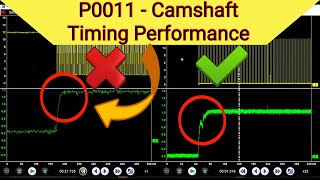
- Scan Tool Live Data: CVVT Target vs. Actual Cam Angle — expected: The 'Actual' angle should closely follow the 'Target' or 'Desired' angle commanded by the PCM with minimal delay.. Failure: A large, persistent deviation between the target and actual angles, or a slow response from the actual angle when the target changes, points to a mechanical or hydraulic issue (clog, bad phaser, low oil pressure).
Scan Tool Commands That Help
- Hyundai GDS (Global Diagnostic System): Actuation Test - OCV (Oil Control Valve) — This bidirectional command allows a technician to manually cycle the intake OCV solenoid. With the engine off, a clicking sound should be heard. With the engine idling, activating the solenoid should cause a noticeable change in engine RPM or cause it to stumble/stall. If there is no change in engine operation, it indicates a clogged OCV, blocked oil passage, or a mechanically failed cam phaser.
Wiring & Ground Locations
- GE01 — On the vehicle body, located near the right front of the engine compartment.. A wiring diagram for the Santa Fe indicates this is a primary ground point for the front engine harness. A loose or corroded ground here could cause erratic voltage to sensors and actuators like the OCV, potentially contributing to timing control faults.
- Intake OCV Connector — On top of the valve cover, connecting to the front-most of the two VVT solenoids.. This is the direct electrical connection for the primary component responsible for this code. The two pins are for power and the PCM's ground-side control signal. It should be checked for oil contamination from a leaking valve cover gasket or a failed OCV seal, which can disrupt the signal.
Real Owner Repair Stories
- Hyundai-Forums user (Hyundai with 2.4L engine) — P0011 code present after engine overheated, causing oil to become dark and thick.
❌ Tried (didn't work) Changing timing belt, Cleaning valve cover
✅ What actually fixed it The issue was resolved by replacing the small, cone-shaped OCV filter screen located under a 14mm bolt head in the cylinder head. The original filter was clogged with sludge, restricting oil flow. - Reddit user in r/Hyundai (2018 Hyundai Elantra SEL (Nu 2.0L engine, but demonstrates a related failure mode), 120,500 miles) — Check Engine Light with code P0011 appeared.
❌ Tried (didn't work) The failure was too rapid for any diagnostic steps.
✅ What actually fixed it The engine failed catastrophically within 45 minutes of the code appearing, requiring a full engine replacement. The likely cause was a sheared dowel pin on the CVVT cam phaser, a known issue on some Hyundai engines that leads to immediate and severe timing problems. - NHTSA ODI #11427064 — An owner reported that after an oil change and maintenance at 84,400 miles, the check engine light came on for P0011. They noted increasing engine noise and a loss of performance while driving.
- NHTSA ODI #11678267 — A report describes severe power loss where the vehicle was unable to reach 60 mph, accompanied by a loud whistling noise from the exhaust and codes P0011/P000A, creating a stalling hazard at highway speeds.
Model Year Variations Within This Range
- 2017-2018: For the 2017 model year refresh, the power output of the 2.4L GDI engine in the Santa Fe Sport was slightly reduced from 190 hp to 185 hp. This change in engine tune does not significantly alter the diagnosis for P0011, but it is a notable difference in specifications within the 2013-2018 range.
Diagnostic Flowchart
Other Known Issues on This Vehicle
Issues unrelated to this code that are worth knowing about as an owner of this generation:
- Worn Flexible Steering Coupler 🟠 Medium — Extremely common. A clicking or clunking noise from the steering column when turning is the primary symptom, usually appearing between 50k-100k miles. (Ref: TSB 17-ST-001)
- Intake Valve Carbon Buildup 🟠 Medium — Common to all Gasoline Direct Injection (GDI) engines. Over time, carbon deposits build up on the intake valves, which can cause rough idle, misfires, and reduced performance. Typically requires cleaning every 40k-60k miles.
- Starter Motor Failure 🟡 Low — A notable number of owners report premature starter failure, often manifesting as a single click or no-start condition. This can occur at various mileages.
- Peeling Paint (Especially White) 🟡 Low — Many owners, particularly those with white paint, have reported issues with paint peeling or flaking off in large sheets, often on the roof and hood. This is a known cosmetic issue across several Hyundai models of this era.
Used vs. New Parts: Buying Guide for This Vehicle
When a used part is the smart pick: For this specific repair on this engine, using used parts is NOT recommended. The primary causes of P0011 are related to oil sludge, debris, and internal wear. A used Oil Control Valve (OCV) or CVVT Cam Phaser from a salvage yard is highly likely to suffer from the same contamination and wear issues as the part being replaced.
What to inspect on the donor part:
- Not applicable, as used parts are not advised for this repair.
OEM-only on this vehicle (don't cheap out):
- Oil Control Valve (OCV)
- CVVT Cam Phaser
- Timing Chain and related components
Aftermarket brands forum-validated for this vehicle:
- Denso (often the OEM supplier for the OCV)
- Delphi
Brands owners have reported issues with on this vehicle:
- Unbranded 'white box' parts from online marketplaces should be avoided due to inconsistent quality control, which is critical for the sensitive CVVT system.
Real Owner Stories
Aggregated from forums and TSBs cited above. Mileages and costs reflect what owners reported in those sources.
2017 Hyundai Santa Fe 2.4L GDI
Symptoms: Check engine light on with codes P0011 and P1326 appearing together.
What fixed it: Mechanic recommended engine replacement due to the combination of timing and knock sensor codes indicating severe internal wear.
Source hint: Reddit r/AskMechanics - '2017 Hyundai Santa Fe code p0011 and p1326. Is this enough info to authorize an engine replacement?'
2013-2018 Hyundai Santa Fe 2.4L GDI
Symptoms: P0011 code triggered; owner found the engine was severely low on oil.
What fixed it: Found '0 oil on the dipstick' and performed an oil change; noted that P0011 is often a precursor to larger engine failure covered by warranty.
Source hint: Hyundai Forums and Reddit user report
Related OBD-II Codes
Frequently Asked Questions
Is my 2013-2018 Santa Fe 2.4L covered by a warranty extension for issues related to P0011?
What specific oil should I use in my Santa Fe to prevent P0011?
My Santa Fe is consuming a lot of oil but has no leaks; is there a TSB for this?
Can I test the Intake Oil Control Valve myself before replacing it?
What is the KSDS update and how does it relate to engine codes?
Is there a specific filter I should check when diagnosing P0011?
Helpful Videos

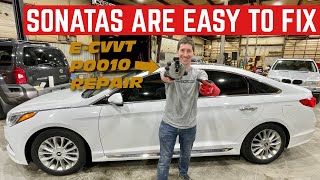
We Have This Part in Stock


The information in this article is provided for general reference and educational purposes only. Vehicle specifications, procedures, and part compatibility can vary by production date, trim level, and region. Always consult your vehicle's factory service manual and verify part numbers before purchasing or performing repairs. Safety-critical components such as airbags, seat belts, and braking systems should be installed by a qualified professional.
- Hyundai Santa Fe:
- 🧭 Diagnostic Flowchart
- 🎬 Helpful Videos
- 🛍️ Shop This Part
- What's Unique About the 2013-2018 Hyundai Santa Fe
- Symptoms You May Notice
- Most Likely Causes
- Rare But Worth Checking
- Diagnosis Steps
- Parts You'll Likely Need
- Related Codes That Often Appear With This One
- Technical Service Bulletins (TSBs) & Recalls
- Platform-Specific Known Issues
- Mechanic-Grade Diagnostic Values
- Scan Tool Commands That Help
- Wiring & Ground Locations
- Real Owner Repair Stories
- Model Year Variations Within This Range
- Other Known Issues on This Vehicle
- Used vs. New Parts: Buying Guide for This Vehicle
- Real Owner Stories
- 2017 Hyundai Santa Fe 2.4L GDI
- 2013-2018 Hyundai Santa Fe 2.4L GDI
- Related OBD-II Codes
- Frequently Asked Questions
- 🎟️ Get 5% Off