

P0011 on 2015-2019 Hyundai Sonata 2.4L: Causes and Fixes for Camshaft Timing
On the 2015-2019 Sonata 2.4L, P0011 is most often caused by low/dirty engine oil or a faulty intake Oil Control Valve (OCV). Always check your oil first. Replacing the OCV is a common, relatively inexpensive fix, costing around $40-$100 for the part.
- First, immediately check your engine oil level. Low or dirty oil is the #1 cause of P0011 on this engine.
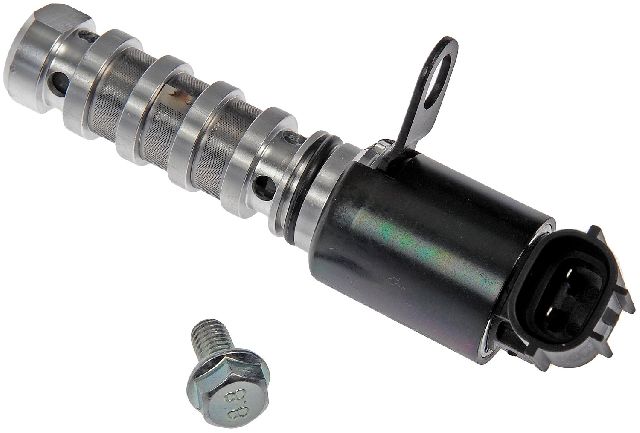
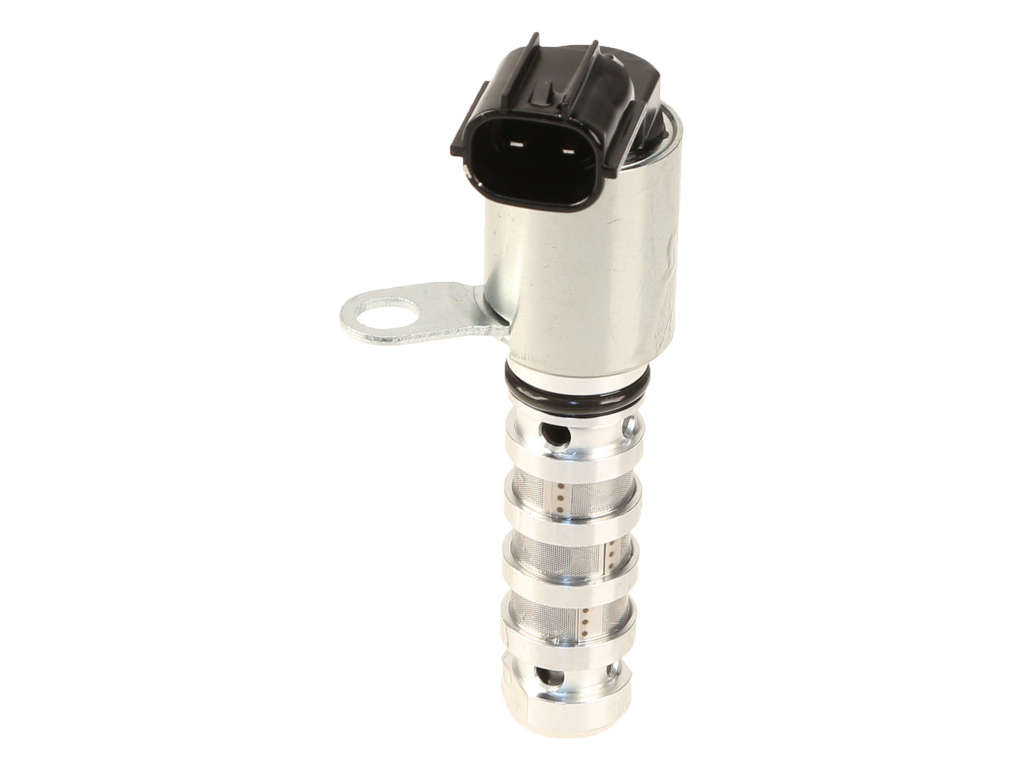
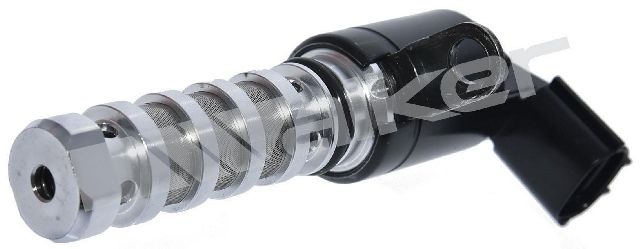
- The most likely failed part is the intake Oil Control Valve (OCV), part number 24355-2G500. It's a relatively easy and affordable DIY replacement.
- This code can be an early warning of the serious, well-known issues with the Theta II engine. If seen with P1326, stop driving and contact a dealer immediately.
What's Unique About the 2015-2019 Hyundai Sonata
The 2.4L Theta II GDI engine in this generation of Sonata has a well-documented history of issues that directly cause code P0011. Manufacturing debris left in some engines, a tendency to develop oil sludge, and high oil consumption can starve the CVVT system of clean, properly-pressurized oil. This makes problems with the Oil Control Valve (OCV) and related components more frequent than on other platforms. As a result, P0011 on this specific engine is often a direct symptom of these underlying, engine-specific issues and should be treated with urgency.
Symptoms You May Notice
- Check Engine Light is on
- Rough or unstable idle
- Engine stalling, especially at low speeds
- Reduced engine power and sluggish acceleration
- Difficulty starting the engine
- Decreased fuel economy
- Engine rattling or knocking noises
- Engine makes a ticking or chattering noise
- Replacing the Camshaft Position Sensor first. While it can fail, it's much less common for this code than oil issues or a bad OCV. A faulty sensor would more likely throw a specific sensor circuit code (e.g., P0340).
Most Likely Causes
- Low or Dirty Engine Oil 🔴 High Probability The Theta II engine is known for high oil consumption and sludge issues, which directly impact the hydraulically-operated CVVT system. An oil light flickering during turns is a key indicator of a low oil level.
How to confirm: Check the oil dipstick for level and clarity. If the oil is below the 'low' mark or appears black and sludgy, this is the likely starting point. Ensure the correct viscosity oil (typically 5W-20) is being used.
Typical fix: Perform an oil and filter change using the manufacturer-specified oil viscosity (5W-20 or 5W-30).
Est. part cost: $40-$80 - Faulty Intake Oil Control Valve (OCV/VVT Solenoid) 🔴 High Probability The OCV is highly susceptible to clogging and failure from the oil sludge and debris issues common to the Theta II engine. It is the most frequently replaced part for this code.
How to confirm: After confirming oil is clean and full, you can test the solenoid by applying 12V to see if it clicks. A more definitive test is to swap the intake and exhaust OCVs (they are identical) and see if the code changes to P0014 (exhaust camshaft). If it does, the OCV is bad. Resistance should measure between 6.9-7.9 ohms.
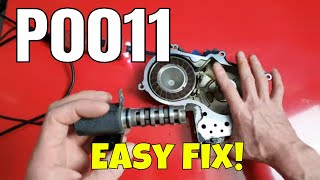
Typical fix: Replace the intake Oil Control Valve. Cleaning the valve with brake or contact cleaner may be a temporary fix, but replacement is recommended. 🎬 See how to clean the solenoid for a potential free fix.
Est. part cost: $40-$100 - Stretched Timing Chain ⚪ Low Probability → Shop Engine Timing Chain While a durable component, high mileage and stress from oiling issues can lead to stretching, causing timing correlation errors.
How to confirm: This is a complex diagnosis requiring removal of the valve cover to check for chain slack and timing mark alignment. This is typically done by a professional. A cam/crank correlation code is often present as well.
Typical fix: Replace the timing chain, guides, and tensioners.
Est. part cost: $200-$400
Rare But Worth Checking
- Failing CVVT Cam Phaser: → Shop Engine Timing Gear The actuator gear on the camshaft itself can fail, but it's much less common than the OCV. This is usually suspected after all other common causes have been eliminated. On some models, this is an electronic E-CVVT which has its own failure modes.
- Clogged OCV Filter Screen: There is a small filter screen below the OCV that can become clogged with debris. It can sometimes be cleaned, but if it's clogged, it points to larger sludge issues in the engine.
- Faulty Engine Control Module (ECM): In very rare cases, the ECM itself can fail and send incorrect signals or falsely report codes. This is highly unlikely and should only be considered after all other possibilities are exhausted.
Diagnosis Steps
- Check the engine oil level and condition. If it is low, dirty, or the wrong viscosity, correct it. This is the most common and cheapest fix.
- Clear the P0011 code with a scanner and perform a test drive to see if the code returns.
- If the code returns, locate the intake Oil Control Valve (OCV) on the top of the valve cover, toward the front of the engine.
- Inspect the electrical connector and wiring to the OCV for any damage, oil contamination, or loose connections.
- Test the OCV. You can swap the intake OCV with the identical exhaust OCV. Clear codes and drive. If the code changes to P0014, the OCV you moved is faulty. Resistance should be 6.9-7.9 Ohms.
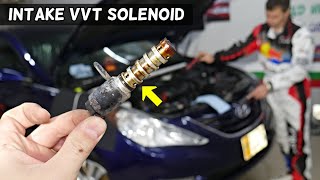
- If the OCV is confirmed to be faulty, replace it. The OEM part number is 24355-2G500. 🎬 Watch: How to locate and replace the intake VVT solenoid.
- If the OCV is good, consider inspecting the OCV filter screen for blockages.
- If the issue persists, the next steps involve checking for a stretched timing chain or a faulty CVVT phaser, which typically requires a professional mechanic.
Parts You'll Likely Need
- Intake Oil Control Valve (VVT Solenoid)
(OEM #24355-2G500)— This valve gets clogged or fails due to the engine's known oil sludge and debris issues, making it the most common component failure for this code.
Trusted brands: Hyundai (OEM), Dorman, NTK
OEM price range: $80-$120
Aftermarket price range: $40-$70
Related Codes That Often Appear With This One
- P0014 — Exhaust Camshaft Position Timing Over-Advanced. If both P0011 and P0014 are present, it points more strongly toward a base timing issue (e.g., stretched chain) or a systemic oil pressure/sludge problem affecting both cam actuators.
- P1326 — Knock Sensor Detection System. This is a critical code related to the Theta II engine recalls for connecting rod bearing wear. If you see P1326 with P0011, stop driving and have the vehicle inspected by a Hyundai dealer immediately, as it may be eligible for warranty extension or recall-related repairs. The dealer will perform a Bearing Clearance Test to determine if the engine needs replacement.
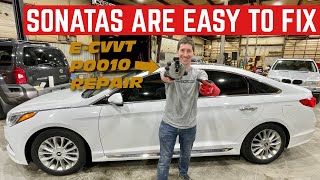
- P0010 — Intake Camshaft Position Actuator Circuit Malfunction. This code points to an electrical issue with the OCV circuit, such as a bad solenoid winding, damaged wiring, or a poor connection, rather than a purely mechanical/hydraulic timing issue. 🎬 Watch this guide for diagnosing electrical issues and P0010 codes.
Technical Service Bulletins (TSBs) & Recalls
- 22-01-033H (Campaign T3G): Describes the inspection and engine replacement procedure related to DTC P1326 and bearing wear, which is relevant if seen with P0011.
- 21-EM-004H: Details the Bearing Clearance Test Service Procedure, a key part of diagnosing the health of the Theta II engine, which is performed if P1326 is present.
- Kia TSB SA305: Although for Kia, it discusses P0010 on the same 2.4L engine, pointing to oil leakage at the E-CVVT motor plug as a cause, which is relevant context for electrical/actuator issues.
Platform-Specific Known Issues
- This vehicle is covered by a class-action lawsuit and recalls related to premature connecting rod bearing wear in the Theta II engine, which can cause oiling problems and lead to this code.
- Hyundai issued Service Campaign T3G (TSB 22-01-033H) which involves inspecting for bearing wear and may result in engine replacement if DTC P1326 is present.
- A Knock Sensor Detection System (KSDS) software update (Campaign 966) was released to detect abnormal engine vibrations, and a lifetime warranty was offered for the engine short block for certain failures after the update is performed.
- Owner experiences confirm that even with proper maintenance records, getting Hyundai to honor the engine replacement warranty can be a lengthy process.
Mechanic-Grade Diagnostic Values
- Intake Oil Control Valve (OCV) Resistance — expected: 6.9 to 7.9 Ohms at 68°F (20°C). Failure: A reading of infinity (OL) indicates an open circuit, while a reading near zero indicates a short. Either requires replacement.
- Scan Tool - CVVT Commanded vs. Actual Angle — expected: The 'Actual' angle should closely follow the 'Commanded' or 'Desired' angle on a live data graph as RPMs are varied.. Failure: A significant lag, no movement, or a fixed actual angle while the commanded angle changes indicates a mechanical/hydraulic fault in the CVVT system (OCV, phaser, oil pressure).
Scan Tool Commands That Help
- Hyundai GDS (Global Diagnostic System) or equivalent professional scanner: CVVT Actuator Test / Actuation Test — This bidirectional command allows the technician to manually command the OCV to operate while the engine is running. You can observe the change in camshaft angle on live data to confirm if the OCV and phaser are responding to commands, helping to isolate a faulty component from a wiring or ECM issue.
Wiring & Ground Locations
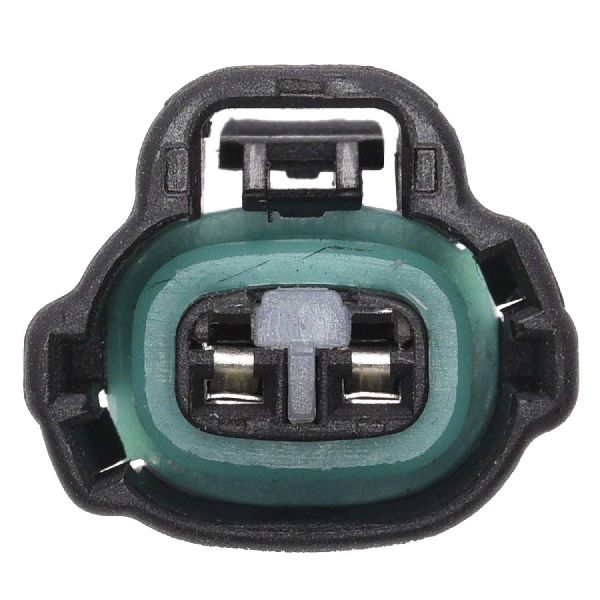
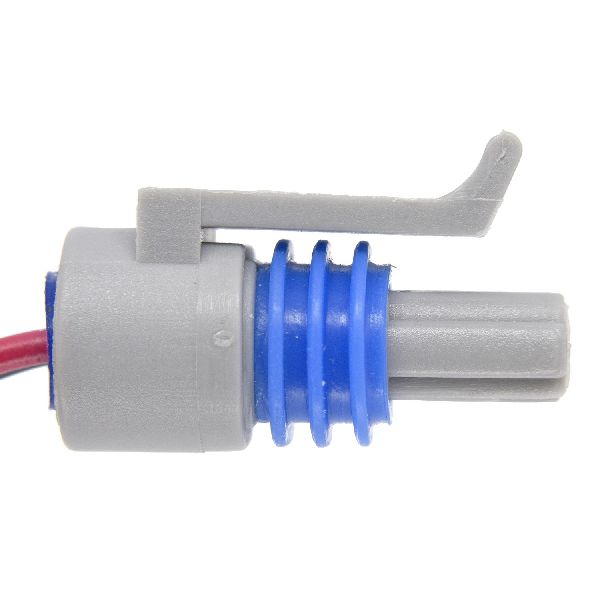
- Intake OCV Connector — On top of the valve cover, connected to the front-most solenoid (intake side).. This is the primary connection to test for power and control signals. Pin 1 is typically the control signal (ground-side switched) from the ECM, and Pin 2 is the 12V power supply, which is active when the engine is running.
Real Owner Repair Stories
- hyundai-forums.com user (2016 Hyundai Sonata 2.4L) — P0011 code, rough running.
❌ Tried (didn't work) Replaced both intake and exhaust Oil Control Valves (OCVs)., Performed multiple oil changes.
✅ What actually fixed it The intake CVVT phaser (the gear assembly on the camshaft) had failed internally. Replacing the CVVT phaser assembly resolved the code and running issues. - Reddit user in /r/Hyundai (2016 Hyundai Sonata 2.4L with 135,000 km) — P0010 and P0011 codes, loss of power, transmission hunting, high idle.
❌ Tried (didn't work) Considering cleaning the OCV.
✅ What actually fixed it Another user identified a common issue where an oil plug on the end of the camshaft for the E-CVVT system (more relevant to P0010) can leak oil into the side cover, causing electrical faults. While the primary discussion was about P0010, the presence of P0011 alongside it suggests a complex interaction. The fix was to replace the side cover and plug.
When the Usual Fixes Don't Work
- In one documented case on a Hyundai forum, a vehicle owner with P0011 had already replaced the OCVs, timing kit, and multiple sensors without success. The final solution was found to be a clogged OCV filter screen located in the cylinder head, a part that even the local dealership was reportedly unaware of. This highlights that even if the most common parts are replaced, a hidden blockage in the oil supply path can be the true root cause.
Documented NHTSA Reports
- An owner reported in NHTSA ODI #11452564 that after a cold start, the car lost power and set codes P0010 and P0011, with a dealer diagnosis confirming engine oil sludge was causing the VVT issues.
- According to NHTSA ODI #11119409, an owner experienced a metal grinding noise when accelerating and fluctuating RPMs alongside P0010 and P0011 codes, despite keeping immaculate maintenance.
- NHTSA ODI #11654322 describes a situation where a combustion chamber clean was performed, after which the entire timing system began failing with codes P0010 and P0011, leading toward catastrophic engine failure.
- In NHTSA ODI #11588550, a vehicle was inspected by mechanics after the engine light came on with codes P0011-00 and P0010-00.
- A report in NHTSA ODI #11396118 notes that a dealer confirmed problems in the CVVT system specifically related to code P0011.
OEM Part Supersession History
24355-2G500→24355-2GGA1 (and others may exist)— Likely internal improvements to combat sticking or failure from oil contamination.
Heads up: While newer revisions are generally backward compatible and recommended, always verify the correct part number for your specific VIN with a Hyundai dealer. Using an incorrect revision could lead to improper operation.
Model Year Variations Within This Range
- 2015-2019: The 2018 model year received a facelift with cosmetic and technology updates, but the 2.4L Theta II GDI engine and its CVVT system remained fundamentally the same throughout the 2015-2019 range. Therefore, the causes and fixes for P0011 are consistent across these years.
Diagnostic Flowchart
Other Known Issues on This Vehicle
Issues unrelated to this code that are worth knowing about as an owner of this generation:
- Catastrophic Engine Failure (Rod Bearing) 🔴 High — Widespread across all model years with the 2.4L Theta II GDI engine. Can occur at any mileage but often between 60k-120k miles. (Ref: Multiple recalls (e.g., NHTSA 20V746000), class-action lawsuit, and lifetime engine warranty extension for eligible vehicles that have the KSDS update (Campaign 966/T3G).)
- Excessive Oil Consumption 🔴 High — Very common. Many owners report needing to add a quart of oil every 1,000-2,000 miles. Often a precursor to more serious engine issues. (Ref: Related to the engine failure recalls; Hyundai dealers perform an oil consumption test as part of the diagnostic process for engine warranty claims.)
- Intake Valve Carbon Buildup 🟠 Medium — Common on GDI engines. Symptoms like rough idle and hesitation typically appear after 60,000-100,000 miles.
- Failing High-Pressure Fuel Pump (HPFP) 🟠 Medium — A known failure point on the Theta II GDI engine, leading to hesitation, stalling, and fuel system-related codes.
- Steering Coupler Disintegration 🟡 Low — Extremely common. The flexible steering coupler wears out, causing a noticeable 'clunk' or clicking noise in the steering wheel. An easy and inexpensive part to replace. (Ref: While not a formal recall on this generation, it was a widespread issue on the prior (YF) generation and continues to be a common failure point.)
Used vs. New Parts: Buying Guide for This Vehicle
When a used part is the smart pick: For this specific repair, using used parts is generally not recommended. The primary failure components (OCV, CVVT phaser, timing chain tensioner) are all highly sensitive to oil quality, wear, and sludge. The Theta II engine's known issues make it very likely that a used part from a donor vehicle will have similar wear or contamination, leading to a repeat failure.
Donor-vehicle mileage cap: roughly under 30000 miles for the part to have meaningful remaining life.
What to inspect on the donor part:
- If considering a used part is unavoidable, demand proof of the donor vehicle's maintenance history.
- Visually inspect any used OCV or phaser for sludge, varnish, or scoring.
- Test the resistance of a used OCV to ensure it is within the 6.9-7.9 Ohm spec before purchasing.
OEM-only on this vehicle (don't cheap out):
- CVVT Cam Phaser: Aftermarket phasers have a poor reputation for reliability and can cause immediate timing issues. The precise machining and oil flow characteristics are critical.
- Timing Chain and Tensioner: Given the critical nature of these parts and the engine's history, using OEM components is the safest choice to ensure longevity and correct operation.
Aftermarket brands forum-validated for this vehicle:
- NTK (for OCV/VVT Solenoid)
- Dorman (for OCV/VVT Solenoid, but OEM is often preferred by specialists)
Brands owners have reported issues with on this vehicle:
- Unbranded, no-name OCVs and CVVT phasers from online marketplaces. These frequently fail out of the box or within a few thousand miles, leading to repeated repairs.
Real Owner Stories
Aggregated from forums and TSBs cited above. Mileages and costs reflect what owners reported in those sources.
2016 Hyundai Sonata 2.4L
Symptoms: Sluggish performance and a P0011 code.
What fixed it: The diagnostic path started with checking the oil level, then moving to the OCV and checking the timing chain.
Source hint: reddit.com/r/Hyundai thread titled '2016 Sonata 2.4L, P0011 code and sluggish performance'
2015-2019 Hyundai Sonata 2.4L — 107000 miles
Symptoms: Complete engine failure.
What fixed it: Free engine replacement from Hyundai due to the class-action lawsuit after providing maintenance records.
Source hint: reddit.com owner report regarding failed engine at 107k miles
2016 Kia Optima 2.4L (Platform Mate)
Symptoms: P0011 code appearing alongside excessive oil consumption and a previous P1326 code.
What fixed it: The owner's experience illustrated the interconnected nature of oil consumption and bearing issues (P1326) with CVVT codes (P0011).
Source hint: reddit.com/r/MechanicAdvice
Related OBD-II Codes
Frequently Asked Questions
Does Service Campaign T3G (TSB 22-01-033H) apply to my Sonata if I have a P0011 code?
Is there a specific part number I should use for the Intake Oil Control Valve?
Will Hyundai replace my engine for free if P0011 leads to a failure?
Can I just clean the OCV instead of replacing it?
My oil light flickers when I take turns; is this related to my P0011 code?
What oil viscosity should I be using to prevent CVVT issues on my 2.4L Sonata?
Helpful Videos
We Have This Part in Stock


The information in this article is provided for general reference and educational purposes only. Vehicle specifications, procedures, and part compatibility can vary by production date, trim level, and region. Always consult your vehicle's factory service manual and verify part numbers before purchasing or performing repairs. Safety-critical components such as airbags, seat belts, and braking systems should be installed by a qualified professional.
- Hyundai Sonata:
- 🧭 Diagnostic Flowchart
- 🎬 Helpful Videos
- 🛍️ Shop This Part
- What's Unique About the 2015-2019 Hyundai Sonata
- Symptoms You May Notice
- Most Likely Causes
- Rare But Worth Checking
- Diagnosis Steps
- Parts You'll Likely Need
- Related Codes That Often Appear With This One
- Technical Service Bulletins (TSBs) & Recalls
- Platform-Specific Known Issues
- Mechanic-Grade Diagnostic Values
- Scan Tool Commands That Help
- Wiring & Ground Locations
- Real Owner Repair Stories
- When the Usual Fixes Don't Work
- Documented NHTSA Reports
- OEM Part Supersession History
- Model Year Variations Within This Range
- Other Known Issues on This Vehicle
- Used vs. New Parts: Buying Guide for This Vehicle
- Real Owner Stories
- 2016 Hyundai Sonata 2.4L
- 2015-2019 Hyundai Sonata 2.4L — 107000 miles
- 2016 Kia Optima 2.4L (Platform Mate)
- Related OBD-II Codes
- Frequently Asked Questions
- 🎟️ Get 5% Off