

Kia Sportage P0011 Code (2011-2016): Causes for Over-Advanced Timing and Fixes
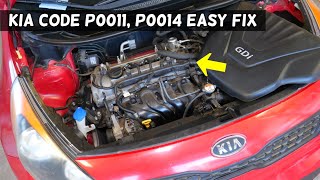
On the 2011-2016 Kia Sportage, P0011 is almost always caused by low or dirty engine oil due to the Theta II engine's known oil consumption issues. Check your oil immediately. If the oil level is fine, the next most likely cause is a bad intake Oil Control Valve (OCV), a ~$50 part that is relatively easy to replace.
- STOP and check your engine oil level immediately. This is the #1 cause of P0011 on this engine.
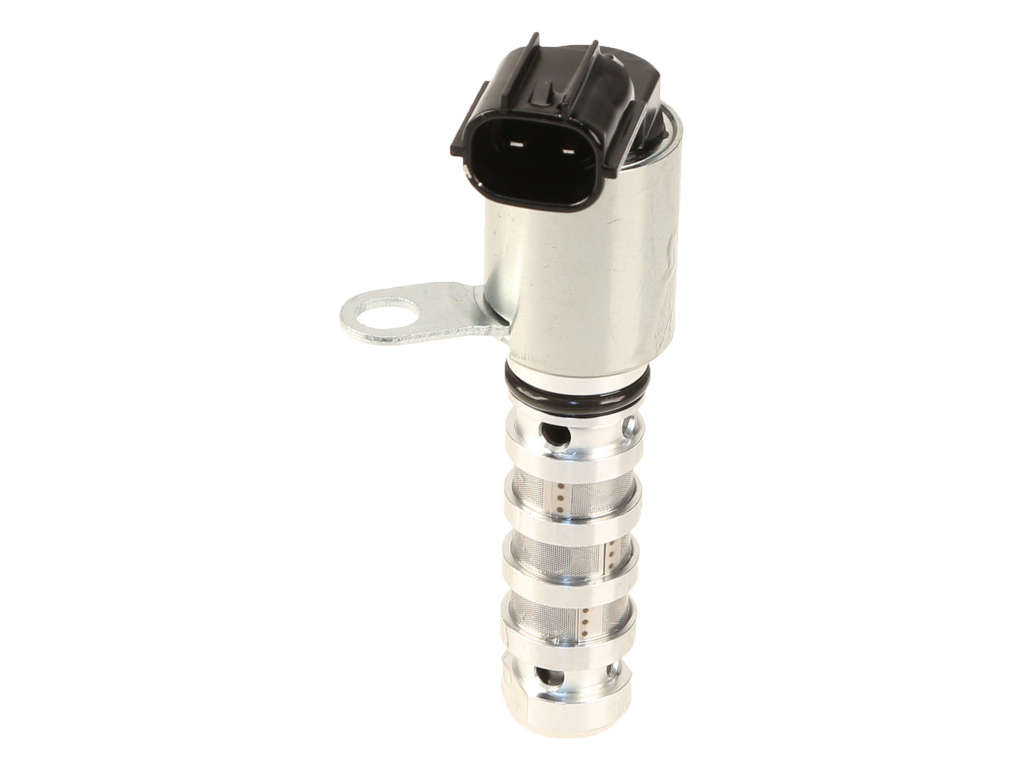
- If the oil level is correct and the oil is clean, the most likely failed part is the intake Oil Control Valve (OCV), part number 24355-2G500.
- This code can be a warning sign of serious engine problems. Your vehicle may be covered by a lifetime engine warranty; contact a Kia dealer to check your VIN for the KSDS update and warranty status.
- Do not replace the camshaft position sensor; it is almost never the cause of this code.
What's Unique About the 2011-2016 Kia Sportage
The 2.4L Theta II GDI engine in this generation of Sportage has a well-documented history of high oil consumption, sludge formation, and in some cases, catastrophic engine failure. These issues led to class-action lawsuits and a lifetime warranty extension for certain engine failures. Because the CVVT system is entirely dependent on oil pressure and cleanliness, the P0011 code on this specific vehicle is very often the first and most serious warning sign of a critical oil level or quality problem that could lead to engine seizure.
Symptoms You May Notice
- Check Engine Light is on
- Rough or unstable idle
- Engine stalling, especially at low speeds
- Reduced fuel economy
- Sluggish or jerky acceleration
- Rattling or clicking noise from the engine bay upon startup
- Difficulty starting the engine
- Vehicle enters 'limp-home' mode (reduced power and RPM limit)
- Replacing the camshaft position sensor. The sensor is reporting the problem correctly; it is very rarely the cause of P0011. The issue is with the mechanical timing components or the hydraulic system that controls them.
Most Likely Causes
- Low or Dirty Engine Oil 🔴 High Probability The 2.4L Theta II engine is notorious for high oil consumption. The CVVT system is hydraulic and cannot function correctly without the proper oil level, pressure, and cleanliness.
How to confirm: Check the engine oil dipstick. 🎬 Watch: Why you should check your oil before replacing parts. The oil level should be between the 'F' and 'L' marks. Inspect the oil's color and consistency; if it is black, thick, or below the 'L' mark, it needs immediate attention.
Typical fix: Top up the oil to the correct level. If the oil is old or dirty, perform a complete oil and filter change. Using a high-quality OEM Kia oil filter is strongly recommended by mechanics to ensure proper oil pressure and prevent issues with anti-drainback valves.
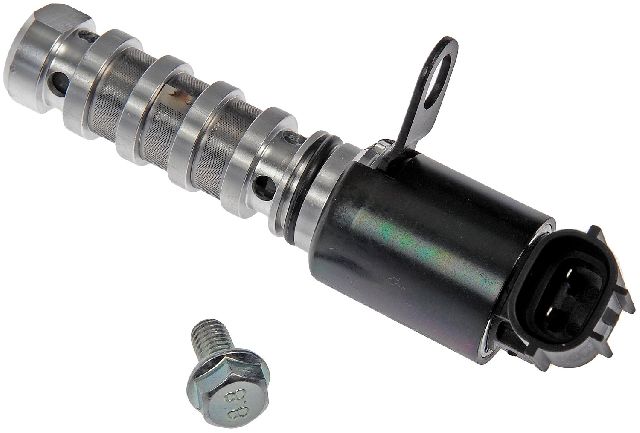
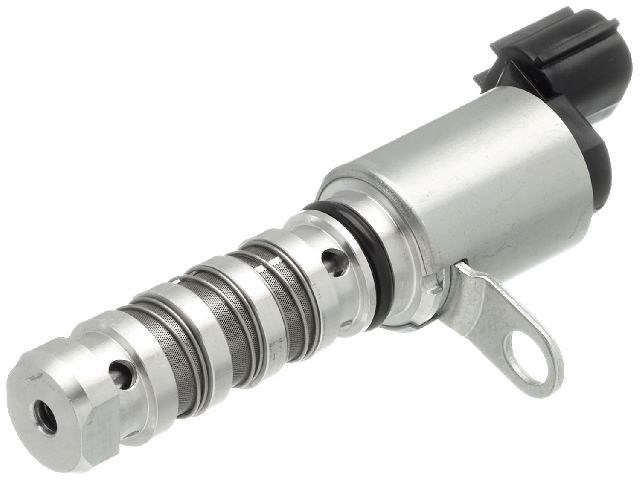
Est. part cost: $30-$70 - Faulty Intake Oil Control Valve (OCV) 🟡 Medium Probability The OCV is a solenoid that directs oil flow to the cam phaser. It can become clogged with sludge from dirty oil or fail electrically, getting stuck in a position that over-advances the timing.
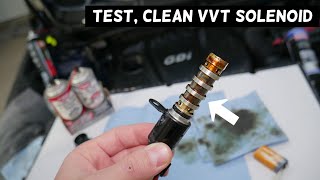
How to confirm: After confirming oil is clean and full, test the OCV. Unplug and check resistance with a multimeter; it should be 6.9-7.9 ohms at room temperature. Remove the valve (one 10mm bolt) and inspect its filter screens for sludge or debris. You can test for mechanical function by applying 12V power; a healthy valve will produce an audible click and its internal spool will move. 🎬 See how to clean and test your VVT solenoid.
Typical fix: Replace the intake OCV. It is located on the top of the valve cover and is a simple DIY job. Note: Some 2016 models may have an electronic eCVVT motor instead of this solenoid, which is a different part and repair.
Est. part cost: $25-$120 - Stretched Timing Chain or Failed Tensioner ⚪ Low Probability → Shop Engine Timing Chain While less common than oil issues, timing chains can stretch over high mileage, or the hydraulic tensioner can weaken, causing the base timing to be incorrect and leading to this code.
How to confirm: This is a complex diagnosis requiring removal of the valve cover to inspect for chain slack and check timing marks. This is best left to a professional.
Typical fix: Replacement of the timing chain, guides, and tensioner. This is a labor-intensive and expensive repair.
Est. part cost: $150-$600
Rare But Worth Checking
- Failed CVVT Cam Phaser/Actuator: → Shop Engine Timing Gear The gear on the end of the camshaft can fail internally, getting stuck in an advanced position. This usually requires timing chain replacement at the same time and is a significant repair.
- Clogged Oil Passages: Severe engine sludge can block the small oil passages leading to the OCV and cam phaser, starving them of oil pressure. This often requires significant engine cleaning or replacement.
- Failed eCVVT Motor (2016+ models): On some later models, the oil-based OCV was replaced by an electronic motor on the cam gear. This motor can fail, causing P0011. This is a more involved repair than the OCV solenoid.
Diagnosis Steps
- Check Engine Oil Level and Condition: This is the most critical first step. Pull the dipstick, check the level, and note the color. If low, top off and see if the code returns. If dirty, proceed to the next step.
- Perform an Oil and Filter Change: Use the manufacturer-specified 5W-20 or 5W-30 oil and a genuine Kia oil filter. Clear the code and drive to see if it returns.
- Inspect and Test the Intake Oil Control Valve (OCV): If the code returns, locate the intake OCV on the valve cover. Unplug it and check the wiring for damage. Remove the valve (typically one 10mm bolt) and inspect its filter screens for debris or sludge. Clean if necessary and re-test. You can test the solenoid with a 12V source to see if it clicks, or check resistance (spec: 6.9-7.9 ohms).
- Replace the Intake OCV: If the valve is dirty, stuck, or fails electrical tests, replace it. This is the most common part to fail after oil issues are ruled out.
- Seek Professional Diagnosis: If a new OCV and clean oil do not fix the code, the problem is likely more severe (timing chain, phaser, internal sludge) and requires professional tools and expertise to diagnose. For 2016 models, this may involve diagnosing the eCVVT system.
Parts You'll Likely Need
- Intake Oil Control Valve (VVT Solenoid)
(OEM #24355-2G500)— This solenoid controls oil flow to the cam phaser and is prone to clogging from dirty oil or electrical failure, making it the most commonly replaced part for P0011 after addressing oil level. 🎬 Watch this walkthrough on replacing the intake oil control valve. This part number supersedes 22100-2G521 and 22100-2G700.
Trusted brands: Kia (Genuine), Dorman, NGK, Standard Motor Products (SMP)
OEM price range: $60-$120
Aftermarket price range: $25-$75
Related Codes That Often Appear With This One
- P0014 — This is the corresponding code for the exhaust camshaft ('B' camshaft). If both appear, it points more strongly to a systemic issue like oil pressure, oil quality, or base timing.
- P1326 — This code is specific to the Knock Sensor Detection System (KSDS). If P0011 appears with P1326, it is a very serious sign of internal engine bearing wear. The vehicle will likely enter 'limp-home' mode and should be taken to a Kia dealer immediately to be assessed under the extended engine warranty.
Technical Service Bulletins (TSBs) & Recalls
- TSB PI1803 (also SC209): KSDS software update for 2011-2013 models, which is critical for engine warranty eligibility. Multiple revisions exist.
- Recall 17V-224 (Campaign SC147): Recall for premature engine bearing wear, which led to the engine warranty extension program.
- Customer Satisfaction Program CS1604: Warranty extension for the MDPS flexible steering coupler to 10 years/unlimited mileage to address clicking noises from the steering column.
Platform-Specific Known Issues
- This vehicle's 2.4L Theta II GDI engine is subject to a class-action lawsuit settlement regarding engine failures. This resulted in a potential lifetime warranty on the engine short block for failures related to connecting rod bearing wear (Recall 17V-224 / Campaign SC147). The P0011 code can be an early symptom of the oiling problems that cause this failure. Owners should contact a Kia dealer to ensure the Knock Sensor Detection System (KSDS) update (Campaign 953 / TSB PI1803) has been performed, as this is a prerequisite for warranty coverage.
Mechanic-Grade Diagnostic Values
- Oil Control Valve (OCV) Solenoid Resistance — expected: 6.9 - 7.9 Ohms at 68°F (20°C).. Failure: A reading of infinity (open circuit) or zero (short circuit) indicates a failed solenoid.
- Oil Control Valve (OCV) Actuation Test — expected: When 12V is applied to the solenoid terminals, the internal spool should move with an audible click.. Failure: No movement or click when power is applied, which may be caused by internal failure or debris.
- Camshaft Position Sensor (CMP) Connector Voltage — expected: For the 3-wire sensor: Pin 1 should have ~12V (Power), Pin 2 should be Ground, and Pin 3 should show a ~5V reference signal (Key On, Engine Off).. Failure: Missing voltage or ground indicates a wiring issue upstream of the sensor.
- Engine Oil Pressure (at Oil Pressure Switch) — expected: While a specific PSI value for P0011 is not published, a TSB for 2011-2012 models involved replacing the switch with an improved version to better detect low oil volume from leaks. A functional switch should show continuity to ground with no pressure, and no continuity when pressure is applied.. Failure: A pressure gauge reading significantly below manufacturer spec at idle and RPM would confirm a base oil pressure problem.
Scan Tool Commands That Help
- Kia GDS (Global Diagnostic System): CVVT Solenoid Activation Test — This bidirectional test allows the technician to command the OCV solenoid on and off while the engine is running. A change in engine idle or stalling indicates the solenoid is mechanically functioning and oil passages are likely clear. No change points to a bad solenoid, clogged passage, or wiring fault.
- Kia GDS (Global Diagnostic System): Resetting Adaptive Values — After replacing a major engine component like an OCV or timing parts, this function should be used to clear the Engine Control Module's learned values and force it to recalibrate to the new components.
- Kia GDS (Global Diagnostic System): E-CVVT Values Reset — For late 2016 models equipped with the electronic CVVT motor instead of the hydraulic OCV, this specific reset procedure is required after replacing the motor to calibrate its position.
Wiring & Ground Locations
- Engine Ground Strap (2011-2013) — Connects the engine block/cylinder head to the vehicle chassis, typically near a motor mount or on the firewall.. A corroded or loose engine ground (OEM P/N 91860-3W210 for some models) can cause erratic voltage signals for all engine sensors, including the camshaft and crankshaft position sensors, leading to incorrect timing data and triggering P0011.
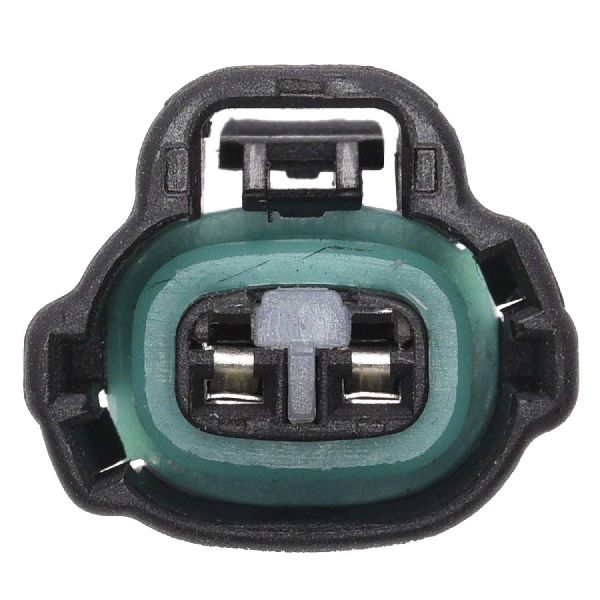
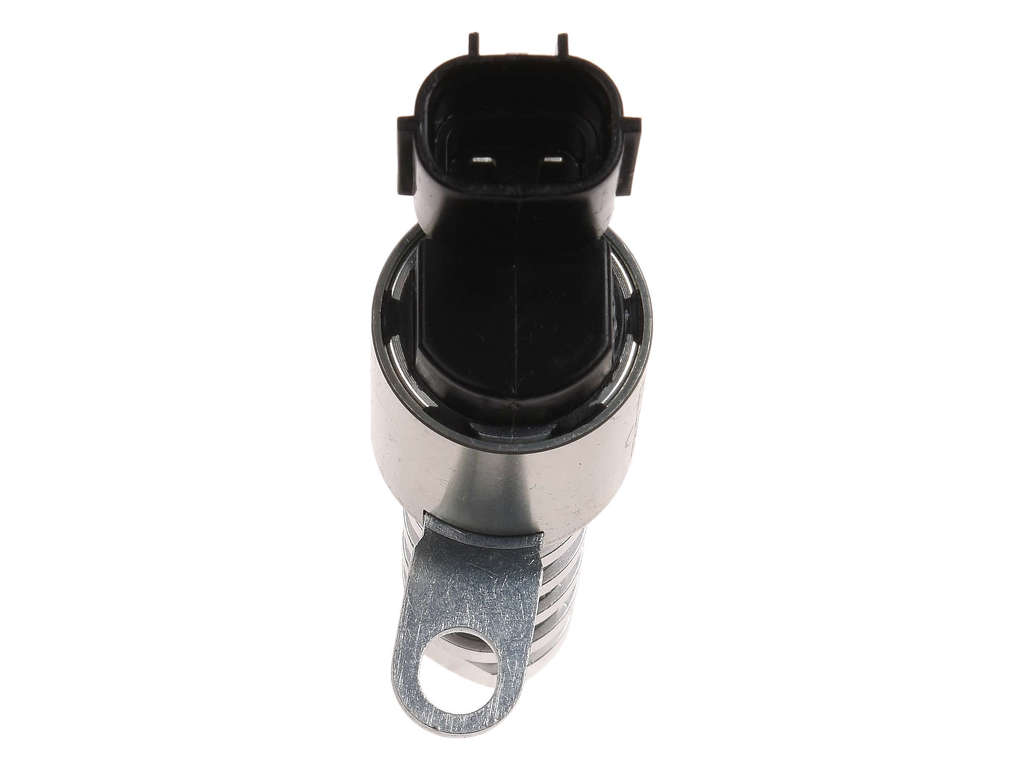
- OCV Connector — A 2-pin connector on top of the Oil Control Valve solenoid, located on the front of the valve cover.. This is the point to test for the Pulse Width Modulated (PWM) 12V signal from the PCM (Pin 2) and ground (Pin 1). The connector and wiring are exposed to heat and can become brittle or damaged, interrupting the signal to the OCV.
Real Owner Repair Stories
- Carly forum user (Kia Ceed (Shares engine architecture)) — Rough, fluctuating idle immediately after a timing chain replacement.
❌ Tried (didn't work) The shop's first suggestion was to replace the OCV solenoid, even though the problem did not exist before their repair.
✅ What actually fixed it The story strongly implies the root cause was an error made during the timing chain installation (misaligned timing marks). The appearance of P0011 immediately after such a repair points to a mechanical timing issue, not a sudden solenoid failure. - Kia Owner Report (NHTSA ODI #11679623) — An owner reported that the check engine light came on and threw a historical P0011 code for the intake camshaft variable timing solenoid, which was then taken to a dealership for assessment.
- Kia Owner Report (NHTSA ODI #11668422) — A diagnostic with a car reader displayed code P0011; the owner attempted to replace the battery thinking it might remedy the situation, though the code persisted.
"I Checked Everything" — The Actual Cause
- For code P0011, the equivalent of a 'smoke test clean' scenario is when the oil is full and clean, and a new OEM OCV has been installed, yet the code persists. In this situation on a Theta II engine, the root cause is almost certainly internal. The next steps involve a more invasive diagnosis to check for: 1) Severe sludge buildup blocking the small oil galleys inside the cylinder head leading to the phaser, which requires manual cleaning. 2) A physically stretched timing chain causing a constant timing offset that the CVVT system cannot correct. 3) An internally failed/stuck CVVT phaser (actuator gear) on the camshaft itself.
OEM Part Supersession History
22100-2G521, 22100-2G700, 420Y4-2GH00→24355-2G500— Updated design for the intake Oil Control Valve to improve reliability and performance.
Model Year Variations Within This Range
- 2011-2013: These early models used a 2.4L Multi-Port Injection (MPI) Theta II engine (G4KE) rated at ~176 hp. They are often cited as having more potential engine concerns and were subject to a TSB (SC098) to replace the oil pressure switch with an improved part to better detect oil leaks.
- 2014-2016: The 2014 facelift introduced an updated 2.4L engine with Gasoline Direct Injection (GDI) (G4KJ), which increased power to ~182 hp. These models are generally considered preferable to the pre-facelift versions.
- 2016: Some late-production 2016 models may be equipped with the newer electronic CVVT (eCVVT) system instead of the hydraulic OCV solenoid. Diagnosing P0011 on these vehicles is different and involves testing an electric motor, not a solenoid, and may require a specific scan tool function to reset E-CVVT values after replacement.
Documented NHTSA Reports
- NHTSA ODI #11674514 describes engine hesitation and lack of acceleration along with engine code P0011, making highway driving difficult and potentially unsafe.
- NHTSA ODI #11662441 notes that an owner previously received engine codes P1326, P0011, and P0014 after receiving the KSDS update, and was told by a dealership they must wait for the engine to fail to qualify for coverage.
- NHTSA ODI #11241077 reports a situation where a local shop checked codes and found P0011 (A Camshaft Position Timing Over Advanced), P0014 (B Camshaft Position Timing Over Advanced), and P1326 (Engine Damage Alert).
Diagnostic Flowchart
Other Known Issues on This Vehicle
Issues unrelated to this code that are worth knowing about as an owner of this generation:
- Premature Connecting Rod Bearing Failure 🔴 High — Widespread across 2.4L Theta II GDI engines, can occur at any mileage but often cited between 60,000-120,000 miles. Led to catastrophic engine seizure. (Ref: Recall 17V-224 (SC147); TSB PI1803 (KSDS Update); Lifetime Engine Warranty Extension)
- Excessive Oil Consumption 🔴 High — Extremely common, often starting around 60,000 miles. Many owners report consuming a quart of oil every 1,000-1,500 miles. This is a primary contributor to P0011 and eventual engine failure. (Ref: Related to the engine failure warranty extension, dealers perform an oil consumption test to validate claims.)
- MDPS Flexible Steering Coupler Wear 🟠 Medium — Very common issue causing a clicking or knocking sound in the steering column when turning the wheel, especially when stationary. (Ref: Customer Satisfaction Program CS1604 / Warranty Extension TSB-CHA068)
- A/C Compressor Failure 🟠 Medium — Frequently reported by owners, leading to a loss of air conditioning. The failure often requires a full compressor replacement, which can be costly.
Used vs. New Parts: Buying Guide for This Vehicle
When a used part is the smart pick: For this specific repair on this engine, using used parts is highly discouraged. The primary causes (OCV, timing components) are directly related to oil quality and sludge, which are wear-and-tear items. A used OCV from a junkyard has an unknown history and is very likely to be clogged or failing.
Donor-vehicle mileage cap: roughly under 20000 miles for the part to have meaningful remaining life.
What to inspect on the donor part:
- If considering a used OCV, it must be removed and inspected. The mesh screens must be perfectly clean with no signs of dark varnish or sludge.
- Ask for the VIN of the donor vehicle to check for accident history; a front-end collision could have damaged engine components.
OEM-only on this vehicle (don't cheap out):
- Engine Oil Filter: Aftermarket filters may not have the correct internal bypass pressure or anti-drainback valve specs, leading to oil pressure issues that can cause CVVT codes.
- Timing Chain Kit: Given this is an interference engine, using a new, high-quality timing chain, tensioner, and guides is critical for engine longevity. A used timing set is never recommended.
Aftermarket brands forum-validated for this vehicle:
- While OEM is safest for the OCV, brands like Standard Motor Products (SMP) and NGK are generally reputable sources for engine management components.
Brands owners have reported issues with on this vehicle:
- Avoid unbranded, no-name parts from online marketplaces. These often have high failure rates and may not meet the precise tolerances required for the CVVT system.
Real Owner Stories
Aggregated from forums and TSBs cited above. Mileages and costs reflect what owners reported in those sources.
2016 Kia Optima 2.4L — ~60000 miles
Symptoms: Excessive oil consumption followed by a P1326 knock sensor code and eventually the P0011 DTC.
What fixed it: The owner's account demonstrates a progression of failure typical for the Theta II engine, often requiring dealership intervention for the oiling problems.
Source hint: Reddit (r/MechanicAdvice) - 2016 Kia Optima P0011 DTC
Related OBD-II Codes
Frequently Asked Questions
Is there a recall for the engine issues causing my P0011 code on my 2011-2016 Sportage?
Why is my 2.4L Sportage consuming so much oil and throwing a P0011?
Can I use any oil filter to fix the P0011 code on my Kia?
How do I test if the Intake Oil Control Valve (OCV) is bad on my Sportage?
Is the clicking noise in my steering wheel related to the P0011 engine code?
Does the 2016 Sportage use the same OCV as the earlier models?
Helpful Videos


We Have This Part in Stock


The information in this article is provided for general reference and educational purposes only. Vehicle specifications, procedures, and part compatibility can vary by production date, trim level, and region. Always consult your vehicle's factory service manual and verify part numbers before purchasing or performing repairs. Safety-critical components such as airbags, seat belts, and braking systems should be installed by a qualified professional.
- Kia Sportage:
- 🧭 Diagnostic Flowchart
- 🎬 Helpful Videos
- 🛍️ Shop This Part
- What's Unique About the 2011-2016 Kia Sportage
- Symptoms You May Notice
- Most Likely Causes
- Rare But Worth Checking
- Diagnosis Steps
- Parts You'll Likely Need
- Related Codes That Often Appear With This One
- Technical Service Bulletins (TSBs) & Recalls
- Platform-Specific Known Issues
- Mechanic-Grade Diagnostic Values
- Scan Tool Commands That Help
- Wiring & Ground Locations
- Real Owner Repair Stories
- "I Checked Everything" — The Actual Cause
- OEM Part Supersession History
- Model Year Variations Within This Range
- Documented NHTSA Reports
- Other Known Issues on This Vehicle
- Used vs. New Parts: Buying Guide for This Vehicle
- Real Owner Stories
- 2016 Kia Optima 2.4L — ~60000 miles
- Related OBD-II Codes
- Frequently Asked Questions
- 🎟️ Get 5% Off