

P0011 on 2015-2019 Lincoln MKC: Causes and Fixes for Over-Advanced Cam Timing
On a 2015-2019 Lincoln MKC, code P0011 is most often caused by low or dirty engine oil, or a failing Variable Camshaft Timing (VCT) solenoid. The fix is usually an oil change and/or replacing the VCT solenoid, which costs about $40-$60 for the part. Adhering to the correct oil change interval with the specified oil is critical.
- For a 2015-2019 Lincoln MKC, P0011 almost always points to an issue with oil quality/level or the intake VCT solenoid.
- Always start diagnosis with an oil and filter change using the correct synthetic oil.
- Ford has issued multiple TSBs confirming that debris clogging the VCT solenoid is the most common cause.
- Replacing the VCT solenoid (Part #CJ5Z-6M280-A) is a common, relatively inexpensive, and effective DIY fix.
What's Unique About the 2015-2019 Lincoln MKC
The 2.0L and 2.3L EcoBoost engines in the Lincoln MKC utilize a Variable Camshaft Timing (VCT) system that is hydraulically actuated and particularly sensitive to oil quality, level, and pressure. Ford/Lincoln has issued multiple Technical Service Bulletins (TSBs) for these vehicles, explicitly stating that P0011 and related codes can be caused by small debris in the oil causing the VCT solenoid to stick. This makes oil-related issues and solenoid failure the most prominent causes for this specific platform, often preceding more severe timing chain issues.
Diagnostic Flowchart
Tap your situation to follow the diagnostic path that matches what you're seeing on this vehicle.
Symptoms You May Notice
- Check Engine Light is on
- Rough or poor idle
- Engine stalling or hesitation, especially at low RPM or when stopping
- Reduced engine power and sluggish acceleration
- Decreased fuel economy
- Rattling or ticking noise from the engine upon startup or during operation 🎬 Watch: 7 common signs of a failing VVT solenoid
- Replacing the camshaft position sensor when the root cause is a sticking VCT solenoid or dirty oil.
- Replacing the expensive camshaft phaser before thoroughly diagnosing the much cheaper VCT solenoid and performing an oil change.
- Assuming a timing chain replacement is needed without first ruling out the VCT solenoids and oil quality, which are far more common failures.
Most Likely Causes
- Low or Dirty Engine Oil 🔴 High Probability The VCT system is hydraulically operated and highly dependent on clean oil at the correct pressure. The manufacturer TSBs highlight the system's sensitivity to debris and sludge. Neglecting oil changes is a primary trigger for this code.
How to confirm: Check the oil level on the dipstick and inspect its color and consistency. If the level is low or the oil is dark, gritty, or sludgy, this is the likely cause. An oil change is the first and most crucial diagnostic step.
Typical fix: Perform an engine oil and filter change using the manufacturer-recommended full synthetic oil viscosity (typically SAE 5W-30 for EcoBoost engines). Consider using an engine flush product before the oil change if sludge is suspected.
Est. part cost: $40-$80 - Failing Variable Camshaft Timing (VCT) Solenoid 🔴 High Probability → Shop Engine Camshaft TSBs #SSM 48423 and #SSM 47170 directly state that P0011 can be caused by debris making the VCT solenoid stick. This is a well-documented failure point, with the solenoid's internal passages and screens becoming clogged.
How to confirm: Use a bidirectional scan tool to command the solenoid on and off (as described in Pinpoint Test HK) while observing camshaft angle data. A lack of response indicates a faulty solenoid. You can also remove the solenoid and inspect its screens for debris or test its actuation with a 12V source.
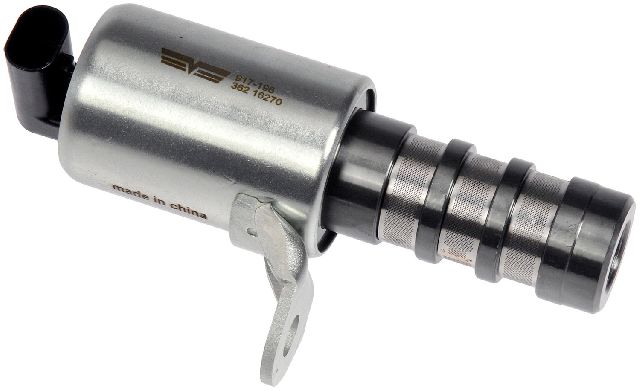
Typical fix: Replace the Bank 1 intake VCT solenoid. It is often recommended to replace both intake and exhaust solenoids at the same time as a preventative measure. The OEM part number is CJ5Z-6M280-A.
Est. part cost: $40-$60 - Faulty Camshaft Position Sensor ⚪ Low Probability → Shop Engine Camshaft Position Sensor
How to confirm: Monitor the sensor's output with a scan tool for erratic or missing readings. If other causes are ruled out, testing the sensor's circuit and signal is the next step. This is less common than oil or solenoid issues.
Typical fix: Replace the Bank 1 intake camshaft position sensor.
Est. part cost: $25-$50
Rare But Worth Checking
- Stretched Timing Chain or Worn Cam Phaser: → Shop Engine Timing Chain This is a more severe mechanical issue, usually occurring at higher mileage (>100k miles) or on vehicles with a poor maintenance history. It can cause the timing to be physically off even if the VCT system is working. It's a much more expensive and labor-intensive repair.
- Clogged Oil Passages: Severe oil sludge can block the small passages that feed the VCT system, preventing proper operation even with a new solenoid. An engine flush may help, but in severe cases, more disassembly is required.
Diagnosis Steps
- Verify the code with an OBD-II scanner.
- Check the engine oil level and condition. If low, dirty, or the wrong viscosity, perform an oil and filter change, clear the code, and test drive. This is the most important first step.
- If the code returns, inspect the wiring and connector for the intake VCT solenoid for any damage or corrosion.
- Using a bidirectional scan tool, access the powertrain control module functions and perform the VCT solenoid cleaning procedure outlined in TSB #SSM 48423 (Pinpoint test HK11 🎬 See how to properly diagnose VCT solenoid timing codes), which cycles the solenoid 10 times to dislodge debris.
- If the test fails or the code returns, remove the intake VCT solenoid. Inspect the mesh screens for metallic debris or sludge. Clean or, more reliably, replace the solenoid.
- If the solenoid and oil are good, test the camshaft position sensor and its circuit for proper signal.
- If all other components test good, the issue may be mechanical, requiring an inspection of the timing chain, guides, and camshaft phaser for wear, stretch, or damage. This is the most labor-intensive step.
Parts You'll Likely Need
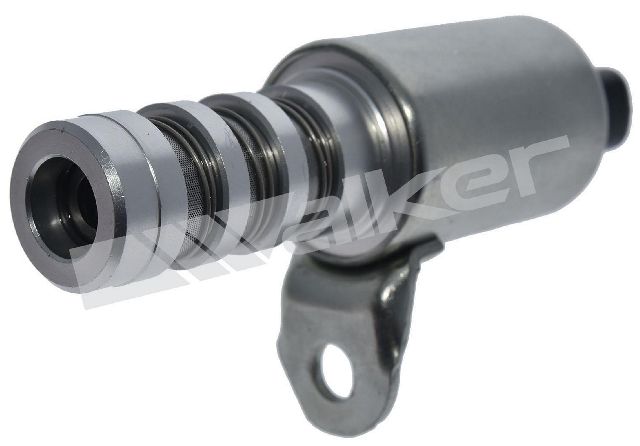
- Engine Variable Valve Timing (VVT) Solenoid
(OEM #CJ5Z-6M280-A 🎬 Watch: Step-by-step VCT solenoid replacement walkthrough)— This is the most common point of failure for P0011 on this vehicle, as confirmed by manufacturer TSBs. It gets stuck due to debris in the oil.
Trusted brands: Motorcraft, Dorman, NTK
OEM price range: $30-$50
Aftermarket price range: $25-$45 - Engine Oil and Filter — The VCT system is hydraulic. Low, dirty, or incorrect viscosity oil is a primary cause of VCT system faults. An oil change is the first step in any diagnosis.
Trusted brands: Motorcraft, Mobil 1, Castrol
OEM price range: $50-$80
Aftermarket price range: $40-$60
Related Codes That Often Appear With This One
- P0012 — This code is for 'Timing Over-Retarded' on the same camshaft, and can appear if the VCT solenoid is sticking or functioning erratically, causing it to get stuck in either direction.
- P0014 / P0015 — These are the equivalent codes for the exhaust ('B') camshaft. It's common for issues related to oil quality to affect both intake and exhaust VCT solenoids, sometimes triggering codes for both.
- P0016 / P0017 — These codes indicate a correlation issue between the crankshaft and camshaft. They can appear alongside P0011 if the timing has jumped due to a stretched chain or failed tensioner, representing a more serious mechanical fault.
Technical Service Bulletins (TSBs) & Recalls
- SSM 48423: Notes that P0011 and other VCT codes may be due to debris causing the VCT solenoid to stick. Recommends a diagnostic step to cycle the solenoid before replacement.
- SSM 54366: References a specific pinpoint test in the service manual for diagnosing P0011 and related codes.
- SSM 47170: Also states that debris causing the VCT solenoid to stick is a potential cause for P0011.
- SSM 46450: An earlier TSB also pointing to debris in the VCT solenoid as the cause for P0011 and related codes.
Platform-Specific Known Issues
- Manufacturer Technical Service Bulletin #SSM 48423 notes that for some 2015-2020 Ford and Lincoln vehicles, DTCs including P0011 may be present due to 'small debris causing the VCT solenoid to stick…' It advises technicians to use a scan tool to cycle the solenoid 10 times to clear debris before replacement.
- TSB #SSM 47170 and #SSM 46450 reiterate the same issue, confirming a pattern of VCT solenoid contamination across multiple model years.
- A Reddit user with a 3.5L EcoBoost (a related engine) and code P0011 successfully resolved hesitation and rough idle by replacing the VVT solenoids and the valve cover, confirming this is a common DIY fix.
Mechanic-Grade Diagnostic Values
- VCT Solenoid Internal Resistance — expected: 6.9 to 14 Ohms. One source specifies 6.9-7.9 Ohms at 68°F (20°C).. Failure: A reading of 0 Ohms indicates a short, while an infinite reading (OL) indicates an open circuit. A reading outside the expected range suggests a faulty solenoid.
- VCT Solenoid Voltage (KOEO) — expected: ~12V (Battery Voltage) on the power supply pin with the key on, engine off.. Failure: No voltage indicates a problem with the power supply circuit, fuse, or relay.
- Camshaft Position Sensor Circuit Voltage (KOEO) — expected: Power Wire: ~5V. Signal Wire: ~5V. Ground Wire: Should show battery voltage (~12V) when tested against the battery positive terminal.. Failure: Incorrect or missing voltage on any wire points to a circuit fault or a bad PCM, not necessarily a bad sensor.
- Scan Tool PID: VCT Advance Error (VCT_ADV_ERR) — expected: Should be close to 0°, with an acceptable variance of +/- 5° during closed-loop operation.. Failure: A consistent, large error value indicates the PCM cannot achieve the commanded cam angle, pointing to a VCT system fault.
Hidden / Shadow Codes Worth Checking
- Mode 6, Test ID $81, Comp ID $81 (and others): Ford utilizes OBD-II Mode 6 data to monitor VCT system performance. Specific Test IDs (TID) and Component IDs (CID) track the camshaft angle error. For example, TID $81/CID $81 often relates to 'VCT Position Error Bank 1'. A failing value here can precede a P0011 code. (see via An advanced OBD-II scanner capable of displaying Mode 6 test results.)
Scan Tool Commands That Help
- Ford IDS (Integrated Diagnostic System): Pinpoint Test HK11 / HK12 - VCT Solenoid Cycle Test — As recommended by TSB #SSM 48423, this function should be used after an oil change but before replacing the VCT solenoid. It commands the PCM to cycle the solenoid 10 times in an attempt to dislodge small debris causing it to stick. If the code clears after this test, solenoid replacement may not be necessary.
Wiring & Ground Locations
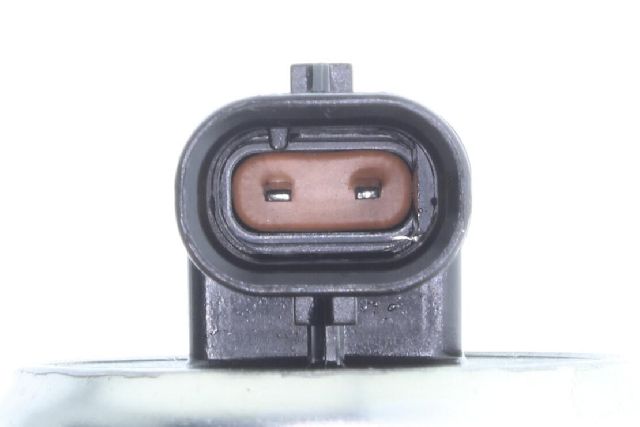
- VCT Solenoid Connector — On the top of the valve cover, near the front of the engine, plugging into the VCT solenoid.. This 2-pin connector and its wiring are common points for damage or corrosion. One pin is the 12V power supply, and the other is the ground signal controlled by the PCM. A poor connection here will prevent the solenoid from actuating correctly.
- PCM Ground (e.g., G103/G105) — Typically located in the engine compartment, on the cowl or inner fender. A vehicle-specific wiring diagram is required for the exact location.. The Powertrain Control Module (PCM) provides the pulsed ground signal to activate the VCT solenoid. A corroded or loose main ground for the PCM can cause erratic behavior in multiple systems, including the VCT system, leading to intermittent codes like P0011.
Real Owner Repair Stories
- Reddit user on r/f150 (2018 Ford F-150 3.5L EcoBoost (related engine family) with 70,000 miles) — Intermittent hesitation and rough idle, with P0011 code.
❌ Tried (didn't work) The cam phasers had already been replaced under warranty at 40,000 miles, so that was not the root cause this time.
✅ What actually fixed it Replaced both VVT solenoids (part HL3Z6M280A for that engine) and the passenger side valve cover. This completely resolved the hesitation and rough idle.
OEM Part Supersession History
CJ5Z-6M280-A→No supersession found in search results.— N/A
Heads up: This part number is specified for a wide range of Ford/Lincoln engines including the 2.0L, 2.3L, and 2.5L. Always confirm the part number with a dealer using the vehicle's VIN before purchasing.
Model Year Variations Within This Range
- 2015-2016: Models in these years with the 2.0L engine typically used the 'Gen 1' EcoBoost.
- 2017-2019: Models in these years with the 2.0L engine used the updated 'Gen 2' EcoBoost, which featured a new twin-scroll turbo, revised cylinder head, and new pistons. The 2.3L EcoBoost was available throughout the 2015-2019 model years. While the fundamental VCT system operation is the same, internal engine and head designs differ.
- 2016-2019: For the 2016 model year, the infotainment system was upgraded from the older MyLincoln Touch to the more modern SYNC 3 system. This does not affect the P0011 code diagnosis.
Helpful Videos
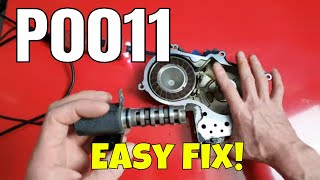
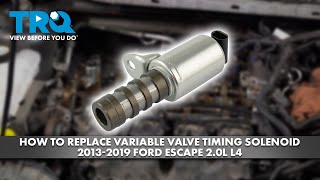
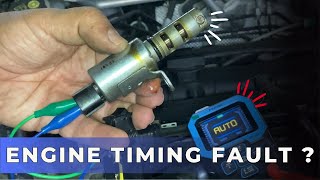

We Have This Part in Stock


The information in this article is provided for general reference and educational purposes only. Vehicle specifications, procedures, and part compatibility can vary by production date, trim level, and region. Always consult your vehicle's factory service manual and verify part numbers before purchasing or performing repairs. Safety-critical components such as airbags, seat belts, and braking systems should be installed by a qualified professional.
- Lincoln MKC:
- 🧭 Diagnostic Flowchart
- 🎬 Helpful Videos
- 🛍️ Shop This Part
- What's Unique About the 2015-2019 Lincoln MKC
- Symptoms You May Notice
- Most Likely Causes
- Rare But Worth Checking
- Diagnosis Steps
- Parts You'll Likely Need
- Related Codes That Often Appear With This One
- Technical Service Bulletins (TSBs) & Recalls
- Platform-Specific Known Issues
- Mechanic-Grade Diagnostic Values
- Hidden / Shadow Codes Worth Checking
- Scan Tool Commands That Help
- Wiring & Ground Locations
- Real Owner Repair Stories
- OEM Part Supersession History
- Model Year Variations Within This Range
- 🎟️ Get 5% Off