

P0011 on 2015-2020 Lincoln MKZ: Causes, Fixes, and VCT Solenoid Issues
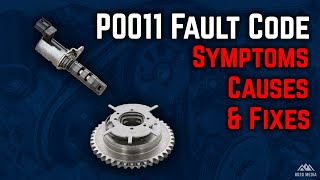
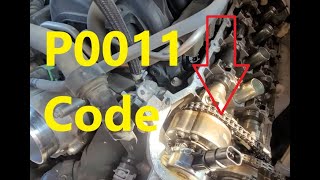
On a 2015-2020 Lincoln MKZ, code P0011 is most often caused by a sticking Variable Camshaft Timing (VCT) solenoid, frequently due to dirty or low engine oil. An oil change and replacing the Bank 1 intake VCT solenoid is the most common fix. For the 2.0L I4, this is a simple repair. For the 3.7L and 3.0L V6 engines, the repair is more complex as the Bank 1 solenoid is on the rear cylinder head, requiring intake manifold removal for access.
- P0011 on the 2015-2020 MKZ points to the intake camshaft on Bank 1 being too far advanced.
- The most probable cause is a sticking VCT solenoid, an issue officially recognized by Ford/Lincoln in service bulletins.
- Always check your engine oil level and condition first; low or dirty oil is a frequent contributor to this code.
- Replacing the Bank 1 intake VCT solenoid and changing the engine oil is the most common and effective repair.
- On V6 engines, replacing the Bank 1 (rear) solenoid is more labor-intensive than on the 2.0L I4 engine.
What's Unique About the 2015-2020 Lincoln MKZ
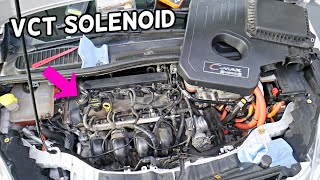
For this generation of Lincoln MKZ and its related Ford platforms (like the Ford Fusion and Edge), the VCT solenoids are a known weak point. Multiple Technical Service Bulletins (TSBs) from Ford, including SSM 47170 and SSM 48423, explicitly state that P0011 can be caused by small debris causing the VCT solenoid to stick. This suggests a higher-than-average likelihood that the solenoid itself is the root cause, rather than more complex mechanical timing issues. The repair complexity also varies significantly by engine; it's a straightforward job on the 2.0L I4 but requires removing the upper intake manifold 🎬 See this walkthrough for locating and replacing the VCT solenoid. on the 3.7L and 3.0L V6 engines to access the Bank 1 (rear) solenoids.
Diagnostic Flowchart
Tap your situation to follow the diagnostic path that matches what you're seeing on this vehicle.
Symptoms You May Notice
- Check Engine Light is on
- Rough, unstable idle or engine vibration
- Engine stalling, especially when coming to a stop
- Difficulty starting the engine
- Poor acceleration and sluggish performance
- Reduced fuel economy
- Rattling or ticking noise from the engine, especially at startup
- Replacing the camshaft position sensor before inspecting the VCT solenoid and engine oil.
- Replacing the cam phaser before thoroughly diagnosing the VCT solenoid, which is a much cheaper and easier repair.
- Assuming the timing chain has failed before ruling out the simpler VCT system components.
Most Likely Causes
- Sticking/Failing Intake VCT Solenoid (Bank 1) 🔴 High Probability Manufacturer TSBs #SSM 47170 and #SSM 48423 directly state that P0011 can be caused by "small debris causing the VCT solenoid to stick." The solenoids contain fine mesh screens that are easily clogged by oil contaminants.
How to confirm: After checking oil, this is the next logical step. Use a scan tool to command the solenoid on and off while monitoring camshaft position data. You can also remove the solenoid and inspect it for debris or a stuck pintle. Resistance can be checked with a multimeter (typically 6.9-7.9 ohms). A DIY method involves using a 12V battery to manually actuate the removed solenoid to see if it clicks open and closed.
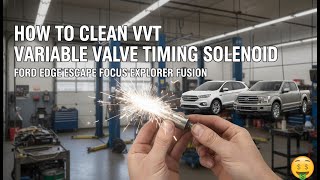
Typical fix: Replace the Bank 1 intake VCT solenoid. It is highly recommended to perform an oil and filter change at the same time to remove any debris that caused the original failure. TSB SSM 47170 even suggests a procedure to cycle the solenoid 10 times with a scan tool 🎬 Watch: How to clean and test your VVT solenoid. to attempt to clear debris before replacement.
Est. part cost: $40-$90 - Low or Dirty Engine Oil 🟡 Medium Probability The VCT system is entirely dependent on hydraulic pressure from clean engine oil to function correctly. Ford's own TSBs point to debris in oil as a primary cause. Owners on forums frequently report that failing to follow recommended oil change intervals precedes the appearance of P0011.
How to confirm: Check the oil level on the dipstick and inspect the oil's condition. If it is low, black, or sludgy, it needs to be changed. Low oil level is a very common and simple cause for this code.
Typical fix: Perform an engine oil and filter change using the manufacturer-recommended oil viscosity (e.g., SAE 5W-30 for EcoBoost, SAE 5W-20 for 3.7L V6). Clear the codes and drive the vehicle to see if P0011 returns.
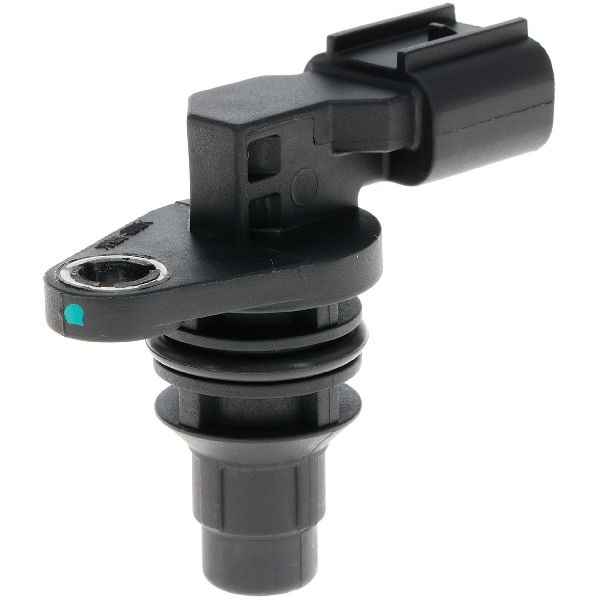
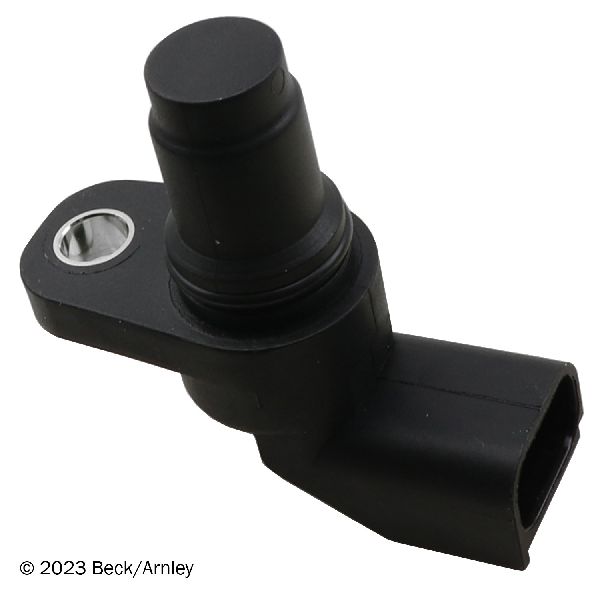
Est. part cost: $50-$90 - Faulty Camshaft Position Sensor (Bank 1 Intake) ⚪ Low Probability → Shop Engine Camshaft Position Sensor
How to confirm: If a new VCT solenoid doesn't resolve the code, the sensor may be providing incorrect data to the PCM. This is less common than a solenoid failure. Often, a failing sensor will trigger other specific sensor circuit codes (e.g., P0340, P0344). An owner on a Reddit forum noted finding 'grey gunk' on the sensor, suggesting inspection is worthwhile.
Typical fix: Replace the Bank 1 intake camshaft position sensor.
Est. part cost: $30-$80
Rare But Worth Checking
- Stretched Timing Chain or Failed Cam Phaser: → Shop Engine Timing Chain This is a more serious mechanical issue. It usually presents with more severe symptoms, such as persistent rattling noises that don't disappear after an oil change. If oil and solenoid replacement do not fix the code, a deeper mechanical diagnosis is needed to check for slack in the timing chain or a malfunctioning cam phaser. A user on a Reddit forum reported battling a P0011 code for two years, which was ultimately resolved by replacing a bad timing chain.
Diagnosis Steps
- Check Engine Oil Level and Condition: This is the first and most critical step. Ensure the oil is full and clean. If it's low or dirty, perform an oil and filter change with the correct viscosity oil, clear the code, and see if it returns.
- Scan for Other Codes: Check for any other related codes that could point to a specific circuit (P0010), the opposite bank (P0021), or a correlation fault (P0016).
- Inspect VCT Solenoid Wiring: Check the electrical connector and wiring to the Bank 1 intake VCT solenoid for any damage, corrosion, or loose connections.
- Test the VCT Solenoid: Using a capable scan tool, monitor the desired vs. actual camshaft position for Bank 1. Command the solenoid on and off to see if the timing angle changes as expected. TSB SSM 47170 recommends cycling the solenoid 10 times to try and clear debris.
- Test/Replace the VCT Solenoid: If the solenoid is unresponsive or timing is consistently incorrect, replace the Bank 1 intake VCT solenoid. You can also bench test the old solenoid with a 12V source to check for mechanical action. Remember to replace the seal.
- Test the Camshaft Position Sensor: If the problem persists, test the camshaft position sensor and its circuit. Check the sensor for contamination.
- Investigate Mechanical Timing: If all electronic and hydraulic components are working correctly, the issue may be mechanical, such as a stretched timing chain or a faulty cam phaser.
Parts You'll Likely Need
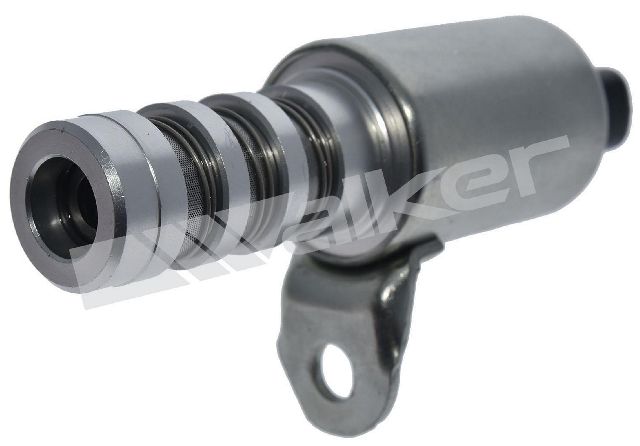
- Engine Variable Valve Timing (VVT) Solenoid
(OEM #2.0L EcoBoost: CJ5Z-6M280-A | 3.7L V6: 7T4Z-6M280-C (replaces 7T4Z-6M280-B) | 3.0L EcoBoost: FT4Z-6M280-B)— This is the most common failure point for P0011 on this vehicle, as confirmed by manufacturer TSBs.
Trusted brands: Motorcraft, Standard Motor Products (SMP), Dorman, Gates
OEM price range: $60-$90
Aftermarket price range: $30-$70 - Camshaft Position Sensor
(OEM #3.7L V6: 7T4Z-6B288-A (Interchange PC773))— A less common but possible cause if the VVT solenoid replacement does not resolve the issue.
Trusted brands: Motorcraft, Bosch, Standard Motor Products (SMP)
OEM price range: $30-$50
Aftermarket price range: $20-$40 - Engine Oil and Filter — Crucial for the proper function of the VCT system. An oil change is a required first step and is necessary when replacing a VCT solenoid to clear out debris.
Trusted brands: Motorcraft
OEM price range: $60-$90
Aftermarket price range: $40-$60
Related Codes That Often Appear With This One
- P0010 — This code indicates an electrical circuit issue ('A' Camshaft Position Actuator Circuit) with the same VCT solenoid, suggesting a wiring, connector, or internal solenoid electrical failure rather than a purely mechanical sticking issue.
- P0012 — This is the opposite code, indicating over-retarded timing for the same camshaft. Seeing both could point to an erratically behaving VCT solenoid or severe oil flow problem.
- P0021 — This is the same over-advanced code but for Bank 2. If both P0011 and P0021 are present on a V6, it strongly suggests a systemic issue like low/dirty oil or low oil pressure affecting both banks.
- P0016 — Indicates a correlation issue between the Crankshaft and the Bank 1 Camshaft. When seen with P0011, it can point more strongly towards a physical timing issue like a stretched chain or jumped tooth, as seen in forum discussions for platform mates.
Technical Service Bulletins (TSBs) & Recalls
- SSM 47170: Notes that P0011 and other VCT codes may be due to small debris causing the VCT solenoid to stick. Recommends using scan tool to cycle solenoid before replacement.
- SSM 54366: Mentions P0011 and directs technicians to a specific pinpoint test in the diagnostic manual.
- SSM 48423: Repeats the information from SSM 47170, indicating debris can cause the VCT solenoid to stick.
Platform-Specific Known Issues
- Technical Service Bulletin SSM 47170 notes that on some Ford and Lincoln vehicles, DTCs including P0011 may be caused by small debris making the VCT solenoid stick. The TSB advises attempting to clear the debris by cycling the solenoid with a scan tool before replacement.
- Technical Service Bulletin SSM 48423 reiterates the same issue as SSM 47170 for a slightly different range of vehicles, confirming this is a persistent design consideration.
Mechanic-Grade Diagnostic Values
- VCT Solenoid Internal Resistance — expected: 6.9 to 7.9 Ω at 68°F (20°C). Some sources give a wider acceptable range of 5.0 to 14.0 Ω.. Failure: A reading outside the specified range, or an open circuit (infinite resistance), indicates a faulty solenoid coil.
- VCT Solenoid Power Supply Voltage — expected: Battery voltage (approx. 12V) with key on, engine off.. Failure: No voltage indicates a problem with the wiring or the fuse (e.g., F16 in the battery junction box).
- VCT Solenoid Short-to-Ground — expected: Infinite resistance (open circuit) when measuring between either pin and the metal solenoid body.. Failure: Any continuity or low resistance reading indicates an internal short, requiring solenoid replacement.
- Scan Tool VCT Advanced Error PID (Ford IDS) — expected: Should hover around 0° with a tolerance of +/- 5° during closed-loop operation.. Failure: A consistent, large error value (e.g., 10° or more) indicates the phaser is not reaching its commanded position, pointing to a sticking solenoid, phaser issue, or oil flow problem.
Scan Tool Commands That Help
- Ford IDS (or equivalent high-level scan tool): VCT Solenoid On/Off Command / Duty Cycle Control — Used to functionally test the solenoid while monitoring the camshaft position PIDs (RCAM and RCAM_DSD). A responsive solenoid will cause the actual cam angle (RCAM) to change, confirming the solenoid is mechanically actuating.
- Ford IDS (or equivalent high-level scan tool): VCT Solenoid Debris Clearing Cycle — As recommended by TSB SSM 47170, this function cycles the solenoid rapidly (e.g., 10 times) to attempt to dislodge small debris causing it to stick. This can be attempted before deciding to replace the solenoid.
Wiring & Ground Locations
- VCT Solenoid Connector (Typical 2-Pin) — On the VCT solenoid itself, at the top of the valve cover (2.0L) or on the front/rear of the cylinder heads (V6 engines).. This is the primary connection point for power and control. Pin 1 is typically the power supply (often a blue-green wire) from a fuse in the battery junction box, while Pin 2 is the ground-side control wire from the PCM. A poor connection here will cause codes P0010 or P0011.
- Fuse F16 (Example) — Located in the battery junction box (under the hood).. This fuse provides the power supply to the VCT solenoid. If this fuse is blown, the solenoid will have no power, preventing any VCT operation and likely setting a circuit code (P0010) along with the performance code P0011.
Real Owner Repair Stories
- Reddit user in r/MechanicAdvice (Vehicle not specified, but common Ford issue) — Persistent P0011 code for two years.
❌ Tried (didn't work) Implied that common fixes like solenoid replacement did not work.
✅ What actually fixed it Replacing a bad (stretched) timing chain. - S197Forum.com user (Ford Mustang with 3-valve V8 (similar VCT principles)) — P0011 and P0021 codes appeared after installing aftermarket cams and VCT lockouts.
❌ Tried (didn't work) Checking mechanical timing.
✅ What actually fixed it The tuner provided a corrected engine tune that properly accounted for the VCT lockouts.
When the Usual Fixes Don't Work
- While the most common fix for P0011 is an oil change or VCT solenoid replacement, there are documented cases where the issue was much deeper. In one instance, a two-year battle with the code was only resolved after a full timing chain replacement was performed due to stretching. In another case involving aftermarket modifications, the code was erroneously triggered by an incorrect engine tune that failed to account for VCT hardware changes, and the fix was purely software-based. These examples highlight that if the simple fixes don't work, the root cause can be significant mechanical wear or even a software calibration issue.
OEM Part Supersession History
7T4Z-6M280-A, 7T4Z-6M280-AA, 7T4Z-6M280-B→7T4Z-6M280-C— Standard part revision and improvement by the manufacturer.
Heads up: The new part number (7T4Z-6M280-C) is the correct and direct replacement for the older versions for the 3.7L V6 engine.
Model Year Variations Within This Range
- 2015-2020: The engine offering changed, which dictates the part number and repair procedure. The 2.0L I4 has easily accessible solenoids on the valve cover. The 3.7L V6 and 3.0L V6 have the Bank 1 (rear bank) solenoids located under the intake manifold, making replacement significantly more labor-intensive.
- 2017-2020: The 3.0L EcoBoost V6 was introduced in the 2017 model year facelift. It uses a different VCT solenoid (FT4Z-6M280-B) than the 2.0L or 3.7L engines.
Helpful Videos
We Have This Part in Stock


The information in this article is provided for general reference and educational purposes only. Vehicle specifications, procedures, and part compatibility can vary by production date, trim level, and region. Always consult your vehicle's factory service manual and verify part numbers before purchasing or performing repairs. Safety-critical components such as airbags, seat belts, and braking systems should be installed by a qualified professional.
- Lincoln MKZ:
- 🧭 Diagnostic Flowchart
- 🎬 Helpful Videos
- 🛍️ Shop This Part
- What's Unique About the 2015-2020 Lincoln MKZ
- Symptoms You May Notice
- Most Likely Causes
- Rare But Worth Checking
- Diagnosis Steps
- Parts You'll Likely Need
- Related Codes That Often Appear With This One
- Technical Service Bulletins (TSBs) & Recalls
- Platform-Specific Known Issues
- Mechanic-Grade Diagnostic Values
- Scan Tool Commands That Help
- Wiring & Ground Locations
- Real Owner Repair Stories
- When the Usual Fixes Don't Work
- OEM Part Supersession History
- Model Year Variations Within This Range
- 🎟️ Get 5% Off