

P0011 on 2014-2021 Mazda 6: Causes and Fixes for Over-Advanced Camshaft Timing
On a 2014-2021 Mazda 6 with the 2.5L SkyActiv-G engine, code P0011 is most often caused by a failing electric intake VVT actuator, especially on 2014-2015 models. A TSB (01-007/15) confirms this issue. Expect to pay $350-$600 for the OEM part; replacement is a moderately difficult DIY (3/5).
- P0011 on a SkyActiv-G 2.5L is most likely a failed electric VVT actuator, not an oil issue, although checking your oil is always the first step.
- Mazda issued TSB 01-007/15 for some 2015 models for this exact issue, confirming a known hardware fault.
- To fix this, you must replace the VVT actuator (Part No. PE01-12-4X0B or its successor PE01-12-4Z0C) and the valve cover gasket (Part No. PY01-10-235).
- Do not confuse this electric actuator with a simpler, cheaper oil control solenoid; they are different parts.
- Ignoring the code can lead to stalling and poor performance.
What's Unique About the 2014-2021 Mazda 6
Unlike many other vehicles where P0011 is primarily caused by dirty oil clogging a hydraulic solenoid, the SkyActiv-G 2.5L engine uses an electric motor to drive the intake VVT actuator. This specific actuator is a known failure point. Mazda issued a Technical Service Bulletin (TSB 01-007/15) for early models due to fatigue in the actuator's internal spring shaft, making it the most likely culprit, rather than oil condition alone. Manufacturer TSB Bulletin #01-007-15-3025A further clarifies that this electric variable valve timing control system failure specifically triggers P0011:00 (over-advanced) or P0012:00 (over-retarded) codes.
Symptoms You May Notice
- Check Engine Light is on
- Rough or unstable idle
- Engine stalling, especially at low speeds
- Poor acceleration or engine hesitation
- Reduced fuel economy
- Rattling or ticking noise from the engine (less common)
- Replacing the Camshaft Position Sensor first without confirming the VVT actuator's function. The actuator is a far more common failure point for this specific code on this engine.
- Replacing the oil control solenoid (OCV). The SkyActiv-G 2.5L uses an electric actuator for the intake cam, not a traditional oil control solenoid like the exhaust side or older engines.
Most Likely Causes
- Failed Electric VVT Actuator 🔴 High Probability A known issue documented by Mazda TSB 01-007/15 for 2015 models (VINs JM1GJ**170533 to 177277) due to actuator spring shaft fatigue. The part is a common failure point across the entire year range. Additionally, TSB Bulletin #SA-033-25 notes that a malfunction in the intake EVVT motor can prevent it from accurately regulating the intake camshaft timing, leading to P0011 and P0010.
How to confirm: Use an OBD-II scan tool to monitor the requested intake cam angle (PID: VT IN_DES) vs. the actual angle (PID: VT IN_ACT). 🎬 See how to diagnose and fix P0011 timing codes. A significant, persistent deviation indicates actuator failure. The actuator may also be physically stuck, which can sometimes be felt when trying to manually move the camshaft with the actuator removed (for advanced users).
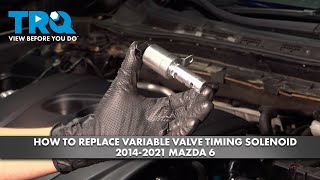
Typical fix: Replace the electric VVT actuator on the intake camshaft. 🎬 Watch this step-by-step guide on replacing the VVT actuator. This requires removing the valve cover, so the valve cover gasket must also be replaced.
Est. part cost: $350-$600 - Low, Dirty, or Incorrect Viscosity Engine Oil 🟡 Medium Probability While the actuator is electric, the cam phaser it controls is still moved by oil pressure. Sludge, low oil levels, or using oil other than the specified 0W-20 can impede its movement, causing timing errors.
How to confirm: Check the oil level on the dipstick. Note the oil's color and consistency. If it is dark, sludgy, or below the 'add' line, this could be the cause. Verify the service history to ensure the correct oil viscosity (0W-20) was used.
Typical fix: Perform a complete engine oil and filter change with a high-quality, full synthetic 0W-20 oil.
Est. part cost: $40-$80
Rare But Worth Checking
- Faulty Camshaft Position Sensor: → Shop Engine Camshaft Position Sensor The sensor provides the timing data to the PCM. If it sends incorrect signals, the PCM may set a P0011 code even if the mechanical timing is correct. This is worth checking if a new actuator does not solve the issue.
- Stretched Timing Chain: → Shop Engine Timing Chain Over time, the timing chain can stretch, causing a correlation issue between the crankshaft and camshaft. This is a more significant mechanical failure and would typically be accompanied by a rattling noise from the front of the engine.
Diagnosis Steps
- Check Engine Oil: Verify the engine oil is full, clean, and of the correct viscosity (0W-20). If in doubt, perform an oil and filter change. Clear the code and drive to see if it returns.
- Scan Tool Analysis: Connect an advanced OBD-II scanner. Monitor the PIDs for 'Desired Intake Cam Angle' (VT IN_DES) and 'Actual Intake Cam Angle' (VT IN_ACT).
- Confirm Actuator Fault: While the engine is running, command the intake cam timing to change. If the actual angle does not match the desired angle or does not change smoothly, the actuator is faulty.
- Check for TSBs: For 2015 models, check if the vehicle's VIN falls within the range specified in TSB 01-007/15 (JM1GJ**170533 to 177277). If it does, the actuator is almost certainly the cause.
- Inspect Wiring: Before replacing parts, visually inspect the wiring harness and connector at the VVT actuator for any damage, corrosion, or loose connections.
- Replace Parts: If the actuator is confirmed faulty, replace the electric VVT actuator (OEM part PE01-12-4X0B, which may be superseded by PE01-12-4Z0C) and the valve cover gasket (PY01-10-235). 🎬 Watch a walkthrough of the valve cover gasket replacement.
Parts You'll Likely Need
- Electric Variable Valve Timing (VVT) Actuator
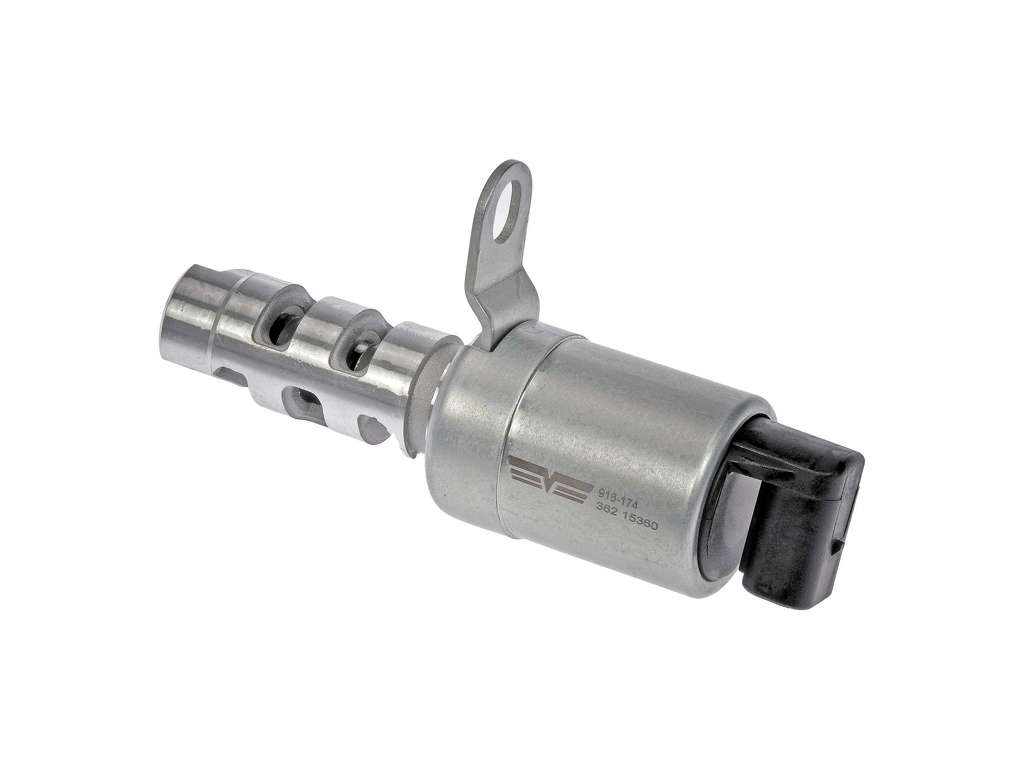
(OEM #PE01-12-4X0B, superseded by PE01-12-4Z0C)— This is the most common failure part for code P0011 on this engine, as documented by a manufacturer TSB.
Trusted brands: Mazda (Genuine)
OEM price range: $350-$600
Aftermarket price range: $200-$400 - Valve Cover Gasket
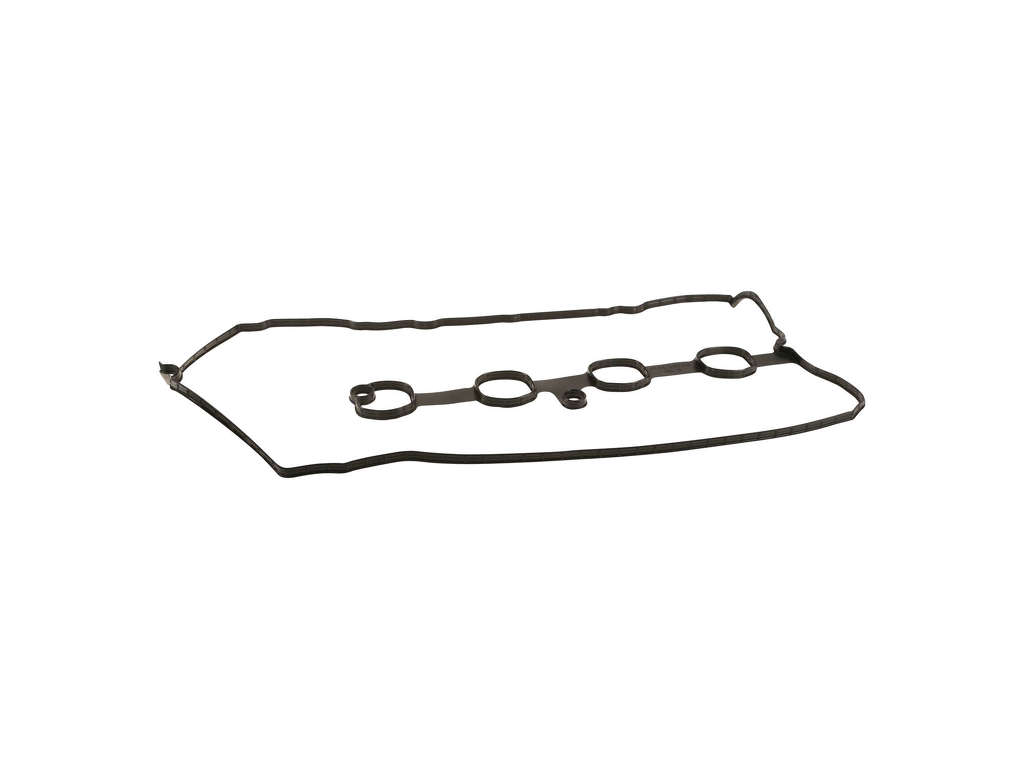
(OEM #PY01-10-235)— Must be replaced when the valve cover is removed to access and replace the VVT actuator.
Trusted brands: Mazda (Genuine), Fel-Pro, Mahle
OEM price range: $30-$50
Aftermarket price range: $20-$40
Related Codes That Often Appear With This One
- P0012 — P0012 is for 'Timing Over-Retarded'. The same failing VVT actuator can get stuck in either an advanced or retarded position, or oscillate between the two, triggering both codes. The Mazda TSB for this issue explicitly lists both P0011 and P0012.
Technical Service Bulletins (TSBs) & Recalls
- TSB 01-007/15: Addresses check engine light with DTC P0011/P0012 caused by a faulty electric VVT actuator on specific 2015 Mazda 6 models.
- TSB Bulletin #01-007-15-3025A: Confirms that vehicles may experience a check engine light with DTCs P0011:00 and/or P0012:00 stored in memory due to the electric variable valve timing control system.
- TSB Bulletin #SA-033-25: Notes that a malfunction in the intake EVVT motor can prevent accurate regulation of the intake camshaft timing, potentially triggering P0010, P0011, and P0012.
Platform-Specific Known Issues
- Mazda Technical Service Bulletin (TSB) 01-007/15 was issued for certain 2015 Mazda 6 models due to 'VVT actuator spring shaft fatigue' causing P0011 and/or P0012.
Mechanic-Grade Diagnostic Values
- PCM Fault-Detection Threshold — expected: The actual intake valve timing should be within 15 degrees of the target valve timing.. Failure: The PCM will log DTC P0011 if the actual timing is more than 15 degrees advanced from the target for approximately 10 seconds.
- Electric VVT System Fuse — expected: Continuity should be present.. Failure: A blown 'EVVT 20 A' fuse will cause a complete loss of power to the VVT actuator system.
- Electric VVT Relay Voltage — expected: With the key on, terminal C of the relay connector (harness-side) should have battery voltage (B+).. Failure: No voltage indicates an open circuit in the power supply from the fuse.
Scan Tool Commands That Help
- Mazda M-MDS, FORScan, or equivalent: VVT Adaptive Memory Reset / Relearn Procedure — After replacing the VVT actuator or disconnecting the battery. A drive cycle is needed for the PCM to learn the operational characteristics of the new actuator. A generic procedure involves a 5-10 minute idle, followed by 10-15 minutes of steady-state driving (45-60 mph), and then several moderate acceleration/deceleration cycles.
Wiring & Ground Locations
- Electric VVT Relay — Located in the main under-hood fuse and relay box.. This relay provides power to the electric VVT actuator motor. A failure of this relay will prevent the actuator from functioning and can be misdiagnosed as a failed actuator itself.
- EVVT 20A Fuse — Located in the main under-hood fuse and relay box.. This is the primary fuse protecting the electric VVT actuator circuit. It should be one of the first electrical components checked when diagnosing a P0011 code.
- Electric VVT Motor/Driver Connector — On the front of the engine, connected to the VVT actuator.. This is the direct electrical connection to the actuator. The Mazda diagnostic procedure involves checking for continuity and voltage at this connector and its corresponding relay terminals.
Real Owner Repair Stories
- MazdaSpeeds Forum (Mazdaspeed (similar VVT system principles)) — P0011 and P0012 codes, sluggish acceleration after timing chain replacement.
❌ Tried (didn't work) Replacing oil, filter, and VVT solenoid.
✅ What actually fixed it The owner discovered the exhaust camshaft was misaligned by approximately 1mm. Despite using a cam alignment tool, it was off just enough to cause the codes. Correcting the mechanical timing to be perfectly aligned resolved the issue, proving the problem was mechanical alignment, not a faulty component. - Klub MazdaSpeed (Polish Forum) (2007 Mazda 6 2.0L (older model, but demonstrates a key principle)) — P0011 code and significant loss of power immediately after replacing valve stem seals.
❌ Tried (didn't work) Cleaning the camshaft position sensor.
✅ What actually fixed it The user suspected the root cause was incorrect reassembly of the VVT gear (phaser) after the service. The appearance of the code immediately after major engine work pointed to a mechanical timing error during reassembly rather than a new component failure.
"I Checked Everything" — The Actual Cause
- While a smoke test is not applicable, a common equivalent scenario is 'New Actuator, Same Code'. In this case, the root cause is often not the actuator itself but a subtle mechanical timing issue. One owner found that after a timing chain service, the exhaust cam was misaligned by a mere 1mm. This tiny error was enough to trigger both P0011 and P0012, even with all new parts. The fix was to re-time the engine perfectly, highlighting that extreme precision is required.
OEM Part Supersession History
PE01-12-4X0B→PE01-12-4Z0C— The updated part number likely incorporates design or material improvements to address the 'actuator spring shaft fatigue' issue identified in TSB 01-007/15.
Model Year Variations Within This Range
- 2015: A specific batch of VVT actuators with spring shaft fatigue issues were installed, as identified in TSB 01-007/15.
- 2018: The Mazda 6 received a major refresh. For VVT issues on 2018 models, TSB 01-014/19 points to a required PCM software update as a potential fix for codes like P0012, suggesting the control logic was changed. This should be checked before replacing hardware on 2018+ vehicles.
Diagnostic Flowchart
Other Known Issues on This Vehicle
Issues unrelated to this code that are worth knowing about as an owner of this generation:
- Infotainment System Ghost Touches, Freezing, and Reboots 🟡 Low — Very common across 2014-2021 models. Often related to software bugs, a failing SD card for navigation, or hardware issues in the Commander control unit.
- Cylinder Deactivation Stalling (2018-2019 models) 🔴 High — Affected a significant number of 2018-2019 models, leading to a recall. A software error in the PCM could cause the engine to stall unexpectedly. (Ref: NHTSA Campaign Number: 19V495000)
- Premature Wheel Bearing Failure 🟠 Medium — Reported by owners to become noisy and require replacement at lower-than-expected mileage, typically starting around 60,000 miles.
- Intake Valve Carbon Buildup 🟠 Medium — A long-term consequence of all direct-injection (GDI) engines. While not considered a major problem on SkyActiv engines compared to others, it can cause rough idle, hesitation, and reduced fuel economy over 80,000+ miles.
- Whining Noise from Automatic Transmission 🟠 Medium — Some owners of early-generation (especially 2014) models reported a whining noise that required transmission replacement.
Used vs. New Parts: Buying Guide for This Vehicle
When a used part is the smart pick: For this specific repair, using a used part is NOT recommended under any circumstances. The primary failure mode of the electric VVT actuator is internal mechanical fatigue, which is directly related to age and use. A used part carries a very high risk of failing again in a short period.
What to inspect on the donor part:
- Not applicable. Do not purchase a used electric VVT actuator for this engine.
OEM-only on this vehicle (don't cheap out):
- Electric VVT Actuator: Due to the known TSB, the electronic complexity, and the critical nature of the part, only a new Mazda Genuine OEM part (PE01-12-4Z0C or newer) should be used. There is insufficient evidence from forums or repair databases to validate the long-term reliability of any aftermarket alternatives.
Aftermarket brands forum-validated for this vehicle:
- For the required Valve Cover Gasket, reputable brands like Fel-Pro and Mahle are considered reliable alternatives to OEM.
Brands owners have reported issues with on this vehicle:
- Any unbranded or 'white-box' electric VVT actuators sold on marketplace websites should be avoided due to high reported failure rates for similar electronic components.
Real Owner Stories
Aggregated from forums and TSBs cited above. Mileages and costs reflect what owners reported in those sources.
2016 Mazda 6 2.5L — 32311 miles
Symptoms: Check engine light came on and off intermittently. When the light was on, there was a strong loss of power and the car was driving uphill with difficulty.
What fixed it: The official service replaced all parts of the fuel distribution system (suspected to be the VVT actuator) after multiple dead-end checks of wires, timing marks, sensors, and oil pressure found nothing wrong.
Source hint: Mazdas247 forum thread 'Mazda6 (2016)...
Related OBD-II Codes
Frequently Asked Questions
Does TSB 01-007/15 apply to my 2015 Mazda 6?
Can I use a different oil weight than 0W-20 in my SkyActiv-G 2.5L to stop the P0011 code?
What specific part number do I need to fix the electric VVT actuator issue?
Is it okay to buy a used VVT actuator from a salvage yard to save money?
Are there other common issues on the 2014-2021 Mazda 6 I should look out for while fixing this?
How can I confirm the actuator is the problem without just throwing parts at it?
Helpful Videos


We Have This Part in Stock


The information in this article is provided for general reference and educational purposes only. Vehicle specifications, procedures, and part compatibility can vary by production date, trim level, and region. Always consult your vehicle's factory service manual and verify part numbers before purchasing or performing repairs. Safety-critical components such as airbags, seat belts, and braking systems should be installed by a qualified professional.
- Mazda 6:
- 🧭 Diagnostic Flowchart
- 🎬 Helpful Videos
- 🛍️ Shop This Part
- What's Unique About the 2014-2021 Mazda 6
- Symptoms You May Notice
- Most Likely Causes
- Rare But Worth Checking
- Diagnosis Steps
- Parts You'll Likely Need
- Related Codes That Often Appear With This One
- Technical Service Bulletins (TSBs) & Recalls
- Platform-Specific Known Issues
- Mechanic-Grade Diagnostic Values
- Scan Tool Commands That Help
- Wiring & Ground Locations
- Real Owner Repair Stories
- "I Checked Everything" — The Actual Cause
- OEM Part Supersession History
- Model Year Variations Within This Range
- Other Known Issues on This Vehicle
- Used vs. New Parts: Buying Guide for This Vehicle
- Real Owner Stories
- 2016 Mazda 6 2.5L — 32311 miles
- Related OBD-II Codes
- Frequently Asked Questions
- 🎟️ Get 5% Off