

P0011 on 2012-2016 Mercedes-Benz E-Class: M276 Camshaft Timing Causes and Fixes
For a P0011 code on the M276 engine, the issue is most likely a faulty camshaft adjuster magnet (solenoid) or a camshaft position sensor on the passenger side (Bank 1). A very common issue is oil leaking from these components into the wiring harness. Before considering expensive repairs, check for oil in the connectors and swap these parts with the driver's side to see if the code follows.
- P0011 on your E-Class points to the intake camshaft timing on the passenger side being too far advanced.
- Before buying any parts, check your oil level and condition. Then, inspect the sensor and magnet connectors on the front of the passenger-side cylinder head for oil leaks.
- The most likely culprits are a faulty camshaft adjuster magnet (solenoid) or camshaft position sensor. Swapping these parts with their counterparts from another position is the best way to confirm a diagnosis.
- A rattling noise on startup points towards a more serious camshaft adjuster (phaser) issue, while an extended crank could indicate a unique M276 problem with a slipped reluctor wheel.
- Proactively addressing leaking sensors/magnets can prevent catastrophic damage to your engine's main computer (ECU).
What's Unique About the 2012-2016 Mercedes-Benz E-Class
On the M276 engine, P0011 is frequently caused by one of two common, relatively simple-to-fix components: the camshaft adjuster magnet (solenoid) or the camshaft position sensor. A well-known issue on this platform is the tendency for these sensors and magnets to leak oil internally, which then travels ('wicks') down the wiring harness and can contaminate the ECU connectors, potentially causing thousands of dollars in damage if not addressed. More uniquely, the M276 can suffer from a slipped camshaft reluctor wheel—a press-fit component that can shift, causing the sensor to report incorrect timing even when the mechanical timing is perfect, often resulting in a frustrating extended crank symptom.
Symptoms You May Notice
- Check Engine Light is on
- Rough or unstable idle
- Engine stalling
- Reduced engine power and sluggish acceleration
- Noticeably worse fuel economy
- Extended engine cranking before it starts
- Rattling noise from the engine, especially on cold starts, that lasts for a few seconds
- Immediately replacing the expensive camshaft adjuster (phaser) or timing chain before diagnosing the much more common and cheaper magnets and sensors.
- Replacing the camshaft position sensor but failing to clean the oil out of the harness connector, leading to a quick return of the code.
- Replacing unrelated sensors like O2 sensors or mass airflow sensors.
Most Likely Causes
- Faulty Camshaft Adjuster Magnet (Solenoid) 🔴 High Probability → Shop Engine Camshaft These solenoids control oil flow to the adjusters and are prone to getting clogged with oil sludge or failing electronically. They are a very common failure point on the M276 engine and are known to leak oil into the wiring harness.
How to confirm: Unplug the connector and inspect for oil contamination. The most effective test is to swap the Bank 1 intake magnet with the Bank 1 exhaust magnet (or Bank 2 intake). Clear the codes and drive. If the code changes to P0014 (exhaust) or P0021 (Bank 2), the magnet is faulty. You can also test resistance, which should be 8-18 Ohms.
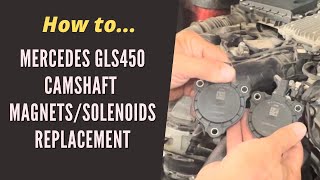
Typical fix: Replace the faulty camshaft adjuster magnet. They are located on the front of the cylinder heads and held by three external Torx bolts. It is highly recommended to install protective pigtail harnesses (Part No. A2711500156) to prevent future oil wicking.
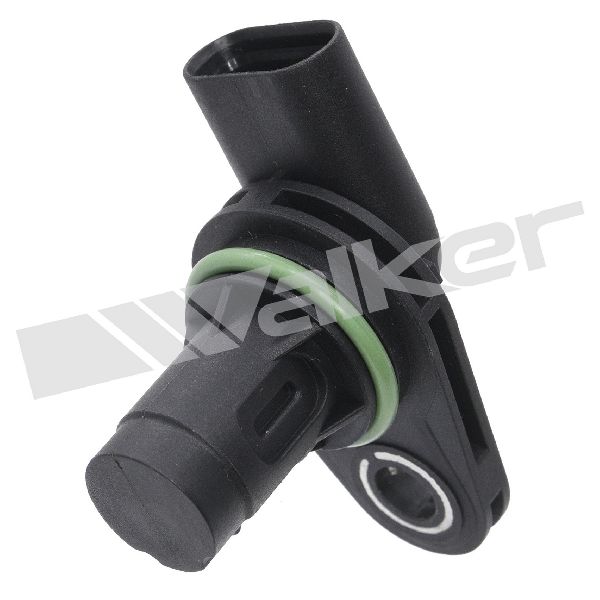
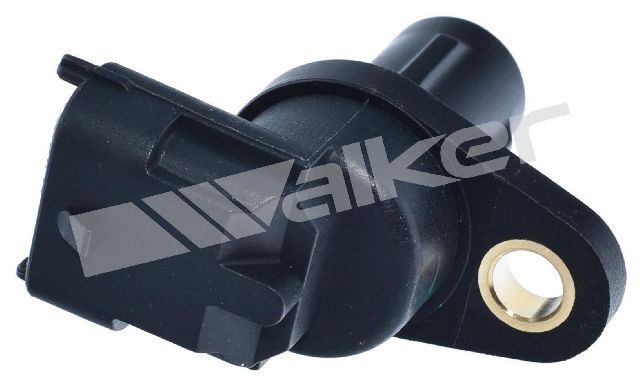
Est. part cost: $40-$60 - Faulty Camshaft Position Sensor 🔴 High Probability → Shop Engine Camshaft Position Sensor These sensors are known to fail and, more importantly, leak oil through their internal potting material. This oil can wick down the wiring harness, contaminating connectors and potentially damaging the engine control module (ECU). 🎬 Watch: How to protect your ECU from oil contamination. Mercedes has updated this part multiple times to address the issue.
How to confirm: Unplug the connector and look for oil inside. Swap the Bank 1 intake sensor with the Bank 2 intake sensor. Clear codes and drive. If the fault code changes to P0021 (Bank 2's equivalent), the sensor is bad. A healthy sensor should have a resistance between 1,000 to 3,000 Ohms.
Typical fix: Replace the faulty camshaft position sensor. It is recommended to replace all four sensors and consider installing protective pigtail harnesses to prevent future oil wicking.
Est. part cost: $40-$70 - Low or Dirty Engine Oil 🟡 Medium Probability The VVT system is hydraulic and highly sensitive to oil pressure and cleanliness. Extended oil change intervals can lead to sludge that clogs the small passages in the adjuster magnets and phasers.
How to confirm: Check the engine oil level and condition. If the oil is low, dark, or sludgy, it could be the cause.
Typical fix: Perform an oil and filter change using the correct Mercedes-Benz specified oil (e.g., MB 229.5) and a quality fleece filter. Clear codes and re-evaluate.
Est. part cost: $100-$200 - Slipped Camshaft Reluctor Wheel ⚪ Low Probability → Shop Engine Camshaft The reluctor wheel (or pulse wheel) that the cam sensor reads is press-fit onto the camshaft. On the M276, this wheel can physically shift its position, causing a mismatch between the sensor reading and the actual mechanical timing. This is a known, but less common, issue.
How to confirm: This is an advanced diagnosis. It requires using an oscilloscope to compare the cam signals of Bank 1 and Bank 2; a shifted wheel will show a clear deviation in the waveform pattern. A mechanic can also set the engine to 40 or 53 degrees past TDC and visually inspect the wheel's alignment through the sensor hole to see if it is centered.
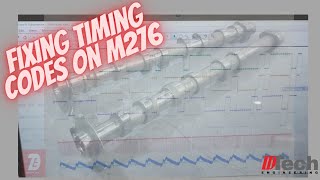
Typical fix: The official repair is to replace the entire intake camshaft. Some specialists have demonstrated a 'no parts required' fix by carefully tapping the reluctor wheel back into its correct position on the camshaft and tack welding it, but this is not a standard procedure and carries risk. 🎬 See this advanced 'no parts required' reluctor wheel fix.
Est. part cost: $700+ - Failing Camshaft Adjuster (Phaser) ⚪ Low Probability → Shop Engine Camshaft The mechanical adjuster gear itself can wear out or fail to hold oil pressure, especially if oil changes are neglected. This is often preceded by a distinct rattling noise on cold starts as the adjuster bleeds down oil pressure when the engine is off. Early M276 engines were particularly prone to this.
How to confirm: A persistent rattling noise from the front of the engine on startup is the primary indicator. A Mercedes-specific scanner may show a code like P001177 ('The position of the intake camshaft (Bank 1) deviates from the specified value'), which points more directly to a mechanical adjuster fault.
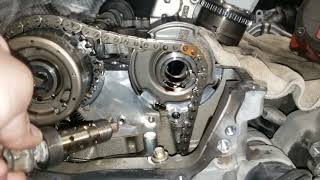
Typical fix: This is a complex repair that involves removing the valve cover and timing components to replace the adjuster gear itself. Mercedes issued a TSB (LI05.10-P-056435) for earlier engines that involves installing new check valves in the cylinder head oil passages and updated tensioners to improve oil supply on startup. 🎬 Watch: How to fix the M276 engine startup rattle.
Est. part cost: $300-$500
Rare But Worth Checking
- Stretched Timing Chain: → Shop Engine Timing Chain While possible, this is less common for a single-bank code on the M276. A stretched chain typically affects both banks and would likely trigger codes for both Bank 1 and Bank 2 simultaneously, often accompanied by a startup rattle.
Diagnosis Steps
- Check Engine Oil: Verify the oil level is correct and the oil is clean and of the proper viscosity (e.g., MB 229.5 spec). If low or dirty, perform an oil and filter change, clear the codes, and see if P0011 returns.
- Scan for Other Codes: Use a Mercedes-specific scanner if possible to check for any other related codes that could provide more clues (e.g., P0016, P0341, P001177).
- Inspect Connectors for Oil: Unplug the electrical connectors for the two camshaft position sensors and two adjuster magnets on the front of the Bank 1 (passenger side) cylinder head. Look for any sign of engine oil inside the connectors. Oil contamination is a sure sign the part has failed internally and is the likely cause.
- Swap the Adjuster Magnet: If no oil is found, swap the intake adjuster magnet with the exhaust adjuster magnet on the same bank. Clear the codes. If the code changes to P0014 (Exhaust Camshaft Position Timing), the magnet is the faulty part.
- Swap the Position Sensor: If the code remains P0011 after the magnet swap, swap the components back to their original positions. Now, swap the intake camshaft position sensor from Bank 1 with the intake sensor from Bank 2 (driver's side). Clear the codes. If the code changes to P0021 (Bank 2 Intake Camshaft), the sensor is the faulty part.
- Listen for Noises: Pay close attention to any rattling noises during a cold start. A distinct, short-lived rattle points towards a failing camshaft adjuster (phaser) or a timing chain tensioner issue.
- Advanced Diagnostics: If all the above steps fail to identify the issue, the problem is likely more complex. The next steps involve using an oscilloscope to check for a slipped reluctor wheel or performing a mechanical inspection of the timing components, which is best left to a professional.
Parts You'll Likely Need
- Camshaft Adjuster Magnet (Solenoid)
(OEM #A2761560790 (supercedes A2761560490))— This is one of the most common failure items for P0011 on the M276 engine. It gets clogged or fails electronically, preventing correct oil flow. It is also a primary source of oil leaks into the wiring harness. - Camshaft Position Sensor
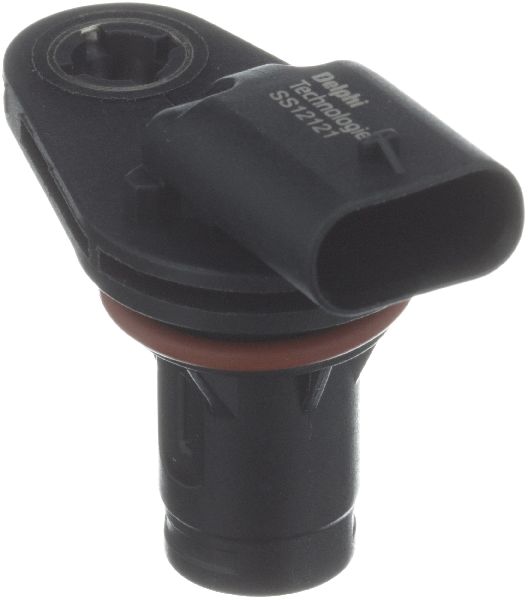
(OEM #A2769051000)— The second most common failure part for P0011. These are notorious for leaking oil through their body and into the wiring harness, causing this code and other electrical issues. - Sacrificial Wiring Harness Pigtail
(OEM #A2711500156)— A preventative part installed between the sensor/magnet and the main engine harness. If the new component leaks oil, this inexpensive pigtail is sacrificed, protecting the expensive engine harness and ECU from contamination.
Related Codes That Often Appear With This One
- P0016 — Indicates a correlation issue between the crankshaft and the Bank 1 intake camshaft. It often appears with P0011 as they both relate to the timing of the same component. It can also be a strong indicator of a slipped reluctor wheel.
- P0341 — This code indicates a problem with the camshaft position sensor circuit itself for Bank 1. If you see this with P0011, it strongly suggests the sensor or its wiring is the root cause.
- P001177 — This is a Mercedes-specific variant of the code that explicitly states 'The position of the intake camshaft (Bank 1) deviates from the specified value', pointing more strongly towards a mechanical fault with the camshaft adjuster (phaser) itself.
Technical Service Bulletins (TSBs) & Recalls
- LI05.10-P-056435: Addresses a rattling noise for several seconds after a cold start. The remedy involves replacing secondary chain tensioners and, on earlier engines, retrofitting check valves into the cylinder head oil passages to maintain oil pressure when the engine is off. This TSB is relevant when a rattle accompanies the P0011 code.
Platform-Specific Known Issues
- Oil Contamination of Engine Harness: The most significant vehicle-specific issue is the tendency of the camshaft position sensors and adjuster magnets to leak oil through their internal seals. This oil then wicks through the wiring harness, potentially reaching and destroying the main Engine Control Unit (ECU). Owners report finding oil in the ECU connectors. Installing protective 'pigtail' harnesses (A2711500156) is a widely recommended preventative measure.
- Cold Start Rattle: A brief (2-5 second) metallic rattle upon cold startup is a very common complaint. On early M276 engines, this was due to insufficient oil supply to the timing chain tensioners. On later engines, it is more often a sign of a failing camshaft adjuster (phaser) that is bleeding down oil pressure. This noise is a key symptom to listen for when diagnosing P0011.
Mechanic-Grade Diagnostic Values
- Camshaft Adjuster Magnet (Solenoid) Resistance — expected: 8 - 18 Ohms. Failure: A reading of open-circuit (infinite resistance), a dead short (near zero), or a value far outside the expected range.
- Camshaft Position Sensor Resistance — expected: 1,000 - 3,000 Ohms (1-3 kOhms). Failure: Readings significantly outside this range suggest a faulty sensor.
- Camshaft Position Sensor Signal Voltage (Key On, Engine Off) — expected: Approximately 4.6V on the signal wire.. Failure: No voltage or significantly lower voltage could indicate a wiring or ECU issue.
- Camshaft Adjuster Magnet (Solenoid) Actuation Test — expected: An audible 'click' as the internal plunger moves.. Failure: No click when 12V is applied directly to the magnet's pins indicates it is seized or electrically failed.
Hidden / Shadow Codes Worth Checking
- P001177: The position of the intake camshaft (Bank 1) deviates from the specified value. This is a Mercedes-specific code that points more directly to a mechanical failure of the camshaft adjuster (phaser) itself, rather than a sensor or solenoid. (see via Mercedes-Benz specific diagnostic scanner, such as XENTRY/DAS.)
- P001685: There is a signal above the permissible limit for the correlation of the position of the crankshaft and the camshaft (Bank 1). This code often accompanies a slipped reluctor wheel, as the signal deviation exceeds the expected threshold. (see via Mercedes-Benz specific diagnostic scanner, such as XENTRY/DAS.)
Scan Tool Commands That Help
- XENTRY/DAS: Camshaft Position Live Data Monitoring — To observe the 'specified' vs 'actual' camshaft angle for Bank 1 intake. A large, persistent deviation between the two values, especially if it's 'stuck' at a certain angle, points towards a mechanical issue (adjuster or reluctor) rather than an intermittent sensor fault.
- XENTRY/DAS: Actuation of Camshaft Adjustment Solenoid — This bidirectional test allows the technician to command the solenoid to activate directly from the scan tool. While observing live data, a technician can see if the camshaft angle changes as commanded. If the solenoid is activated but the angle doesn't change, it points to a clogged solenoid, low oil pressure, or a seized adjuster.
Wiring & Ground Locations
- Bank 1 Camshaft Position Sensor Connector — Front of the passenger-side cylinder head. There are two sensors; the intake sensor is typically the upper or more accessible one.. This connector is the primary inspection point for oil wicking from a failed sensor. Oil here confirms the sensor is the source of the leak and likely the cause of the code.
- Bank 1 Camshaft Adjuster Magnet Connector — Front of the passenger-side cylinder head, below the position sensors. The intake magnet is typically the upper of the two magnets.. This is the second common point for oil contamination. Oil found in this connector points to a failed adjuster magnet, which is a very common cause for P0011.
- ME-SFI (ECU) Connector — Typically located in the engine bay, often in a protected box near the firewall or fender.. This is the 'worst-case scenario' location for oil. If oil from a leaking sensor or magnet has wicked all the way down the harness to the main ECU connector, it can cause multiple, erratic codes and requires extensive cleaning of the harness and connector pins, and potentially ECU replacement.
Real Owner Repair Stories
- YouTube channel 'Pine Hollow Auto Diagnostics' (2016 Mercedes GL450 with M276 Bi-Turbo engine) — Extended crank, Check Engine Light with codes P0011 and P0016.
❌ Tried (didn't work) Initial diagnosis pointed towards common sensor/solenoid issues, but the persistence of both P0011 and P0016 suggested a base timing problem.
✅ What actually fixed it The intake camshaft reluctor wheel on Bank 1 had physically shifted. An oscilloscope confirmed the signal from the Bank 1 intake cam was delayed by over 8 degrees compared to the Bank 2 intake cam. The fix involved removing the camshaft, carefully tapping the press-fit reluctor wheel back to its correct position (using the non-turbo M276's laser etching as a guide), and then tack welding it in place to prevent it from moving again. This resolved the codes without replacing the entire camshaft. - YouTube channel '603 MTech Autowerks' (2015 Mercedes-Benz C400 with M276 engine at 100k miles) — Rattling noise on cold startup. No active Check Engine Light, but a stored code was found.
❌ Tried (didn't work) The owner had previously replaced the Bank 1 adjuster a year prior for the same issue on the other side.
✅ What actually fixed it A scan with a Mercedes-specific tool revealed a stored fault code P002177 (the Bank 2 equivalent of P001177), indicating a mechanical deviation. The cause was a failing intake camshaft adjuster (phaser) on Bank 2 that was bleeding down oil pressure when off. Replacing the faulty camshaft adjuster and the timing chain tensioner on that bank resolved the startup rattle and the stored code.
OEM Part Supersession History
A2761560490→A2761560790— Updated design to improve reliability and potentially reduce oil leakage.A2769050143, A2769050800, A2761530028→A2769051000, which is then superseded by A2769051100— Multiple revisions to address the internal oil leaking issue.
Heads up: While older part numbers may fit, it is critical to use the latest available revision (A2769051100 or a direct replacement like A2769051000) to get the most robust seal against oil leakage.
Model Year Variations Within This Range
- 2012-2014: The primary engine was the naturally aspirated 3.5L M276. These earlier engines are noted as being more susceptible to the camshaft adjuster rattle and failure addressed in TSB LI05.10-P-056435.
- 2014-2016: Introduction of the 3.0L Bi-Turbo M276 engine (M276 DELA 30) in models like the E400. While the fundamental timing architecture is the same, the turbo models have different packaging and access around the front of the engine, which can complicate diagnosis of the reluctor wheel position without an oscilloscope.
- 2013+: In early 2013, the M276 engine block manufacturing process switched from cast iron cylinder liners to a 'Nanoslide' cylinder wall coating, which reduced friction and weight. This does not directly affect the P0011 code but is a significant internal engine change within the specified model years.
Diagnostic Flowchart
Other Known Issues on This Vehicle
Issues unrelated to this code that are worth knowing about as an owner of this generation:
- Timing Chain Tensioner Wear / Cold Start Rattle 🟠 Medium → Shop Engine Timing Chain — Common on earlier M276 engines (pre-2014). A rattling noise on cold start is the primary symptom. (Ref: TSB LI05.10-P-056435)
- High-Pressure Fuel Pump (HPFP) Failure 🟠 Medium — Becoming more common as the engines age. Symptoms include long crank times, rough idle, stuttering, and power loss.
- Oil Leaks from Front Timing Covers 🟡 Low — The sealant on the upper front timing covers can degrade, causing oil to seep down the front of the engine.
- Carbon Buildup on Intake Valves 🟡 Low — As a direct-injection engine, the M276 is susceptible to carbon buildup over high mileage (100k+ miles), though it is generally less severe than on some competitor engines. Can lead to reduced performance.
- Worn Drive Belt Pulleys and Tensioner 🟡 Low — A common wear item on many engines. Can cause squeaking noises or accessory drive failure if the belt slips or breaks.
Used vs. New Parts: Buying Guide for This Vehicle
When a used part is the smart pick: For a slipped reluctor wheel, a complete used camshaft from a low-mileage, verified-good donor vehicle can be a cost-effective alternative to a brand new camshaft, which is very expensive. For most other causes, new parts are recommended.
Donor-vehicle mileage cap: roughly under 60000 miles for the part to have meaningful remaining life.
What to inspect on the donor part:
- For a used camshaft, inspect the reluctor wheel for any signs of movement or damage.
- Check camshaft lobes and bearing journals for scoring, discoloration, or excessive wear.
- Verify the donor vehicle did not have timing-related fault codes or startup rattles.
OEM-only on this vehicle (don't cheap out):
- Camshaft Adjuster (Phaser)
- Timing Chain
- Timing Chain Tensioners
- Cylinder Head Check Valves
Aftermarket brands forum-validated for this vehicle:
- Bosch (often the OEM supplier for sensors)
- Pierburg (often the OEM supplier for solenoids/magnets)
- VDO
- Delphi
Brands owners have reported issues with on this vehicle:
- Unbranded, 'white-box' sensors and solenoids from online marketplaces are a significant risk. Failure rates are high, and they can fail in ways that cause further diagnostic confusion.
Real Owner Stories
Aggregated from forums and TSBs cited above. Mileages and costs reflect what owners reported in those sources.
2013 Mercedes-Benz E350 M276
Symptoms: Owner discovered oil inside the camshaft sensor connectors and followed the wicking path to find oil had reached the ECU connectors.
What fixed it: Discussion focused on replacing the leaking sensors and installing protective pigtail harnesses (Part No. A2711500156) to prevent further oil wicking into the engine harness.
Source hint: MBWorld.org Forums - '2013 e350 oil in wire harness m276'
Related OBD-II Codes
Frequently Asked Questions
My 2013 E350 has a brief metallic rattle for about 3 seconds on cold starts; does TSB LI05.10-P-056435 apply to me?
I found oil inside the electrical connector of my camshaft sensor. What should I do to prevent damage to the ECU?
Can I test if the P0011 code is caused by the magnet or the sensor without buying new parts?
What specific oil should I use for my M276 engine to avoid VVT issues?
Is it true that the reluctor wheel on the M276 can shift and cause timing codes?
Helpful Videos

We Have This Part in Stock


The information in this article is provided for general reference and educational purposes only. Vehicle specifications, procedures, and part compatibility can vary by production date, trim level, and region. Always consult your vehicle's factory service manual and verify part numbers before purchasing or performing repairs. Safety-critical components such as airbags, seat belts, and braking systems should be installed by a qualified professional.
- Mercedes-Benz E-Class:
- 🧭 Diagnostic Flowchart
- 🎬 Helpful Videos
- 🛍️ Shop This Part
- What's Unique About the 2012-2016 Mercedes-Benz E-Class
- Symptoms You May Notice
- Most Likely Causes
- Rare But Worth Checking
- Diagnosis Steps
- Parts You'll Likely Need
- Related Codes That Often Appear With This One
- Technical Service Bulletins (TSBs) & Recalls
- Platform-Specific Known Issues
- Mechanic-Grade Diagnostic Values
- Hidden / Shadow Codes Worth Checking
- Scan Tool Commands That Help
- Wiring & Ground Locations
- Real Owner Repair Stories
- OEM Part Supersession History
- Model Year Variations Within This Range
- Other Known Issues on This Vehicle
- Used vs. New Parts: Buying Guide for This Vehicle
- Real Owner Stories
- 2013 Mercedes-Benz E350 M276
- Related OBD-II Codes
- Frequently Asked Questions
- 🎟️ Get 5% Off