

P0011 on 2003-2006 Mitsubishi Lancer Evolution (Evo 8 & 9): MIVEC Causes and Fixes
For the 2006 Evo IX, P0011 is almost always caused by a faulty MIVEC oil control valve (solenoid) or low/dirty engine oil. For 2003-2005 Evo VIII models (which lack MIVEC), this code points to a mechanical timing issue like a jumped timing belt or a faulty camshaft position sensor.
- First, confirm if your Lancer Evolution is an VIII (2003-2005) or IX (2006), as the cause of P0011 is completely different.
- For an Evo IX, the most likely fix is replacing the MIVEC oil control solenoid on the intake side.
- For any model, always start by checking your engine oil level and condition, as low or dirty oil is a common cause for timing-related codes.
- On an Evo VIII (non-MIVEC), P0011 strongly suggests a mechanical timing issue, such as a jumped timing belt, which requires immediate attention.
What's Unique About the 2003-2006 Mitsubishi Lancer Evolution
The 2003-2006 year range covers two different versions of the 4G63T engine. The 2006 Lancer Evolution IX features MIVEC variable valve timing on the intake camshaft, making P0011 a code related to this system's hydraulic control. The 2003-2005 Lancer Evolution VIII has fixed cam timing, so a P0011 code is much rarer and points to more fundamental mechanical timing problems rather than a failure in a variable timing system.
Generation note: This guide covers the Lancer Evolution VIII (2003-2005) and Lancer Evolution IX (2006). The primary difference is that the Evo IX engine has MIVEC (variable valve timing) on the intake cam, while the Evo VIII does not. This distinction is critical for diagnosing P0011, as the causes and fixes are entirely different between them.
Symptoms You May Notice
- Check Engine Light is on
- Rough idle or stalling
- Hesitation during acceleration
- Reduced engine power
- Worse fuel economy
- Rattling noise from the engine, particularly on the Evo IX, sometimes described as 'MIVEC clack'.
- Oil light flickering at very low RPM (below 800) in conjunction with P0011, indicating a potential oil pressure issue.
- Replacing the camshaft position sensor when the actual problem is the oil control valve (solenoid) on an Evo IX.
- Assuming a MIVEC-related failure on an Evo VIII, which does not have the system.
- Swapping connectors for the MIVEC solenoid and another nearby identical connector, causing a 'phantom' P0011 code.
Most Likely Causes
- Faulty Intake MIVEC Oil Control Valve (OCV) / Solenoid (2006 Evo IX ONLY) 🔴 High Probability The OCV is an electro-hydraulic solenoid that controls oil flow to the MIVEC cam gear. It can get stuck, clogged with debris from infrequent oil changes, or fail electrically, causing the cam timing to default to an advanced position. Some owners have reported the solenoid leaking oil internally, which can also trigger the code.
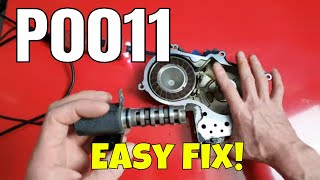
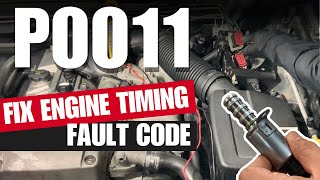
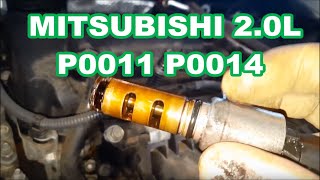
How to confirm: Remove the OCV from the cylinder head (held by a single 10mm bolt). Test its resistance (should be 6.9 - 7.9 ohms). Apply 12V power from a battery to check if the internal plunger clicks open and closed; be brief to avoid burning the coil. 🎬 See how to diagnose and test VVT solenoids properly. A visual inspection may reveal a clogged screen, debris, or internal leakage.
Typical fix: Replace the oil control valve. Cleaning may be a temporary fix, but replacement is recommended for a permanent solution.
Est. part cost: $150-$250 - Low or Dirty Engine Oil 🟡 Medium Probability The MIVEC system (Evo IX) is hydraulically operated by engine oil. Low oil levels, incorrect oil viscosity, or sludge from infrequent oil changes can restrict flow and cause the system to malfunction. This is often the first and easiest thing to check.
How to confirm: Check the engine oil level and condition on the dipstick. If the oil is low, dark, or sludgy, it should be changed. Many forum users and repair videos recommend this as the absolute first step before replacing any parts. 🎬 Watch: Why you shouldn't replace parts before checking your oil.
Typical fix: Perform an engine oil and filter change using a quality synthetic oil of the correct viscosity (e.g., 5W-30 or 10W-30 depending on climate and use).
Est. part cost: $50-$100 - Jumped Mechanical Timing (2003-2005 Evo VIII Primarily) 🟡 Medium Probability On a non-MIVEC engine, an over-advanced reading often means the physical timing has skipped a tooth on the timing belt, causing the cam sensor to read a value that is advanced relative to the crank sensor. This is a serious mechanical issue that requires immediate attention.
How to confirm: Remove the upper timing cover and verify that the camshaft and crankshaft timing marks align perfectly at Top Dead Center (TDC). This is a non-negotiable check for P0011 on an Evo VIII.
Typical fix: Re-time the engine. This is a good opportunity to replace the timing belt, tensioner, and pulleys if their age is unknown.
Est. part cost: $200-$500 for a full timing kit - Sticking or Failed MIVEC Intake Cam Gear (2006 Evo IX ONLY) ⚪ Low Probability The internal mechanism of the MIVEC cam phaser can become stuck due to debris or wear, preventing it from retarding the timing from its advanced state. In some rare cases, internal screws on the gear have been known to back out, causing catastrophic failure.
How to confirm: This is difficult to confirm without swapping parts. It is usually diagnosed by exclusion: if the OCV solenoid is new, the oil is clean, the passages are clear, and the base timing is correct, the gear itself becomes the primary suspect.
Typical fix: Replace the MIVEC intake camshaft gear. This is an expensive part and a labor-intensive job.
Est. part cost: $400-$600 - Faulty Camshaft Position Sensor (CMP) ⚪ Low Probability → Shop Engine Camshaft Position Sensor The sensor that reads the camshaft's position can fail, sending incorrect data to the ECM. This is a possible cause on both Evo VIII and IX models. However, many owners replace this part only to find the problem persists, as the issue is more often hydraulic or mechanical.
How to confirm: Swap with a known-good sensor. Check for a damaged or incorrectly installed trigger wheel on the end of the camshaft, which can be installed 180 degrees out.
Typical fix: Replace the intake camshaft position sensor.
Est. part cost: $80-$130
Rare But Worth Checking
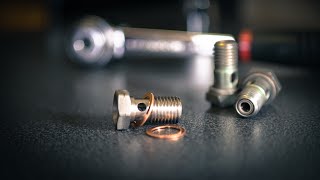
- Clogged MIVEC Oil Passages or Filter: For the Evo IX, there is a small conical filter (screen) in the banjo bolt fitting for the MIVEC oil feed line. This can become clogged with debris, starving the system of oil pressure. The oil line itself can also leak. The filter part number is MN176325.
- Incorrectly Installed Aftermarket Cams: On Evo IXs, installing aftermarket camshafts sometimes triggers this code if the MIVEC map in the tune is not adjusted properly or if the cam gear was not installed correctly. In some cases, the trigger plate on the end of the cam can be installed 180 degrees incorrectly.
- Failing ECM: Mitsubishi service documentation lists a failed ECM as a possible, though highly unlikely, cause. A Mitsubishi tech on EvolutionM noted they had never seen a failed ECM in 8+ years that wasn't caused by an external factor.
Diagnosis Steps
- Verify the vehicle year. Is it a 2003-2005 Evo VIII (non-MIVEC) or a 2006 Evo IX (MIVEC)? The diagnostic path depends entirely on this.
- Check the engine oil level and condition. If low, dirty, or overdue for a change, correct this first. Clear the code and drive to see if it returns. This simple step solves the problem in many cases.
- For 2006 Evo IX: Inspect and test the intake MIVEC Oil Control Valve (OCV). It's located on the intake side of the head and held by one 10mm bolt. Check resistance (spec: 6.9-7.9 ohms) and apply 12V to listen for actuation. Clean the mesh screens. If it fails the test or is suspect, replace it.
- For 2003-2005 Evo VIII: Inspect the mechanical timing. Remove the upper timing cover and verify the alignment of the cam and crank timing marks. If they are misaligned, the timing belt has likely jumped and must be corrected immediately.
- For 2006 Evo IX: If the OCV and oil are good, locate and inspect the small conical oil filter (screen) for the MIVEC system for clogs. It is located in the oil feed line banjo bolt.
- If all the above steps do not resolve the issue, consider a faulty camshaft position sensor. Before replacing, inspect the trigger wheel on the cam for proper installation (not 180 degrees out).
- For 2006 Evo IX (Advanced): If all else fails, the MIVEC intake cam gear itself may be mechanically stuck or failing internally. This is the most expensive and labor-intensive fix.
Parts You'll Likely Need
- Intake MIVEC Oil Control Valve / Solenoid (Evo IX Only)
(OEM #1028A021)— This is the most common failure point for P0011 on the MIVEC-equipped Evo IX. It controls the oil flow that adjusts cam timing and is prone to clogging or electrical failure.
Trusted brands: Mitsubishi Genuine
OEM price range: $180-$260
Aftermarket price range: $80-$150 - Camshaft Position Sensor
(OEM #MN158261 (Verify by VIN))— A potential cause on both models if the sensor itself is providing incorrect readings to the ECM, though it is often misdiagnosed.
Trusted brands: Denso, NGK/NTK, Mitsubishi Genuine
OEM price range: $100-$150
Aftermarket price range: $50-$90
Related Codes That Often Appear With This One
- P0442 - Evaporative Emission System Leak Detected (Small Leak): One user on Reddit reported this code appearing alongside P0011, though the connection is likely coincidental.
Technical Service Bulletins (TSBs) & Recalls
- TSB-20-13-002REV: While primarily for later model Mitsubishis, this TSB discusses ECU reprogramming to correct issues where DTC P0011 is stored. It indicates that software logic can be a factor in how sensitively the code is triggered, though it doesn't apply directly to the Evo IX's hardware-focused issues.
Platform-Specific Known Issues
- Owner Story: The Misleading Cam Sensor Replacement: In a YouTube video by 'shus Garage', the owner of an Evo IX MR with a P0011 code first replaced the camshaft position sensor for $130, which did not fix the problem. The code returned immediately. He then replaced the MIVEC oil control valve (solenoid), which ultimately resolved the issue. This highlights a common misdiagnosis where the sensor is blamed before the more likely culprit, the OCV solenoid.
- Forum Deep Dive: Aftermarket Cams and Tuning: A lengthy thread on EvolutionM.net details a frustrating P0011 case on an Evo IX with aftermarket HKS 272 cams. After replacing the MIVEC gear and verifying mechanical timing, the issue persisted. The tuner noted the MIVEC maps in the ECU had to be adjusted significantly for the new cams, and even then, the code would set under light throttle/high gear conditions. This shows the interplay between mechanical changes, hydraulic control, and ECU tuning is critical.
- The Clogged Banjo Bolt Filter: A user on EvolutionM.net with P0011 and a flickering oil light was advised to check the MIVEC oil line and its filter. Another user confirmed a conical screen filter exists on the solenoid side of the line, which can get plugged. This points to a specific, often overlooked maintenance item that can directly cause oil starvation for the MIVEC system.
Mechanic-Grade Diagnostic Values
- Intake MIVEC Oil Control Valve (OCV) Solenoid Resistance — expected: 6.9 - 7.9 Ohms. Failure: Resistance outside of this range indicates a faulty solenoid coil.
- Intake MIVEC Oil Control Valve (OCV) Solenoid Voltage (Key On) — expected: Battery voltage (approx. 12V) at the power supply pin of the connector.. Failure: No voltage indicates a wiring or relay issue upstream of the solenoid.
- Engine Oil Pressure (4G63T) — expected: Cold idle: ~80-90 PSI. Warm idle: ~12-25 PSI. Cruising RPM: ~60-80 PSI.. Failure: Significantly lower pressure, especially at idle, can starve the MIVEC system and cause P0011.
- Scan Tool Live Data: Intake VVT Phase Angle vs. Target Angle — expected: The actual and target angles should closely match during operation.. Failure: A consistent difference of more than 5 degrees for 5 seconds will set the code.
Scan Tool Commands That Help
- Scan Tool (M.U.T.-III or advanced aftermarket): Actuator Test: Intake VVT Solenoid / Oil Control Valve — This command allows the technician to manually activate the OCV solenoid with the engine running. A healthy system will cause the engine to hesitate or stall, confirming the solenoid and hydraulic passages are working. No change in engine operation points to a faulty solenoid, clogged passage, or stuck cam gear.
Wiring & Ground Locations
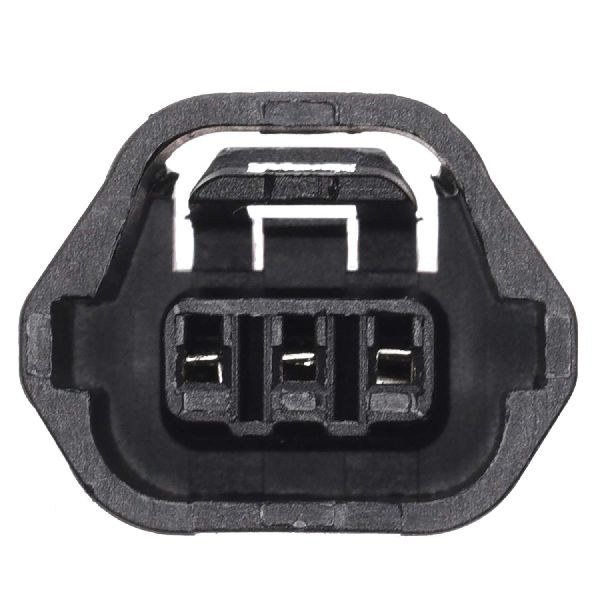
- B-31 — The electrical connector for the Intake Oil Feeder Control Valve (MIVEC Solenoid) on the cylinder head.. This is the direct connection point for the solenoid. Checking for power, ground, and signal integrity at this connector is a primary electrical diagnostic step.
- B-26 — The main engine-ECU connector.. The control wire for the MIVEC solenoid runs from connector B-31 to this ECU connector. A continuity check between these two points is necessary if a wiring fault is suspected.
- Engine Block/Transmission Ground — A primary ground strap typically runs from the negative battery terminal to a mounting bolt on the transmission case or engine block.. A poor main engine ground can cause a variety of sensor and actuator issues, including erratic behavior of the cam/crank sensors and the MIVEC solenoid, potentially leading to timing codes.
Real Owner Repair Stories
- EvolutionM Forum user (2006 Evo IX SE with HKS 272 cams) — P0011 code appeared the day of purchase. Code only sets under light throttle, slight incline, in 4th or 5th gear.
❌ Tried (didn't work) Adjusting MIVEC tables in the tune, Replacing the MIVEC cam gear, Verifying mechanical timing, Testing the OCV solenoid (resistance was in spec at 7.3 ohms, and it actuated with 12V), Verifying oil flow to the head and gear, Attempting an ECU 'relearn' procedure mentioned by a Mitsubishi engineer
✅ What actually fixed it The thread ends without a definitive fix posted by the original user, highlighting the difficulty of this code when common causes are eliminated. Another user in a similar situation found the issue was a wiring problem between the ECU and the solenoid connector. - EvolutionM Forum user (Evo IX with GSC S2 cams) — P0011 code appeared after installing new cams and replacing some valves.
❌ Tried (didn't work) Adjusting cam gear position during install, Flipping the cam sensor trigger plate 180 degrees, Cleaning the head and all components
✅ What actually fixed it Another user in the thread suggested the issue was the crank sensor plate (reluctor wheel) being installed flipped/backwards after the engine work. This caused the ECU to read incorrect crank timing, leading to the P0011 code. The original poster later confirmed this was the fix. - EvolutionM Forum user (Evo IX) — Phantom P0011 code, but the car never ran poorly.
❌ Tried (didn't work) Extensive diagnosis of the MIVEC system.
✅ What actually fixed it The user discovered they had accidentally swapped the MIVEC solenoid connector with another nearby connector that was physically identical. Swapping them back to their correct locations resolved the code.
OEM Part Supersession History
Unknown→1028A021— Standard part revision and update over time.
Heads up: Part number 1028A021 is listed for 2008+ Lancer and Outlander models but is commonly sold and used as the correct replacement for the Evo IX MIVEC solenoid. It is physically and functionally compatible.
Model Year Variations Within This Range
- 2006 only: The 2006 Evo IX engine is equipped with MIVEC on the intake camshaft. This entire system (solenoid, oil passages, cam gear) is the primary source of P0011 codes and does not exist on the 2003-2005 Evo VIII.
- 2003-2005 only: The Evo VIII engine has fixed cam timing. A P0011 code on these models is exceptionally rare and points directly to a base mechanical timing issue (e.g., jumped timing belt) or a failure of the cam/crank position sensors, not a hydraulic control system.
Diagnostic Flowchart
Other Known Issues on This Vehicle
Issues unrelated to this code that are worth knowing about as an owner of this generation:
- Transfer Case (T-Case) Failure 🔴 High — Common on modified cars or those driven aggressively. Can fail from hard launches or even from improper fluid filling, as it can give a false 'full' reading.
- ACD/AYC Pump Failure 🟠 Medium — Affects 2005+ models with Active Center Differential (ACD). The pump is located under the car and is highly susceptible to corrosion from road salt and moisture, leading to failure. Many owners in rust-prone areas perform a trunk relocation for the pump.
- 5-Speed Transmission 5th Gear Synchro Grind 🟡 Low — Extremely common on 5-speed models (Evo VIII and IX). A notchy or grinding shift into 5th gear is almost considered a standard characteristic of the transmission and often does not worsen significantly.
- Warped Front Brake Rotors 🟡 Low — The stock Brembo rotors are prone to warping, especially with aggressive street driving or track use.
- Clear Coat Failure on Carbon Fiber Wing 🟡 Low — Very common. The clear coat on the factory carbon fiber rear wing is known to peel, fade, and yellow over time due to sun exposure.
- Oil Starvation on Track 🔴 High — During high-G cornering on a race track, the 4G63 can experience oil starvation as oil sloshes away from the pickup. This can lead to catastrophic engine failure. Many track-focused owners install baffled oil pans to mitigate this.
Used vs. New Parts: Buying Guide for This Vehicle
When a used part is the smart pick: A used MIVEC cam gear can be a cost-effective option if sourced from a reputable seller with a known low-mileage donor car, as a new OEM gear is very expensive. A used camshaft position sensor is also a reasonable choice for diagnosis or replacement.
Donor-vehicle mileage cap: roughly under 80000 miles for the part to have meaningful remaining life.
What to inspect on the donor part:
- For a MIVEC cam gear, inspect for any signs of sludge or scoring.
- Ask the seller for the history of the donor car; evidence of regular oil changes is a major plus.
- For electronic parts like sensors or solenoids, purchase from sellers who offer a warranty or return policy.
OEM-only on this vehicle (don't cheap out):
- MIVEC Oil Control Valve (Solenoid): While cheaper aftermarket versions exist, forum consensus strongly favors the genuine Mitsubishi part (1028A021) for reliability and to avoid repeat failures.
- MIVEC Cam Gear: Unless opting for a high-performance aftermarket unit from a top-tier brand (Kelford, GSC, etc.), the OEM gear is the only recommended choice for replacement.
Aftermarket brands forum-validated for this vehicle:
- Denso or NGK/NTK for Camshaft Position Sensors.
Brands owners have reported issues with on this vehicle:
- Unbranded, no-name MIVEC solenoids from online marketplaces are frequently reported as failing quickly or being dead-on-arrival.
Real Owner Stories
Aggregated from forums and TSBs cited above. Mileages and costs reflect what owners reported in those sources.
2006 Mitsubishi Lancer Evolution IX MR 2.0L Turbo
Symptoms: Check engine light with code P0011. The owner initially replaced the camshaft position sensor, but the code returned immediately.
What fixed it: Replacing the MIVEC oil control valve (solenoid).
Cost: $130-$250
Source hint: YouTube video by 'shus Garage' cited in 'The Misleading Cam Sensor Replacement'
2006 Mitsubishi Lancer Evolution IX 2.0L Turbo
Symptoms: P0011 code persisting even after replacing the MIVEC gear and verifying mechanical timing; code specifically triggered under light throttle and high gear conditions.
What fixed it: Adjusting the MIVEC maps in the ECU tuning to accommodate aftermarket HKS 272 cams.
Source hint: EvolutionM.net - 'Infamous P0011 SES Light' (2012-01-04)
2006 Mitsubishi Lancer Evolution IX 2.0L Turbo
Symptoms: P0011 code accompanied by a flickering oil light at very low RPM.
What fixed it: Checking and cleaning the MIVEC oil line and its conical screen filter located on the solenoid side of the line.
Source hint: EvolutionM.net - 'Help! P0011 Code!' and 'The Clogged Banjo Bolt Filter'
2006 Mitsubishi Lancer Evolution IX 2.0L Turbo
Symptoms: The Check Engine Light (SES) appeared after the owner attempted to prime a new turbo by cranking the engine with the cam sensors unplugged.
What fixed it: This was an electrical interruption/procedural trigger; the fix involved clearing the code and ensuring all sensors were properly connected.
Source hint: EvolutionM.net - 'Help! P0011 Code!' (2011-01-02)
Related OBD-II Codes
Frequently Asked Questions
I have a 2006 Evo IX with a P0011 and a flickering oil light at idle. Is this related?
Does TSB-20-13-002REV apply to my 2006 Mitsubishi Lancer Evolution IX?
Should I replace the Camshaft Position Sensor first on my Evo IX to fix P0011?
What is the 'MIVEC clack' noise associated with this code?
Can aftermarket cams like the HKS 272 cause a P0011 code on my Evo?
Is there a specific filter I should check on my Evo IX for MIVEC issues?
My 2004 Evo VIII has P0011 but doesn't have MIVEC. What should I check?
Helpful Videos

We Have This Part in Stock


The information in this article is provided for general reference and educational purposes only. Vehicle specifications, procedures, and part compatibility can vary by production date, trim level, and region. Always consult your vehicle's factory service manual and verify part numbers before purchasing or performing repairs. Safety-critical components such as airbags, seat belts, and braking systems should be installed by a qualified professional.
- Mitsubishi Lancer Evolution:
- 🧭 Diagnostic Flowchart
- 🎬 Helpful Videos
- 🛍️ Shop This Part
- What's Unique About the 2003-2006 Mitsubishi Lancer Evolution
- Symptoms You May Notice
- Most Likely Causes
- Rare But Worth Checking
- Diagnosis Steps
- Parts You'll Likely Need
- Related Codes That Often Appear With This One
- Technical Service Bulletins (TSBs) & Recalls
- Platform-Specific Known Issues
- Mechanic-Grade Diagnostic Values
- Scan Tool Commands That Help
- Wiring & Ground Locations
- Real Owner Repair Stories
- OEM Part Supersession History
- Model Year Variations Within This Range
- Other Known Issues on This Vehicle
- Used vs. New Parts: Buying Guide for This Vehicle
- Real Owner Stories
- 2006 Mitsubishi Lancer Evolution IX MR 2.0L Turbo
- 2006 Mitsubishi Lancer Evolution IX 2.0L Turbo
- 2006 Mitsubishi Lancer Evolution IX 2.0L Turbo
- 2006 Mitsubishi Lancer Evolution IX 2.0L Turbo
- Related OBD-II Codes
- Frequently Asked Questions
- 🎟️ Get 5% Off