

P0011 on 2007-2010 Saturn VUE: Camshaft Timing Over-Advanced Causes & Fixes
On a 2007-2010 Saturn VUE, especially models with the 3.6L V6 engine, code P0011 is most often caused by a faulty camshaft position actuator solenoid or low/dirty engine oil. On the 3.6L V6, it can also be a sign of a stretched timing chain, which is a more serious and well-documented repair. For the 2.4L Ecotec engine, clogged solenoid screens are a very common cause.
- Always check your engine oil first; low or dirty oil is a primary cause of P0011.
- The most common faulty part is the camshaft position actuator solenoid, which is relatively inexpensive and easy to replace.
- If you have a 2008-2010 VUE with the 3.6L V6 engine, this code could be an early warning of a stretched timing chain, a known and serious issue.
- Do not confuse the camshaft position *sensor* with the camshaft position *actuator solenoid*; they are different parts, and the solenoid is the more likely culprit for P0011.
What's Unique About the 2007-2010 Saturn VUE
The 2007-2010 Saturn VUE spans two distinct generations with different engines, making diagnosis tricky. The second generation (2008-2010) offered a 3.6L V6 (LY7) engine notorious for premature timing chain stretch. For this engine, a P0011 code is a significant warning sign that could point to this well-documented and serious issue, as referenced in GM technical service bulletins and special coverage programs like #11340C. While a bad solenoid is still a likely culprit across all engines, the possibility of a timing chain problem is much higher on the 3.6L V6 models, often requiring a repair costing upwards of $1,800-$3,500.
Diagnostic Flowchart
Tap your situation to follow the diagnostic path that matches what you're seeing on this vehicle.
Generation note: The 2007-2010 range covers the end of the first generation and the entire second generation of the Saturn VUE. - 2007 (First Gen): Offered a 2.2L I4, a 3.5L V6 (a Honda J35 engine), and a 2.4L Hybrid. The Honda 3.5L V6 has its own specific VVT (VTEC) system. - 2008-2010 (Second Gen): This model was a rebadged Opel Antara. Engines included a 2.4L I4 (LE5), a 3.5L V6 (a GM pushrod engine LZ4, not the Honda one), and a 3.6L DOHC V6 (LY7). The P0011 issues are most famously associated with the 3.6L V6 due to timing chain problems.
Symptoms You May Notice
- Check Engine Light is on
- Rough or erratic idle
- Engine stalling, especially at low RPMs or when coming to a stop
- Reduced engine power and poor acceleration
- A short, sharp rattle noise from the engine on startup (TSB #PIP4716F)
- Decreased fuel economy
- Hard starting
- Engine hesitation or stumbling when accelerating
- Replacing the camshaft position *sensor* when the actual fault is with the camshaft position *actuator solenoid*.
- Replacing the timing chain on a 2.4L or 3.5L engine without confirming stretch, when the issue is more likely a simple solenoid or oil problem.
- On the 3.6L V6, only replacing the solenoids when the root cause is a stretched timing chain. If the code returns quickly, the chain is the likely culprit.
Most Likely Causes
- Low, Dirty, or Incorrect Viscosity Engine Oil 🔴 High Probability The VVT system is hydraulically operated by engine oil. Low pressure or sludge from contaminated oil can cause the camshaft phasers and solenoids to respond slowly or get stuck. On the 3.6L V6, overly long oil change intervals recommended by the original Oil Life Monitor (OLM) calibration were a major contributor to premature timing chain wear.
How to confirm: Check the engine oil dipstick for proper level and inspect the oil's condition. If it is dark, sludgy, or past its change interval, this is the most likely starting point.
Typical fix: Perform an oil and filter change using the manufacturer-recommended oil viscosity (typically 5W-30). Consider shorter oil change intervals (e.g., 5,000 miles) especially on the 3.6L V6, to prevent future issues.
Est. part cost: $30-$70 - Failed Camshaft Position Actuator Solenoid (VVT Solenoid) 🔴 High Probability → Shop Engine Camshaft These solenoids can become clogged with oil sludge on their small internal screens or fail electrically, preventing them from accurately controlling oil flow to the camshaft phaser. This is a very common failure on the 2.4L Ecotec engine.
How to confirm: A common diagnostic step is to swap the Bank 1 intake solenoid with the Bank 2 intake solenoid (if applicable, on V6 engines). Clear the codes and drive the vehicle. If the code changes to P0021 (the Bank 2 equivalent), the solenoid is confirmed to be faulty. You can also test the solenoid's resistance with a multimeter; a reading between 8-12 ohms is typically expected.
Typical fix: Replace the Bank 1 intake camshaft position actuator solenoid. On 2.4L engines, it is often recommended to replace both intake and exhaust solenoids at the same time.
Est. part cost: $25-$80 - Stretched Timing Chain 🟡 Medium Probability → Shop Engine Timing Chain This is a well-documented, widespread issue specifically for the 2008-2010 models with the 3.6L V6 (LY7) engine. The original timing chains were made of a material prone to premature wear and stretching, which directly affects camshaft timing and triggers codes like P0011. GM acknowledged this with Special Coverage Program #11340C, which extended the warranty, and by releasing updated chain kits.
How to confirm: This requires professional diagnosis. A technician will use a scan tool to check camshaft/crankshaft correlation data; a deviation of more than 9 degrees is a strong indicator. A rattling noise on a cold start is also a classic symptom. Physical inspection is required for definitive proof, which involves significant engine disassembly.
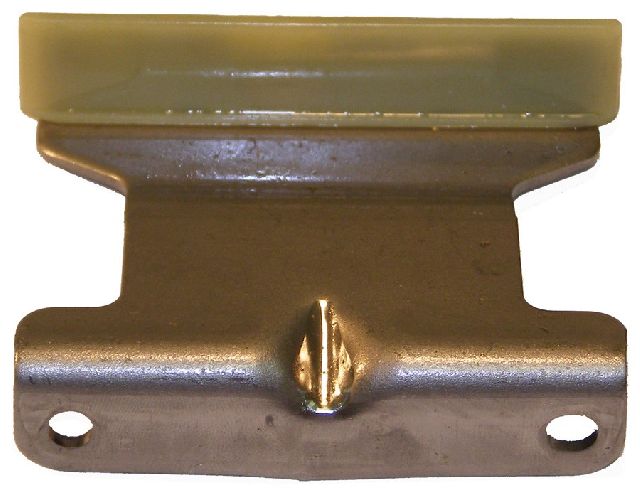
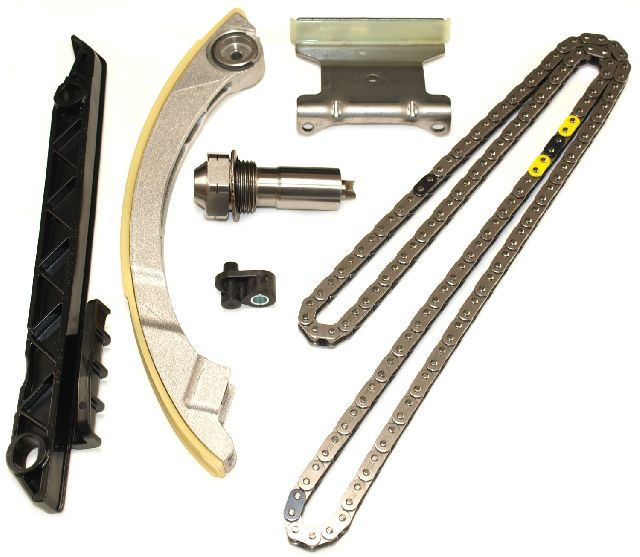
Typical fix: Replace all three timing chains, guides, and tensioners with an updated kit. This is a labor-intensive job often costing $1,800-$3,500, and some mechanics recommend pulling 🎬 See this walkthrough of a GM V6 timing chain replacement the engine to perform the service.
Est. part cost: $300-$700 for a kit
Rare But Worth Checking
- Failed Camshaft Phaser (Actuator): → Shop Engine Camshaft The mechanical gear itself at the end of the camshaft can fail or get stuck. This is less common than a solenoid failure but can happen, especially on high-mileage engines. Compressed air can be used to test the phaser's movement during diagnosis.
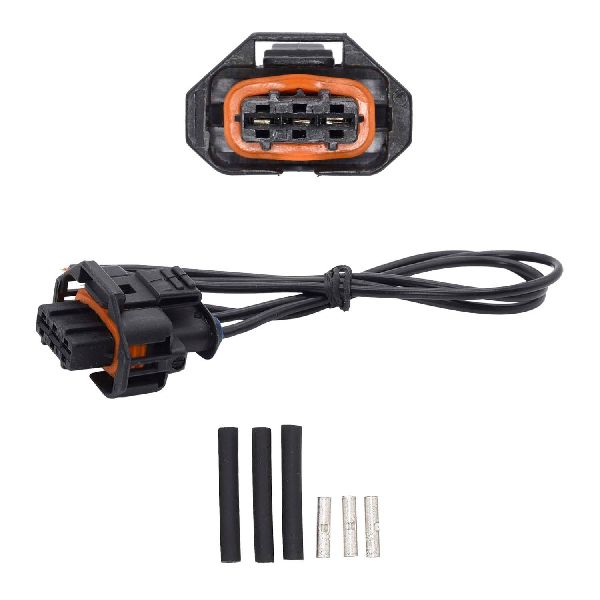
- Wiring or Connector Issue: The wiring to the camshaft position actuator solenoid could be damaged, or the connector could be loose or corroded, causing an intermittent signal. Check for voltage at the connector with the ignition on.
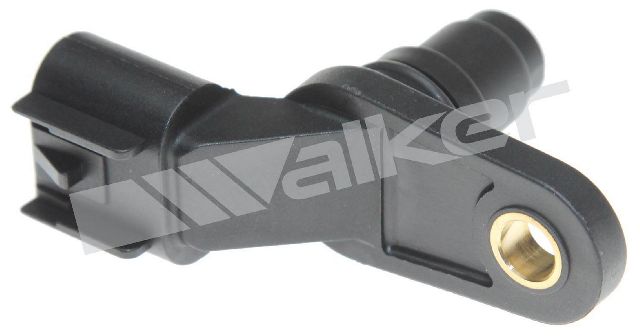
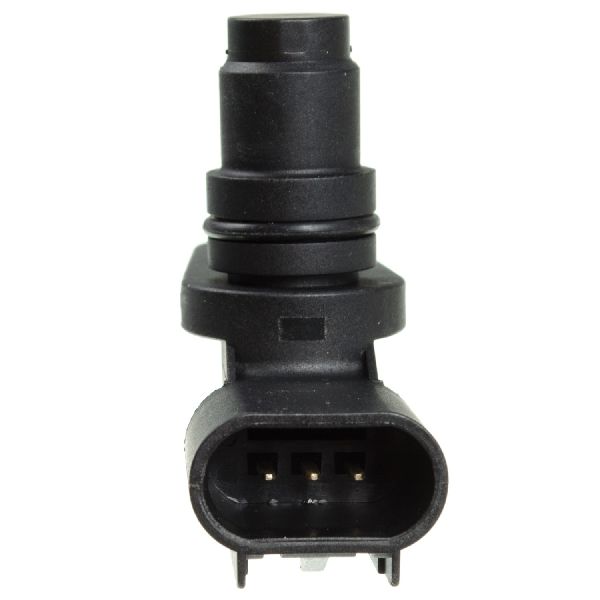
- Faulty Camshaft Position Sensor: → Shop Engine Camshaft Position Sensor While less likely to cause P0011 without other codes, a failing sensor can send incorrect data to the ECM, leading to a misdiagnosis of the camshaft's actual position. However, replacing this sensor for a P0011 code alone is a common misdiagnosis.
Diagnosis Steps
- Check the engine oil level and condition. Top off or change the oil and filter if necessary. This is the first and most important step. 🎬 Watch this before replacing parts to avoid common P0011 mistakes
- Use an OBD-II scanner to check for any other stored trouble codes, which can provide valuable context (e.g., P0008 points strongly to timing chains).
- Use an advanced scan tool to monitor the desired vs. actual camshaft position angles for Bank 1. A large discrepancy or a value that doesn't change indicates a problem.
- For V6 engines, swap the Bank 1 intake camshaft actuator solenoid with the Bank 2 intake solenoid. Clear the codes and see if the fault moves to Bank 2 (P0021). If it does, the solenoid is bad.
- If the solenoid is not the issue, inspect the solenoid's connector and wiring for damage, corrosion, or looseness.
- If the vehicle has the 3.6L V6, listen carefully for a startup rattle and have a professional check for timing chain stretch using scan tool data, as this is a common and serious failure point.
- If all else fails, the camshaft phaser itself may need to be inspected or replaced, which is a more involved mechanical job.
Parts You'll Likely Need
- Camshaft Position Actuator Solenoid (Intake)
(OEM #12655420 (supersedes 12628347, 12646783))— This is the most common part to fail, especially on the 2.4L engine. It gets clogged with debris or fails electrically, causing incorrect camshaft timing.
Trusted brands: ACDelco (GM Genuine), Delphi, Dorman
OEM price range: $40-$70
Aftermarket price range: $25-$50 - Timing Chain Kit (For 3.6L V6)
(OEM #ACDelco 12690388 (Updated Kit))— Required if diagnosis confirms the timing chains have stretched, a common and well-documented issue on the 3.6L LY7 V6 engine leading to P0011 and related codes.
Trusted brands: ACDelco (OEM), Cloyes, Melling
OEM price range: $500-$700
Aftermarket price range: $300-$500
Related Codes That Often Appear With This One
- P0014 — This is the corresponding code for the exhaust ('B') camshaft on Bank 1. If both intake and exhaust solenoids are failing or oil pressure is low, they can appear together.
- P0008 / P0009 / P0016 / P0017 — These codes indicate a correlation problem between the crankshaft and the camshaft(s). They are very common companions to P0011 when the timing chain has stretched or jumped a tooth on the 3.6L V6 engine, as noted in TSB #PIP4716F and TSB #12-06-01-009F.
- P0300 — This is a random misfire code. Incorrect valve timing from a P0011 fault can lead to unstable combustion and misfires, as noted in TSB #PIP5064C.
Technical Service Bulletins (TSBs) & Recalls
- PIP4716F: Mentions a sharp rattle noise at startup and lists P0011 as a possible DTC related to engine issues.
- PIP5064C: Connects P0011 with rough running and misfires on V6 engines and advises checking engine oil pressure.
- 12-06-01-009F: Announcing the availability of improved timing chain kits to address premature wear on the 3.6L V6 engine, which causes codes like P0011, P0008, etc.
- 11340C (Special Coverage): An extended warranty program (10 years/120,000 miles) for premature timing chain wear on the 3.6L V6. It also included reprogramming the ECM to shorten oil change intervals. This program has likely expired for all 2007-2010 vehicles.
Platform-Specific Known Issues
- 3.6L V6 Timing Chain Stretch: → Shop Engine Timing Chain Models from 2008-2010 with the 3.6L V6 are highly susceptible to premature timing chain wear. This was caused by a combination of the original chain design and an overly optimistic Oil Life Monitor (OLM) calibration from the factory. This is a major repair that often presents with codes P0011, P0008, P0016, P0017, and an engine rattle on startup. GM issued TSBs (e.g., #12-06-01-009F)
Mechanic-Grade Diagnostic Values
- Camshaft Position Actuator Solenoid (VVT Solenoid) Resistance — expected: 8 to 13 Ohms at 68°F (20°C).. Failure: A reading outside this range, an open circuit (OL), or a resistance value that fluctuates wildly when wiggling the connector indicates a faulty solenoid.
- Camshaft Position (CMP) Sensor 5V Reference Voltage — expected: 4.8-5.2 Volts between the 5-volt reference circuit and ground with the ignition ON.. Failure: Voltage outside this range suggests a wiring issue or a fault in the Engine Control Module (ECM).
- VVT Solenoid Manual Activation — expected: When 12V is applied to the solenoid's pins, the internal plunger should audibly click and move.. Failure: No movement or sound indicates the solenoid is seized or electrically failed.
Scan Tool Commands That Help
- GDS2 / Tech2: Camshaft Position Actuator Solenoid Test / Control — Use this bidirectional control to command the Bank 1 intake VVT solenoid ON and OFF at idle. A functional solenoid and phaser will cause the engine to run rough or stall. If there is no change in engine performance, it indicates a stuck solenoid, clogged oil passage, or a failed phaser.
Wiring & Ground Locations
- G107 — At the rear of the engine (applies to 2.4L, 3.5L, and 3.6L engines).. This is a critical engine-to-chassis ground. A loose or corroded connection can affect the stability of the entire engine management system, leading to erratic sensor readings and false timing codes.
- G106 — On the engine, at the left front top corner (for 3.6L models).. This is a primary ground for the engine and ECM. A poor connection can cause unstable readings from the camshaft and crankshaft sensors.
- ECM Connector X1, Pin 20 (Red/Wht) — At the Engine Control Module (ECM), located in the left front of the engine compartment.. This is the main battery positive voltage feed to the ECM. Loss of stable power here can cause numerous faults, including timing codes.
- ECM Connector X2, Pin 73 — At the Engine Control Module (ECM).. This is the primary ground for the ECM. Verifying this ground is essential during electrical diagnosis for any engine management codes.
Real Owner Repair Stories
- Reddit user in r/MechanicAdvice (Vehicle with VVT (details analogous to Saturn Vue)) — Check Engine Light with code P0011 immediately after an oil change. Some sluggishness on acceleration.
❌ Tried (didn't work) Replaced the intake VVT solenoid.
✅ What actually fixed it The code was resolved by performing another oil change using the correct, manufacturer-specified oil viscosity. The wrong weight oil was used in the initial service, which prevented the VVT system from operating correctly. - YouTube video (Go-Parts) (2012 GMC Acadia with 3.6L V6 (mechanically identical engine and common failure)) — Rough running, Check Engine Light with timing correlation codes (P0018/P0019), and an engine rattle.
❌ Tried (didn't work) Diagnosis immediately pointed to a mechanical issue, bypassing sensor replacement.
✅ What actually fixed it A complete timing chain replacement. The video showed significant slack in the original chains. The fix involved replacing all chains, guides, and tensioners with a new kit, which resolved the codes and symptoms.
When the Usual Fixes Don't Work
- In at least one documented case, a vehicle owner experienced a P0011 code immediately following an oil change. The owner first replaced the most common cause, the VVT solenoid, but the code returned. The actual root cause was that the service station had used the wrong viscosity engine oil. Performing a second oil change with the correct manufacturer-specified oil resolved the issue without further parts replacement. This highlights how critical correct oil viscosity is for the VVT system, and that it can be the sole cause of the fault even when parts are functional.
OEM Part Supersession History
12628347, 12646783→12655420— Part has been updated by the manufacturer over time.12655420→12679099— Latest part number update from GM for the VVT solenoid (camshaft position actuator).
Model Year Variations Within This Range
- 2009: The location of the Engine Control Module (ECM) differs by engine. For V6 models, it is in the left front of the engine compartment. For the 2.4L I4 model, the ECM is located at the left REAR of the engine compartment.
Helpful Videos
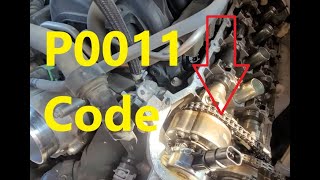
![How to Fix P0011 Engine Code in 4 Minutes [2 DIY Methods / Only $6.95]](https://img.youtube.com/vi/Il4J5NOlYPg/mqdefault.jpg)
We Have This Part in Stock


The information in this article is provided for general reference and educational purposes only. Vehicle specifications, procedures, and part compatibility can vary by production date, trim level, and region. Always consult your vehicle's factory service manual and verify part numbers before purchasing or performing repairs. Safety-critical components such as airbags, seat belts, and braking systems should be installed by a qualified professional.
- Saturn VUE:
- 🧭 Diagnostic Flowchart
- 🎬 Helpful Videos
- 🛍️ Shop This Part
- What's Unique About the 2007-2010 Saturn VUE
- Symptoms You May Notice
- Most Likely Causes
- Rare But Worth Checking
- Diagnosis Steps
- Parts You'll Likely Need
- Related Codes That Often Appear With This One
- Technical Service Bulletins (TSBs) & Recalls
- Platform-Specific Known Issues
- Mechanic-Grade Diagnostic Values
- Scan Tool Commands That Help
- Wiring & Ground Locations
- Real Owner Repair Stories
- When the Usual Fixes Don't Work
- OEM Part Supersession History
- Model Year Variations Within This Range
- 🎟️ Get 5% Off