

P0011 on 2013-2016 Volkswagen CC 2.0T: Causes and Fixes for Over-Advanced Timing
On a 2013-2016 VW CC with the 2.0T engine, code P0011 is most often caused by a faulty Camshaft Adjuster Magnet (N205 solenoid) or low/dirty oil. However, it can also signal a failing timing chain tensioner or a disintegrated camshaft bridge screen, which are critical and expensive repairs. Always check oil first, then inspect the N205 solenoid and check cam phase deviation with a scan tool.
- P0011 on a 2.0T TSI engine should be addressed immediately to prevent poor performance and potential engine damage.
- Always start diagnosis by checking the engine oil level and condition, as the VVT system is oil-dependent.
- The Camshaft Adjuster Magnet (N205 solenoid) is a very common and relatively inexpensive part to replace that often solves this code.
- Be aware of the serious and well-documented timing chain tensioner issue on this engine. If you hear a rattle on startup, investigate the tensioner immediately.
- This code is frequently seen with P0016; their appearance together strongly points to a mechanical timing or VVT hydraulic control issue.
What's Unique About the 2013-2016 Volkswagen CC

The EA888 2.0T engine used in the 2013-2016 CC is known for several specific issues that directly cause the P0011 code. Early versions of the timing chain tensioner are prone to failure, which can lead to jumped timing or catastrophic engine damage. Additionally, a small oil screen in the camshaft bearing bridge is known to break apart, sending debris into oil passages and clogging the VVT solenoids or camshaft adjuster. This specific issue is acknowledged by Volkswagen in Technical Tip 01-15-08TT, which links P0011 to a damaged camshaft adjuster spool valve caused by this screen failure.
Diagnostic Flowchart

Tap your situation to follow the diagnostic path that matches what you're seeing on this vehicle.
Symptoms You May Notice

- Check Engine Light (MIL) is on
- EPC (Electronic Power Control) light may be on or blinking
- Rough or unstable idle
- Engine stalling, especially at low speeds or when stopping
- Poor acceleration or loss of power
- Audible rattling noise from the engine, especially on startup or shutdown, indicating a loose timing chain
- Reduced fuel economy
- Extended engine cranking time before starting
- Replacing the Camshaft Position Sensor (G40) when the actual fault is with the N205 solenoid, timing chain, or oil pressure/quality. The sensor is often reporting a real mechanical problem, not failing itself.
Most Likely Causes

- Low, incorrect, or dirty engine oil 🔴 High Probability The VVT system is entirely dependent on clean oil with the correct viscosity and pressure. Extended oil change intervals lead to sludge buildup that can clog the small passages in the VVT solenoids and camshaft phasers, causing them to react slowly or stick.
How to confirm: Check the oil level on the dipstick and inspect its condition. If it's low, excessively dark, or sludgy, it needs to be changed. This should always be the first step.
Typical fix: Perform an engine oil and filter change using the correct VW-specified synthetic oil (e.g., VW 502 00). Consider using an engine flush product if significant sludge is suspected.
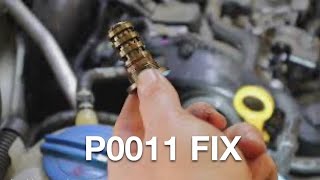
Est. part cost: $60-$100 - Failed Camshaft Adjuster Magnet (N205 Solenoid) 🔴 High Probability → Shop Engine Camshaft This solenoid, which controls oil flow to the camshaft phaser, is a very common failure point. It can become clogged with sludge or debris (often from a failing cam bridge screen) or fail electrically, causing it to stick.
How to confirm: Use a scan tool to command the solenoid on and off while monitoring cam angle. A simpler physical check is to remove the solenoid and shake it; a good one should rattle freely, while a faulty one will be silent or sluggish. Also inspect its screen for debris.
Typical fix: Replace the Camshaft Adjuster Magnet. It is located on the upper timing cover and held by three T30 Torx screws. 🎬 Watch: How to diagnose and repair the P0011 code
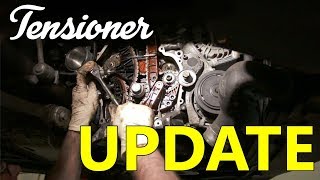
Est. part cost: $40-$160 - Failed Timing Chain Tensioner / Stretched Timing Chain 🟡 Medium Probability → Shop Engine Timing Chain The original timing chain tensioner design on early EA888 2.0T TSI engines is a well-documented failure point. The tensioner's internal ratchet mechanism can fail, causing it to retract on shutdown and lose hydraulic pressure, allowing the chain to become slack, rattle, and potentially jump timing. While many 2013+ models received an updated tensioner from the factory, chain stretch can still occur over time.
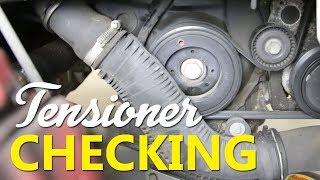
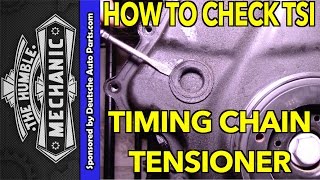
How to confirm: Visually inspect the tensioner's extension through the inspection port on the lower timing chain cover. 🎬 See how to check your timing chain tensioner If it is the old design or extended significantly (many grooves showing), it has failed or is failing. A scan tool can also measure camshaft deviation (phase position); a value greater than +/- 5 degrees suggests a stretched chain.
Typical fix: Replace the timing chain, tensioner, and all related guides and rails with the updated parts. This is a labor-intensive job that requires special tools.
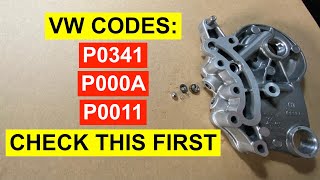
Est. part cost: $400-$800 for a full kit - Broken/Clogged Camshaft Bearing Bridge Screen 🟡 Medium Probability → Shop Engine Camshaft The camshaft bearing bridge (or 'cam cradle') contains a small plastic and metal screen designed to filter oil. This screen is known to fatigue, break apart, and send plastic/metal debris through critical oil passages. This is a known issue addressed in VW TSB 01-15-08TT.
How to confirm: Remove the upper timing cover and the camshaft bearing bridge to visually inspect if the screen is intact. If the screen is missing or pieces are broken off, it has failed. Debris may be found inside the N205 solenoid valve.
Typical fix: Replace the camshaft bearing bridge with an updated version. Many technicians simply remove the screen from the old part, but improved aftermarket versions (like Dorman's OE FIX) exist with a stronger all-metal screen. If the screen is missing, the N205 solenoid and camshaft adjuster (phaser) must be inspected for clogging and replaced if necessary.
Est. part cost: $150-$250
Rare But Worth Checking
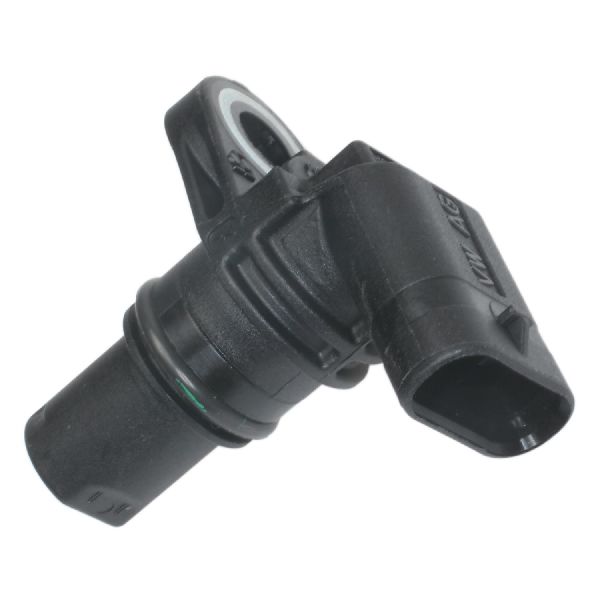
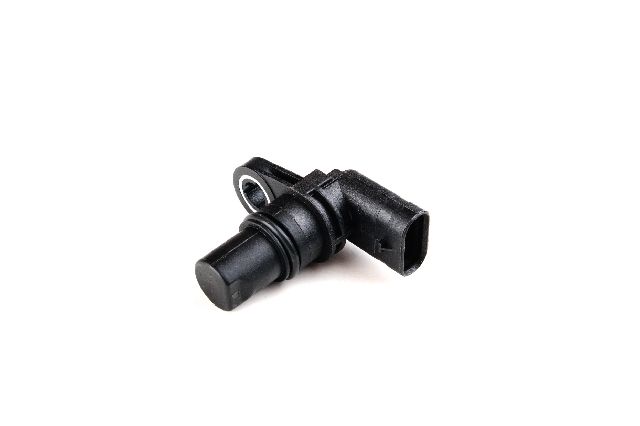
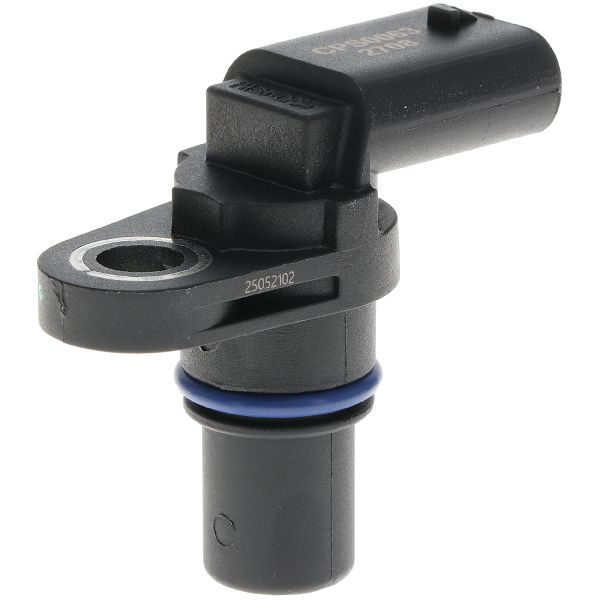
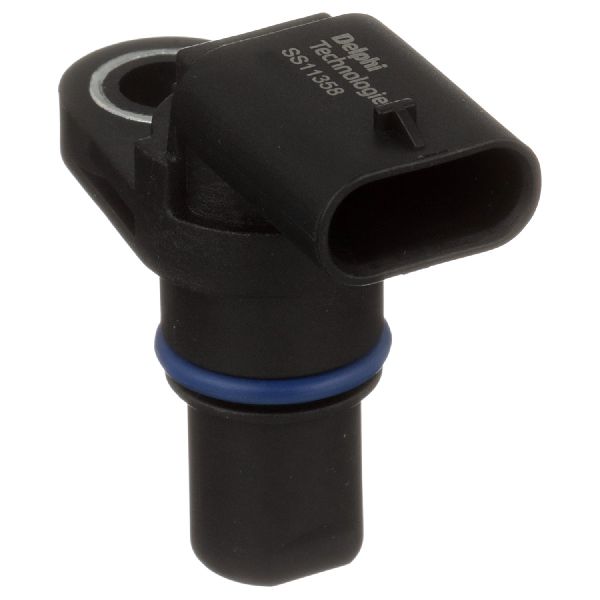
- Failed Camshaft Position Sensor (G40): → Shop Engine Camshaft Position Sensor This sensor tells the ECM the camshaft's position. While it can fail, it's more likely to throw a sensor-specific circuit code (like P0341) rather than P0011 alone, though they can appear together if the underlying cause is mechanical.
- Failed Mechanical Camshaft Adjuster (Phaser): → Shop Engine Camshaft This is the gear-like mechanism on the end of the camshaft itself. It can fail mechanically or become clogged internally with debris from a failed cam bridge screen, but this is less common than the failure of the N205 solenoid that controls it.
Diagnosis Steps
- Check the engine oil level and condition. Top up or perform an oil and filter change if necessary, using VW 502 00 specification oil. This is the simplest and first step.
- Scan the ECM for any other fault codes. Codes like P0016, P0341, or P000A appearing with P0011 provide critical context.
- Using a capable scan tool (like VCDS), monitor the requested vs. actual intake camshaft position angles. In VCDS, check Measuring Value Block 93, field 3 ('Camshaft adjustment intake bank 1; actual value'). A deviation greater than +/- 5 degrees from the specified value at idle indicates a problem. Values approaching or exceeding 8-10 degrees suggest a significant mechanical issue like a stretched chain.
- Inspect and test the Camshaft Adjuster Magnet (N205 solenoid). Remove it (3x T30 bolts) and check its internal screen for metal or plastic debris. Shake the solenoid; a healthy one will rattle. A silent one is stuck and faulty.
- Remove the upper timing cover and inspect the camshaft bearing bridge for a missing or damaged oil screen. If it's gone, it has disintegrated and is the likely source of debris.
- Visually inspect the timing chain tensioner through the inspection port in the lower timing cover. Check for the updated tensioner design (which lacks a retaining clip on the piston) and see how far the piston is extended.
- If a stretched chain is suspected, perform a physical measurement. Remove the upper timing cover and measure the distance between the timing marks on the two camshaft sprockets. A measurement between 124-126mm is considered normal; anything larger indicates significant chain stretch.
- If all else fails, perform a full mechanical timing check to ensure the chain has not jumped a tooth.
Parts You'll Likely Need

- Camshaft Adjuster Magnet (N205 Valve)
(OEM #06H109257C (updated), 06H109257A (superseded))— This solenoid is a frequent failure point due to clogging from oil sludge or debris, directly causing the P0011 code. It's a common first part to replace after an oil change.
Trusted brands: Genuine VW/Audi, Pierburg, Vaico
OEM price range: $120-$160
Aftermarket price range: $40-$90
Related Codes That Often Appear With This One
- P0016 — Crankshaft Position - Camshaft Position Correlation (Bank 1 Sensor A). If the camshaft is over-advanced (P0011), its position will not correlate correctly with the crankshaft's position, triggering P0016. They often appear together and point strongly to a mechanical timing issue like a jumped or stretched chain.
- P0341 — Camshaft Position Sensor 'A' Circuit Range/Performance (Bank 1). This code can be triggered by the same underlying mechanical issues, such as a jumped timing chain, a faulty cam bridge, or a sticking N205 valve, that cause P0011.
- P000A — 'A' Camshaft Position Slow Response. This code is often seen with P0011 and points to a hydraulic issue, such as a clogged N205 solenoid, debris in the cam phaser, or low oil pressure.
- P0300, P0301, P0302, P0303, P0304 — Random or specific cylinder misfire codes. Incorrect camshaft timing disrupts the air/fuel mixture and combustion process, leading to misfires.
Technical Service Bulletins (TSBs) & Recalls
- Engine runs rough with MIL ON, DTCs P0011, P0016, P000A, P0341: This Technical Tip, updated May 1, 2020, specifically addresses P0011 and related codes on 2.0T TSI engines. It instructs technicians to monitor MVB 93/3 for cam deviation exceeding +/- 5 degrees. It identifies the cause as the screen in the camshaft adjuster bridge disintegrating and lodging in the camshaft adjuster spool valve, requiring replacement of the bridge, spool valve, and potentially the intake camshaft.
- Camshaft Position Faults P0011 and P0016: → Shop Engine Camshaft This bulletin (while referencing a TDI engine) describes a similar diagnostic process for P0011 and P0016, noting that a sticking camshaft adjuster control valve can be a primary cause.
Platform-Specific Known Issues
- A Technical Service Bulletin (TSB) V151701 was issued for 2016-2017 models for P0011 and P0016, identifying wear on the camshaft bearing bridge as a potential cause.
- Another technical tip, 01-15-08TT, points to a disintegrated screen in the camshaft adjuster bridge lodging in the camshaft adjuster spool valve as a cause for P0011, P0016, and other codes.
- The original timing chain tensioner was prone to premature failure. VW released several updated versions to correct the design flaw.
Mechanic-Grade Diagnostic Values
- N205 Camshaft Adjustment Valve Resistance — expected: 6-13 Ohms. Failure: A reading outside of this range indicates an electrical fault within the solenoid.
- Engine Oil Pressure at Hot Idle (approx. 80°C) — expected: 17.4 - 30.5 psi (1.2 - 2.1 bar). Failure: Pressure below this range can cause VVT system malfunctions and trigger P0011. Some sources report 12 psi as adequate, but VW specs are higher.
- Engine Oil Pressure at 2000 RPM — expected: 39 psi (2.7 bar) or higher. Failure: Pressure below this specification under load indicates a significant lubrication system problem (e.g., worn oil pump, clogged pickup tube).
- VCDS Camshaft Phase Angle (Camshaft adjustment intake bank 1; actual value) — expected: Normal Position: -3.0 to 6.0 KW; Shifted Position: 16.0 to 25.0 KW. Failure: A value that is stuck, slow to respond, or consistently outside the specified range when commanded indicates a VVT system fault.
Scan Tool Commands That Help
- VCDS (VAG-COM): Basic Settings - Group 094 (Camshaft Adjustment) — This function runs a test on the camshaft adjuster system. You hold the brake and rev the engine to 2000 RPM. VCDS will report if the system passes or fails the test, which can confirm a mechanical or hydraulic issue with the phaser or solenoid if it fails.
- VCDS (VAG-COM): Output Tests - Camshaft Adjustment Solenoid (N205) — This allows you to manually cycle the N205 solenoid on and off. You should hear an audible click from the solenoid each time it's activated. If no click is heard, it points to a failed solenoid or a wiring issue.
Wiring & Ground Locations
- Main Engine Ground Strap — Typically runs from the engine block or transmission housing to a point on the vehicle's frame rail or chassis, often near the front driver's side under the battery tray area.. A poor engine ground can cause erratic voltage signals from sensors like the Camshaft Position Sensor (G40) and Crankshaft Position Sensor, leading to incorrect data being sent to the ECM and potentially triggering timing correlation codes.
- Coil Pack Ground Points — On EA888 engines, the ignition coil packs are grounded via small wires to studs on the valve cover.. While not directly related to P0011, these grounds are notoriously fragile and can cause misfire codes (P030x) that may appear alongside P0011, confusing the diagnosis. A bad ground here can create electrical noise that may interfere with other sensors.
- Main Chassis Ground Point — A primary ground point with multiple brown wires is often located on the firewall or bulkhead, behind the battery.. The ECM and various sensors rely on this central grounding point for a stable reference. Corrosion or looseness here can affect the accuracy of all sensor readings, including those for the VVT system.
Real Owner Repair Stories
- Ross-Tech Forums user (VW Jetta with 2.0T engine) — P0011 and P0012 codes appearing only on cold starts.
❌ Tried (didn't work) Replacing Timing Belt, Replacing Cam Position Sensor
✅ What actually fixed it The user performed an oil change with the correct 5W-40 synthetic oil, which made the engine run smoother but did not fix the code initially. After running a VCDS Basic Settings test on Group 94, a rattle was heard, pointing towards a loose cam chain. The final resolution pointed towards a mechanical timing issue (cam chain) rather than the previously replaced sensors.
OEM Part Supersession History
06H109467 (and subsequent revisions)→06K109467K— The original timing chain tensioner design was prone to premature failure of its ratchet mechanism, leading to loss of chain tension. The updated part uses a stronger, more reliable design.06H103144F, 06H103144G, 06H103144H, 06H103144J→06H103144K— The original camshaft bridge contained a plastic/mesh screen that was prone to disintegrating and clogging oil passages. The updated part has a more robust design.06H109257A→06H109257C— Internal improvements to the solenoid's function and durability.
Model Year Variations Within This Range
- 2013: Early 2013 model year vehicles may still have the older, failure-prone timing chain tensioner design (PN 06H109467). The cutoff from the factory was around 2012-2013, making it critical to visually inspect the tensioner on these transitional year vehicles.
Helpful Videos
We Have This Part in Stock


The information in this article is provided for general reference and educational purposes only. Vehicle specifications, procedures, and part compatibility can vary by production date, trim level, and region. Always consult your vehicle's factory service manual and verify part numbers before purchasing or performing repairs. Safety-critical components such as airbags, seat belts, and braking systems should be installed by a qualified professional.
- Volkswagen CC:
- 🧭 Diagnostic Flowchart
- 🎬 Helpful Videos
- 🛍️ Shop This Part
- What's Unique About the 2013-2016 Volkswagen CC
- Symptoms You May Notice
- Most Likely Causes
- Rare But Worth Checking
- Diagnosis Steps
- Parts You'll Likely Need
- Related Codes That Often Appear With This One
- Technical Service Bulletins (TSBs) & Recalls
- Platform-Specific Known Issues
- Mechanic-Grade Diagnostic Values
- Scan Tool Commands That Help
- Wiring & Ground Locations
- Real Owner Repair Stories
- OEM Part Supersession History
- Model Year Variations Within This Range
- 🎟️ Get 5% Off