

P0012 on 2005-2010 Chevrolet Cobalt 2.2L: Causes and Fixes for Over-Retarded Camshaft Timing
On a 2.2L Ecotec Cobalt, code P0012 is almost always caused by low/dirty engine oil or a faulty intake camshaft position actuator solenoid. An oil change is the first step. If that doesn't work, replacing the intake solenoid (OEM Part #12655420, often superseded by #12628347 or #12646783) is a common 15-minute DIY fix for under $50.
- First, check your engine oil. Low or dirty oil is the #1 cause of P0012 on this car.
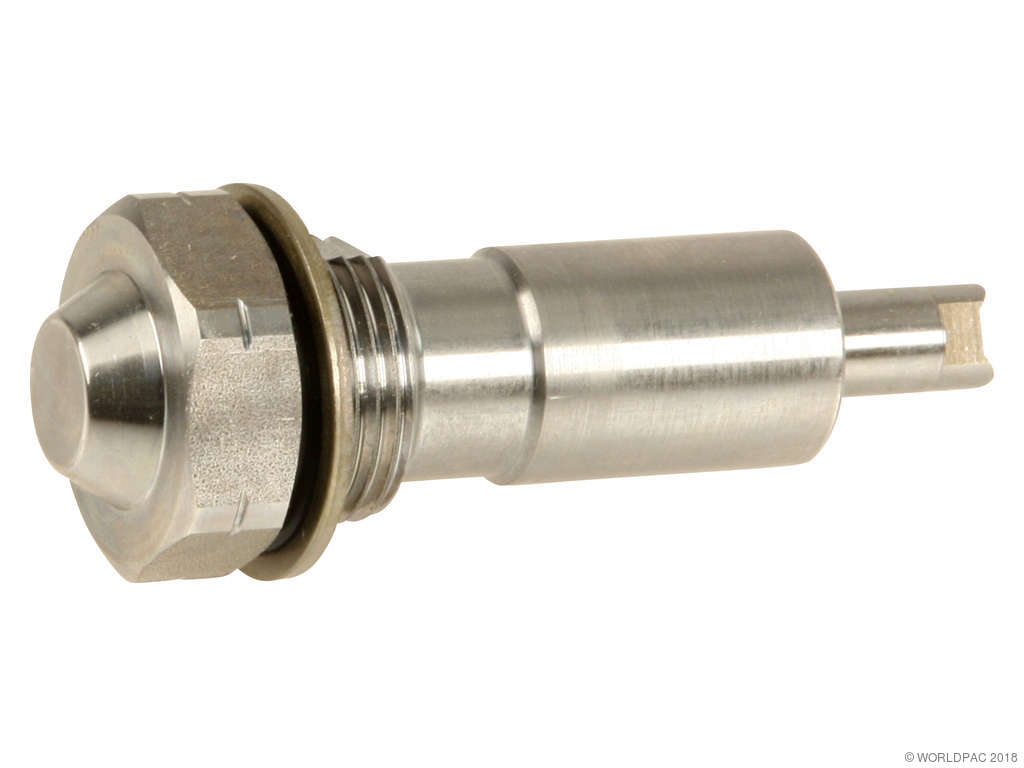
- The most likely failed part is the Intake Camshaft Position Actuator Solenoid (front of the engine), which is an easy and inexpensive DIY replacement.
- A simple way to confirm a bad solenoid is to swap it with the exhaust solenoid (rear of the engine) and see if the code changes to P0014.
- If you hear a rattling noise from the engine, especially at startup, be prepared for a more serious timing chain issue that requires professional repair.
What's Unique About the 2005-2010 Chevrolet Cobalt
The Ecotec engine family used in the Cobalt relies heavily on clean oil and proper oil pressure to operate its VVT system. These engines are known for being sensitive to oil maintenance, and the camshaft actuator solenoids are a common failure point due to small internal passages that can get clogged by oil sludge or debris. While a stretched timing chain is also a known Ecotec issue, particularly on pre-2005 models due to a tensioner design flaw, the solenoids are a much more frequent and simpler cause for this specific code on the 2005-2010 Cobalt.
Symptoms You May Notice
- Check Engine Light is on
- Rough, unstable, or shaky idle.
- Engine may hesitate or stall, especially at low speeds or when coming to a stop.
- Noticeable loss of power and poor acceleration.
- Decreased fuel economy.
- Rattling noise from the engine, especially on a cold startup for a few seconds, which could indicate a timing chain or tensioner issue.
- Replacing the camshaft position *sensor* instead of the camshaft position actuator *solenoid*. The sensor reads the position, but the solenoid controls it. The solenoid is the more common failure point for this performance code.
Most Likely Causes
- Low or Dirty Engine Oil 🔴 High Probability The Ecotec's VVT system uses oil pressure to phase the camshafts. The solenoids that control this have very fine mesh screens and small passages that are easily clogged by old, dirty, or incorrect viscosity oil, which is the leading cause of P0012.
How to confirm: Check the oil dipstick for level and inspect the oil's color and consistency. If it's low, dark, or sludgy, this is your likely starting point.
Typical fix: Change the engine oil and filter using the manufacturer-specified 5W-30 viscosity oil. This simple fix resolves the issue in a significant number of cases.
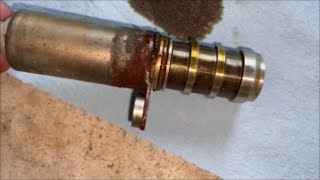
Est. part cost: $30-$60 - Faulty Intake Camshaft Position Actuator Solenoid 🔴 High Probability → Shop Engine Camshaft These solenoids are a very common failure item on Ecotec engines. They can fail electrically or, more commonly, get stuck or clogged internally from oil debris, preventing proper oil flow to the cam phaser.
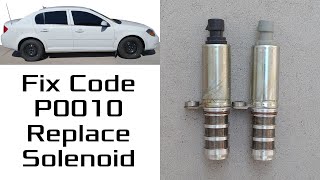
How to confirm: Swap the intake solenoid (front of the engine, radiator side) with the identical exhaust solenoid (rear of the engine, firewall side). Clear the codes and drive. If the code changes to P0014 (Exhaust Camshaft Position Timing), the solenoid you moved is faulty. This is a widely documented and reliable diagnostic trick 🎬 Watch: How to diagnose and swap these solenoids yourself. on Cobalt forums.
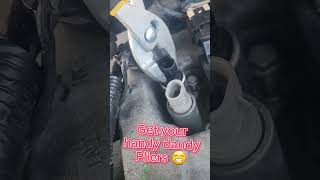
Typical fix: Replace the intake camshaft position actuator solenoid. It is held in by a single 10mm bolt and is easily accessible on top of the valve cover. 🎬 Watch: Step-by-step guide to replacing the intake camshaft solenoid.
Est. part cost: $25-$50 - Stretched Timing Chain or Failed Tensioner 🟡 Medium Probability → Shop Engine Timing Chain Timing chain stretch is a known weakness on higher-mileage 2.2L Ecotec engines. While a design flaw in the tensioner was mostly fixed after 2004, wear can still occur. When the chain stretches, the base mechanical timing between the crank and cams becomes incorrect, which the VVT system cannot overcome.
How to confirm: Listen for a rattling or buzzing sound from the passenger side of the engine, especially for a few seconds on a cold start. A definitive check requires removing the valve cover to physically inspect chain slack or checking cam/crank correlation with an advanced scan tool. This is often a professional diagnosis.
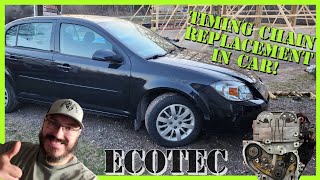
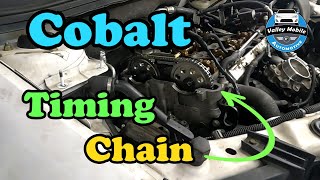
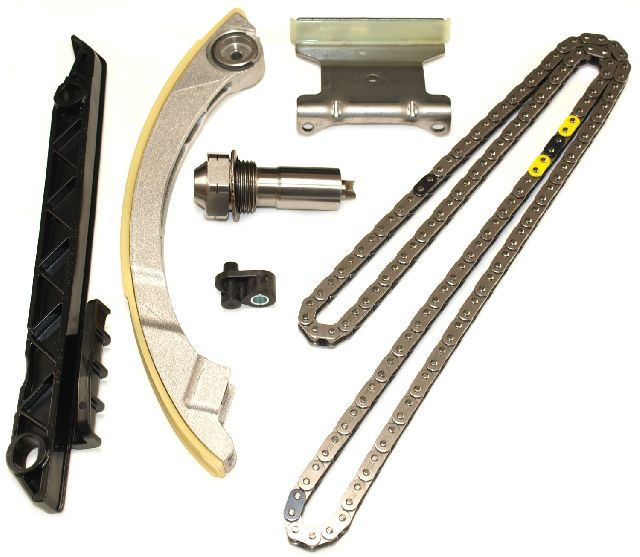
Typical fix: Replace the timing chain, tensioners, and guides. This is a significant repair that is often best left to a professional. 🎬 See how a mechanic replaces the Ecotec timing chain.
Est. part cost: $100-$250
Rare But Worth Checking
- Faulty Camshaft Phaser: → Shop Engine Camshaft The actuator gear on the end of the camshaft can fail internally or get stuck. This is much less common than a solenoid failure and is usually diagnosed after replacing the solenoid and verifying timing chain integrity.
- Faulty Camshaft Position Sensor: → Shop Engine Camshaft Position Sensor While possible, the sensor that reads the camshaft's position is less likely to fail than the actuator solenoid that controls it. A sensor fault would typically throw a different code related to the sensor circuit itself (e.g., P0340). Owners often misdiagnose this part.
Diagnosis Steps
- Check Engine Oil: Verify the oil level is full and the oil is clean. If low or dirty, perform an oil and filter change with 5W-30 oil, clear the code, and see if it returns. This is the cheapest and most common fix.
- Scan for Other Codes: Check if other codes like P0011, P0014, P0016, or P0017 are present to help narrow down the cause.
- Swap the Camshaft Actuator Solenoids: The intake and exhaust solenoids are identical and located on top of the valve cover. The intake solenoid is toward the front (radiator side). Unplug both, remove the single 10mm bolt from each, and swap their positions.
- Re-Scan Codes: Clear the codes and drive the vehicle. If the code changes to P0014, the original intake solenoid is confirmed to be faulty. If P0012 returns, the solenoid is likely not the issue.
- Inspect Solenoid and Wiring: If the code remains P0012 after the swap, remove the intake solenoid again. Inspect its screens for metallic debris or sludge. Check the wiring harness and connector for damage, corrosion, or loose pins.
- Professional Diagnosis: If the oil is good and the solenoid is confirmed to be working, the next step is to suspect a mechanical timing issue. This involves inspecting the timing chain for stretch, which typically requires professional service.
Parts You'll Likely Need
- Intake Camshaft Position Actuator Solenoid
(OEM #12655420 (Superseded by 12628347, 12646783, and 12679099))— This is the most common part to fail for this code on the 2.2L Ecotec engine, usually due to internal clogging or electrical failure.
Trusted brands: ACDelco (OEM), Delphi, NTK
OEM price range: $35-$60
Aftermarket price range: $20-$45 - Timing Chain Kit — If the solenoids and oil are good, a stretched timing chain is the next most likely cause, a known issue on these engines.
Trusted brands: Cloyes, ACDelco
OEM price range: $150-$250
Aftermarket price range: $80-$150
Related Codes That Often Appear With This One
- P0011 — This is for 'Intake Camshaft Position Timing - Over-Advanced'. It has the exact same causes (oil, solenoid, timing chain) and indicates a problem within the same system. Seeing both can point to an erratic solenoid.
- P0014 — This is the equivalent 'Over-Retarded' code for the exhaust camshaft. It will appear if you swap a bad intake solenoid to the exhaust side for diagnosis.
- P0016 / P0017 — These are camshaft-to-crankshaft correlation codes. If you see P0012 along with these, it points more strongly toward a base timing issue, like a stretched timing chain affecting the engine's overall synchronization.
Technical Service Bulletins (TSBs) & Recalls
- NHTSA: 09V419000 - While not for P0012, this safety recall addresses a critical fuel system issue on the Cobalt where the fuel pump module could crack and leak fuel, especially in warm weather states.
- GM Bulletin 10023D - Safety recall for loss of electric power steering, a major issue for this platform.
Platform-Specific Known Issues
- The 2.2L Ecotec engine is known for timing chain stretch and tensioner failure at higher mileage, which can cause a variety of cam/crank correlation codes, including P0012.
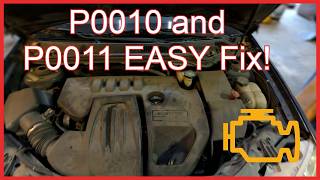
- A real-world owner on CobaltSS.net with codes P0010 and P0011 (related intake cam codes) noted the car would fail to start on the first attempt but would start on the third, along with an unstable idle, confirming the drivability issues associated with a failing solenoid.
Mechanic-Grade Diagnostic Values
- Camshaft Position Actuator Solenoid Resistance — expected: 8-13 Ohms at approximately 68°F (20°C).. Failure: A reading outside this range, or an open/short circuit, indicates a failed solenoid coil.
- Scan Tool: Desired vs. Actual Camshaft Position Angle — expected: The 'Actual' value should closely follow the 'Desired' value commanded by the ECM with minimal lag.. Failure: If the 'Actual' position is consistently more retarded than 'Desired', or fails to change when commanded by a bidirectional scan tool, it points to a stuck phaser, a clogged solenoid, or low oil pressure.
- VVT Solenoid Connector Voltage — expected: With the key on, engine off, one pin should have 12V (battery voltage) from the fuse. The other pin is the control wire from the ECM, which will be pulse-width modulated when the engine is running.. Failure: Absence of 12V power indicates a blown fuse or wiring issue. The control wire can be checked for continuity back to the ECM.
Scan Tool Commands That Help
- GDS2 / Tech2: Camshaft Position Actuator Control — This bidirectional command allows a technician to manually command the intake camshaft actuator solenoid to a specific percentage (e.g., 0%, 25%, 50%). While observing live data for 'Desired' vs 'Actual' cam angle, the technician can verify if the solenoid is responding electrically and if the phaser is responding mechanically. A lack of change in the 'Actual' angle despite the command points directly to a failure in the VVT system (solenoid, phaser, or oil pressure).
Wiring & Ground Locations
- VVT Solenoid Connector (Intake) — On top of the valve cover, toward the front of the vehicle (radiator side).. This is the direct connection to the component most likely to cause P0012. Pin 1 (may vary, check diagram) is typically the 12V power supply from the fuse block, and Pin 2 is the control signal wire from the ECM. Checking for power and signal here is a primary electrical diagnostic step.
- G103 / G105 — G105 is often located on the transmission stud. A ground cable may run from G105 to G103, located on the body behind the driver's side headlight. Another key ground is on the engine block, part of the main negative battery cable harness.. The ECM, ignition control module, and various sensors share these grounds. A corroded or loose ground at these locations can cause erratic voltage, leading to incorrect sensor readings and improper command signals from the ECM to the VVT solenoids, potentially triggering false codes.
Real Owner Repair Stories
- CobaltSS.net forum user via Go-Parts article (Chevrolet Cobalt (shared Ecotec platform)) — Persistent P0017 code (exhaust side equivalent of P0012/P0016)
❌ Tried (didn't work) Replaced exhaust VVT solenoid, Replaced exhaust camshaft position sensor
✅ What actually fixed it A diagnostic shop confirmed the reluctor wheel on the exhaust camshaft had spun on the shaft. This caused the sensor to get an incorrect reading even though the mechanical timing chain was perfectly aligned. The entire exhaust camshaft had to be replaced to resolve the issue. - Chevrolet Owner via NHTSA ODI #11615506 (Cross-model reference: Equinox with shared manufacturer VVT logic) — An owner reported a yellow warning light with codes P0012 and P0017. A mechanic inspected the vehicle and determined that the timing chain kit and oil pump required replacement to resolve the issue.
OEM Part Supersession History
12655420→12628347, then 12646783, then 12679099.— GM regularly updates part designs to integrate new materials, technologies, or manufacturing processes to improve reliability and performance.
Heads up: All listed part numbers are generally cross-compatible for this application. However, it is always best to use the latest available revision (12679099) when replacing.
Model Year Variations Within This Range
- 2005-2008 vs 2009-2010: The 2.2L engine in 2009-2010 models was the LAP, which included Variable Valve Timing (VVT). The 2.2L L61 engine used from 2005-2008 did NOT have VVT. Therefore, code P0012 is only applicable to the 2.4L LE5 engine in the 2006-2008 Cobalt and the 2.2L LAP engine in 2009-2010 models. An L61 engine should not be able to set this code.
Diagnostic Flowchart
Other Known Issues on This Vehicle
Issues unrelated to this code that are worth knowing about as an owner of this generation:
- Sudden Loss of Electric Power Steering (EPS) 🔴 High — Extremely common across all model years. A massive recall was issued. (Ref: NHTSA Recall 10V073000. Dealers were to replace the electric power steering motor.)
- Defective Ignition Switch / Key Stuck in Ignition 🔴 High — Very common, leading to a major safety recall. The switch could move out of the 'Run' position while driving, causing the engine to shut off and disabling airbags. (Ref: NHTSA Recalls 14V047, 14V171. GM's recall numbers were 14113 and 14133.)
- Cracked Fuel Pump Module Causing Fuel Leak 🔴 High — Common enough to warrant a safety recall, particularly for vehicles in warmer climates which accelerated the plastic cracking. (Ref: NHTSA Recalls 09V419000, 12V459000. Dealers were to replace the fuel pump module.)
- Timing Chain Tensioner Failure 🟠 Medium → Shop Engine Timing Chain — More common on pre-2005 Ecotec engines due to an oiling issue, but still a known failure point on 2005+ models, typically after 100,000 miles. (Ref: No specific recall, but GM redesigned the tensioner. The new design is visibly different and provides better oiling.)
- Front Control Arm Bushing Failure 🟡 Low — A common wear item, often failing prematurely. Symptoms include clunking noises from the front suspension over bumps.
Used vs. New Parts: Buying Guide for This Vehicle
When a used part is the smart pick: A used VVT solenoid from a low-mileage donor vehicle can be a cost-effective option for diagnosis (to confirm a failure via swapping) or even for repair, as they are relatively simple components. Other electronic modules like the ECM are also generally safe to source used.
Donor-vehicle mileage cap: roughly under 80000 miles for the part to have meaningful remaining life.
What to inspect on the donor part:
- Check for sludge under the donor vehicle's oil cap, as this indicates poor maintenance and likely compromises the VVT solenoids.
- Ensure the part is from a vehicle of a similar year to maximize compatibility.
- Inspect the solenoid screens for tears or metallic debris before purchase.
OEM-only on this vehicle (don't cheap out):
- Timing Chain Kit: Due to the critical nature of engine timing, using an OEM (ACDelco) or a highly-reputable OEM-supplier like Cloyes is strongly recommended. A failed aftermarket chain or tensioner can cause catastrophic engine damage.
Aftermarket brands forum-validated for this vehicle:
- VVT Solenoids: ACDelco (OEM), Delphi (often an OEM supplier).
- Timing Components: Cloyes.
- Suspension/Performance: ZZPerformance, BC Racing.
Brands owners have reported issues with on this vehicle:
- Generic/No-Name VVT Solenoids: Many forum and user reviews report high failure rates for unbranded, low-cost electronic parts and sensors. While Dorman is a major aftermarket brand, some users prefer to avoid their electronic components and solenoids, citing inconsistent quality compared to OEM.
Real Owner Stories
Aggregated from forums and TSBs cited above. Mileages and costs reflect what owners reported in those sources.
2009 Chevrolet Cobalt LT 2.2L Ecotec
Symptoms: The car would fail to start on the first attempt but would start on the third; also experienced an unstable, surging idle.
What fixed it: Replacement of the intake camshaft position actuator solenoid.
Source hint: CobaltSS.net - Camshaft Positioning sensor code
2005-2010 Chevrolet Cobalt 2.2L Ecotec — ~125000 miles
Symptoms: Rattling or buzzing sound from the passenger side of the engine for a few seconds on a cold start.
What fixed it: Replacement of the timing chain, tensioners, and guides due to chain stretch.
Source hint: vehicle_specific_issues / ChevyTalk Forum - 2.2 Ecotec 4 cyl fix.
Related OBD-II Codes
Frequently Asked Questions
Is there a recall for the P0012 code on my 2005-2010 Chevrolet Cobalt?
I have a P0012 code; should I replace the camshaft position sensors first?
Can I use any oil to fix the P0012 code on my 2.2L Ecotec?
How can I tell if my P0012 is a solenoid or a mechanical timing chain issue?
Is the 2.2L Ecotec engine in the Cobalt known for specific timing hardware failures?
Does the P0012 issue affect the Pontiac G5 as well?
Helpful Videos
We Have This Part in Stock


The information in this article is provided for general reference and educational purposes only. Vehicle specifications, procedures, and part compatibility can vary by production date, trim level, and region. Always consult your vehicle's factory service manual and verify part numbers before purchasing or performing repairs. Safety-critical components such as airbags, seat belts, and braking systems should be installed by a qualified professional.
- Chevrolet Cobalt:
- 🧭 Diagnostic Flowchart
- 🎬 Helpful Videos
- 🛍️ Shop This Part
- What's Unique About the 2005-2010 Chevrolet Cobalt
- Symptoms You May Notice
- Most Likely Causes
- Rare But Worth Checking
- Diagnosis Steps
- Parts You'll Likely Need
- Related Codes That Often Appear With This One
- Technical Service Bulletins (TSBs) & Recalls
- Platform-Specific Known Issues
- Mechanic-Grade Diagnostic Values
- Scan Tool Commands That Help
- Wiring & Ground Locations
- Real Owner Repair Stories
- OEM Part Supersession History
- Model Year Variations Within This Range
- Other Known Issues on This Vehicle
- Used vs. New Parts: Buying Guide for This Vehicle
- Real Owner Stories
- 2009 Chevrolet Cobalt LT 2.2L Ecotec
- 2005-2010 Chevrolet Cobalt 2.2L Ecotec — ~125000 miles
- Related OBD-II Codes
- Frequently Asked Questions
- 🎟️ Get 5% Off