

P0012 on 2012-2016 Chevrolet Impala 3.6L: Causes for Over-Retarded Cam Timing
On the 3.6L V6 Impala, code P0012 is most often caused by low or dirty engine oil, or a failing intake camshaft actuator solenoid on Bank 1 (firewall side). An oil change is the first step; if that fails, a new solenoid is the likely fix, costing about $50-$95 for an OEM part. The correct OEM part number is 12636175.
- First, check your engine oil. Low or dirty oil is the #1 cause of P0012 on this engine.
- If the oil is fine, the Bank 1 (firewall side) intake (upper) camshaft actuator solenoid is the most likely culprit. It's a relatively easy and affordable part to replace.
- A simple way to confirm a bad solenoid is to swap it with the exhaust solenoid below it. If the code changes to P0014, you've found the problem.
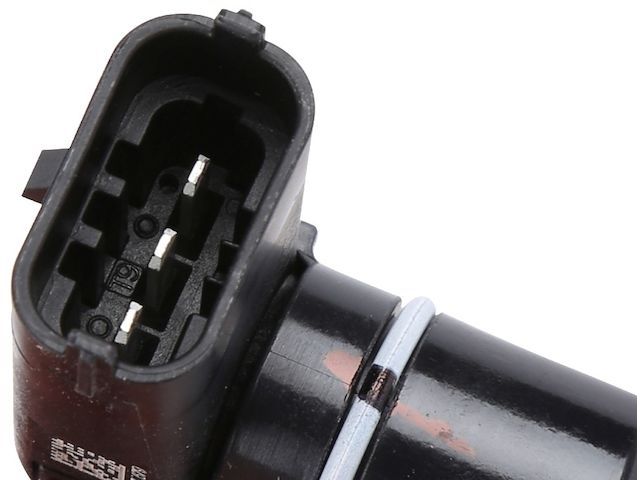
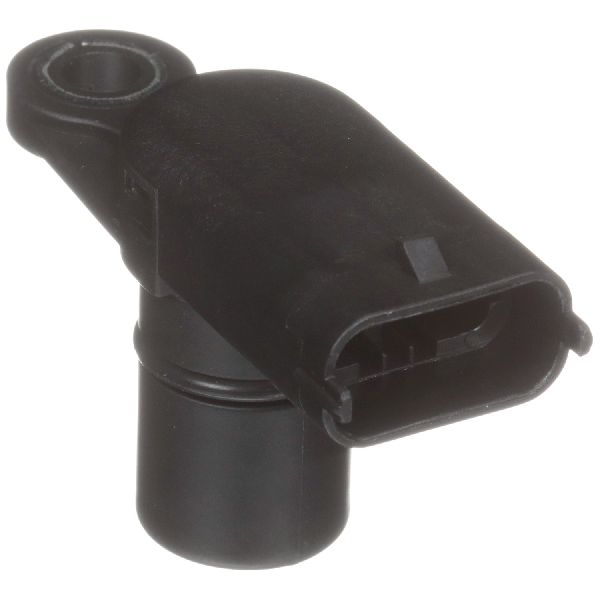
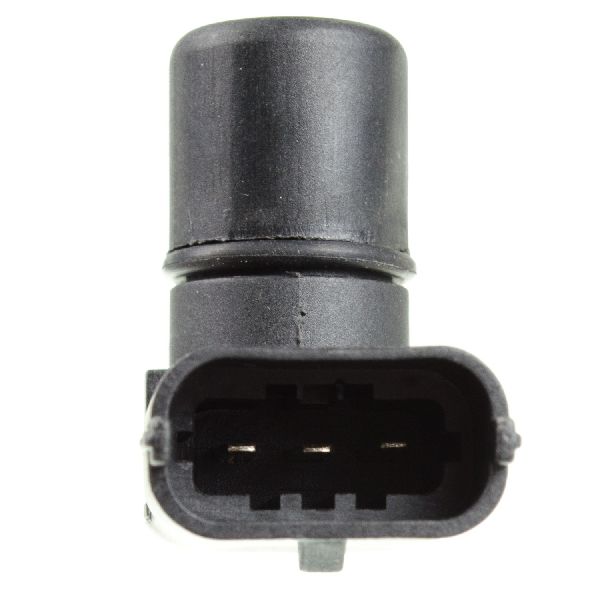
- Do not replace the camshaft position sensor; it is almost never the cause of this code.
- If you hear a rattling noise from the engine on cold starts, the timing chain may be stretched, which requires professional repair.
What's Unique About the 2012-2016 Chevrolet Impala
The GM 3.6L LFX V6 engine is known for being particularly sensitive to engine oil level and quality. The hydraulic VVT system uses oil pressure to change cam timing, and any sludge or low pressure can quickly cause timing deviation codes like P0012. While the LFX engine was an improvement over its predecessor (the LLT) regarding timing chain durability, it can still be susceptible to timing chain stretch, which can also trigger this code. However, the most common failure point by far is the camshaft actuator solenoid itself, which can become clogged with debris or fail electrically.
Generation note: This range covers the end of the ninth generation (2012-2013) and the start of the tenth generation (2014-2016). The ninth-gen body style was also sold as the 'Impala Limited' for fleets from 2014-2016. Both platforms used the same 3.6L LFX V6 engine, so the causes, diagnosis, and fixes for this code are identical.
Symptoms You May Notice
- Check Engine Light is on
- Rough or unstable idle
- Reduced engine power and sluggish acceleration
- Engine stalling, especially at low speeds or when stopping
- Decreased fuel economy
- Rattling noise from the engine on a cold start (if related to timing chain issues)
- Hard starting
- Replacing the camshaft position sensor. The sensor is usually just reporting the timing problem correctly; it is rarely the cause of a P0012 code.
Most Likely Causes
- Low or Dirty Engine Oil 🔴 High Probability The VVT system uses small oil passages that are easily clogged by sludge or starved by low oil levels. The 3.6L LFX is known to be sensitive to oil condition, and extended oil change intervals can exacerbate this.
How to confirm: Check the oil dipstick. The oil level should be full and the oil should appear clean (not black, thick, or sludgy).
Typical fix: Perform an engine oil and filter change using the correct viscosity full synthetic oil (ACDelco dexos1 5W-30 is recommended).
Est. part cost: $40-$80 - Faulty Intake Camshaft Position Actuator Solenoid (Bank 1) 🔴 High Probability → Shop Engine Camshaft These solenoids are a very common failure item on the 3.6L LFX engine. The internal screens can get clogged with debris or the solenoid can fail electrically.
How to confirm: Locate the Bank 1 (firewall side) intake solenoid (it's the upper of the two). Swap it with the exhaust solenoid below it. Clear the codes and drive. If the code changes to P0014 (Exhaust Camshaft Position System Performance), the solenoid is bad. You can also test the solenoid's resistance; a good one should read between 7-12 ohms.
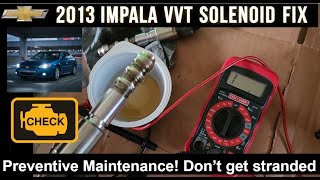
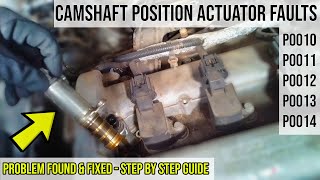
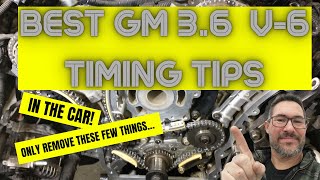
Typical fix: Replace the Bank 1 intake camshaft position actuator solenoid. The OEM part number is 12636175. 🎬 Watch: A step-by-step guide to replacing your VVT solenoids.
Est. part cost: $50-$95 - Stretched Timing Chain ⚪ Low Probability → Shop Engine Timing Chain While the LFX design improved upon the earlier LLT, premature timing chain wear is still a known, albeit less common, issue on this engine. It usually occurs at higher mileage or with a history of infrequent oil changes, which was a problem exacerbated by early GM Oil Life Monitor (OLM) calibrations suggesting overly long intervals.
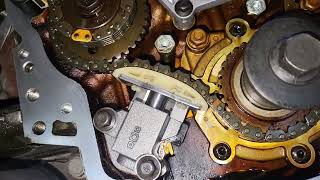
How to confirm: Listen for a distinct rattling or scraping noise from the front of the engine (passenger side) for 2-3 seconds on a cold start. This is a strong indicator. This is often accompanied by 🎬 Listen to the specific clattering noise caused by VVT issues. other codes like P0008, P0016, or P0018. Professional diagnosis is required to confirm chain slack.
Typical fix: Replace all three timing chains, tensioners, and guides. This is a major, labor-intensive repair. GM TSB 12-06-01-009D provides details on this procedure.
Est. part cost: $400-$900
Rare But Worth Checking
- Faulty Camshaft Phaser: → Shop Engine Camshaft The phaser is the gear at the end of the camshaft that the solenoid acts upon. It can become stuck or clogged internally, but this is much less common than a solenoid failure.
- Slipped Crankshaft Reluctor Ring: Extremely rare, but covered in GM TSB PIP3423J. If timing chains are replaced and timing codes immediately return, this could be the cause. It requires crankshaft replacement.
- Clogged Solenoid Oil Passages: Even with a good solenoid, the oil passages in the cylinder head leading to the solenoid can become blocked with sludge, preventing proper operation. This usually requires removal of the valve cover to clean.
Diagnosis Steps
- Check Engine Oil: Verify the oil level is full and the oil is clean. If low, top it off. If dirty or past its service interval, perform a full oil and filter change with 5W-30 full synthetic oil meeting GM's dexos1 specification.
- Scan for Other Codes: Check for other timing-related codes (P0008, P0011, P0016, P0022, etc.) that could point to a larger issue.
- Inspect Solenoid Connector: Check the wiring and connector for the Bank 1 intake solenoid for damage, corrosion, or oil contamination.
- Swap Solenoids: Swap the Bank 1 intake (upper) and exhaust (lower) solenoids on the firewall-side cylinder head. They are identical parts. Clear codes and drive. If the code changes to P0014, the solenoid you moved is faulty.
- Test Solenoid (Optional): If you have a multimeter, unplug the solenoid and measure the resistance across its two pins. 🎬 See how to test your solenoids using a multimeter. A good solenoid should measure between 7 and 12 ohms. An open circuit (infinite resistance) or a short means it's bad.
- Replace Solenoid: If the solenoid is confirmed bad, replace it with a new one. The recommended OEM part is ACDelco 12636175.
- Check for Timing Chain Noise: If the problem persists, listen carefully for a rattling noise on cold startups. If heard, the timing chains are the likely cause and require professional inspection.
Parts You'll Likely Need
- Intake Camshaft Position Actuator Solenoid
(OEM #12636175)— This is the most common part to fail, causing P0012. It gets clogged with sludge or fails electrically, preventing proper VVT operation.
Trusted brands: ACDelco (GM Genuine)
OEM price range: $50-$95
Aftermarket price range: $25-$60 - Engine Oil and Filter — Low or dirty oil is the leading cause of all VVT system faults. This should always be the first step in addressing the code.
Trusted brands: ACDelco, Mobil 1, Pennzoil
OEM price range: $40-$80
Aftermarket price range: $30-$60
Related Codes That Often Appear With This One
- P0011 — This is the over-advanced code for the same camshaft. Seeing them together or intermittently can indicate a sticking solenoid or erratic oil pressure.
- P0008 — This code indicates a general engine position system performance error. When seen with P0012 on a 3.6L V6, it strongly points towards a stretched timing chain.
- P0022 — This is the same 'over-retarded' code but for Bank 2 (radiator side). If both P0012 and P0022 are present, it suggests a systemic issue like low/dirty oil or low oil pressure affecting the entire engine.
Technical Service Bulletins (TSBs) & Recalls
- PIP3423J / SB-10055422-3142: While for codes like P0008/P0016/P0017, this TSB notes that a slipped crankshaft reluctor ring can be a rare cause of persistent timing codes on the 3.6L LFX engine after a timing chain service.
- 12-06-01-009D: Provides information and part numbers for High Feature V6 timing chain kits and guide replacement for codes including P0008, P0016, etc., which are related to P0012 when a timing chain is the cause.
- 19-NA-256: Provides diagnostic tips for engine noises and criteria for engine replacement vs. repair for the HFV6 engine family, noting that sludge from lack of maintenance or low oil can be a cause for major failure.
Platform-Specific Known Issues
- The 3.6L LFX engine has a known history of camshaft actuator solenoid failures. The solenoids can become clogged with engine sludge, especially if oil change intervals are extended.
- While less common on the LFX than the older LLT engine, premature timing chain stretch is still a documented issue that can cause this code, often appearing with code P0008.
- The Bank 1 (firewall side) solenoids are more difficult to access than Bank 2, requiring removal of the engine cover and sometimes maneuvering around wiring harnesses.
Mechanic-Grade Diagnostic Values
- Camshaft Position Actuator Solenoid Resistance — expected: 8-12 Ohms. Some sources cite a wider range of 5-15 Ohms, or a more precise 6.9-7.9 Ohms at 68°F (20°C).. Failure: An open circuit (infinite resistance), a short (near zero ohms), or a reading significantly outside the expected range.
- Scan Tool: Desired vs. Actual Camshaft Position Angle Variance — expected: Less than 2-5 degrees at idle and during commanded changes.. Failure: A consistent variance greater than 5-6 degrees for more than a few seconds will trigger a fault code.
- Engine Oil Pressure (LFX Engine, Warm Idle) — expected: 20-30 PSI is considered normal at warm idle.. Failure: Significantly lower pressure can starve VVT components. Note that pressure can be up to 110 PSI on a cold start.
- VVT Solenoid Connector Voltage — expected: Battery Voltage (~12V) on the power supply pin (typically Pin 1) with ignition on, engine off.. Failure: No voltage or low voltage points to a problem in the wiring harness, fuse, or ECM power supply, not the solenoid itself.
Scan Tool Commands That Help
- GDS2 (GM Techline Connect) or equivalent professional scanner: Camshaft Position Actuator Test — This bidirectional command allows a technician to manually command the VVT solenoid ON and OFF while observing the 'Camshaft Position Variance' PID. If the variance angle does not change when the solenoid is commanded, it confirms a fault with the solenoid, a clogged oil passage, or a mechanically stuck phaser. It is a critical step to isolate an electrical/hydraulic issue from a base mechanical timing problem (like a stretched chain).
Wiring & Ground Locations
- G104 / G109 — On the front of the right (passenger side) cylinder head for the 3.6L LFX engine.. This is a primary engine ground. A poor connection here due to corrosion or looseness can introduce electrical noise or voltage drops, potentially affecting the ECM and its sensor readings, leading to false or intermittent codes.
- G106 — Located on the right rear of the engine on 2012+ models.. Another critical engine ground point. Ensuring all engine grounds are clean and tight is a foundational step in diagnosing any electronic engine control issue.
- Bank 1 Camshaft Actuator Solenoid Connector — On the Bank 1 (firewall side) cylinder head, connecting to the intake (upper) solenoid.. This connector provides the Pulse-Width Modulated (PWM) control signal from the ECM. Pin 1 is typically the ignition voltage supply, and Pin 2 is the control circuit that the ECM switches to ground. Testing for voltage and signal at these pins can diagnose a wiring or ECM driver issue.
Real Owner Repair Stories
- Go-Parts Case Study (2018 GMC Canyon with 3.6L V6 (LFX engine family)) — Check engine light with code P0014 (exhaust cam timing, but same component type), ticking noise, reduced fuel economy.
❌ Tried (didn't work) Verifying engine oil level and condition, which were normal.
✅ What actually fixed it The technician tested the VVT solenoid's resistance and found it was 15 ohms, which was outside the manufacturer's specification of 6-10 ohms. Replacing the faulty VVT solenoid resolved all symptoms and cleared the code. - Cross-Manufacturer Reference: NHTSA ODI #11615506 — In a report involving a similar GM engine platform, an owner experienced a yellow warning light with codes P0012 and P0017. A mechanic inspected the vehicle and determined that the timing chain kit and oil pump required replacement to resolve the issue.
OEM Part Supersession History
12586722, 12588943, 12615613, 12626012→12636175— Standard part evolution for improved reliability, material, or manufacturing process.
Heads up: TSB #PIP5096C notes that for some 3.6L LFX engines (identified by an 'A' on the EUN sticker), a sticking solenoid issue was traced to a supplier tolerance problem. On these specific engines, the bulletin advises replacing the solenoid with the new service part rather than swapping it with another solenoid from the engine for diagnosis.
Diagnostic Flowchart
Other Known Issues on This Vehicle
Issues unrelated to this code that are worth knowing about as an owner of this generation:
- Torque Converter Shudder/Failure 🟠 Medium — Common issue reported by owners, often manifesting as a shudder or hesitation during light acceleration or when shifting. Can occur at various mileages.
- Intake Valve Carbon Buildup 🟠 Medium — As a direct-injection (DI) engine, the LFX is susceptible to carbon buildup on the back of the intake valves over time, as fuel does not wash over them. This can lead to rough idle and misfires at higher mileage (typically 80k+ miles).
- Power Steering Hose Leak (2012 models) 🔴 High — Affects a specific build range of 2012 Impalas where a power steering hose was misrouted near the catalytic converter, posing a fire risk. (Ref: NHTSA Campaign #11V398000 (Recall 11224))
- Cracked Air Intake Duct Hose 🟡 Low — The flexible rubber intake boot between the air filter housing and the throttle body is known to crack, causing unmetered air to enter the engine and trigger lean codes (P0171/P0174).
- Clogged PCV Orifice in Valve Cover 🟡 Low → Shop Engine Valve Cover — The fixed PCV orifice, which is integrated into the valve cover, can become clogged. This leads to excessive crankcase pressure, high oil consumption, and can cause lean codes. The fix requires replacing the entire valve cover.
Used vs. New Parts: Buying Guide for This Vehicle
When a used part is the smart pick: For this specific repair, buying a used camshaft actuator solenoid is NOT recommended. These parts are a high-failure item due to internal clogging from oil sludge and electrical failure from heat cycles. The cost of a new OEM part is low enough that the risk of a used part failing shortly after installation outweighs the potential savings.
What to inspect on the donor part:
- Not applicable as used parts are not advised for this component.
OEM-only on this vehicle (don't cheap out):
- Camshaft Actuator Solenoid: While not strictly 'OEM-only', using a genuine ACDelco part (12636175) is highly recommended for reliability and to avoid compatibility issues.
- Timing Chain Kit: If the cause is a stretched chain, using a complete OEM kit is critical to ensure all updated components (chains, guides, tensioners) are installed together.
Aftermarket brands forum-validated for this vehicle:
- Dorman (Part #917-215): This is a widely available and commonly used aftermarket alternative for the VVT solenoid, with generally positive reviews for fit and function.
Brands owners have reported issues with on this vehicle:
- Unbranded/No-name oil filters: GM has issued service bulletins (e.g., 10-06-01-003B) warning that some aftermarket oil filters can disintegrate internally, sending debris through the engine and clogging VVT solenoid screens, directly causing codes like P0012.
Real Owner Stories
Aggregated from forums and TSBs cited above. Mileages and costs reflect what owners reported in those sources.
2012 Chevrolet Impala 3.6L LFX
Symptoms: The owner described a hesitation and slippage feeling during acceleration from a stop, though it was intermittent.
What fixed it: While the specific user report was intermittent, the context identifies that replacing the VVT solenoid is the standard fix for related VVT performance issues when oil changes fail to resolve it.
Source hint: ChevroletForum.com user description of 2012 Impala hesitation
2012-2015 Chevrolet Camaro 3.6L LFX
Symptoms: Owners on enthusiast forums discussed whether the LFX still suffered from the timing chain issues of the previous LLT engine.
What fixed it: The consensus and technical data indicate that while the LFX design was improved, timing chain stretch can still occur, requiring replacement of all three chains, tensioners, and guides as per TSB 12-06-01-009D.
Source hint: Camaro5.com thread titled '3.6 and timing chain issues on LFX?'
2012-2016 Chevrolet Impala 3.6L LFX
Symptoms: Check engine light with VVT performance codes; oil change did not resolve the issue.
What fixed it: Replacing the VVT solenoid.
Source hint: Reddit.com (r/MechanicAdvice) reports on fixing P0011/P0012 by replacing the VVT solenoid
Related OBD-II Codes
Frequently Asked Questions
Which specific TSB provides the repair procedure for timing chain replacement on my 3.6L LFX engine?
I have a 2012 Impala with P0012 and a hesitation when accelerating. Could this be related to the transmission?
What is the recommended oil for the 2012-2016 Chevrolet Impala 3.6L to prevent VVT codes?
Is there a TSB for persistent timing codes even after the timing chain has been serviced?
Which solenoid should I replace for a P0012 code on my Impala V6?
Can I test the solenoid before buying a new one?
Helpful Videos
We Have This Part in Stock


The information in this article is provided for general reference and educational purposes only. Vehicle specifications, procedures, and part compatibility can vary by production date, trim level, and region. Always consult your vehicle's factory service manual and verify part numbers before purchasing or performing repairs. Safety-critical components such as airbags, seat belts, and braking systems should be installed by a qualified professional.
- Chevrolet Impala:
- 🧭 Diagnostic Flowchart
- 🎬 Helpful Videos
- 🛍️ Shop This Part
- What's Unique About the 2012-2016 Chevrolet Impala
- Symptoms You May Notice
- Most Likely Causes
- Rare But Worth Checking
- Diagnosis Steps
- Parts You'll Likely Need
- Related Codes That Often Appear With This One
- Technical Service Bulletins (TSBs) & Recalls
- Platform-Specific Known Issues
- Mechanic-Grade Diagnostic Values
- Scan Tool Commands That Help
- Wiring & Ground Locations
- Real Owner Repair Stories
- OEM Part Supersession History
- Other Known Issues on This Vehicle
- Used vs. New Parts: Buying Guide for This Vehicle
- Real Owner Stories
- 2012 Chevrolet Impala 3.6L LFX
- 2012-2015 Chevrolet Camaro 3.6L LFX
- 2012-2016 Chevrolet Impala 3.6L LFX
- Related OBD-II Codes
- Frequently Asked Questions
- 🎟️ Get 5% Off