

P0012 on 2015-2020 Ford Explorer: Camshaft Timing Causes and Fixes
On a 2015-2020 Ford Explorer, code P0012 is most often caused by low or dirty engine oil, or a failing intake VCT solenoid on Bank 1. An oil change is the first step; if that fails, replacing the VCT solenoid is the next likely fix, costing around $50-$150 for the part. In some cases, especially on the 3.5L engines, it can indicate a more serious timing chain issue.
- P0012 on a 2015-2020 Explorer is a serious code that indicates a problem with the engine's camshaft timing.
- Always check the engine oil level and condition first. A simple oil change is the cheapest and most common fix.
- The most likely faulty part is the Bank 1 intake VCT solenoid, which is a known issue acknowledged by Ford TSBs.
- An engine rattle at startup is a major warning sign that the problem could be a more serious and expensive timing chain issue.
- Due to the potential for major engine damage, it is critical to address this code promptly and not continue driving indefinitely.
What's Unique About the 2015-2020 Ford EXPLORER

For the 2015-2020 Explorer, particularly those with the 3.5L and 2.3L engines, this code is frequently linked to known issues with the VCT solenoids. Ford has issued multiple Technical Service Bulletins (TSBs) acknowledging that small debris in the engine oil can cause these solenoids to stick, directly leading to P0012 and related codes. The official dealer procedure before replacement, per TSB SSM 48423, is to use a diagnostic tool to cycle the affected solenoid 10 times to try and dislodge the debris (Pinpoint Test HK11). 🎬 Watch: A mechanic explains the Ford dealer memo and solenoid testing This specific vulnerability to debris makes the VCT solenoid a primary suspect right after checking the oil.
Diagnostic Flowchart

Tap your situation to follow the diagnostic path that matches what you're seeing on this vehicle.
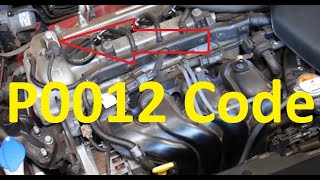
Generation note: This year range covers two Explorer generations. The 2015-2019 models are the 5th generation, commonly equipped with the 2.3L EcoBoost, 🎬 Watch: How to fix P0012 on the 2.3L engine 3.5L V6, and 3.5L EcoBoost V6. The 2020 model is the first year of the 6th generation, featuring the 2.3L EcoBoost, 3.0L EcoBoost V6, and a hybrid option. The causes for P0012 are similar across these engines as they all use a VCT system that is highly dependent on oil pressure and cleanliness.
Symptoms You May Notice

- Check Engine Light is on
- Rough or unstable idle
- Engine stalling, especially at low speeds or when stopping
- Noticeable loss of power and sluggish acceleration
- Difficulty starting the engine
- Decreased fuel economy
- Rattling noise from the engine, particularly on a cold start, which may indicate a timing chain or phaser problem [ODI #11611949, 9]
- Replacing the camshaft position sensor. While a sensor can fail, it typically produces a different set of codes related to sensor circuits (e.g., P0340). P0012 is a mechanical timing correlation error, not a sensor circuit error.
- Immediately replacing the timing chain without first checking the oil and VCT solenoids. Always start with the simplest and most common fixes, as an oil change or a single solenoid can often resolve the issue.
- Replacing only the VCT solenoid when a timing chain rattle is present. The rattle is a strong indicator of a larger mechanical issue with the chain, guides, or phasers that the solenoid cannot fix.
Most Likely Causes

- Low or Dirty Engine Oil 🔴 High Probability The VCT system is hydraulic and highly sensitive to oil pressure and cleanliness. Extended oil change intervals can lead to sludge that clogs the small passages in the VCT solenoids and phasers.
How to confirm: Check the engine oil level on the dipstick and inspect its condition. If the oil is below the minimum mark, black, or sludgy, this is the likely cause. A dry dipstick is a major red flag.
Typical fix: Perform an engine oil and filter change using the manufacturer-specified grade of oil (e.g., 5W-30 for many of these engines). Clear the codes and drive to see if P0012 returns.
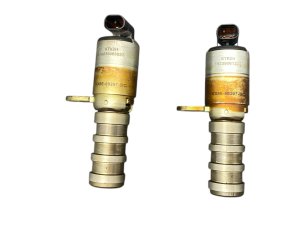
Est. part cost: $40-$80 - Failing Intake VCT Solenoid (Bank 1) 🔴 High Probability → Shop Engine Variable Valve Timing (VVT) Solenoid Ford has issued multiple TSBs (SSM 47170, SSM 48423) stating that debris can cause the VCT solenoid to stick, which is a well-documented issue on this platform. These solenoids have fine mesh screens that can become clogged.
How to confirm: After an oil change, if the code returns, the solenoid is the next suspect. A mechanic can command the solenoid with a scan tool to check its response. It can also be removed, inspected for sludge on its screens, and tested with a 12V source to see if it actuates. Resistance should be between 5-15 ohms.
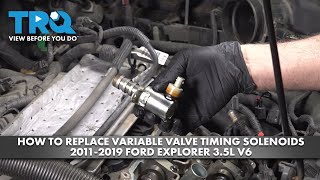
Typical fix: Replace the Bank 1 intake VCT solenoid. Since the valve cover must be removed, many mechanics recommend replacing all solenoids on that bank (or all four on V6 engines) at the same time. 🎬 See this step-by-step VCT solenoid replacement for 3.5L V6 models
Est. part cost: $40-$150 - Stretched Timing Chain or Failed Tensioner/Guides 🟡 Medium Probability → Shop Engine Timing Chain The 3.5L engines (both naturally aspirated and EcoBoost) are known to be susceptible to timing chain stretch and guide/tensioner failure at higher mileage, often exacerbated by infrequent oil changes. An owner complaint directly linked a P0012 code to a broken tensioner. [ODI #11611949]
How to confirm: A persistent rattling noise on startup is a key symptom. A mechanic must perform an invasive inspection of the timing components to confirm slack in the chain or find broken plastic guide pieces in the oil pan. If the chain has jumped a tooth, the engine may not start at all.
Typical fix: Replace the timing chain, tensioners, guides, and often the cam phasers as a complete kit. This is a labor-intensive job.
Est. part cost: $400-$800
Rare But Worth Checking
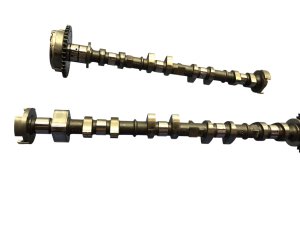
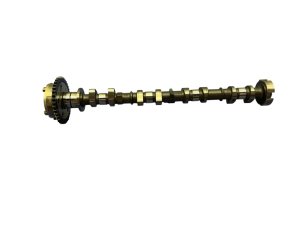
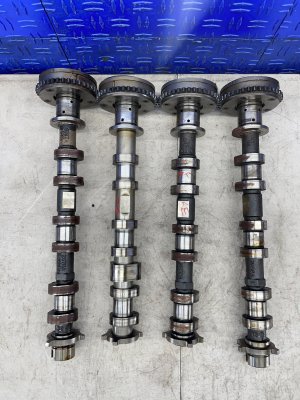
- Failed Camshaft Phaser: → Shop Engine Camshaft The phaser is the gear at the end of the camshaft that the VCT solenoid controls. It can fail mechanically, get stuck, or lose its internal locking pin, causing a timing code and startup rattle. This is less common than a solenoid failure but is often replaced along with the timing chain as a preventative measure.
- Wiring or Connector Issue: An open or shorted wire, or a corroded connector at the VCT solenoid can prevent it from functioning correctly, mimicking a failed solenoid. This should be checked before replacing parts.
Diagnosis Steps
- Check Engine Oil Level and Condition: Ensure the oil is full and clean. If it's low or dirty, perform an oil and filter change with the correct viscosity oil, clear the code, and see if it returns.
- Scan for Other Codes: Check if other VCT or sensor codes are present to understand the full scope of the issue.
- Listen for Engine Noises: Listen for a rattling sound during cold starts. A rattle strongly suggests a problem with the timing chain or phasers.
- Inspect VCT Solenoid: If the code returns and there is no rattle, inspect the Bank 1 intake VCT solenoid. On V6 engines, Bank 1 is the passenger side of the engine (the bank with cylinder #1). The solenoid is located under the valve cover.
- Test the Solenoid: Remove the solenoid and check its screens for sludge or debris. You can test its mechanical function by applying 12V power to its terminals to see if the internal plunger moves. Check its resistance with a multimeter (should be ~5-15 ohms).
- Professional Diagnosis: If other steps fail, a professional diagnosis is recommended. A mechanic can use a scan tool to monitor desired vs. actual cam angles and perform the TSB-recommended solenoid cycling test. If necessary, they will perform a mechanical inspection of the timing chain for stretching or damage to the guides and tensioner.
Parts You'll Likely Need
- Engine Oil and Filter — This is the first and most crucial step, as low or dirty oil is the most common cause of VCT system problems.
Trusted brands: Motorcraft, Mobil 1, Castrol
OEM price range: $50-$90
Aftermarket price range: $40-$80 - Variable Camshaft Timing (VCT) Solenoid
(OEM #HL3Z-6M280-A (verify by VIN))— This solenoid is a known failure point, as documented in Ford TSBs. It gets clogged with debris and sticks, causing the timing to be over-retarded.
Trusted brands: Motorcraft, Dorman, NGK
OEM price range: $80-$150
Aftermarket price range: $40-$90 - Timing Chain Kit
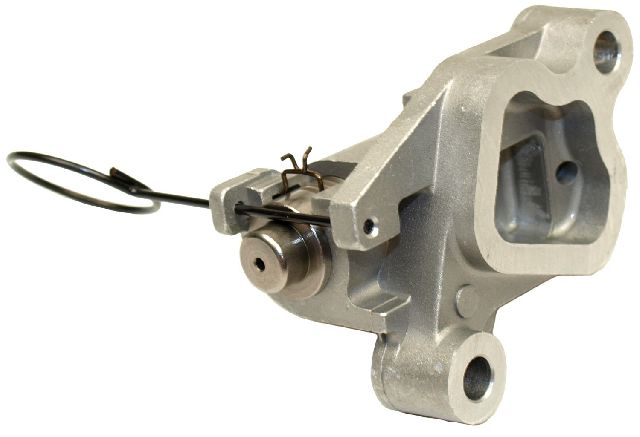
(OEM #AT4Z-6D256-A (3.5L NA, verify by VIN))— If the engine has a startup rattle, the timing chain may be stretched or the tensioner may have failed, requiring a full kit replacement. This is a common failure on the 3.5L Cyclone engine family. [9, ODI #11611949]
Trusted brands: Motorcraft, Cloyes
OEM price range: $500-$800
Aftermarket price range: $300-$500
Related Codes That Often Appear With This One
- P052B — This code is for 'Cold Start Camshaft Position Timing Over-Retarded', which often appears with P0012 and points specifically to a problem that is most apparent when the engine and oil are cold, such as a sticking VCT solenoid or a noisy cam phaser.
- P0011, P0014, P0015, P0021, P0022 — These are all VCT-related timing codes for the other camshafts (intake/exhaust, bank 1/2). Seeing them together can indicate a widespread oil pressure or contamination problem affecting the entire VCT system. The cited TSBs list all these codes as having a common cause.
Technical Service Bulletins (TSBs) & Recalls
- SSM 47170: Notes that various VCT codes including P0012 may be caused by small debris causing the VCT solenoid to stick.
- SSM 54366: Reiterates the diagnostic procedure for a range of VCT codes including P0012.
- SSM 48423: Another bulletin pointing to debris causing the VCT solenoid to stick for codes P0011, P0012, and others.
Platform-Specific Known Issues
- TSB SSM 47170, SSM 48423, and others specifically mention that P0012 (and other VCT codes) on these vehicles may be due to small debris causing the VCT solenoid to stick. The recommended first step for a technician is to perform a solenoid cycling test with a scan tool before replacement.
Mechanic-Grade Diagnostic Values
- VCT Solenoid Internal Resistance — expected: 6.9 to 7.9 ohms at 68°F (20°C). Some sources state a broader acceptable range of 7 to 14 ohms.. Failure: A reading of 0 ohms (short circuit) or infinite/OL (open circuit) indicates a failed solenoid that needs replacement.
- VCT Solenoid Power Supply Voltage — expected: Battery voltage (approx. 12V) should be present at one of the two pins on the solenoid's electrical connector with the ignition on, engine off.. Failure: No voltage indicates a problem with the wiring or the fuse supplying power to the VCT circuit.
- Ford IDS Live Data - VCT Advance Error (VCT_ADV_ERR) — expected: The value for Bank 1 and Bank 2 should be close to 0 degrees at idle and respond similarly during a road test.. Failure: Excessive variation or a consistently high number on Bank 1 while the drivability concern is present suggests a problem in the Bank 1 VCT system.
Scan Tool Commands That Help
- Ford IDS (Integrated Diagnostic System): Pinpoint Test HK12: VCT Solenoid Cycle Test — This is the official Ford procedure to use when VCT codes like P0012 are present. The command cycles the solenoid on and off 10 times to attempt to dislodge small debris stuck in the valve, which can potentially fix the issue without replacing the part.
- Ford IDS (or equivalent professional scanner): Monitor VCT PIDs (VCT_ADV_ERR, VCTDUTY#) — During a road test, a technician can monitor the VCT advance error and duty cycle PIDs. If the PCM is commanding a high duty cycle to the Bank 1 solenoid but the advance error remains high, it points to a mechanical or flow issue (stuck solenoid, bad phaser, oil blockage) rather than an electrical one.
Wiring & Ground Locations
- Bank 1 VCT Solenoids — On the 3.5L V6, the solenoids are located under the front (Bank 1) valve cover. The intake solenoid is typically on top with a white or grey connector, and the exhaust solenoid is below it.. This is the physical location of the component most likely causing the P0012 code. Access requires removing the valve cover.
- VCT Solenoid Connector — Connects directly to the top of the VCT solenoid under the valve cover.. The connector has two pins: one receives 12V power from a fuse in the battery junction box, and the other is the control wire that the PCM provides a ground to, in order to actuate the solenoid. Checking for power at this connector is a key diagnostic step.
- Engine Wiring Harness — Routed across the top and sides of the engine.. While no specific chafe point is universally cited for this circuit, Ford engine harnesses can be prone to chafing where they make sharp bends or are secured too tightly. An intermittent short or open in the VCT solenoid's control wire can cause this code and be difficult to diagnose.
Real Owner Repair Stories
- YouTube video by 'Automotive Solutionz' (2017 Ford Explorer 2.3L EcoBoost) — Check engine light with codes P0012 and P0014.
❌ Tried (didn't work) The video proceeds directly to the successful diagnosis.
✅ What actually fixed it The mechanic removed the valve cover and found both VCT solenoids were heavily covered in oil sludge. Replacing both solenoids resolved the codes. The video highlights how sludge buildup physically prevents the solenoid from operating correctly. - Reddit user in r/f150 (Ford F-150 with V8 (similar VCT system design)) — P0012 code.
❌ Tried (didn't work) The discussion implies that using non-OEM parts can lead to a recurring failure.
✅ What actually fixed it The consensus advice was to replace all VCT solenoids at the same time, not just the failing one, and to strictly use genuine Ford (Motorcraft) parts. One user commented that they replaced their solenoids with OEM parts at 80k miles which fixed the issue, but it returned at 165k miles, suggesting even OEM parts have a finite life but are more reliable than aftermarket alternatives.
OEM Part Supersession History
Varies by specific engine and bank→HL3Z-6M280-A (Commonly used, but verify by VIN)— Part consolidation and design updates.
Heads up: For the 3.5L Ti-VCT V6 engine specifically, there can be different part numbers for the intake vs. exhaust solenoids, and for the left vs. right bank (e.g., AT4Z-6M280-A, AT4Z-6M280-B). Using the wrong solenoid can result in improper operation. Always verify the correct part number with the vehicle's VIN before ordering.
Model Year Variations Within This Range
- 2020: The 2020 model year is a complete redesign (6th generation) and moved to a RWD-based platform from the previous FWD-based platform. The naturally aspirated 3.5L V6 was discontinued. The 2.3L EcoBoost was retuned for more power (300 hp vs. 280 hp), and the 3.5L EcoBoost was replaced by a 3.0L EcoBoost in performance trims. While the engines changed, they still use oil-dependent VCT systems, making the root causes of P0012 (oil contamination, solenoid failure) fundamentally the same.
Helpful Videos

Used OEM Parts in Stock
New Aftermarket Parts Available


The information in this article is provided for general reference and educational purposes only. Vehicle specifications, procedures, and part compatibility can vary by production date, trim level, and region. Always consult your vehicle's factory service manual and verify part numbers before purchasing or performing repairs. Safety-critical components such as airbags, seat belts, and braking systems should be installed by a qualified professional.
- Ford EXPLORER:
- 🧭 Diagnostic Flowchart
- 🎬 Helpful Videos
- 🛍️ Shop This Part
- What's Unique About the 2015-2020 Ford EXPLORER
- Symptoms You May Notice
- Most Likely Causes
- Rare But Worth Checking
- Diagnosis Steps
- Parts You'll Likely Need
- Related Codes That Often Appear With This One
- Technical Service Bulletins (TSBs) & Recalls
- Platform-Specific Known Issues
- Mechanic-Grade Diagnostic Values
- Scan Tool Commands That Help
- Wiring & Ground Locations
- Real Owner Repair Stories
- OEM Part Supersession History
- Model Year Variations Within This Range
- 🎟️ Get 5% Off