

P0012 on 2015-2019 Ford Explorer Police Interceptor: Causes and Fixes
P0012 on a Ford Explorer Police Interceptor most often points to a faulty Variable Camshaft Timing (VCT) solenoid or low/dirty engine oil. A sticking VCT solenoid is a known issue, and replacing the Bank 1 (passenger side, firewall) solenoid is a common fix. Access is difficult. Expect to pay $40-$100 for an aftermarket solenoid and $80-$150 for an OEM part like Motorcraft #AT4Z-6M280-A.
- P0012 means the intake camshaft on the passenger side (Bank 1) is timed slower than the engine computer expects.
- The most common causes are low/dirty engine oil or a sticking VCT solenoid. Always check your oil first.
- A Ford Technical Service Bulletin (SSM 50067) confirms that sticking VCT solenoids are a known issue for this code on your vehicle.
- Before replacing the solenoid, a special diagnostic test can be run to try and clear debris from it.
- If oil and the solenoid are good, the problem may be a more serious mechanical issue like a stretched timing chain.
What's Unique About the 2015-2019 Ford EXPLORER POLICE INTERCEPT
For this generation of Ford Explorer and its V6 engines, the Variable Camshaft Timing (VCT) system is sensitive to oil condition and quality. Ford has issued a Technical Service Bulletin (TSB SSM 50067) that directly applies to these vehicles, noting that P0012 can be caused by small debris making the VCT solenoid stick. A critical factor for this platform is the transverse engine layout, which places Bank 1 against the firewall, making the most common repair 🎬 See how to identify Bank 1 vs Bank 2 (replacing the Bank 1 VCT solenoid) a significantly more labor-intensive job compared to Bank 2.
Diagnostic Flowchart
Tap your situation to follow the diagnostic path that matches what you're seeing on this vehicle.
Symptoms You May Notice
- Check Engine Light is on
- Rough idle or engine running unevenly
- Engine stalling, especially at stops
- Hard starting condition
- Sluggish acceleration and lack of power
- Reduced fuel economy
- Rattling or ticking noise from the engine, especially a 2-5 second rattle on cold startup 🎬 Hear the EcoBoost cold start rattle and see updated phasers
- Replacing the camshaft position sensor. A faulty sensor typically sets a different code related to the sensor circuit itself (e.g., P0340), whereas P0012 indicates a mechanical timing correlation problem.
Most Likely Causes
- Low or Dirty Engine Oil 🔴 High Probability The VCT system is hydraulically operated and highly dependent on oil pressure and cleanliness. Old or low oil can cause solenoids to stick or phasers to respond slowly. Using an incorrect oil viscosity can also trigger this code.
How to confirm: Check the oil dipstick for proper level and inspect the oil's color and consistency. If it's dark, gritty, or below the 'add' line, this is a likely contributor.
Typical fix: Perform an oil and filter change using the correct viscosity oil specified by Ford (e.g., 5W-20 or 5W-30 depending on engine) and a quality filter like Motorcraft.
Est. part cost: $40-$80 - Failing Variable Camshaft Timing (VCT) Solenoid 🔴 High Probability → Shop Engine Camshaft Ford TSB SSM 50067 specifically calls out sticking VCT solenoids due to small debris as a cause for P0012 on these vehicles. The solenoid's internal screens can become clogged, or the internal spring can weaken over time, preventing proper oil flow and valve movement.
How to confirm: A mechanic can use a scan tool to command the solenoid on and off while monitoring camshaft position data. A definitive DIY method is to swap the Bank 1 intake solenoid with the Bank 2 intake solenoid. If the code changes to P0022 (Bank 2), the solenoid is confirmed to be faulty.
Typical fix: Replace the Bank 1 intake VCT solenoid. Due to the difficult access on the firewall side, it is often recommended to replace both the intake and exhaust solenoids on Bank 1 at the same time.
Est. part cost: $40-$150 - Worn Timing Chain or Components 🟡 Medium Probability → Shop Engine Timing Chain The 3.5L engines, particularly the EcoBoost variant, are known for timing chain stretch, especially over 80,000-100,000 miles. This stretch, or failure of plastic guides and tensioners, directly affects camshaft timing and can cause P0012.
How to confirm: Listen for a distinct rattling noise from the passenger side of the engine on a cold startup that lasts for 2-5 seconds. A mechanic will need to remove the valve cover and/or timing cover to inspect the chain for slack and check if the timing marks align correctly.
Typical fix: Replacement of the timing chain, tensioners, and guides. This is a labor-intensive job, often costing over $1,400.
Est. part cost: $300-$700 - Failed Camshaft Phaser ⚪ Low Probability → Shop Engine Camshaft The phaser is the mechanical gear that the VCT solenoid controls. Its internal locking pin can fail, causing a startup rattle, or its oil passages can become blocked. This is less common than a solenoid failure but is often replaced during a timing chain job.
How to confirm: This is typically diagnosed after confirming the VCT solenoid is working correctly and the base timing is correct. If the camshaft angle does not change when commanded, and the solenoid is good, the phaser is the likely culprit.
Typical fix: Replace the camshaft phaser for Bank 1. This is often done at the same time as a timing chain replacement.
Est. part cost: $150-$300
Rare But Worth Checking
- Clogged Oil Passages: Severe engine sludge can block the small oil passages leading to the VCT solenoid and phaser, starving them of oil pressure. This usually indicates a larger engine health problem due to lack of maintenance.
Diagnosis Steps
- Check the engine oil level and condition. Top off or change the oil and filter if necessary, using the correct Ford-specified viscosity.
- Use an OBD-II scanner to confirm P0012 and check for any other related codes.
- Listen carefully for a 2-5 second rattling noise on a cold engine start. A rattle points strongly toward a timing chain/phaser issue.
- Review live data on the scanner, focusing on the commanded vs. actual camshaft position for Bank 1 (PIDs like CAM_ADV_ACT1 vs CAM_ADV_DSD1).
- Per TSB SSM 50067, use a capable scan tool to perform pinpoint test HK12, which cycles the Bank 1 intake VCT solenoid multiple times to try and dislodge any debris. Clear the code and see if it returns.
- If the code returns, consider swapping the Bank 1 intake VCT solenoid with the Bank 2 intake solenoid. Clear codes and drive. If the fault moves to Bank 2 (code P0022), you have confirmed a bad solenoid.
- If the solenoid is not faulty and a rattle is present, the issue is likely mechanical. Inspect the timing chain for slack and the camshaft phaser for damage. This is an advanced step requiring partial engine disassembly.
Parts You'll Likely Need
- Variable Camshaft Timing (VCT) Solenoid
(OEM #AT4Z-6M280-A (Bank 1/Right Side Intake) or 7T4Z-6M280-C (Superseded Part))— This is the most frequent point of failure for P0012, often due to clogging or sticking, as noted in Ford's own service bulletin.
Trusted brands: Motorcraft, Dorman, Standard Motor Products (SMP)
OEM price range: $80-$150
Aftermarket price range: $40-$100 - Engine Oil and Filter
(OEM #XO-5W30-QSP (Oil), FL-500S (Filter) - Varies by engine)— Correct oil level and cleanliness are critical for the VCT system's operation. This is the first and cheapest step in troubleshooting.
Trusted brands: Motorcraft (Synthetic Blend), Mobil 1, Valvoline
OEM price range: $50-$90
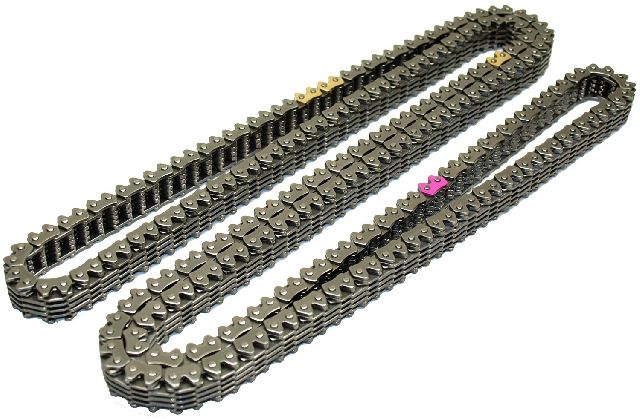
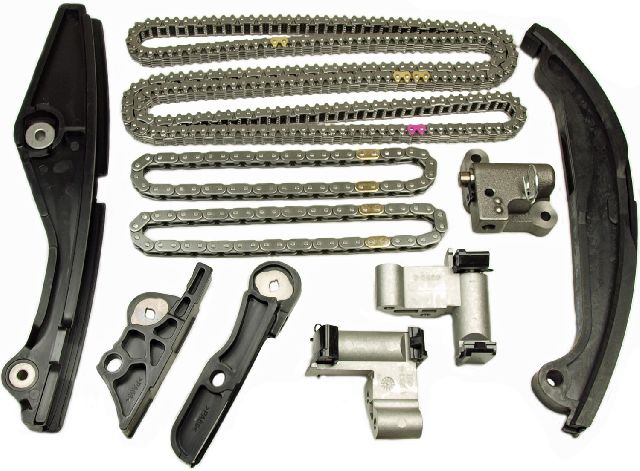
Aftermarket price range: $40-$80 - Timing Chain Kit — If the chain has stretched or the guides have failed, the base timing will be incorrect, leading to this code. This is a more involved repair, often indicated by a startup rattle.
Trusted brands: Motorcraft, Cloyes
OEM price range: $400-$700
Aftermarket price range: $250-$500
Related Codes That Often Appear With This One
- P0011 — This code is for 'Timing Over-Advanced' on the same bank. Seeing both may indicate an erratic VCT solenoid or oil flow problem.
- P0022 — This is the same 'Over-Retarded' code but for Bank 2 (driver's side). If oil condition is the root cause, it can affect both banks simultaneously.
- P052B — This code is for 'Cold Start 'A' Camshaft Position Timing Over-Retarded Bank 1'. Seeing it with P0012 is a very strong indicator of a failing cam phaser or a VCT solenoid that is sticking when cold.
- P0300, P0301-P0306 — Misfire codes can occur because incorrect cam timing disrupts the engine's combustion cycle, leading to misfires on one or more cylinders.
Technical Service Bulletins (TSBs) & Recalls
- SSM 50067: Illuminated Malfunction Indicator Lamp (MIL) With Variable Cam Timing (VCT) DTCs. Notes that debris can cause the VCT solenoid to stick and recommends a diagnostic cycling procedure before replacement.
Platform-Specific Known Issues
- TSB SSM 50067: Ford acknowledges that on 2015-2021 vehicles, including the Explorer, P0012 and other VCT codes can be set by small debris causing the VCT solenoid to stick. The recommended first step is a diagnostic procedure (Pinpoint Test HK12) to cycle the solenoid to clear it before replacement.
- Real-World Repair Context: Owners on forums report that P0012 can appear even after a major timing chain job. This is often because debris knocked loose during the repair can travel through the oil and clog the screens of the newly installed or cleaned VCT solenoids, highlighting the extreme sensitivity of the system.
Mechanic-Grade Diagnostic Values
- VCT Solenoid Resistance — expected: 5.0 - 15.0 Ohms. Failure: A reading outside this range, or infinite resistance (open circuit), indicates a failed solenoid coil.
- VCT Solenoid Connector Voltage (KOEO) — expected: Battery Voltage (~12V) on one of the two pins.. Failure: No voltage suggests a wiring issue, a blown fuse, or a problem in the power supply (VPWR) circuit.
- Scan Tool PID: VCT_ADV_ERR1 (VCT Advance Error Bank 1) — expected: Close to 0° at hot idle.. Failure: A consistent negative value (e.g., -5° to -15°) indicates the camshaft is stuck in a retarded position and not advancing as commanded by the PCM.
- Engine Oil Pressure (Hot Idle) — expected: Minimum of 15 PSI.. Failure: Pressure below 15 PSI at hot idle can cause the VCT system to malfunction and may indicate severe mechanical wear or oil pump issues.
Hidden / Shadow Codes Worth Checking
- Mode $06, Test ID $81: This test monitor relates to VCT system performance. A failure logged here can indicate an emerging problem with the VCT system, sometimes before a persistent DTC like P0012 is set. (see via A professional scan tool with Mode $06 capabilities, such as the Ford IDS or high-end aftermarket scanners.)
Scan Tool Commands That Help
- Ford IDS (or equivalent professional scanner): Pinpoint Test HK11 / HK12: VCT Solenoid Output State Control — As recommended by Ford TSBs, this command should be used after checking oil but before replacing a VCT solenoid. It forcefully cycles the solenoid on and off multiple times to attempt to dislodge internal debris that may be causing it to stick.
- Ford IDS (or equivalent professional scanner): Live Data PID Monitoring: VCT_ADV_ERR1, VCT_INT_DIF1, VCTDUTY1 — During diagnosis (especially on a road test) to see if the PCM is commanding a change, how the camshaft is responding, and the percentage of duty cycle being applied. A large, persistent error value confirms a mechanical/hydraulic fault.
Wiring & Ground Locations
- Bank 1 VCT Solenoid Connector — On the Bank 1 (firewall side) valve cover, plugging into the top of the intake VCT solenoid. The connector is often white or grey.. This is the primary connection point for electrical testing of the solenoid. Checking for voltage, ground signal, and connector integrity is a key diagnostic step.
- G104 / G105 — Main engine compartment grounds, often located on the fender aprons in the rear corners of the engine bay.. A poor or corroded engine ground can cause erratic voltage signals from various sensors, including the Camshaft Position Sensor. The PCM may misinterpret this noisy data as a timing correlation fault, leading to a false P0012 code.
Real Owner Repair Stories
- Reddit user, r/AskAMechanic (2009 Ford Flex (similar 3.5L V6 engine and VCT system)) — P0012, P0016, P0022, rough running.
❌ Tried (didn't work) The user performed a complete timing job (chains, guides, tensioners, water pump) and cleaned the VCT solenoids. The engine ran smoothly afterward.
✅ What actually fixed it The P0012 code returned a few days after the major repair. The unresolved conclusion was that either debris knocked loose during the timing job had clogged a VCT solenoid screen, or one of the solenoids was intermittently failing despite passing a bench test. This highlights that even a comprehensive repair can be defeated by oil contamination. - Ford Truck Enthusiasts forum user (2006 F-150 5.4L (different engine, but highly relevant VCT diagnostic logic)) — Stalling at hot idle, rattling/clanking noise, codes P0012 & P0022.
❌ Tried (didn't work) A complete timing job including chains, guides, tensioners, phasers, and a new high-volume oil pump (Melling M340).
✅ What actually fixed it The problem persisted. Further teardown revealed the true cause: wiped-out crankshaft bearings. The severe wear was causing a catastrophic loss of oil pressure when the oil was hot and thin, which the new pump and VCT components could not overcome. The ultimate fix required a bottom-end engine rebuild or replacement.
"I Checked Everything" — The Actual Cause
- In the context of P0012, the equivalent of a 'smoke test clean' scenario is when all primary components appear to be working. A real-world example is when a P0012 code appears shortly after a complete timing chain replacement. The mechanic assumes the new chain, phasers, and solenoids are good, but the actual cause is microscopic debris that was dislodged during the repair, which then traveled through the fresh oil and clogged the fine mesh screen of a brand new VCT solenoid.
When the Usual Fixes Don't Work
- While replacing the Bank 1 VCT solenoid is the most common fix, it is not a guaranteed solution. In a documented case, a user replaced the correct solenoids for a P0012 code, which resolved the code itself, but the primary symptom of stalling at idle persisted. This indicates the code was only one piece of a more complex problem, potentially involving the opposite bank or a base engine issue not severe enough to set another code. In another case, a massive parts replacement including a full timing job and a new oil pump failed to fix the issue because the root cause was a loss of oil pressure from worn crankshaft bearings, a problem far deeper in the engine than the VCT system itself.
OEM Part Supersession History
AT4Z-6M280-A→N/A— This is the current, widely-used OEM part number for the VCT solenoid in this application.
Heads up: This part number is specified for multiple VCT solenoid positions across different Ford engines. For the 3.5L/3.7L V6, it is often listed for the Bank 1 (Right/Firewall) Intake and Bank 2 (Left/Radiator) Exhaust positions. Always verify the correct part for the exact position being replaced.
Model Year Variations Within This Range
- 2016-2019: The Ford Explorer received a major facelift for the 2016 model year. While the core V6 engines remained, these updates often include revised PCM software and calibrations. This could potentially alter the specific thresholds or logic for setting a P0012 code compared to the 2015 model year, though the physical causes remain the same.
Helpful Videos
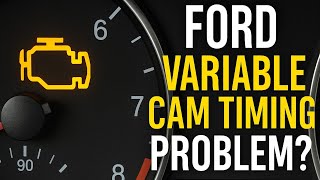
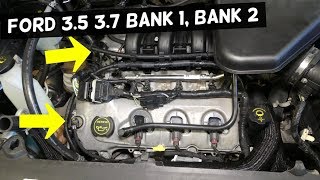
Used OEM Parts in Stock
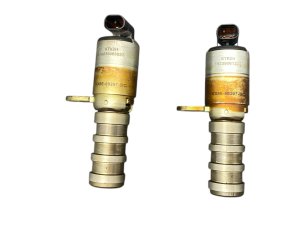
New Aftermarket Parts Available

The information in this article is provided for general reference and educational purposes only. Vehicle specifications, procedures, and part compatibility can vary by production date, trim level, and region. Always consult your vehicle's factory service manual and verify part numbers before purchasing or performing repairs. Safety-critical components such as airbags, seat belts, and braking systems should be installed by a qualified professional.
- Ford EXPLORER POLICE INTERCEPT:
- 🧭 Diagnostic Flowchart
- 🎬 Helpful Videos
- 🛍️ Shop This Part
- What's Unique About the 2015-2019 Ford EXPLORER POLICE INTERCEPT
- Symptoms You May Notice
- Most Likely Causes
- Rare But Worth Checking
- Diagnosis Steps
- Parts You'll Likely Need
- Related Codes That Often Appear With This One
- Technical Service Bulletins (TSBs) & Recalls
- Platform-Specific Known Issues
- Mechanic-Grade Diagnostic Values
- Hidden / Shadow Codes Worth Checking
- Scan Tool Commands That Help
- Wiring & Ground Locations
- Real Owner Repair Stories
- "I Checked Everything" — The Actual Cause
- When the Usual Fixes Don't Work
- OEM Part Supersession History
- Model Year Variations Within This Range
- 🎟️ Get 5% Off