

P0012 on 2015-2019 Ford Fiesta: Intake Cam Timing Causes and Fixes
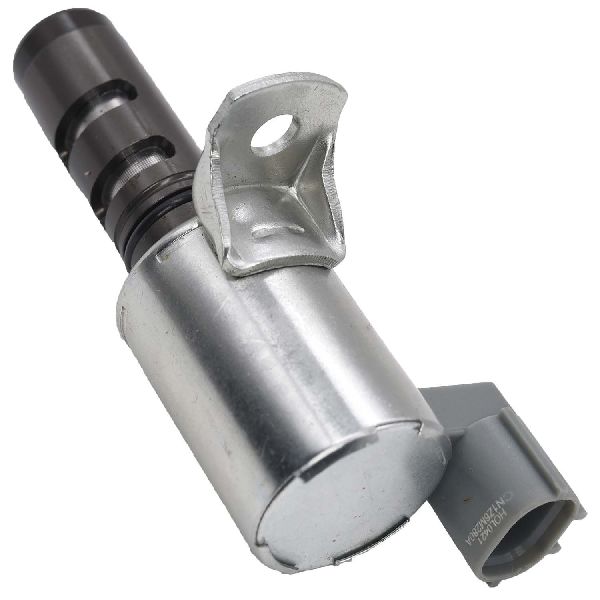
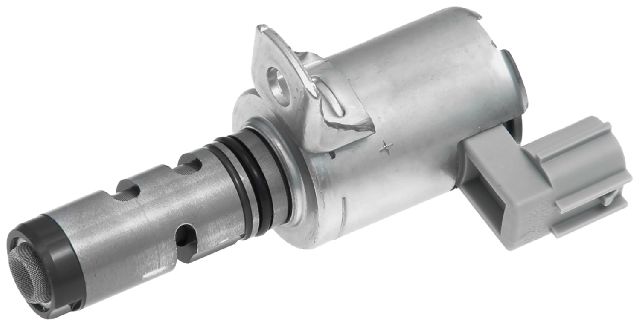
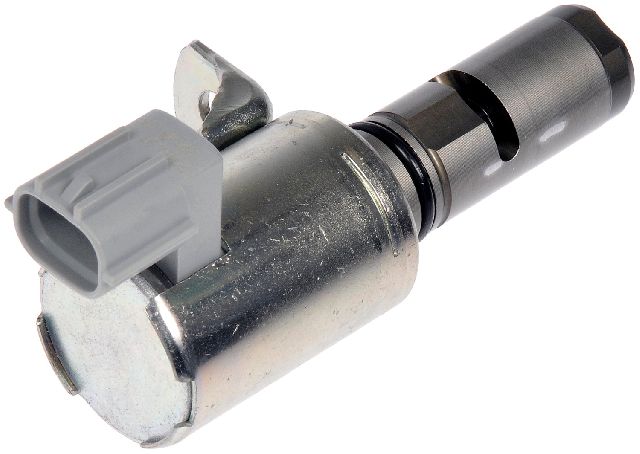
On a 2015-2019 Ford Fiesta, code P0012 is most often caused by low/dirty engine oil or a failing intake Variable Camshaft Timing (VCT) solenoid. Using the correct 5W-20 oil and a quality filter is critical. Replacing the VCT solenoid (Part No. BE8Z-6M280-A) is a common DIY fix. The part costs $30-$90, while a shop repair is estimated between $123 and $162.
- The first and easiest step is to check your engine oil. Low or dirty oil is a very common cause for P0012.
- The most likely failed component is the intake VCT solenoid, which is a known issue acknowledged by Ford in service bulletins.
- Replacing the VCT solenoid is an affordable and accessible repair for many DIY mechanics.
- Always use the correct viscosity engine oil as specified in your owner's manual to prevent this issue from recurring.
- Do not immediately assume a major timing chain issue; diagnose the simpler and more common oil and solenoid problems first.
What's Unique About the 2015-2019 Ford FIESTA
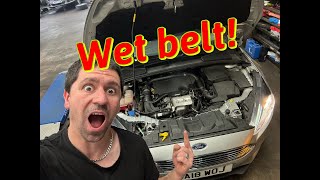
The Ford Fiesta's 1.6L Ti-VCT and 1.0L EcoBoost engines use a Variable Camshaft Timing (VCT) system that is highly dependent on clean engine oil and correct oil pressure. Ford has issued multiple Technical Service Bulletins (TSBs), including SSM 48423, acknowledging that this code is often triggered by small debris in the oil causing the VCT solenoid to stick. The 1.0L EcoBoost engine features a timing belt-in-oil (wet belt) design, which can degrade over time, shedding material that clogs oil passages and the VCT system, making correct oil type and change intervals even more critical. Ford's official diagnostic procedure before replacement is to use a scan tool to cycle the solenoid 10 times to try and clear the debris (Pinpoint Test HK11).
🎬 Watch: How to try this free fix to clear debris.Diagnostic Flowchart
Tap your situation to follow the diagnostic path that matches what you're seeing on this vehicle.
Symptoms You May Notice
- Check Engine Light is on
- Rough or unstable idle
- Poor acceleration and loss of power, especially when trying to accelerate from a stop
- Decreased fuel efficiency
- Engine stalling or hesitating, particularly at low RPMs
- Rattling noise from the engine on startup
- Replacing the camshaft position sensor. This sensor reports the timing, but it rarely causes the timing to actually be incorrect. The problem is usually with the mechanical or hydraulic parts that control the timing, which the sensor is correctly reporting as faulty.
Most Likely Causes
- Low or Dirty Engine Oil 🔴 High Probability The VCT system uses oil pressure to adjust cam timing. The oil passages in the solenoids are very small and can easily get clogged by sludge or debris from old or incorrect viscosity oil. On the 1.0L EcoBoost, degraded wet belt material can also contaminate the oil.
How to confirm: Check the engine oil dipstick for level and inspect the oil's color and consistency. If it's low, black, or the wrong type (Ford specifies Castrol 5W-20 WSS-M2C948-B for the 1.0L EcoBoost), it needs to be changed.
Typical fix: Perform an engine oil and filter change using the manufacturer-specified oil. Clear the codes and see if P0012 returns. Many owners report this alone solves the problem.
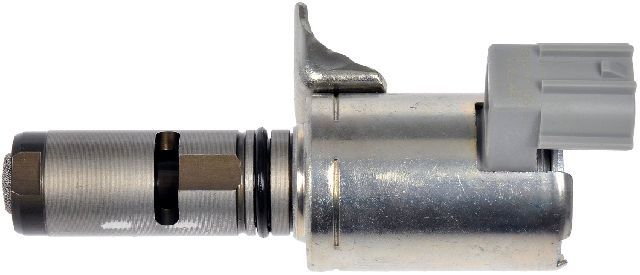
Est. part cost: $30-$60 - Failing Intake VCT Solenoid 🔴 High Probability → Shop Engine Variable Valve Timing (VVT) Solenoid Ford TSBs SSM 48423 and SSM 47170 directly state that debris can cause the VCT solenoid to stick, which is a common failure point on this platform. The solenoids can get clogged with sludge or fail electrically.
How to confirm: Use a scan tool to command the solenoid on and off while listening for a click. You can also remove the solenoid to inspect its screens for debris or test its internal resistance with a multimeter (typically 6-12 Ohms). Swapping the intake and exhaust solenoids (if identical) will cause the code to change (e.g., to P0014 or P0015) if the solenoid is faulty.
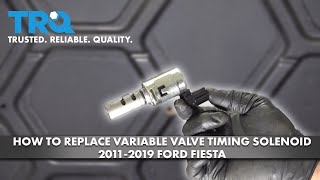
Typical fix: Replace the intake VCT solenoid. It is often recommended to change the engine oil at the same time. The part is accessible on top of the engine after removing the valve cover. 🎬 See this walkthrough on how to replace the solenoid.
Est. part cost: $30-$90 - Stretched or Damaged Timing Belt ⚪ Low Probability → Shop Engine Timing Chain The 1.6L Ti-VCT uses a traditional dry timing belt, while the 1.0L EcoBoost uses a belt-in-oil ('wet belt'). The wet belt is known to degrade over time, which can cause it to stretch or shed material, leading to timing inaccuracies and oil starvation. While less common than solenoid issues, a stretched belt can cause timing to be retarded beyond what the VCT system can correct.
How to confirm: Listen for a rattling noise on cold starts. A physical inspection is required to confirm slack or degradation of the belt, which is an involved diagnostic step requiring removal of engine covers.
Typical fix: Replace the timing belt and related components like tensioners and guides. For the 1.0L EcoBoost, this is a labor-intensive job that also requires cleaning the oil sump 🎬 Watch: Full guide on replacing the EcoBoost wet timing belt. and pickup tube.
Est. part cost: $150-$400
Rare But Worth Checking
- Failed Camshaft Phaser: → Shop Engine Camshaft The phaser is the gear on the end of the camshaft that the solenoid controls. While the solenoid is the more common failure, the phaser itself can become damaged, clogged with debris, or its internal locking pin can fail, causing it to be stuck in a retarded position.
- Clogged Oil Passages: Severe engine sludge from infrequent oil changes or wet belt degradation can block the oil passages leading to the VCT system, starving it of the pressure needed to operate, even if the solenoid and oil pump are functional.
Diagnosis Steps
- Check the engine oil level and condition. If it is low, dirty, or the wrong viscosity (Ford specifies 5W-20), perform an oil and filter change, clear the code, and re-test.
- Use an OBD-II scanner to view live data. Observe the desired vs. actual intake camshaft position angle for Bank 1. A significant, lagging discrepancy points to a VCT issue.
- Per Ford TSB SSM 48423, use a bidirectional scanner to run pinpoint test HK11, which cycles the intake VCT solenoid 10 times to attempt to dislodge debris. Clear codes and re-test.
- If the code returns, unplug the solenoid and check for battery voltage (around 12V) at the power wire in the connector with the ignition on.
- Test the solenoid's resistance with a multimeter. A typical reading is between 6-12 Ohms. An open circuit (infinite resistance) or short (zero resistance) indicates a failed solenoid.
- Remove the VCT solenoid (typically held by one 8mm bolt under the valve cover) and inspect the mesh screens for sludge or metallic debris. Clean with brake cleaner, but replacement is recommended if it was contaminated.
- If the solenoid and oil are good, the next step is to inspect the mechanical timing components (timing belt, tensioners, and phasers) for wear or damage. This is a more advanced repair, especially on the 1.0L EcoBoost due to the wet belt design.
Parts You'll Likely Need
- Engine Variable Valve Timing (VVT) Solenoid
(OEM #BE8Z-6M280-A)— This is the most common part to fail for this code on the Fiesta, as identified by Ford's own TSBs. It gets stuck due to oil contamination or internal failure.
Trusted brands: Motorcraft, Dorman, Standard Motor Products (SMP), TRQ
OEM price range: $75-$90
Aftermarket price range: $28-$65 - Engine Oil and Filter — Low or contaminated oil is a primary cause of VCT system faults. An oil change is a critical first step and necessary maintenance when replacing a solenoid. Using the correct Ford-spec 5W-20 oil is crucial.
Trusted brands: Motorcraft Synthetic Blend, Castrol GTX Magnatec (meets Ford spec), Mobil 1
OEM price range: $40-$60
Aftermarket price range: $30-$50
Related Codes That Often Appear With This One
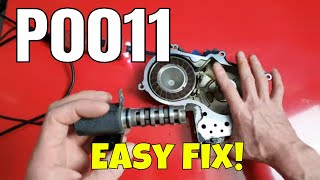
- P0011 — This code indicates the intake cam timing is over-advanced. It can appear with P0012 if the VCT solenoid is sticking intermittently, causing both over-retarded and over-advanced conditions at different times.
- P0016 — This code indicates a correlation problem between the crankshaft and the intake camshaft. If the cam timing is significantly retarded, it can fall out of sync with the crankshaft, triggering P0016 as well.
- P052B — This code for "Cold Start 'A' Camshaft Position Timing Over-Retarded" often appears with P0012 on EcoBoost engines, pointing more specifically to a problem that is most apparent during a cold start, often related to a sticking VCT phaser or solenoid.
Technical Service Bulletins (TSBs) & Recalls
- SSM 48423: Notes that P0012 and other VCT codes may be due to small debris causing the VCT solenoid to stick. Recommends running diagnostic test HK11 to cycle the solenoid 10 times to clear it before replacement.
- SSM 54366: Mentions P0012 and directs technicians to specific pinpoint tests for diagnosis.
- SSM 47170: Also states that P0012 can be caused by debris cau
Platform-Specific Known Issues
- Ford Technical Service Bulletin #SSM 48423 notes that for some 2015-2020 Ford vehicles, DTCs like P0012 may be caused by small debris making the VCT solenoid stick. It recommends cycling the solenoid with a scan tool before replacement.
- On the 1.0L EcoBoost engine, the timing belt runs in oil (a 'wet belt'). This belt is known to degrade, shedding rubber particles that can clog the oil pickup tube and VCT solenoids, leading to oil starvation and timing codes like P0012. This is a widely discussed issue in owner forums.
- Owners on Reddit and other forums frequently report that an immediate oil and filter change with high-quality, correct-viscosity oil can sometimes resolve the P0012 code, highlighting the system's sensitivity to oil condition.
Mechanic-Grade Diagnostic Values
- VCT Solenoid Internal Resistance — expected: 7.8 Ohms. A general acceptable range is often cited as 7-14 Ohms.. Failure: A reading of infinite resistance (open circuit) or near-zero resistance (short circuit) indicates a failed solenoid.
- VCT Solenoid Connector Voltage — expected: ~12V (Battery Voltage). Failure: With the ignition on and connector unplugged, one pin should have battery voltage when tested against a good ground. No voltage indicates a wiring or fuse issue upstream.
- VCT Advanced Error PID (Live Data) — expected: Should hover around 0°, with a variance no greater than +/- 5° during closed-loop operation at idle.. Failure: A consistent, significant error value that correlates with drivability issues points to a VCT system fault.
Scan Tool Commands That Help
- Ford IDS or equivalent professional scanner: VCT Solenoid Bidirectional Control / Pinpoint Test HK11 — As noted in TSB SSM 48423, this command cycles the solenoid rapidly (e.g., 10 times) to dislodge small debris that may be causing it to stick. This should be attempted after an oil change and before physically replacing the solenoid.
- 12V Power Source (e.g., car battery): Manual Solenoid Activation Test — After removing the solenoid from the engine, you can safely apply 12V to its pins to see if the internal plunger moves with an audible click. This directly confirms the solenoid's mechanical and electrical function outside the vehicle.
Wiring & Ground Locations
- Fuse F16 — Located in the Battery Junction Box (underhood fuse box).. This 15A fuse provides power to the VCT solenoid. If there is no voltage at the solenoid connector, this fuse should be checked.
- G103 / G104 — Likely on the left front of the engine compartment, near the frame rail or inner fender.. These are primary engine compartment ground points. The PCM and its sensors rely on clean, tight grounds to function. A corroded or loose ground at these locations can cause erratic sensor readings and driver behavior, potentially contributing to timing control issues.
Real Owner Repair Stories
- YouTube user 'Fix it Felix' (Ford Expedition (similar VCT system)) — Flashing check engine light, car struggling to accelerate, feeling weak, misfires.
❌ Tried (didn't work) The user noted that many online forum users reported that replacing the VCT solenoid did NOT fix their problem.
✅ What actually fixed it For this owner, replacing the VCT solenoid and the associated seal did fix the problem. The total cost was under $100 for parts, and power was restored. - Commenter on 'HVAC Mechanic' YouTube video (Unspecified, but had P0012) — Persistent P0012 code after an engine rebuild.
❌ Tried (didn't work) Engine was rebuilt., VVT solenoid was replaced.
✅ What actually fixed it The issue was not resolved, but the owner was certain the problem was the VCT actuator/sprocket (phaser) on the end of the camshaft, as all other common fixes had failed.
Model Year Variations Within This Range
- 2015-2019: No significant variations in the VCT system for the 1.6L Ti-VCT engine have been documented within this model year range that would alter the diagnosis or repair of code P0012.
Helpful Videos
We Have This Part in Stock


The information in this article is provided for general reference and educational purposes only. Vehicle specifications, procedures, and part compatibility can vary by production date, trim level, and region. Always consult your vehicle's factory service manual and verify part numbers before purchasing or performing repairs. Safety-critical components such as airbags, seat belts, and braking systems should be installed by a qualified professional.
- Ford FIESTA:
- 🧭 Diagnostic Flowchart
- 🎬 Helpful Videos
- 🛍️ Shop This Part
- What's Unique About the 2015-2019 Ford FIESTA
- Symptoms You May Notice
- Most Likely Causes
- Rare But Worth Checking
- Diagnosis Steps
- Parts You'll Likely Need
- Related Codes That Often Appear With This One
- Technical Service Bulletins (TSBs) & Recalls
- Platform-Specific Known Issues
- Mechanic-Grade Diagnostic Values
- Scan Tool Commands That Help
- Wiring & Ground Locations
- Real Owner Repair Stories
- Model Year Variations Within This Range
- 🎟️ Get 5% Off