

P0012 on 2015-2018 Ford Focus: Causes and Fixes for Over-Retarded Camshaft Timing
On a 2015-2018 Ford Focus, P0012 is most often caused by low or dirty engine oil, or a failing intake Variable Camshaft Timing (VCT) solenoid. An oil change is the first step. If that fails, replacing the VCT solenoid (Part No. CJ5Z-6M280-A) is the next most likely fix, costing around $30-$75 for the part.
- P0012 on a 2015-2018 Focus almost always points to an issue with oil quality or the intake VCT solenoid.
- The first and cheapest step is always to check your oil and perform an oil change with the correct 5W-20 viscosity if needed.
- The most common required part is the intake VCT solenoid (and the valve cover gasket needed to access it).
- Ignoring this code can lead to serious engine problems, so it should be addressed promptly.
- Ford has acknowledged this is a common issue in multiple Technical Service Bulletins.
What's Unique About the 2015-2018 Ford FOCUS
For this generation of Ford Focus with the 2.0L Duratec engine, the Variable Camshaft Timing (VCT) system is highly sensitive to oil quality and level. Ford has issued multiple Technical Service Bulletins (TSBs) acknowledging that small debris in the oil can cause the VCT solenoids to stick, directly leading to this code. The official dealer procedure, per TSB SSM 48423, is to first run a diagnostic routine (Pinpoint Test HK11) that cycles the solenoid 10 times to try and dislodge debris before replacing the part. This makes regular oil changes with the correct 5W-20 oil especially critical.
Diagnostic Flowchart
Tap your situation to follow the diagnostic path that matches what you're seeing on this vehicle.
Symptoms You May Notice
- Check Engine Light is on
- Rough or unstable idle, sometimes causing shaking
- Engine stalling, especially at low speeds or when coming to a stop
- Reduced engine power and poor, sluggish acceleration
- Decreased fuel economy
- Rattling noise from the engine, especially on startup
- Replacing the camshaft position sensor. While a sensor can fail (and cause a P0340 code), it's much less common than oil-related issues or a bad VCT solenoid for this specific code on this car. One owner reported replacing the sensor first, only to have the P0012 code appear next, leading to the eventual replacement of the VCT solenoids.
Most Likely Causes
- Low or Dirty Engine Oil 🔴 High Probability The VCT system uses oil pressure to adjust cam timing. The passages in the solenoids are small and can easily get clogged by sludge or debris from old or incorrect viscosity oil. This is the number one cause cited by mechanics for this code.
How to confirm: Check the oil level on the dipstick and examine its color and consistency. If the level is low or the oil is dark black and thick, it needs to be changed. Many owners report the code appears when an oil change is overdue.
Typical fix: Change the engine oil and filter using the manufacturer-specified 5W-20 synthetic blend or full synthetic oil. Clear the codes and drive to see if it returns.
Est. part cost: $30-$60 - Failing Intake VCT Solenoid 🔴 High Probability → Shop Engine Variable Valve Timing (VVT) Solenoid Ford TSBs #SSM 48423 and #SSM 47170 specifically state that debris can cause the VCT solenoid (causal part 6M280) to stick. This is a well-documented issue on this platform and its mates like the Fusion and Escape.
How to confirm: After an oil change, if the code returns, the solenoid is the next logical suspect. It can be tested with a multimeter (resistance should be 7-14 ohms) or activated with a high-end scan tool to see if it's working. A common DIY diagnostic is to swap the intake and exhaust solenoids 🎬 See this quick video on how to test your VVT solenoid. and see if the code changes to P0014 (for the exhaust cam). If it does, the solenoid is confirmed bad.
Est. part cost: $30-$75 - Wiring to VCT Solenoid ⚪ Low Probability → Shop Engine Variable Valve Timing (VVT) Solenoid
How to confirm: Inspect the electrical connector and wiring going to the intake VCT solenoid for any signs of damage, corrosion, or oil contamination from a leaking valve cover gasket. Check for a stable voltage signal with a multimeter.
Typical fix: Repair or replace the damaged section of the wiring harness or the connector. Clean any oil from the connector with electrical contact cleaner.
Est. part cost: $5-$50
Rare But Worth Checking
- Stretched Timing Chain or Failed Phaser: → Shop Engine Timing Chain While less common, a stretched timing chain or a failed camshaft phaser (the gear the solenoid controls) can cause the base timing to be incorrect, leading to this code. A rattling noise on startup is a key symptom. NHTSA complaint #11634319 for a 2018 Focus with this code was diagnosed with internal engine failure, which could be related to this. A Reddit user with a 2012 Focus reported a persistent P0012 even after replacing solenoids, pointing towards a deeper mechanical timing issue.
Diagnosis Steps
- Check Engine Oil: Verify the oil level is correct and the oil is clean. If it's low or dirty, perform an oil and filter change with the correct 5W-20 oil. Clear the code and drive to see if it returns.
- Inspect VCT Solenoid Connector: Check the wiring and connector for the intake VCT solenoid for damage or oil saturation.
- Test the VCT Solenoid: If you have a capable scan tool, command the solenoid on and off to check for a response (Ford's Pinpoint Test HK11/HK12). Alternatively, remove the valve cover to access the solenoid.
- Swap Solenoids (DIY Diagnostic): A simple and effective test is to swap the intake and exhaust VCT solenoids. They are identical parts. Clear the codes. If P0012 disappears and P0014 appears, you have confirmed the solenoid you moved is faulty.
- Remove and Inspect/Replace Solenoid: Remove the 8mm bolt holding the solenoid and pull it out. Inspect its screens for debris. Given the low cost and high probability of failure, replacing it is often the most efficient step. 🎬 Watch this step-by-step walkthrough to replace your Focus VVT solenoids.
- Check Timing Components: If the code persists after replacing the solenoid, the issue may be mechanical. Listen for a rattling noise that could indicate a timing chain or phaser issue. This step is best left to a professional.
- Further Diagnosis: If all else fails, a professional may need to check the camshaft phaser and perform more in-depth electrical testing, as suggested by TSB #SSM 54366.
Parts You'll Likely Need
- Intake Variable Camshaft Timing (VCT) Solenoid
(OEM #CJ5Z-6M280-A)— This part is the most common point of failure for code P0012 on this engine, often due to sticking from oil debris as noted in Ford TSBs. The intake and exhaust solenoids are the same part number.
Trusted brands: Motorcraft, Dorman, Standard Motor Products (SMP)
OEM price range: $30-$45
Aftermarket price range: $25-$60 - Valve Cover Gasket
(OEM #CM5Z-6584-A)— The valve cover must be removed to access the VCT solenoids, and the gasket should be replaced to prevent oil leaks. The OEM kit includes spark plug tube seals.
Trusted brands: Motorcraft, Fel-Pro, Mahle
OEM price range: $25-$40
Aftermarket price range: $15-$30
Related Codes That Often Appear With This One
- P0011 — This code for 'Over-Advanced' timing can appear if the VCT solenoid is sticking intermittently, causing it to be out of position in both directions at different times.
- P0014 — This is the corresponding 'Over-Retarded' code for the exhaust camshaft ('B'). It can appear alongside P0012 if oil contamination is affecting both VCT solenoids or if the solenoids were swapped for diagnosis. It was also cited along with P0012 in NHTSA complaint #11634319.
Technical Service Bulletins (TSBs) & Recalls
- SSM 54366: Notes P0012 among other VCT codes and refers to a specific pinpoint test in the service manual.
- SSM 48423: States that small debris causing the VCT solenoid to stick may be the cause for P0012. Recommends cycling the solenoid before replacement.
- SSM 47170: An earlier bulletin also pointing to debris causing the VCT solenoid to stick.
Platform-Specific Known Issues
- TSB #SSM 48423 & #SSM 47170: Ford notes that P0012 (and related codes) may be caused by small debris causing the VCT solenoid to stick. The bulletin suggests using a scan tool to cycle the solenoid 10 times (Pinpoint Test HK11) to attempt to clear the debris before resorting to replacement.
- NHTSA ODI #11634319: An owner of a 2018 Focus reported codes P0012 and P0014, and a dealer diagnosed the problem as an internal engine failure, highlighting the potential severity if the issue is not addressed.
- Forum Experience: Oil Change Fix: On the FocusFanatics forum, multiple threads discuss P0012 appearing. In several documented cases, owners reported that simply performing a fresh oil and filter change with the correct 5W-20 synthetic oil was enough to clear the code and resolve the symptoms, reinforcing the oil quality sensitivity.
- Forum Experience: Solenoid Replacement: A Reddit thread on r/FocusST details a user's experience where an oil change did not fix the P0012 code. Other users confirmed the next step is replacing both VCT solenoids (Part #CJ5Z-6M280-A) and the valve cover gasket (Part #BB5Z-6584-A), which resolved the issue.
Mechanic-Grade Diagnostic Values
- VCT Solenoid Internal Resistance — expected: 7 to 14 Ohms. Failure: A reading of OL (Open Loop) indicates a broken internal coil. A reading significantly below 7 Ohms may indicate a short circuit.
- VCT Solenoid Connector Voltage (KOEO) — expected: ~12V (Battery Voltage). Failure: No voltage or significantly low voltage points to a problem in the wiring harness, fuse, or PCM power relay, not the solenoid itself.
- Live Data PID: VCT_INT_DIF1 (VCT Intake Difference) — expected: Close to 0 degrees at idle.. Failure: A value that is consistently negative or does not respond to engine RPM changes can indicate a retarded timing issue.
- Live Data PID: VCT Advanced Error (Ford IDS) — expected: Should hover around 0° during closed-loop operation.. Failure: A sustained difference of more than +/- 5° indicates a discrepancy between commanded and actual cam position.
- Engine Oil Pressure at Idle — expected: Minimum of 15 PSI at normal operating temperature.. Failure: Pressure below 15 PSI can cause the VCT system to malfunction, as it is hydraulically operated.
Hidden / Shadow Codes Worth Checking
- Mode 6, TID $53: Ford uses Mode 6 data to store test results for non-continuous monitors. While not a 'shadow code,' analyzing the VCT-related test IDs (like TID $53 for VCT) with a capable scanner can reveal if the system is operating at the edge of its acceptable parameters, even before a DTC is set. (see via A professional scan tool or advanced DIY tool like FORScan with Mode 6 capabilities. Ford's IDS specifically calls out using this data for VCT diagnosis.)
Scan Tool Commands That Help
- Ford IDS / FORScan: VCT Solenoid On/Off Command (Bidirectional Control) — This is used to manually command the solenoid to activate and deactivate. A change in engine idle quality or an audible click from the solenoid indicates it is mechanically responding. This is part of Ford's Pinpoint Test HK11, which cycles the solenoid to attempt to clear debris.
- Ford IDS: Histogram Mode for VCT Error PIDs — This function is used during a road test to graphically log the VCT error over time. It helps a technician visualize intermittent faults or delays in the VCT system's response that might not be obvious when looking at numbers alone.
Wiring & Ground Locations
- Main Engine Bay Ground — Under the air box, on the chassis frame rail, in front of the battery.. A poor ground at this primary location can cause unstable voltage references for various engine sensors and actuators, including the PCM which controls the VCT solenoids. This can lead to erratic sensor readings and incorrect commands.
- PCM Ground — Typically located on the chassis very close to where the Powertrain Control Module (PCM) is mounted.. The PCM directly controls the ground-side of the VCT solenoid circuit to activate it. A corroded or loose PCM ground can cause intermittent or failed solenoid operation, directly leading to VCT codes like P0012.
- VCT Solenoid PCM Pins — Specific pins on the main PCM electrical connector. The exact pin numbers are found in the service manual under Pinpoint Test HK.. For advanced electrical diagnosis, a technician must test for continuity and voltage directly at the PCM pins to rule out a wiring harness break or short between the PCM and the solenoid.
Real Owner Repair Stories
- Reddit user on r/FocusST (2014 Ford Focus ST) — Intermittent P0012 code. Car would run perfectly, then suddenly the check engine light would come on and the engine would run rough with a misfire at idle. Clearing the code with a scanner would immediately make the car run perfectly again.
❌ Tried (didn't work) The issue was random and not linked to specific driving conditions.
✅ What actually fixed it The user suspected a faulty sensor sending a false signal. Another user confirmed they fixed the exact same issue by replacing the VVT (VCT) solenoid. - Reddit user on r/Mustang (2018 Ford Mustang GT (similar VCT system principles)) — P0012 code.
❌ Tried (didn't work) Replacing the VCT (VVCT) solenoid did not fix the code.
✅ What actually fixed it The problem was ultimately resolved by replacing the mechanical timing components: a new timing kit (cam phasers, chains, tensioners) along with new VCT solenoids and sensors. - Reddit user on r/MechanicAdvice (2012 Ford Escape V6 (similar VCT system principles)) — Persistent P0012 code with no noticeable drivability issues.
❌ Tried (didn't work) Replaced Cam Position Sensor (for a previous P0340 code)., Ford dealer replaced both VCT solenoids and valve cover gaskets.
✅ What actually fixed it The story is a cautionary tale; the P0012 code returned even after the dealer replaced the solenoids. The dealer kept the car for two days and could not determine the root cause, highlighting that the issue can sometimes be deeper than the common fixes.
When the Usual Fixes Don't Work
- While replacing the VCT solenoid is the most common fix after an oil change, it is not a guaranteed solution. Multiple owner-documented cases show the P0012 code returning after solenoid replacement. In these instances, the root cause was found to be deeper mechanical issues within the timing system, such as failing cam phasers or a stretched timing chain. One report detailed a Ford dealer replacing the solenoids, only to have the code return, with the dealer then struggling to find the true cause. This indicates that if a new solenoid doesn't fix the code, a more thorough mechanical inspection of the timing system is required.
OEM Part Supersession History
CJ5Z-6M280-A→N/A— This is the most commonly cited OEM part number for this application. While other similar Ford VCT solenoids have supersessions (e.g., CM5Z-6M280-A to CM5Z-6M280-C), no direct supersession for CJ5Z-6M280-A was found in the search results.
Heads up: Ensure the part number matches the vehicle's VIN. The intake and exhaust solenoids are physically identical and use the same part number for this engine.
Model Year Variations Within This Range
- 2015-2018: No significant variations within the 2015-2018 model years for the 2.0L GDI engine are noted to affect the diagnosis or common causes of a P0012 code. The official Ford TSBs for this issue cover the entire year range and beyond.
Helpful Videos
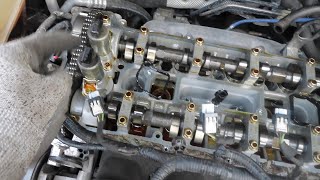
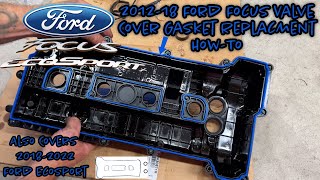

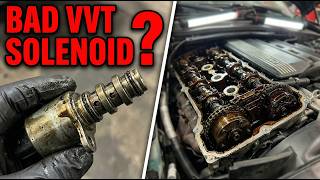
We Have This Part in Stock

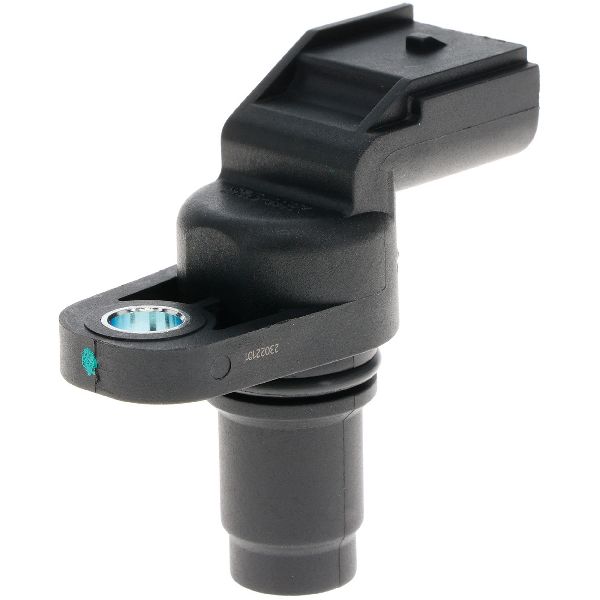
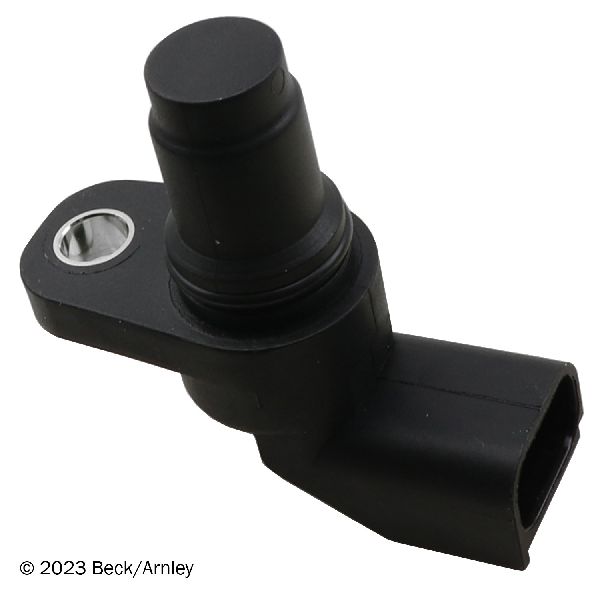
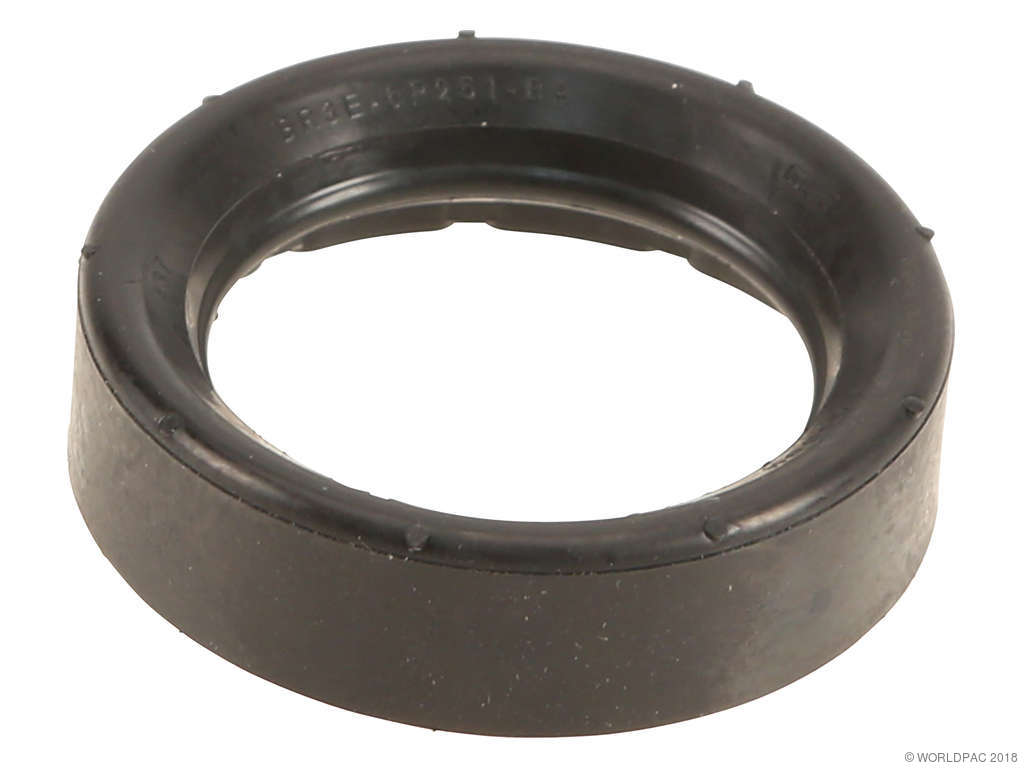
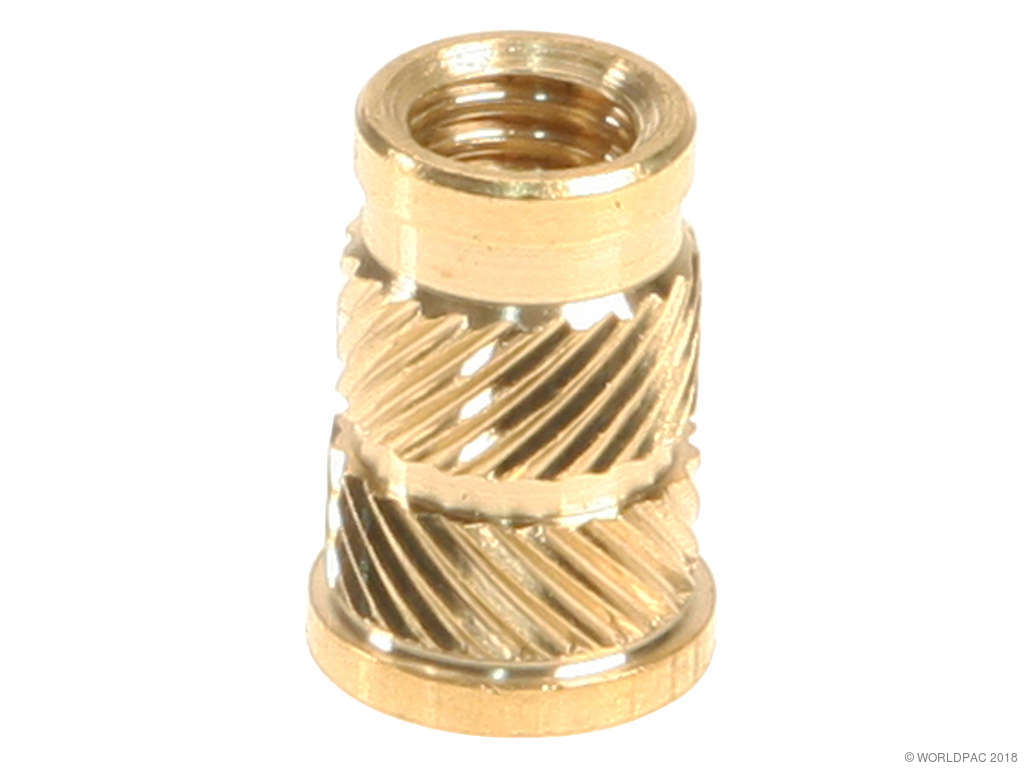

The information in this article is provided for general reference and educational purposes only. Vehicle specifications, procedures, and part compatibility can vary by production date, trim level, and region. Always consult your vehicle's factory service manual and verify part numbers before purchasing or performing repairs. Safety-critical components such as airbags, seat belts, and braking systems should be installed by a qualified professional.
- Ford FOCUS:
- 🧭 Diagnostic Flowchart
- 🎬 Helpful Videos
- 🛍️ Shop This Part
- What's Unique About the 2015-2018 Ford FOCUS
- Symptoms You May Notice
- Most Likely Causes
- Rare But Worth Checking
- Diagnosis Steps
- Parts You'll Likely Need
- Related Codes That Often Appear With This One
- Technical Service Bulletins (TSBs) & Recalls
- Platform-Specific Known Issues
- Mechanic-Grade Diagnostic Values
- Hidden / Shadow Codes Worth Checking
- Scan Tool Commands That Help
- Wiring & Ground Locations
- Real Owner Repair Stories
- When the Usual Fixes Don't Work
- OEM Part Supersession History
- Model Year Variations Within This Range
- 🎟️ Get 5% Off