

P0012 on 2013-2020 Ford Fusion 1.5L EcoBoost: Causes for Over-Retarded Cam Timing
On a 2013-2020 Ford Fusion with the 1.5L EcoBoost engine, code P0012 is most often caused by low or dirty engine oil, or a failing intake Variable Camshaft Timing (VCT) solenoid. An oil change and a new VCT solenoid are the most common fixes, costing around $40-$100 for the part. In some cases, this code can be an early symptom of the engine's known coolant intrusion problem, which contaminates the oil.
- Always check your oil level and condition first; this is the easiest and a very common fix.
- The most likely failed part is the intake VCT solenoid, which is relatively inexpensive and accessible for DIY replacement.
- A common DIY diagnostic is to swap the intake and exhaust VCT solenoids to see if the trouble code follows the part.
- Be aware that on the 1.5L EcoBoost, this code can be an early sign of a serious coolant leak into the engine oil. Monitor your coolant level closely.
What's Unique About the 2013-2020 Ford Fusion
The 1.5L EcoBoost engine's Variable Camshaft Timing (VCT) system is highly sensitive to oil quality and condition. Ford has acknowledged in service bulletins that small debris in the oil can cause the VCT solenoids to stick, triggering codes like P0012. More critically, on this specific engine, P0012 can sometimes be an early warning sign of oil contamination caused by a known coolant intrusion issue, where a design flaw in the engine block allows coolant to leak into the cylinders and mix with the oil. This contaminated oil turns into sludge that clogs the VCT system and can lead to catastrophic engine failure if not addressed.
Symptoms You May Notice
- Check Engine Light is on
- Rough or unstable idle
- Noticeable loss of engine power and acceleration
- Engine may hesitate or stall, especially at low speeds
- Reduced fuel economy
- Rattling or knocking noise from the engine, especially when hot
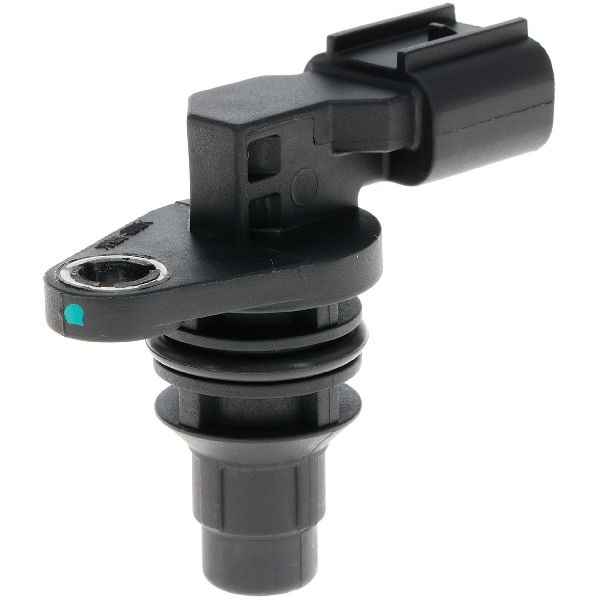
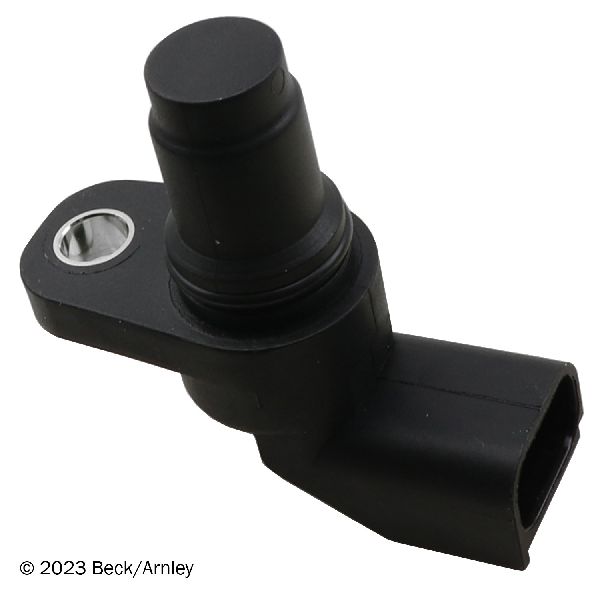
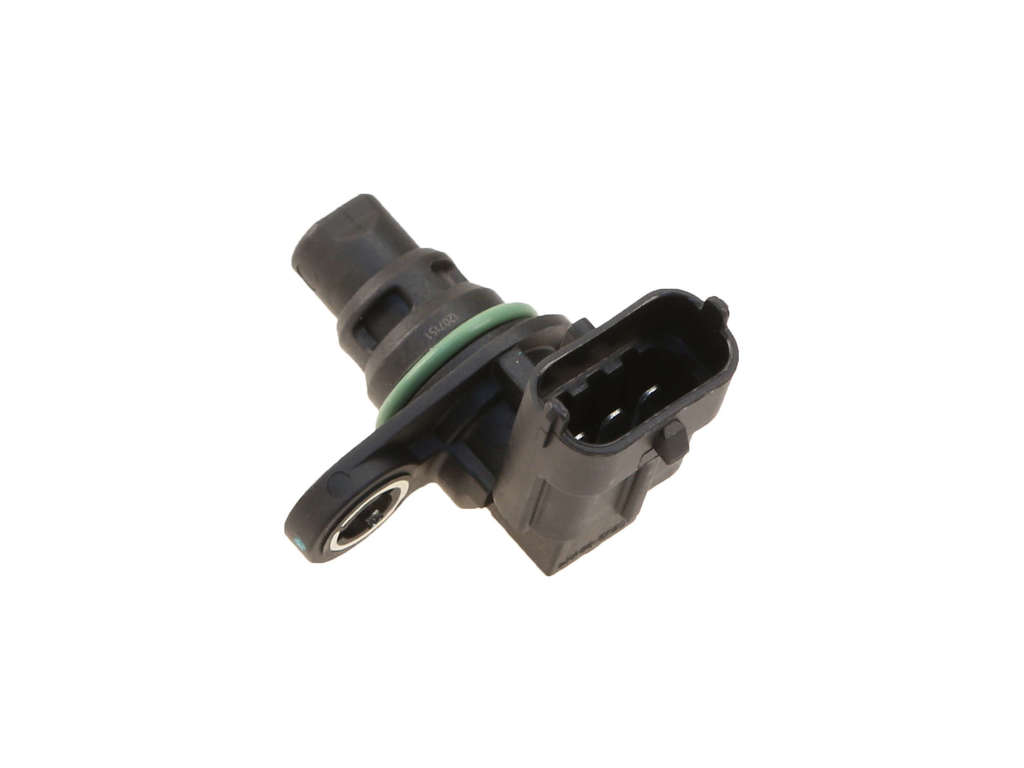
- Replacing the camshaft position sensor. The sensor is almost always doing its job correctly by reporting the timing error; it is not the cause of the error. Multiple owners have replaced this sensor with no effect.
Most Likely Causes
- Low, Dirty, or Incorrect Viscosity Engine Oil 🔴 High Probability The VCT system uses oil pressure to adjust cam timing. The small passages in the solenoids are easily clogged by sludge or debris from old or contaminated oil, which is a very common issue.
How to confirm: Check the oil dipstick for level and examine the oil's color and consistency. If it's dark, thick, below the 'add' line, or has a milky/frothy appearance (indicating coolant contamination), it needs immediate attention.
Typical fix: Perform an oil and filter change using the manufacturer-specified oil (Motorcraft SAE 5W-20 Synthetic Blend, check owner's manual for exact spec) and a quality filter. This is often the first and sometimes only step needed.
Est. part cost: $40-$80 - Failing Intake VCT Solenoid (Oil Control Valve) 🔴 High Probability → Shop Engine Variable Valve Timing (VVT) Solenoid Ford has issued multiple Technical Service Bulletins (TSBs) noting that debris can cause these solenoids to stick. It's a very common failure point, often occurring between 75,000 and 120,000 miles, especially with delayed oil changes.
How to confirm: A common and effective DIY test is to swap the intake VCT solenoid with the exhaust VCT solenoid. They are identical and accessible on top of the engine. After swapping, clear the codes and drive. If the code changes to P0014 (exhaust camshaft timing), the solenoid is confirmed faulty. A professional can command the solenoid with a scan tool (like FORScan) to check its response.
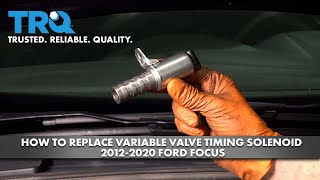
Typical fix: Replace the intake VCT solenoid. The part is held by a single 8mm bolt. 🎬 Watch this step-by-step walkthrough for replacing the VVT solenoid.
Est. part cost: $40-$100 - Stretched or Damaged Timing Belt / Tensioner ⚪ Low Probability → Shop Engine Timing Chain The 1.5L EcoBoost uses a timing belt which can stretch or degrade over time, especially if past its service interval (typically 100,000+ miles). While less common than oil or solenoid issues, a stretched belt can cause the base timing to be retarded.
How to confirm: This requires a physical inspection of the timing belt, its tension, and the alignment marks on the camshaft and crankshaft pulleys. This is a labor-intensive check and is usually performed after ruling out oil and solenoid issues.
Typical fix: Replace the timing belt, tensioner, and idler pulleys as a kit.
Est. part cost: $150-$300
Rare But Worth Checking
- Engine Oil Contamination from Coolant Intrusion: The 1.5L EcoBoost has a known design flaw in the engine block that allows coolant to leak internally into the engine oil, particularly between cylinders. This creates sludge that clogs VCT components. If you have unexplained coolant loss, white exhaust smoke, and/or misfire codes (P0301-P0304) along with P0012, this is a strong possibility. Ford issued TSB 20-2100 and Customer Satisfaction Program 21N12 for this issue, which may cover a short block replacement.
- Failed Camshaft Phaser/Actuator: → Shop Engine Camshaft The mechanical actuator on the end of the camshaft can fail, but it is much less common than a solenoid failure. This is typically diagnosed after all other causes have been ruled out. One owner on a forum replaced the gear (phaser) and still had the code, suggesting it's not a common fix.
Diagnosis Steps
- Check Engine Oil: Verify the oil level is correct and the oil is clean. If low, top it off. If dirty, overdue for a change, or shows any sign of being milky (coolant contamination), replace the oil and filter with the correct grade (SAE 5W-20 Synthetic Blend). Clear the code and see if it returns.
- Inspect VCT Solenoid Wiring: Check the electrical connector and wiring going to the intake VCT solenoid for any damage, corrosion, or loose connections. The connector is on top of the valve cover and easy to access.
- Swap VCT Solenoids: This is the most effective DIY diagnostic step. The intake and exhaust VCT solenoids are identical and located next to each other on the valve cover. Label them, unbolt them (one 8mm bolt each), and swap their positions. Clear the codes and drive the vehicle. If code P0014 appears, the original intake solenoid is faulty and must be replaced.
- Test Solenoid: If you have an advanced scan tool, you can command the VCT solenoid on and off to check its operation. You can also remove the solenoid and check its internal screen for sludge or debris. Some dealer procedures involve cycling the solenoid multiple times to try and clear debris before replacement.
- Investigate Coolant Intrusion: If you also have symptoms of coolant loss, white smoke from the exhaust, or a milky appearance to the oil, the engine must be professionally inspected for the known coolant intrusion issue per TSB 20-2100. A technician can pressure test the cooling system and use a borescope to check for coolant inside the cylinders.
- Check Mechanical Timing: If solenoids and oil are good, the next step is to inspect the timing belt for slack, damage, or incorrect alignment. This is a more advanced job and usually requires removing the engine cover.
Parts You'll Likely Need
- Intake Variable Camshaft Timing (VCT) Solenoid
(OEM #CJ5Z-6C535-A)— This solenoid is the most common part to fail for this code, usually by getting clogged with oil debris or failing electrically. It is often called an 'Oil Control Valve'.
Trusted brands: Motorcraft, Dorman, Standard Motor Products
OEM price range: $60-$100
Aftermarket price range: $40-$70 - Engine Oil and Filter — Low or dirty oil is a primary cause of VCT system faults. An oil change is a required first step and often the complete fix. Using the specified Motorcraft SAE 5W-20 Synthetic Blend oil is critical.
Trusted brands: Motorcraft (Synthetic Blend 5W-20), Mobil 1, Castrol
OEM price range: $50-$80
Aftermarket price range: $40-$60
Related Codes That Often Appear With This One
- P0011 — This code ('A' Camshaft Position Timing - Over-Advanced) can appear if the VCT solenoid is sticking intermittently, causing timing to be both too fast and too slow at different times.
- P0014 — This code ('B' Camshaft Position Timing - Over-Retarded) may appear if the issue is systemic, like widespread oil sludge affecting both the intake and exhaust VCT solenoids. It will also appear if you swap a bad intake solenoid to the exhaust position for diagnosis.
- P0299 — This code ('Turbocharger/Supercharger Underboost') can occur alongside P0012 because incorrect cam timing negatively impacts exhaust flow, which in turn affects the turbocharger's ability to build boost pressure.
- P0300-P0304 — Misfire codes for various cylinders. These are very common if the P0012 code is a symptom of the underlying coolant intrusion issue, which fouls spark plugs and disrupts combustion.
Technical Service Bulletins (TSBs) & Recalls
- SSM 50067: Notes that various VCT codes, including P0012, can be caused by small debris causing the VCT solenoid to stick.
- SSM 47170 / SSM 48423: Similar to the
Platform-Specific Known Issues
- Ford has issued multiple Special Service Messages (e.g., SSM 50067) and TSBs indicating that P0012 can be caused by debris causing the VCT solenoid to stick. The dealer procedure may involve cycling the solenoid with a scan tool to attempt to clear it before replacement.
- This engine is known for a potential defect causing coolant to leak into the engine's oil passages due to a flaw in the engine block design. This oil contamination can lead to VCT system failure and trigger a P0012 code as an early symptom before more severe engine damage occurs. Check for TSB 20-2100 or Customer Satisfaction Program 21N12.
Mechanic-Grade Diagnostic Values
- VCT Solenoid Internal Resistance — expected: 5 to 15 Ohms. A more specific range is 6.9 - 7.9 Ohms at 68°F (20°C).. Failure: A reading of 0 Ohms (short), infinite/OL (open circuit), or a value outside the expected range indicates a faulty solenoid coil.
- VCT Solenoid Connector Voltage (Key On, Engine Off) — expected: Battery voltage (approximately 12V) on the power supply pin.. Failure: No voltage or significantly low voltage points to a wiring issue, blown fuse, or a problem with the PCM power relay.
- Scan Tool PID: VCT_INT_DIF1 or VCTADVERR (VCT Advance Error) — expected: Should hover close to 0 degrees, with a variance no greater than +/- 5 degrees for an excessive period.. Failure: A consistent, large deviation from 0 degrees while the PCM is commanding a change indicates a fault in the VCT system (solenoid, phaser, or oil flow).
- Camshaft Position (CMP) Sensor Signal Wire Voltage (Key On, Engine Off) — expected: According to a Ford diagnostic manual, there should be no voltage on the CMP signal wire with the engine off.. Failure: The presence of voltage (e.g., 4.9V) on the signal wire with the key on and engine off can indicate a short to voltage in the harness or a faulty PCM.
Scan Tool Commands That Help
- Ford IDS / FORScan: Pinpoint Test HK11 / HK12: VCT Solenoid Cycle Test — As per Ford TSBs (SSM 48423), this function should be used before replacing a VCT solenoid suspected of sticking. It commands the PCM to cycle the solenoid on and off 10 times in an attempt to dislodge small debris, which can sometimes resolve the code without replacing the part.
- Ford IDS / FORScan: Live Data Monitoring of VCT PIDs — Monitor PIDs like VCT_INT_CMD1 (commanded angle), VCT_INT_ACT1 (actual angle), and VCT_INT_DIF1 (error) during idle and while driving. This allows you to see in real-time if the camshaft is failing to respond to the PCM's commands, confirming a system fault.
Real Owner Repair Stories
- Reddit user in r/MechanicAdvice (2014 Ford Fusion 1.5L Turbo EcoBoost) — Permanent P0012 code, engine doesn't sound great.
❌ Tried (didn't work) Swapping the VVT Solenoid on the intake side., Performing an oil change.
✅ What actually fixed it The user was advised that on the 1.5L/1.6L engines, the cam phaser bolt can back out, causing the cam to go out of time because there is no dowel pin to hold its position. This was suggested as the next likely cause after the common fixes failed.
Model Year Variations Within This Range
- 2014-Early 2019: Engines built on or before February 21, 2019, may have the original engine block design with a flaw that allows coolant to intrude into the cylinders. The flaw is a thin wall or 'slit' in the coolant passage between the cylinders on the deck surface. The updated block design (part number DS7Z-6009-G or similar) eliminates this slit, making it a solid surface between the cylinders to prevent leaks. A P0012 code on these earlier models, especially with coolant loss, has a higher probability of being related to this root cause.
Diagnostic Flowchart
Other Known Issues on This Vehicle
Issues unrelated to this code that are worth knowing about as an owner of this generation:
- Coolant Intrusion / Cracked Engine Block 🔴 High — Common on engines built before mid-2019. A design flaw in the open-deck block between cylinders allows coolant to leak into the oil. Symptoms include coolant loss, white smoke, and misfires. (Ref: TSB 20-2100, Customer Satisfaction Program 21N12)
- Degraded Shifter Cable Bushing 🔴 High — Widespread on 2013-2016 models. The bushing that attaches the shifter cable to the transmission can degrade, causing a mismatch between the gear selected by the driver and the actual gear. This can lead to the vehicle rolling away when in 'Park'. (Ref: Ford Recall 18S20, 22S43)
- Sticking VCT (Oil Control) Solenoids 🟠 Medium → Shop Engine Variable Valve Timing (VVT) Solenoid — Very common across all years, often appearing after 75,000 miles. Solenoids get clogged with oil debris, causing rough idle, power loss, and codes like P0011, P0012, P0014. (Ref: SSM 50067)
Used vs. New Parts: Buying Guide for This Vehicle
When a used part is the smart pick: For this specific repair, using used parts is generally not recommended. The primary failure components (VCT solenoid, timing components) are highly sensitive to oil quality and wear. A used part from a junkyard carries a high risk of being contaminated with the same sludge and debris that caused the original failure.
Donor-vehicle mileage cap: roughly under 60000 miles for the part to have meaningful remaining life.
What to inspect on the donor part:
- If considering a used VCT solenoid, insist on seeing the donor vehicle's maintenance records to verify frequent oil changes.
- Inspect the mesh screens on the solenoid for any signs of dark, thick sludge or metallic particles. Any contamination is a red flag.
- Check the donor vehicle for signs of the coolant intrusion issue (milky oil cap, low coolant), as this would contaminate all related parts.
OEM-only on this vehicle (don't cheap out):
- VCT Solenoid: While aftermarket options exist, the OEM Motorcraft part is strongly recommended due to the system's sensitivity. Aftermarket solenoids can have different internal tolerances, leading to persistent or new codes.
- Timing Belt and Tensioner: Given the critical nature of these parts, using OEM or a high-quality, well-regarded aftermarket kit (like Cloyes) is essential for reliability. Avoid unknown or budget brands.
- Engine Block: If the engine requires replacement due to coolant intrusion, only a new, updated block from Ford should be used to permanently fix the design flaw.
Aftermarket brands forum-validated for this vehicle:
- Dorman (for VCT Solenoid, often a viable alternative to OEM)
- Standard Motor Products (SMP)
- NTK
Brands owners have reported issues with on this vehicle:
- Unbranded, 'white box' solenoids from online marketplaces should be avoided as their quality control and performance are highly questionable.
Real Owner Stories
Aggregated from forums and TSBs cited above. Mileages and costs reflect what owners reported in those sources.
2014 Ford Fusion 1.5L EcoBoost
Symptoms: Check engine light with multiple codes including P0113, P0098, P0238, P0012, and P0443; rough idle, stalling, and poor performance.
What fixed it: The user was advised to check wiring and connections for the VCT solenoids and oil quality, though they had previously reached a dead end by replacing several unrelated sensors.
Source hint: r/fordfusion thread cited in owner_reports
2014 Ford Fusion 1.5L EcoBoost
Symptoms: Leaking engine block and P0012 code.
What fixed it: Identified as the known coolant intrusion issue on the 1.5L engine covered by TSBs.
Source hint: Blue Oval Forums
2013-2020 Ford Fusion 1.5L EcoBoost — ~95000 miles
Symptoms: Rough idle, power loss, and P0012 code appearing after 75,000 miles.
What fixed it: Replacing the VCT solenoids which were clogged with oil debris.
Source hint: SSM 50067 and common_causes context
2013-2020 Ford Fusion 1.5L EcoBoost
Symptoms: P0012 code appearing alongside P0299 (turbo underboost).
What fixed it: Replacing the VCT solenoids.
Source hint: 2GFusions.net Forum
Related OBD-II Codes
Frequently Asked Questions
Does TSB 20-2100 apply to my 1.5L EcoBoost Fusion if I see code P0012?
What specific oil should I use for my 2013-2020 Fusion 1.5L to prevent VCT issues?
Can I test the VCT solenoids myself before buying new parts?
Is there a Customer Satisfaction Program for the engine block issues related to this code?
What is the dealer procedure for a sticking VCT solenoid according to SSM 50067?
How often do the VCT solenoids typically fail on this vehicle?
Helpful Videos
We Have This Part in Stock


The information in this article is provided for general reference and educational purposes only. Vehicle specifications, procedures, and part compatibility can vary by production date, trim level, and region. Always consult your vehicle's factory service manual and verify part numbers before purchasing or performing repairs. Safety-critical components such as airbags, seat belts, and braking systems should be installed by a qualified professional.
- Ford Fusion:
- 🧭 Diagnostic Flowchart
- 🎬 Helpful Videos
- 🛍️ Shop This Part
- What's Unique About the 2013-2020 Ford Fusion
- Symptoms You May Notice
- Most Likely Causes
- Rare But Worth Checking
- Diagnosis Steps
- Parts You'll Likely Need
- Related Codes That Often Appear With This One
- Technical Service Bulletins (TSBs) & Recalls
- Platform-Specific Known Issues
- Mechanic-Grade Diagnostic Values
- Scan Tool Commands That Help
- Real Owner Repair Stories
- Model Year Variations Within This Range
- Other Known Issues on This Vehicle
- Used vs. New Parts: Buying Guide for This Vehicle
- Real Owner Stories
- 2014 Ford Fusion 1.5L EcoBoost
- 2014 Ford Fusion 1.5L EcoBoost
- 2013-2020 Ford Fusion 1.5L EcoBoost — ~95000 miles
- 2013-2020 Ford Fusion 1.5L EcoBoost
- Related OBD-II Codes
- Frequently Asked Questions
- 🎟️ Get 5% Off