

P0012 on 2015-2019 Ford Transit: Causes and Fixes for Camshaft Over-Retarded
On a 2015-2019 Ford Transit with a gas engine, P0012 is most often caused by low or dirty engine oil, or a sticking Variable Camshaft Timing (VCT) solenoid on Bank 1. Start by checking your oil; if it's clean and full, the VCT solenoid is the next likely culprit. Replacing the solenoid is a common DIY fix, with the part costing around $30-$90.
- P0012 on your Ford Transit is most commonly an oil-related issue. Start by checking and changing your oil and filter, using the correct Ford-spec oil.
- The VCT solenoid for Bank 1 is the next most likely culprit and is a relatively easy and inexpensive part to replace.
- Use the 'solenoid swap' trick to confirm the diagnosis before buying parts.
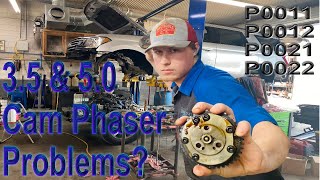
- If you hear a startup rattle, the problem may be a more serious cam phaser issue, which requires professional repair.
- Adhering to a 5,000-mile oil change interval can help prevent this issue from recurring.
What's Unique About the 2015-2019 Ford TRANSIT
Ford's Variable Camshaft Timing (VCT) systems used in the 3.5L and 3.7L engines are known to be highly sensitive to oil quality and maintenance intervals. The internal passages in the VCT solenoids are very fine and can become clogged with small amounts of sludge or debris, leading to sticking. Many technicians and owners recommend oil change intervals of 5,000 miles, rather than following the oil life monitor, to prevent these issues. This makes regular, high-quality oil changes especially critical for these vans, which often see extended idle times that accelerate oil breakdown.
Diagnostic Flowchart
Tap your situation to follow the diagnostic path that matches what you're seeing on this vehicle.
Symptoms You May Notice
- Check Engine Light is on
- Rough or unstable idle
- Engine hesitates or feels sluggish during acceleration
- Reduced fuel economy
- Engine may be difficult to start
- Stalling at low speeds or when stopping
- Rattling noise from the engine on cold startup
- Replacing the camshaft position sensor. The sensor is almost always reporting the timing accurately; the problem is the mechanical timing itself, which is controlled by the VCT solenoid and phaser.
- Immediately replacing timing components. Before undertaking an expensive timing job, always rule out the much more common and cheaper fixes: an oil change and VCT solenoid replacement.
- Replacing only the VCT solenoid when a cam phaser is also bad. Even a dealer can replace the solenoids, but if the code returns, it often points to a deeper mechanical issue like a failing phaser that was the root cause all along.
Most Likely Causes
- Low, Incorrect, or Dirty Engine Oil 🔴 High Probability The VCT system is entirely dependent on clean oil at the correct pressure. These engines are known to be sensitive to oil condition, and extending oil change intervals can lead to sludge that clogs the tiny screens in the VCT solenoids.
How to confirm: Check the oil level on the dipstick and examine the oil's condition. If it is dark, gritty, below the 'add' line, or if the last oil change was over 5,000-6,000 miles ago, this is the most likely cause.
Typical fix: Perform an oil and filter change using the manufacturer-specified grade of oil (e.g., Motorcraft Synthetic Blend 5W-20 for 3.7L, 5W-30 for 3.5L EcoBoost).
Est. part cost: $40-$80 - Sticking or Failed VCT Solenoid (Bank 1 Intake) 🔴 High Probability → Shop Engine Variable Valve Timing (VVT) Solenoid As noted in multiple Ford TSBs (#SSM 48423, #SSM 47170), small debris from engine oil can cause the VCT solenoid's internal spool valve to stick, which is a very common failure mode for this platform. [NHTSA TSBs]
How to confirm: After ruling out oil issues, the easiest way to confirm a bad solenoid is to swap the Bank 1 intake solenoid with the Bank 2 intake solenoid. Clear the codes and drive. If the code changes to P0022 (Intake Cam Over-Retarded Bank 2), you have definitively confirmed the solenoid is faulty. You can also test resistance with a multimeter (should be 6.9-7.9 ohms).
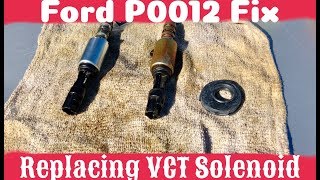
Typical fix: Replace the Bank 1 intake VCT solenoid and its seal. 🎬 Watch: A step-by-step guide to replacing the VCT solenoid. The solenoids are located on the top of the valve covers, making them accessible.
Est. part cost: $30-$90 - Damaged Camshaft Phaser ⚪ Low Probability → Shop Engine Camshaft The phaser itself can fail mechanically, getting stuck in the retarded position or having its internal locking pin fail. This is less common than a solenoid failure but is a known issue, especially on the 3.5L EcoBoost, and often presents with a distinct rattling noise on startup.
How to confirm: This is an advanced diagnosis. If a new solenoid and fresh oil do not fix the code, and especially if a startup rattle is present, the phaser is the next suspect. This requires removing the valve cover for inspection and is a labor-intensive job.
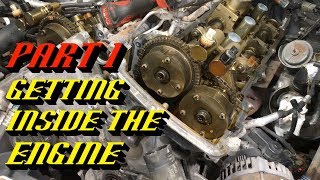
Typical fix: Replace the camshaft phaser. This is a major repair that should include replacing the timing chain, guides, and tensioners at the same time. 🎬 Watch: A deep dive into accessing the timing chain and phasers.
Est. part cost: $150-$400
Rare But Worth Checking
- Stretched Timing Chain or Worn Guides: → Shop Engine Timing Chain While less common than oil or solenoid issues, if the engine has a persistent rattling noise, it could indicate a stretched timing chain. This slack can cause the base cam timing to be off, triggering the code. This is a more common concern on higher mileage EcoBoost engines.
- Wiring Harness Damage: Check the wiring and connector to the VCT solenoid for any signs of corrosion, oil contamination, or physical damage. A poor electrical connection can prevent the solenoid from actuating correctly, mimicking a failed part.
Diagnosis Steps
- Check the engine oil level and condition. If it is low, top it off. If it is old (over 5,000 miles) or dirty, perform a complete oil and filter change with the correct Ford-specified viscosity oil.
- Clear the code with an OBD-II scanner and drive the vehicle to see if the code returns.
- If the code returns, listen carefully for a rattling or ticking noise during a cold startup. A rattle strongly suggests the issue may involve the cam phaser itself.
- Inspect the wiring and connector for the Bank 1 intake VCT solenoid for damage or oil saturation.
- The most effective DIY diagnostic step is to swap the intake solenoids between Bank 1 (passenger side) and Bank 2 (driver side). They are identical parts. Clear the codes and drive. If the code changes to P0022 (for Bank 2), you have confirmed the solenoid you moved is faulty.
- If the solenoid swap does not move the code, the problem is likely deeper in the engine, such as a clogged oil passage in the cylinder head, a failing camshaft phaser, or a timing chain issue. This level of diagnosis is best left to a professional.
- Per Ford TSB #SSM 48423, a technician may use a scan tool to command the VCT solenoid on and off to check its response and potentially dislodge debris. [NHTSA TSBs]
Parts You'll Likely Need
- Intake/Exhaust VCT Solenoid
(OEM #7T4Z-6M280-C)— This solenoid is the most common mechanical part to fail for this code, often due to internal sticking caused by oil debris. It is used for both intake and exhaust positions on both banks. It supersedes part numbers 7T4Z-6M280-A, 7T4Z-6M280-AA, and 7T4Z-6M280-B.
Trusted brands: Motorcraft, Dorman, SKP
OEM price range: $60-$90
Aftermarket price range: $30-$60 - Engine Oil and Filter — Low or contaminated oil is a primary cause of VCT system faults. An oil change with high-quality, Ford-spec oil is the first and most crucial step in diagnosis and repair.
Trusted brands: Motorcraft, Mobil 1, Valvoline
OEM price range: $50-$90
Aftermarket price range: $40-$70 - VCT Solenoid Seal (Gasket)
(OEM #6E5Z-6C535-AB)— This small seal is critical for preventing oil leaks around the VCT solenoid. It should always be replaced when the solenoid is removed or replaced to ensure a proper seal.
Trusted brands: Motorcraft, Fel-Pro
OEM price range: $5-$15
Aftermarket price range: $3-$10
Related Codes That Often Appear With This One
- P0011 — This code is for 'Intake Camshaft Position Timing - Over-Advanced (Bank 1)'. Seeing both may indicate an erratic VCT solenoid or an oil pressure problem causing inconsistent cam movement.
- P0022 — This is the same 'Over-Retarded' code but for Bank 2. If you see both P0012 and P0022, it points towards a systemic issue like low oil pressure or severe oil contamination affecting both banks.
- P052B — This code for 'Cold Start 'A' Camshaft Position Timing Over-Retarded Bank 1' is very specific. Seeing it with P0012 strongly points to a mechanical issue with the VCT solenoid or phaser that is most apparent during a cold start.
Technical Service Bulletins (TSBs) & Recalls
- SSM 48423: Notes that P0012 and other VCT codes on 2015-2020 Ford vehicles may be due to a sticking VCT solenoid from small debris.
- SSM 54366: Recommends a specific diagnostic pinpoint test (HK) for P0012 and other VCT codes on 2015-2021 Ford vehicles.
- SSM 47170: An earlier bulletin also identifying debris causing the VCT solenoid to stick.
Platform-Specific Known Issues
- Ford has issued multiple Technical Service Bulletins (TSBs) related to VCT system codes. Bulletin #SSM 48423 and #SSM 47170 specifically state that codes including P0012 may be due to 'small debris causing the VCT solenoid to stick'.
- A real-world example from an owner of a 2017 F-150 with the 3.5L EcoBoost (a platform mate) reported getting codes P0012 and P052B along with a rattling noise on startup. This combination of symptoms points directly to a fault in the Bank 1 VCT system, likely the solenoid or the phaser itself.
Mechanic-Grade Diagnostic Values
- VCT Solenoid Internal Resistance — expected: 7.0 to 14.0 ohms. A common reading for a good solenoid is between 7.0 and 7.9 ohms.. Failure: A reading outside of this range, or an open circuit (infinite resistance), indicates a failed solenoid.
- VCT Solenoid Connector Voltage — expected: Battery voltage (~12.6V) at the power supply pin with key on, engine off.. Failure: No voltage indicates a problem with the power supply circuit, potentially a blown fuse or wiring issue.
- Scan Tool VCT Error PID (e.g., FORScan VCT_DIF) — expected: Should be close to 0 degrees at a stable, hot idle.. Failure: A large, persistent, or erratic value on one bank indicates the camshaft is not at its commanded position. Slow reaction to changes in desired value and overcorrection can point to a sticking solenoid.
Hidden / Shadow Codes Worth Checking
- Mode 6, Test ID ($A9, etc.): Mode 6 data provides results from non-continuous monitor tests. For VCT issues, it can show statistical data on camshaft timing performance, such as the number of times the timing has been close to the threshold for setting a code. This can reveal a marginal component before it fails completely. (see via A professional scan tool like Ford's IDS or an advanced DIY tool like FORScan can access Mode 6 data. On newer CAN vehicles, the data is often presented with descriptions like 'Misfire Cylinder 1 Data' rather than just a Test ID.)
Scan Tool Commands That Help
- Ford IDS (Integrated Diagnostic System): VCT Solenoid Duty Cycle / VCT Error PID Monitoring — Use the data logger to monitor the commanded vs. actual camshaft position and the error between them (VCT_ERR PID). The histogram function can be used during a test drive to capture intermittent anomalies.
- Ford IDS (or other advanced scan tool): VCT Solenoid On/Off Command — As mentioned in TSB SSM 48423, a technician can command the solenoid on and off with the engine running. A healthy system will cause the engine to run rough or stall when the solenoid is commanded on at idle. No change in engine operation points to a stuck solenoid or a clogged oil passage.
Wiring & Ground Locations
- Fuse 36 (Battery Junction Box) — Under the hood, in the main fuse box (Battery Junction Box).. On the 2016 Transit, this single 20-amp fuse provides power to all four VCT solenoids as well as all the heated oxygen sensor (HO2S) heaters. A blown fuse or a fault in this shared circuit will cause multiple circuit codes for both systems (e.g., P0012, P0022, and O2 heater codes) to appear simultaneously.
- VCT Solenoid Connector — On top of the valve cover, plugging into the VCT solenoid.. The connector itself or its two wires can become damaged from heat, oil contamination, or improper servicing. The Motorcraft pigtail connector part number is available for repairs.
Real Owner Repair Stories
- Ford F150 Forum user (Ford F-150 with 5.0L V8 (uses similar VCT technology)) — Engine shudder, rough idle, and stalling only when very hot (2+ hours of highway driving). Threw code P0022 (Bank 2 equivalent of P0012).
❌ Tried (didn't work) Initial diagnosis was difficult because the problem only occurred when the engine was extremely hot.
✅ What actually fixed it Using FORScan, the owner logged VCT data during the failure event. The log for the Bank 2 intake solenoid showed it was slow to react to commanded changes and would overcorrect, causing instability. The VCT Error PID (VCT_DIF) was erratic instead of staying near zero. This data confirmed a sticking VCT solenoid was the root cause, which was then replaced.
When the Usual Fixes Don't Work
- In some cases, particularly on higher-mileage 3.5L EcoBoost engines, replacing the VCT solenoid and performing an oil change may not resolve the P0012 code. If a startup rattle is also present, the actual root cause is often a stretched primary timing chain or a mechanically failed camshaft phaser. The slack in the chain or failure of the phaser's locking pin prevents the camshaft from achieving its commanded position, even with a perfectly functional solenoid.
OEM Part Supersession History
7T4Z-6M280-A, 7T4Z-6M280-AA, 7T4Z-6M280-B→7T4Z-6M280-C— Part revision and improvement by the manufacturer.
Helpful Videos

The information in this article is provided for general reference and educational purposes only. Vehicle specifications, procedures, and part compatibility can vary by production date, trim level, and region. Always consult your vehicle's factory service manual and verify part numbers before purchasing or performing repairs. Safety-critical components such as airbags, seat belts, and braking systems should be installed by a qualified professional.
- Ford TRANSIT:
- 🧭 Diagnostic Flowchart
- 🎬 Helpful Videos
- What's Unique About the 2015-2019 Ford TRANSIT
- Symptoms You May Notice
- Most Likely Causes
- Rare But Worth Checking
- Diagnosis Steps
- Parts You'll Likely Need
- Related Codes That Often Appear With This One
- Technical Service Bulletins (TSBs) & Recalls
- Platform-Specific Known Issues
- Mechanic-Grade Diagnostic Values
- Hidden / Shadow Codes Worth Checking
- Scan Tool Commands That Help
- Wiring & Ground Locations
- Real Owner Repair Stories
- When the Usual Fixes Don't Work
- OEM Part Supersession History
- 🎟️ Get 5% Off