

P0012 on 2020-2021 Ford Transit: Camshaft Timing Over-Retarded Causes and Fixes
On a 2020-2021 Ford Transit, a P0012 code is most often caused by a known PCM software issue, which can be fixed with a dealer update per TSB 21-2224. Other common causes include low or dirty engine oil using the wrong viscosity, and a faulty Variable Camshaft Timing (VCT) solenoid.
- For a 2020-2021 Transit with P0012, first check if TSB 21-2224 applies; a simple software update could be the fix.
- Always check your engine oil level and condition first. Low or dirty oil is a very common and simple-to-fix cause.
- Bank 1 on the Transit's V6 engine is the cylinder bank closer to the firewall.
- If an oil change doesn't work, the next most likely part to fail is the Bank 1 intake VCT solenoid, which is relatively inexpensive and accessible to replace.
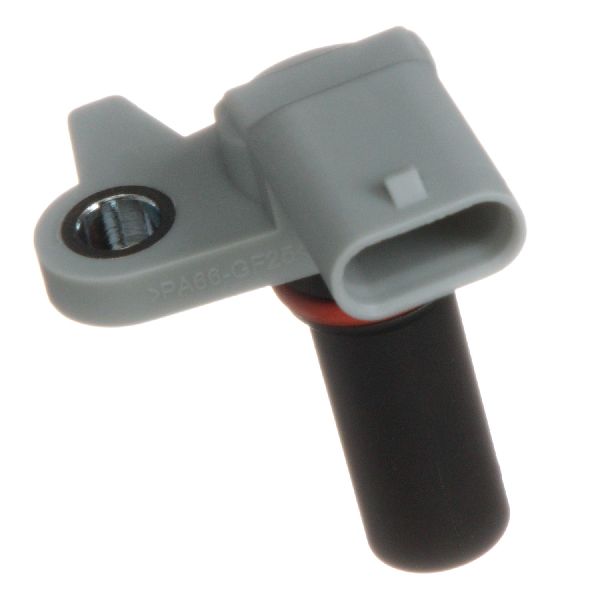
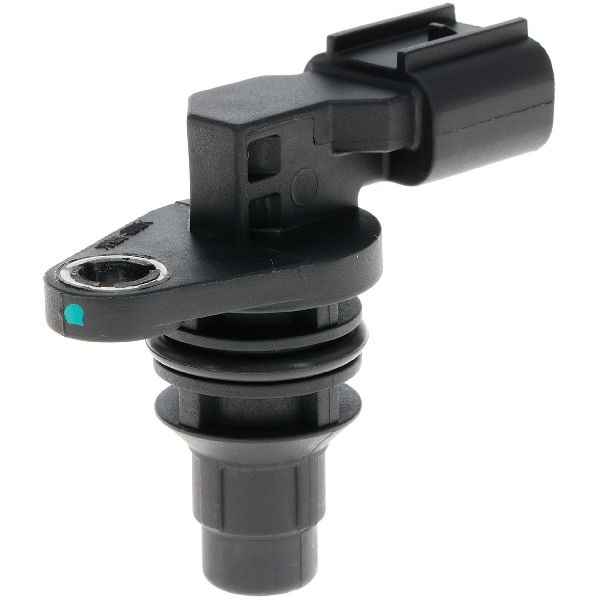
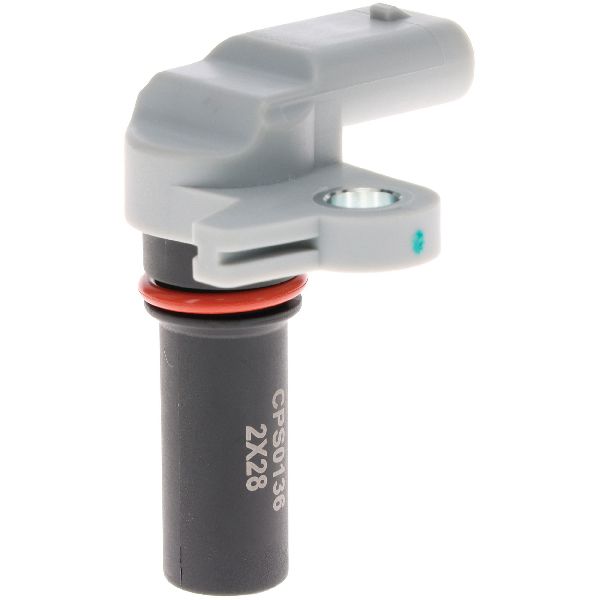
- Do not immediately replace the camshaft position sensor, as it is rarely the root cause of this specific code.
What's Unique About the 2020-2021 Ford TRANSIT
For the 2020-2021 Ford Transit, a significant number of P0012 code instances are directly linked to a software problem in the Powertrain Control Module (PCM), as identified in Ford's Technical Service Bulletin 21-2224. Unlike many other vehicles where this code points immediately to a mechanical or hydraulic fault, for Transits built on or before July 1, 2021, the very first diagnostic step should be to check if this software update has been performed. Many owners have reported this simple dealer reflash permanently solved the issue.
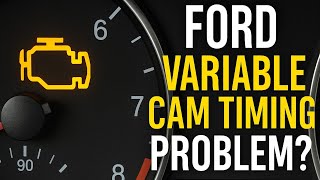
🎬 Watch: A breakdown of Ford's timing codes and dealer bulletins.Diagnostic Flowchart
Tap your situation to follow the diagnostic path that matches what you're seeing on this vehicle.
Symptoms You May Notice
- Check Engine Light is on
- Rough or unstable idle
- Engine stalling, especially at low speeds or when coming to a stop
- Poor acceleration and reduced engine power
- Decreased fuel economy
- Hard starting
- Engine rattling noise, especially on cold startup
- Replacing the camshaft position sensor. This sensor is almost always functioning correctly; it is simply reporting the timing problem it detects. The fault lies within the control system (software, solenoid, oil) or mechanical timing parts (phaser, chain).
Most Likely Causes
- Incorrect Powertrain Control Module (PCM) Software 🔴 High Probability Ford issued TSB 21-2224 specifically for 2020-2021 Transit vehicles built on or before July 1, 2021, identifying a software issue that can cause P0012 and other timing codes. This is the most likely cause for vehicles within this build range.
How to confirm: A Ford dealer or a qualified shop with access to Ford's service database (OASIS) can check the vehicle's VIN to see if TSB 21-2224 applies and if the update has been performed.
Typical fix: Reprogramming the PCM with the updated software. This is a dealer-only fix. If out of warranty, owners report costs ranging from $110 to $175 for the service.
Est. part cost: $0 (if under warranty) - Low, Dirty, or Incorrect Viscosity Engine Oil 🔴 High Probability The Variable Camshaft Timing (VCT) system is hydraulic and extremely sensitive to oil pressure and cleanliness. Using oil other than the specified full synthetic (e.g., Ford Spec WSS-M2C961-A1 for the 3.5L EcoBoost) or extending oil change intervals can cause sludge to clog the small passages in the VCT solenoids.
How to confirm: Check the engine oil dipstick for level and inspect the oil's condition. If it is dark, sludgy, or below the 'add' mark, this is a likely cause. This should be the first check if the TSB does not apply.
Typical fix: Perform an oil and filter change using the manufacturer-specified grade of oil (e.g., Motorcraft SAE 5W-30 Full Synthetic) and a quality filter (e.g., Motorcraft FL-500S). In cases of heavy sludge, some mechanics report resolving codes by performing multiple oil changes in short succession.
Est. part cost: $60-$120 - Faulty Variable Camshaft Timing (VCT) Solenoid 🟡 Medium Probability → Shop Engine Camshaft The solenoid can get stuck due to sludge or internal failure, preventing it from correctly directing oil flow to the cam phaser. The screens on the solenoid can become clogged with debris.
How to confirm: A mechanic can use a scan tool to command the solenoid on and off to check for a response. It can also be removed and inspected for debris on its screens or tested for electrical resistance. A common DIY diagnostic is to swap the Bank 1 intake solenoid with the Bank 2 intake solenoid; if the code changes to P0022 (the same code for Bank 2), the solenoid is confirmed faulty.
Typical fix: Replacement of the Bank 1 intake VCT solenoid. Many owners choose to replace all four VCT solenoids (intake and exhaust for both banks) at the same time as a preventative measure.
Est. part cost: $30-$80 - Failing Camshaft Phaser ⚪ Low Probability → Shop Engine Camshaft The phaser itself can fail mechanically, most famously causing a 'cold start rattle' that lasts for a few seconds. The internal locking pin can wear, allowing the phaser to move around when oil pressure is low, leading to noise and incorrect timing. This is a well-known issue on the 3.5L EcoBoost platform, particularly in the F-150.
How to confirm: This is typically diagnosed after all other possibilities (software, oil, solenoid) have been ruled out. A distinct rattling noise from the top of the engine on startup is a strong indicator.
Typical fix: Replacement of the camshaft phaser(s), which is a significant, labor-intensive repair that involves removing the valve cover and timing components.
Est. part cost: $150-$400 per phaser
Rare But Worth Checking
- Stretched Timing Chain or Failed Tensioner: → Shop Engine Timing Chain While less common on newer vehicles, a stretched chain or a failed hydraulic tensioner (often due to oiling issues) can cause base timing to be off, triggering this code. This is often accompanied by a rattling noise.
Diagnosis Steps
- Check for Technical Service Bulletins (TSBs). For any 2020-2021 Transit, the first step is to have a dealer check if TSB 21-2224 applies to your VIN. If it does and the update hasn't been performed, this is the most likely fix.
- Check the engine oil level and condition. If low, dirty, or not the correct viscosity, perform an oil and filter change with the correct Ford-specified oil (e.g., Motorcraft WSS-M2C961-A1) and filter. Clear the code and test drive.
- If software and oil are good, use a scan tool to monitor the desired vs. actual camshaft angle for Bank 1. A significant lag in the actual angle confirms the over-retarded condition.
- Command the Bank 1 intake VCT solenoid on and off with the scan tool. Listen for a change in engine idle and watch the timing angle data for a response. Ford's IDS software has a specific function, Pinpoint Test HK11, to cycle the solenoid 10 times to clear debris.
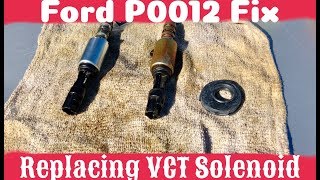
- Perform a 'solenoid swap'. Swap the Bank 1 intake solenoid with the Bank 2 intake solenoid. Clear codes and drive. If the code returns as P0022 (Bank 2 over-retarded), you have confirmed the solenoid is faulty. 🎬 See this walkthrough on how to replace the VCT solenoid.
- Remove and inspect the VCT solenoid for clogged screens or sludge. Clean or replace as necessary.
- Test the VCT solenoid's electrical circuit for proper voltage and ground, and check the solenoid's internal resistance with a multimeter.
- If the solenoid and wiring are good, the issue may be mechanical. Listen for a cold start rattle which would point towards a faulty cam phaser or timing chain issue, which requires more intensive labor.
Parts You'll Likely Need
- Engine Oil and Filter
(OEM #Motorcraft FL-500S (Filter), Motorcraft XO-5W30-Q1FS (Oil))— The VCT system is highly sensitive to oil level and quality. Using the correct Ford-spec oil (WSS-M2C961-A1 for 3.5L EcoBoost) is critical.
Trusted brands: Motorcraft
OEM price range: $60-$120
Aftermarket price range: $50-$90 - Variable Camshaft Timing (VCT) Solenoid
(OEM #HL3Z-6M280-A)— This solenoid controls oil flow to the cam phaser and is a common failure point due to sludge or electrical issues. It is used for both intake and exhaust positions on many Ford V6/V8 engines.
Trusted brands: Motorcraft, Dorman
OEM price range: $30-$50
Aftermarket price range: $25-$45
Related Codes That Often Appear With This One
- P0011 — This code is for 'Camshaft Position Timing Over-Advanced' on the same bank. Seeing both can indicate an erratic VCT solenoid or an oil pressure problem causing unpredictable camshaft movement.
- P0021, P0022 — These are the equivalent over-advanced and over-retarded codes for Bank 2 (driver's side). If codes for both banks appear, it strongly suggests a systemic issue like low oil pressure, dirty oil, or the PCM software issue affecting the entire engine.
- P052B — This code is for 'Cold Start 'A' Camshaft Position Timing Over-Retarded Bank 1'. Seeing this alongside P0012 strongly points to a mechanical issue like a sticking VCT solenoid or a failing cam phaser that is most pronounced before the engine is warm and oil pressure has stabilized.
Technical Service Bulletins (TSBs) & Recalls
- TSB 21-2224: Addresses P0012 and other timing codes on 2020-2021 Transits, pointing to a PCM software update as the correction.
- SSM 54366: A broader service message covering many Ford/Lincoln vehicles from 2015-2021 with a range of VCT-related codes, including P0012, directing technicians to a specific diagnostic test.
Platform-Specific Known Issues
- TSB 21-2224: Some 2020-2021 Transit models built on or before July 1, 2021, may trigger P0012 and other related timing codes due to a PCM software error. The prescribed fix is a PCM update, which should be the first diagnostic step for any vehicle in this range.
Mechanic-Grade Diagnostic Values
- VCT Solenoid Internal Resistance — expected: 6.9 - 7.9 Ohms at 68°F (20°C). Some service documents allow a broader range of 5 - 14 Ohms.. Failure: A reading of 0 ohms (short), infinite/OL (open), or significantly outside the expected range indicates a faulty solenoid coil.
- VCT Solenoid Connector Voltage (KOEO) — expected: Battery voltage (approx. 10.5V - 12.5V) at the power supply pin.. Failure: Low or no voltage points to an open in the VPWR circuit, a blown fuse, or a PCM power relay issue.
- Engine Oil Pressure (at idle, warm) — expected: Minimum of 15-25 PSI.. Failure: Pressure below this threshold can cause erratic VCT operation and trigger timing codes.
- Scan Tool PID: VCT Advanced Error — expected: Should hover around 0° at idle in closed-loop operation.. Failure: Excessive variation or a consistently high retarded value while the fault is present confirms a VCT system issue.
Hidden / Shadow Codes Worth Checking
- Mode 6, TID $53: This is not a DTC but an onboard test monitor for misfires. It tracks misfire counts per cylinder for the current and last 10 drive cycles. Incorrect cam timing from P0012 can cause subtle misfires on Bank 1 cylinders that may be logged here before they are severe enough to set a P030x code. (see via A professional scan tool or software like FORScan that can access OBD-II Mode $06 data.)
Scan Tool Commands That Help
- Ford IDS (Integrated Diagnostic System): Pinpoint Test HK11: VCT Solenoid Cycle Test — As per Ford TSBs (SSM 48423), this test should be run before replacing a suspect VCT solenoid. It rapidly cycles the solenoid 10 times to attempt to dislodge small debris that may be causing it to stick, which can sometimes resolve the fault without replacing parts.
- Ford IDS (or equivalent advanced scan tool): VCT PID Data Logging & Histogram — When diagnosing an intermittent issue, recording the VCT error PIDs, desired vs. actual cam angle, and solenoid duty cycle during a test drive can capture anomalies that occur under specific load or temperature conditions. The histogram feature can help visualize the data to spot outliers.
Wiring & Ground Locations
- VCT Solenoid Connector — On the top of the valve cover for Bank 1 (passenger side), plugged directly into the intake VCT solenoid. It is a 2-wire connector.. This is the primary connection to test for power (VPWR) and the control signal from the PCM. Corrosion or damage to these wires or pins will prevent the solenoid from operating correctly.
- G100-Series Grounds (e.g., G104, G105) — These are major engine bay ground points, typically located on the radiator support or inner fender aprons.. The entire engine management system, including the PCM and its sensor circuits, relies on clean, tight ground connections. A poor engine or chassis ground can introduce electrical noise or voltage drops, potentially causing the PCM to misinterpret sensor data and trigger false codes.
Real Owner Repair Stories
- YouTube channel 'BlueCollarMechanic' (2009 Ford F-150 5.4L V8 (Note: Different engine, but demonstrates a universal cause for VCT codes)) — Check engine light with codes P0012 and P0022 (both banks over-retarded), plus a rattling engine noise.
❌ Tried (didn't work) Initial diagnosis considered immediate replacement of VCT solenoids or timing components.
✅ What actually fixed it The oil was found to be extremely dirty and low. The mechanic performed an oil and filter change, drove the vehicle, and then performed a second oil and filter change shortly after. This process of flushing the system with clean oil and short-interval changes successfully cleared the sludge, eliminated the codes, and stopped the engine rattle without replacing any hard parts.
OEM Part Supersession History
HL3Z-6M280-A→N/A— This is the current and stable part number.
Heads up: Part number HL3Z-6M280-A is widely used across many Ford engines (2.0L, 3.5L, 5.0L) from roughly 2015 to present, including the 2020-2021 Transit. No supersessions were noted in parts catalogs as of early 2026.
Model Year Variations Within This Range
- 2020 - Early 2021: Vehicles built on or before July 1, 2021, are subject to TSB 21-2224. For these specific vehicles, the most probable cause of P0012 is a PCM software issue, whereas for vehicles built after this date, the cause is more likely to be traditional mechanical or oil-related issues.
Helpful Videos

We Have This Part in Stock


The information in this article is provided for general reference and educational purposes only. Vehicle specifications, procedures, and part compatibility can vary by production date, trim level, and region. Always consult your vehicle's factory service manual and verify part numbers before purchasing or performing repairs. Safety-critical components such as airbags, seat belts, and braking systems should be installed by a qualified professional.
- Ford TRANSIT:
- 🧭 Diagnostic Flowchart
- 🎬 Helpful Videos
- 🛍️ Shop This Part
- What's Unique About the 2020-2021 Ford TRANSIT
- Symptoms You May Notice
- Most Likely Causes
- Rare But Worth Checking
- Diagnosis Steps
- Parts You'll Likely Need
- Related Codes That Often Appear With This One
- Technical Service Bulletins (TSBs) & Recalls
- Platform-Specific Known Issues
- Mechanic-Grade Diagnostic Values
- Hidden / Shadow Codes Worth Checking
- Scan Tool Commands That Help
- Wiring & Ground Locations
- Real Owner Repair Stories
- OEM Part Supersession History
- Model Year Variations Within This Range
- 🎟️ Get 5% Off