

P0012 on 2019-2024 Genesis G70 3.3T: Causes and Fixes for Over-Retarded Camshaft Timing
On a 2019-2024 Genesis G70 3.3T, code P0012 is almost always caused by low/dirty engine oil or a failing passenger-side intake Oil Control Valve (OCV). First, check your oil. If it's full and clean, the OCV is the next likely fix, costing about $50-$80 for an OEM part. This issue is often linked to a recall for a leaking turbo oil feed pipe that causes low oil levels.
- Before buying any parts for a P0012 code, check your engine oil level and condition. A simple oil and filter change using OEM parts often resolves the issue.
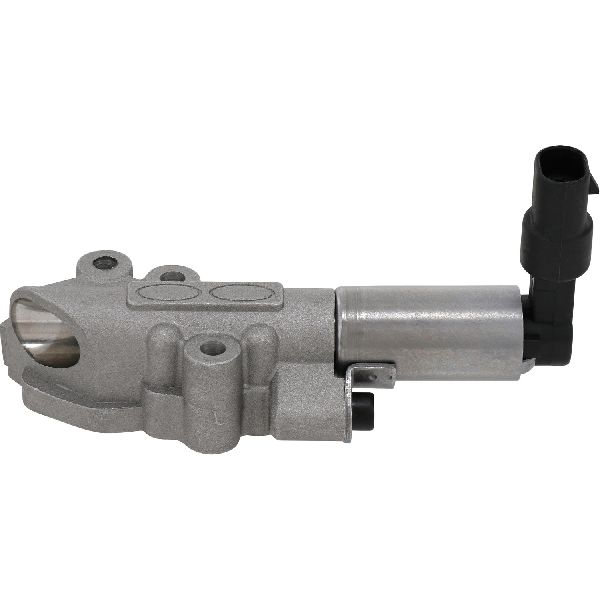
- The most likely failed part is the passenger-side intake Oil Control Valve (OCV), OEM part number 24355-3L100.
- A no-cost way to confirm a bad OCV is to swap it with the driver-side intake OCV. If the code moves to the other bank (P0022), you've found the faulty part.
- Ensure TSB 24-01-032G for the turbo oil feed pipe has been addressed by a dealer to prevent oil leaks that are a known cause of this code.
- Do not replace the Camshaft Position Sensor; it is almost never the cause of this specific code on this engine.
What's Unique About the 2019-2024 Genesis G70
The Genesis G70's Lambda II 3.3T V6 engine's CVVT system is highly sensitive to oil level and cleanliness. A key issue for this platform is a recall for a leaking driver-side turbo oil feed pipe, which can cause a vehicle-wide low oil level and trigger this P0012 code on the passenger side. Unlike platforms where timing chain failure is common, P0012 on this engine is most often traced back to simple oil maintenance or a faulty Oil Control Valve (OCV).
Generation note: The 2019-2024 model years cover the first generation (IK) of the Genesis G70. A significant facelift occurred for the 2022 model year, but the Lambda II 3.3T GDi V6 powertrain remained the same, so the causes and fixes for P0012 are consistent across this entire range.
Symptoms You May Notice
- Check Engine Light is on
- Rough idle or stalling
- Poor acceleration and reduced engine power
- Decreased fuel economy
- Hard starting
- Engine hesitation
- Replacing the Camshaft Position Sensor (CMP). The CMP sensor reads the camshaft's position, but it rarely fails in a way that causes this specific 'over-retarded' code. The problem is almost always the hydraulic control (oil or OCV), not the sensor itself.
Most Likely Causes
- Low or Dirty Engine Oil 🔴 High Probability The CVVT system is hydraulic and highly sensitive to oil pressure and volume. A recall (NHTSA #24V191000 / Genesis Recall 019G) for a leaking driver-side turbo oil feed pipe makes unexpected low oil levels a known and critical issue on this platform.
How to confirm: Turn off the engine, wait 5-10 minutes for the oil to settle, and check the dipstick. The level should be between 'F' and 'L'. Check if the oil is excessively dark, thick, or sludgy. An oil change is the first and most important diagnostic step.
Typical fix: Perform an engine oil and filter change using a high-quality full-synthetic 5W-30 oil and a genuine Hyundai/Genesis OEM oil filter. Using non-OEM filters has been linked to CVVT issues.
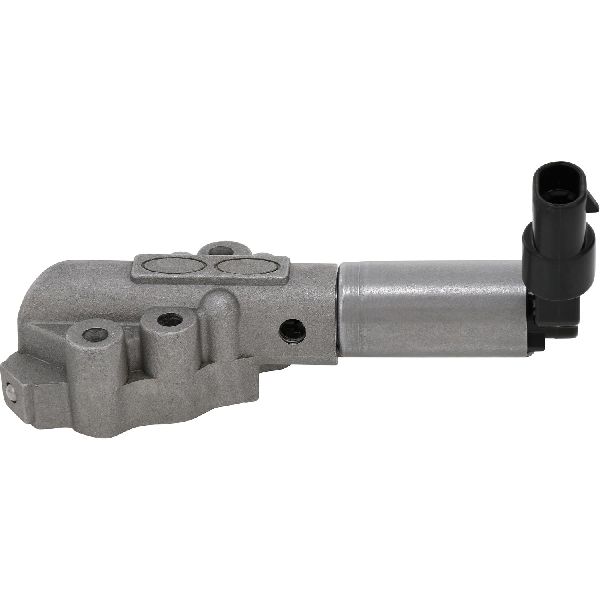
Est. part cost: $50-$100 - Faulty Bank 1 Intake Oil Control Valve (OCV) 🔴 High Probability → Shop Engine Variable Valve Timing (VVT) Solenoid The OCV (also called a VVT solenoid) can become clogged with oil sludge or fail electronically over time. It is the most common component failure for this code if the oil level is correct.
How to confirm: Swap the Bank 1 (passenger side) intake OCV with the Bank 2 (driver side) intake OCV. They are identical parts. If the code changes to P0022 (Bank 2 Over-Retarded), the OCV is confirmed to be faulty. You can also test the OCV's resistance with a multimeter; it should be between 6.9 and 7.9 ohms.
Typical fix: Replace the Bank 1 intake OCV. It is located on the front of the passenger-side valve cover and held by a single 10mm bolt.
Est. part cost: $50-$80
Rare But Worth Checking
- Stretched Timing Chain or Failed Guide/Tensioner: → Shop Engine Timing Chain This is a more serious mechanical issue. A key symptom is a distinct rattling noise from the front of the engine during a cold start that lasts for a few seconds.
- Failed Camshaft Phaser (CVVT Actuator): → Shop Engine Camshaft The mechanical gear on the end of the camshaft can get stuck. This is much less common than an OCV failure and typically requires professional diagnosis to confirm.
- Clogged Oil Passages: In cases of severe neglect and oil sludge, the small passages feeding the CVVT components in the cylinder head can become blocked. This is an extensive and costly repair.
Diagnosis Steps
- Read the code with an OBD-II scanner to confirm P0012 is the active fault.
- Check Engine Oil: This is the most critical first step. Turn off the engine, wait 5-10 minutes, and check the dipstick. Ensure the level is correct and the oil is clean. If low or dirty, perform an oil and filter change with OEM-spec 5W-30 synthetic oil and an OEM filter, clear the code, and re-test.
- Inspect OCV Wiring: Locate the intake OCV on the passenger-side valve cover. Inspect its electrical connector and wiring for any visible damage, corrosion, or oil contamination.
- Diagnose the OCV via Swapping: Unplug and remove the intake OCVs from both Bank 1 (passenger) and Bank 2 (driver). They are held by a single 10mm bolt. Swap their positions. Reinstall them, clear the codes, and drive the vehicle.
- Re-scan for Codes: If the code has changed to P0022 ('A' Camshaft Position - Timing Over-Retarded Bank 2), you have confirmed the OCV that is now on Bank 2 is faulty. Purchase a new OCV and install it in the original Bank 1 position.
- If Code P0012 Returns: If the same code comes back after the swap, the OCV is not the issue. The problem is likely a more serious mechanical issue (clogged oil passage, failing cam phaser, timing chain). At this stage, professional diagnosis is recommended.
Parts You'll Likely Need
- Engine Oil Control Valve (VVT Solenoid)
(OEM #24355-3L100 (primary), 24360-3CAB2 (verify by VIN))— This solenoid is the most common part to fail for this code. It gets clogged with sludge or fails electrically, preventing it from properly regulating oil flow to the cam phaser.
Trusted brands: Hyundai / Genesis OE
OEM price range: $50-$80
Aftermarket price range: $30-$60 - Engine Oil and Filter
(OEM #Filter: 26320-3LTA0)— The CVVT system is highly dependent on clean oil at the proper pressure. Using a genuine OEM filter is recommended as some aftermarket filters have been linked to CVVT problems on these engines.
Trusted brands: Hyundai / Genesis OE Filter, Mobil 1, Pennzoil Platinum
OEM price range: $25-$40
Aftermarket price range: $15-$30
Related Codes That Often Appear With This One
- P0022 — This is the identical 'over-retarded' code but for Bank 2 (driver's side). It will appear if you swap a faulty Bank 1 OCV over to Bank 2 during diagnosis, confirming the OCV is the problem.
- P0011 — This is the code for an 'over-advanced' condition on the same camshaft (Bank 1 Intake). Seeing both codes intermittently can suggest a very sticky or erratic OCV that is failing to control oil pressure in either direction.
- P0524 — This code indicates that engine oil pressure is too low. It directly points to the root cause of P0012, as the CVVT system cannot function without adequate oil pressure. This is often linked to the turbo oil line leak recall.
- P0300, P0301, P0303, P0305 — These are misfire codes for Bank 1 (Cylinders 1, 3, and 5). Incorrect camshaft timing disrupts the engine's combustion process, leading to misfires on the affected cylinders.
Technical Service Bulletins (TSBs) & Recalls
- 24-01-032G (NHTSA ID 10254992 / Recall 24V191000) - Addresses the turbocharger oil supply pipe, which can deteriorate and leak oil. This is a primary cause of low oil levels that can trigger P0012.
Platform-Specific Known Issues
- A recall/TSB (NHTSA #24V191000 / Genesis Recall 019G / TSB 24-01-032G) was issued for a leaking left-hand (driver side) turbocharger oil feed pipe on 2019-2022 G70s. This leak can cause a significant loss of engine oil, leading to low oil pressure that triggers CVVT codes like P0012, and also poses a fire risk.
Mechanic-Grade Diagnostic Values
- Bank 1 Intake Oil Control Valve (OCV) Coil Resistance — expected: 6.9 - 7.9 Ohms at 68°F (20°C). Failure: A reading of infinity (open circuit) or near-zero (short circuit) indicates a failed solenoid coil.
- OCV Connector Voltage (Key On, Engine Off) — expected: ~12V (Battery Voltage) on the power supply pin. Failure: No voltage suggests a break in the wiring, a blown fuse, or an issue with the power supply from the engine main relay, not the OCV itself.
- Scan Tool Live Data: CVVT Actual vs. Desired Angle (Bank 1 Intake) — expected: The 'Actual Position' PID should closely track the 'Desired Position' PID within a few degrees as engine RPM and load change.. Failure: A large, persistent gap where the 'Actual' value is stuck or lags significantly behind the 'Desired' value indicates the camshaft is not moving as commanded.
Scan Tool Commands That Help
- Hyundai GDS (Global Diagnostic System): Active Test: CVVT Oil Control Valve — This bidirectional command allows a technician to manually cycle the Bank 1 intake OCV on and off while the engine is idling. A corresponding change in engine sound and live cam angle data confirms the valve is mechanically responding, helping to isolate the problem between the OCV itself and a potential wiring/ECM issue.
- Hyundai GDS (Global Diagnostic System): Vehicle S/W Management > Reset Adapted Values — After replacing a major CVVT component like a cam phaser or OCV, this function should be performed to clear the ECM's learned timing adjustments. This allows the system to quickly adapt to the new part and can prevent the code from returning due to old data.
Wiring & Ground Locations
- Bank 1 Intake OCV Connector — On the front of the passenger's side (Bank 1) valve cover, connected to the intake CVVT solenoid.. This 2-pin connector provides the control signal from the ECM to the OCV. Damage, corrosion, or oil contamination in this connector can prevent the OCV from functioning, mimicking a failed OCV. Checking for ~12V with the key on is a key diagnostic step.
- Bank 1 Intake CMP Sensor Connector — On the top of the passenger's side (Bank 1) valve cover, typically towards the rear.. While the sensor itself is rarely the cause of P0012, damage to its wiring or connector can cause erratic signals. A common pinout is Pin 1: Signal, Pin 2: Ground, Pin 3: 5V Power. This should be verified with a vehicle-specific diagram before testing.
- Main Engine Ground — Typically a heavy gauge wire bolted from the engine block or cylinder head to the chassis, often near the alternator or starter.. A loose or corroded main engine ground can cause erratic voltage and faulty readings in all engine sensors and actuators, including the OCVs and CMP sensors, leading to a variety of codes including P0012.
Real Owner Repair Stories
- Aggregated from genesisg70forum.com and stingerforum.org (2018+ Kia Stinger GT / Genesis G70 3.3T) — Check Engine Light with code P0012 or P0022 (the Bank 2 equivalent).
❌ Tried (didn't work) Replacing the Camshaft Position Sensor., Performing an oil change when the OCV was the actual failure.
✅ What actually fixed it In numerous documented cases, the issue was resolved by first swapping the intake OCV from the affected bank to the opposite bank. When the code followed the solenoid (e.g., P0012 changed to P0022), replacing the faulty OCV with a new OEM part (24355-3L100) permanently cleared the code.
OEM Part Supersession History
24355-3L100→No supersession found, remains the current part number.— This part number is specific to the INTAKE camshafts on both banks of the 3.3T GDi V6.
Heads up: This is an INTAKE OCV. The part number for the EXHAUST OCV is different (e.g., 24360-3CAB2). They are not interchangeable.24360-3CAB2→No supersession found, remains a current part number.— This part number is for the EXHAUST camshafts on the 3.3T GDi V6.
Heads up: This is an EXHAUST OCV. It is not the correct part for a P0012 code, which refers to the intake camshaft ('A'). Do not use this part for P0012.
Model Year Variations Within This Range
- 2019-2022: These model years are specifically cited in the NHTSA recall #24V191000 / TSB 24-01-032G for the leaking turbocharger oil feed pipe. While later models share the engine, the recall is specific to this range, making the low oil level cause particularly relevant for these years.
Diagnostic Flowchart
Other Known Issues on This Vehicle
Issues unrelated to this code that are worth knowing about as an owner of this generation:
- Peeling/Fading Exterior Paint 🟡 Low — Commonly reported, especially on white and other light-colored pre-facelift (2019-2021) models. Can occur within 2-3 years. A class-action lawsuit has been filed regarding this issue. (Ref: No recall, but subject of a class-action lawsuit as of March 2024.)
- High-Pressure Fuel Pump (HPFP) Failure 🟠 Medium — A known failure point on the Lambda II GDI engine family, though less frequent on the 3.3T than the 2.0T. Can lead to stalling, rough idle, and codes like P0087. (Ref: Recall 24V528000 / 023G covers the fuel pump on 2019-2023 G70s, which may fail and cause a loss of drive power.)
- ABS Module Short Circuit 🔴 High — A recall was issued for 2019-2021 models as the ABS module could malfunction and cause an electrical short, increasing the risk of an engine compartment fire. (Ref: NHTSA Recall 21V161000.)
- Starter Solenoid Water Intrusion 🔴 High — A recall was issued for 2019 G70 models where water could enter the starter solenoid, causing an electrical short and potential fire risk, even when parked. (Ref: NHTSA Recall 24V191000 / Genesis Recall 019G.)
- Brake Vibration / Premature Wear 🟡 Low — Many owners of the G70 and its platform-mate, the Kia Stinger, report brake judder or vibration due to warped rotors or uneven pad deposits, sometimes occurring under 25,000 miles.
Used vs. New Parts: Buying Guide for This Vehicle
When a used part is the smart pick: For the most common fix, the Oil Control Valve (OCV), buying a used part is generally NOT recommended. The cost savings are minimal compared to the risk of the used electronic/mechanical part failing soon after installation, requiring the labor to be done again. A new OEM part is the safest and most cost-effective long-term solution.
Donor-vehicle mileage cap: roughly under 40000 miles for the part to have meaningful remaining life.
What to inspect on the donor part:
- Verify the donor vehicle did not have any timing-related trouble codes.
- Inspect the OCV's mesh screens for any metallic debris or heavy sludge, which indicates poor engine health of the donor vehicle.
- If possible, test the resistance of the used OCV before purchase to ensure it is within the 6.9-7.9 ohm specification.
OEM-only on this vehicle (don't cheap out):
- Oil Control Valve (OCV) / VVT Solenoid
- Engine Oil Filter
Brands owners have reported issues with on this vehicle:
- Unbranded/white-box solenoids from online marketplaces are frequently cited as unreliable in forums. While brands like Dorman are available, owner reviews are mixed, making the OEM part the most consistently recommended choice.
Real Owner Stories
Aggregated from forums and TSBs cited above. Mileages and costs reflect what owners reported in those sources.
2019 Genesis G70 3.3T
Symptoms: Check engine light on with code P0012; owner noted the car was part of a recall for a leaking oil pipe.
What fixed it: Addressed the leaking left-hand turbocharger oil feed pipe under Recall 24V191000 / TSB 24-01-032G to restore proper oil pressure.
Source hint: TSB 24-01-032G (NHTSA ID 10254992 / Recall 24V191000)
2018-2023 Kia Stinger GT (3.3T)
Symptoms: P0012 code triggered on the shared Lambda II 3.3T engine platform.
What fixed it: Diagnostic swap of OCVs confirmed a faulty Bank 1 OCV (part #24355-3L100).
Source hint: stingerforum.org threads detailing P0012 code and OCV swap diagnostic
2019-2021 Genesis G70
Symptoms: Brake vibration and judder occurring under 25,000 miles, alongside unrelated engine hesitation.
What fixed it: Replacement of warped rotors or pads to fix vibration; P0012 issues required separate oil system maintenance.
Source hint: genesisg70forum.com and Reddit r/GenesisG70 owner discussions
Related OBD-II Codes
Frequently Asked Questions
Does the turbo oil feed pipe recall (24V191000) affect my 2021 Genesis G70's P0012 code?
Can I use an aftermarket oil filter on my 3.3T G70 if I have VVT timing issues?
Is there a simple way to test if the Bank 1 Intake Oil Control Valve is actually bad?
What specific oil should I use for my 2019-2024 G70 to prevent P0012?
Are there other fire-related recalls for the 2019 G70 that I should check while fixing this code?
Helpful Videos

We Have This Part in Stock


The information in this article is provided for general reference and educational purposes only. Vehicle specifications, procedures, and part compatibility can vary by production date, trim level, and region. Always consult your vehicle's factory service manual and verify part numbers before purchasing or performing repairs. Safety-critical components such as airbags, seat belts, and braking systems should be installed by a qualified professional.
- Genesis G70:
- 🧭 Diagnostic Flowchart
- 🎬 Helpful Videos
- 🛍️ Shop This Part
- What's Unique About the 2019-2024 Genesis G70
- Symptoms You May Notice
- Most Likely Causes
- Rare But Worth Checking
- Diagnosis Steps
- Parts You'll Likely Need
- Related Codes That Often Appear With This One
- Technical Service Bulletins (TSBs) & Recalls
- Platform-Specific Known Issues
- Mechanic-Grade Diagnostic Values
- Scan Tool Commands That Help
- Wiring & Ground Locations
- Real Owner Repair Stories
- OEM Part Supersession History
- Model Year Variations Within This Range
- Other Known Issues on This Vehicle
- Used vs. New Parts: Buying Guide for This Vehicle
- Real Owner Stories
- 2019 Genesis G70 3.3T
- 2018-2023 Kia Stinger GT (3.3T)
- 2019-2021 Genesis G70
- Related OBD-II Codes
- Frequently Asked Questions
- 🎟️ Get 5% Off