

P0012 on 2010-2017 GMC Terrain 2.4L: Intake Cam Timing Over-Retarded Causes & Fixes
On the 2.4L Ecotec, P0012 is almost always caused by low or dirty engine oil, or a failing intake camshaft position actuator solenoid. The root cause is often excessive oil consumption due to a known piston ring defect. Checking your oil is the first step; if the level is good, replacing the solenoid with an OEM part is a common, affordable DIY fix.
- First, check your engine oil. Low or dirty oil is the #1 cause of P0012 on this engine.
- The most likely failed part is the Intake Camshaft Position Actuator Solenoid (part #12655420), located at the front of the engine.
- A simple diagnostic test is to swap the intake and exhaust solenoids. If the code changes to P0014, you have confirmed the solenoid is bad.
- Replacing the solenoids is a beginner-friendly DIY job that requires basic hand tools and can be done in under an hour.
- This code should be addressed promptly to avoid poor performance, bad fuel economy, and the risk of more severe engine damage.
What's Unique About the 2010-2017 GMC Terrain
The 2.4L Ecotec engine used in this generation of GMC Terrain and its sibling, the Chevrolet Equinox, is widely known for issues with high oil consumption, which was the subject of a class-action lawsuit and several GM Special Coverage programs (e.g., #14882, #15285C). This defect, caused by faulty piston rings, leads to chronically low oil levels. This is a critical factor for code P0012 because the entire VVT system is hydraulic and relies on clean, sufficient engine oil at the proper pressure to function. Consequently, low oil levels or oil degradation from extended change intervals are the leading triggers for this code, often causing the camshaft actuator solenoids to fail prematurely.
Symptoms You May Notice
- Check Engine Light is on
- Rough or unstable idle
- Engine stalling, especially at low speeds or when shifting between drive and reverse
- Poor acceleration and loss of power
- Reduced fuel economy
- Rattling or knocking noise from the engine, especially on a cold startup, that lasts for a few seconds
- Replacing the camshaft position *sensor* instead of the camshaft position *actuator solenoid*. The sensor reads the camshaft's position, while the actuator (solenoid) is what moves it. P0012 is almost always related to the actuator or its oil supply.
Most Likely Causes
- Low or Dirty Engine Oil 🔴 High Probability The 2.4L Ecotec engine is notorious for consuming oil between changes due to a piston ring design flaw. GM issued Special Coverage programs (like 14882) to address this. The VVT system is extremely sensitive to oil level and quality, making this the number one cause.
How to confirm: Check the engine oil dipstick. Note the level and the condition of the oil (is it dark, thick, or sludgy?). The level may be dangerously low even if the oil change is not yet due.
Typical fix: Top off the oil to the correct level or perform a full oil and filter change using the manufacturer-specified 5W-30 full synthetic oil. If consumption is severe (over 1 quart per 2,000 miles), investigate eligibility for GM's piston ring replacement program.
Est. part cost: $40-$80 - Faulty Intake Camshaft Position Actuator Solenoid 🔴 High Probability → Shop Engine Camshaft These solenoids get clogged with debris from dirty or low oil, or simply fail electronically over time. It's an extremely common failure point on this engine. Owner forums strongly recommend using only ACDelco or Delphi replacements, as cheaper aftermarket solenoids are known to fail quickly.
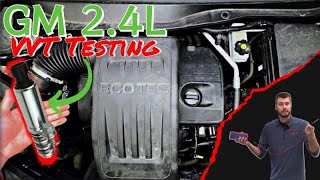
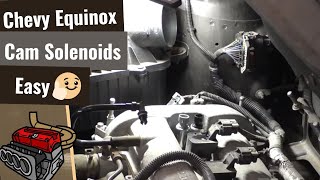
How to confirm: Swap the intake solenoid (front of the engine, gray connector) with the exhaust solenoid (rear of the engine, black connector). Clear the codes and drive. If the code changes to P0014 (exhaust camshaft timing), the solenoid is confirmed bad. You can also test the solenoid's resistance with a multimeter; a good one should read between 8 and 13 ohms. 🎬 Watch: How to test the VVT solenoid with a multimeter.
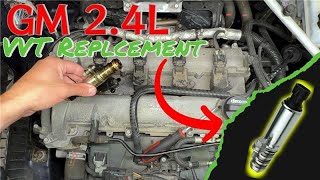
Typical fix: Replace the intake camshaft position actuator solenoid. Many owners choose to replace both intake and exhaust solenoids at the same time as preventative maintenance.
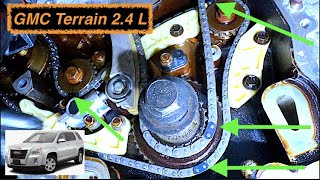
Est. part cost: $25-$60 - Stretched Timing Chain or Worn Guides/Tensioner 🟡 Medium Probability → Shop Engine Timing Chain Chronic low oil levels and pressure from the oil consumption issue put extra stress on the timing chain components, leading to premature stretching and wear of the chain, guides, and tensioner.
How to confirm: A persistent rattling noise on cold starts that lasts for a few seconds is a classic sign. Verifying requires significant engine disassembly to check timing marks and chain slack.
Typical fix: Replace the timing chain, tensioners, and guides. This is a complex and labor-intensive job, often costing over $1,500. 🎬 Watch: Detailed guide on replacing the timing and balance chains.
Est. part cost: $200-$500
Rare But Worth Checking
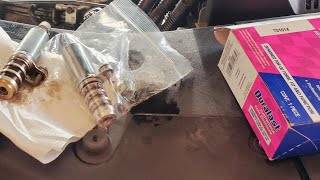
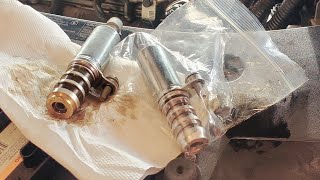
- Clogged Solenoid Screens or Oil Passages: Sludge and debris can clog the small filter screens on the solenoids themselves or the oil passages in the cylinder head, starving the VVT system of oil. When replacing solenoids, always inspect the old ones and the mounting ports for debris.
- Failed Camshaft Phaser: → Shop Engine Camshaft The camshaft phaser (actuator) is the mechanical gear that the solenoid acts upon. While less common than a solenoid failure, the phaser can fail mechanically, getting stuck in one position or having its internal locking pin break.
- Faulty Engine Control Module (ECM): In very rare cases, the ECM itself can fail and no longer properly control the VVT solenoid. This should only be considered after all other possibilities are exhausted.
Diagnosis Steps
- Check Engine Oil: Verify the oil level is full and the oil condition is good. If low or dirty, perform an oil change with 5W-30 full synthetic oil and a new, quality filter. Clear the code and see if it returns. This is the most critical first step.
- Inspect Solenoid Wiring: Check the electrical connector and wiring to the intake camshaft actuator solenoid (the front-most solenoid, usually with a gray connector) for any damage, corrosion, or loose connections.
- Swap the Solenoids: Disconnect and remove both the intake (front) and exhaust (rear) solenoids. They are held in by a single 10mm bolt each. Inspect the screens for sludge. Swap their positions, reinstall them, and clear the codes.
- Re-evaluate Codes: Drive the vehicle. If the code returns as P0014 ('Exhaust (B) Camshaft Position Timing - Over-Retarded'), this confirms the solenoid you moved to the exhaust position is faulty.
- Replace the Faulty Solenoid: If the swap test confirms a bad solenoid, replace it with a new part. It is highly recommended to replace both solenoids at the same time using genuine ACDelco or Delphi parts.
- Further Diagnosis: If the P0012 code returns after replacing the solenoid(s) and verifying oil level, the issue is likely more serious. The next steps involve checking for a stretched timing chain, a bad camshaft phaser, or clogged oil passages in the cylinder head, which may require professional diagnosis.
Parts You'll Likely Need
- Intake Camshaft Position Actuator Solenoid
(OEM #12679099 (supersedes 12655420, 12628347))— This is the most common part to fail, usually due to clogging from dirty oil or simple electronic failure. It directly controls the timing of the intake camshaft.
Trusted brands: ACDelco (GM Genuine), Delphi
OEM price range: $40-$60
Aftermarket price range: $25-$45 - Exhaust Camshaft Position Actuator Solenoid
(OEM #12679100 (supersedes 12655421, 12628348))— Often replaced at the same time as the intake solenoid as a preventative measure, since they are the same age and subject to the same conditions.
Trusted brands: ACDelco (GM Genuine), Delphi
OEM price range: $40-$60
Aftermarket price range: $25-$45
Related Codes That Often Appear With This One
- P0010 — This code indicates a circuit malfunction for the intake camshaft actuator solenoid, which often accompanies or precedes a performance code like P0012, pointing directly to an electrical issue with the solenoid itself.
- P0011 — This is the opposite code, for 'Timing Over-Advanced'. It's less common to see with P0012, but can appear if the VVT system is behaving erratically or if the phaser is failing.
- P0013 / P0014 — These are the equivalent codes for the exhaust camshaft. Since the solenoids are a known weak point and are subjected to the same oil conditions, it's common for both to fail around the same time.
- P0016 / P0017 — These codes indicate a correlation issue between the crankshaft and camshaft, often pointing to a stretched timing chain. If you see these with P0012, the timing chain is a very likely culprit.
Technical Service Bulletins (TSBs) & Recalls
- 17-NA-098: Addresses rough running, hesitation, stalling, and DTCs P0010, P0011, P0013, P0014 by recommending the replacement of both camshaft position actuator solenoid valves.
- 12-06-01-009G: Provides information on timing chain diagnosis for various GM engines, relevant when P0012 is accompanied by correlation codes like P0016/P0017.
- PIP5072F: Diagnostic aid for P0011 and P0012, focusing on debris inspection in VVT components.
Platform-Specific Known Issues
- Excessive oil consumption is a well-documented issue for the 2.4L Ecotec engine, leading to low oil levels that cause VVT system faults and timing chain wear. GM acknowledged this with Special Coverage program #14882, which extended the warranty for replacing defective piston and ring assemblies.
- GM issued a Technical Service Bulletin (TSB 17-NA-098) for 2010-2012 models that experience rough running, stalling, and codes including P0011 and P0014, recommending the replacement of both camshaft position actuator solenoid valves.
- TSB PIP5072F addresses codes P0011 and P0012 and instructs technicians to inspect for debris in the camshaft home-parked position, the solenoid valve, and the camshaft actuator, suggesting a potential for internal engine debris causing the blockage.
Mechanic-Grade Diagnostic Values
- Camshaft Position Actuator Solenoid Resistance — expected: 8 to 13 Ohms. Failure: A reading outside this range, an open circuit (infinite resistance), or a reading that fluctuates wildly when wiggling the connector pins indicates a faulty solenoid.
- Engine Oil Pressure (Hot Idle) — expected: At least 18.85 PSI (130 kPa) with oil at 80°C. Some sources suggest a healthier range of 20-30 PSI.. Failure: Pressure significantly below 18 PSI at hot idle indicates a problem with the oil pump, pickup tube, or excessive bearing clearance, which will starve the VVT system.
- Engine Oil Pressure (at 1,000 RPM) — expected: 50-60 PSI. Failure: Pressure below this range suggests inadequate flow to operate the VVT phasers correctly under load.
- Scan Tool: Camshaft Position Variance — expected: On a scan tool, the 'Intake Camshaft Position Variance' PID should be close to 0 degrees at idle.. Failure: A consistent negative value (e.g., -5 to -15 degrees) at idle that the ECM cannot correct indicates the camshaft is stuck in a retarded position, confirming the P0012 fault condition.
Scan Tool Commands That Help
- GDS2 / Tech2: Camshaft Position Actuator Control — This bidirectional control allows a technician to command the intake camshaft phaser to a specific angle (e.g., 0 to 20 degrees) while the engine is running. Monitoring the 'Desired' vs 'Actual' cam position PIDs while using this command can confirm if the solenoid is responding and if the phaser is moving smoothly or is stuck.
Wiring & Ground Locations
- Intake Camshaft Actuator Solenoid Connector — Top of the valve cover, the front-most of the two solenoids (closer to the radiator), typically with a gray connector.. This is the direct connection point for the solenoid. One pin receives 12V power with the key on, and the other is the duty-cycle control ground signal from the ECM. Damage here or oil contamination in the connector will directly cause P0010 and P0012.
- G107 — On the driver's side of the cylinder head.. This is a primary engine and ECM ground point. A loose or corroded connection at G107 can cause erratic behavior and incorrect voltage readings for multiple engine sensors and actuators, including the VVT system, potentially leading to false codes.
Real Owner Repair Stories
- YouTube user 'savagegeese' (2010 GMC Terrain (LAF engine)) — Engine failure due to oil consumption and timing chain issues.
❌ Tried (didn't work) The original LAF engine was beyond repair.
✅ What actually fixed it The owner performed an engine swap, replacing the original LAF engine with a newer, updated LEA engine from a 2015 Chevy Captiva. To make the new engine work with the old 2010 vehicle electronics, the intake camshaft and sprocket from the original LAF engine had to be swapped onto the new LEA engine. The LEA cam sensor and actuator remained. This resolved the check engine lights related to camshaft position that occurred after the initial swap.
OEM Part Supersession History
12628347, 12655420→12679099— GM often updates parts to improve reliability, screen material, or internal coil design to better withstand heat and contaminated oil. While not explicitly stated, the multiple supersessions point to iterative improvements on a high-failure part.
Model Year Variations Within This Range
- 2010-2011 vs 2012-2017: The 2010-2011 models used the LAF 2.4L engine, which had single VVT (intake cam only). Starting in 2012, GM switched to the LEA 2.4L engine, which featured dual VVT (both intake and exhaust cams) and was E85/FlexFuel capable. While the intake solenoid part and diagnosis for P0012 are very similar, swapping an entire engine between these versions requires transferring the LAF intake camshaft to the LEA block to ensure compatibility with the earlier vehicle's ECM.
Diagnostic Flowchart
Other Known Issues on This Vehicle
Issues unrelated to this code that are worth knowing about as an owner of this generation:
- Excessive Oil Consumption 🔴 High — Extremely common across all model years. Caused by faulty low-tension piston rings. Can start as early as 50,000 miles. (Ref: GM Special Coverage 14882, 15285C, N192291100 (extends warranty for piston/ring replacement).)
- Stretched Timing Chain 🔴 High → Shop Engine Timing Chain — Common, typically between 80,000-120,000 miles. Directly exacerbated by low oil pressure from the oil consumption issue. Symptoms include startup rattle. (Ref: TSB 12-06-01-009G (addresses timing chain issues).)
- Blown Rear Main Seal 🟠 Medium — Common in cold climates. A frozen/clogged PCV orifice in the intake manifold causes excessive crankcase pressure, blowing out the rear main seal. (Ref: TSB 14882 (addresses the PCV system as part of the oil consumption fix).)
- Cracked Exhaust Manifold 🟠 Medium — Frequently occurs, causing a ticking noise and exhaust fumes in the cabin. The cast iron manifold is prone to cracking from heat cycles.
- Catalytic Converter Failure 🟠 Medium — Often a consequence of the excessive oil consumption, as unburned oil contaminates and clogs the converter.
Used vs. New Parts: Buying Guide for This Vehicle
When a used part is the smart pick: For this specific repair, buying used parts is generally not recommended. The primary failure components (solenoids, timing chains) are wear items that are inexpensive to buy new.
Donor-vehicle mileage cap: roughly under 80000 miles for the part to have meaningful remaining life.
What to inspect on the donor part:
- If considering a major component like a cylinder head or engine block due to sludge, seek a donor vehicle with documented regular oil changes.
- Avoid parts from engines that show heavy oil sludge under the oil cap or on the dipstick.
OEM-only on this vehicle (don't cheap out):
- Camshaft Position Actuator Solenoids: While aftermarket is available, forums and mechanics strongly recommend using ACDelco (GM Genuine) or Delphi parts. Cheaper, no-name aftermarket solenoids are known for high rates of premature failure, causing the code to return quickly.
- Timing Chain Kit: Given the labor-intensive nature of the job and the engine's sensitivity to timing, using a high-quality, complete OEM or OEM-supplier kit is critical for a lasting repair.
Aftermarket brands forum-validated for this vehicle:
- Delphi (Often the OEM supplier)
Brands owners have reported issues with on this vehicle:
- Unbranded or 'white-box' solenoids from online marketplaces.
- Dorman: While a popular brand, some users report that their replacement solenoids (like p/n 917-215) may have a different bolt head size (e.g., 8mm instead of the OEM 10mm), which can be an inconvenience during installation. Some users have also reported receiving defective parts out of the box.
Real Owner Stories
Aggregated from forums and TSBs cited above. Mileages and costs reflect what owners reported in those sources.
2011 GMC Terrain 2.4L
Symptoms: Check engine light P0012 and low oil level.
What fixed it: Replacing the intake solenoid.
Source hint: terrainforum.net thread titled 'P0012 code on 2011 Terrain'
2012 Chevrolet Equinox 2.4L
Symptoms: P0012 code returned even after replacing the intake solenoid.
What fixed it: The discussion identified a stretched timing chain as the necessary next diagnostic step.
Source hint: equinoxforum.net thread titled '2012 Equinox 2.4L P0012 code'
2010-2017 GMC Terrain 2.4L
Symptoms: Simultaneous P0012 and P0014 codes.
What fixed it: Topping off low oil levels and replacing both VVT solenoids.
Source hint: terrainforum.net thread titled 'P0012 and P0014 codes'
Related OBD-II Codes
Frequently Asked Questions
My 2011 GMC Terrain is stalling and showing P0012; is there a TSB for this?
Does GM have a program to help with the oil consumption that causes my P0012 code?
Should I use aftermarket solenoids to fix the P0012 code on my Terrain?
What oil should I be using in my 2.4L Ecotec to prevent VVT issues?
I have a rattling noise on cold start along with P0012. What does that mean?
How can I tell if the intake solenoid is actually the problem?
Helpful Videos
We Have This Part in Stock


The information in this article is provided for general reference and educational purposes only. Vehicle specifications, procedures, and part compatibility can vary by production date, trim level, and region. Always consult your vehicle's factory service manual and verify part numbers before purchasing or performing repairs. Safety-critical components such as airbags, seat belts, and braking systems should be installed by a qualified professional.
- GMC Terrain:
- 🧭 Diagnostic Flowchart
- 🎬 Helpful Videos
- 🛍️ Shop This Part
- What's Unique About the 2010-2017 GMC Terrain
- Symptoms You May Notice
- Most Likely Causes
- Rare But Worth Checking
- Diagnosis Steps
- Parts You'll Likely Need
- Related Codes That Often Appear With This One
- Technical Service Bulletins (TSBs) & Recalls
- Platform-Specific Known Issues
- Mechanic-Grade Diagnostic Values
- Scan Tool Commands That Help
- Wiring & Ground Locations
- Real Owner Repair Stories
- OEM Part Supersession History
- Model Year Variations Within This Range
- Other Known Issues on This Vehicle
- Used vs. New Parts: Buying Guide for This Vehicle
- Real Owner Stories
- 2011 GMC Terrain 2.4L
- 2012 Chevrolet Equinox 2.4L
- 2010-2017 GMC Terrain 2.4L
- Related OBD-II Codes
- Frequently Asked Questions
- 🎟️ Get 5% Off