

P0012 on 2011-2016 Kia Sportage 2.4L GDI: Causes and Fixes for Over-Retarded Cam Timing
This code is most often caused by low or dirty engine oil. Before buying any parts, check your oil level and condition. If the oil is fine, the next most likely culprit is a faulty intake Oil Control Valve (OCV), which is a relatively inexpensive and accessible part to replace. Due to the engine's history, this code should be treated with urgency as it can be an early sign of oil starvation.
- First, check your engine oil. Low or dirty oil is the #1 cause of P0012 on this specific engine.
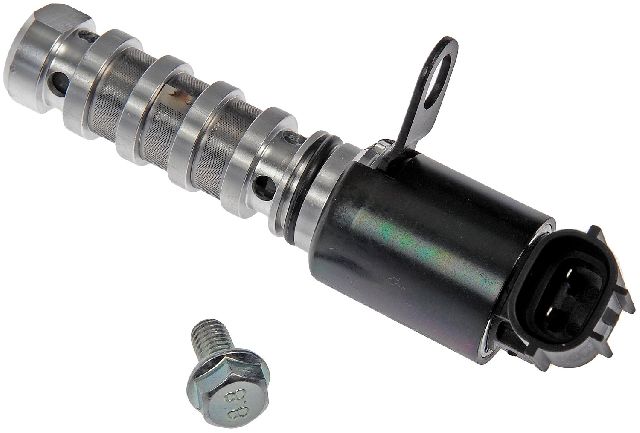
- If the oil is clean and full, the intake Oil Control Valve (OCV), part #24355-2G000, is the most likely part to have failed and should be replaced.
- This code can be an early symptom of the larger, well-known oiling and engine wear issues affecting the Theta II engine. Do not ignore it.
- Do not immediately assume you need a new timing chain; this is a less common cause and a much more expensive repair.
- Due to extended warranties from class-action lawsuits, contact a Kia dealer to see if your vehicle is covered for related engine diagnostics or repairs, especially if you suspect oil consumption or hear engine knocking.
What's Unique About the 2011-2016 Kia Sportage
The 2.4L GDI Theta II engine in this generation of Sportage has a well-documented history of oil-related issues. Manufacturing defects, including metal debris left in oil passages from the factory, led to recalls (NHTSA 17V-224) and extended warranties for premature engine wear. This history is directly relevant to code P0012, as the CVVT system is entirely dependent on clean oil and stable oil pressure to function. Sludge or debris can easily clog the small passages in the Oil Control Valve (OCV), making this code a common first symptom of these larger oiling system problems. As a result, Kia issued a Product Improvement Campaign (PI1802) to install a Knock Sensor Detection System (KSDS) via a software update to monitor for engine vibrations indicative of bearing failure.
Generation note: The 2011-2016 model years cover the third generation (SL) of the Kia Sportage. The information provided is consistent across this entire generation for the specified 2.4L GDI engine, and also applies to many other Hyundai and Kia models 🎬 Watch: A mechanic explains P0012 on the 2.4L GDI engine. using the same engine.
Symptoms You May Notice
- Check Engine Light is on
- Rough, unstable idle
- Engine stalling, especially when coming to a stop
- Poor acceleration and a feeling of lost power
- Decreased fuel economy
- Hard starting
- Engine rattling noise on startup (less common, but indicates timing chain issues)
- Replacing the camshaft position sensor. This sensor reports the timing, but it rarely causes a performance code like P0012. The issue is typically with the mechanical or hydraulic components that control the timing.
- Immediately replacing the timing chain. This is an expensive and labor-intensive job that should only be done after the much more common and cheaper causes (oil level/condition and the OCV) have been definitively ruled out.
Most Likely Causes
- Low or Dirty Engine Oil 🔴 High Probability The Theta II engine family is known for oil consumption issues, which can lead to low oil levels. Additionally, manufacturing debris can contaminate oil, leading to sludge. The CVVT system is extremely sensitive to oil level and cleanliness.
How to confirm: Check the engine oil dipstick. The oil level should be in the full range, and the oil should be a translucent amber/brown color, not black, gritty, or milky.
Typical fix: Change the engine oil and filter using a high-quality full synthetic oil that meets the manufacturer's specifications (typically 5W-20 or 5W-30) and an OEM or equivalent quality filter.
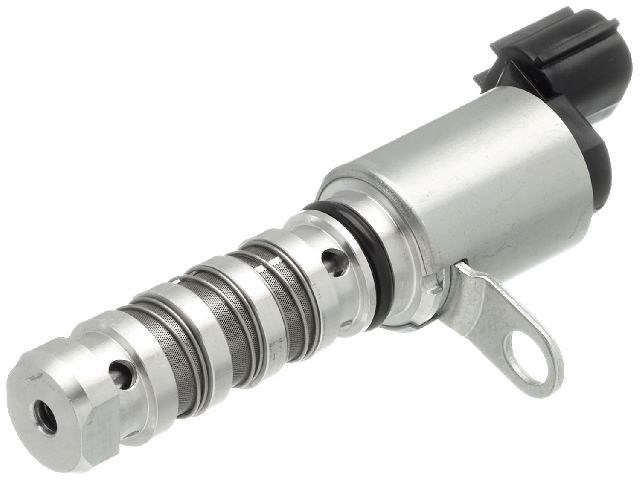
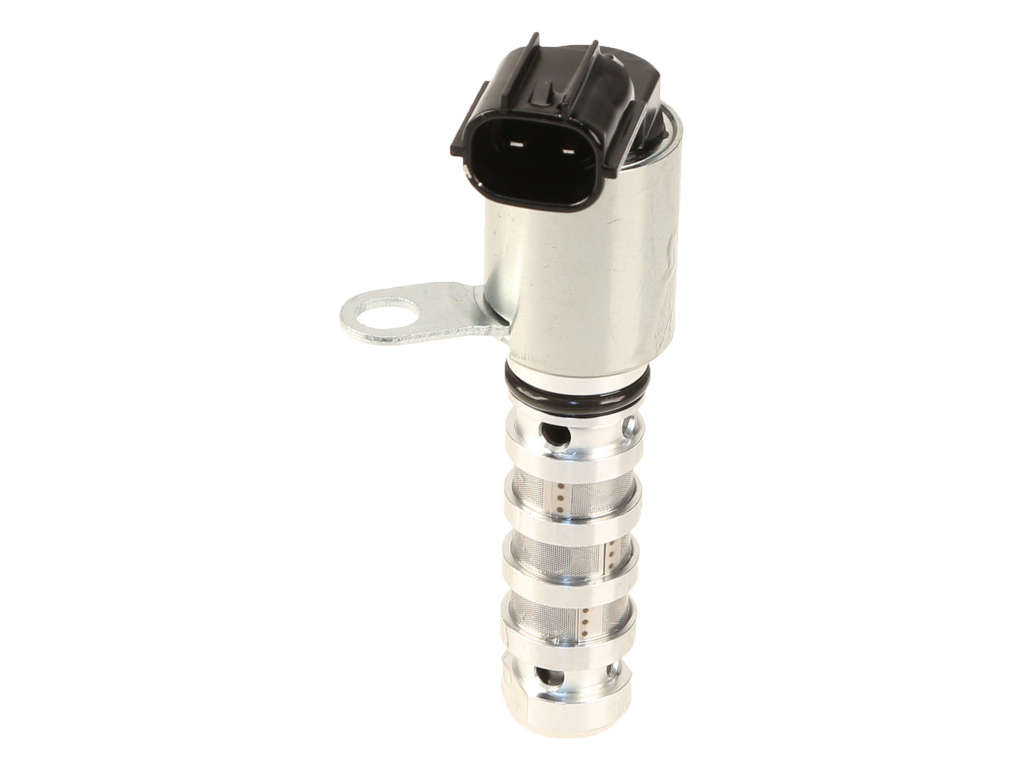
Est. part cost: $40-$80 - Faulty Intake Oil Control Valve (OCV) 🔴 High Probability → Shop Engine Variable Valve Timing (VVT) Solenoid The OCV has very fine mesh screens that are easily clogged by sludge or the metallic debris known to be an issue in some Theta II engines, impeding its function.
How to confirm: After ruling out oil issues, the OCV can be removed and inspected for sludge or a torn screen. It can also be tested with a multimeter; resistance should be between 6.9 and 7.9 ohms at room temperature. A common diagnostic trick is to swap the intake and exhaust OCVs (if they are identical parts) and see if the code changes to P0014, which would confirm the OCV is faulty.
Typical fix: The valve can sometimes be cleaned with brake cleaner, but given the low cost and high failure rate, replacement is the recommended and most reliable fix.
Est. part cost: $50-$150 - Stretched Timing Chain or Failing Tensioner ⚪ Low Probability → Shop Engine Timing Chain While a durable part, the timing chain can stretch over time, especially with a history of infrequent oil changes or low oil levels, which are common issues for this engine. A failing hydraulic tensioner can also cause slack.
How to confirm: This is a more advanced diagnosis. A rattling noise from the engine on cold starts is a key symptom. A mechanic can confirm by checking camshaft/crankshaft correlation data with a scan tool or by physically inspecting the chain for slack by removing the valve cover.
Typical fix: Requires replacement of the timing chain, guides, and tensioners. This is a labor-intensive job.
Est. part cost: $200-$400
Rare But Worth Checking
- Failing Camshaft Phaser (Actuator): → Shop Engine Camshaft The gear at the end of the camshaft that the OCV sends oil to can fail internally, getting stuck in the retarded position. This is much less common than an OCV failure and is usually diagnosed after an OCV replacement does not solve the code.
- Clogged Oil Passages: In engines with severe sludge or debris from bearing wear, the small oil passages leading to the cam phaser can become blocked, starving the CVVT system of oil pressure even if the OCV is functional.
Diagnosis Steps
- Check Engine Oil Level and Condition: Pull the dipstick. If the oil is low, top it off, clear the code, and see if it returns. If the oil is dark, gritty, or past its service interval, perform a full oil and filter change using the manufacturer-specified oil and a quality filter.
- Inspect the Intake Oil Control Valve (OCV) Connector: Locate the intake OCV on the top of the valve cover. Ensure its electrical connector is secure and free of oil contamination or corrosion.
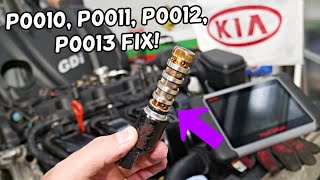
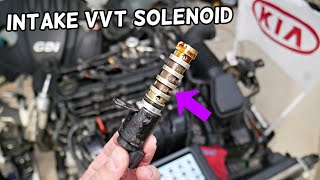
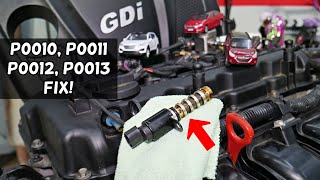
- Test/Swap/Replace the Intake Oil Control Valve (OCV): If oil is good, suspect the OCV. You can swap the intake and exhaust OCVs to see if the code follows the valve. If it does, replace the faulty valve. It is held in by a single 10mm bolt. 🎬 See this walkthrough on locating and replacing the VVT solenoid.
- Clear Codes and Test Drive: After any repair, clear the trouble codes with a scanner and perform a test drive to see if the code returns.
- Check for Recalls/Warranty Extension: Check your vehicle's VIN on the NHTSA or Kia's owner portal for open recalls (like 17V-224) or the engine warranty extension. The underlying cause may be covered.
- Advanced Diagnosis: If the code persists, the issue is likely more serious. At this point, a professional diagnosis is recommended to inspect the timing chain, tensioners, and cam phasers for wear or failure.
Parts You'll Likely Need
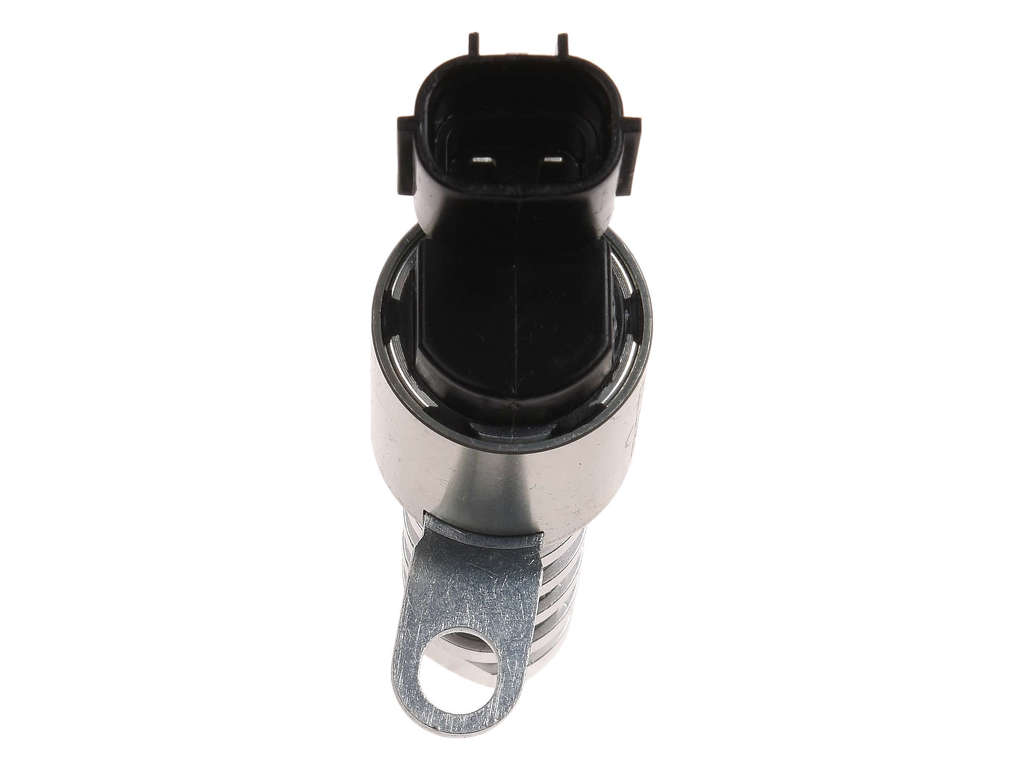
- Intake Oil Control Valve (VVT Solenoid)
(OEM #24355-2G000)— This is the most common part to fail for this code after oil issues are ruled out. Its internal screen gets clogged or the solenoid itself fails.
Trusted brands: Kia (Genuine OEM), Hyundai (Genuine OEM), Standard Motor Products, Dorman
OEM price range: $80-$150
Aftermarket price range: $40-$90
Related Codes That Often Appear With This One
- P0011 — This code is for 'Intake Camshaft Position Timing - Over-Advanced'. It's common to see both P0011 and P0012 when the Oil Control Valve is failing intermittently, causing the timing to be erratic in both directions. 🎬 Watch: Understanding how these camshaft timing codes affect your engine.
- P0016 / P0017 — These are correlation codes between the crankshaft and camshafts. If the timing chain has stretched or jumped a tooth, it will throw off the base timing and trigger these codes along with P0012.
- P1326 — This code is specific to the Knock Sensor Detection System (KSDS). If the KSDS detects vibrations from premature bearing wear (a root cause of oil contamination), it will trigger P1326 and put the vehicle into limp mode. P0012 may appear as an earlier symptom of the oiling problem that eventually leads to the P1326 event.
Technical Service Bulletins (TSBs) & Recalls
- SC147 / TSB ENG123 (NHTSA ID: 10141998): While not directly for P0012, this TSB addresses the engine inspection and replacement procedure related to the bearing wear issue on 2011-2013 Sportage models, which is a root cause of oil contamination leading to P0012.
- TSB PI1802: Provides information on updating the ECU to install the Knock Sensor Detection System (KSDS) to protect the engine from excessive connecting rod bearing damage.
- TSB ENG222 (NHTSA ID: 10206642): Addresses procedures for diagnosing excessive oil consumption, a primary contributor to low oil levels that can cause code P0012.
Platform-Specific Known Issues
- NHTSA Recall 17V224 (Kia Campaign SC147): Issued for 2011-2013 Sportage models due to manufacturing debris (metal shavings) in the engine that could restrict oil flow to bearings, causing premature wear and potential engine seizure. These same debris can cause the P0012 code by clogging the OCV.
- Theta II Engine Class Action Lawsuit: This engine family was the subject of a major class-action lawsuit resulting in lifetime warranty extensions for certain owners due to systemic issues with bearing failure and oil consumption. P0012 can be an early warning sign of these oil flow problems.
- Product Improvement Campaign PI1802: A voluntary campaign to update the ECU with Knock Sensor Detection System (KSDS) software. This system is designed to detect the onset of bearing failure and put the car in limp mode (triggering code P1326) to prevent catastrophic failure.
Mechanic-Grade Diagnostic Values
- Intake Oil Control Valve (OCV) Coil Resistance — expected: 6.9 - 7.9 Ohms at 68°F (20°C). Failure: A reading of OL (infinite resistance), near 0 Ohms (short), or significantly outside the specified range indicates a failed solenoid coil.
- OCV Harness Connector Power Pin Voltage — expected: Approx. 12.6V (Battery Voltage) with Key On, Engine Off. Failure: No voltage or significantly low voltage points to a blown fuse, bad relay, or a break in the power wire.
- Scan Tool Live Data: Desired vs. Actual Intake Cam Angle — expected: At idle, the 'Actual' angle should closely track the 'Desired' angle, typically within 1-2 degrees.. Failure: A consistent deviation where the actual angle lags (is retarded) by more than 5-10 degrees while the engine is running confirms the performance fault and will trigger P0012.
Scan Tool Commands That Help
- Kia GDS (Global Diagnostic System) or equivalent professional scanner: CVVT Solenoid Actuation Test / Bidirectional Control — This command allows a technician to manually energize the intake OCV with the engine running to verify its mechanical function. When activated, a healthy OCV should cause a noticeable change in engine idle (it may stumble or run rough), confirming the valve is not stuck. If activating the solenoid causes no change, it's likely stuck or clogged.
Wiring & Ground Locations
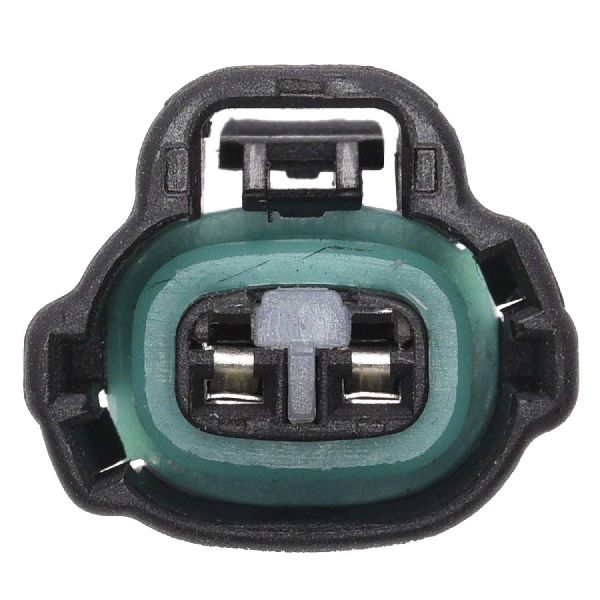
- Intake OCV Connector — On top of the valve cover, connected to the solenoid which is held in by a single 10mm bolt. On the 2.4L GDI, the intake side is generally towards the firewall.. This 2-pin connector is the primary interface for the OCV. Oil leaking from the valve cover gasket can contaminate the pins, causing poor connection. The wires in the harness can also become brittle from heat and vibration, leading to intermittent opens or shorts.
- G104 / G105 (Engine Grounds) — Typically found on the driver's side of the cylinder head or on the intake manifold itself. Look for black wires bolted directly to the engine.. The PCM and its sensors rely on a clean ground reference. While less common for a specific code like P0012, a poor engine ground can cause a variety of erratic sensor readings and drivability issues, complicating diagnosis.
Real Owner Repair Stories
- Reddit user on r/MechanicAdvice (2017 Kia Sportage SX, ~95,000 miles) — P1326 (KSDS limp mode) and a history of intake cam actuator issues.
❌ Tried (didn't work) Meticulous oil changes every 3,000 miles with OEM filters.
✅ What actually fixed it The user reported a previous issue where the intake cam actuators (phasers) were freezing up, which was resolved. The later P1326 code was a result of the known engine bearing failure, for which the earlier cam timing issues were likely a symptom of oil contamination/pressure problems. - Forum posts on Hyundai/Kia forums (Various Hyundai/Kia models with 2.4L Theta II engine) — Persistent P0012 code, rough idle, stalling.
❌ Tried (didn't work) Oil and filter change., Replacing the intake OCV (sometimes multiple times with different brands)., Cleaning the original OCV.
✅ What actually fixed it In several documented cases, the final fix was the replacement of the intake camshaft phaser (the actuator gear itself). The phaser's internal locking pin or oil passages had failed, causing it to be stuck in the retarded position, a problem a new OCV could not overcome.
OEM Part Supersession History
24355-25000, 24355-2G600, 24355-2G610→24355-2G000— Part consolidation and potential internal improvements over the production run.
Heads up: While 24355-2G000 is the most common replacement for the 2011-2016 range, there was a change in early 2011. Vehicles produced before 01/13/2011 may have used a different part. Always verify the correct part number with the vehicle's VIN.
Model Year Variations Within This Range
- 2011 (early production): The OCV part number may differ for vehicles manufactured very early in the model year (before Jan 13, 2011). It is critical to verify the part number via VIN to ensure compatibility, as using the wrong solenoid can result in improper operation even if it physically fits.
Diagnostic Flowchart
Other Known Issues on This Vehicle
Issues unrelated to this code that are worth knowing about as an owner of this generation:
- Premature Engine Failure (Rod Bearing Failure) 🔴 High — Widespread across the entire production run, typically manifesting between 60,000 and 120,000 miles. Led to recalls and lifetime warranties for many owners. (Ref: NHTSA Recall 17V-224; TSB PI1802 (KSDS Update))
- Degrading Steering Coupler 🟠 Medium — Very common. Owners report a distinct 'clicking' or 'ticking' noise from the steering column when turning the wheel. The rubber coupler disintegrates over time. (Ref: Kia TSB CHA084-R8)
- A/C Compressor Failure 🟠 Medium — Common complaint where the A/C blows warm air. Can be due to a failed compressor clutch, a faulty electronic control valve on the compressor, or internal compressor failure.
- Intake Valve Carbon Buildup 🟡 Low — Inherent to all GDI engines, including the Theta II. Symptoms like rough idle and hesitation typically appear after 60,000 miles. Requires periodic cleaning (walnut blasting).
Used vs. New Parts: Buying Guide for This Vehicle
When a used part is the smart pick: For this specific repair, using a used part is NEVER recommended. The primary failure modes of the OCV and cam phaser are clogging from contaminated oil and internal wear. A used part from a junkyard vehicle, which likely has a similar history, has a very high probability of being faulty or failing shortly after installation.
What to inspect on the donor part:
- Not applicable, avoid used electronic/hydraulic engine components for this repair.
OEM-only on this vehicle (don't cheap out):
- Oil Filter - The OEM Hyundai/Kia filter is strongly recommended due to specific bypass valve pressure ratings critical for the CVVT system's health.
- Camshaft Phaser - Due to the complexity and precision required, and the high labor cost to replace, using an OEM phaser is the safest bet to ensure a one-time repair.
Aftermarket brands forum-validated for this vehicle:
- Standard Motor Products (SMP)
- Denso (often the original OEM supplier)
- Dorman (ensure it is the correct, vehicle-specific part number)
Brands owners have reported issues with on this vehicle:
- No-name, unbranded solenoids from online marketplaces. These often have lower quality control, incorrect coil resistance, and use inferior screen materials that can tear and send debris into the engine's oil passages.
Real Owner Stories
Aggregated from forums and TSBs cited above. Mileages and costs reflect what owners reported in those sources.
2012 Kia Sportage 2.4L GDI
Symptoms: Owner experienced P0012, rough idle, and stalling.
What fixed it: After confirming the oil level was correct, they replaced the intake OCV.
Source hint: kia-forums.com thread titled 'P0012 code - 2012 Sportage'
2011-2013 Kia Sportage
Symptoms: Manufacturing debris (metal shavings) in the engine restricting oil flow to bearings, leading to potential engine seizure.
What fixed it: Engine inspection and replacement procedure as per TSB ENG123.
Source hint: SC147 / TSB ENG123 (NHTSA ID: 10141998)
Related OBD-II Codes
Frequently Asked Questions
Is my 2011-2013 Sportage covered under a recall for the issues causing P0012?
What is the KSDS update I keep hearing about in relation to engine codes?
Can I just swap parts to see if the Intake Oil Control Valve is bad?
Why is my Sportage stalling at stoplights along with the P0012 code?
Does the Theta II engine class action lawsuit affect my P0012 diagnosis?
What kind of oil should I use to prevent CVVT issues in my 2.4L Sportage?
Helpful Videos
We Have This Part in Stock


The information in this article is provided for general reference and educational purposes only. Vehicle specifications, procedures, and part compatibility can vary by production date, trim level, and region. Always consult your vehicle's factory service manual and verify part numbers before purchasing or performing repairs. Safety-critical components such as airbags, seat belts, and braking systems should be installed by a qualified professional.
- Kia Sportage:
- 🧭 Diagnostic Flowchart
- 🎬 Helpful Videos
- 🛍️ Shop This Part
- What's Unique About the 2011-2016 Kia Sportage
- Symptoms You May Notice
- Most Likely Causes
- Rare But Worth Checking
- Diagnosis Steps
- Parts You'll Likely Need
- Related Codes That Often Appear With This One
- Technical Service Bulletins (TSBs) & Recalls
- Platform-Specific Known Issues
- Mechanic-Grade Diagnostic Values
- Scan Tool Commands That Help
- Wiring & Ground Locations
- Real Owner Repair Stories
- OEM Part Supersession History
- Model Year Variations Within This Range
- Other Known Issues on This Vehicle
- Used vs. New Parts: Buying Guide for This Vehicle
- Real Owner Stories
- 2012 Kia Sportage 2.4L GDI
- 2011-2013 Kia Sportage
- Related OBD-II Codes
- Frequently Asked Questions
- 🎟️ Get 5% Off