

P0012 on 2007-2015 Mazda CX-9: Causes and Fixes for Over-Retarded Cam Timing
On the 2007-2015 Mazda CX-9, code P0012 is most often caused by low, old, or contaminated engine oil. The VVT solenoid for Bank 1 (rear) is the next likely culprit. However, this code can be an early warning of a failing internal water pump leaking coolant into the oil, a major issue for this engine that can lead to catastrophic failure.
- P0012 on a 2007-2015 CX-9 is a serious code that demands immediate attention.
- Your first step is to check the engine oil. If it looks milky, your internal water pump has likely failed, and you should not drive the vehicle.
- The most common fixes are an oil change or replacing the Bank 1 (rear) VVT solenoid.
- Do not replace the camshaft position sensor; it is almost never the cause.
- Any timing-related code on this engine could be a symptom of the well-documented internal water pump and timing chain problems, which is an expensive but necessary repair to save the engine.
What's Unique About the 2007-2015 Mazda CX-9
The 3.5L/3.7L V6 in this CX-9 is a Ford Cyclone engine with a critical design flaw: an internal, timing-chain-driven water pump. When this pump's seals fail, it leaks coolant directly into the engine oil, destroying the oil's lubricating properties and creating a 'milky' or 'chocolate milk' sludge. Since the VVT system relies entirely on clean oil at the correct pressure, this contamination is a primary cause of VVT codes like P0012 and can lead to catastrophic engine failure if ignored. This issue was so prevalent it led to class-action lawsuits and is a well-documented failure among owners.
Symptoms You May Notice
- Check Engine Light is on
- Rough idle or stalling, especially when in gear at a stop
- Poor acceleration and loss of power
- Decreased fuel economy
- Rattling or knocking noise from the engine, especially on cold starts
- Engine hesitation or sputtering under load
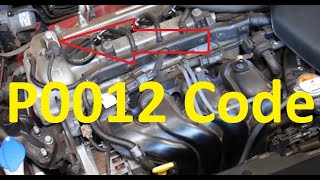
- Replacing the camshaft position sensor. This sensor is rarely the cause of a timing correlation code like P0012; the code indicates a mechanical or hydraulic problem, not a sensor failure. 🎬 See this breakdown of P0012 causes and common fixes. The sensor is correctly reporting the mechanical fault.
Most Likely Causes
- Low, Dirty, or Contaminated Engine Oil 🔴 High Probability The VVT system is extremely sensitive to oil quality and pressure. More importantly, the internal water pump is known to fail and leak coolant into the oil, severely degrading it and causing sludge.
How to confirm: Check the oil dipstick. Note the level and condition. If the oil appears milky, frothy, or like chocolate milk, it is contaminated with coolant, indicating water pump failure. 🎬 Watch: How to spot the signs of water pump failure. If it is just low or very dark/sludgy, it needs changing. An oil analysis from a lab like Blackstone can confirm coolant presence.
Typical fix: Perform an oil and filter change with a quality full synthetic 5W-20 oil. If oil is contaminated, the water pump, timing chain, and related components must be replaced immediately.
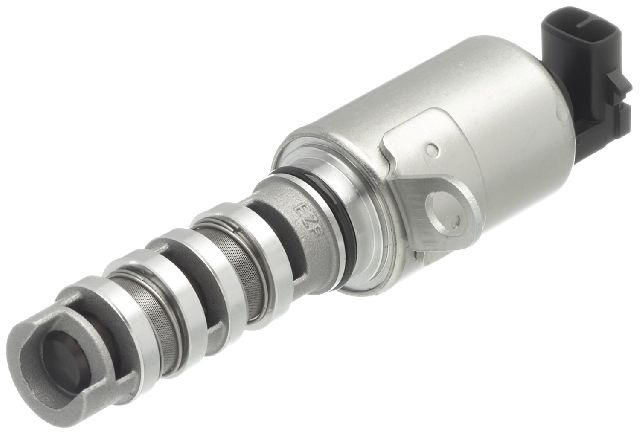
Est. part cost: $40-$70 for oil and filter; $1500-$3500 for water pump and timing job. - Failing VVT Solenoid (Oil Control Valve - OCV) for Bank 1 🟡 Medium Probability The solenoid can become clogged with debris or sludge from dirty oil, or fail electrically, causing it to stick. Ford/Mazda TSBs for related platforms acknowledge this is a common issue.
How to confirm: The Bank 1 intake solenoid is on the rear valve cover, which requires removing the upper intake manifold for access. A common diagnostic step is to swap it with the identical solenoid from Bank 2 (front). If the code changes to P0022 (Bank 2 over-retarded), the solenoid is confirmed bad. You can also test its resistance with a multimeter (should be ~6.9-7.9 Ohms at 68°F/20°C). A scan tool can also be used to command the solenoid on and off to check its response.
Typical fix: Replace the Bank 1 intake VVT solenoid. Given the labor to access it, replacing the intake manifold gaskets is required.
Est. part cost: $40-$120 for the solenoid, plus $30-$60 for intake gaskets. - Stretched Timing Chain or Failed Timing Components 🟡 Medium Probability → Shop Engine Timing Chain Poor oil quality from a failing water pump or extended service intervals puts extra stress on the timing chain, causing it to stretch. The chain also drives the internal water pump, adding to its load. A rattling noise on startup is a key symptom.
How to confirm: This requires removing the timing cover to physically inspect the chain for slack and verify timing marks. This is a labor-intensive job, often done by a professional.
Typical fix: Replace the timing chain, tensioners, and guides. It is highly recommended to replace the internal water pump at the same time, as the labor overlaps almost completely.
Est. part cost: $400-$800 for a full timing kit with water pump. - Failed Camshaft Phaser (VCT Actuator) ⚪ Low Probability → Shop Engine Camshaft The phaser can become clogged with sludge or fail mechanically, getting stuck in the retarded position. Ford issued TSB 11-6-1 for early build date Cyclone engines for this issue.
How to confirm: This is usually diagnosed after all other causes have been ruled out. It requires significant disassembly to inspect or replace.
Typical fix: Replace the Bank 1 intake camshaft phaser. This is typically done during a timing chain job.
Est. part cost: $100-$250
Rare But Worth Checking
- Clogged Oil Passages: Severe engine sludge from neglected oil changes or coolant contamination can block the small oil passages that feed the VVT solenoids and phasers, starving them of pressure.
Diagnosis Steps
- Check the engine oil level and condition immediately. If the oil is milky or looks like a milkshake, stop the vehicle and do not drive it. The internal water pump has likely failed.
- If the oil is just low or old, perform an oil and filter change using full synthetic 5W-20 oil and a quality filter. Clear the code and see if it returns.
- If the code persists, the next step is to test the Bank 1 (rear) intake VVT solenoid. This requires removing the upper intake manifold.
- Once the manifold is off, inspect the solenoid's wiring and connector for damage or oil contamination.
- Swap the Bank 1 (rear) and Bank 2 (front) intake VVT solenoids. They are identical parts. Reassemble (using new intake gaskets), clear the codes, and drive the vehicle. If the code changes to P0022, the solenoid you moved to the front is faulty and must be replaced.
- If the solenoid is not the issue, listen for a rattling noise from the engine on cold startups, which would indicate a stretched timing chain.
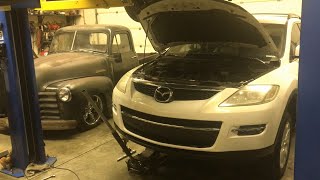
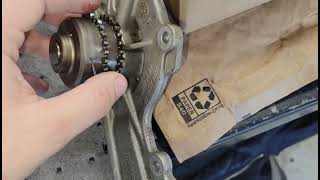
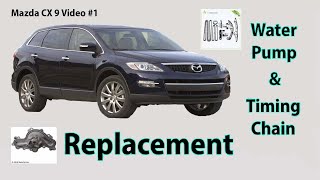
- If a stretched chain or water pump failure is suspected, the next step is a major mechanical inspection of the timing components, which typically requires professional service. 🎬 Watch: A walkthrough of the water pump and timing replacement.
Parts You'll Likely Need
- Engine Oil and Filter — The VVT system is dependent on clean oil. This is the first and cheapest step in troubleshooting.
Trusted brands: Castrol, Mobil 1, Valvoline, Motorcraft (OEM)
OEM price range: $60-$90
Aftermarket price range: $40-$70 - VVT Solenoid / Oil Control Valve (Bank 1 Intake)
(OEM #7T4Z-6M280-C (Ford/Motorcraft part number))— This solenoid controls oil flow to the cam phaser and is a common failure point, often getting clogged or failing electrically.
Trusted brands: Mazda OE, Motorcraft (OEM), Dorman (916-993), Standard Motor Products (VVT105)
OEM price range: $60-$120
Aftermarket price range: $40-$90 - Timing Chain and Water Pump Kit — This is the definitive fix for a stretched chain and the failure-prone internal water pump. Replacing them together is critical for long-term reliability as the labor overlaps.
Trusted brands: Motorcraft, Cloyes
OEM price range: $600-$900
Aftermarket price range: $400-$700 - Intake Manifold Gasket Set — Required for accessing and replacing the Bank 1 (rear) VVT solenoid. These are single-use gaskets that must be replaced anytime the intake manifold is removed.
Trusted brands: Fel-Pro, Mahle, Mazda OE
OEM price range: $50-$80
Aftermarket price range: $25-$50
Related Codes That Often Appear With This One
- P0022 — This is the equivalent 'over-retarded' code for Bank 2. Seeing both P0012 and P0022 together strongly points to a systemic oil pressure or oil quality problem affecting the whole engine, such as a failing water pump, severe sludge, or a stretched timing chain.
- P0011 — This is an 'over-advanced' code for Bank 1. Seeing it with P0012 can indicate a VVT solenoid that is sticking erratically or an intermittent oil pressure issue.
- P0016 — This code indicates a crankshaft/camshaft correlation issue. It often appears alongside P0012 when the timing chain has stretched or jumped a tooth, or if the water pump failure is causing erratic timing.
Technical Service Bulletins (TSBs) & Recalls
- Ford TSB 11-6-1: Addresses VCT codes P0011, P0012, P0016, P0018, P0021, P0022 on 2007-2009 Ford/Lincoln models with the 3.5L/3.7L engine, pointing to potential camshaft phaser issues on early builds.
- Mazda SSP 93: A Special Service Program extending the warranty on the power brake unit for 2007-2013 CX-9s due to internal diaphragm failure.
- Mazda TSB 01-012/15: While for a different code (P0123), it shows a history of harness-related issues on this platform.
- Bulletin #01-007-15-3025A: Notes that some vehicles may experience a check engine light with P0011:00 and/or P0012:00 stored in memory, specifically regarding the electric variable valve timing control system.
- Bulletin #01-014-19-3618: Describes instances where P0012:00 (Electric variable valve timing control system: Over-retarded) is stored in the PCM memory.
- Bulletin #01-021-19-3649: Reports that some customers may experience the check engine light on with DTC P0012:00, noting the concern occurs on vehicles with specific PCM manufacturing origins.
- Bulletin #SA-033-25: A manufacturer service bulletin notes that P0012, P0011, and P0010 may be caused by a malfunction in the intake EVVT motor that prevents accurate regulation of the intake camshaft.
Platform-Specific Known Issues
- The internal, timing-chain-driven water pump is the single biggest issue on this engine. Its failure contaminates the oil with coolant, which can quickly destroy the VVT system and the entire engine.
- Stretched timing chains are common, partly due to the strain of driving the water pump and often exacerbated by poor oil quality from coolant contamination.
- The AWD transfer case (Power Transfer Unit or PTU) is another known weak point on this vehicle, though it is unrelated to code P0012. It can fail due to fluid breakdown and overheating.
Mechanic-Grade Diagnostic Values
- VVT Solenoid (OCV) Coil Resistance — expected: 6.9-7.9 Ohms at 68°F (20°C). Broader acceptable ranges are cited as 6-12 Ohms.. Failure: A reading of infinite resistance (open circuit) or well outside the specified range indicates a failed coil.
- VVT Solenoid Connector Voltage — expected: Battery Voltage (~12.6V) on the power supply wire with Key On, Engine Off.. Failure: Low or no voltage points to a problem in the wiring or power supply from the PCM, not a bad solenoid.
- Scan Tool Live Data: VCT_ADV_ERR1 (Bank 1 Cam Timing Error) — expected: Consistently within +/- 5 degrees of 0 at idle and under load.. Failure: A large, persistent error value confirms the camshaft is not achieving the commanded position, indicating a mechanical or hydraulic fault.
- Scan Tool Live data: VCTADV1 (Bank 1 Actual Cam Timing) — expected: Near 0° at warm idle (below 800 RPM).. Failure: A reading significantly different from 0° at idle indicates the phaser is stuck or not returning to its base position.
Scan Tool Commands That Help
- Mazda IDS / Ford IDS (or equivalent professional scanner): VCT Solenoid Output State Control (Pinpoint Test HK11/HK12) — Per Ford TSBs, this command should be used after checking oil but before replacing a VCT solenoid. It forcefully cycles the solenoid on and off (typically 10 times) to attempt to dislodge internal debris that may be causing it to stick, potentially saving the cost of a new part.
Wiring & Ground Locations
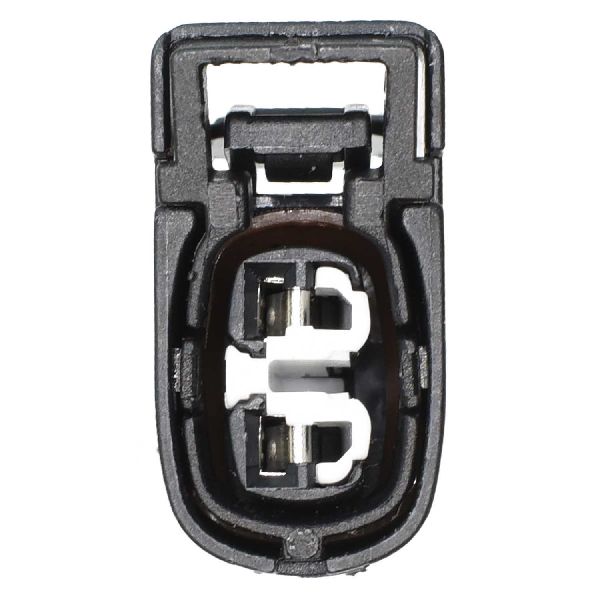
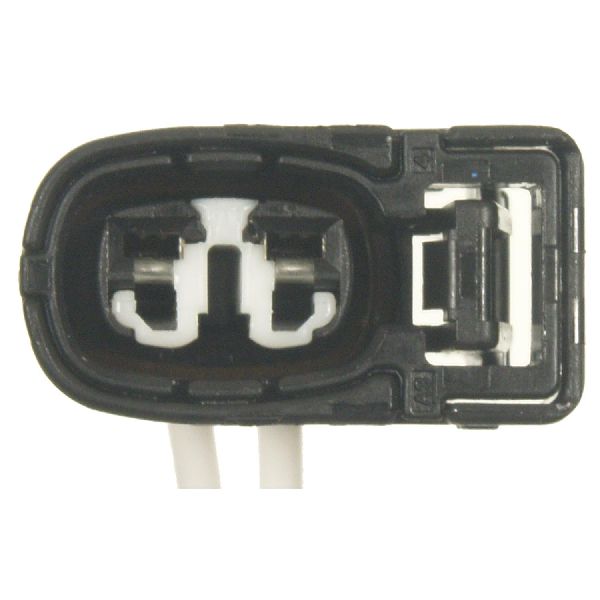
- Bank 1 VVT Solenoid Connector — On the rear valve cover (firewall side), plugging into the top of the intake VVT solenoid.. This is the primary connection point for electrical testing (voltage, resistance, and PCM ground signal) of the Bank 1 solenoid.
- PCM Ground — On a 2011 model, the PCM ground is shared with the Mass Air Flow sensor and the Data Link Connector 2.. A poor ground connection here can cause erratic signals and voltage fluctuations, potentially leading the PCM to misinterpret data and set false timing codes.
Real Owner Repair Stories
- Mazdaspeeds.org forum user 'stagman' (Mazdaspeed (similar VVT system principles)) — Persistent P0012 code.
❌ Tried (didn't work) Replaced OCV (VVT Solenoid), Replaced cam cap and camshaft, Replaced VVT actuator (phaser), Redid timing job, Confirmed oil pressure was fine
✅ What actually fixed it The issue was not fully resolved in the thread, but the next diagnostic steps pointed to a wiring issue or a physical defect in the cylinder head (a small mark inside the intake cam journal), which would require head replacement. This highlights a scenario where all common parts are replaced without a fix.
OEM Part Supersession History
7T4Z-6M280-A, 7T4Z-6M280-AA, 7T4Z-6M280-B (Ford/Motorcraft)→7T4Z-6M280-C— Likely minor internal improvements for reliability and performance.
Heads up: The latest 'C' revision is the recommended replacement for all previous versions and should be used for repairs.CY01-14-420A, CY01-14-420B (Mazda)→CY01-14-420C— Internal improvements for reliability.
Heads up: The parts are interchangeable; the latest revision 'C' should be used for all repairs.
Model Year Variations Within This Range
- 2007 vs 2008-2015: The 2007 model year used a 3.5L V6, while 2008-2015 models used a bored-out 3.7L V6. For the purposes of diagnosing P0012, this difference is minor. Both engines are from the same Ford Cyclone family, share the internal water pump design flaw, and use the same VVT solenoids and diagnostic procedures.
Diagnostic Flowchart
Other Known Issues on This Vehicle
Issues unrelated to this code that are worth knowing about as an owner of this generation:
- AWD Transfer Case (PTO) Failure 🔴 High — Common, especially on 2008-2013 models. Often occurs between 80,000-120,000 miles. (Ref: Mazda issued a warranty extension (SSP 92) in the USA to 9 years.)
- Internal Water Pump Failure 🔴 High — A well-documented design flaw across all 2007-2015 models. Failure can occur at any mileage, but is more common over 80,000 miles.
- Power Brake Booster Failure 🟠 Medium — Common enough to trigger a NHTSA investigation and a warranty extension program (SSP 93) for 2007-2013 models. (Ref: Mazda Special Service Program (SSP 93) extended warranty coverage.)
- Leaking Power Steering Hoses 🟡 Low — A relatively common, but less severe, issue reported by owners.
- Premature Wheel Bearing Failure 🟠 Medium — Frequently reported problem causing noise from the front end.
Used vs. New Parts: Buying Guide for This Vehicle
When a used part is the smart pick: A used VVT solenoid from a reputable auto recycler can be a cost-effective option, especially if sourced from a lower-mileage vehicle that was not in a front-end collision. Complete used engines are a very high-risk purchase for this vehicle due to the common internal water pump failure and should only be considered if the service history is known and impeccable.
Donor-vehicle mileage cap: roughly under 80000 miles for the part to have meaningful remaining life.
What to inspect on the donor part:
- For a VVT solenoid, inspect the mesh filter screens for tears, metallic debris, or thick sludge.
- For a complete engine, remove the oil filler cap and look inside with a flashlight for any milky-white or brown sludge, which indicates coolant contamination.
- Check the oil on the dipstick of the donor engine; if it's milky, frothy, or well above the full mark, avoid the engine entirely.
OEM-only on this vehicle (don't cheap out):
- Timing Chain Kit
- Water Pump
Aftermarket brands forum-validated for this vehicle:
- Hitachi (for VVT Solenoids)
- Cloyes (for Timing Components)
Brands owners have reported issues with on this vehicle:
- Unbranded or 'white box' VVT solenoids and timing components are frequently reported to have high premature failure rates on owner forums.
Real Owner Stories
Aggregated from forums and TSBs cited above. Mileages and costs reflect what owners reported in those sources.
2014 Mazda CX-9 Grand Touring 3.7L
Symptoms: Owner found discolored oil (described as looking like a milkshake) and noted the vehicle was throwing timing-related codes.
What fixed it: The issue was identified as a catastrophic internal water pump failure that contaminated the oil. While the owner discussed the lack of legal recourse, the required fix for this condition is replacing the water pump, timing chain, and related components, or the entire engine if metal shavings are present.
Source hint: Reddit r/MazdaCX9 - '2014 CX-9 Grand Touring water pump failure'
2007-2015 Mazda CX-9 3.5L/3.7L
Symptoms: Owner reported a rattling noise on startup and eventually experienced a code for over-retarded timing.
What fixed it: The timing chain had stretched due to the strain of driving the internal water pump and poor oil quality. The fix required replacing the timing chain, tensioners, and guides, along with the water pump since the labor overlaps.
Source hint: Mazdas247.com - 'CX-9 water pump issue years?'
2010-2014 Ford Edge 3.7L (Platform Mate)
Symptoms: Owner experienced P0012 and P0022 codes with a rough idle.
What fixed it: Replacing the VVT solenoids (Oil Control Valves) which were covered in sludge. This improved the idle, though the owner noted it may not have resolved deeper timing chain issues.
Source hint: Ford Edge Forum - 'P0022 camshaft position timing - 3.7L'
Related OBD-II Codes
Frequently Asked Questions
Does Ford TSB 11-6-1 apply to my 2008 Mazda CX-9 with the 3.5L engine?
I see milky residue on my dipstick along with code P0012; what does this mean for my CX-9?
Which VVT solenoid should I check for a P0012 code on the Mazda CX-9 V6?
Can I use a different oil weight to fix the VVT rattle on my 3.7L Cyclone engine?
Is there a way to test if the Bank 1 solenoid is actually bad before buying a new one?
Is the power brake unit issue related to my P0012 engine code?
Other Known Issues on This Vehicle
Issues unrelated to this code that are worth knowing about as an owner of this generation:
- AWD Transfer Case (PTO) Failure 🔴 High — Common, especially on 2008-2013 models. Often occurs between 80,000-120,000 miles. (Ref: Mazda issued a warranty extension (SSP 92) in the USA to 9 years.)
- Internal Water Pump Failure 🔴 High — A well-documented design flaw across all 2007-2015 models. Failure can occur at any mileage, but is more common over 80,000 miles.
- Power Brake Booster Failure 🟠 Medium — Common enough to trigger a NHTSA investigation and a warranty extension program (SSP 93) for 2007-2013 models. (Ref: Mazda Special Service Program (SSP 93) extended warranty coverage.)
- Leaking Power Steering Hoses 🟡 Low — A relatively common, but less severe, issue reported by owners.
- Premature Wheel Bearing Failure 🟠 Medium — Frequently reported problem causing noise from the front end.
Used vs. New Parts: Buying Guide for This Vehicle
When a used part is the smart pick: A used VVT solenoid from a reputable auto recycler can be a cost-effective option, especially if sourced from a lower-mileage vehicle that was not in a front-end collision. Complete used engines are a very high-risk purchase for this vehicle due to the common internal water pump failure and should only be considered if the service history is known and impeccable.
Donor-vehicle mileage cap: roughly under 80000 miles for the part to have meaningful remaining life.
What to inspect on the donor part:
- For a VVT solenoid, inspect the mesh filter screens for tears, metallic debris, or thick sludge.
- For a complete engine, remove the oil filler cap and look inside with a flashlight for any milky-white or brown sludge, which indicates coolant contamination.
- Check the oil on the dipstick of the donor engine; if it's milky, frothy, or well above the full mark, avoid the engine entirely.
OEM-only on this vehicle (don't cheap out):
- Timing Chain Kit
- Water Pump
Aftermarket brands forum-validated for this vehicle:
- Hitachi (for VVT Solenoids)
- Cloyes (for Timing Components)
Brands owners have reported issues with on this vehicle:
- Unbranded or 'white box' VVT solenoids and timing components are frequently reported to have high premature failure rates on owner forums.
Real Owner Stories
Aggregated from forums and TSBs cited above. Mileages and costs reflect what owners reported in those sources.
2014 Mazda CX-9 Grand Touring 3.7L
Symptoms: Owner found discolored oil (described as looking like a milkshake) and noted the vehicle was throwing timing-related codes.
What fixed it: The issue was identified as a catastrophic internal water pump failure that contaminated the oil. While the owner discussed the lack of legal recourse, the required fix for this condition is replacing the water pump, timing chain, and related components, or the entire engine if metal shavings are present.
Source hint: Reddit r/MazdaCX9 - '2014 CX-9 Grand Touring water pump failure'
2007-2015 Mazda CX-9 3.5L/3.7L
Symptoms: Owner reported a rattling noise on startup and eventually experienced a code for over-retarded timing.
What fixed it: The timing chain had stretched due to the strain of driving the internal water pump and poor oil quality. The fix required replacing the timing chain, tensioners, and guides, along with the water pump since the labor overlaps.
Source hint: Mazdas247.com - 'CX-9 water pump issue years?'
2010-2014 Ford Edge 3.7L (Platform Mate)
Symptoms: Owner experienced P0012 and P0022 codes with a rough idle.
What fixed it: Replacing the VVT solenoids (Oil Control Valves) which were covered in sludge. This improved the idle, though the owner noted it may not have resolved deeper timing chain issues.
Source hint: Ford Edge Forum - 'P0022 camshaft position timing - 3.7L'
Related OBD-II Codes
Frequently Asked Questions
Does Ford TSB 11-6-1 apply to my 2008 Mazda CX-9 with the 3.5L engine?
I see milky residue on my dipstick along with code P0012; what does this mean for my CX-9?
Which VVT solenoid should I check for a P0012 code on the Mazda CX-9 V6?
Can I use a different oil weight to fix the VVT rattle on my 3.7L Cyclone engine?
Is there a way to test if the Bank 1 solenoid is actually bad before buying a new one?
Is the power brake unit issue related to my P0012 engine code?
Helpful Videos
We Have This Part in Stock


The information in this article is provided for general reference and educational purposes only. Vehicle specifications, procedures, and part compatibility can vary by production date, trim level, and region. Always consult your vehicle's factory service manual and verify part numbers before purchasing or performing repairs. Safety-critical components such as airbags, seat belts, and braking systems should be installed by a qualified professional.
- Mazda CX-9:
- 🧭 Diagnostic Flowchart
- 🎬 Helpful Videos
- 🛍️ Shop This Part
- What's Unique About the 2007-2015 Mazda CX-9
- Symptoms You May Notice
- Most Likely Causes
- Rare But Worth Checking
- Diagnosis Steps
- Parts You'll Likely Need
- Related Codes That Often Appear With This One
- Technical Service Bulletins (TSBs) & Recalls
- Platform-Specific Known Issues
- Mechanic-Grade Diagnostic Values
- Scan Tool Commands That Help
- Wiring & Ground Locations
- Real Owner Repair Stories
- OEM Part Supersession History
- Model Year Variations Within This Range
- Other Known Issues on This Vehicle
- Used vs. New Parts: Buying Guide for This Vehicle
- Real Owner Stories
- 2014 Mazda CX-9 Grand Touring 3.7L
- 2007-2015 Mazda CX-9 3.5L/3.7L
- 2010-2014 Ford Edge 3.7L (Platform Mate)
- Related OBD-II Codes
- Frequently Asked Questions
- Other Known Issues on This Vehicle
- Used vs. New Parts: Buying Guide for This Vehicle
- Real Owner Stories
- 2014 Mazda CX-9 Grand Touring 3.7L
- 2007-2015 Mazda CX-9 3.5L/3.7L
- 2010-2014 Ford Edge 3.7L (Platform Mate)
- Related OBD-II Codes
- Frequently Asked Questions
- 🎟️ Get 5% Off